Transcript
This week is the stop killing games campaign destined to fail?
[music]
Hello and welcome to the game business show. This week's show is sponsored by Keywords Studios. We've spoken about Keywords a few times already on this show because they just do so much across the whole spectrum of making and selling video games. They've got 13,000 people in 26 countries who help studios build, launch, and support games globally and at scale. They like to say they are supercharged by technology and shaped by long-term partnerships. Keywords Studios connect specialist expertise around the player experience. One of the things they're perhaps best known for, certainly historically, is how they help studios prepare games for more markets, languages, platforms, launch windows, all sorts, while importantly keeping the quality context in control where they matter most. They do localization planning, testing, localization testing. That's really important. That was my first job in video games, localization testing. And of course, launch support as well. Keywords helps protect meaning, tone, and release quality at a global scale. You can find out more on the
Keywords Studios website and of course, in today's edition of the game business newsletter. That was your advert for the week. Now, back to the show. We took a break last week and it gave me a moment to look back on the summer that we've been having as a video game business. And it's been rough. It started okay. Go back to spring, go back to May, and there were so many hits. Forza Horizon 6, 007 First Light, Lego Batman to a degree, Subnautica 2. In fact, all year, whether it's AAA new IP like Pragmata and Crimson Desert, franchises like Resident Evil, tons of indie hits like Mugenics for instance. There's been lots of failures too, of course. High Gard was a high profile one, but there's been a lot of successes. And Summer Game Fest was great. Tons of big game reveals from all three platform holders this year. Very strong showings that set up the end of year nicely, I think. But that's not what the conversation has been about the last few months. We've had these rising prices of consoles. It's become a real crisis as PlayStation, Xbox, and Nintendo
significantly increase the cost of their machines to compensate for the rising component prices, specifically the price of RAM and storage. It feels like an existential threat to the typical forward trajectory the industry has been going on. We've had Amazon Luna on the show and Netflix to a lesser extent, too, which are these streaming platforms alongside Xbox that they might offer some solution, an avenue to get games out there that doesn't require expensive hardware. There's renewed industry interest in this. We had Strauss Zelnick talk about it several times during last week's Take-Two financial calls, but it's easy to be skeptical. Streaming outside of, you know, players that want to play their games on other screens, it hasn't really caught on. Technically, it still isn't quite good enough for hardcore players. For non-gamers or more casual users, there are still barriers to use, you know, the cost of these things, the fact you still need a controller. Maybe maybe it will work this time. Maybe there's a way forward, but you can understand the skepticism. We've So, we've had that big story, and we've also had this big story around physical discs no longer being produced
by PlayStation from January 2028. Sony says it's because gamers have shown they don't want physical discs, and to be honest, few of us expected the next generation of consoles to have disc drives built in. But no disc drives at all? Not even external one? No discs? The industry uses percentages to highlight how small the physical market is for games, but that doesn't paint the truth. We're talking millions of gamers here. In the UK, around 4% of people who bought Resident Evil 4 Requiem this year bought it in a box, that's according to Ampere. I'm sure it's a third-party game, but it's a classic PlayStation IP. I bought that one physically because I'm a fan, and I've got physical copies of Resident Evil dating back to the original, which I bought on PC. This has to be a margin play. With the aforementioned cost rises on hardware plus games generally, this is a way to cut out a distribution channel that is frankly quite costly, where the margins just aren't as good. I do get it. But for me, it still feels odd. Nintendo has changed it so that if you want a physical game, it costs more than a digital one. I still buy those games
physically because, well, I'm a fan. If the next Resident Evil game, well, not the next one. The next one's out next year, so that will be available in a box. But the one after that, if that game is $80 as a download and $100 as a physical good, I would still buy the physical good because I'm a fan. In the same way I dropped £50 on a fancy colored Lincoln Park vinyl. It's a small industry, of course. It's not going to drive things for the industry. But there's a business in it and it will keep audiences happy-ish. In fact, it might even improve the quality of physical goods being created because they're being made not as a mass-produced product, but as a specialist collector's item. The vinyls you get today are really cool. That's where I thought physical's heading, not into oblivion. It certainly upset a lot of gamers at a time when, frankly, frankly as an industry, we need them. And finally, the other big stories, of course, have been around layoffs. It's just been constant. It's been constant for years. I was just writing about the cuts at Supermassive Games. But the big headline cuts have come at Bungie and, of course, Xbox. Xbox has laid off 1,600 people, sold two studios, let two other studios leave. There's another 1,600
cuts to come, including more potential studio departures. We've talked extensively about the business, now congested the market is, and how hard it is to succeed, and how everyone over-invested, and etc., etc. Yes, there are successes across the industry every year. I listed a bunch of them earlier. But it's a crowded space. Costs are high and success is hard. This is leading to closures of companies that are struggling to break through. Investors are getting scared, whereas big organizations like Xbox are focusing in on the more reliable bets. This isn't unique to Bungie and Xbox. Everyone is doing it. What appears to be cropping up, and you might have heard this in our Sumo interview, which we did on on Tuesday, is these smaller teams are appearing. A handful of people who are finding the fun, getting to the heart of the game, as they say, before scaling up. they do that first. And sometimes that scaling up is internal, but in many cases it isn't. It's with outsourcing companies and contractors. This is more theory at the moment. We're not necessarily seeing it everywhere, but certainly some companies are doing it. But if this is
the direction of the industry, if we are talking a future where we have a load of small teams that scale up when they need, probably using outsourcing in cheaper locations, and then scaling back afterwards, what does that mean for the existing companies with hundreds of staff? Of course, live service games might need that internal resource, but does everybody? The model won't work for everyone, but I can see it becoming something that works for both people and businesses. It might require some professionalized union protections, of course, but generally this might be the model. But if it is, and that is where we're heading, and that's my actual thing, then I think painful layoff stories, well, painful layoff stories are going to continue. This is going to be a long transition. It's going to take a long time to get us to that place, and um yeah, but I think that this might be part of it. Now, all of that, the price rise, the death of this, and job cuts, it is bleak. It's miserable. But change Change isn't always good, but good things do often come from it, and it is inevitable. And this industry remains a creative force, an
entertainment leader. It's where Hollywood is going, you know, it's where they're turning because of our strong IP. It's where other industries are learning, you know, they're learning from us in terms of how to engage people and speak to audiences. And looking more immediately, you know, September looks really good. The lineup of games, the quality on show. October is also looking pretty good. November, it's got one game in it, but it looks pretty good. Um There are so many challenges, but we will overcome it because we have to. And we'll do it together. That's what we're about at The Game Business. I'm I'm not Jason Schreier. I'm not even Stephen Totilo. We're not Kotaku. We're not IGN. They do their jobs exceptionally well. It's important that they do. But, for TGB, our job is not to avoid the tough conversations, quite the opposite, but to tackle them in a way that's designed to move things on, to take sort of more reasonable, pragmatic approach to what we're facing, so we can all learn from it and be inspired together. And hopefully find a sustainable way
forward. I'm hoping we can get there. And I'm genuinely very grateful to all the industry leaders who have come on and just shared their thoughts and candid in you know, opinions and all sorts. I hope to keep doing this for a long, long, long, long time and you know, those people make this job interesting and exciting and hopefully useful for you all. And indeed, I want to thank paying subscribers. We don't have a lot, but we have a good number and it's helping us to sort of plow forward with the game business. So, thank you for your support. If you're not, you'd like to become a paying subscriber, you can find out more at the gamebusiness.com. Now, today, we're going to tackle an altogether different conversation, although it does loosely tie to the physical disc story. It's around the Stop Killing Games campaign. You may have heard these name come up a few times now. Stop Killing Games is a consumer movement that is largely concerned with preserving video games. It's expanded a bit from that. It started in 2024 in response to Ubisoft shutting down The Crew. That's a 12-year-old racing game that requires a constant internet connection to play, despite being mainly single player. It's also most recently joined a lawsuit
against PlayStation and its digital pricing. That's the Dutch lawsuit that claims that PlayStation are a monopoly. It's also taking issue with streaming technology. While this is wrapped up in the conversation of game ownership, preservation, and consumer rights, it has triggered responses, particularly via petitions and both by the UK government and the European Union. The industry trade bodies have got involved against this movement due to how complicated it is to keep games alive indefinitely. And it's faced some defeats. Uh the UK said it considered existing consumer protection laws sufficient. And just this June, the European Commission ruled out proposing new legislation to legally mandate that video game publishers keep discontinued games playable. And shortly after that, a California bill called Protect Our Games Act, which was backed by Stop Killing Games, failed to get through the state Senate. So, it keeps losing. Some small victories here and there, but it keeps losing. Um and it is facing big opposition from major industry players. But why? Why? Why are we so against saving our games? Why is it so complicated? Surely,
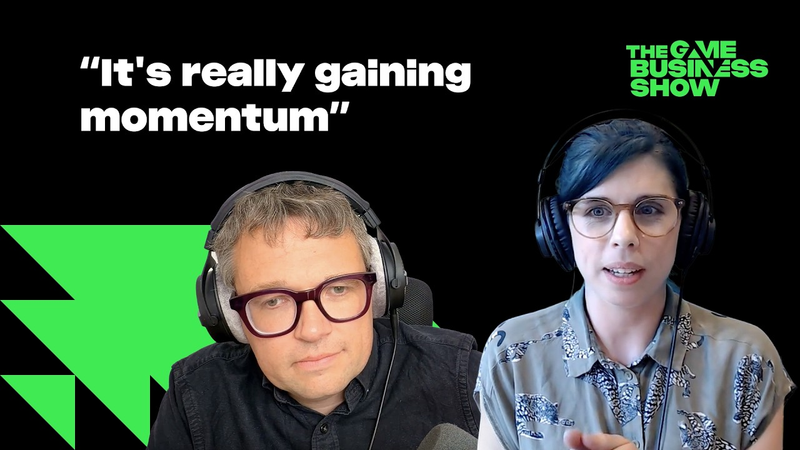
we want this art to continue forever. To help me work this out and see if Stop Killing Games has any hope of success, I had a chat with a real industry expert on video game policy. She's been actively involved in conversations around Stop Killing Games and is director of public policy and public affairs at Flux Digital Policy. Her name is Dr. Celia Pontin. And here she is. Hello Celia, welcome to the show.
Hi. Thank you for having me.
Now, I think it's important to say up front, you're generally pro-preservation. You're sort of sympathetic to what the Stop Killing Games campaign is about. That's right?
Yeah. Yeah, I I understand people's passions behind it and that they want to continue playing a game that they have particularly loved or enjoyed or invested time in. And I can see exactly where that is important to an awful lot of people.
Cuz when we start getting into some of the challenges, they may sound they sound like we're being down on it. But I know you've been various trade body meetings and that kind of thing and you've Have you been involved in those conversations and stuff?
Yeah, so there are there are actually a lot of conversations happening around
this at a policy level and I've been lucky enough to be part of those.
Mhm.
And it is I think it's a marker of how seriously it is being taken and that it's not just a side issue that's being punted away. You know, people are talking about this and are really trying to find a way forward that works practically and legally and gives the industry on both sides what it needs.
Yeah. Well, this ties into what I was going to ask cuz I'm surprised to see trade body statements around this issue. I'm surprised that it's not being just pushed away and ignored. Why is the industry why are game publishers why trade bodies not ignoring it and pushing it under the carpet?
I think they are engaging with it seriously and I think fairly intensely because the campaign has been very vocal across multiple jurisdictions and so it's not like this is just an American issue and we don't hear about it in the UK or it's not just an EU one. It's being shared everywhere.
Mhm.
Particularly in those three areas and so
it's hard to escape and it's not something that you could really back away from. It's also gaining momentum as a talking point not necessarily on one side or the other but as something that's in the more general public consciousness because it speaks to a move towards a digital owning culture and that's not just games. It's also music, it's also film, e-books, things like that. This is something that we are moving towards as a society when it comes to how we intake our culture and our media and our inputs and so although games are kind of at the forefront of it in terms of what's happening in public commentary,
Mhm.
but like you said, they're not just pushing it away.
They do seem to be trying to counter it. I they seem worried. That's where I'm coming from that it's okay that games are calling for legislation. They're causing they're calling for change and the reaction of the publishers seems to suggest they're worried that that might happen if they're not careful. And so I is that
you you're nodding your head. Is that yeah? Um
Well, everyone everyone in every industry is worried about new legislation because it's a big unknown, right? Like so whenever there is uh new legislation on anything on the horizon then people start getting a little bit concerned because there's a little bit of a better the devil you know thing that happens within regulation. But, I think one of the issues and one of the concerns that you see is a mismatch between what people or the public might be calling for and what is possible. Not necessarily just technologically, although there are some barriers there, but also when it comes to how existing legislation works, whether that's consumer protection or IP law, as well as the practical implementation of it. So, there might be some ideal solution being touted by some of
the really engaged players in this space, but that might not actually work out. And so, if that were to be legislated for, then you could have this real tension of something having been called for and supposedly supported, but actually the industry gets caught in the middle having to deliver something that might not actually really work in practice. And I think that can be a real concern to them.
Yeah. Let's dive into it. This seems more like a consumer rights issue, right? If this is This is really what we're talking about here. Are consumer rights being violated here?
In that area, it's very case-by-case and specific, right? And so, it would be hard to call that one way or another in general. What I would say is that there are existing protections. That's actually that kind of the point, like it Are consumer rights being violated? Well, they already exist to be violated if that makes sense. There is already a framework for dealing with these sorts of things.
Um about contracts having to be
delivered as laid out in terms of service and things like that, and whether what you have been provided as digital content or digital service, whether that matches up to your expectations and to what was promised. So, I think there are aspects of that, and the EU and I think in UK have called those out, but there are aspects of those that already exist and actually already provide what's being asked for.
Mhm. Well, cuz this gets down to it, right? Stop killing games is arguing that when you buy a copy of a game, you should own it. But that's never been the case, has it? That's not even been the case when you bought a physical disc. Even if in practicality you do own it, right? The technically you don't. Is that that's right?
This is a niche thing for me to just call to mind, but when you used when you used to play a DVD and therefore you had to watch the beginning bit where it said like what the rights were things if you was the
holder of this DVD.
Mhm.
And cuz you couldn't skip things back in those days, you would have to read the bit that said, "It's not licensed for distribution or for showing in" I think it's usually prisons and schools are mentioned, which as an ex-teacher I very much appreciate that equivalence. And you would So, cuz you were being given a license to use it like it was personal use. You weren't supposed to be like showing it to make money out of screening it or something like that, right? Cuz it was it was a license to be able to use this bit of media in a really specific way. That's just what I remember as a really concrete example of this, but but games have those as well. And yeah, you can't really revoke someone's copy of a PS1 game without going into [clears throat] their house and taking it away from them, which does seem a bit over the top. Um but it is it's nonetheless a bit more complicated than just I I have this disc and it is mine.
Well, yes. There's the technicality and then the and the reality, you know, people did sell their games. In fact, there was even entire mechanisms set up around doing that. Now, obviously this all comes from the crew, right? This all comes from started there. The game became offline, it's no longer accessible. There is of course the call for why couldn't they just give that to the players or why couldn't they make that available in other ways? And I think this is where we get down into the complications around IP and and all sorts of stuff. Um this is quite a big question, but there are quite a few legal barriers to necessarily being able to do that, right?
Yes. Quite quite a few. Um so I think firstly, there are barriers in terms of intellectual property law and this is something that was directly cited by the European Commission recently. So they commented on on whether or not they were going to immediately pursue new legislation, for example, to to deal with this and that that came as a result of the Stop Killing Games campaign getting a bunch of signatures and um having a debate in
the EU. So they directly called out IP law and it's it's the same in the UK as well, broadly speaking. Now, as a caveat, I'm not a lawyer. Seek legal advice uh if you're affected by these issues. I but it's not as straightforward when it comes to video games because they are a instead of being one single item that has one kind of intellectual property right associated with it, it is this like bundle and cloud myasma of all these interconnecting different tiny bits of copyright works. Okay, it's it's not just one thing. It is the script and the voiceover and the graphics. Sometimes even by frame right? It's this big old bundle and that means that if you are talking about handing over a game to the platforms, that's not really a very straightforward way of thinking about it in certain aspects of the law, right? So
although in consumer protection law, you know, if you're being sold a game, you're being sold a game. That's not how it works in other areas of regulation. And I think it's hard for people who have never come across this idea before to really immediately get that it's not some kind of kicking it down the road free pass argument. It is genuinely something that adds a lot of complication um because you might not actually as a as a company be legally able to hand that stuff over even if you wanted to cuz it might not all be yours.
Mhm.
But even if it were, there's a certain degree to which you might question whether someone can be compelled to do something with intellectual property that they hold the rights to.
Yeah.
Um you know, that it it is their thing. So, you have that aspect. That's a barrier to it and it is one that looks simple on paper when you say, "Well, just give someone the IP or we're not
asking for rights over it." Well, actually it's not that straightforward.
Yeah.
But you also have technical barriers when it comes to the integration of third-party services and platforms and things. As I obviously there are technical issues with that and how you hand over maybe the contracts or the way that those plug in and integrate with certain features of your game. But there is also the idea of well, who has liability if a third-party no longer provides their services, right? So, if I as a game creator want to sunset my game and I hand it over to the fans, I might have this web underneath of different third-party services to do things that I haven't done myself and fine, I could maybe hand over the arrangements if I could like get get that worked out, but then if one of those services goes under or they're bought out or they just cease to exist for whatever reason,
then what happens to the game that was dependent on them? You know, that then has a a weakness to it that means that that's still might not be persistently available and does that third-party service have any obligations in this? And again, it it starts to get quite complicated and it's another you can't just hand this over to someone else.
Yeah, well, it's not easily.
No. Some instances you probably can but it's just it's not a case that it's always able.
In some instances that happened. I guess there's also the thing that I think it someone said it to me before was like what is if you've got a license for a song uh maybe it's a car game, maybe it's a license to a certain type of car and that license is for 10 years for a set period of time and you've handed it over to someone else. You know, those licensing agreements that might expire. Is this amateur group maybe let's say people who are looking after the game know they have to take this out of the game and then who's liable if they don't?
And there are other liabilities um if you've got and of course we are mainly
talking about multiplayer live service games. I know there are some questions over single player that's um let's go always online and whether that's necessary and that kind of its own thing but overwhelmingly we're talking about multiplayer or live service. And when you take over that, you may well find that you have regulatory obligations under things like Ofcom's online safety act implementation, right? Or if you've got player chat, that could well be subject to age restrictions uh from maybe spring on with all that stuff kind of up in the air at the moment and whether it would apply but it's an example of where you could have some obligations suddenly that you depending on how you structure a takeover, you could end up being responsible for in quite a big way. And I don't know how cognizant people are of that necessarily and how serious that could be and how
much work it could be even if they were willing and able to take it on.
Yeah, you know, there's all sorts of GDPR even
Yep.
All of that can they have to be compliant with all of these things and if you're just a group of people that are doing it in your spare time who own the games forum that's that's it's like a bit of you're running a business. I mean you basically said a moment ago that if they own an IP they don't have to release it, right? They don't have to put it out there. This is an example of a non game that isn't where it isn't online game but when Nintendo did the Super Mario 35 game for the 35th anniversary of Mario they said it was going to be available for 6 months. It was you know part of the subscription service and after 6 months it doesn't exist anymore. The game's gone. And that is in a way what the stop killing games is about is like you we don't we don't want you to do that but from Nintendo's point of view that was specifically created to celebrate the 35th anniversary of Mario. And from their point of view it's not the 35th anniversary of Mario anymore. The game shouldn't exist anymore. It was it was designed for being a moment in time. And that's because they are free to do with their IP as they want and I guess that's
you can't force people to release stuff or or or do these things I guess and that's where maybe some of these um ambitions are going to um run into some brick walls I guess is what I'm trying to say. It wasn't a question, was it? Um I was actually just trying to look up there was a game that was released on the Nintendo website for the Wii and it was like a Christmas game and the idea was you unlocked something every day as a Christmas advent calendar it was done by a marketing agency and I really read the story recently I thought it was fascinating and that game of course when the Christmas was over it stopped existing. But the marketing agency got the rights from the game from Nintendo and actually re-released the thing and they continued it. Nothing to do with what we're talking about.
of cool though. I didn't know about that.
Yeah, I'm going to look at I was trying to I should have done it before I started the podcast and the is Wii Christmas browser game. I I was a whole article about somebody who was their favorite game they played over Christmas but anyway I'll put it in the in the newsletter.
[laughter]
I want to know what that is, but it does
exist. They have made it and they've obviously removed some of the Nintendo bits. It's commitment to a minimum if if a game company said, "Look, we're going to make this online service game. It is online. It is connected." Um is saying we can guarantee you this will be available for 6 7 8 9 10 years. Is that Is that a potential It's not a solution, but is it a potential middle ground?
I think it depends on how it's communicated and what expectations are. I think in the example you gave the very short-lived effectively promotional game. Uh you know, that's one context where it is intended to be available for the short period of time and people are aware. It's a little bit like having a limited edition of something, right? You've only got this amount of time to visit the Natural History Museum Pokémon pop-up shop and once it's gone, it's gone.
Still on, I think. I don't know.
Yeah. I um I mean, I was you know, early doors on that, but I
[laughter]
so much money spent so much money. I would buy even uh
if it's a game that's going to be, you know, it's just marketed as a game, then you would expect it to be running for longer than just a few months for sure. Yeah. But guaranteeing a specific amount of time wouldn't necessarily be at odds with consumer rights, you know, if it forms part of the material information. If it is indeed something that is going to be available for that certain amount of time, um then depending on the context, that could be something that consumers need to know before they decide whether or not to purchase that product or to engage with it cuz it could apply to free-to-play as well um because it's about whether you engage with the commercial decision rather than when you actually buy something. But I I don't know if it answers the question of some of the people who are raising concerns because some of the asks of
some of the Stop Killing Games campaign have been around um being playable in perpetuity and being able to be handed over. And so there is a question over whether saying that it's going to be available for a minimum period, whether that addresses that side of it. So I think there's a couple of different things going on within the same uh umbrella. Um and some of it is about whether it continues to be available and some of it is whether about, you know, what you're getting when you buy it. I think there are difficulties with um minimum commitment periods uh in terms of whether you can guarantee that that's going to be available. I mean, we've talked before about third-party services or whether there could be hiccups in it. And it's going to be more manageable for some games than for others. Um but you tend to have to have a principle of the law is the law or regulations are regulations or enforcement is enforcement for everyone. And I would be
wary of whether a small indie developer can necessarily make the same kind of commitment as someone who's got maybe a simpler game or is more experienced or is larger, right? Like I think it needs to be done under the context of will it work and is it feasible?
I can't know how you can like force that into law or legislation that has to be available for a certain amount of time either because what if a company doesn't you know, as you said, things get turned off, companies go bust. Um I've just been linked to it, by the way. The game I was talking about was Mission in Snowdrift Land, which is a um uh a Nintendo and German Advent calendar promote the week that turned into a uh uh a game that exists. Sorry. Um
[laughter]
Just deviating off a little bit. What makes this a little bit more topical at the moment is that there's this talk around the end of physical games uh certainly on PlayStation. Is that putting even more momentum behind this stop killing games campaign? Because I guess that is something these games are
now tied to us, you know, digital stores and services.
I think it is being talked about in those circles. I I've definitely seen people uh posting about it um in stop killing games spaces online um and talking about it. And it's been interesting looking at those discussions because there are some mix of people saying that the digital only distribution is very linked to stop killing games uh because of that kind of ephemeral feeling about it. But then on the other hand, there are some people saying, "Well, we get why like this is
Mhm.
linked, but it isn't the same kind of thing."
Yeah.
Um and it's um we don't want it to distract from the ultimate aim of this. And I think their point of view on that is because an awful lot of people buy games digitally even if they are available in physical formats. Um and so it's already a live issue when it comes
to digital distribution, right? Like the conversation is already happening. I do think this is kind of pushed it up a little bit as well. Uh but it's not the it's not the thing that has put this on the agenda.
Mhm.
I also I also think it it highlights kind of where there's an overlap between digital only and physical distribution in that there's, you know, the code in a box
Yeah.
uh like approach to physical distribution where you are getting a box and you can buy it from as I'd say Toys "R" Us and then I realize that hasn't existed for a very long time.
It exists within WH Smith site, TG Jones. I've lost track.
Sad. I'm now firmly over at Smith's Toy Superstore. But, you can go and you can physically buy it, but actually you're not buying the disc to go in the machine, right? It's a It's a access code, effectively
like a Steam key, right? So, sure that's that's physical distribution, but it is also in in a sense a digital distribution. Um and so, it's it's one of those areas where things are a little bit messy and mixed together at the moment. Um and in due course, I mean, eventually everything's going to be digital only distribution. I think it's just a case of when that happens and in what format.
Yeah, I It's a weird I mean, I've got my views on it. I'm a bit surprised that they're stopping disc production entirely. I always think there's going to be always a group of people that will happily spend over the odds for physical items. Even if it's a small industry, I think there is still an industry for that. I guess the concern from a consumer point of view is the same concern that, you know, you could switch it off. For example, Nintendo has these things called the key cards, which are a bit like code in the box, but work better in the sense that you can still lend your friend the game and they put it in their machine and they can download it and play it, just as they would any other game. It still required download. If there's a time in the future when that store gets turned off or that ability to download that game gets
turned off, then that physical item that you bought is it's not useless cuz you might have downloaded it onto a a hard drive somewhere, but you can't use it anymore. You can't use it on a different device, different machine, and that's part of that preservation calling. What I can't see from this talking about this, I don't know what the solution is. Um I don't know that Is there anything that can be done? Is this dest- Is this the Stop Killing Games campaign destined to fail? It feels like there's too many reasons why this can't win.
That's a really big question.
[laughter]
The impression I get from publishers I think there's the consumers have a certain impression and I completely understand that impression. They publishers don't care. They're laughing maniacally as they turn off their games going, "Haha, you can't play this anymore." They don't want to do that. They don't want these games to fail. They want them to live forever. Um, but there is there is costs involved and there is, you know, resources involved and there's difficult things and all that kind of stuff. But they would love there to be a way that they they I guess a framework um, to go, "Right, how do we do this?" And I I always get the impression as well speaking to certain developers, they're increasingly thinking about what if or when does this
game ends, what do we do? What happens to it? So there is they're trying to work those plans into the beginning. But obviously for some games it's a case of we can package it up and make it available open source. And some people it's a case of well, maybe we can take off all the offline modes and make it available as a standalone single player experience. It's going to depend on the game and there's no legislation, there's no one rule that will fit all that. I do get the impression the industry is now thinking about it more. But from sort of a legal and legislative point of view, I don't I can't see a I can't see an avenue here that doesn't conflict with all the various different
rights and
Boom.
and IP law and all sorts.
So I think when it comes to the arguments around IP, it is very complicated, but also really really importantly, it is linked to international distribution, right? Like every country jurisdiction or group of jurisdictions have their approaches and their law, but
there are you know, interlinks between
them. And again, very complicated subject. And if you were going to change something in one country, the ripples outwards and how that then changes and functions would be enormous. And I think that that is an area where change would have to be on a systemic level and it would have to be for a reason and on its own merits. I think it would be really hard to justify and I think the European Commission kind of basically said this reading between the lines. It would be really hard to justify a change to that mechanism and to that kind of web of international approaches for this when there are already consumer rights protections for contracts and services and your expectations and the way it's sold to you and the rights that you have and the contracts that you sign.
So, I think that the consumer protection avenue would be a much more likely avenue to be pursued if regulations were going to change on this and if regulatory priorities changed. On that side of things though, you've also got to consider whether things so whether games already exist and how those could be impacted. In general, you tend not to have things that are retroactively applied. This is a very broad and heavily caveated statement because there may be instances where particularly live games are expected to fall in line with things like the online safety act, right? Like Ofcom enforce it as it's a service, so you have to be making changes to it to make it comply with your regulatory requirements. But there are other aspects where well, if you've created a game that's made in this way that couldn't be passed on,
it would be really hard to justify changing regulations or changing the law to say, "Oh, well, you now have to recreate it in this way so that you can pass it on." So, I think there are always going to be things that can't be retroactively moved into a always available in perpetuity kind of model if it doesn't already suit it. But you also have to think about what is available, what is continuing to be available look like, and what does it mean, and what standards do you players set for that, and is playable the same for one person as it is for the other, and is playable the same for one kind of game than it is for another? If I can play a multiplayer game by myself, right, in an open world, but no one else is there, is that playable? Or is it only playable if there is the live service aspect where I can be matched with other people? Um and then you have to start figuring out how legislation would work for different scenarios, and
how it would account for the vast variability both in game genre and in player expectations of those. And in some instances, I'm not sure there is one solution that would work, even if there were a legislative appetite to do so. It's really complicated.
[laughter]
Well, this is what this is what I'm getting from it, and I and I do, you know, and there's also different types of companies. Like, I bet if it's the Destiny is a game that's not being updated anymore, and you can foresee a future where they go, right, the game's not making It's costing us money, we're going to close it down. And And it might be a situation there where fans can spin up some servers and run the game themselves, look after the game themselves. And cuz it's Sony, cuz it's Bungie, cuz they're big company, they've got a lot of money, they can go, well, we can afford to have a very low-level oversight on this to make sure, you know, it's all above board and everything's fine and kosher. A smaller company who's maybe spun up I There was a Somebody my my um our sales guy, George, his daughter loved a online sort of sort of sort of a game sort of community thing,
and they've just closed it down. He was apparently devastated, and somebody's found an old version of it, and they've spun it all up. But that sounds like a small company where fans have basically just taken the code and
[laughter]
they've just and done and done their thing with it, and and and it's a very different world. It doesn't sound to me like this is something that legislation can fix or legal requirements can fix. I think it's just something the industry almost needs to say, what? Stop killing games noted. We've heard this and we'll do our best. But I guess there's trust there, right? And there's always a lack of it, you know, we do we trust you and maybe part of it is just making consumers aware that this online game they've played may eventually not exist anymore. Maybe it's an awareness thing and an education thing.
I think there is something to be said for the awareness bit as well.
Mhm.
Um and if nothing else, I think the campaign has highlighted both for games specifically, but also I think like I mentioned earlier medium or broadly, that when it comes to digital media of certain types, it's not about whether
you're a purchasing the media, it's you're purchasing access to it, for example. Um and how that functions and you'll see that some platforms um are putting on there quite clearly that you're purchasing a license. Um and I think it is becoming more and more well known and well understood uh particularly as a result of this. I do wonder, this is this is me as a millennial sitting here saying, "Well, that Gen Z." Um but genuinely, I do wonder if Gen Z are going to have less of a problem with this because this is just how a lot of things work now.
I agree. I I I have this I have this thing where when I was young, and I guess when you were young as well, uh younger, um not saying we're old. Um uh there wasn't a lot of stuff, you know, things like I I didn't have access to every single TV show in the world immediately at the touch of a button. I
and I owning a DVD was important because sometimes there wasn't anything on the telly I wanted to watch, and I couldn't just boot up Netflix or Amazon Prime Video. I had to put on a DVD. I had to select a game. I'm now There is so much I hate the word content, but just games, music, so much of it all around me all the time. That need to have a collection of DVDs is almost non-existent. Every now and again I might have the urge to watch a old classic that I can't get access to isn't on one of the services. But those aren't very regular moments for me. And I think if you're at a generation where where you've got so much entertainment at the just at your fingertips, oh I can't or that film isn't available anymore. Well, there's about a billion others that you can watch instead. That I think changes the um motivation. I think it just limits stuff. You got access to so much so much great stuff as well that suddenly the fact that something from a year years and years ago isn't available anymore isn't so much of an issue. I also think preservation today isn't I'm a Doctor Who fan.
And in the '60s and '70s, '60s in particular, like hundreds of Doctor Who episodes were set on fire, right? They were put in the furnace. They don't exist anymore. And there's treasure hunters that go around the world to like TV stations in Africa to see if they've got old reels of this old destroyed episode of Doctor Who. When they find one, it becomes headline news, right? It's like we found the episode of the Dalek episode. That was last year, I think. So, that happens. And they've all in in games today, they are preserved on laptops, they are preserved in private collections. They do exist still. They can come back out. It's obviously clearly an issue for a certain group of people, but I do think it's quite a small vocal group of people. And I think um I'm to be clear, I like buying physical goods. I like having my collections, but I haven't bought a CD in years.
That's fine. I own fewer than a dozen CDs and they're all in the glove box in my car cuz that's the only CD player I own.
Yeah.
And I haven't had a disc drive in my computer for about 13 years. So, the uh yeah, physical media
definitely is has a different place in my life than it used to.
Yeah. If I want to listen to something, I can listen to it anytime through the thing. And even if I can't listen to it, I I listen to every other song in the world. And it's um and so it it it's a it but you know, I still want to I am of a generation that likes physical. I still buy all my Nintendo games in box form even though it's cheaper to buy them digitally.
I don't know but I do as well. But I don't know that's the one that I do. Uh every everything else is digital.
Yeah, I I don't know why. I know actually and I have a practical reason today is my my sick nearly 7-year-old plays on the Switch too. And I play a game and I like being able to just unplug it, plug it into his and he can play it without having to work out hang on is the accounts connected? Can I share my digital code license? And that's quite messy. Um but um anyway, have I missed anything? Is there any other complications?
I don't know if it's something that's missed per se, but um something that I'm quite keen to have stated uh reasonably
clearly, which is that a lot of this is complicated particularly when you are trying to apply solution across a really diverse industry and diverse entire in terms of the types of game there are not too sure on the rest but whether they're you know, multiplayer or single player or require lobbies or you know, the server architecture and the technology that lies behind that but also the sorts of companies that you have from like one or two people studios through to multi-billion dollar companies with about you know, thousands and thousands of staff. Trying to get to a point where you have a solution that works across that and including across the diversity of what people will think of as what it means to play a game and to be able to access it and that's that's a really tall order and it's not necessarily something where you can suggest a pat neat solution uh
particularly if you have to take into account a patchwork of overlapping and also dependent bits of regulation across different jurisdictions. And I think there is there is sometimes a cynicism that when particularly big company says that something can't be done, right? There's a level of cynicism in people to think, "Well, you would say that because it's commercially convenient for you to say that." And there are times when something that may be commercially convenient may also be true.
Mhm.
And that's really important to recognize and that it is also sometimes true for the little studios as well as true for the big studios. And that we need to make sure that their voices don't get lost in the mix um as well and that you're not going to end up putting out suggestions that would perhaps work to get what you want for a big game and then stifle innovation
because a small studio thinks that they can't engage with that process um to a sufficient degree to be able to know that their game does what it needs to do if it comes to the end of its life. Right? You want to make sure that you've got an ecosystem that is going to work and support new talent, right? And new sorts of games and new things that work rather than stifle them.
Celia, thank you so much for your insight. I'll I'll I'll let you get back to your important policy work. I won't bore you about Nintendo Advent Calendar games anymore.
I'm very glad you did. It was lovely.
[laughter]
Thank you so much for your time.
Thank you.
Thank you to Celia there for joining us. It is a really tough conversation. Ultimately, no developer wants to kill their games and we don't want unhappy fans. So hopefully we can find a way forward that can satisfy as many people as possible. All that's left for me to do is to wrap up the news from the last week except we weren't here last week so we're going to wrap up the news from the last two weeks. It's a lot of news so bear with us. We're going to start with news that's a bit more recent and we're going
to start with Remedy's financials. I just Remedy we feature them a lot on the show. So I thought it would be good to start with them. Their Q2 revenue hit 10.2 million euros, which is down 40% year-on-year and an operating loss of 3.9 million euros. For the half year, sales were down 23% and losses hit 2.9 million euros. Part of the decline is due to the game FBC firebreak. That came out in the same quarter last year and even though it didn't do as well as people hoped to Remedy hoped, it nevertheless was in that quarter and so boosted revenue in that time. The company is building up to some big launches and well one particular big launch Control Resident is out in September. It launches in a very competitive market. You might be a bit nervous about that, but it has attracted a large number of Steam wish list 1.5 million. But the game looks great. If it wasn't going up against Wolverine, I'd feel a lot more confident about it, but I'm hoping it'll do well. It certainly looks great. And again, that has started to do pretty well as Alan Wake 2. The game has now sold 3 million copies worldwide. It's not a huge number. I think it should be doing better than that, but it is profitable. It's a profitable game and hopefully we'll be we'll see more from Alan in the future.
Sticking with financial, Square Enix has had a strong Q1. Profit rose 175.5% to 83 million dollars. A number of titles helped to achieve that. The big one though was Final Fantasy 7 Rebirth, which arrived on Nintendo Switch 2 and on Xbox formats in June. The game initially launched on PS5 in February 2024 and PC in January 2025. Square Enix also saw an uptick in users for its MMO Final Fantasy 14. So some decent numbers there. Sticking with Japanese companies, Bandai Namco, its digital segment, which includes games, did have a bit of a drop 15.6% decline to 573 million dollars. Profit fell 30.9% to 94.5 million dollars. This was due to there being no major PC or console release in the quarter. This time last year had Elden Ring night rain in that quarter, which which did quite well for them. Has some promising tasks coming up. Ace Combat 8, which is out in October, has had some real good buzz around it. It's going some decent numbers. They've got a new Dragon Ball game coming out as well. It's also handling the publishing of a promising RPG called Blood of the Don
Walker that's also out in September. So, some big titles coming out from Bandai Namco. Sega, they didn't have a big game in Q1 either, but actually it did a little better than expected. Sales increased slightly to $432 million. Sega's bigger titles are due later in the year. They've got Streets of Heaven and Persona 4 revival coming out in sort of the early 2027. Other upcoming titles include Alien Isolation 2, Crazy Taxi World Tour, Total War Warhammer 40,000, and Virtual Fighter. All of them will be in the next financial year or beyond, but there are quite a lot of games coming to Sega. And as a old-school Sega fan, I'm looking forward to playing those. Moving away from financials at least for a little while, Ampere Analysis shared some interesting data on LinkedIn that I really want to draw your attention to. It's about Resident Evil Requiem. The game's physical share of sales up to the end of June differs from a little over 10% to more than 50% in some territories. What that means is in the US, 22% of Resident Evil Requiem sales were physical. In France, it was 55%. In Japan, 51%. 43% in Australia. 40% in the UK. That's a good number of games, you
know, copies of a big AAA game sold physically. Just goes to show that some markets will react differently when PlayStation stops making disc games available in January 2028. There's an education process to be done for sure. Oh, this is a good story. This has just broken. NC, which you might not have heard of NC, but if I tell you what they used to be called, NCsoft, you might remember them. They're taking over the global publishing of Throne and Liberty. They making Throne and Liberty. That's their game. It's an MMO that it it was making alongside its studio Far Spark Games, but it was being published by Amazon Games globally. Amazon is shifting away from MMOs now and it's towards more mainstream games better suited to its Luna platform. So, NC is now taking over the publishing of the MMO. So, hopefully it does well. Oh, we've got some indie games that have done pretty well. Mecha Comedian, the game that's dominated the summer. 20 million copies sold now. It is the biggest selling game of the year. Even at $6, which is how much the game costs, it was the second biggest revenue generator in June in the US. Real hit.
Excellent hit. Speaking of sort of games in this friend sloppy genres that are doing quite well, co-op adventure game Big Walker sold 1 million copies worldwide. That's the game from House House. That's the Australian studio famous for Untitled Goose Game. So, that's two nice indie hits there. Uh bit of a negative story this one. Oh, wait, it's a negative story. Supermassive Games, the UK developer behind horror story titles such as Until Dawn, which is brilliant, and The Dark Pictures Anthology, which I haven't played, but I've heard is also pretty good, is laying off a further 75 employees. It is his third round of job cuts. The studio, I don't know what's going on within the studio and Sony. It made a bunch of games with Sony. It hasn't done for a while. Um it isn't working on Until Dawn 2. That's being made by fellow UK developers Firesprite. The best of luck to the folks at Supermassive, cuz their games are good. Um and the horror genre is, you know, hot right now. Uh in a more positive story, UK charity GamesAid has raised 82,000 pounds that were distributed amongst four charities: AFK, Autistica, Rays of Sunshine, Children's Charity, and Solving Kids' Cancer. Each receiving 20,500 pounds each. I used to be a trustee of that
charity. Um it's nice to see them still going and doing quite well. Long time ago, that. And now, let's move into the stories that we cover these in the micro. So, if you listen to the micro that is only available to paid subscribers, you would have heard of all these, but I'll rattle through them quickly. Electronic Arts appointed Cam Weber as Chief Studios Officer and Dave Tinson as COO after the completion of its $55 billion leveraged buyout. The company's majority owner is the Saudi Arabia Public Investment Fund with Silver Lake and Infinity Partners also among the investors. Take-Two did its financials and it beat its guidance for for Q1. This was due to strong revenue from NBA 2K26 and Grand Theft Auto Online, the classic two. It says it will hit between 8 billion and 8.2 billion dollars in net bookings for the full year, and that's all because of the launch of a certain Grand Theft Auto 6. I had a chat with Strauss Zelnick. It's on the Game Business website right now after the financial results. And we talked a little bit about consoles. I think this was the most interesting one because obviously the console market's going for a tough time, the rising prices and all sorts of things might impact the install base. And he said, "The install base of this
generation at Christmas time will be roughly the same as the install base was when we launched GTA V. We're not concerned about selling to a smaller audience." That bit's good. "But the intersection of the growth of PC as a format within console and PC releases from 1% to 50% over the last 20 years combined with our optimism about streaming service over the next 3 years, we do think the audience for console and PC games could be 10 times or more the size of the business today. And it does not mean we think our revenues will grow by 10 times, but we do think the install base will grow materially." Really ambitious on streaming. We mentioned it earlier. I'm skeptical, but if they people are willing to give it a go, I think it's I think it's worth worthwhile. The platform holders did their financials. Nintendo's operating profit jumped nearly 151% thanks to higher software revenue and a $300 million US tariff refund. However, Q1 sales were down 9.5% mainly due to unfavorable comparisons with the Nintendo Switch 2 launch in June 2025. Another key number that I spotted in the Nintendo financials was its digital sales rose 90% $840 million. This is mostly due to higher download
sales for games that are also sold in boxes. So, big digital transition happening there on Nintendo. Remember Nintendo now charge more for the physical versions of their games than they do for the digital versions. PlayStation sales were basically flat for the for the quarter to 5.8 billion dollars. Operating income rose 37%. Again, they were boosted by a US tariff refund. However, the cost of next generation platforms and restructuring has hit the company's overall earnings. The firm says it is cautiously moving forwards with its controversial plan to phase out discs. Xbox revenue, we knew they had a bit of a tough time. Ashley Shall has been talking about it a lot. That's the CEO of Xbox. Their revenue was down 7% for the full financial year, 10% down during its financial fourth quarter ending June 30. Game Pass growth helped offset declines elsewhere, including a 29% drop in hardware revenue. What's not going to help that 29% drop in hardware revenue with the new prices for the Xbox Series S and X in Europe and the UK. We knew that the prices were going up. They said that already. They gave us the US prices. They didn't give us the prices for the US and Europe. They have now and it is high. The Xbox Series S will
increase by 130 pounds and 150 euros. While Xbox Series X will increase by 170 pounds and 200 euros. That's uh That's quite the price hike, I have to say. There was a There was a time when you could buy a console for that amount of money. Uh another loads of financials financial seasons. Atari's core business returned a profit in its latest financial results and it hit its highest revenue number for more than a decade. However, losses within its newly acquired wonderful business meant that group posted a 5.5 million dollar loss overall. Um Roblox shares dropped by 30% after its Q2 results, which showed monetization was 2% below its guidance. Investors hated it, but the company said this was because it had switched how it recommends games. Focusing on longer-term retention over short-term monetization. It is also changing what games it showcases younger players following the introduction of age checks. It's a good move, but investors don't like it. The company that doesn't want to be in the financial conversation anymore is Devolver Digital. It wants to go private. The firm intends to be listed on the UK's AIM market with shareholders set to vote on the matter on September
8th. Devolver went public in November 2021 with a valuation of nearly 695 million pounds. Today, its market cap is 34.6 million pounds. Devolver cited the challenging video game market since 2021 and insisted its share price does not reflect the true value of the business. Sticking with a UK-related story, Secret Mode has opened an internal development studio in Sheffield, UK. The studio will support the publisher's games by creating add-on content as well as porting titles to other platforms. The new team is expected to grow to 20 people. The Secret Mode was owned by Sumo. It bought itself out with the help of the Mona Capital and it's publishing the upcoming Star Wars Galactic Racer game. It's really cool. I'm going to get them on the show soon cuz they're it's really cool story that one. And this isn't a cool story. The studio behind the Netflix FIFA World Cup game, Refactor Games, has laid off 85% of its staff. The US developer previously made football simulator in 2022. Sticking with Unity, Tripledot Studios has bought mobile publisher Supersonic for $40 million from Unity. Unity announced plans to divest Supersonic earlier this year.
Razer has acquired the assets to cloud-based streaming platform StreamElements, which includes its technology brands and operations. Co-development studio Vertigo Games has appointed former Sumo Group co-founder and CEO Carl Cavers OBE as non-executive director and shareholder. Cavers left Sumo in 2025. And Frontier Developments has appointed Dan Lazarides as chief marketing officer. Dan previously worked as senior VP of marketing at Sega Europe and head of brand at Bethesda. Woo, over 10 minutes on the news. Um, there thank you for listening. I hope you enjoyed today's show. We've got some cool episodes next week. Really do. I'll tease some more of them around the micro on Monday. If you want to get on micro, by the way, we do things, we wrap up the news, we give a bit of opinion on what's going on in the industry. You need to become a paid subscriber for that. And to do that, you can go to the gamebusiness.com and and become a paid subscriber. But obviously, our big episodes are available for free. They always will be and they will come out on a Tuesday and a Thursday. And we appreciate subscribers to that, too. If you're not subscribing it to a free subscriber or paid subscriber, the gamebusiness.com. It's everything
you need to know. Um, that's it from me today. Thank you all for tuning in. Until next time. Have a good week.
Auto-generated captions from YouTube — names and numbers may be misheard.


















Comments