VideoPocketGamer.biz
Session: Winning In China: Apple Ads Growth Strategies For Global Mobile Game Publishers.
17 Aug 202621 min video
Transcript
[music] [music]
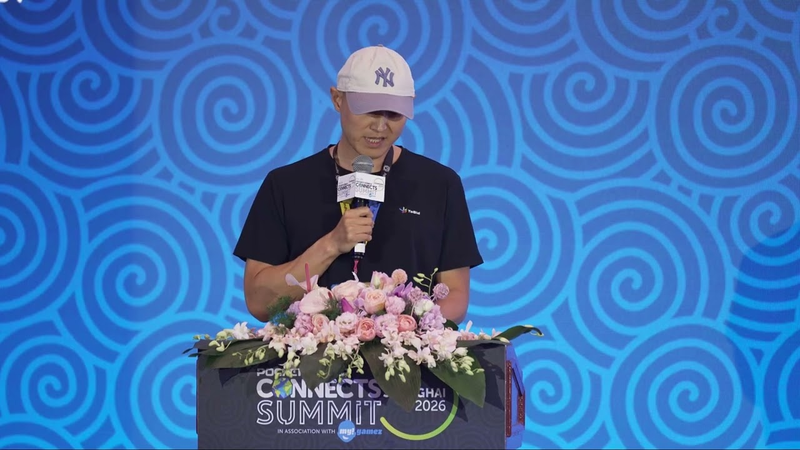
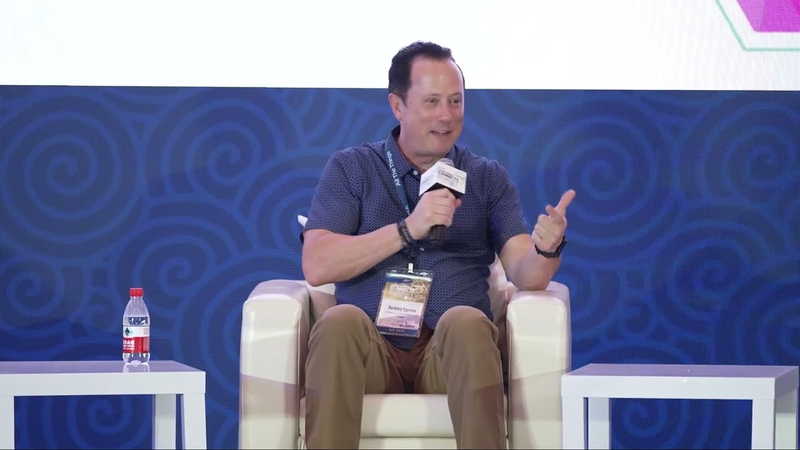
with winning strategies in China. Please welcome Cassius Mail from M Stars AI to the stage. His talk is winning in China, Apple Ads growth strategies for global mobile game publishers. Please give a warm round of applause.
Hi everyone. Okay, that's pretty loud. Okay. Uh for most publishers entering China, the first thing that would come to their mind is scale, but scale actually isn't the hard part. Readiness is. I'm Cash from N9 and today I want to talk to you about how uh global Okay,
that was the first one. All right. I want to talk to you about how global teams can enter the China market, how they can use Apple Ads to leverage high intent demand, and how to scale in China and learn after they enter the market. I also will introduce how N9 or Ingyong Laida in Chinese uh and M Stars can help uh their publishers and give them visibility and control uh in along with localized uh execution for their campaigns. So, let's start with the market and the opportunity. Uh I don't need to get tell you guys about the size of the opportunity. The Chinese market is the biggest gaming market in the world. It's worth 350 billion uh domestic market revenue last year and has 683 million users. A lot of those, 73% is mobile. So, the market is definitely mobile and 39% of those users
discover those mobile games through the App Store. But, this sense of scale creates both an opportunity, but you know, you can't [clears throat] be complacent. You can have a mobile game developer that is well-funded, has a budget, and has a good brand, but they may also slow down their execution in China if they don't localize properly. If they didn't do their compliance like Leo was mentioning earlier, uh all these kind of things can definitely slow down your execution in the market, and that's because uh China is not just another translated market. Uh so, before you would launch in China, here are four areas that you could uh work on to get yourself ready for the market. The first is do you have your publishing and your approvals, uh especially if you're mobile game, so your approvals, ISBN, and numbers all in place along with the timing. So, understand what the timing would look like. The second is do you have your local
operating setup? Do you know who is going to set up your campaigns? Who's doing the reporting? And when issues in invariably pop up, who's going to do these escalations? The third is your App Store readiness, and it's not just about translating the product, it's about having localized metadata, uh translated keywords, and also all the screenshots on the page. And finally, measurement. Uh so, what are you able to measure what happens after you get that install? Uh that's also very important. If any of these things are missing, then you can't fix those with more budget. What's going to happen is it's going to take you longer to do your learning, and it's going to cost more. So, for each of these areas, if you can have the owner, uh the main risk, and the next step for each of them, that is going to save you more time in the long run, rather than rushing your first one or two weeks into the market.
Uh and uh China is also unique in the sense that your discovery is going to happen way before uh the people are actually in an App Store looking for your product. They may hear about your product from short video, live streaming, creators, and communities all from local China platforms like uh Bilibili, you know, Douyin, QQ, and Xiaohongshu. So, you are going to have to get ready for this kind of discovery mechanism in China, which is different from out in Europe or the North America. And the next is when people are actually on the App Store looking for your product, they'll have their own vocabulary, which might not be what you were expecting cuz it might not just be a translation for your other keywords. People will use local genre terms, gameplay language, IP slang, or even the names of local competitors. And if you just use a translated list of keywords, you're going to lose out on all that other local intent.
And the third is uh what affects readiness. It's not just going to be your assets that are affects readiness. If you want to make sure that you're going to launch on time before your media team is ready to go live, you need to have your uh approvals, your ad reviews, and your compliance check all already done. Uh otherwise, you're going to end up slowing down your execution. Uh the next is Okay. So, once you are ready to execute, um how does the Apple App Store fit into this one? Uh the Apple ads can actually capture users at all stages in their journey from discovery, where they might not know about your ad, or when they're comparing you to other games, or finally, there's some people that already know exactly what they want and they're just going there for downloads. So you capture their intent at every single level. For a game launch, that means visibility is when people are actually searching for your games.
For uh it can mean brand protection against competitors that are bidding on your terms. Uh it could also be non-brand growth. So it once you already launch and you're looking for growth and more user acquisition, you could focus on uh the competitors or you could focus on other category terms to grow your user base. Uh the benchmark at the bottom really does go to highlight how important the App Store is. The Apple ads uh remain the number one global media source for iOS gaming again, like every year. So scale is very uh important over here, but it's also important to to understand that you can get more than just the scale here. You can also use this to understand which user searches and which queries show like genuine intent and learn from that as well. Once you are ready to launch the ads, Apple uh the Apple App Store actually has four placements to use.
You can think about them as four different jobs. Uh so the first one is the Today tab and it's the first thing you see when you open up your device, so it'll be an awareness play. The second one is the Search tab and that influences users before they even type in their first query. Uh the next is search results and search results are the ones that capture explicit demand because your ads are going to show up after people type in their uh search terms. And the fourth one is product pages uh and that's where your ads are going to show up when a user is browsing another product or a related app. This one is not yet available in mainland China. For global publishers entering China, the one that you most likely are going to use the most is number three, which is search results, because it captures the explicit demand that's already there, and it's the easiest to get learning from when you're just entering the market. Uh and you don't need to use all of these
different placements. You need to understand what their jobs are and what you can learn from them. And maybe once you have the search results down and you need more reach, you could think about adding in traffic with the Today tab and the search tab afterwards. Okay. Um so, once you do uh kind of like set up your campaigns, there are several common issues that we see. Uh here's five of them, so I'll share with you guys what the common mistakes are. Uh this would be a good to screenshot if you want to, but the first is direct keyword translations. And this one will miss the local player language if you're just using a translated list of keywords, like I mentioned before. Users have their own search language, and that's not going to be captured necessarily in translations. The second one is mixed intent signals. So, if you combine brand, category, competitor, and discovery into the same groups, then you're not going to know what's actually
generating the results. The third, fourth, and fifth also follow on the same patterns. Weak page relevance means the search term doesn't match what happens on the landing page afterwards. Uh if you scale too early before the quality is actually vetted, and fifth is if you don't have a reporting uh cadence that is regular, then you might be slow in making your decisions and improvements. There's not one AI feature or a smart bid change that's going to solve for all of these problems. What you need to do is have a systematic workflow. So, start with doing local keyword research. Then, you group all your campaigns by intent, brand, category, and uh brand and category and the like so that each one has its own purpose and you can learn more quickly. Make sure that your custom product pages match the users' search intent.
Fourth, set some KPIs for your campaign and then monitor those. So, once you do hit some of those KPIs, then you proceed with the scaling and not uh before that. And finally, have a weekly reporting cadence so that you can have quick results and quick decisions after that, at least on a weekly basis. Uh here I want to share with you guys how N9 and the mstars.ai campaign management platform can fit in and help you guys be that bridge to China. Uh the typical way of working is that we have our we help a global publishers that set their own goals, KPIs, budgets, and overall strategy. And the N9 team will help you guys with the on-the-ground local execution, the day-to-day execution in China. Both teams leverage the mstars.ai campaign management platform to get visibility into what's working, uh what
changes are being done, and the reason behind them, the reason why. So, the local team is not working in a black box, and the international team doesn't need to wait a week before they get another spreadsheet. So, it's a local execution with a global lens. Now, I'll walk you through some practical examples of what a campaign setup would look like. Step one, you create your campaign structure. Uh this is where your budget turns into tests and tests turns into scale. You put your inputs. Start with your business inputs. What's the most important thing for you? Your budget, your goals, your KPIs, and you also set your own risk tolerance. So, whether it's aggressive or not. And then the system would take these inputs and then create a plan for you along with the justification and the explanation for why it made that media plan.
After that, you you organized your groups by intent. So, uh this is brand. It's not very clear, but okay. Brand, competitor, discovery, and all of these are going to do their own separate jobs. So, they'll all have their own bids. They can all have their negative structure as well. Uh so, that the campaigns are all sorted by intent so you can do your learning faster. Uh with those in place, the system would suggest a list of keywords for you to start with along with the match type and the bids. This is not a fixed AI campaign. Uh so, this is a starting point. It's a structured campaign starting point. But, then you can use those inputs to then uh inspect what the suggestions are, modify them, even improve them before you actually set the campaign to go live. And you definitely should. So, once that campaign structure is made,
the first thing you should do is take a look at the keywords and do your keyword research. So, find out what the local users are actually searching for, what they're typing in to find your product. Uh and then you would probably miss a lot if you're just using a translated list of keywords, right? Uh because you're going to you're not going to have the local genre terms, the slang, the gameplay mechanics, and the motivation. Uh or the other competitor and the adjacent terms. So this this is after you have all these things then you're going to rank them. So our system would rank that for you based on the keyword relevance, the competitive landscape and the competitiveness of the keywords and it would also group them by intent so you can create the different groups for these keyword sets. Yeah, and there we go. So once you have like your key once you
have your keywords done the next part is to make sure that the user's search intent matches what they see on the landing page. And this is where a lot of campaigns will actually fall off. So imagine you have someone who's looking for like a tactical shooter game and what they end up on is a landing page that is focused on storyline characters. Your campaign may have won that tap but you broke the user's experience and expectations. So what you want to do is look at the user's search intent and then create custom landing pages that match with that search intent. You can make custom product pages by theme, by audience or anything else that you can imagine. And okay, just to clarify the custom product pages over here are not the same thing as the product page placement that I mentioned earlier. They're separate. Now our system also will help identify when you do have those search intent and
custom product page mismatches and suggest how to fix those if you're using our system. The next thing is after you have your campaign that go live is to measure the success. And learnings don't usually happen from a dashboard. They happen based on decisions. For our weekly like for a let's say a successful or for a good weekly meeting for us, we'd go over how did the campaign spend, how did the campaign spend, did we hit those efficiency targets, and did we get the quality that we were looking for? And most importantly, what's the next step? That is the most important question because it's going to tell us what do we need to do. Do we need to change the bids? Do we need to move around some of the budgets? Do we need to adjust the landing pages? Or do we need to wait for more data? Uh all and uh or do we need to wait for more data? Okay.
Uh the the next slide is how does AI fit into this? We had a whole deck on AI before. Uh I'm not going to go a lot into data, but the way we use data is to speed up the things that take the teams the longest time to do. So, taking those business inputs, creating the ma- marketing plan, using AI to inspect and find the issues and present us with the opportunities, and using AI to review and prepare the reports. Then, uh typically we use all those inputs and that the AI gave us, and then we have a person that actually review and action them and give a reason why they would action them rather than letting the AI run wild and do everything by itself. Now, uh the next question is do we have the scale to do this? Miri.com has two ways to work We have two ways that we work with the uh our partners. First is you as a publisher, you can use the platform directly, or you can decide to use a fully managed uh approach to leverage the platform and
our own expertise. And our expertise is based on 13 years of experience in app growth, 10 of those focused on Apple Ads, and working with over 5,000 different publishers. Uh so, most of our expertise is also based on games. We've run over 100 million dollars 100 million RMB in quarterly gaming spend working with hundreds of publishers. I won't read the entire icon wall, but we do focus on different genres as well. I'll give you guys two case examples and if you guys want more case studies later as we can also share them at our kiosk right outside. The first was but basically what this highlights is you can use the same platform to achieve very different goals. The first case is Whiteout Survival that already had a strong brand, so they wanted to protect it. So our team created branded campaigns, but they also wanted to grow and manage the cost. So we created brand like non-brand campaigns that captured
new intent from different kinds of categories. Took the keywords that worked the best, separated them out with their own budgets and bids in order to grow the success for this campaign. The results were really a good mix because then over 60% of the install came from non-brand and 18% lower than what the client wanted in terms of target CPI. The next is a match-three simulation game and this one the target was not to get the lowest cost per install, but to get the highest lifetime value. So our approach was different. We used keywords, we used paid learnings to improve their ASO and we also used the multiple creative testing to find the ones that converted the best and we optimized towards lifetime value rather than lowest cost per install. So that gave us very different results using the same platform. And I'm going to okay, use one last proof point over here cuz I am running short
on time, but we are our main operating brand in China is A9 and we are one of the handful of Apple Ads partners. This is the certification is important because it demonstrates our ability to help global publishers enter the China market and perform in a systematic way to help them grow. Uh and I will close off with uh four thoughts, I guess, uh that I've mentioned earlier in the report. So, first, treat China as a distinct growth market. Build around Build around local player intent and structure your Apple Ads for learning before you scale, and use AI-assisted tools to learn and operate faster, but not to replace human decision-making. This is the model that we operate with at N9. We find the We find the local intent. We'll help you set up the campaigns
based on your own business goals and problems. Then, we identify where there are opportunities for growth based on the data, and then scale accordingly. Uh so, if you guys want more information or if you want to connect with us, we have our QR codes over here for uh scheduling a demo, and we have our uh WeChats over here that you can scan, as well, to connect with either Apple Ads or to connect with N9 here in China. And that's all the time I have, so thank you very much.
[music] [music]
Auto-generated captions from YouTube — names and numbers may be misheard.
Key insights
7 takeaways · ~3 min read- 01Entering the Chinese mobile game market requires rigorous operational readiness, including securing ISBN approvals, establishing local reporting structures, and ensuring App Store metadata is culturally localized rather than simply translated.
- 02Apple Search Ads remain the primary global media source for iOS gaming, providing visibility across the entire user journey from initial discovery to high-intent downloads.
- 03Campaign performance is frequently hindered by five common mistakes: direct keyword translation, mixing intent signals (brand vs. category), weak landing page relevance, premature scaling, and lack of a regular reporting cadence.
- 04Successful Apple Ads strategies require segmenting campaigns by intent—specifically brand, competitor, and discovery—to allow for distinct bidding, negative keyword structures, and faster learning cycles.
- 05Custom product pages must be aligned with specific search intent; for example, a user searching for a 'tactical shooter' should be directed to a landing page highlighting gameplay rather than general character storylines.
- 06In a case study for 'Whiteout Survival,' a dual-strategy approach using branded protection and non-brand growth campaigns resulted in over 60% of installs coming from non-brand sources while achieving an 18% lower cost per install than the target.
- 07Optimizing for lifetime value (LTV) rather than just cost per install (CPI) requires using paid search learnings to refine App Store Optimization (ASO) and conducting rigorous creative testing to identify high-converting assets.
Ask AI about this video
Cite this video
Citation
Generating citation…



















Comments