European Video Games Industry Insight Report: 2024
84 pages~57 min full read
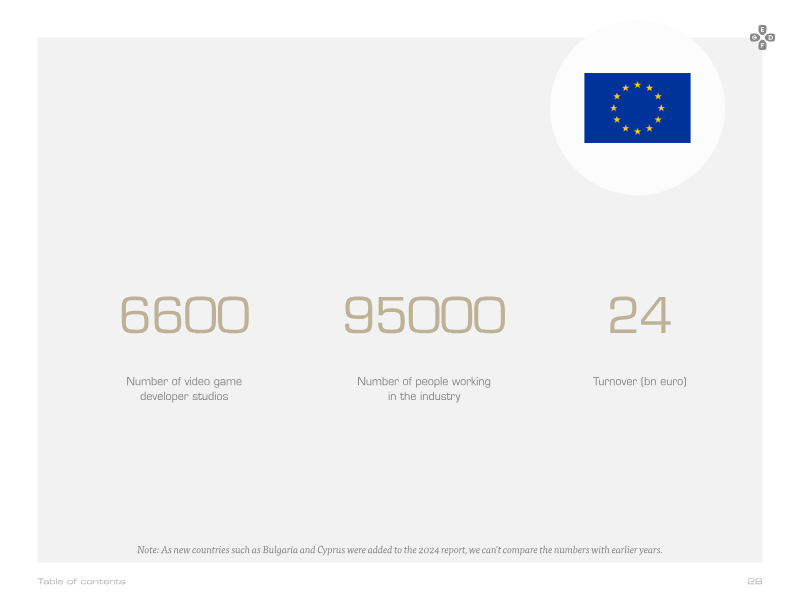
While the number of studios continues to rise, employment growth has stalled or slightly declined. This trend reflects global market consolidation and workforce restructuring.
The European video games industry demonstrated notable resilience in 2024, achieving an estimated 6% growth in combined turnover despite a challenging macroeconomic climate marked by inflationary pressures and cautious investment strategies. Comprising approximately 6,600 studios and 95,000 employees, the sector generated a total turnover of €24 billion. While the number of studios continues to rise, employment growth has stalled or slightly declined, reflecting broader global trends of market consolidation and workforce restructuring. Sustained industry stability and future competitiveness depend heavily on the availability of predictable public funding and the development of robust intellectual property.
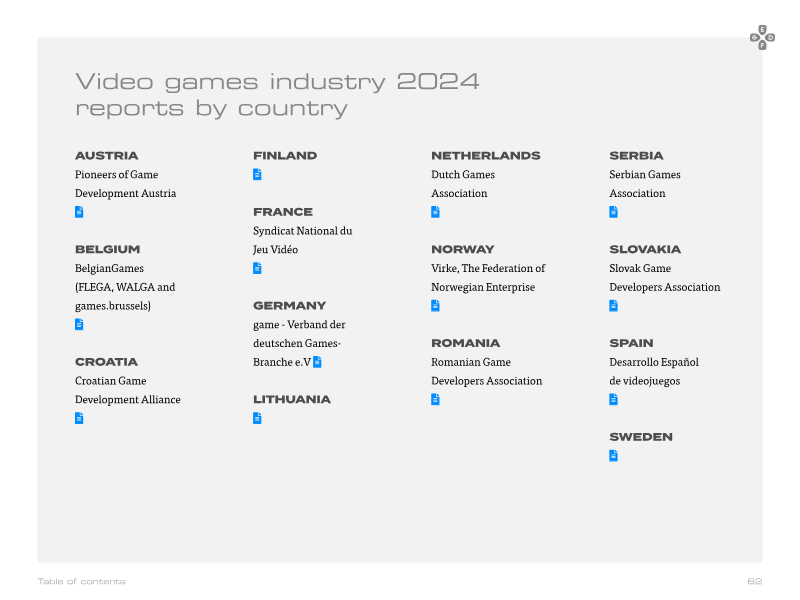
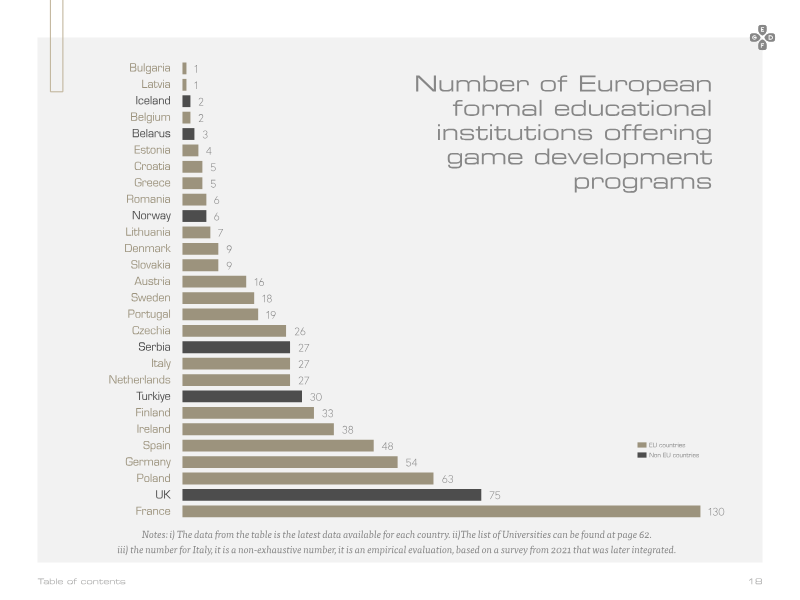
The industry landscape across Europe is characterized by significant geographic diversity in both economic output and educational infrastructure. Nations such as Germany, France, Finland, Sweden, Spain, and Serbia have emerged as key hubs of expansion, though data collection methodologies remain inconsistent across borders. To address this, standardized frameworks have been established to track industry participants, revenue, and new game releases more effectively. Furthermore, the region benefits from an extensive educational network, with hundreds of formal universities and specialized academies across 18 countries—led by the United Kingdom, Poland, and Spain—providing the necessary talent pipeline for continued development.
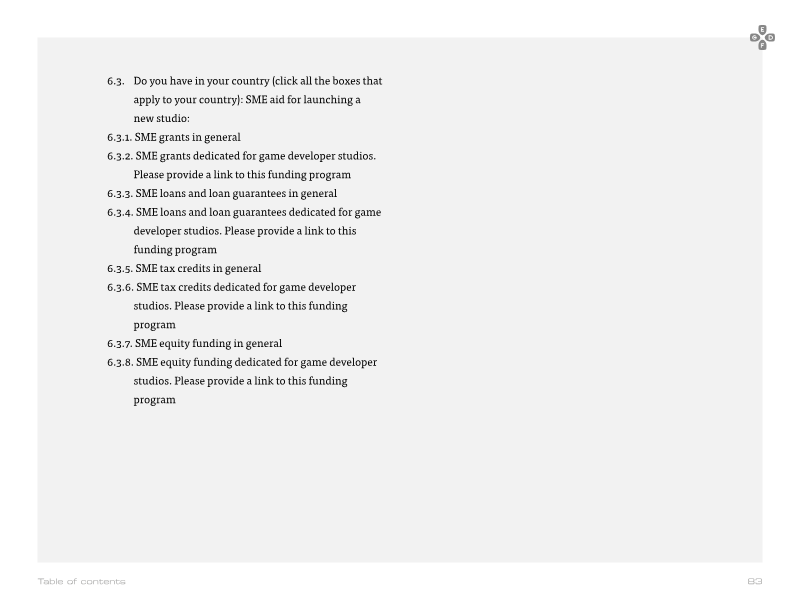
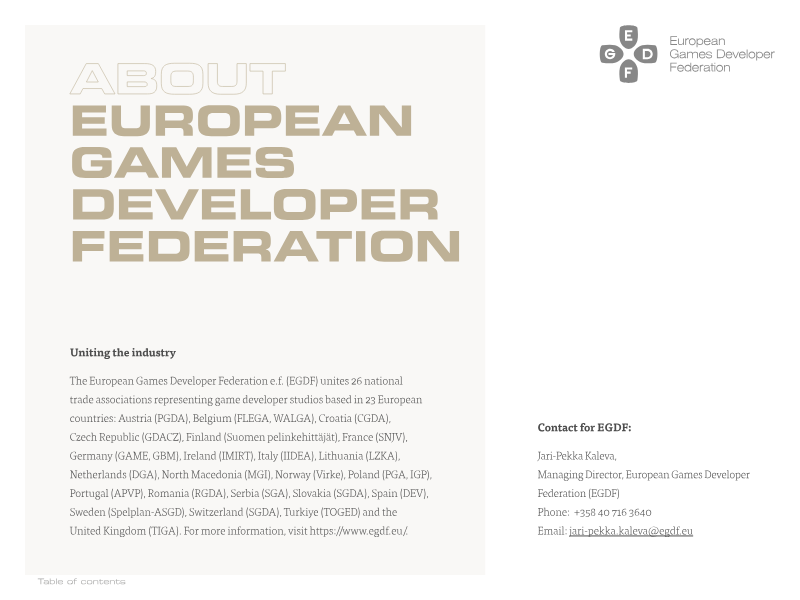
State-sponsored financial support remains a cornerstone of the European ecosystem, with various grants, loans, and tax credits designed to foster production, research and development, and the growth of small and medium-sized enterprises. The European Games Developer Federation, representing 26 national trade associations across 23 countries, continues to play a vital role in advocating for these instruments. As the industry looks toward 2025 and 2026, the integration of these support mechanisms with a skilled workforce will be essential for maintaining the continent's position in the global gaming market.


Video Games Europe · 2026

Video Games Europe · 2026

Video Games Europe · 2026

Video Games Europe · 2026

Video Games Europe · 2026

Video Games Europe · 2026
Video Games Europe · 2025
Video Games Europe · 2025

Video Games Europe · 2025

Video Games Europe · 2025



Video Games Europe · 2025

Video Games Europe · 2025

Deconstructor of Fun · 2026

The Game Business · 2026
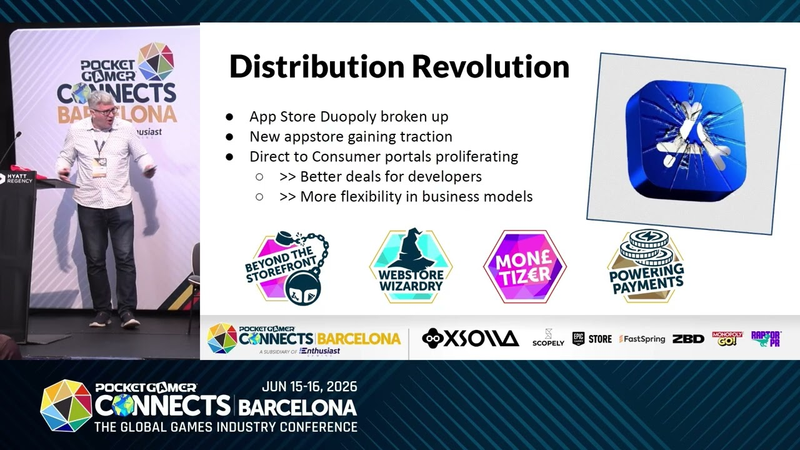
PocketGamer.biz · 2026
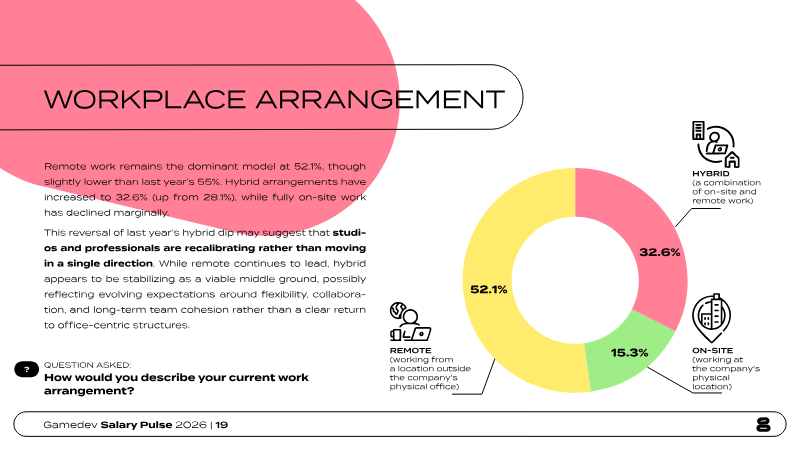

8Bit · 2026

Mobilegamer.biz · 2025
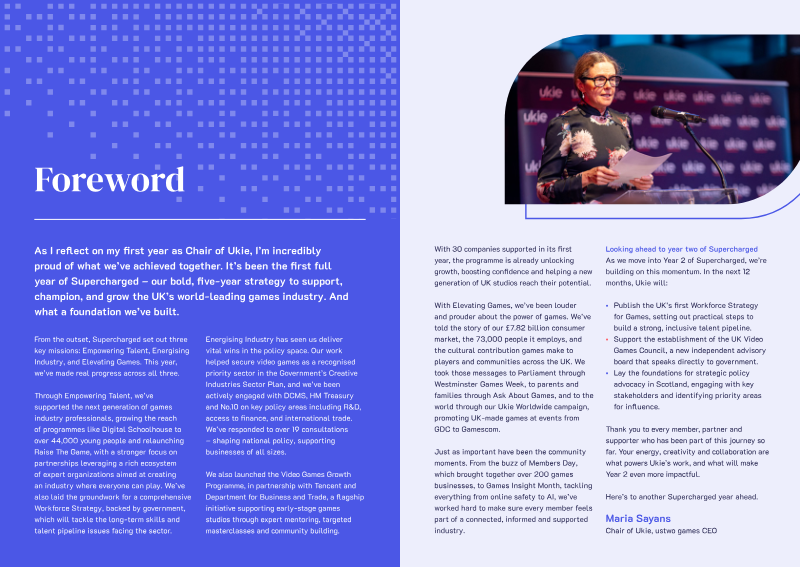


Ukie · 2025

Deconstructor of Fun · 2025

Game Dev Unchained · 2025

The Game Business · 2025

Direcció General d’Innovació i Cultura Digital · 2025


Remedy Entertainment · 2025

PocketGamer.biz · 2025
Comments