VideoThe Game Business
The video games most at risk from PlayStation’s physical switch-off
20 Aug 202654 min video
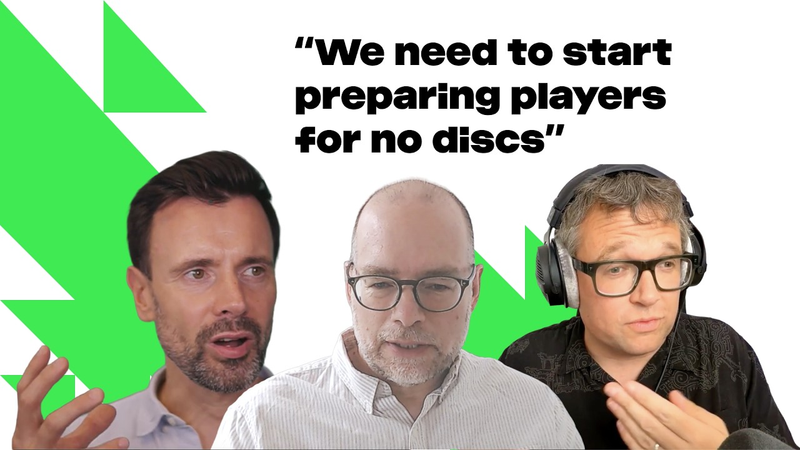
This week, what would $1,000 game machines mean for the console sector? How should publishers prepare for a no dis future? And we speak to Gamescom [music] on the eve of its 2026 show. Hello and welcome to the Game Business Show. This week's edition is sponsored by Keyword Studios. Keyword Studios calls itself the video game industry endto-end partner. And that means they help game developers make the games, launch the games, and then support them afterwards. And they've got great technology. They're strong partners. They've got 13,000 people across 26 countries. And they're all experts when it comes to the player experience. One of the many things they do is around marketing and player engagement. It's all about helping game companies understand their players more clearly and building strong relationships with them. And keywords does this player support, trust and safety, community insight, building an engagement strategy, and more. It's all about responding to player needs with relevance, care, and impact. You can find out more about that on the Keyword
Studios website, or alternatively, check out the newsletter attached with this episode. Now, back to the show. It's a bumper edition this week, but before we get to that, a quick note. We have a summer sale now on for paid subscribers to the game business. Paid subscribers get an extra weekly podcast and newsletter which comes out on a Monday and reacts to breaking news stories going on in the industry. It's called Here's the Dr, which I think might be funny. Um, paid subscribers get that. They also get a monthly market report from me and they get access to the game business live in Los Angeles in June at no extra cost. Also, paid subscribers support everything we do. We do have some sponsors, as you've just heard, which helps a lot, but it doesn't cover everything. So, if you're interested in that, please do consider it. It's currently 25% off until the end of August, less than a cup of coffee a month. Um, we've got quite a couple of weeks ahead as well. Um, and it'd be great to get your support. Um, in fact, some of the interviews we've got coming up, we've got Unity, we've got Roblox, we've got CD Project, got a bunch of breaking stories and those are just a, you know, a couple of the names you can expect to hear from us in the next few
weeks. Some of that is coming from Gamescom. And in a moment, I'm going to welcome Felix Faulk, the managing director of the German Games Industry Association and co-organizer of Gamescom to chat about this year's event. But before we get to that, we have a returning guest with a folder of data that looks at what might happen if video game consoles rise to $1,000 and also some insight into the potential immediate impact of PlayStation stopping disc production in January 2028. If you want to look at the data, I recommend looking at the newsletter because it's presented an easier way to read than hearing it on a podcast. But anyway, he is the senior director for games at Ampair Analysis. His name is Pierers Harding Roles. Hello Pier. Welcome to the show.
Hi Chris. Lovely to be here again.
It's always good to have you on. You've put out a report that was um pretty depressing reading. Um it was around the prospect of these $1,000 consoles which might happen as a result of the component crisis and shortage that's impacting hardware prices.
It was a kind of scenario, I would say.
Yes. Scenario. kind of kind of preempt it, direct us away from that inevitability. I think that's the idea behind it. Trying to be more positive, i.e. that it's going to drive innovation because our warning is if the nextG consoles do launch at $1,000 that we'll see a significant drop off in in adoption because of that.
We've already seen a $1,000 Steam machine though, so it's not a completely unimaginable future. And the headline stat is according to your scenario forecast is we might end up with a potential 38% drop in nextg console sales volume over 5 years at a $1,000 launch price. You also did a I thought it's quite funny. Look what happens if it was an $800 launch price or it was a $700 launch price and all of it's a drop. It's not like oh it's just that particular price point is the problem. there seems to be any
yeah I think the scenarios they work out a bit different because the impact on the actual spending and kind of longevity of the existing consoles are in the market are different
and if you had obviously less people
adopting nextg consoles at a very high price point $1,000 you'd get people hanging on to their devices and publishers would be supporting those devices for longer and I think you get you ongoed cycle So the actual impact on the market probably isn't heavily felt until at least 3 years into the next generation because you know eventually you've got people that are lapsed out of using their existing consoles and they're still not convinced to buy the next gen at a higher price point. So that's when you start to hit probably a negative impact on the market. So there is this window of opportunity. I think you got from now until well the current expected end of 28 launch of the next generation you know conceivably they might extend it out beyond that but then even if they were to launch then you've got another probably 2 or 3 years before you start to have an impact on the actual spending and scale of the market. So, you know,
even in that sort of worst case scenario of very expensive consoles, you're going to get a situation where they've got this window of opportunity to try and make an impact. And conceivably cost of components could come down by that point. Other strategies might be put in place to try and lower the price, which is historically what we used to see.
Yeah.
You know, as the life cycle went through and you got into sort of year three and four, we used to have price drops. Could we get back to that? Well, you know, we're at a very high price point because of the high pricing, because of the component costs and stuff, but in sort of four or five years time, the situation may be significantly different.
I think the problem about the $1,000 is I don't think either of the console manufacturers will be wanting to price at that point, you know, at that price point. No,
this is a kind of warning that if they do obviously and they just bring out, you know, incrementally improved, graphically improved devices without much change that um we're going to end
up with having a smaller adoption and a potentially smaller market after a few years.
That's the flaw of any analysis is we can't factor in innovation, can we? Like we have to assume the PS6 is going to be a PS5 that runs a bit better and looks a bit fancier when the reality is it could be completely different. There's reports of it being handheld and all sorts of things and that changes the whole picture entirely.
It's inevitable that it's going to be more innovation and that's been driven by the challenging economics of the situation. Without any change, keeping the status quo, we're going to head to a situation which is is not great for the market. But if we do innovate and drive upgrades because you're bringing to something really interesting to the market that's going to be a distinct change than the current generation, then I think got obviously got a good chance to to reestablish growth and stuff.
I think the challenge of innovation is that in this crossgen world, you know, we talk about the fact that people are going to be holding on to their PS5s for a lot longer this time with this is what we think will happen. You can't do like a Wii and completely break everything
with your nextG because people want the games to run across devices. They also want it to run across multiple platforms as well. We got what Sony did with the Dual Sense, which is like um it's quite an innovative controller in a way, but it was done in such a way that, you know, you can make a PS5 version, but you can still work on Xbox and PC. And I think that's probably the the sticking point. I I'm going to I'm going to have it. I guess you can't do like a next playground and go, "Right, we're going to the camera will be the controller the next time around." Yeah, I don't think it will leave that kind of technological disconnect from the previous generation. Like you say, it's it's very hard to do that because you want to be supporting the existing generation of users with the same content and being able to kind of cross generational publish. Um so it could be something like a hybrid um device, which is, you know, exactly what Nintendo did with the Switch.
Yeah. Um but that has is not sort of it's not necessarily about outputting kind of more graphics and stuff. It's more about a um you know similar kind of
output um but that's achievable at a price point that is significantly below $1,000. I don't want to get back on my old normal soap box of this but actually innovation in anything comes down to games really. Look, the PS4 wasn't a huge like it was visually very nice, but it wasn't a huge difference between PS3. What came with PS4 and I think back to that launch is the games everyone was talking about wasn't Call of Duty and it wasn't the next, you know, Gran Turismo or whatever. It was Destiny and Watchd Dogs. Like those are these two big new IPs that weren't as well Destiny was quite unique and unique at the moment, but um Watchd Dogs wasn't quite as innovative as I think people expected it to be. that both of those games were different and new and it was like, oh, this is exciting. This is what the next gen brings something different and new. And I think when I look at the Switch that happened with the PS um 4, PS5, the games that launched that console, most of them played on the old one, even the big first party titles. And in fact, the
ones that didn't were like remakes and astrobot. And I and I feel that when you're talking about innovation, it comes down to what is that game? I've got to get a PS 6 because I need to play this game. And I don't know if you're going to get that in the first 3 years. I I imagine you get that.
You know that third parties obviously they don't really do exclusivity anymore that much basically. Um so it comes down to investment in first party content in effect. I think we've had some news this week about Sony looking to invest in new IP and stuff and build up some more franchises and
the challenge of that is obviously risk laden in the context of investment versus return because they cost so much to develop this content and stuff. So you have a whole kind of balance of kind of investment risk that's got to be done across both the hardware and the software kind of proposition. I've spoke to a lot of developers this last particular first time I've heard it and I've heard it a few times in the last
couple of weeks now. People telling me the cost of games has gone down like it is because they're doing it with smaller teams. They're doing it you know it's not really AI that's done it but some people are talking about that it's smaller teams and it's being more focused and it's faster tools and making games quicker. It we've been talking about it for years but first I'm actually hearing people tell me no the cost of games are going down. So you it might be they'd be able to make these things faster. But I don't necessarily talking about exclusivity. I mean more sort of generational exclusivity if you know what I mean like Watchd Dogs and Destiny weren't exclusive to any particular platform but they were
they were you know and actually they were cross generation but because they came at the that moment between generation it created this sort of um
I think the costs involved mean that generational exclusivity third party is is a hard
Yeah. I think the example I was just giving, you know, Destiny was on PS3 and so it was I think someone's going to correct me. Um, and I just think it just when you launch a new machine and hey, these we can we're done this. We we got
it running on the old stuff but look how good it runs on the new stuff. And I don't know if we really had that in, you know, Spider-Man and Mars Morales ran really well on the PS4 and, you know, ran better on the PS5, but it was the difference.
It's that incremental, you know, improvement really. And I don't, you know, PS5 and the X1 series are already really capable devices. And then if you're going to step that up, um, you know, what improvements are you going to have
in the graphical department? So, higher frame rates potentially, more reflections.
Well, yeah, but I I just think I just think I'm not sure I'm phrasing my I just think the innovation has to come from the games. You can sit there and hybrid's interesting, that might do it. But if you're going to go, right, we're going to launch a new generation and we're going to create some innovative things. You need the games to showcase the innovative things that can come from third party. It can work cross generation, but it still needs you still need to say, you could get game X on the PS5 and it will run fine. But on the PS6, but you need the new device. Yeah. Yeah.
It will allow you to do these extra
things as well. Well, I think part of that probably would be GTA 6, you know, that that would be a fundamental thing which is,
you know, will bring a version to the
to the next generation of consoles which will be fundamentally an improvement versus the PlayStation 5 Xbox series version. Um, so there are, you know, there's we ways to build kind of demand and interest and kind of fear of missing out and wanting to upgrade. Um, but fundamentally, if you've got a device that costs, I don't think it's for the early adopters necessarily, they probably won't mind about the price so much, even if it reaches up to those higher levels. It's it's more that the
uh the extension of of lack of adoptions happens after, you know, it gets extended out over those kind of opening years and it's it's after kind of year one and two that you start to see the divergence. And I guess we're seeing these platform holders now trying to do
things to improve margins elsewhere to potentially avoid these price points. So um investment in ad funded models from Xbox and we've got obviously PlayStation dropping physical discs. Obviously I know that there's other companies thinking streaming might be the thing. I'm not convinced by that but we are starting to see these efforts.
That's kind of incremental moves, isn't it? It's kind of chipping off at the block to try and get into a better position before you know um coming to market. Yeah. Well, let's use that to segue into our chat about discs because um in January 2028, PlayStation will be dropping physical discs. Uh we've brought it up a few times on the show. We've shared some data, but we're going to go a bit deeper this time and more on the potential impact for publishers and you know why they might need to be thinking about how to mitigate this. And Pier, you've been doing some data analysis. Uh I have too, but not to your level. Um that shows that yes, the market is mostly digital. We know that. But these sort of percentage figures that people are throwing around the business is 90% digital etc. doesn't really paint the
full picture does it?
It's a much more nuance situation I would say.
Yeah.
Cuz there is going to be some pain felt and particularly in certain markets over certain genres. Anyway, because you've got some you got some figures.
Yes. Initially we looked at um some of the PlayStation sales of some of the AAA titles that have come out in the recent sort of 18 months or so. Um and you can see that there is a big variance between uh different types of games. So we had a discussion about Hell Divers 2 for example, you know, a sort of live service title, you know, online title. The share of physical for that sort of game is obviously much lower than the share of physical for something like a Capcom title like Resident Evil Recquum. um which in total looks quite you know positive in in the context of um it's around you know 30% or slightly above that in terms of total sales being physical and that fits into the the um
overall sort of analysis when you're looking at a company that's like Capcom that's saying you know 90% of our business is is digital and 10% is physical across the whole portfolio. Um but there is a difference for new releases. So they have this kind of new release dynamic which means so for certain AAA games which means that the physical is higher. Um and then on top of that you've got differences between different markets. Um so if you look at where obviously a significant volume takes place in the US the digital share is much higher than say in France for example um where it's it's quite common to for it to be 50%. Um so you look at the US is it's around 20%. Um UK is different again is different again. Japan's different again. So you have these different
um percentage shares in different markets where retail is obviously more effective or there is a more established games retail and there's more activity around physical sales. Um and that means publishers are going to have to become you know develop strategies for different markets to try and educate the audience and convert that audience over to digital kind of consumption. And that's going to take place probably over the next, you know, as we run up to the removal of physical media of new games in January 2028 for PlayStation. That's going to have to start taking place now to kind of mitigate any lost customer that a is a isn't really up speed with uh digital purchases or just doesn't, you know, use those uh sales channels. um and be you know doesn't know how to necessarily you know go about scoring
stuff digitally. So there's there's this whole kind of educational and transitional period which needs to take place and companies with games which are more heavily physical obviously have to invest more in that. Um and similarly, you know, I think there's going to be involvement with retail because that's where a lot of the awareness and and uh of these titles, the awareness and kind of understanding that these games are available. You know when you think about gifting and stuff like that if you look at the Astro B figures for example you know the digital the physical share is significantly higher because a lot of that is the more kind of family casual audience which has bought this as a gifting opportunity. So there's there's retailers that have to be involved and I also think you know slightly that Sony will be involved in conjunction with the publishers to you know implement a strategy of of transitioning people across to the digital opportunity.
I've talked about it a little bit on um
what I love the most I seem to have angered both groups of people. People that say that's not not such a big deal and those that are very adamant that this is a big deal. I will say a statistic like like I think 10%'s a lot of people, right? You know, it's um I know we're saying, "Oh, it's not it's not the majority." Even you said 30%. 30%'s loads. That's a third third of Resident Evil players bought the game physically. There's a lot of players to suddenly lose. Um or risk losing. I know that won't be the number, but you are talking, you know, I think there's a few strategies here. Um you mentioned retail. Um it's interesting how willing retail are going to be. I think that's the that's part of this because it used to be the model and there always is been this discomfort between retailers and publishers but um there is this used to be the model that you know retailer retailers would sell hardware for not a lot of money really they would not they wouldn't get much good margin on it the idea is they make the margin back on the software and that was the whole model of it and that's the whole model of the platform holders but it's the model of the retailers as well and we now live in
a market we're expecting retailers to sell games where they they're giving away customers that's specifically why Sony and their announcement they made this and you know point about retailers and their the availability of digital prepaid codes or boxed you know prepaid codes which we this is what we're getting with GTA 6 about GTA 6. Yeah.
Yeah. I mean that is part of the transition uh kind of management but it means that retailers still have some skin in the game so to speak and will be I think more willing to you know um take ownership of part of that kind of understanding and awareness um education and stuff. So I don't, you know, I I get your point, you know, but I think retailers will still want to get involved because they still got this opportunity to sell um sell packaged or box games even if they are digital codes
and not the actual physical media.
It is worth noting that I I don't have the exact era stat here, but I'm not exaggerating it really. Something like 98% of physical games are sold from online retailers like Amazon, right? They're not sold in actual shops. And um um so it even that you know element of it yes it's physical but it's online physical and the the um uh and that's UK number by the way. Uh, I guess GTA is going to be a big education moment, right? Cuz if there's one game that will teach everyone, oh, you can you should download your console games. You know, it's this is a good uh I say good depending on your point of view, but from an educational point of view, this is a good it's good that this that's the game that's going to be doing this because it will teach loads of people that that this is what a physical game is. It's a code in the box and um and if you can just download it. Um, so I think that might be a key educational
I mean there'll be other other publishers will follow on but the same instrument once once his days plan is I'm sure it's going to happen. are we really because some games it's worth
noting that we're talking about um you know we're talking two years away and there's some companies will have I'm not just talking the annual iterative um um sports games but them as well where they've got a year now to try and go right the next game there will be a physical version of it but maybe we can use that opportunity to pivot more players to digital so um the game I'm thinking about because we're talking here Resident Evil Recreum right heavily digital heavily physical in some markets like France you 40% in the UK right big big number um but there is a Resident Evil next year in fact they try and do a Resident Evil every year and then and you think well next year's Resident Evil they might want to get that number down as much as they can and that might
yeah so they it's all about you know the the phys they in a way they did it this year but it didn't really work so well because previous Resident Evils they used to do these really fancy collector's editions where you got like a box and a statue they didn't do that for recreum Not really. There was there
was a few bits, but um um a lot of the a lot of the extra goods you could get, the physical goods you could get for Recrim, you had to buy separately. They weren't part of a collector's edition.
What is interesting is the GTA 6 um proposition is, you know, the the kind of pre-order giveaway and stuff like that. It's actually fairly uh minimal. They're not giving early access cuz that's one of the key drivers is early access. Um you know, it's surprising not to see it. is pretty consistent with their previous releases. So, I know it's all digital in effect, but um you know, actually driving people to that um higher higher price point pre-order um kind of proposition is is is not actually giving away a huge amount because they, you know, they don't really need to. Um
there definitely is moves from other publishers. Um, and same with Xbox on to drive people to digital kind of pre-ordering. Um, and that's only going to accelerate the shift. Um, so, you
know, I wouldn't be surprised by the time we get to January 2028, there will have been a whole shift and transition of users across digital during this kind of educational period. I mean, it's why Tony gave this amount of time of preparation. You know, you're thinking, why do they announce it now? you know what was the you know the reason was is because they need to give the industry um you know the time to kind of educate the audience and make the transition but you know get ready commercially to do that there will need to be investment in terms of how do they you know get the buyer audience for for AAA games which have a high propensity to have good physical sales at launch how do you convert that audience and get them across so there's there's time and investment.
I wouldn't be surprised if this causes a drop in day one purchases. I just think I think about you know and I think that's a bit of a that's where things
get complicated because I I do believe there is an audience of people the most avid fans the most the biggest advocate for the people that want to go there day one. Um and that's fine. They'll go digital. But I do think there is this group of people of which I'm one of and I don't know if I'm representative of a large group or a small group of people that goes I don't know if I like this. I'm not sure. Seems interesting. It's I mean the trailer attracted me, but it's not a game in my favorite franchise or something, but I might give it a go. I'll go give it. I'll buy that. You know, I'll buy 007 First Light or whatever. Um, and I'm more inclined and I will give and I have a habit of just giving things a go if I can buy the physical copy because, you know, even though I never do, I it's just a gate in my mind. I could give it away or sell it to someone, you know, if they don't like it. I'm willing to take a risk because there's a if you're risk taking a risk on a $70 or $80 game and it's a digital game there and you and you don't like it as $80, you've just lost basically or wasted. Um, if you take a risk on $80 game and it's a physical game, it might
be, you know, I can sell that on and I've lost $30 and it's it's a different it's just a different risk.
But this this debate, Chris, has been going on for two decades.
No.
Yeah. Is it is it should we try and sort of um stop the pre-owned market somehow?
Um and and what would the impact be on
Yeah.
day one sales cuz obviously you know people that don't buy the pre-owned are they shifted towards buying the the new purchase or in your kind of argument is this going to drop and cannibal in effect it's going to drop day one sales because you're not people are just not going to buy them because they're not physical. Well, I think I think it's for the pre-owned stuff I think is people bring this up on social media all the time. I think it's a pointless conversation in 2026. Like it absolutely was a major conversation 15 years ago.
That's what I mean. It's been going on,
but but back then everyone did pre-owned, right? It was they're actively saying to you, give the games back to us, we'll give you stuff, right?
And it was I remember when I was at university, I would take four old FIFA games into um game and I would get um I don't know, latest Ubisoft title for 99 p. It was like it was like it was like um I used to do that all the time. They didn't always accept FIFA games, but it's it it was it was that's what I used to do. It used to it was basically glorified rental system for me and certain people. I s there play a game. If I liked it, I kept I loved it. I kept it. I thought it was all right. It went on a pile of stuff that eventually I'd take back to game to get another one. And it was and I do think particularly at that time when you think about the amount of physical games that came out every week. People talk about September being busy. I remember one week in November being twice the size of this entire year's AAA schedule, right? That was in 2008. It was like something like World of Warcraft and um which was in a box back then. Football Manager and um WWE and Need for Speed and a Call of Duty game was in the same week. Guitar Hero title and um Banjo Kazoui, Gears of War, all of that within like seven days of each other. And that was normal back
then. But I I always felt that that preo market benefited from that. game used to have a statistic that said that 98% of people who traded in games traded against instore credit.
So you they traded it in against things to buy against the next thing they did. They weren't trading into cash.
Now that was obviously an issue and a debate back then and it's I think it's pointless game don't do pre-owned.
Back then Argos Asda did pre-owned. Asda don't do pre-owned. CX still does.
Yeah.
And you can still have eBay and all that kind of stuff.
You get more on eBay and stuff. It's that much more than it used to be. But I think it is like from a collector point of view or people that just want to own a tangible piece of media then um obviously it is uh it's um you know upsetting to understand that Sony is not going to be producing games.
But I and here's the thing I'm moving on from that conversation. I think it's not the right call and I and I understand that PS6 won't have a hard drive and all this kind of stuff. They think that there is an a small cottage industry here that you can just allow to happen.
Like it's not a case of supporting it. You can just let it happen. But um but that's a almost a we've had that chat. This is like a like a PlayStation 6. I mean part of the reason might be because they're thinking of doing something, you know, hybrid or something like that. I think a PlayStation 6 could be um you know could have a you know add-on drives like they've done for the PlayStation 5 because people will still have physical kind of PlayStation 5 games that they want to play on there.
Um so I don't it's not necessarily the death but obviously new games from January 20 28 and not going to have I don't think they're going to reverse that decision anyway. I wouldn't be surprised, you know,
I think Xbox is probably shifting, you know, wants to shift users progressively. Obviously, it benefits them both around margin sales and all this kind of stuff. Um, so I I wouldn't be surprised if Xbox followed suit,
but even I don't think it's a big deal. I was I used to do this um uh when when I used to report on the GSD data all the time. I would go I do a bit of digital analysis and I go like Nintendo's at sometimes Nintendo can be 70 80% physical in certain markets even higher than that in certain cases right this is Switch not Switch 2 and um um PlayStation would be 50 depending on the market like France it could be 50 60% physical right which is what we saw with Resident Evil Reququum for instance so that can be heavily physical and then you get to Xbox and it's like 10% [laughter] right and um and and I may think that's partly Xbox Series S being a very very popular platform. You know, particularly at the start, like I'm not saying it's half now, but it certainly was half for a long time of all sales of Series S. Half the owners of a of an Xbox don't own have a hard drive, don't have a disc drive. And then you've also got things like Game Pass, which I think trains it audience. I also think the types of games that sell well on Xbox, like the Hell Divers 2 example we gave earlier, are lean more heavily to the
online digital world. So I think that audience is a lot more digital savvy and they're they're not that far off the PC numbers really in terms of digital. So I think for Xbox it's like if they drop discs I don't I think the outcry will be a lot lot quieter even even when
well you got a lot of vocal
vocal people I guess.
Um I'm aware that we're sort of we sort of deviate off there a little bit but yeah I so I think from from if you're I think it depends on the publisher. You've mentioned a couple of examples there. So games like Astrobots are so kids games, family games, maybe nostalgia games. Astro is a bit nostalgic.
Um, uh, single player story games.
I mean, I think the point is
you start off with a kind of portfolio analysis. You know, what what is our overall percentage of digital
which is kind of what Capcom announced in its earnings, you know, or it shares how much the digital you can see in the earnings reports and stuff. And then like how many AAA games have we got coming? Are they AAA games? what are those likelihood that are going to be
you know higher physical how many of those games we've got as a portfolio how exposed are we to this and then you start doing the country level stuff so there's a there is quite a lot of kind of complexity to this in terms of managing your audience and I think you know internally within publishers they're only starting to discuss strategies to kind of manage this basically um but luckily we've got this window of opportunities to do that. Um, so yeah.
Yeah. And GTA can train them all anyway. It'll be fine. Um, peers, um, I'm conscious of the time. Thank you, though. Are you going out to Gamescom?
I will be at Gamescom. Yeah.
Well, you might like my next guest then. We're about to welcome Felix Faulk, who is the managing director of the German Games Industry Association and the co-organizer of Gamescom. So, Pier, thank you. No problem.
And now over to Felix. Hello, Felix. Welcome to the show.
Hi. Good to see you again.
Wow. Great numbers every year. Gamescom sold out four exhibitors. You can't fit
any more exhibitors in. Yeah. The numbers keep going up.
Do you have any challenges? It just seems to be always everything's going in the right direction.
Yeah. I mean, it's crazy. And we're really delighted that it works like this. I mean, we as an association with all our members, we know how hard it's been in the past years for the games industry. So to see on the opposite that Gamescom is going really well and we are breaking records every year somehow feels you know strange but on the other hand it's great to see that Gamescom helps the industry to show what's the next new thing to talk about investments to talk about new ideas new growth new companies new games so I think for the international games industry gamescom is very important and especially in tough times it's even more important to think about the future and that's what we do at Gamescom. So I'm really happy that we are able to provide this important stage. Uh and yeah and this year yes if you ask for challenges it's we are sold
out for the first time. So of course it will be a challenge to rearrange things for next year but we already in the middle of planning for 27 and the years afterwards. So I don't have any worries that we will be able to grow. And especially for me when I saw the numbers for the country pavilions uh which are growing this year from 40 to 47 so almost 20%. We have a new country pavilions from Cyprus from Morocco from Nigeria. So it's great to see that all these countries come to Gamescom to do business and that's the beauty of Gamescom. So all the challenges we have are challenges I can't complain about. Yeah, we go. Good problems. Can you actually fit more people in? I know you can probably open more halls and get more exhibitors in, but can you actually fit more guests in? Is that a good idea?
Yeah, we we don't want to fit too many people in because Gamescom is not only about people on site. I mean, we have hundreds of thousands. So, last year we had 357,000
people. It doesn't really matter if it's 10k more or less because the majority of growth has been in the digital reach. So we have massive reach in people tuning in from everywhere in the world for Gamescom. Uh which is millions of people. Um we we had more than a billion people last year. Uh so that's more important than the people on site. But of course we always try to find the good balance between as many people as possible but not limiting the quality of stay for people. So um that's why 2019 we had a situation where we had too many people. So the complaints were going up and people said it's too full and you know it's too busy and you know it starts to feel squeezed. So we went down from there and we give less tickets and to the market than we could do. two days are already sold out because it's important for us that this day is perfect for everyone who's there and
gets multiplicated into the world via digital.
Well, let's talk about digital then because obviously Gamescom is becoming bigger destination for game reveals and last year was I was really impressed. Lego Batman and Call of Duty and stuff like that, but it's still very much like the third place people go. It's like the Game Awards, Summer GameFest, and then maybe it's Gamescom. Is it a European thing? Does that hold us back a little bit? I think it's uh of course the focus on community. So Gamescom is the heart of gaming for the community and that's of course for them best to have also hands-on. So when you see the different marketing beats of games, it's quite normal that something you want to present with a hands-on demo at Gamescom. We had um really nice examples where companies made it to announce it in opening night live and have it hands-on next day at Gamescom. But of course, you know, that's tough and this also reduces the number of marketing
beats for the companies. So, we do see that the amount of marketing beats for a game is extended. So, there are more marketing beats. So, it's always a mix. And we do see a lot of announcements also this year at Gamescom. But the core is the community experience and the background stories and the discussions and the conversation and the dialogue, you know, from cosplay to esports to everything. I think it's a mixture of this. It's not like one event where it's always only about announcements. It's a 360°ree festival which has everything in there.
What I didn't know you did was this indie showcase, Open Night Live, I thought was the thing, and you've got this indie one as well, which you teamed up with IGN this year. That's cool. Um, and I guess IGM hopefully give it a bigger reach and make that more of a more of a thing for you.
Yes, we are extending what we do for indies and with Gatescom Awesome Indie the show which we had the last years we want to make it bigger. we did more investment to uh get more reach for this
and more um you know more people tuning in because in the end it's even for us as organizers sometimes we meet for evaluation in September and people say oh have you seen this and I say oh no I haven't even have even noticed because it's so huge and so massive so it is important with all these things happening to find more slots for also indies and that's what we do this here. And by the way, um the indie space is growing. Uh we have 16% plus from exhibitors in the indie space. So it's a core a core feature of what's happening at Gamescom is indies, which is great because the diversity and the uh you know the the uh how much is happening at Gamescom. This is one example for this.
I don't know if you know this, Felix, but I obviously speak to a lot of event companies. I used to work at Reed Pop as well. So things like Comic-Cons and the Paxes and stuff and they're all looking at you and they hate you, you know, it's
just [laughter] it's they're really struggling and it's you I guess the scale of Gamescom is part of it. But one of the events that I've I've been in I've been following for years ever since it was GDC Europe and then it became Defcom and now you've rebranded it to Gamescom Dev. Is it working? Is the rebrand sort of taking you in the right direction you want to do with that?
Yeah, it's working really well. It's not only the new name Gamescom DEFA, it's also the closer integration into Gamescom. So, for example, for business tickets, we um changed the whole business structure um to make people aware of the fact that they can do five days the whole week of business. So, business is starting on the Monday at Gamescom Dev um you know, goes into Gamescom um um business area um until Friday. So this helps a lot for better understanding what you actually can do and where you can do business and meetings. Uh by the way um when it comes to other event organizers we are in great partnership as you know they they
tell me and we have you know we invite them and they are at Gamescom and we learn from each other. So uh we do
I don't really hate you. I was only joking. [laughter] Um nobody because um as it was with E3 in former days and also with GDC it's a partnership because it's not only you know there's not only space for one event that's also why we created Gamescom Asia and Gamescom Latan in Zo and in Thailand in Bangkok because um there are more places in the year calendar and also in the world uh which are in important for the games industry. So um I think it's a a partnership. It's tough for smaller events and especially for midsize events because a digital is so important that you can't as you know many companies don't decide for 10 events um but maybe only for one or two. So of course with this size of Gamescom
and this importance the global relevance of Gamescom is it's easier for us but we also work hard for this uh when you remember uh co when we did just digital gamescom that was
that was no fun uh for for for the team and everyone but we still did it because it's so important so we invest a lot and and do a lot to um fulfill the needs of the industry and of the community. change the topic a little bit. Talk to me about this democracy theme because this is interesting. I this is new.
It's not new. Uh it's part of the games industry and that topics of society and also political topics which are not directly connected to to games are important for us because we are a massive factor uh for economy for society for culture. So I think there's also a responsibility. So, at Gamescom, we do this uh with our program Gamescom Cares. And maybe you remember last year
um opening night live uh where we had a Gamescom highlight, a Gamescom Cares highlight uh with the developer developing games for democracy and presented a couple of them. So, that was uh one of my highlights of the show. And this year uh we have the chance for the first time that the highest representative of Germany, our president is attending Gamescom. So u that's on the gamescom Thursday where we talk about the potentials of games for democracy because in broader society there's still and media general interest media there's still misunderstanding about games. So I mean you you might remember how often there are articles about um toxic behavior in games and you know gamers with a very narrow view on this community and we want to which studies actually tell in Germany as well and we want to tell people that it's especially gamers and the gaming industry who who have a great potential
for things like democracy and in our times right now what you can see with all problems GEC has. Uh it's so important to to show where we are standing and what why we are um why um diversity, why democracy, why all of these things are so important for a successful games industry and what how we and our community can help um democracy. because and what those studies have shown the activism and the engagement of the community is much higher than in the rest of the uh society. So gamers
are more willing to donate to to um uh to collect donations to uh sign to sign positions to demonstrate to you know to engage for things like democracy and that's a chance
I've just been reading this you might have seen this but this is from one of
my one of our regular guests and he's tal and the whole book is about how
it's on my desk.
Yeah. Yeah. It says George and he and um it's all about how you know basically bad actors are using games. Well, I not say not all of them bad actors. I want to be careful of saying that but certainly certain um um different uh maybe non-democratic societies are using video games in in trying to influence things. And yeah, I think it's an important education tool.
Yeah. And and Josh will be at Gamescom Congress talking about this. So we use the reach and the importance of Gamescom to also shed in light on these important topics because I think we need to be aware of this uh movements and we need to hold back and fight back because you know all the international teams working creatively on the development of games they're dependent on these values and it's why why we need to fight for this. Yeah.
Well that's obviously a bit very serious topic. This is also quite an important topic. You issued a political statement
um for more support for European and the German game scene in particular. You know what? This speaks to something Felix. I went to see a UK developer a couple of weeks ago. We actually did we did it last week with Sumo and they've told me that they have had to reduce like a lot of studios to cut back and they've cut staff in the UK. They haven't cut any staff from their India office. That worries me a little bit because Sumo was a UK independent company. I know this not a European business, but it was a UK independent company, but it's now owned by 10 cent. And that's not unusual. Like a lot of our top game companies are owned by Chinese or Japanese or American companies, but it was always sort of okay because at least that led to job creation and investment and stuff like that. But now we're seeing those [clears throat] jobs being outsourced to places like India, to China, to yeah, some places in Europe as well. But see, the money is sort of flowing out and now the jobs are as well. And I think it's more important than ever that you know the games industry gets backed and supported because in in in not just in
the US as well and Canada and all the west really for me and maybe I'm over worrying about it um but there feels like a threat here that if we're not careful we might see this industries in these markets um fall away quite fast. Um there wasn't a question. I thought the statement was important.
Yeah. I mean interesting observation. I don't see this for for our industry. Of course, there have been cuts everywhere in the past years in the games industry. But the difference for industries like a movie or other industry the production is stronger than in other industry connected to the place where
oh yeah
where it happens because you can't you know there are some assets you can get from supporting studios in India or wherever but the core creative team needs to be on site and needs to stay there for years and years. So that's why the effects for also a government are so positive and that's why so many
countries support uh games production.
Yeah. You get the core creative team. So this is the this is the the thing everyone talks about. You get core creative teams of five six people 30 people however big the team is and then they scale up when they need to scale back by using outsource companies. And increasingly we're starting to see those outsource companies go into markets where it's cheaper. And that's where I'm a bit worried in film and TV. the examples that you gave in the UK film scene is huge but that's because of tax support from governments right and that's helped that that's made that an easy you know there's less of that sort of thing so that's why in a way I was agreeing in the sense that um I may be overwearing it but it's
I mean we there is a dynamic um [snorts] evolution or dynamic development so we always need to see what's happening but what we can see now the cultural benefit of having a strong um games industry in Europe, in Germany, the cultural benefit is huge because other um regions um in the world are using games as as
political soft power. So it it is important there's the technology and the question of where does the technology where the games industry has a big impact in where is this coming from the future and who knows how to um deal with um artificial intelligence and whatever where we are on the forefront as games industry and the third is economy um economy which is important where the most important people sit so um yeah that's why Um I'm also looking forward to Hannah Verkanin who's executive um president vice president of uh the European Commission. So for the first time at Gamescom we also have the European perspective and she's um in preparation for a European game strategy. So this will be interesting also to talk to her how can we as European games uh plays how can we be better in the future. I think that's good part of a positive um um of a
positive
um um um competition that's in [laughter]
I got the end well and we're in the time so I'll end on a Gamescom question. What are you most looking forward to from the event this year?
Ah always hard the hardest question. Um I'm very much looking not only this one but I'm very much looking um forward to a game done quick. So for the first time GDQ is present in Europe at Gamescom and uh it's not only fun to see all these speedruns but also it's connected to um collecting donations for gaming for democracy so for good cause as well. And I think this uh there comes together a lot of the strength the unique strength of uh the community of the games community to be creative to be fun but also to do things for a better future. So I think that's a nice one of the very
many nice examples of gamescom 2026.
I'm looking forward to we will of course be there. My whole team's going to be there including Jeff. But thank you Felix. Good luck next week.
Thank you very much and see you in Cologne. So, all that's left for me to do now is run through the news of the last week. And there's quite a few stories. I'll start with the more recent stories. Human Fall Flat development leaders Satari Sha and Will Dudley have formed a new studio called Pretty Cool Games. They're UK based, fully remote, and they received startup money from Chinese developer Hypergri, which is best known for RPG Art Knight Enfield. Human for obviously a mega hit. It's been an absolute smash hit. So, that's an exciting new studio. Speaking of new studios, you've probably heard about this thing as I emailed you about it yesterday. Arcane studio leaders Harvey Smith, Ben Horn, and Ricardo Bear have formed Black Pony Immersive. This is a 23 person team. They've received publisher backing, although we're not sure who. They wouldn't tell us that it is working on a single player immersive sim game. The team have worked on major games in the past, including Dishonored
Prey, DSX. They also worked on Redfall, which didn't go very well, and it's a really fascinating story, that one. You can check out the full, I think, genuinely fantastic interview with Smith and Horn in yesterday's edition of the Game Business Show and newsletter to give that a read. Um, sticking with immersive Sims, another immersive sim legend, this one, but not such a happy story. DSX, Thief, and Epic Mickey creator Warren Spectre has announced his retirement after over 40 years making video games. The games legend says it's time to focus on writing books and maybe some consulting. He admits his personal enjoyment of making games has fallen away in recent years. Uh completely different story this one. The US Senate Judiciary Subcommittee on Crime and Counterterrorism. He's they've been getting involved in Roblox. They're going to be investigating the platform. They've accused it of prioritizing revenue and engagement metrics over child safety. Roblox denies this and it has been pushing a lot on the child safety angle, but it continues to face criticism on that front. Uh we covered these two stories in our in our it's not called Micro anymore. was called here's the drinking that we do on Monday. But
one of them was Netflix is closing Night School Studio alongside Helsinki based Moon Loot Games. Moon has yet to release a game. Whereas Night School is actually one of the most prolific and exciting studios that Netflix had. They they made the recent horror hit Unhinged and last year's Black Mirror tie in Frlet. They did Oxenfree and Oxenfree 2 and they worked on the Mr. Robot mobile game and I've always really liked them. So it's a real shame. I do hope that that team, you know, can stay together in some way. In a more positive news, 2K Games has opened a studio. That studio is called Small Axe. They have a new developer in Vancouver, Canada. So, right on EA Sports is launch and field of EA Sports People. Some of the leaders of the new studio include VP and executive producer Aaron Mccardi. He's from EA Sports FC and Madden. Head of design Gary Patterson, who was from FIFA and NBA Live, head of operations Tom Pan, who worked on FIFA, UFC, and SSX. Head of engineering Mike Thompson, who worked on NHL and UFC, and technical art director John Cruz, who worked on FIFA, NBA, and Skate. Lots of EA people. Other key hires include head of HR Trish McWang who was at Gloom Mobile, another EA related company, and animation director
Bren Breedfeld, who was at Relic Entertainment, Owen, art director Carl Rick, who was at Blackbird Interactive. They are building a new blockbuster sports franchise and want to redefine the future of sports video games. It may be a football game, it may not be a football game. We'll find out soon. Onto financials, Nexon saw Q2 revenues rise 2% to $761 million, driven by continued success for Arc Raiders and Maple Story. Art Raiders has now hit 16.3 million sales after selling a further 800,000 units during that second quarter. A large content update for Art Raiders is coming in October. We should get them back on. I'd love to get back on. Mattel has announced the formation of Mattel Games Studios, a global development organization that will create games based on the company's IP. It follows the acquisition of Mattel 163 in February. That was a joint venture had with Nexon. They bought the full uh they made it a single venture. Um, the new group will oversee existing mobile games and upcoming titles coming to Roblox and Fortnite. That Pokemon spin-off game, do you remember it? Pokemon Poke KPS Switch 2 exclusive did really well in March. It's now sold 5 million copies worldwide. That's the latest update from
Nintendo. And finally, CD Project has made some cuts to its project serious team. That's the new multiplayer spin-off to the Witchers series. Nine employees have been cut for further nine to be offered roles elsewhere. The cuts were to reflect the project's needs at this stage of development. That's it for today's episode of the Game Business Show. We're going to be back next week with well lots and lots and lots of news cuz we're going to be out at Gamescon. So stay tuned for us for that. If you want to make sure you don't miss any of those shows or any of those newsletters, if you go to the gamebus.com, just put your email in there. You'll [snorts] get an alert every time we do something. It's really handy. And also you can become a paid subscriber if you want to take up us up on that 25% offer. But that's it from us today. Until next time, thank you for tuning in.
Auto-generated captions from YouTube — names and numbers may be misheard.
The global video game industry faces a critical inflection point as hardware manufacturers and publishers navigate a transition toward a fully digital ecosystem. Projections indicate that a potential $1,000 price point for next-generation consoles could trigger a 38% decline in sales volume over five years, as consumers increasingly opt to retain existing hardware. To counter this stagnation, the industry must prioritize software innovation and compelling new intellectual property over incremental graphical upgrades. Central to this shift is the planned phase-out of physical PlayStation discs by January 2028, a move that necessitates a sophisticated multi-year strategy to convert risk-averse consumers who rely on the resale value of physical media to justify high-priced day-one purchases.
Regional disparities in platform adoption further complicate this transition. While Xbox has aggressively pivoted toward digital distribution through the Series S and Game Pass, Nintendo and PlayStation maintain significant physical sales in specific markets. Publishers are currently analyzing regional data to manage the decline of physical retail, often utilizing retail partnerships—such as selling digital codes in physical packaging—to maintain consumer visibility. This strategic pivot occurs alongside broader industry volatility, characterized by ongoing layoffs at major firms, the outsourcing of core development roles to lower-cost regions, and increasing regulatory scrutiny regarding child safety on digital platforms.
Amid these structural changes, industry events like Gamescom are evolving to serve as vital cultural and political platforms. Organizers are prioritizing attendee experience over raw volume, emphasizing the role of gaming in promoting democratic values and addressing the industry's responsibility to mitigate the misuse of interactive media. Simultaneously, European officials are crafting comprehensive strategies to bolster regional competitiveness and technological leadership, aiming to preserve local creative hubs against the pressures of global outsourcing. These combined efforts reflect a concerted attempt to stabilize the industry’s economic foundation while addressing the complex social and regulatory challenges inherent in a digital-first future.

The Game Business · 2026

The Game Business · 2026

The Game Business · 2026

The Game Business · 2026

The Game Business · 2026

The Game Business · 2026

The Game Business · 2026

The Game Business · 2026

The Game Business · 2026

The Game Business · 2026

The Game Business · 2026

The Game Business · 2026
Deconstructor of Fun · 2026

Deconstructor of Fun · 2026

CD Projekt · 2026

CD Projekt · 2026

Deconstructor of Fun · 2026

The Game Business · 2026

The Game Business · 2026

Deconstructor of Fun · 2026
The Game Business · 2026
The Game Business · 2026

Deconstructor of Fun · 2026
The Game Business · 2026
Comments