VideoDeconstructor of Fun
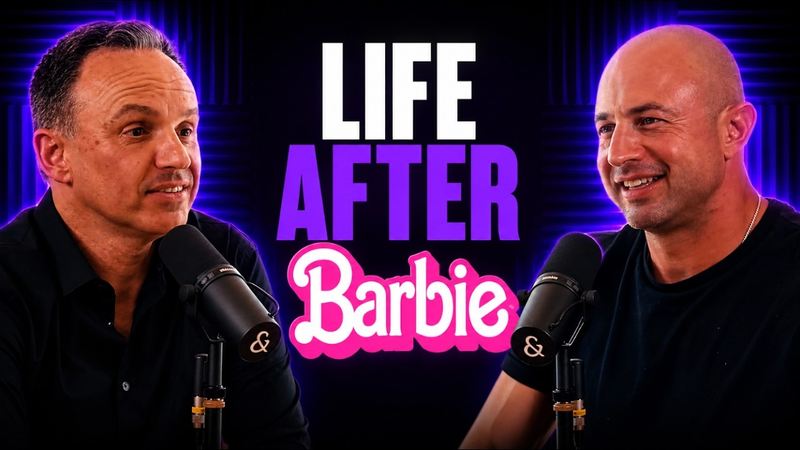
How to Pitch Mattel the Perfect Game with Marcus Liassides, Mattel Digital SVP
31 Aug 202641 min video
Transcript
Marcus, you're a global head of digital at a company that owns Barbie, Hot Wheels, Uno, Monster High, Street Sharks, Masters of Universe, and of course, Wackamal. What are you what are you doing at a gaming summit?
Well, uh, Mattel is heavily invested in gaming. We think it's the future of uh, of our brands. Um, we are taking a very franchise view to our brands. The Barbie movie was obviously an amazing expression of our IP in movie and and TV and uh gaming is an area that we're heavily investing in. So meeting with great studios here, studios that have uh amazing ideas and imagination for our brands. Um and you know figuring out the the gaming landscape between licensing, you know, our self-publishing business and and particular creative platforms, Roblox. Um you and I talked about that a little. uh excited to see Roblox getting its moment in the the sun here literally um and uh all the exciting things that people are seeing on the horizon. So,
we're very very excited about the digital gaming space uh excited about bringing Hot Wheels, Barbie, and definitely Whack-a-Old uh to the digital gaming space uh and just looking for wonderful partners to work with.
Yeah. What what um what excites you especially about Roblox?
Yeah. Um
cuz I'm just asking that because there's a lot of companies here in Roblox. It's just the smallest representative and yet you mentioned that as probably one of the most exciting for you.
One of the most exciting. I I think we're seeing um we're excited about creation around our IP. Um and in Roblox and I think it's a generational thing. When I see my kids playing on Roblox, they're not playing to beat someone. They're not playing to get to the next level. You know, a lot of self-expression, a lot of a lot of creation. And um we fully lean in and believe that the some of the best experiences on the platform are going to come from uh other people, other creators, not Mattel. And so uh we're leaning in heavily building our own experiences, but but more importantly
putting our IP in their hands, which is kind of, you know, gets people a little nervous, you know, some of the brand teams, but you know, putting our IP in their hands, imaging what they come up with. Um, you know, maybe the next uh game, the next card game, the next version of Uno can come from creators on a platform like Roblox. So, super exciting.
Oh, interesting. So, you're almost like outsourcing the creativity of what type of games can be made to the community.
Yeah, we put IP in their licensing program.
Um, the first time that we've ever done anything like it. Um, took a little time to get our brand teams there. They're excited now. Um, but yeah, we put IP in the the platform in the licensing program. Creators come and take that IP and express it in whichever way they they see fit. There are brand guides,
but we aren't approving every expression. We're not approving every asset. Uh, and so seeing what they come up with. So, super exciting. Um, and it's a whole generation that are now experiencing our IP in a way that they
haven't before.
Yeah. Because 50% of of we looked at the stats, 50% of kids in the US under 16
are playing Roblox, right?
Playing playing Roblox, creating on Roblox.
Um, you know, my younger kids, they're creating their own games now on on Roblox. So, completely different paradigm to kind of the mobile gaming space or the PC console space.
Um, and you know, one of the things that really hit me, someone showed me recently a game on uh Roblox called um Front Lines. I don't know if you've seen it.
Front Lines.
Yeah. The the
Call of Duty. Yeah. I mean, the the fidelity is incredible, you know, and the the studio creator behind that did an amazing job.
So, the Roblox can have that fidelity, yet a lot of the games aren't that. There's something there that the this younger audience,
it's not about visual fidelity always. It's about this. It's a game loop. It's about creation, self expression, social, you know, where they hang out. And and I think that's a little bit of a
um a paradox to what we're looking at here on mobile gaming and and PC console that I think we can learn from. And so we're trying to lean into that. Um it's
a journey. We don't have the the perfect formula yet, but we're taking swings and uh I think it's exciting.
You come from outside of gaming.
Yep.
Is it's probably easier for you to kind of look at all these platforms in a very objective way and look at Roblox like, "Yeah, let's put a bet on here."
A lot of the studios, you probably talked to a lot of studio heads here
who were very iffy towards Roblox and you're all in. What What did you hear? like why why are they not as big of a believer as you who head digital for Mattel?
I I think it it must be just an understanding gap because you know you can't question the numbers.
Yeah.
You can't question the
they do
they do I mean wow okay um I mean there's like hundreds of millions of kids playing on the platform all the time. I mean say revenue share is not there and this
sure you know you don't have any cost you don't have any you know certain like it's straight
you're preaching to the yeah um so yeah I I think there's an understanding gap um I think obviously you know you're talking about kids and when kids are you
know predominantly kids not just kids um but uh
30% under 16
under 16 yeah there's a higher bar um you know that we've always operated across our business in our toy business and and so you know child safety you know is something that's rooted in Mattel's DNA. And so there's that piece. There's the monetization question around how to monetize that audience. So I think a lot of unknowns, but you know, there's been a lot talked about this week that that Roblox is fueling that next wave of of gamers for all of us.
Next next wave of play.
Next wave of play. Yeah. Um which I think again is going to be very different than the wave of play we've we've seen in the past.
It was just like next wave of play. Like we don't even know what it's like. Just like mobile play and these games that we're playing on mobile are totally different than the generation before us who looked at us be like what is this? Yeah, totally. Al although even you know from you know early PC games console the dynamic is always to beat something to progress to another level this wave is very very different hang out you know when I my kids play Minecraft with me
how do we what do we where's the boss who do no it's not that dad you know well what
Jason momoa
yeah yeah it's just it's just creation and that's that's all it was and that's a very very different mindset than if you're building a mobile game where you you want progression you want level up you want achievement. Um,
so I think a lot of change is coming but it's it's exciting exciting to be an IP holder. Um,
you know, particularly in you know this world of and it kind of positive with AI.
Um, you know there's lots of people excited about lots of people scared about it. Um, you know we think IP is going to be even more important in in the AI world. um to help experiences they have to be good experiences like you know IP doesn't allow a bad experience to rise to the top
but a good experience a great experience matched with IP you know we think that that has real potential
and in the age of AI what do you mean by that you mean that if you have an IP that adds certain type of legit
legitimacy
discovery um discoverability again it has to be a great experience course you know slapping you know there's been if you go back to monopoly go. There's been many Monopoly games. Monopoly Go got the game right and the brand right, but if you get a great experience and the IP fits, I think it really can help you stand out from the crowd. Um, now
especially since the crowd is growing in size because it
creating is much easier.
Exactly. Exactly. And now I'm excited by that. I see my kids um using AI to prompt to create Roblox games. no one is playing their games yet. But the the confidence that I see that building in them. Um, as a father, I really embrace that. And so that's the positive side of AI. You know, on the other side, not not negative, but you're going to get a lot more games, a lot more experiences, a lot more copycats. And that's where I think AP IP can really help you.
Yeah. Separate from from the pack.
Yeah. Yeah.
Um, taking kind of step back, if if a if a studio wants to work with Mattel, what's the process actually look like
from your end?
Yeah. Um, so quite often inbound. We're trying to be more outbound. You know, quite often right now it's studios that come to us that have a game idea that that they need IP and we'll engage with them around that. They they have a vision already. Um, and great, we'd love to engage in in that. Um, you know, then we take it back to the brand teams. um our brand teams and and as Mattel holistically we're trying to be much more progressive. Um we still see studios that come to us that present what they think we want to see.
What we really want to see is that thing that we would never have seen like the Barbie movie moment, right? The Barbie movie was something different than people expected from Barbie.
That's what we're looking for in in gaming. Um and so go through the process, present to the the brand teams. Typically the brand teams go well this is and then get very excited about it. Um you know a little nervous at first and then well this really kind of um progresses our brand and and maintains
cultural relevance prog so present to the brand teams and then um quite quickly move forward through through contract and things. So it's a much more seamless process than it has been in the past. More and more we're actually coming to the market and saying Barbie has these games but it doesn't have this game. We see an audience fit. We see your white space. And so we're starting to bring game ideas to studios. Even then, we want that creative visionary that can take that spark of an idea and really really bring it to life.
Unless you've been living under a rock, you know this is web store rumbringer. 70% of top apps [music] are using a web store. And the best ones, they're doing it with app charge. Do you want a $20,000 inapp [music] purchase? Yeah, app charge does that. Do you want to pretend that subscriptions are still a viable monetization strategy [music] for games? Yeah. Apprecure even let you do that. They get what high [music] average revenue per paying customer means. And they're already doing over half a billion dollar in transactions a year.
So, are you going to be [music] the first to do a $20,000 AP? Don't accept microtransactions. Embrace macrotransactions. Learn more at appcharge.com. [music]
This episode is sponsored by my local. More than 2 billion daily active users, over 2.8 million independent apps globally. That's the reach Maloco ads unlock for performance marketers who don't want to stop at the usual bold gardens. It's all powered by KA Moo's compound [music] AI system, continuously learning from billions of events and getting smarter with every campaign. Hop over the world [music] garden. Check out malokco.com. That's m o l o.com.
What are the ideas that that the studios have to be building around? So, let's, you know, let's use Barbie as an example. There's plenty of Barbie games as a father of two girls. Uh, we have many of them. There's the dollhouse type of experience. There's the dress up type
of experiences. How how do you bring that idea to the market that can be grown into good pitches?
Yeah. Um, so a lot of those that you mentioned, you know, and Barbie will always stay rooted there is is with our core audience, our, you know, the kids audience,
you know, with the Barbie movie, it ignited a whole new audience of Barbie fans that are not the toy doll fans. You know, they're the Barbie brand fans.
And so, you know, quite often we have studios come to us pitching again what they think we want to see, which is a kids game. And and we do want to see kids games. Great. We also want to see how you can expand the audience of of uh of the IP of the brand. Barbie Match 3 maybe, you know, um but also, you know, more, you know, Barbie Match 3 is a great opportunity for the Barbie brandatch,
but you know, authentic like Barbie Sims or Barbie, you know, life sim or Barbie Township, something like that
that that broadens the audience. Um,
you know, that's taking a little bit more time to get naturally from studios.
So, we're going out to them and say, "Hey, what if we could do something in this in this space?" So, um, we're trying to be more progressive, you know, we're trying to take some swings. We're probably open to doing things that we wouldn't have done maybe a few years ago.
Like, give me an example.
Um, well, you know, on on the the Barbie side, again, the Barbie movie just changed everything, right? Yes, of course.
Um,
it it was it pushed the bounds of what we as a company felt comfortable with in a very good way. Like it made us think about Barbie in a in a made Barbie relevant.
It made Barbie relevant. Exactly. That you know now we think gaming can make it continue to make it relevant. You know what if again there was an experience a digital experience ready for that
reignited audience Barbie movie fan that allows them to now go and experience Barbie in a very immersive way
like He-Man now
like He-Man now you know. Um, and so we uh we just just last week actually released a bunch of games, you know, our first mobile game, a Skeletor game. Um,
but also skins in Fortnite. You can now go into Fortnite and get your He-Man skin and your Skeletor skin and we're super excited about that. Um, my 21-year-old I took to an event recently and there was a big He-Man statue and I'm like, "Ah, it's He-Man." And my dad, my son said, "He who?" I [laughter] mean, it it made me remember realize that there's a big
this blonde character that is partly dressed with an iron cross on like thongs.
Yeah. And I'm like, how can my 21-year-old son not know who He-Man is? I forgot that there was a generational gap.
But now the whole audience is getting engaged in it. They're seeing it in Fortnite running around. So, it's it's super fun.
It's true.
Yeah. He-Man is quite an experience if you don't know where that comes from. I I totally understand. It is a shocking looking character.
Shocking looking character. And then you've got Skeletor there and but you you get into it. It's it's pretty it's pretty fun.
Somebody was high making those characters [laughter] in the 80s.
It's it's it's fun and it's fun to it's fun to see another generation start to experience it.
Oh. Um what are the some of the common mistakes that studio studios make when
they're pitching to Mattel? You said one is pitching what
they think they want to see.
What what they think what is the
Yeah. Um and and and you know slightly related to that is is not knowing the audience that they're they're they're going for because we have each brand has very different audiences. We've talked about Barbie, but Hot Wheels um which is an amazing brand, you know, continues to grow. I think it's in its eighth consecutive year of growth. I think now the biggest toy toy brand on the planet. Um you know, we have you know, young kids that play with cars to put dead dents in the the walls. You always know a Hot Wheels house that has dents along the wall from launching it,
but then we have a huge collector base that are, you know, adult collectors, you know, avid fans of the brand.
Um, and so quite often we'll see a racing pitch that doesn't know whether it's, you know, aimed at an adult audience, aimed at a kid audience. Um, you know, we be much more specific, much more intentional about the audiences
that we're trying to to talk to. And it's not always kids. Uh and so that's often um you know often the the the kind of the the pitfall that people fall and also you know we joked around Barbie match three you know I think that's a you know a great opportunity um you know pitches that just slap the the brand onto an existing game without any thought as to what makes it
truly original to that brand. You know we see that a lot and it doesn't mean that we wouldn't progress some of that but we want people thinking outside the box. You know we want people pushing the bounds a little bit and making us feel uncomfortable. you know, we we invite that that now, you know, if someone's making us feel uncomfortable, it's probably that there's some cultural relevance opportunity there that that we're really playing into the audience
and what what so that basically makes the pitch unforgettable when it makes you feel uncomfortable but in the right way.
In the right way and um being a little fickle as well, you know, polish is important. So when someone brings it to life their vision and it does make us
pause and like oh
actually that's a good thing you know um we see it it's polished it's brought to life you know it's not someone you think maybe we could do this this and this got real vision you know when someone takes the time to invest in the brand up front in a pitch you know it means something uh and so you know those are all them always the memorable pitches.
Got it. So so and that means that they have to be truly excited about the IP. Yeah, totally. You we want people to be passionate. You know, again, the Barbie movie I talked about a lot. You know, Greta, you know, she was very very invested in the she had a vision and, you know, she could see it. You know, even if others maybe on the the brand weren't there yet, she could see it. We're looking for that in the gaming space. We want people that are passionate about the brand.
They want we want them to push us. You know, when we say, "Oh, I'm not sure about that." We want them to push back and say, "No, this is why
this audience wants this experience." Like if I'd be pitching Street Sharks, I'd bring in photos of me with Street Shark, the Jack Shark figures and kind of talking about the lore and and what I
think that could translate in the current audience and which platforms and what why do I feel like it's going to connect with the people because I love the IP and this is how I would share my love with the people who have never heard about it.
Exactly. And the best games, the best games, the best best content is made by people that are passionate about that IP, about that format, that muscular sharks.
About muscular sharks. There should there should be a great game there. [laughter]
Yeah, they are pretty crazy looking.
I mean, you're you're pretty busy, but maybe on the side you can create.
Maybe maybe I'll come up with a Roblox game with Street Sharks.
We should do it.
Okay. Um, yeah, [laughter] I want to different things. So, what can we talked about? what can what type of a pitch a developer should do to Mattel, but what is a developer getting from Mattel other than the IP that is recognizable?
Yeah. Um, a very very good question. I think a lot a lot of work that we've done over the last couple of years is trying to not just be a IP license and a
and an IP partner. You know, we want to be a partner to our partners. Um, we want to support in a world and you've talked about it a lot around UA getting more expensive particularly in in mobile. Um, you know, we want to really lean in and give them an advantage with our IP. So, you know, leveraging our own and operated channels um supporting um you know, we we have games that that that uh now our own game but in the past was uh Uno Mobile, a joint venture with uh with Netis with Mattel 163. we had a QR code on the box on every every Uno set sold, you know, to drive people to uh to download the game. And so we're we're we're leaning into that more and more. Um we also understand, and you know, you had a question in in kind of the prep material that it doesn't always land first time. Um sometimes there's pivots, sometimes there's changes, sometimes the game needs a little bit more time. Um you it's sometimes as the license or you know you just license out
the IP and if it doesn't work okay next you know we don't want to be that. Um we know that successes sometimes come the second time or the third time particularly with a team that's passionate about the IP. So we want to be a true partner. Um yeah
and what are the contracts like? Are we talking about minimum guarantees? Are we talking about revenue share? How how is that contract set up? I mean we can be very very flexible and each opportunity is different you know kind of platform you know ambition team um quite often they include MGS you know sometimes they don't um you know quite often is a royalty sometimes we're contributing development funds if it's something that we believe in uh so you no cookie cutter you know we're very very flexible you know we really want to meet our fans where they are and uh sometimes an economic model might get in the way of a great experience that our fans, you know, would really really love and we we don't want to we don't want to put that blocker on it. So, we can be very very
flexible. So, very much depends probably on the IP. So, some IPs are more
Yeah, sure.
premium than others. I would imagine Hot Wheels and and Street Charts are in different categories.
You'd be surprised, but Yeah. [laughter]
Yeah. Um and then Barbie of course uh on in in the league of her own
and the genre and then the genre and then the platform. Look, if it's Barbie and it's match three and it's with a top, okay, there's going to be some economics there that respect that opportunity. Um, if it's, you know, a creative mind that's come to us with, you know, Barbie in a completely adjacent genre, they've just got this perfect narrative on it, then we're probably going to take a very different view to try and embrace that opportunity and and help it come to life.
Interesting. So basically if you have a very very recogniz remarkable pitch Yeah.
then that leads into conversation with you uh with the IP holder to figure out what the right deal is for this type of a game.
Yeah. Absolutely. And again, you know, something we've done more recently is in several games we've offered development funding to help it get there. Now it's still the studios game. You know, they're still the publisher if that's you know
skin in the game. But, you know, we'll help it get there. Um, you know, we really do believe in gaming. We believe that gaming is, uh, you know, a very, very important way of reaching our audience and having a a two-way dialogue with them. You know, and our physical toy business, you know, we sell through retailers. The retailer often has the the consumer relationship. In gaming, you know, we have that first party relationship. And so, we are very very open to supporting our partners.
So, why is reaching audiences through games for you important? Is it to generate sales? Is it to for for that digital experience for your company? Is it to generate sales for your toying lines? Like what is the ultimate focus here?
Yeah, ultimate focus is built is continuing to build fandom and ensure that our brands maintain cultural
relevance. You know, some of our brands have, you know, 65 years old and Mattel just celebrated 80th anniversary last year. Wow. Um the only way brands last that long is continual reinvention and um digital play you know from kids all the way through is a very very part of very important part of a fans experience with the brand and so we want to be there uh you know if if there isn't the Barbie experience if there isn't the motor experience if there isn't the street shots experience then that fan will go and play with something else and that will be you know could be a competitive brand could be a different brand it's just not our web brand and so it's very very important that we meet them where they are and it that's why creative platforms Roblox is is important as well. We could just say it's just about mobile. It's just PC console.
The biggest part of our audience are creating on Roblox. You know, it's not even possible for us to ignore it. Um we want to meet them where they are.
And so when you're when Roblox again kind of going back to that there for
sure monetization is not the focus, it's the reach. reach, you know, we we o over time, you know, we believe if you have an engaging experience, um so we recently acquired um the Barbie Dreamhouse Tycoon game on on Roblox. It was initially developed by GameFam, a partner of ours who did an amazing job with it.
Um has over 550 million plays on Roblox, still, you know, a top branded um platform. you know, we where there's engagement over time, you know, there's opportunities to to develop that relationship and potentially monetize it, not necessarily on platform. You know, we have research to show that engagement on Roblox does lift toy sales, you know, off platform in in through retail.
And so, again, we're taking the long playing the long game
as you should for an 80-year-old company.
Yeah. And uh and uh it's exciting, you know, there's it's a lot to play for. uh from developer perspective there's a lot of perception that working with an IP
holder especially as big as Mattel that it could be slow the bureaucracy is there there's an approval process what's it what's it really like I'm sure your UI team is good the question is whether the data feeding their decisions is keeping up with them pathmatics from sensor tower will give [music] them what your internal dashboards can't historical spend across every major platform competitor creative rollouts share of voice trends and seasonal patterns you'd never spot otherwise. [music] It's the difference between playing with fog of war and having the whole map revealed. Pathmatics from [music] Sensor Tower because you want your UA team to be OP in sickness and in health in soft launch and in live ops through every meta shift and every platform policy change. That's the kind of loyalty vibes built between your game and your players. AI powered
targeting, a [music] real metal layer rorowass optimization that actually compounds. That's what makes Vibes the fastest growing loyalty platform in mobile games. Till churn do us a part. Vibes vybs.co.
Yeah. Yeah. And there's some there's some reality to to some of that. Um, I'd like to think that more of that reality is in the past than than the future. We we have worked hard to streamline that. Um, you know, the positive negative of brand approvals is it's quite often because of those approvals that a a brand and IP has lasted 65 years. Um, and so there's an element where we're protecting all of our partners, you know, by by managing the brand. That said, uh we are putting more and more trust into our partners to not have just post approvals to upfront set some guard
rails and set some expectations and say look go and create within that. And again, the Roblox licensing program is exactly that. You know, they can take our IP.
It guides the things you can and can't do
and then we let them
have create full creative expression and they can go and publish the game without us ever approving it uh up front. That's progression, I think. Um, and and we're trying to operate that across all of our partners, across all platforms. So, there is definitely a process. I'm not going to, you know, lie about that. And that process, I think, safeguards and protects all of us.
That said, we want to lean into wonderful creative minds and to do things that that we wouldn't have done ourselves.
Talking about mobile now, so the process that you know, this is what I'm most familiar with on mobile. The challenges has been when working with big IPs uh that you have to go through that same approval process not only throughout the development but in live services and what happens is is especially your
creative production gets hamstrung y as well as your monetization. So sometimes the IP holder doesn't want too strict of a monetization sometimes they would say no ad monetization which again uh could be challenging these type of games. What's your perception of this? Yeah, I mean we've heard all of those things and again I hope that going forward we're um more streamlined than than maybe we've been in the past. Um you know the the frustration that we've heard from some of our partners on the mobile space isn't just about the game development as you say and isn't just about live ops but in UA you mean the amount of creative that you have to have to
crazy volumes
crazy volumes and how the reaction that you have to have. Um and so we we are putting um better processes in place to allow our partners to respond to that. But what that's doing is setting up front like you know you've seen trends in mobile UA where you know the girl in the corner is cowering.
You know we don't want Barbie to be that you know you know Barbie is about you know self empowerment power. Um
you know Barbie can express herself in
different ways than needing to be saved. And so we set guard rails up front and say we're comfortable with these types of UA ads. we're not so comfortable with these types. And then more and more allowing the studio to respond in real time.
Now they could launch an ad. We will have an ability to see it once it's live. If after we see it and it's live, there's something there. Then we'll ask them to adjust it. But uh in the past, everything had to be approved before it can go live. We we're we're changing that.
So now at least you see the metrics of the ad. And
we see the metrics like we can actually even see the creative after it's running. Yeah.
But we allow them to our partners to create the creative, put it out there, see the data, and then have a post check versus putting it into a a stream where we have to approve it cuz there's there could be a thousand different creative for, you know, a great mobile game.
Yeah. Yeah. Yeah. We just got to approve all that.
The amount of creatives is just growing so fast. But at the same time,
you do give the recognizable IP. Mhm.
So it comes from with with restrictions, but
it comes with it comes with um
but benefits
guardrails and and again the gu the benefits come from the fact that we've put guardrails in place
to continually protect that brand.
Exactly.
And to and to grow it. But we recognize that um especially in mobile, especially in the speed that people have to do business, you know, we have to continue to evolve too.
Yeah. And one thing about exclusivity that has been challenged in my experience.
One thing about the the IP is exclusivity and that has [clears throat] been a challenge when working with IPs. What I mean by that is let's say I'm I'm working on a Barbie game and unknowing to me there's another Barbie game being worked on. Maybe it's a towards a different genre or it has a different you know in your opinion it could be different audience but the way I'm seeing it it's very similar and coming pretty much in the same time. So how do you think about exclusivities? Yeah, I mean there are some types sometimes we
put strong exclusivity in. Yeah.
Um
we will always put windowing in and so even if we you know we haven't been able to put exclusivity on or we think there's a good reason not to have exclusivity, we'll always protect our partners' investment by putting windows in place so that that you're you're not launching the Barbie game right on top of even if it's not the same game or genre. They both take life out of each other. I mean there's a theory to say that you know all boats rise but uh you know we we we put windows in. We want our partners to be successful. Like if if they aren't successful, cliche, then then we're not going to be successful. We want them to push us. We want them to be ambitious.
You know, we want them to feel like we're a real partner. We'll put skin in the game. Um which is again new. Um but uh you know hopefully you know when we look back we have this conversation in a year or two you know partners studios are feeling like we're really there with them.
How many partners do you have currently and how many partners do you want to have in in a year let's say? Yeah, I mean I we have I would guess um north of 50 60 you know games um
that are either in development or in live service right now you know more historically um but I would say that there's more that studios could do to push us like you know there's probably I would say and I don't mean this negatively on the others but probably five that really push us to do something bigger different than we've ever done before. And so that's been the invite here is, you know, push us like let's do something special together.
Be creative.
Yeah. Be creative. Yeah. Let's go and create the Barbie moment, the Barbie movie moment
in digital, you know, whatever the platform.
Yeah.
Damn. And um you recently acquired Mattel 163, which is the joint venture that you had with Net Ease.
Uh what's the reasoning behind that joint venture uh that publishing arm and like where is it heading?
Yeah. Yeah. So alongside our self- our licensing business, you know, we are investing more in a a publishing group.
Um we want to be able to have that first party relationship uh around um certain games and certain opportunities. Mattel 163 is a joint venture that we formed with Netis about 8 years ago. Um, and you know, a really strong CEO there, an amazing team, and they've managed to scale three live service games, um, to north of $200 million, um, 550 million downloads, 20 million monthly active users around predominantly three games, uh, Uno, Phase 10, and Skipbo. And so, you know, what better studio than to progress all of our life service data capabilities than a studio that carries our name and is developing games around our IP. And so, we closed that deal uh in March. Uh, Netis have been an amazing partner, fantastic partner.
Uh, and now it's the next stage of the journey of Mattel 160, bringing them close to our brands, supporting them even more, and and continuing to build on that foundation for more games to come. So that studio was primarily publishing card games, right?
Card games, casual card games. Yeah.
For mobile.
For mobile.
How do how do you move that studio to service the 50 to 60 partners? Yeah. That are on different platforms as well.
Well, so so that studio um will run alongside our licensed business. And so um you know there will be some games, some opportunities where we say, okay, instead of licensing this particular game, you know, let's go and build that out ourselves and we'll publish that ourselves and develop it ourselves. Barbie poker, you know,
makes you feel uncomfortable.
It does make me feel uncomfortable. Um, but yeah, so, you know, trying to trying to expand that business, build on that foundation. You know, the thing that that
that that team has done amazingly well and and kind of a real light bulb moment for us is the biggest game, Uno is the biggest card game on the planet, right?
The biggest game for them was phase 10,
bigger than Uno. Um, because the phase 10 mechanic just really worked in in in mobile games. And so that made us realize that whilst often we're focused on Barbie, Hot Wheels, Uno, maybe it is Street Sharks, you know, that has that
big idea, that big opportunity, you know, it's a bit again kind of cliche, but like we have a big toy box. We have 800 brands, you know, some of them that that are live and in market and some of them that haven't been live for many, many years. Like what is it that we can do with that portfolio, that toy box to bring some of them to life?
Yeah. But feel still feels like the the self-publishing is focused on very specific type of games.
It's it's focused on mobile casual freeto play. Um
which is what Mattel 163 has done very very well. Uh I think we'll probably be able to board outside of just card to broader casual puzzle. Um
but it gives us that that that platform. Uh gives us first party relationships
progresses the narrative.
Seven [snorts] years that's not a sponsorship. That's a marriage. And that's exactly how long we've been partnering with AppSlider. [music] And the reason it has lasted is simple. Every growth team I talk to on this podcast, every operator who comes and [music] breaks down what is actually
working for them, eventually the conversation lands on measurement. And in gaming, we refer to reliable measurement with a single word, [music] absoric Labs, we know that great gameplay is what players love. But integrating metagame features like challenges, progression, and rewards is crucial for retention and monetization. But coding them is a tedious and timeconuming process. That's [music] why top studios have turned to Hero from Heroic Clouds. Hero provides a complete suite of battle tested metagame features that are quick to implement, letting you spend more time on the core gameplay experience. Ready to ship fully featured, engaging games? Check out Hero today at heroiclabs.com. [music] Yeah, an ability to publish even probably games that are develop developed by others.
We can support help support um so with 20 million monthly active users, you know, there's a foundation there. If a partner game um you know it makes sense to help boost them or you know launch
launch marketing or co-promotion, we now have a you know a platform to help do that.
Is there a chance of like let's say somebody does Barbie poker and it does surprisingly well, you're absolutely surprised. Would you acquire that asset or that team and put it part to be a part of like Mattel 163 for just a crazy scenario basically like acquiring teams or
No no I'm not sure Barbie poker is the one um but yeah I mean we we continue to be very acquisitive you focus on M&A we're having discussions all the time um I think it's maturity of the business that we've accepted that not all the great ideas are going to come from Mattel how could they um we want people thinking our IP and if there's a great opportunity and it makes sense then yeah we can explore bringing that into the Mattel family.
Marcus I want to end on this is like what does success look like for Mattel digital in two to three years from now? Yeah.
Like what what's your vision?
Yeah I mean clearly internally we have you know financial goals. Um but we are
playing the long game here. Uh we want as I mentioned earlier we want to have experiences that meet our fans where they are. Um and so in in two or three years, you know, if we've got two or three games out there, you know, first party games, if we've supported some of these big um or not big, more ambitious um games around our IP with partners, and we're continuing to build knowledge, capability. Uh you know, I think we'd be in a good way. I'd love to come here in two years time and everyone be okay, I get Roblox now. I get Fortnite. I get why we need to be there because I do think that is the wave that's coming. Um, and we haven't figured it out yet. And I think as an industry, we need to figure it out. Um, but yeah, I mean, I I think moving moving the business forward, getting more knowledge, uh, more understanding, and hopefully along the way there's a hip, you know. Um, it would be great for Mattel to have the our Monopoly go moment.
Uh, and I believe we have the IP wizard of the coast moment.
Wizard of the Coast moment. Um, I
believe we have the IP there to to be able to do that. What's the best way for developers to reach out to Mattel like to move forward from here? They listen to this, they go to Mattel's page, they see the 800 brands that you have, the 800 IPs. What's the what's the best step from there?
Yeah, we have a uh digital gaming b business development team. We're all conferences, GDC, Gamescom, you know, we're we're there um actually at Gamescom, you know, we have a a Mattel stand, Mattel booth, which we've not done before at that event. Um, you know, reach out. Uh, come and find us, you know, come to the stand. Um,
pitch the uncomfortable.
Pitch the uncomfortable,
but audience fitting pitch.
Exactly. Polish. Bring it to life. Um, you know, we're we're super excited to see what people can come up with.
Amazing. Likewise.
Great.
Thank you, Marcus.
Thank you.
You did it. You made it to the end of the episode. As a fan of the show, it would help us out if you'd subscribe and [music] leave us a review on the podcast service of your choice. Those stars and
likes while a small action on your part mean a lot to us and help to grow the show. More importantly, are you a member of the Deconstructor of Fun Slack group? If you have 5 years or more of games industry experience, go to deconstructorofund.com/slack and apply to [music] join. Join the games industry best professional community filled with peers always willing to lend a hand [music] or subscribe to our newsletter to get all the latest insights from the Deconstructor of Fun content [music] creators. Thanks for listening. You did [music] it. You made it to the end of the episode. As a fan of the show, it would help us out if you'd subscribe and leave us a review on the podcast service of your choice. Those stars and likes while in small action on your part mean a lot to us and help to grow the show. More importantly, are you a member of the Deconstructor of Fun Slack group? If you have 5 years or more of games industry experience, go to deconstructorofund.com/slack
and apply to join. Join the games industry best professional community filled with peers always [music] willing to lend a hand or subscribe to our newsletter to get all the latest insights [music] from the deconstructor of fun content creators. Thanks for listening.
Auto-generated captions from YouTube — names and numbers may be misheard.














Comments