VideoPocketGamer.biz
Session: From Code To Continent: Distribution Strategies & Partnerships For Scaling H5 Games......
17 Aug 202615 min video
Transcript
[music] [music]
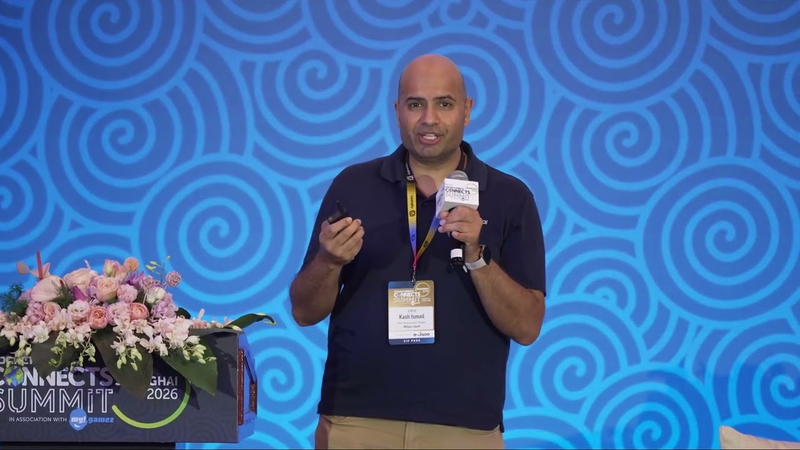
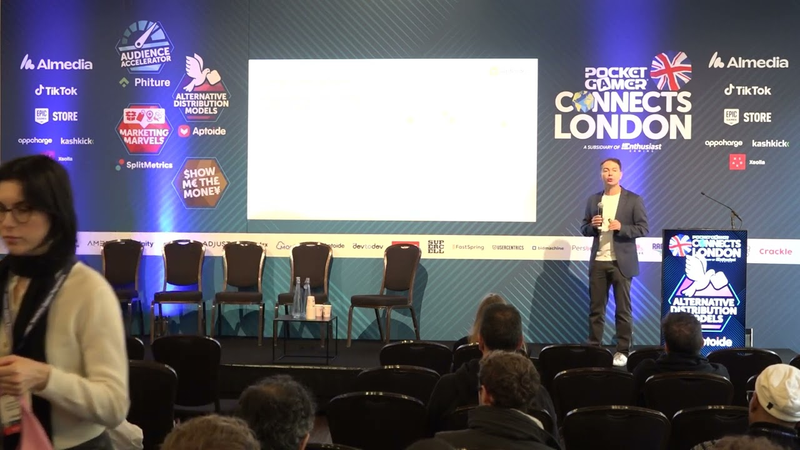
Please welcome Chibike Goodman from Dot Chasers to the stage. His talk takes us beyond the usual markets into Africa and other emerging regions. The topic is from code to continent, distribution strategies and partnerships for scaling H5 games across Africa and emerging markets.
Thank you everyone for for joining. My name is Chibike and I'm the founder and chief executive officer of Dot Chasers. It is an ad ecosystem that supports game distribution, monetization across
emerging markets. So today we'll be looking at code to continent, how distribution strategies that helps scale games outside of China. I can see the numbers in China are very intimidating, very very intimidating. But um how many people have distributed games outside of China? You see China is a very big market, the next market. Also judging from the last speaker is the the West, the US and all that. But there is a fantastic opportunity in emerging markets, especially Africa, where you have fast growing internet users, fast growing audience and people that are actively hopping on games. As a background, we have a full ecosystem that includes a DSP for direct advertisers to work on games. We also
have game distribution platforms that helps uh game developers to reach new markets. But I ask, how many people here have distributed games in Africa? Anyone has strong distribution of games in Africa? I see not a lot. That means there's a huge opportunity for you to explore new markets and new people. Now, the game here is that Asia is quite undisputed number one in the market, but outside Asia, there's a whole lot of people that are outstanding there. You have an average people of age 19 and most of them have quite early stage to to phones or quite early access to to gaming industries. So, you have people who are going to be with you for a very long time. They're also very
conscious about data. They're also conscious about the kind of games they use. You will see that most people don't want to install so many apps on their game on their phones, but they want to have a single source that will give them access to so many games to play with and that is where we come in. Now, you're looking at three markets in one moment. You're looking at all the parts of Asia that are out of China. You're looking at Africa, which is next frontier of over 1.3 billion people. That's almost That's almost the population of China as well. Then you're looking at some parts in Latin America as well. Now, why do the traditional playbooks fail there? It is because uh just as China is a different market, Africa is also a different play. Uh
Africa is quite dynamic in terms of the approach. You saw in terms of the uh app store. So, uh you have a problem with app store where people are not uh so keen to have so many apps on their phones. So, there's a problem with that. There's also a problem with uh user acquisition uh because if you want to have everybody to install your game or to anytime they want to play, it becomes a problem because uh these people have limitations on the number of apps they will have on their phones. And so, you need to be very mindful of that. And then, there's a cold start problem. Uh people work mostly in communities and interactions have to be based on recommendations. And that, then there's a People always make assumptions to localize, but those assumptions don't always work in this market.
Now, what works? If what works in other markets don't work in these markets, then first thing that works is you need to partner with uh something that give you access to highly engaged players. And then, a player base that is undisputed. Uh I was talking with someone here and I told him that uh if you want to enter this market and you're expecting them to install and play the games every now and then, it will be difficult. But, when you throw your game into an already existing community of people, and then you have your game on top of people that you don't necessarily need to spend money on acquisition, but you spend money on recommendations. And those recommendations drive playability. Those recommendations also drive um incremental engagement in those games and revenue. Then you look at destinations, not necessarily individuals. Uh because uh
you look at um the people distribute games with links, and then they don't want to make downloads and actions are taken based on communities. Then there's the social dis- discovery where people uh play games that they saw their mates playing or they saw their mates share it on on WhatsApp. So, one by one reach inside an already active audience is a critical thing to achieve growth in this market. Other strategies that uh work including uh players don't have loyalty to individual titles. They just return to destinations that always have something great. So, um there are really no lion brand or dominating brand, but there are basically engagement. They are basically fun. So, people want to play one game, and after that they can easily switch to
another game without having to uninstall or without having to install new apps. So, uh the the thing about switching from one game to the other is the key, and there has to be that ease from which uh users can move from one game to the other without having to do that. Now, that comes with a lot of things, uh a lot of uh things when it comes to monetization. Now, uh in this market, people are not keen about their spending money on games. So, the best way to generate revenue is usually via monetization. And uh you can monetize with video uh rewarded videos, which is globally acceptable ways. And then you can also monetize with native in-game ads. An interesting thing about this market is that people rather spend their time or wait for a video to play than to spend money
to buy things inside the games. So it's always strategic. A game that used to be a premium game in North America or China probably have to look at doing it premium in Africa or in other markets because people rather watch advertising than to pay for those games. So a key monetization there is basically advertising and major types of doing that is through the rewarded ads, interstitials, and in-banner. Now interstitial is really important because in other markets people care about disruptions, people care about people care about what users feel, but when people when people in this market know that you need to have an interstitial to play in order for them to activate the next freebies on the game, they'd rather wait for those interstitials to play than to
ease them out. So it's it's always a critical. So user experience can be compromised for benefit when you are approaching this market. And that's really an interesting part of it. And we built a monetization infrastructure that works across the markets. So a a key thing is that game developers or distribution will be wondering where the advertisers going to come from, but in this market we've already built a very strong monetization stack that comes from both direct advertisers, um, agencies, SSPs, and also, uh, s- top of the, uh, big five when it comes to ad buyers across the globe. So, we're talking about the Google AdX. Um, we still have, uh, fantastic fantastic partnership with, uh, Google
as MCM partner, so which means, uh, those who are monetizing we have a first, uh, monetization or ads being bought from Google, and then other direct advertisers for premium, uh, for premium buying. Now, what does this mean for, uh, developer? Uh, typically, um, it's not a market that you just stay in Asia and probably deploy and expect that it's going to grow. It's a market that requires very strategic operation for you to enter. And so, typically, we allow, uh, people to submit their games where we look at the monetization stack. We also look at how the ads are going to appear there. There is a single API integration that helps for in-game activities, in- in-game banners. And then, one day, uh, you just trade into a community of over a million daily active users and daily players. And a million
is quite an understatement because the community is quite green. If you look at it with uh, what's happening in China, it's, uh, pretty small, but, uh, that million daily active users is going to grow into billions because, uh, we already have a fast-growing Africa is about the fastest-growing population globally. So, you have people who are using mobile phones as their first access to internet. So, there's a very fast way or or the growth there is pretty faster than other regions. Then you have a full programmatic monetizations, which I just talked about, which include rewarded ads and interstitials. And then payment is quite straightforward. Now, if you look at this in comparison with what's happening in other markets, you realize that Southeast Asia is already a matured market, quite closed. Middle East is also a
matured market, but Africa and Latin America and other parts have very good opportunity for growth of gaming and then monetization and gamers who are going to stay. An interesting part about this is you you're going to have an audience of gamers who are going to stay for a long time, who are going to become quite disciples because uh there's a thing about people. When they have loved a game and played it, they keep recommending it to others. So, you could, without driving installations, without driving acquisition, be at the top of be at the top of this class when you do a proper thing around that. Now, things take back uh to the studio. Now, you don't need to you don't need to build from scratch, especially when it comes to distribution, because we've already built an environment that enables
distribution to fast-moving audience and an audience that is ever ready to get on top. But the key job will be around building games that have lovability, building games that are likable, building games that can be monetized easily. And H5 is a dominant uh is a dominant method here uh because H5 enables people to, you know, uh move around and move from one game to the other without having to install and uninstall. And an interesting part of it is that most of these things are done on mobile phones like low-end and mid-range model mobile phones. And then traditional distribution doesn't work here. Uh what works here is community distribution, which is what we've been able to build. And then the window is is open for game developers here who are exploring new market. And it's really interesting
for for you to take first mover advantage of this. I'll close by saying this, you wrote the code we will handle the continent. It is a continent that understands its own have its own dynamics, and you have opportunity to reach ever ready players who are going to become long-term users for your games. Thank you very much. You have my contact, and if you want to reach out, I'm always available.
[music]
Auto-generated captions from YouTube — names and numbers may be misheard.
Key insights
6 takeaways · ~2 min read- 01Africa represents a high-growth frontier with a population of over 1.3 billion, characterized by a young demographic (average age 19) that relies on mobile devices as their primary internet access point.
- 02H5 gaming is the dominant distribution model in emerging markets because it bypasses the need for app store installations, which is critical for users with limited device storage and data constraints.
- 03Traditional user acquisition playbooks fail in Africa; success relies on community-based distribution and social discovery, where games gain traction through peer-to-peer recommendations on platforms like WhatsApp rather than individual app downloads.
- 04Monetization in these regions is most effective through an ad-supported model—specifically rewarded ads, interstitials, and in-banner ads—rather than premium pricing, as users are willing to engage with ads to access free content.
- 05Players in emerging markets demonstrate low loyalty to individual titles, preferring 'destinations' or platforms that offer a variety of games they can switch between easily.
- 06Dochase provides a monetization infrastructure that integrates with global ad buyers, including Google AdX, to allow developers to deploy games into existing communities of over one million daily active users.
Ask AI about this video
Cite this video
Citation
Generating citation…

















Comments