Game Development reports and market data
Documents
chludens.ch: Developing an Interactive Archive for Swiss Vintage Games and Its Community
The CH LUDENS project details the development of a digital web archive for Swiss vintage games and their community, aiming to preserve and make accessible a historically overlooked yet significant game development scene.
- The chludens.ch project is a digital web archive for Swiss vintage games and their community, developed at the Zurich University of the Arts to preserve a largely overlooked pre-Internet game development scene.
- The archive adopts a 'archiving the game without the game' approach, focusing on contextual materials such as interviews, gameplay videos, metadata, and historical documents rather than collecting software or source code.
- A flexible wiki structure with a filter system, clear categorizations, and systematic file naming was found necessary to integrate heterogeneous data types and map relationships between people, games, and institutions.
Fair Play Perspectives: Bridging Research, Design, and Industry
This research initiative explores strategies to diversify the game industry and game content, focusing on the perspectives of feminist game design researchers, game designers, and industry stakeholders.
- The paper reports preliminary, exploratory qualitative findings from the first phase of an action research initiative on diversity, equity, and inclusion in games, presented at DiGRA 2025, drawing on discussion rather than a large-scale survey.
- The study's primary focus is the Nordic games industry, particularly Sweden, and its sample is geographically and numerically limited, so the authors expect insights to inform broader international conversations rather than generalize directly.
- Research cited in the paper documents sexist, stereotypical, and narrow identity representation in games, along with barriers such as limited job access and toxic work environments for women, and the authors argue industry progress remains slow.
Creating Video Games in Barcelona: Production Field and Belonging
The document explores the video game production field in Barcelona, focusing on the concept of belonging among creators, particularly within independent studios with significant female participation.
- The paper uses Pierre Bourdieu's concept of the field, extending Brendan Keogh's call to look beyond the 'industry' toward a broader field of production, to study video game creation in Barcelona.
- The field is undergoing informalization that admits creators with non-traditional backgrounds, such as a nurse, a travel agency owner, and a computer technician in the core team of the Frog Studio case, but this openness produces uncertainty.
- Members of Frog Studio, an indie team that took part in a Barcelona incubator from May to October 2024, described feeling on the periphery of development, with one participant frustrated by the masculinized culture of hegemonic production.

Trajectories of Professionalization as Game Developer in 2000s Brazil: Stories from Tectoy Digital/Zeebo Interactive Studios/Tectoy Studios
This document examines the professionalization trajectories of game developers in Brazil during the 2000s, focusing on the experiences of workers from Tectoy Digital, Zeebo Interactive Studios, and Tectoy Studios.
- The study examines three defunct mid-sized Brazilian studios, Tectoy Digital, Tectoy Studios, and Zeebo Interactive Studios, all linked to Tectoy, a 1990s and 2000s local partner of SEGA.
- Precarious and volatile professional conditions in 2000s Brazil tended to produce versatile, generalist developers who specialized only later in their careers.
- The research challenges the assumption that game-development innovation flows one way from the Global North to the Global South, arguing that Brazilian production practices produced distinct knowledge and skills.
Communicative Artificial Intelligence for Nonplayer Characters in Digital Games: Mapping the Field
This document maps the current state of communicative artificial intelligence (AI) for non-player characters (NPCs) in digital games, arguing for increased critical and theoretical research in this emerging field.
- The paper's central thesis is that LLM-driven NPC dialogue may fundamentally change how players communicate with gameworlds, so it deserves scrutiny through established frameworks like the philosophy of fiction rather than being treated as a detached technology.
- Drawing on Hepp et al.'s definition of communicative AI (automation for communication, embeddedness in digital infrastructures, entanglement with human practices) and Barad's concept of entanglement, the author argues such systems cannot be understood apart from the human communication data used to train them.
- The analysis centers on Van de Mosselaer and Gualeni's 'implied designer' concept, warning that AI-generated dialogue could erode players' sense of intentionality and make a gameworld feel less alive.

After All, Caesar Never Was a Quitter: Struggling with the Past in Early Game Design
This study examines the foundational design principles of early digital historical games, with a particular focus on Chris Crawford's "Legionnaire" (1982) and "Caesar."
- The authors argue that playable histories emerge from an ongoing negotiation between the past and present-day concerns, including technological constraints and designers' own priorities.
- Their case study, Chris Crawford's 1982 strategy game Legionnaire, draws heavily on Julius Caesar's De Bello Gallico, with the manual's portrayals of figures like Sabinus and peoples like the Aedui and Helvetii informed by Caesar's accounts.
- The relative strengths of in-game units mirror the historical characterizations found in Caesar's writings, showing how classical narratives were translated into mechanics.
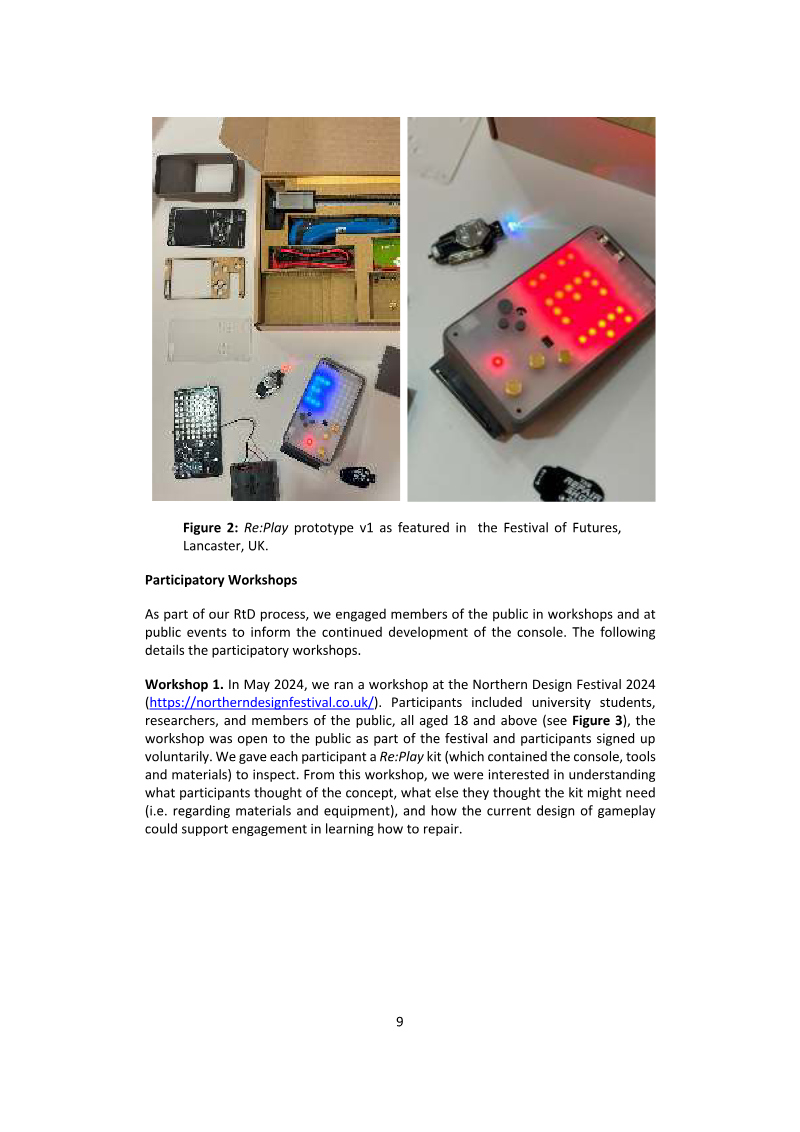
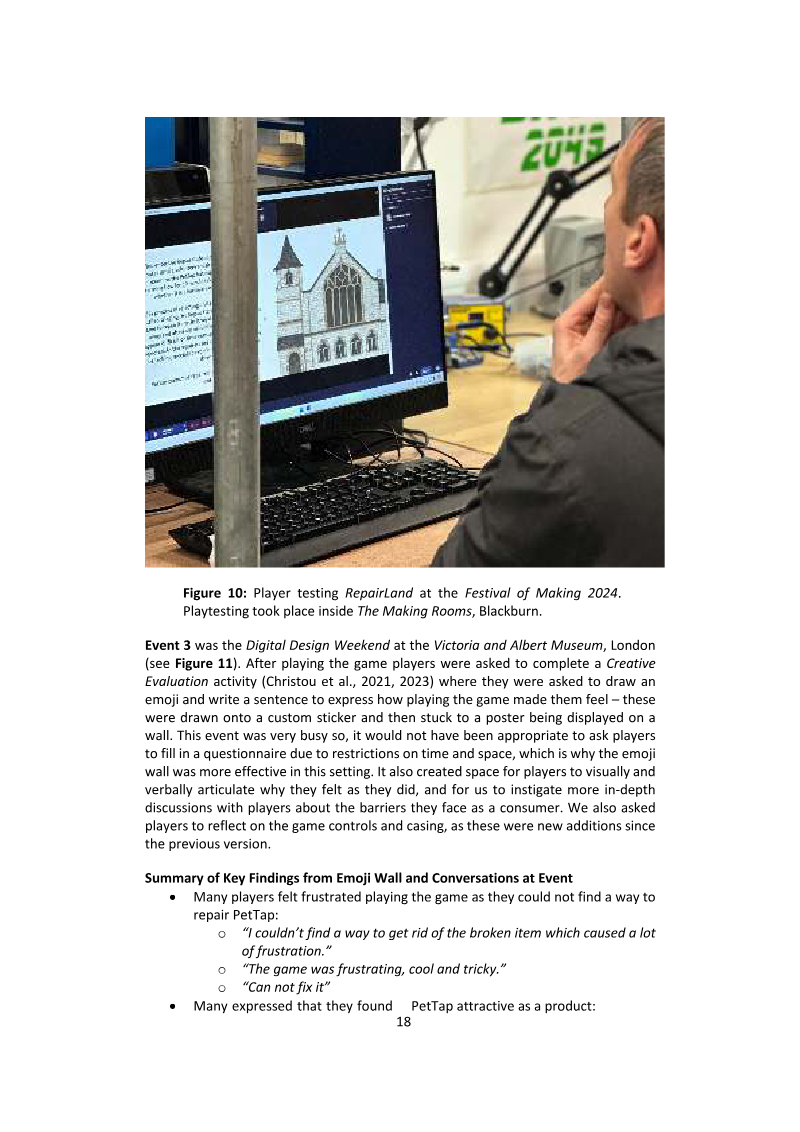
Gameful IoT Repair
The document "Gameful IoT Repair" addresses the escalating global e-waste crisis, particularly driven by the proliferation of Internet of Things (IoT) devices and design practices that limit repairability.
- E-waste reached 53.6 million tonnes in 2019 and is projected to reach 75 million tonnes by 2030, while more than 29 billion IoT devices are forecast by 2030.
- The UK is identified as the second-largest per-capita e-waste contributor, and Right-to-Repair legislation currently excludes IoT devices.
- Glued-shut device design, warranty restrictions, and restricted repair permissions are framed as the core obstacles to repairing IoT devices.

From Myth to Market: Lessons from Black Myth: Wukong's Success
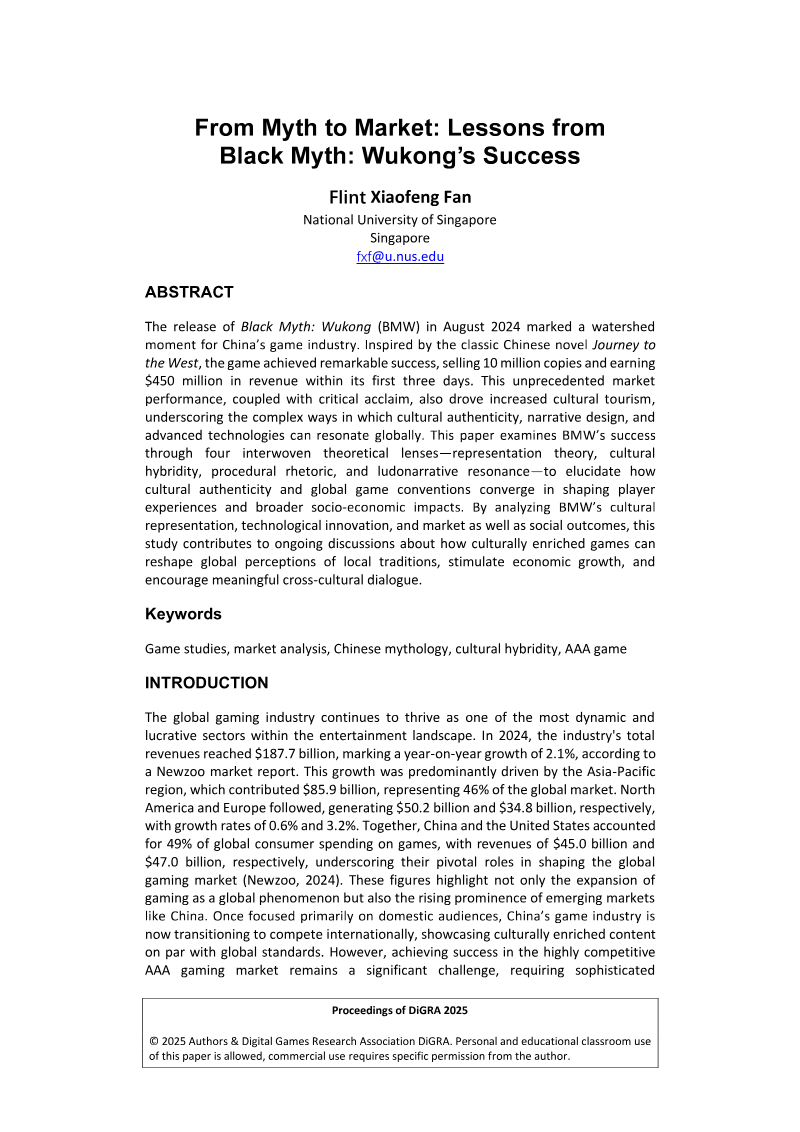
"From Myth to Market: Lessons from Black Myth: Wukong's Success" examines the unprecedented commercial and cultural impact of the video game Black Myth: Wukong.
- The report treats Black Myth: Wukong's success as a case study in how a Chinese mythology-based action game reached extraordinary commercial and cultural reach after its August 2024 release, while arguing that commercial success alone does not guarantee deep cross-cultural understanding.
- Its central claim is that the game's blend of Chinese mythological content with global gaming conventions operates in a "third space," making it accessible to international players while raising questions about the commodification of cultural material.
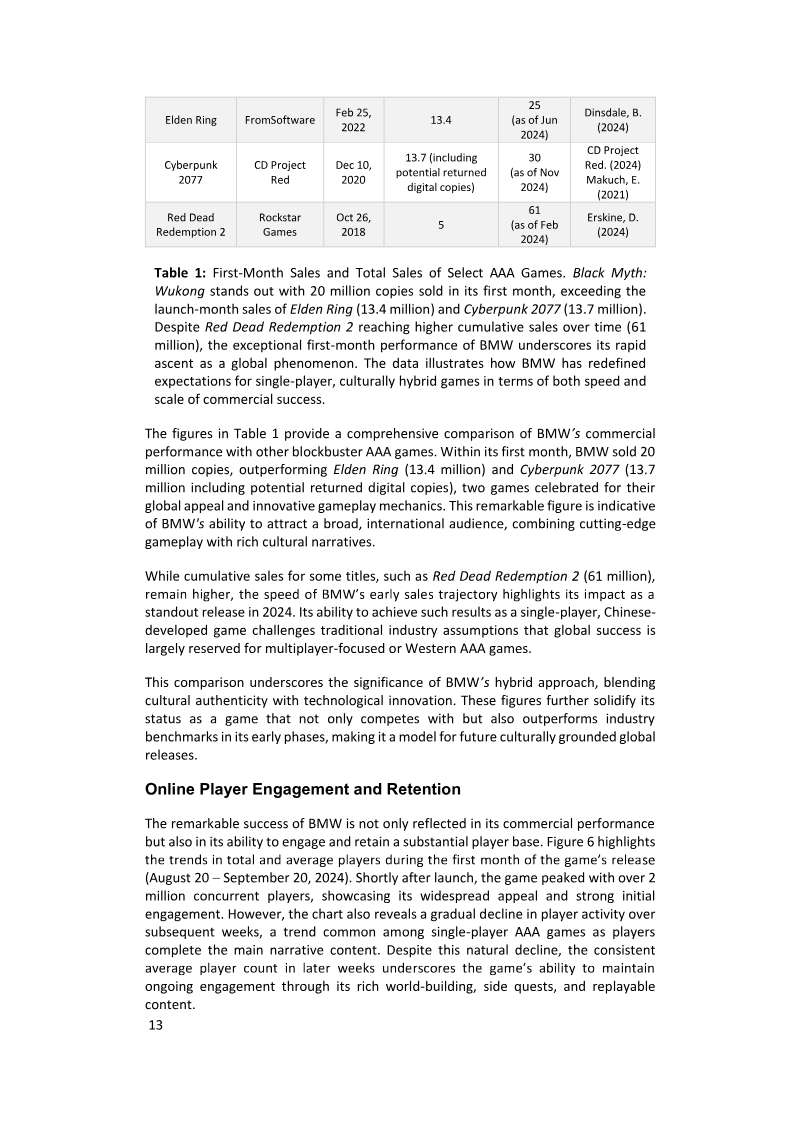
- Reported sales include over 10 million copies and roughly $450 million within three days, over 17.8 million Steam units and about $850 million in Steam gross revenue by early September 2024, with later claims of 20 million copies in the first month.
Designing a Toolkit for Visualising Desirable Sustainable Futures in Video Games
This research outlines the design of a toolkit aimed at enabling game artists and art directors to visualize desirable, sustainable futures within video games.
- Games' visual aesthetics are argued to be a lever for shifting cultural imaginaries toward pro-environmental collective action, grounded in Causal Layered Analysis and sociotechnical imaginaries frameworks.
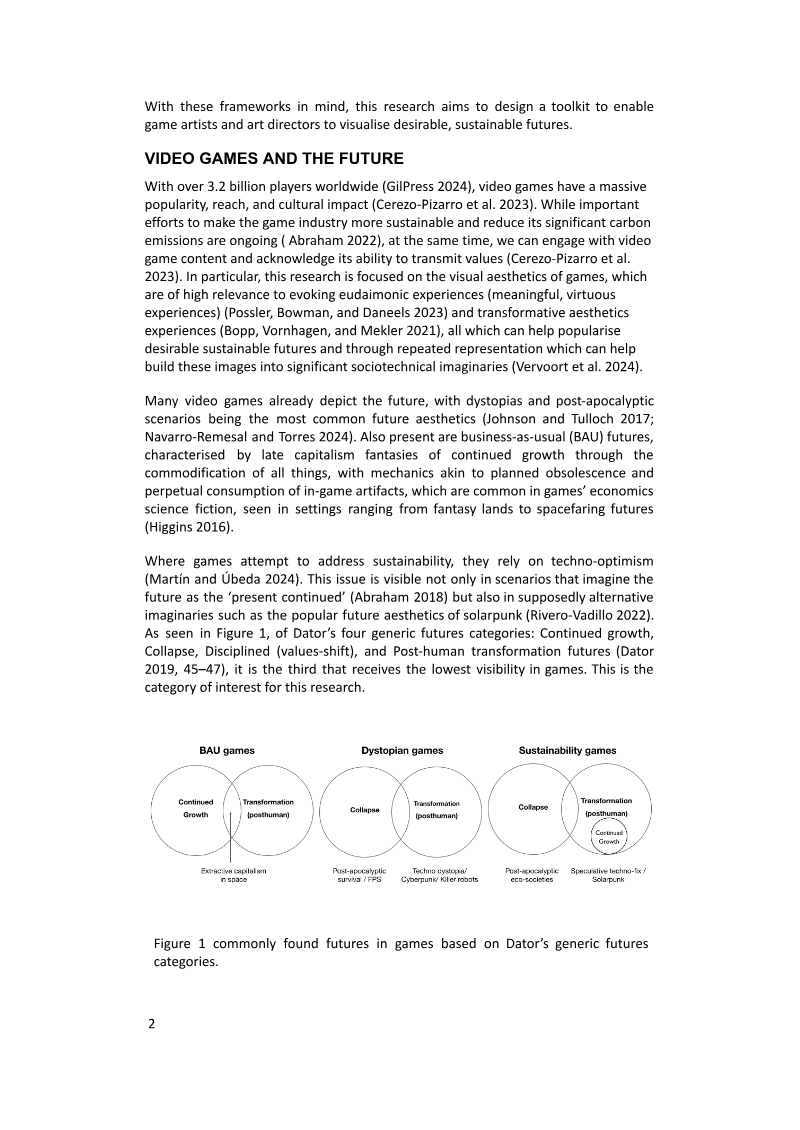
- The values-shift future category receives the least visibility in games, while dystopian/post-apocalyptic scenarios dominate and business-as-usual or techno-optimistic visions recur even in sustainability-oriented titles.
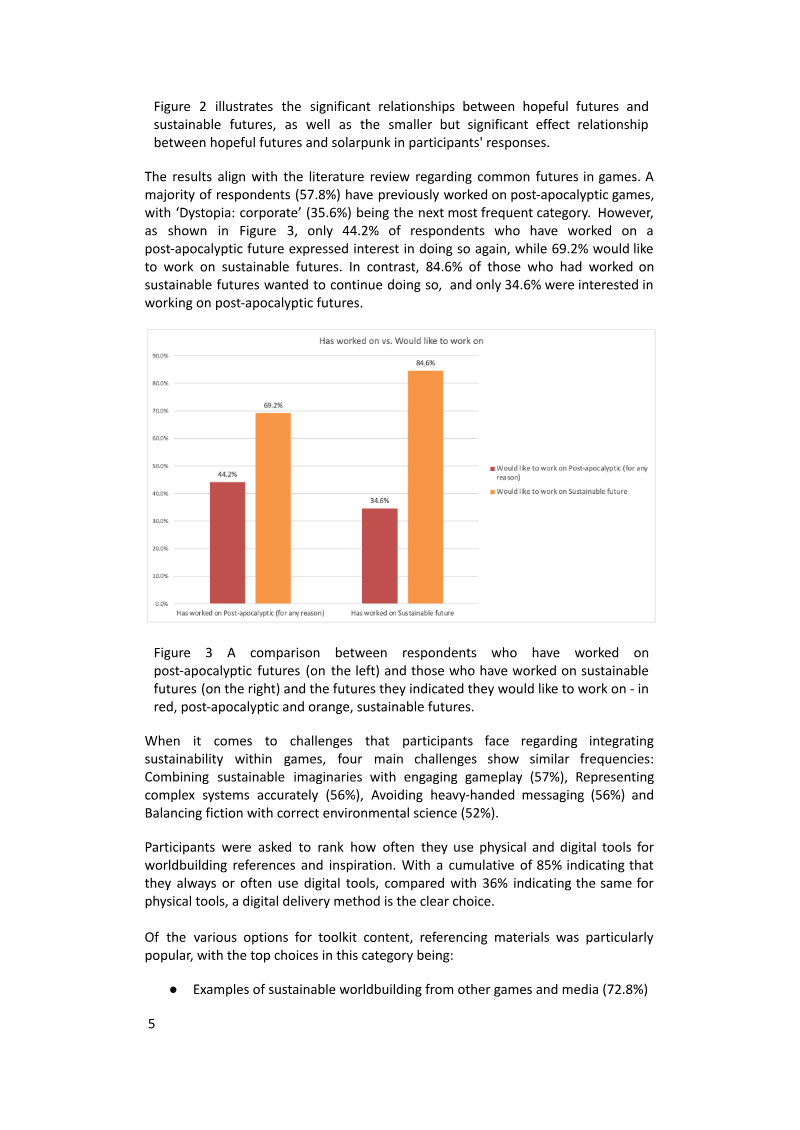
- Survey respondents (n=103, worldwide, ±9.7% margin of error at 95% confidence) showed 'hopeful futures' strongly associated with sustainable futures and, to a lesser degree, with solarpunk, though likely self-selection bias toward sustainability-minded participants limits generalisability.
A Longitudinal Look Into Student Video Game Designs
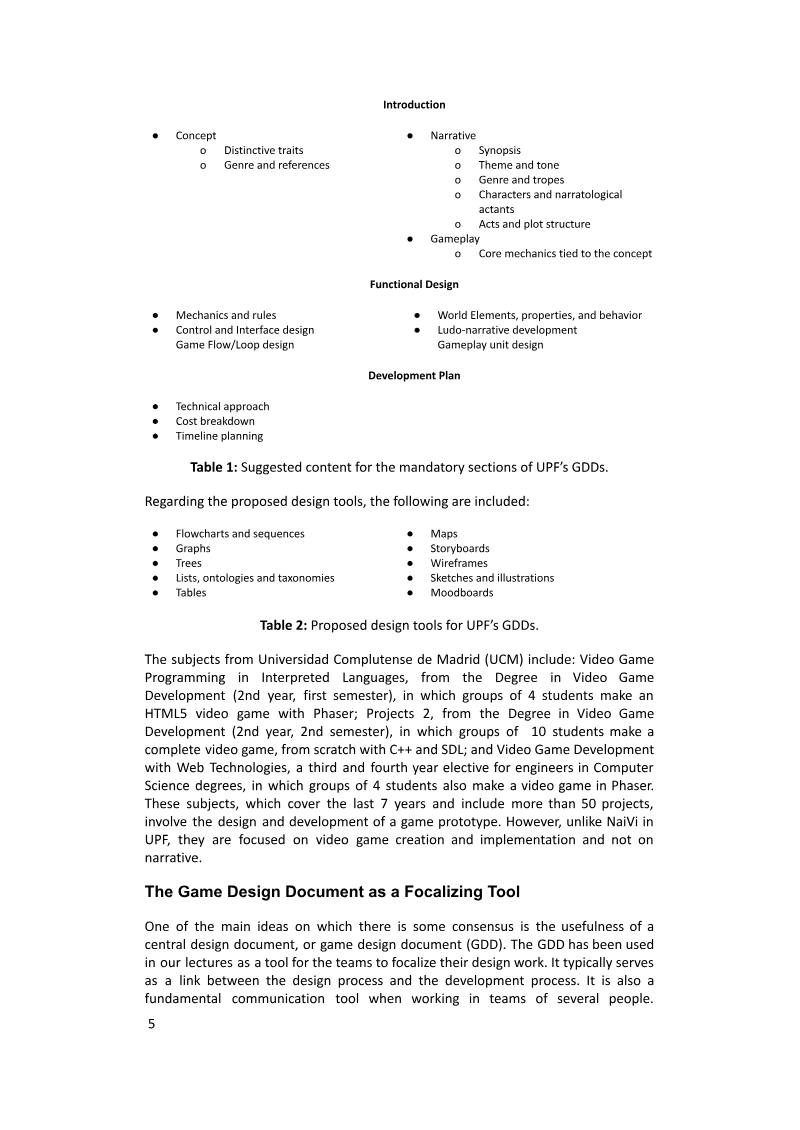
This analysis examines the challenges university students face in learning video game design, focusing on their application of Game Design Documents (GDDs) within an academic context.
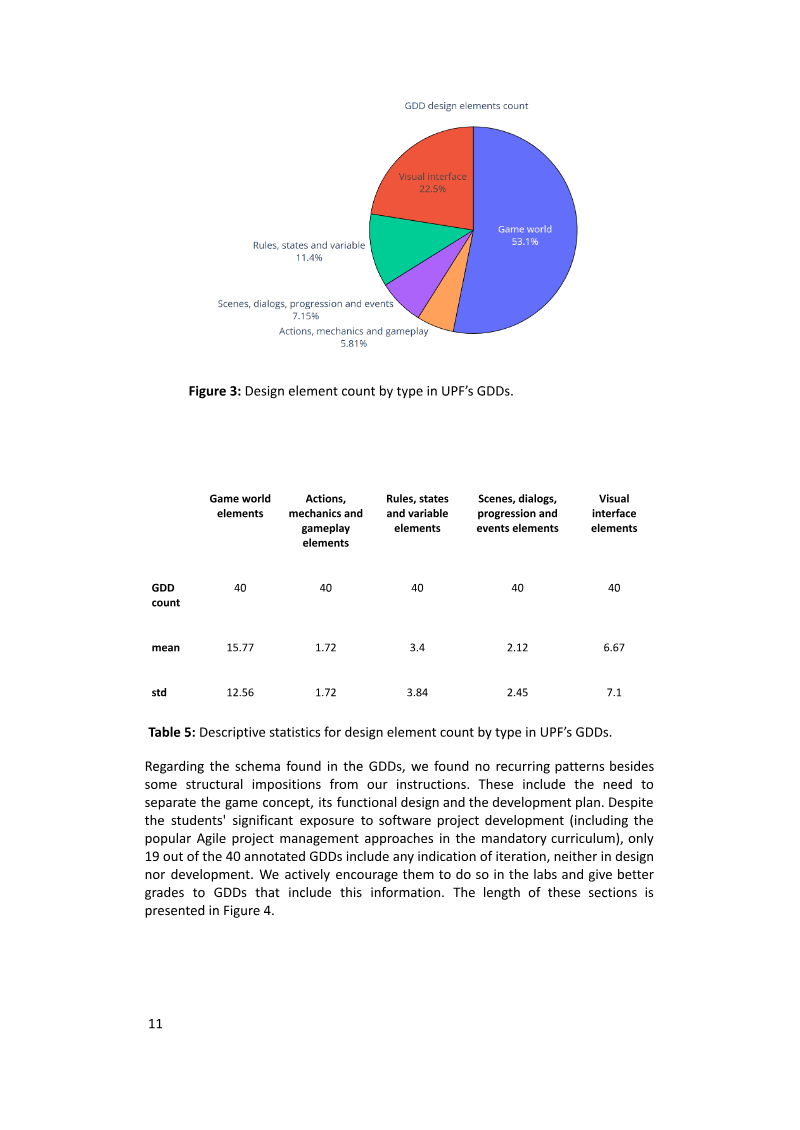
- Students treat Game Design Documents mainly as static documentation rather than living design tools: only 19 of 40 analysed GDDs show any evidence of iteration.
- Real design reasoning appears to happen outside the documents: prototypes change about every 2.2 days on average, while GDDs are revised roughly every 19.1 days.
- Student teams prioritise technical prototype development over documentation, and design decisions are shaped more by informal team discussion than by methods taught in class.
Designing Anthrogames: Theory, Methods, and AI Integration in Cultural Gaming
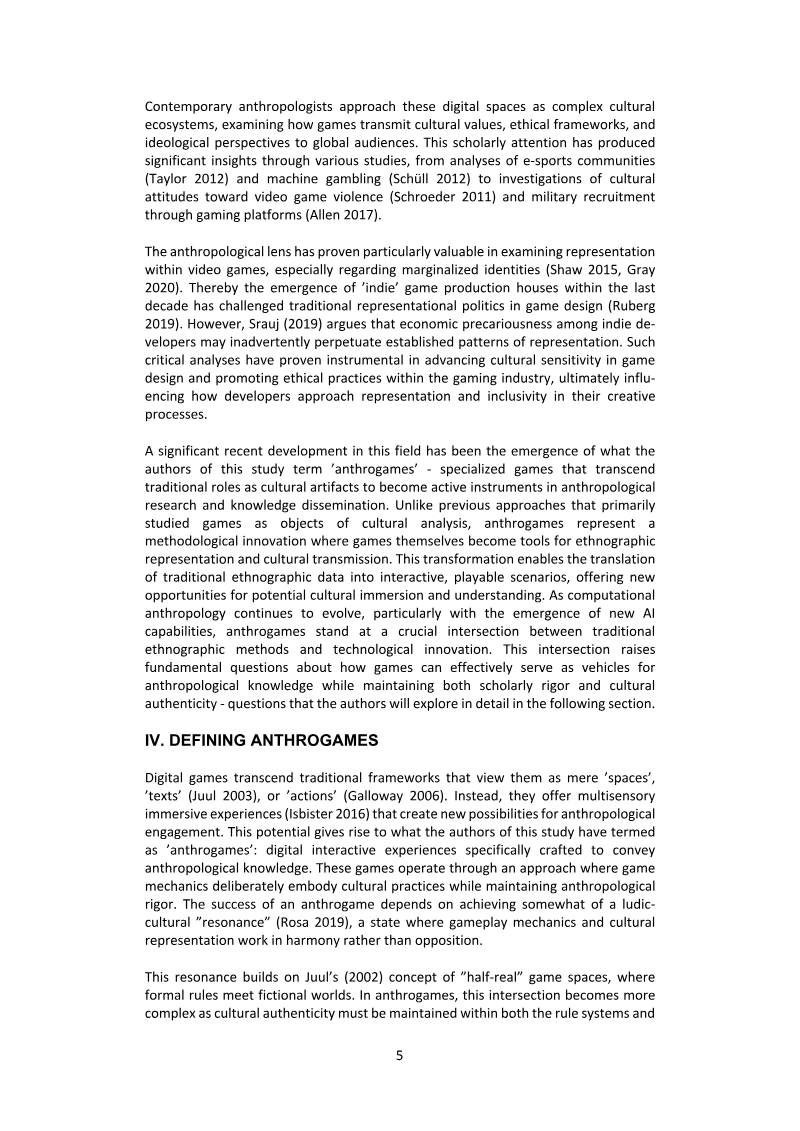
This study introduces "anthrogames" as a distinct category of games designed to integrate anthropological knowledge with interactive design, differentiating them from general educational games or traditional ethnographic media.
- Anthrogames are framed as a distinct category from educational or documentary games because they are grounded in ethnographic methodology, with the field tracing a progression from virtual ethnography (2000–2008) through game production studies (2009–2015) to recognized practice (2016–2024).
- The central argument is that large language models and participatory design could substantially reshape how anthrogames are developed, but the work is primarily conceptual and literature-based, offering no quantitative findings.
- Never Alone (developed with the Cook Inlet Tribal Council and Iñupiaq community input) is presented as a model of cultural insight integrated into cooperative mechanics, while The Long Day of Young Peng translates Andrea Pia's fieldwork on rural-urban labor migration in China into playable experience.
Platform Alternatives or Platform Power: Custom and Commercial Game Engines in the Work of Foreigners in Czech Game Production
This research examines the strategic implications of custom versus commercial game engine adoption within the Czech game development industry, specifically through the lens of international workers.
- The study draws on longitudinal semi-structured interviews with 28 foreign developers across 10 Czech studios conducted between 2022 and 2024, and challenges the assumption that commercial engines democratize game development.
- Foreign developers often view Czech custom engines as outdated, citing performance limits, steep onboarding for junior hires, and knowledge concentrated within companies rather than in shared communities.
- Studios that adopted Unity or Unreal faced acute shortages of experienced staff, because globally marketable commercial-engine skills are in high demand abroad and foreign workers often outpaced local leads in proficiency.