1 free read left. Create a free account for unlimited reading + AI research.
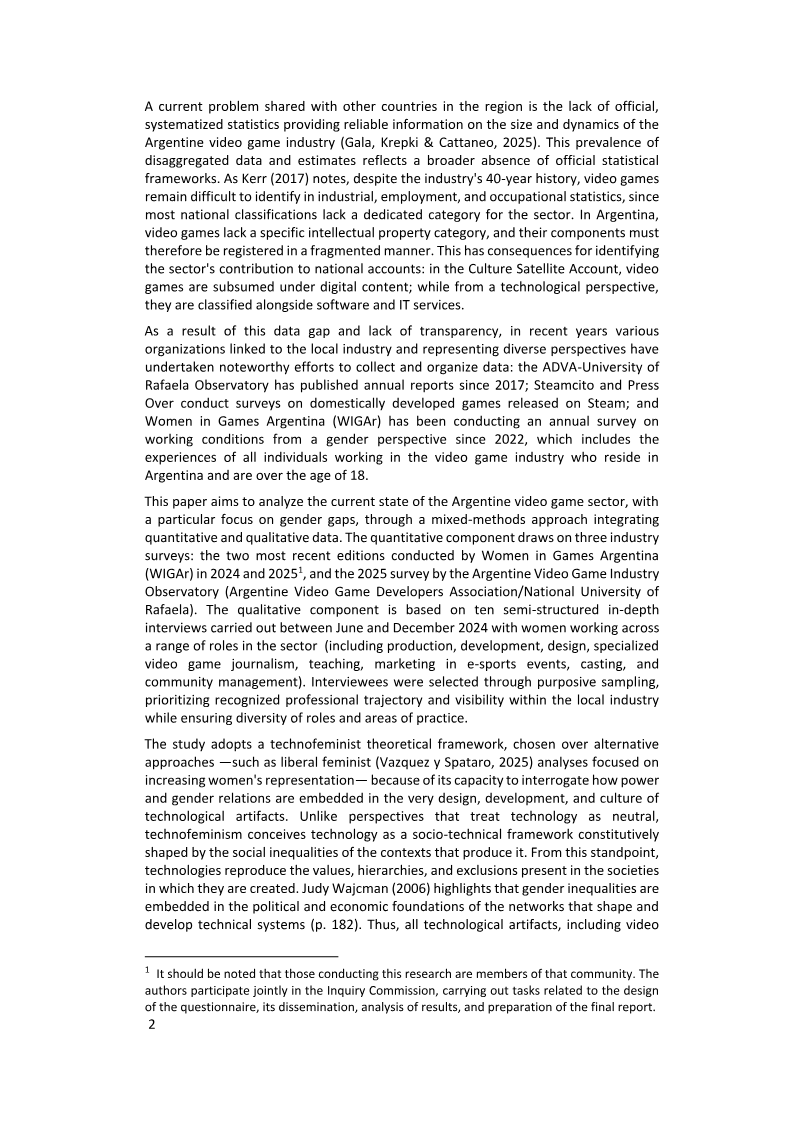
Create free accountWhitepaper DiGRA
1 free read left. Create a free account for unlimited reading + AI research.
Create free accountWhitepaperDiGRA
This paper examines how individuals became professional game developers in 2000s Brazil, a context where professional opportunities were volatile and formal training pathways were scarce. Its central argument is that the practices and knowledges formed under these conditions produced versatile, often generalist professionals whose experiences challenge the assumption that innovation flows unidirectionally from the Global North to the Global South. The author, who worked as a developer in this period, frames the study as both a snapshot of local production culture and a contribution to theorizing transnational game development circuits in more nuanced terms.
The empirical focus is the workforce of Tectoy Digital, Tectoy Studios, and Zeebo Interactive Studios, three defunct mid-sized Brazilian studios linked to Tectoy, a local partner of SEGA during the 1990s and 2000s. Staff at these studios worked on original projects, including mobile games and titles for the Zeebo console, as well as ports of well-known games to J2ME platforms. The research draws on a survey of participants, supplemented by biographical interviews with selected individuals, to trace their career trajectories and decision-making.
Preliminary findings indicate that precarious conditions frequently produced professionals with broad skill sets who specialized only later in their careers. The nascent state of game development in Brazil also pushed workers toward significant career decisions, such as switching sectors or emigrating. Notably, the author observes an analogous phenomenon in the Netherlands, where an influx of Brazilian developers has reportedly fostered hybrid development cultures. The study argues that such findings are relevant for understanding game work in contexts where material conditions are less favorable than in North America, Western Europe, or East Asia.
Each row is a game or company this document names, each column a document, oldest first. A mark means that document names it. Select a row to see those documents.

DiGRA · 2026

DiGRA · 2026



DiGRA · 2026



DiGRA · 2026



DiGRA · 2026



DiGRA · 2026



DiGRA · 2026



DiGRA · 2026

DiGRA · 2026



DiGRA · 2026



DiGRA · 2026

DiGRA · 2026
New Zealand Game Developers Association · 2026