Game Development reports and market data
Documents

The Surprising Truth About Gaming Startups in Pakistan!
Pakistan’s gaming industry is undergoing a pivotal transition, evolving from a landscape of isolated service-based projects into a structured, high-growth sector.
- Pakistan's gaming sector has achieved significant scale through a bootstrapped model, with leading studios collectively reaching over 3 billion downloads.
- The industry is projected to accelerate its growth by 10 to 20 times in the coming years if it secures institutional financing and strategic international partnerships.
- The ecosystem is currently in a 'scrappy builder' phase and is estimated to be two to three years away from reaching full market maturity.
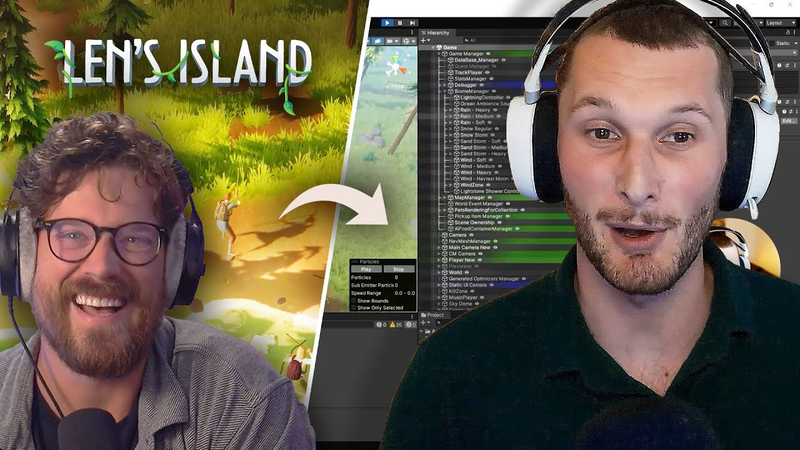
What A $1,000,000 Game Looks Like In Unity (w/ Julian Ball)
The development of the open-world sandbox game Len’s Island serves as a case study in balancing technical constraints with high-fidelity visual design within the Unity engine.
- The developer of Len's Island prioritizes cinematic visual quality by designing assets to look intentionally flat or 'bad' in their raw state, relying on a heavy post-processing and color-grading pipeline to achieve the final aesthetic.
- To maintain high performance on hardware like the Steam Deck, the team built a custom occlusion optimization system rather than relying on standard Unity tools, while also using a mix of hand-built assets and procedural grid-based systems.
- The game utilizes Unity's Universal Render Pipeline (URP) and manages complex runtime tasks, such as rebuilding the nav mesh every time a player places a building foundation, to allow for an open-world sandbox experience.
How To Start Making Games With NO EXPERIENCE
The development of successful indie games is often characterized by a transition from early personal isolation to professional collaboration, rather than innate technical mastery.
- Fredrik Prantare, creator of Core Keeper, grew the game to over 4 million copies sold, with figures currently approaching 4.5 million units.
- Prantare’s development journey began in high school by utilizing level editors in games like Heroes of Might and Magic III, which helped him build foundational design skills.
- The transition from a high-schooler with low academic attendance to a leader of a 50-person team was driven by years of iterative failure in various project 'constellations'—small, collaborative groups formed to build games.
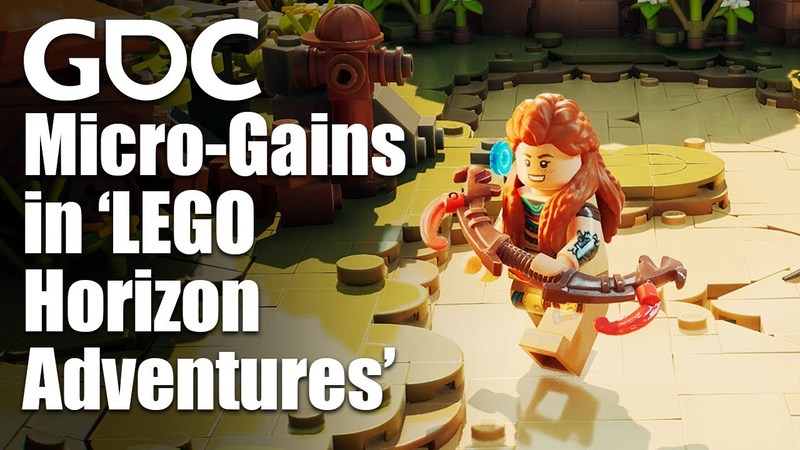
Building Big Impact, One Brick at a Time: Marginal Gains in 'LEGO Horizon Adventures'
The philosophy of marginal gains, popularized by British cycling’s transformation into a dominant global force, serves as a powerful framework for game development.
- The principle of marginal gains suggests that if you improve a process by 1% every day, you will be 37 times better after one year due to the compounding effect of incremental improvements.
- Studio Gobo implemented a 'feedback tracker' on Confluence for each game biome to capture minor 'toe stubbers'—small friction points that were not significant enough to be classified as formal bugs.
- Small, cross-functional teams, such as the three-person 'boss pods' used in LEGO Horizon Adventures, demonstrated significantly faster iteration speeds compared to larger development teams.

Let's Review Your Games — Ep. 017
Modern indie game development requires a rigorous focus on technical optimization, particularly for the Steam Deck, which has emerged as a critical platform for reaching contemporary audiences.
- Prioritize technical optimization for the Steam Deck, as it has become a critical platform for reaching modern indie gaming audiences.
- Implement the 'isekai principle' by dropping players into an unfamiliar environment with a clear, immediate motive within the first five minutes of gameplay.
- Improve visual clarity by using high-contrast, cinematic lighting instead of ambient light to ensure the protagonist is easily distinguishable from the environment.

I Was Wrong About Making Games...
The primary thesis of this analysis is that indie game developers often hinder their success by obsessively pursuing groundbreaking, unique mechanics rather than focusing on quality and execution.
- Success in the indie game market does not require creating a groundbreaking or entirely unique mechanic; focusing on executing a solid, high-quality game within an established genre is more effective.
- Attempting to force innovation often leads to bloated codebases, development paralysis, and wasted resources, as evidenced by the speaker's failed attempts to iterate on complex, 'unique' mechanics like magnetiles or skydiving.
- Leveraging your specific strengths—your '20%' or forte—is the most reliable way to ensure quality, as seen in the speaker's shift from struggling with new mechanics to focusing on storytelling and atmosphere in his title, Twisted Tower.

Leading new frontiers in mobile @ Develop Brighton 2025
Modern mobile game development has transitioned into a mature, highly competitive landscape where success depends on balancing rigorous data-driven iteration with strategic creative experimentation.
- Mobile game development requires prioritizing core loops and early validation, with teams like Supercell London utilizing ICE (Impact, Confidence, Effort) scoring to manage production processes.
- Live operations for legacy titles, such as the four-year-old 'Love & Pies', require constant iteration and rebuilding of game economies to meet evolving market expectations for features like generator boosts.
- The mobile audience has matured significantly, shifting from casual players of Windows 95-era games to a more sophisticated demographic that expects higher polish and mobile-native experiences.
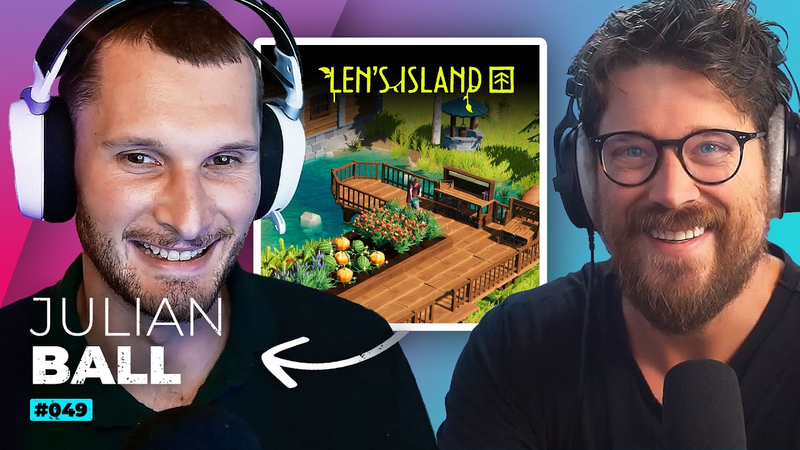
Julian Ball: Why His Game Took 8 Years To Make, How Launch Went, Staying Motivated | Ep. #049
The development of Lens Island serves as a case study in the endurance required for long-term independent game production, spanning an eight-year cycle that culminated in a successful commercial launch.
- Julian Ball spent eight years developing his open-world sandbox game, Lens Island, which combines elements of Diablo, Stardew Valley, and Minecraft into a single cohesive experience.
- The development of Lens Island required building a massive amount of content, effectively creating four games' worth of mechanics to support diverse playstyles like farming, building, and combat.
- To maintain project momentum over an eight-year cycle, Ball utilized a team-based workflow where he acted as a director, offloading specialized tasks like 3D art to experts while focusing on high-level design and artistic vision.

When Xbox took on PlayStation and won
The Xbox 360’s rise to prominence during the mid-2000s serves as a masterclass in strategic market disruption and crisis management.
- Microsoft secured a critical first-to-market advantage and captured developer mindshare by utilizing rigorous wargaming simulations to anticipate Sony’s competitive tactics.
- The company invested over $1 billion into a comprehensive repair and replacement program to address the 'Red Ring of Death' hardware failure, successfully preserving brand integrity and customer retention.
- Strategic third-party publisher relations were solidified by securing simultaneous releases for major blockbuster titles, most notably Grand Theft Auto IV.
Jamming Together: Breaking the Gender Barrier in Game Jams
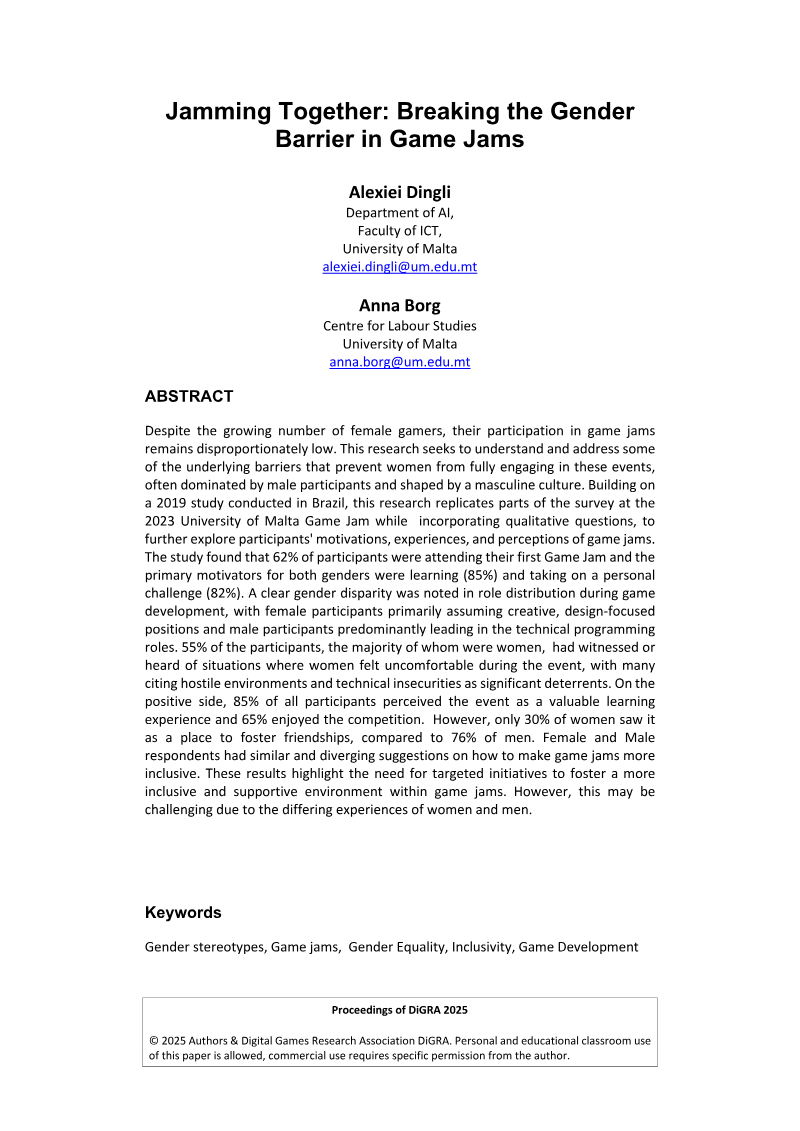
"Jamming Together: Breaking the Gender Barrier in Game Jams" examines the persistent underrepresentation of women in game jams and explores the underlying factors contributing to this disparity.
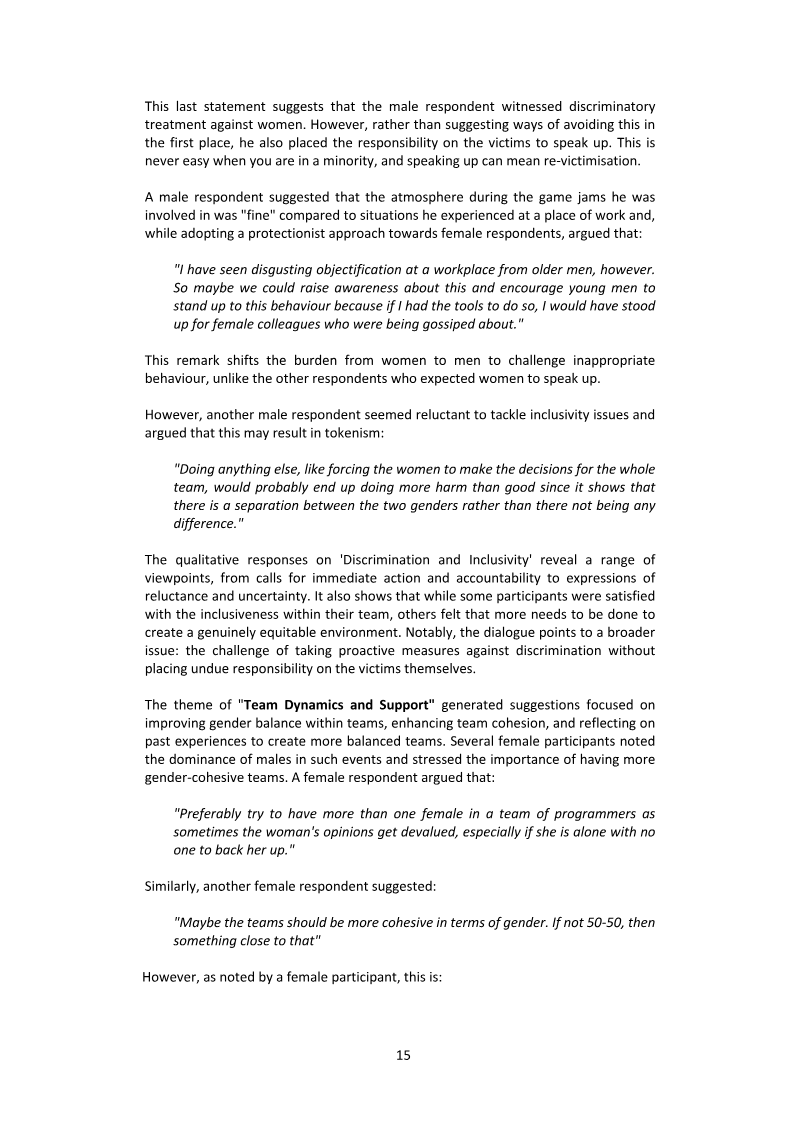
- Women were roughly twice as likely as men to feel uncomfortable at game jams (65% versus 32%), and they made up two-thirds of respondents who reported feeling insecure.
- A clear perception gap exists: women reported considerably more gender bias, discomfort, and dismissal of their ideas than men, many of whom were unaware of these experiences.
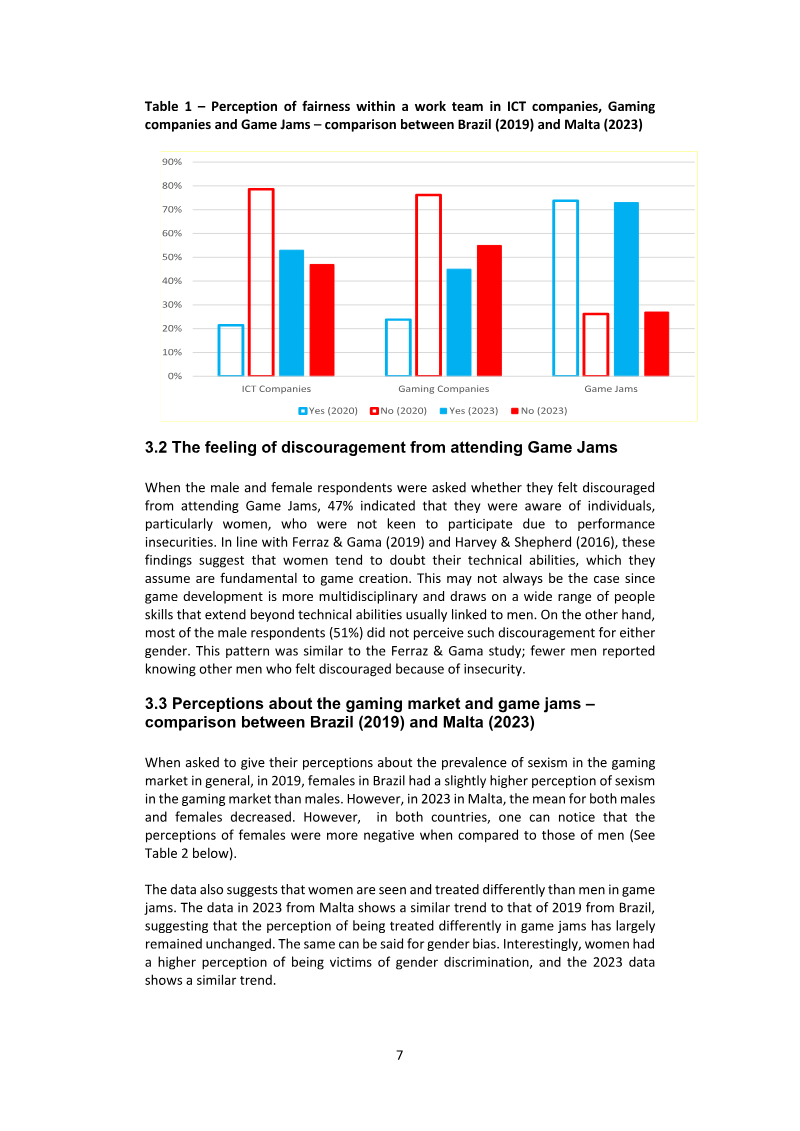
- Women's reports of differential treatment at game jams remained largely unchanged between 2019 and 2023, even though jams were generally seen as fairer than the wider ICT and gaming industries.
Want To Make Your First Game? Watch THIS
The primary thesis of this discussion is that sustained productivity in game development is not a product of inherent discipline, but rather the result of identifying and leveraging powerful underlying motivations.
- Long-term game development requires a core 'why' to sustain momentum through the inevitable 'desert' phases of production where motivation wanes.
- Negative motivation—such as fear, survival pressure, or the need to escape a constrained situation—is often a more powerful initial driver for productivity than positive goals.
- Discipline is not an innate trait but a byproduct of visualization; developers who have previously experienced the success of a launch or positive player feedback are better equipped to power through boring development cycles.
Product Managing Game Studio Culture with Seth Sivak (ex-World of Warcraft Boston Studio Head)
Company culture functions as a critical, actionable tool for organizational success rather than a passive byproduct of hiring or branding.
- Treat company culture as a product that requires constant iteration and intentional design rather than a passive byproduct of hiring.
- Avoid the 'busyness trap' by ensuring team efforts are aligned with strategic outcomes that drive product-market fit rather than just efficient execution of tasks.
- Define culture through explicit incentive structures, as rewarding behaviors like heroic crunch creates unsustainable norms that damage long-term morale.