Transcript
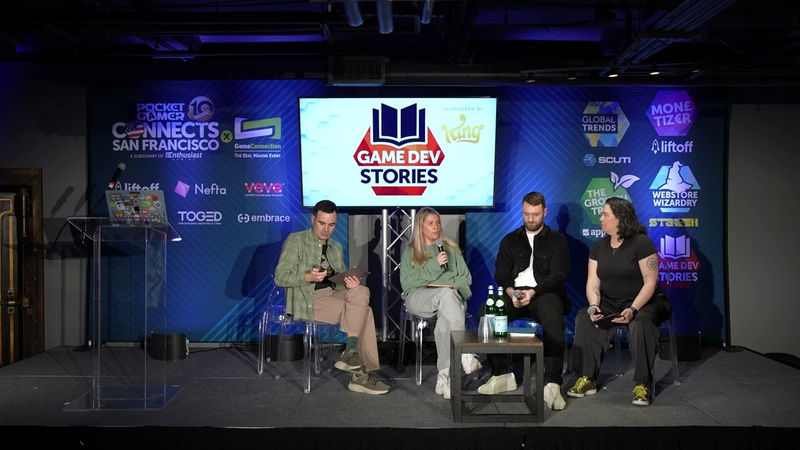
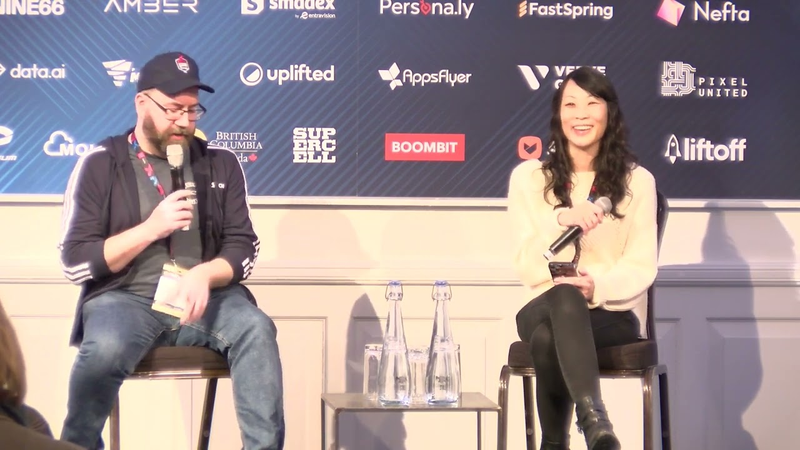
Let's go. Hello. Welcome to Develop Brighton. Uh we got a whoop already. It's exciting stuff. Is everyone full of caffeine? I am. Uh so this may be shaky and frenzied, but it's going to be good. Um this session is called leading new frontiers in mobile. Uh and two of the people leading new frontiers are right here with us. Uh I'll introduce you now. Chari Kim, you have a glittering 15-year career in mobile games, starting at Gree, uh, taking in a spot, uh, a time at Microsoft and now and most recently Space Ape, where you worked on Samurai Siege and launched Beat Star. Uh, Space A is now Supercell London, uh, working on uh, thrilling new games. Is that right? That's right. That's right. Okay, good. Uh, Felicity Gracie Hurst of Trail Mix. uh another glittering career in mobile. Um 17 years
of experience across product production and engineering. Uh Felicity has also developed pre-release hardware VR AR devices at Microsoft and Endreams and has also driven uh growth on uh games including Farm Heroes Saga at King now running Love and Pies and uh at Trailmix and is general manager at the Londonbased studio. Uh I'm Neil. I'm just some guy really. You're all so glittering. Thank Well, you know, uh I I run a mobile games industry website called uh mobile gamer.biz um which launched uh three and a half years ago and um it's basically just just me. Um so uh without further ado um can you tell us Chari what you're working on right now at Supercell without breaking any confidentiality agreements? Of course that was going to be your first question Neil. Um
so yeah we I am since uh at Supercell I'm leading a new game title not announced as of yet. Uh it is part of the spark umbrella of projects. Um if uh people know about spark it is the kind of the incubation um arm of uh supercell now uh which houses several projects several teams very team oriented um and it is what I can say is it is uh at the forefront of innovation because that's what we're here to talk about but also we are targeting an audience that is not typically a supercell audience. So, uh very fresh and new in that sense as well. Right. And uh Felicity, your work is a little bit more out there and public. Can you tell us uh a little bit about what you
do dayto-day? Yeah. Yeah. Absolutely. So, I'm happy to talk about what I'm doing because I joined Trailmix just toward the end of last year. So, pretty new in role uh to run our flagship merge title, Love Applies. Um, if anyone hasn't played it, it's a cozy uh melodramatic uh narrative driven merge game. Please download now. Um, uh, and yeah, so so I've been enrolled for the last six months. Basically, Love and Pies is almost four years old, I should say. At I think at that age, it's considered a legacy title. So, what I've been focused on since joining the team, um, adding a lot of new live ops, uh, features to catch up with, uh, you know, the the current state of the market, what players expect, you know, genre, uh, table six features like generator boost, while also um, kind of rebuilding the foundations of the game. We've done a big revamp recently to our, uh, our game economy, um, to set up for, you know, future growth and innovation. Great. Thank you. Um, uh, Chari, let's
switch back to you, um, to talk not specifically about what you're working on, but around what you're working on. Um, SuperSelf sort of famously doesn't launch that many games. Um, but we've seen a couple launch recently in sort of unconventional ways. Squadbusters with relatively short soft launch, Moco with an invite only launch. Um, is the company now in a slightly more sort of experimental era when it comes to launching new games? Yeah, I would say so. And I would say that our bar is still extremely high at Supercell in terms of uh the success we look to achieve and the bar that we want our games to achieve. Um but I think we have been more experimental in how we get there. Uh so Squad for example being a game with multiple Supercell IPS um the approach that they've tried is uh a big brand marketing type launch
and I think Mo now has is trying something quite different maybe quite opposite even um the approach is uh launch it and kind of grow it uh um uh grow it as they uh in launch which is yeah kind of the opposite approach if you if you think about it. So and I think we will continue to see that kind of experimentation as we launch games and um see how we distribute games in the future as well. La la la la la la la la la la la la la la la la la la la la la la la la la la la la la la la la la la la la la la la la launch and learn is a thing I've heard uh a couple of people say particularly at King. Um, Felicity, you're you're very much sort of that's kind of your whole deal on Love and Pie. Sure. Learning about what players are doing uh in the game. Um, how has how has that game changed over time and and how do you go about uh collecting and and sort of processing that player feedback? Oh, yeah. Well, I mean, absolutely. It is launch and learn is so true. I think
once you're already launch though, it is just iterate, iterate, iterate. And Love Pies has changed a lot. I think we're famous for the pivot at Trailmix. I don't know I mean maybe people know this story of uh how uh the game's core was actually you know rebuilt and pivoted from I think ma it was like a match core and then pivoted to a merge core in like six weeks like and then soft launched a couple month and and came out of soft launch very shortly thereafter so it's something that we uh definitely have form for at trail mix is responding to what we see in the data we are pretty obsessed with our players I will say we use pretty much every form of insights we can find, qualitative and quantitative. So, you know, all the data analytics you'd expect because it's mobile. But in addition, like doing tons and tons of player research, we do, you know, surveys, but we also work with um agencies to do like deep motivation based and persona research on our players. Um and actually our uh player
experience team have quite a sophisticated tool set with automation, AI uh to analyze player sentiment and uh um you know from both customer support and uh socials and our community. Um but I think sometimes the best methods are the old school ones just talking to people and listening to players. And so we also have an initiative underway where we're uh setting up a new official Discord uh channel to um get in touch with some of our most loyal uh fans and ambassadors. So yeah, keep an eye out for that coming soon. Great. And the first mention of AI for the day. So um keeping tally. Yeah, mark that off on your bingo card. There is an AI question coming of course later on. Um uh tell me you you you me you mentioned uh your AI labs and spark program uh when it comes to sort of generating new game ideas. Uh what can you tell us about uh how those new processes uh how those new processes have sort of fed into how you approach
uh uh spinning up new games? Yeah, it's a timely question actually because uh our team had recently did a collaboration with a AI lab team which was super exciting. Uh the team was Starboard. Um, and ba basically that team took our code base and turned two of our NPCs into AI generated NPCs and they took the personality uh of the NPCs and fed it a lot of our game data and the game player data and um had them generate the dialogue and it was an amazing collaboration. Uh, it really showed me um a good way to partner with a a second team to kind of contain uh exploration in that way because I
think when you're a new game team and we are still quite a small new game team, it's 14 people on the team at the moment and uh when you're focused on the core loop and the the core driver of the game, because it's not AI at the core. Just to be clear, Supercell's next game is not going to be an AI game necessarily. Just want to clarify. But, uh, the AI exploration we've done was a great way to do the R&D. Um and on the back of that we learned uh if we were to take that further which at the moment we've paused it and we're not going to take it further yet because again we have to focus on our core loop first but if we come come back to and take that further I we feel we felt that we had uh a lot of uh learnings to kind of how to approach it next time. Um, for example,
one of the things we learned was the the real time generation of the MP the dialogue from the NPCs wasn't that useful to us. In fact, it was going to be too risky for us from maybe it will generate a bit of dialogue that was uh too out there or not secure. Uh you you know we have younger players that we would have to think about as well. uh so those risks were not worth the real time generation. So what we think we will do if we come back to it is feed the game data kind of like overnight have it generate the dialogue and then that that can go through probably another AI checking it for security checking it for uh uh bad language context things like that and then bring it back to the game. Um yeah so those kind of collaborations are happening. AI lab is very new uh but it is already
starting to happen and AI lab being run by Otto and Spark being run by Stefan I know they're having a lot of conversations already um they might we might even sit in the same building in Helsinki uh to kind of encourage that collaboration. Uh, so yeah, those are all things happening as we speak. Well, not right now because they're all on holiday, but you know, when they're when they're back from their cabins. Yeah, I got a great uh just while we're talking about being on holiday, my favorite out of office of this summer so far. I think I mentioned it to you guys, uh, the boss of Trail Mix uh, uh, said in her out of office, "This email will not be read or responded to." I think that is a quality example uh for everyone to follow. Yeah, enjoy your car. Yeah, respect to you. Um Phily, let's let's talk about sort of while we're talking about being on the cutting edge of uh sort of new processes. Um how do how do you track what your sort of
competitors are doing in the merge 2 space and and adapt and integrate uh those new features and uh new ways of uh engaging players into uh love and pies? Great question. And I mean like we I would say everyone on a team plays all of our competitor games. I think you you've got to in this in this space you can't be complacent mobile and casual particularly changes so much. I think we're we're merge fans as well. So we're playing like not just merge games but other games. Love and Pies I I guess we're pretty unique now in that we were one of the early movers in in merge. I think we and and there have been a lot of uh you know big titles that have come in uh heavy hitters to sort of lead and and and redefine the category which is great because we can keep our eyes on you know what they're doing learning at scale but also you know looking at some of the smaller new innovative games. I think our team for a while was playing like things like yeah Hello Town and like like just having fun like obsessing
over like these little uh games and learning from them as well. Um we obviously aren't at the scale to to to mimic or fast follow and I don't think we have interest in doing that either like what our competitors are doing with regards to their live ops calendar. We have to be a little bit um well we have to prioritize for impact right with the the scale of the team that we are which means that we want to do what is most valuable but we also want to do what we think our players will will resonate with most and and that you know hits our our kind of love of pies and trail mix DNA. Um so yeah we have a process for that. Um you know we do use ice scoring like impact confidence and effort scoring because I you know come from a production background so I'm always going to talk about process. Um, but to me that is a, you know, a key part of it. But then putting a creative lens on it so that it's something that fits within our game world and has that, you know, that kernel of something that makes it um, emotionally resonant and
well, you know, heartfelt, uh, which is key to our audience and to our game. And um making making games today is is is sort of a balance of uh tried and trueue process and and doing what works and improving what works but also taking a few risks. Um Chari what can you tell us about uh Ilk in particular the big boss of Supercell uh has called for more exper experimentation and risk uh in mobile after sort of a few years you know it's been a difficult market maybe people have been pulling back from uh launching new games um not the case at supercell um how has how has sort of Ilka's call for innovation and more risk affected your thinking in terms of spinning up new games Ilka's ILA is uh always been very very uh focused on innovation and Supercell as a whole is a reflection of that and
that's always been kind of there for me as well throughout my career. Uh, even when I was at Space A, we I personally looked up to Supercell Games and um, Supercell Games have been my northstar quite honestly. Uh, especially on Beat Star cuz Beatar uh, we had a good relationship with Superstell already at that point and um, Ilka um, had uh, was one of our fans ultimately. So um, that's always been there. So in that sense I think nothing's changed. But I think for me my sense of what I take away from that is when we call upon that for the whole industry. Um I think the way to get there is to kind of celebrate the innovation that does happen in our industry already. I think we often don't give our own industry the
attention and love and praise that it deserves. Like games like Homescapes, games like uh White Out Survival are hugely innovative in their own way. And the more that we pay attention and to that craft of innovation and the more we talk about it and the more we study each other I think is probably the right way to go for kind of building on it and having innovation that is attuned to the mobile space in the best way. Um so yeah that's my personal take on Ilka's call for innovation. Yeah, I'm important to note there why you mentioned Ilka was a fan of Space A so much of a fan he bought the company. Yeah. Well, yes, that's that's exactly what happened. Oh, also Love Empire is like innovate innovative uh work done by Love Empire always supercell investy always. So big fans
here. Felicity. Similarly, um you have this existing uh player base that you've got to keep happy, but also sort of keep showing new things and keep them engaged. How do you balance uh sort of not upsetting that core while offering offering them new things to do and sort of slightly different ways to play love and pie love and pies? Yeah. No, great question because I think this is something I'm passionate about. I I do love a framework. So I think proven better new is something that we talk about a lot internally. Um I think if anyone's not familiar with this framework I think some people will tell you you know there there is a golden ratio of like 702010 proven better new I don't believe that and I think you know as Charmmy calls out like there's a lot of innovation happening in the industry and I think in different phases of games you may go through a different ratio of that split especially in new games there may be you know a bit more of the new where I think you know live games particularly where you have an established audience and you've proven product market fit and you've got a player base that already love your game.
Um, you know, you you can still find a lot of innovation in that better space where you're maybe bringing features from uh, you know, that are proven in a different genre or like slightly improving upon and I think, you know, some of the competitors you called out are actually, you know, great examples of this is that's where we push the uh, the boundaries. So, on Love and Pies, we definitely are, you know, releasing a lot of new content. You know, we're we're live game. We have new game days. We have, you know, seasons and decoration events going out all the time, but we're also, you know, developing new features, new live ops, and constantly testing that to get that to get that balance just right. And um let's talk about player uh expectations for a little while. Um I think there's a lot of chat in the media in general about like what Gen Z wants, dividing people into generations and subcategories of people, which is feels sort of very mobile. Um, uh, Chari, what do you think, uh, mobile players, uh, demand in 2025 that's different to what they were sort of
expecting back when you were working on Samurai Siege or even Beat Star? Uh, yeah, from what I observed, because we've done actually a lot of research studying these Gen Z's uh, and and maybe these gen these pesky kids. um we've done quite a bit of that before we kind of decided on the game that we're making now. What I've observed and what struck me the most is that I think the mobile audience is increasingly more gamer. I think in the beginning of mobile or even before that when I was working on Facebook games um that audience was very much the opposite. Often you might encounter an audience that you know played solitaire on Windows 95 and then this this has been their first game since you know that kind of audience. I
don't think that audience is really there anymore. And I I think the the newer generation of mobile gamers uh have grown up playing playing probably console games are far more likely to be playing a console game as well as mobile games. Uh a lot more of that going on, much more savvy. But what I would stress though is the the most um direct thing to conclude there would be let's just put those experiences on mobile because that's what they're used to. But I think it's quite the opposite. I think because of the maturity of these these game gaming industries and the the platforms mobile almost needs to be more mobile. It needs to fit their life in a way that other devices cannot fit. And what is best, what mobile does best is the low barrier
to entry. You always have it with you. You can pick it up and play while we wait, you know. Well, I mean, I wasn't playing while we wait for this session, but because I was too nervous, but you know, um I could have been. Uh and you could play in the bathroom, you could play during breaks, and while you're waiting for something else to happen, you could play in bed. they they play in bed a lot. First thing when they wake up, last thing before going to sleep. Um, and only mobile can do that. So, what I see is more and more games that fit that lifestyle in the best way and give them that sense of achievement or fun or or excitement in the smallest doses. I think those games are already doing the best and those games will continue to do the best. Yeah. And Felicity, with with a live game, is it uh meeting player expectations? Is it more kind of just constantly feeding them content that they can hoover up?
And how do you sort of keep them excited and engaged? Um yeah, I mean, you have to sort of stay with the market. I think, you know, there are expectations now that players have and I think, you know, Charm called it that I think the player expectations have changed. the market has matured a bit and there are some, you know, really fantastic games out there with um that are just so much more polished than I think we're getting a new microphone. Sorry. Hey, sorry about that if I'm cutting out. I think it might be. There we go. Yeah, so much more polished than they ever were, honestly. Um trying to turn this one off so you don't get feedback. There you go. Um but yeah, sorry. Sorry. keeping up with player demand uh on a live game uh was was the question. Yeah. Well, I I think you have the the benefit of having the audience there on the live game is that that you can iterate and work with them. But uh we also see how fast features now propagate
um across games like you know and because there is this expectation players who are playing some of you know the the huge uh category leaders like and how quickly like a a new live OP event or a new uh you know booster in casual will just spread across every game because it's what the audience demands and it's what they want. Um but I think that has also you know as everyone who works in mobile is aware it has increased the um the the the barrier to entry for new games. I know like with with you know install shrinking it feels like the and and just games with such mature live ops and constant streams of content you know retaining players for so long. there is no need to switch games or run out of energy and go play your second or third game the way there used to be because you can just stay in your main game like you said in the morning when you wake up at night you know before you go to bed do your daily tasks there's just and and and you can almost not
exhaust that stream of content so like engagement is the battleground now I think more than it ever was and you have to be you know very very actively pursuing that to you know to keep up with player expectations. Yeah, we started calling them destinations. It's like it's it's beyond a game now. It's a destination. You put games inside the game uh because it's a platform platform for other games and that is becoming more and more the norm. Yeah. Yeah. Great. Um I got a couple more questions to cover and then we'll do uh Q&A from the audience. Um, uh, Lesie Supercell's sort of famous, infamous killing of projects. Um, Charmy, what how has that changed? Um, and and what has, uh, Space Ape bought to Space Ape is now Supercell London. Uh, how has that, uh, that sort of move from being Space A to Supercell London? How has that affected your internal processes in terms of how you
look at launching new games and whether to kill them and whether to proceed? Uh yeah, I mean that that uh threat of a kill always looms upon us new games at all times. Uh but it's always uh self-inflicted. It's a pressure that we put on ourselves. Um and uh Space Ape had a similar culture around kills actually. So from that sense, it carried over quite quite well. But I think if I had to point to something that I I feel like our team is now doing as part of Spark and maybe um kind of pushing Spark uh helping push Spark in a direction is um testing earlier uh getting data or validation earlier. We are very much uh we believe in that.
We've done a lot of that at Space Ape. Uh we've done uh alpha launches, public beta launches a lot earlier. So that's the kind of uh thing that we are hoping to do as part of Spark and I think naturally that will help shape uh new games as we go forward. Okay. Yeah. And uh Felicity, how how has uh you know, you've got four years worth of Love and Pies sort of player data. Um how has that fed into how Trail Mix approaches uh launching new games and and what can you tell us about what you might have coming up? Well, yes, Trailmix is making new games. I cannot announce anything today. Um uh but absolutely everything that we've learned through the process of developing and operating Love and Pies is feeding into uh the new games that we're creating uh across our London and Berlin sites. Um I think one of the biggest learnings is around community um
and audience. I know distribution is is harder now than it ever has been and it is a lot tougher to um I think get seen and to find an audience. I think we we really benefited from that on Love and Pies. they have a great uh player base and a great community. Um but it wasn't designed with that in mind. Whereas our new games are definitely designed with distribution in mind. Uh you know the systems for you know finding the right players and and keeping and that feedback loop um strong to yeah find our audience and then learn from that audience. So, keeping that cycle really tight. Um, really informing the like every every single detail of the new game design with the interest group and the the research on these players and their motivations and where they are is is like a key part of our new game approach. Great. And uh I'm sure we will announce those games on mobilegamer.biz at some point. Good plug for the website. Um, let's finish on AI. Um, we left it right
till the end. Um I I find a lot of the talk around AI quite vague. Um I personally use uh transcription software, some uh a thing called um Descript to edit uh a podcast. Not sure if that actually counts as AI, but it's it's cool software, modern feeling software. Are there specific um tools or processes that you guys use in your uh game production uh that you could recommend to the crowd here? Um specifics would be great if possible. Um because like I say, I find a lot of AI chat kind of a little bit woolly. Yeah. So in the last two three weeks I it seems to cursor AI seems to have completely transformed uh our the way our programmers are working. Okay. Is that that's a coding tool? So it's a it's it sits on top of um yeah
it's a coding tool. I wish I had one of our programmers up here with me. Um but so like before I think they used to ask chat GPT, hey how would you code this? And then you would paste it over. Now they just uh tell cursor AI, hey I want something that works like this and then it'll just have code kind of written for you. I don't know does anybody can anybody help me out here? I think I think there's a guy over there that come please please tell us and yeah session I was gonna say I can add on cursor. Oh yeah. I've heard that is you know really powerful particularly for like green field projects like and new games I think in particular less so on you know legacy code bases. So I hear I hear it gets less use on Okay. Yeah. That's projects like ours. But
yeah. Yeah. Uh yeah that makes a lot of sense. Yeah. Um what I'm hearing is like you still have to know how it works to know whether it's good or not the code that it suggests but yeah it has been gamechanging for our programmers and again this is very hot and new and like I've only been hearing this in the last few weeks. Um and then we have for legacy code it seems it's been useful to have um like legacy legacy super solion code. Uh we've we have like AI bots now to help decipher that code and ask questions to it yeah that's the other way of using AI but I think that is our own kind of bot. So I don't think there's like a tool I can name for that but yeah but yeah I think we're doing a lot of that similar thing. I think AI it gets used so much as a buzzword now for like
a lot of different technologies under that umbrella. Some of which are you know things that we've been doing for years with ML like segmentation. Um I I guess Gen AI and LLM all under that banner. I think though in terms of tools you can get really far with just the new bunch of LLMs whether you're in the chat GPT or the Gemini space we use a lot of you know custom GPTs or gems uh that that we build uh for productivity purposes right and and I think that's a great uh example one where you can feed your codebase in and use natural language to ask questions you can do the same with your uh your analytics stack you could do the same with you know and also just yeah a lot of those real productivity use cases like summarizing meetings and you know accelerating notes I think yeah so we call it kind of all under the umbrella of new technology rather than you know just purely AI um really just to I don't know outsource some of those manual tasks to let us spend more time
on the delightful stuff. Yeah. Cool. Um thank you. That's AI almost covered maybe. Let's do questions shall we? Uh does anyone have questions for the esteemed panel here? I think there may be or I think maybe we have the one microphone here. Uh you'll have to uh this this chap here. So cursor.ai everyone buy shares in that. Is that the thing? Hi guys. It's working. Okay. Too late. Might be too late. Thank you for the talk guys. Uh Felicity, this is mainly a question for you. So you talked about um working on a mature product um and then talked about launching new products. So from a live ops perspective, uh what learnings would you take from the mature product and then put that into a new product and what kind of cornerstones and foundations would you really build on first and how would that inform your strategy for launching a new game with
live ops in it? Question. Can I Can you hear me if I use this one? Can you hear me? Can everyone can you hear me? We need to run. We need another mic. Sorry. No, thanks for the question. It is a great question. I think um it's a challenge, right? Because sometimes with new game, you need to prove things out first and you don't want to spend all this time building things to scale if you're, you know, you need to validate them first. But I think that the big key is to build in order to operate. Um so you need to be thinking with that in mind of how a system could be become operable. Um like some of the tools and uh you know at at at Trailmix we're building um you know it's more of the learnings rather than it is the technology that we're sharing between our games. Um, but I think, you know, live ops is a mindset, right? And I think it's very different from, I think, those of us who've been around the block and have come from, you know, console or or, you know, more old
school uh, game making where you think about launch and then you think about like, you know, post-release content that that is done like, you know, new games. Now I do think very much and yeah I'm interested in your take on this too because you know you we are think you're you're building a an environment and a system rather than you know a one-off. And so you have to think not just in terms of how your team is going to run it, but how you're going to keep that content uh fresh uh and so also the pipeline for that, you know, the content furnace as it were. Yeah, I could add to that actually because uh having launched and was part of live operating Beatstar and now working on a new game, I do feel that there were there was so much I learned launching the game that I am not now taking into the new game. And um the
biggest thing I think to consider are things that are going to be really difficult to change down the line. So if you think your main piece of content and and content is key. Content in a live game, content is king, how how often and how to what quality and how much you can deliver the content is key. So the if you have a key piece of content that you think your game is delivering that provides the most value, therefore is going to be probably what is monetized. If you have that, you have to be prepared to be pumping those things out. Um, and something that I think we've done, our artists are very very savvy about this is, um, cuz we have characters in our game that is going to be a big part of the content. uh they've made sure from the beginning that the
this content was going to be easy to generate and easy to create and uh work around because once that is set that is like nearly impossible to to go back and change. So the things that are hard to change um but are very important are probably the things you want to focus on. Cool. Um, I think it may be easiest if you have a question just to project rather than us going back and forth with the mic. Yeah, we could repeat the question as well. Do you think you can project or I'm sure um it's a bit following on on what you were saying with content and characters. I wanted to ask something about narrative. Um, so you know big changes some years now was like Lily's garden having like some different point of content for people. Um do you feel like there's a lot of interest in
that narrative space or do you also see that move a little bit to the AI being question? Yeah, I can speak to this because Love and Pies is a narrative game and um you know, we've done a lot of audience research as well and like actually carved up our, you know, audience personas. We know that we have um a percentage of our players who are very narrative driven. I think I I identify as one myself. Like I play a lot of narrative games. Um but it's not the majority of our player base. Like we do have a lot of players who are there for the the core merge gameplay and they skip all the story. um that doesn't mean that our uh we call them druids actually that is is our narrative focused persona type um uh are less important to us right and I think you have to serve all these different audience uh needs and motivations uh one thing I will say though is I know that um you know genai particularly on on on text uh is uh you
know a use case that that that many you know is kind of well established but for us I think it was never a question that we would um you know scale our our narrative content with AI. I think you know the kernel of something heartfelt and human is really important to who we are at Trailmix. um you know we um definitely are are AI evangelists and in in trying to find use cases for productivity but when it comes to the the human heart which I think our narrative is it is our center um it's really important for us as that comes from um a very heartfelt and human place and then then we can power that at scale with AI. Did you want to speak to any of that? Thank you. Thank you for the question. Thank you. I think we don't have too much long left, but one more maybe sir. A lot of modern phones are really like really powerful. Are you are you doing anything special for people with like
more modern handsets or is it more like thinking okay someone with a 10-year-old handsets be able to play on this game or do you have to try to sort of like have a range of features different kind of handsets you have like more powerful one phone or the question was about yeah new devices and and sort of how how powerful new devices are affecting your game development process broadly. Do you want to speak to that Jeremy from the new game side? That's a really interesting question because I think we spend most of our time talking about the opposite is uh how we make sure our games run smoothly on really really old devices because I think the market is more global than ever. Um a lot of our success even at Supercell like Brawl Stars for example uh a lot of the success comes from Asia
and Southeast Asia uh and they're now looking more seriously at Brazil uh for example. So uh that's always the focus and the nice thing about that is the game becomes the game stays very very performant which is again according to my Gen Z's research they're very very sensitive to performance like the game feel of how it loads how uh lack of patience is is the common denominator here but um and So because of that a lot of our conversations are there actually I think it's quite the opposite. Yeah I'll agree with that. I think that is because I think mobile freeto play in particular is about reach and and the global reach. So min is always at the forefront. Yeah. I just to add my own personal take uh the the am I still on?
Oh no. I think I'm still on. Um, what one of the most popular series of stories on the site in the last year has been the sort of consistent failure of these AAA games coming to mobile. Um, players on mobile just want to play mobile games. I think, you know, why would you want to play Assassin's Creed Mirage on a phone when you can play on your PlayStation? It's it's the form and function I think um is very important in mobile and and like you guys say how addressing a widest audience as possible is is often the most important thing in mobile. Um I think I don't want to I don't want to seem like I've got the final word because I'm least least important person on this panel but um I think that's it. Um thank you very much. Can we have a round of applause for Char? [Applause]
Thank you.
Auto-generated captions from YouTube — names and numbers may be misheard.
Key insights
Distilling the key insights…
Ask AI about this video
Cite this video
Citation
Generating citation…














Comments