Transcript
Okay, so you want to make your first indie game and more importantly, you want to make some money from it, right? Imagine making a game and releasing it. And I'm sure you've thought about this and you get that $20,000 payout from Steam, right? Or maybe you get it from your publisher and it's in your personal checking account. It seems like this fantasy, this fairy tale, but it's real. Um, I've actually done this and a lot of indies have done this. So, how exactly do you do this? Well, you've got to stand out. There's thousands of indie games out there and you need to make something unique. You need to make something brand new, right? [music] Wrong. This is completely wrong. You don't need to make something brand new. Instead, you need to make something Well, it's it's a lot simpler than you think. If you're looking to make your first indie game, I can tell you that this video will probably save you a ton of heartache and wasted time. Don't do what I did. Instead, do what I'm about to say because I have a few gray hairs from what I'm about to tell you. All right, story time. Uh, I haven't released a commercial game since
my second game, Never Song. That game did really well on Apple Arcade and also did pretty decent on Steam. It wasn't gang busters by any means, but oddly it was my most profitable game and my family was certainly able to build some wealth from it. Okay, so there there was no plan for that game. I just [clears throat] made it because I wanted to. And like clockwork, it printed money for me and my publisher, Serenity Forge. After that, I began working on my next game. Oh boy. Uh ju just saying that makes my skin crawl. Let me explain. It was supposed to be groundbreaking. My plan was to somehow surpass my previous success with Neverong and Pinstripe. And my assumption was I needed to create something totally unique to do that. So, I got to work on this fresh, totally unique idea. All right. It was basically you carry a baby across a beautiful, breathtaking 3D environment. I live streamed its creation, created the art from scratch, added physics. By the way, look at that cute little baby. I was
enamored by this idea. It felt truly unique. The moment I shared the screenshot on Twitter, though, people immediately began comparing it to, can you guess? Death Stranding. Obviously, some people, if I recall, were pretty nasty about this, saying it was well, basically Death Stranding, but worse. So, guess what I did? I completely changed it. I needed to make something completely unique. Remember that's the only way to make it big on Steam. I mean, look at Cole to the Lamb. That's completely unique. Well, kind of not really. It was actually Binding of Isaac and a little bit of Stardew Valley. Well, what about Undertale? Okay, Undertale. That's brand make a new baby, right? Well, kind of. It's very similar to Moon Remix, RPG Adventure, and Earthbound, but whatever. I'm sure that's those are just flukes. You still need to be brand new. Okay, that's the rule. It's 2025. It's way too competitive out there. You have to be brand new. That's what I was telling myself. So, this brand new mechanic that
I started working on was, well, you basically place magnetiles. Have you ever played with magnetiles? My kids play with them all the time. You sort of place them all over the place in this 3D environment. This felt kind of unique. But guess what? Because I built a brand new mechanic on top of a third person controller that was honestly built for a completely different genre, the game's code base became bloated. It was a mess. It felt like I was building two completely different games on top of one another. I was overwhelmed. And then like clockwork, I realized I was basically just making Minecraft but worse. We can't just make Minecraft but worse, Thomas. I have to make something new. It has to be new. So, what did I do? I introduced a skydiving mechanic. Of course. Duh. I I felt like I was a genius. A brilliant genius coming up with a brand new skydiving. Ah, [gasps] crap. Feather, Superflight, Skyward Sword. I gave up. I completely scrapped
everything. After months of working on my next big, completely unique game, I jumped into creating a totally different game, a first-person shooter. This game, this is what I told myself, this game was going to be unique. But again, like clockwork, I cycled through ideas one after the other, trying desperately to come up with some groundbreaking, truly unique gameplay mechanic. See, this game, it it started as a game where enemies are basically demons from the Book of Enoch. I'm really fascinated by the Book of Enoch. That game was called Father, and then it shifted to a game where you had paths of a mansion that randomly shifted around. That game was called Happy Hotel. And then I changed the idea more to a game where you yourself can haunt a mansion. And for some reason that was called Infiniti Tower. I think you get the idea, right? I ultimately found myself, what do they call it? Floundering, spending thousands of dollars, hundreds of hours scrambling trying to find the perfect unique game idea. In the end, I was shocked to find
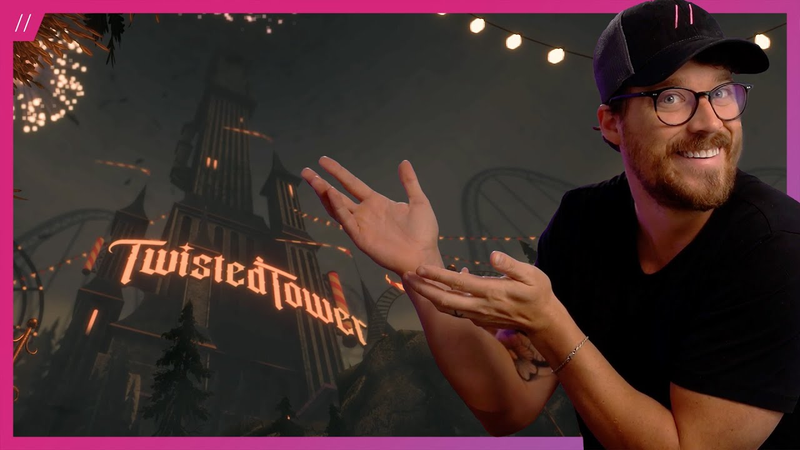
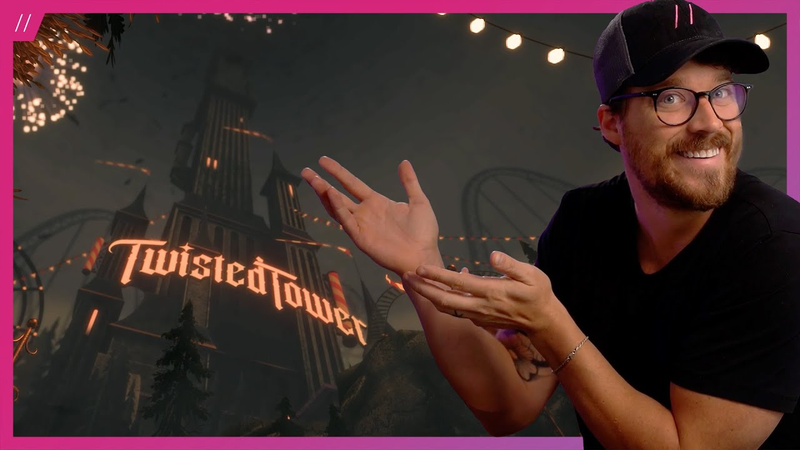
that well, you don't need to make something new. You need to make something. Wait for it. You need You need to make something good. Let me explain. And this blew my mind. I know it sounds simple, but this really did blow my mind. And I hope it changes the entire way of thinking about your first indie game. After floundering for years, I ultimately just honestly I gave up and I made what I wanted to make. I ultimately made a standard FPS inspired by Bioshock, but in a Disney World environment. That's it. It's called Twisted Tower. And boy oh boy is that name fitting. It was a twisted, convoluted journey figuring out what this game even was. The game is not super unique. The gunplay doesn't have some unique twist or spin. Not really. I mean, the visuals are kind of twisty, but that's about it. Instead, the game heavily focuses on what I, as the art director, as the project lead, what I do best. It tells a great story. It has a great atmosphere. And it's spooky.
That's about it. I released the demo in February during Nexfest and I'll be honest, I was expecting a bored sort of gray, irritated response. I expected people to basically say, "This is a Bioshock ripoff and it sucks." That's what I was expecting. Instead, I received the opposite. See, people, they they wanted to play Bioshock again, even if that meant it was a distilled down, dumbed down indie version. As long as it had that Bioshock flare and it was decently fun and had a unique story and setting, players were happy. Now, the game has almost 100,000 wish lists. The demo has over a thousand very positive reviews on Steam, and I'd say it's a solid title for not being very unique or groundbreaking. Okay, so what does this mean for you as you embark on creating your groundbreaking fresh new indie game? Well, don't aim to create something fresh or new. instead make something good. So, how do you do that?
Right? It's easier said than done. Uh here are three three quick tips that will help you do that. Number one, make a game in a genre that you're head over heels for because if you love it, you probably know it very, very well and you can replicate it and please an audience that also likes that genre. Don't pick some stupid random genre that's popular. Pick the one that's popular for you, right? Because you know it. Number two, make a game that focuses heavily on what you do best. This is called your forte. For example, if you're a 2D artist, focus heavily on that. Okay? If you're a brilliant storyteller, focus on that. This is called your 20%. So, the thing that you do that comes easy and it tends to be well explosive for you. it tends to get a lot of results. That's your 20%. It's your forte. Focus on that. And finally, number three, this is important. Be sure that what you're
creating is actually good. Okay? And you might be wondering, well, how do I how do I know that until I release my game? Well, here's a secret. You can release it to a private audience. That's called alpha testing, beta testing. Okay? Test it with your family, with your friends, and look, if they don't like it, fix what they don't like. It's really, really simple. If they find something frustrating, fix that thing. It's it's pretty straightforward. Um, but if they do like it, hey, congratulations. You've got a solid game in a genre that you understand, and it focuses on your forte. Meaning, well, all three of those things are actually going to make the game stand out. See, the thing is, standing out is as simple as just making a solid game that hits all the genre tropes. Why? because most indies don't even do that. Sure, there's thousands of indie games released each year, but most of them aren't even halfway solid. So, your job is to be solid. Your job is to focus on what you do well. Stay within
the confines of that genre and do it well. Test it with an audience and you're good. You don't have to be new or groundbreaking or fresh and unique. You just got to be solid. Don't try and be new. It's okay. Just make a good decent
Auto-generated captions from YouTube — names and numbers may be misheard.
Key insights
7 takeaways · ~3 min read- 01Success in the indie game market does not require creating a groundbreaking or entirely unique mechanic; focusing on executing a solid, high-quality game within an established genre is more effective.
- 02Attempting to force innovation often leads to bloated codebases, development paralysis, and wasted resources, as evidenced by the speaker's failed attempts to iterate on complex, 'unique' mechanics like magnetiles or skydiving.
- 03Leveraging your specific strengths—your '20%' or forte—is the most reliable way to ensure quality, as seen in the speaker's shift from struggling with new mechanics to focusing on storytelling and atmosphere in his title, Twisted Tower.
- 04Choosing a genre you are personally passionate about is critical because deep familiarity with the genre's tropes allows you to better serve an existing audience that already enjoys those types of games.
- 05Validation through private alpha and beta testing is essential to ensure a game is actually 'good' before release, allowing developers to identify and fix frustrating elements based on real user feedback.
- 06The speaker's pivot to a Bioshock-inspired FPS resulted in nearly 100,000 wishlists and over 1,000 very positive reviews on Steam, proving that players are often eager for familiar, well-executed experiences rather than experimental ones.
- 07Standing out in a saturated market is achievable simply by being 'solid,' as the majority of indie games fail to meet the basic quality standards of their chosen genre.
Ask AI about this video
Cite this video
Citation
Generating citation…














Comments