Game Development reports and market data
Documents
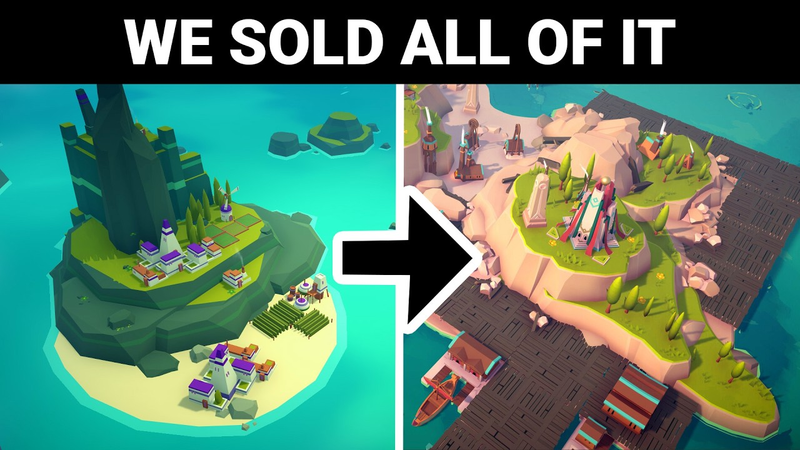
They Paid Us To Upgrade Our Indie Game
The sale of intellectual property (IP) by independent developers can serve as a viable strategy for both exiting a project and ensuring its continued development.
- Selling an indie game IP can be a viable exit strategy when the original developers no longer wish to maintain the project, as demonstrated by the sale of 'Islanders' to the porting studio Coatsync.
- The sale price for the 'Islanders' IP was approximately 1 to 2 times the total revenue the game had generated in the year following its initial release.
- Selling an IP can provide significant relief from the long-term stress of maintenance, porting, and community management, which the author notes can be exhausting and prone to contractual failures.
Fredrik Präntare: How He Sold Millions Of Copies, Solo Dev vs. Team, 3 Years On 1 Game | Ep. #048
The commercial success of the sandbox title Core Keeper, which has surpassed four million copies sold, serves as a case study for the transition from solo development to large-scale studio management.
- Core Keeper has achieved significant commercial success with over four million copies sold, validating a development strategy that scales from a solo creator to a 40-person remote team.
- The studio maintains a flat organizational structure and recruits talent through long-term academic and online networks rather than traditional industry hiring pipelines.
- Publisher partnerships were leveraged to fund team salaries, allowing the studio to maintain lean operations during the critical early phases of development.
Evolving Worlds from Chaos: The Art-Led Approach of 'Darkest Dungeon 2's' Procedural Generation
The development of Darkest Dungeon 2 centers on a deliberate shift toward an art-led procedural generation system, prioritizing the game’s distinct, painterly aesthetic over traditional, programmer-centric automation.
- Red Hook Studios shifted from a programmer-led procedural generation system to an art-led approach for Darkest Dungeon 2 to ensure the game’s distinct, painterly 3D aesthetic remained consistent across generated environments.
- The team abandoned an initial 'sequential plate' system because it created an unsustainable workload for the art team and failed to support the desired game design direction.
- The final solution utilized a grid-based system where environment artists defined a minimal set of road tiles, allowing Unity to generate complex, seamless biomes without requiring constant developer intervention.

Let's Review Your Games — Ep. 016
Independent game development requires a precise balance between innovative core mechanics and cohesive aesthetic presentation.
- Long-term success depends on the rigorous application of technical stability, intuitive UI, and a unified artistic direction that clearly communicates the game's intent.
- Marketing assets, particularly cover art, must accurately reflect the tone of the gameplay to avoid alienating the target audience.
- Technical issues such as frame hitching and poor UI feedback can undermine innovative core mechanics, creating avoidable friction that disrupts player immersion.
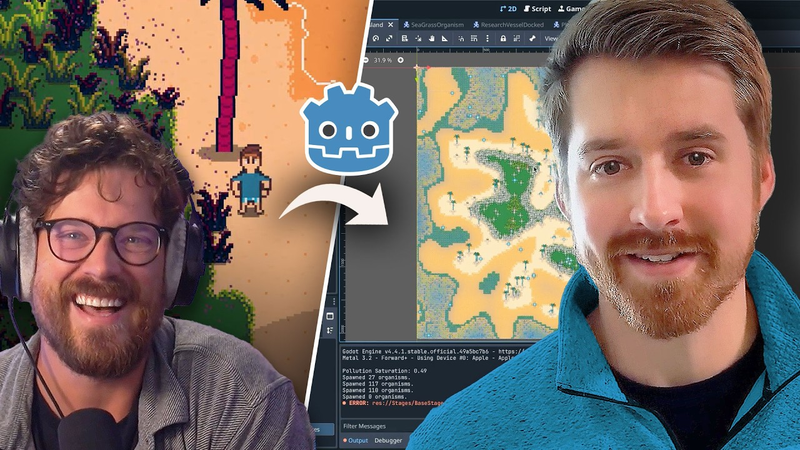
How To Make EVERYTHING For Your Games (COMPLETELY ALONE)
This discussion provides a technical overview of solo game development, focusing on the practical application of the Godot engine and the artistic discipline required for pixel-art projects.
- Successful solo game development relies on modular scene-based architecture and intentional design choices rather than reliance on complex external tools.
- Godot’s scene tree hierarchy enables efficient management of complex object interactions, such as dynamic player positioning relative to environmental sprites, through runtime node reparenting.
- Maintaining professional-grade pixel art requires strict adherence to a defined viewport and canvas scale to ensure consistent pixel sizing across all assets.

"Reviving Sega will be the greatest achievement in my career"
Sega president and COO Shuji Utsumi outlines a strategic vision for revitalizing the company by balancing its rich historical legacy with modern, globalized development practices.
- Sega is transitioning from a Japan-centric development model to a simultaneous global release strategy across all platforms, including PC, to capture a broader international audience.
- The company is utilizing a portfolio-based management approach that balances stable revenue from established franchises like Sonic, Persona, and Yakuza with innovation from riskier new projects.
- Sega acquired Rovio to integrate mobile expertise and address the challenges of the games-as-a-service sector through deeper IP engagement.

Llibre Blanc de la Indústria Catalana del Videojoc 2024
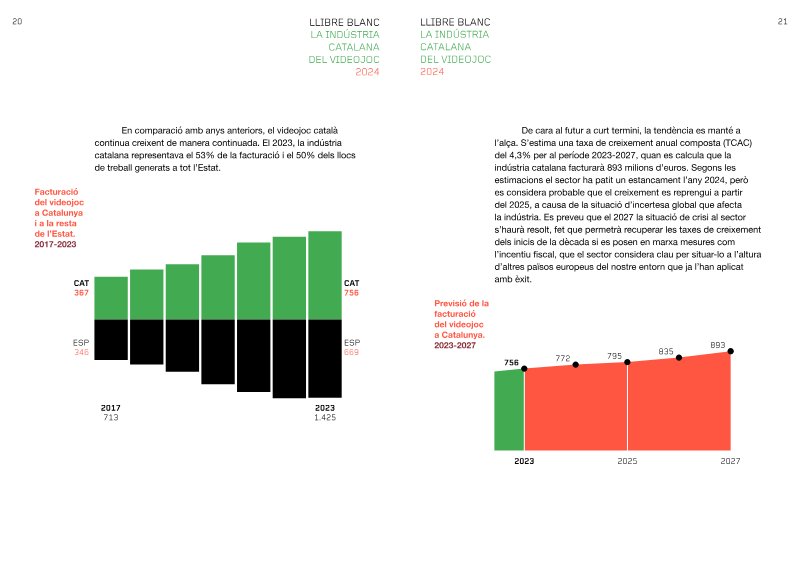
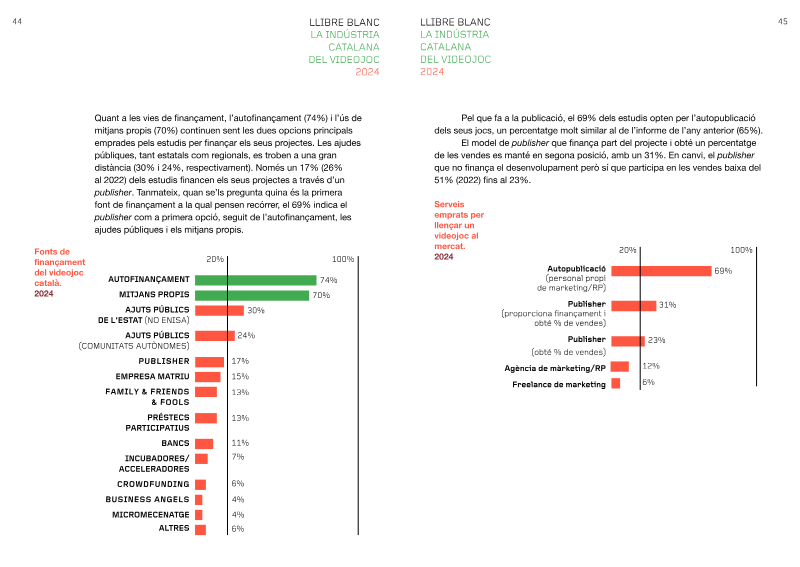
El Llibre Blanc 2024 ofereix una radiografia de la indústria catalana del videojoc i sosté que, malgrat la correcció postpandèmia global, el sector va continuar creixent el 2023.
- The Catalan video game industry generated €756 million in 2023, representing 53% of Spain's total revenue and a 6.6% increase from 2022. It employed 5,174 professionals, accounting for 50% of the national total.
- The industry is projected to reach €893 million by 2027, with an estimated compound annual growth rate (CAGR) of 4.3% for 2023-2027, despite an anticipated stagnation in 2024.
- In 2024, there were 262 video game studios in Catalonia, with 161 formally constituted as companies, a 10% increase from the previous year.
Walking Away from Venture Capital with Sophie Vo
The pursuit of venture capital often forces founders into a rigid framework of hyper-growth and high-stakes exits that frequently conflicts with personal well-being and long-term business sustainability.
- Venture capital models prioritize rapid valuation markups and high-stakes exits, which frequently conflict with long-term business sustainability and founder well-being.
- Founders who rely on external investment often face forced growth trajectories, problematic cap tables, and burnout, whereas bootstrapping allows for greater autonomy and control over the business vision.
- Modern leadership should shift away from aggressive, hyperscale metrics toward self-awareness, active listening, and strategic silence to better align business goals with personal values.
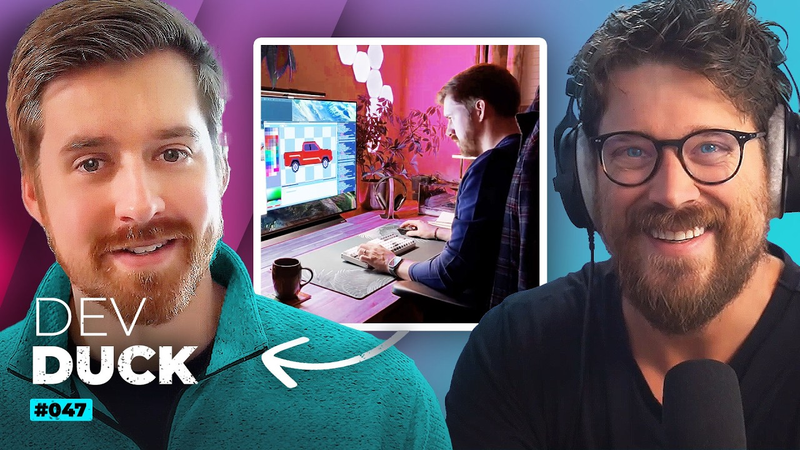
DevDuck: Switching To Godot, Making Games Alone, 5 Years On 1 Game, Staying Motivated | Ep. #047
Solo game development requires a delicate balance between creative ambition and the practical constraints of a professional career.
- Solo developers can mitigate scope creep and prolonged production cycles by adopting a disciplined, iterative workflow rather than pursuing total creative control.
- The transition from Unity to Godot reflects a strategic shift toward lightweight, node-based architectures that offer more intuitive management of 2D depth and procedural generation.
- Custom editor tools allow developers to combine procedural efficiency with manual curation, ensuring that generated game environments retain a handcrafted, intentional quality.
Rules of the Game 2025: Uncommon Techniques from Insightful Designers
Effective game design relies on the strategic application of intentional friction, where mechanical limitations, scarcity, and unconventional controls are used to align gameplay systems with a project’s core emotional and thematic goals.
- Designers should use intentional friction—such as mechanical limitations and scarcity—to align gameplay systems with the project’s core emotional and thematic goals.
- Technical development should prioritize rapid, messy iteration over rigid scripting standards, allowing for temporary, one-off solutions during early production to protect the player experience.
- Innovation is best achieved by stripping mechanics to their simplest form and selectively reintroducing complexity to foster emergent, varied gameplay.
Autonomous Worlds | BITKRAFT Summit 2024
Autonomous worlds represent a paradigm shift in digital environments, functioning as fully on-chain gaming ecosystems where blockchain technology serves as an immutable, permissionless foundation.
- Autonomous worlds are defined as fully on-chain, permissionless environments where digital physics and rules are decentralized, allowing for unlimited, composable experiences beyond the original creator's intent.
- Cartridge is developing the open-source toolchain 'Dojo' and 'Slot,' a rollup-as-a-service platform, to provide the infrastructure necessary for developers to build fully on-chain games.
- Unlike centralized platforms like Roblox, autonomous worlds eliminate platform take-rates and permission requirements, enabling developers to commercialize and iterate on game assets and mechanics freely.
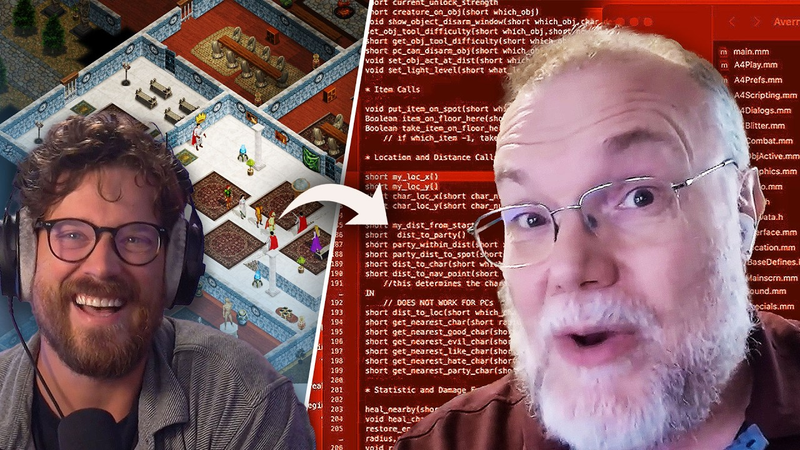
What A Custom Game Engine (NOT UNITY) Looks Like Behind The Curtain (w/ Jeff Vogel)
Maintaining a bespoke, 30-year-old game engine written in simple C++ offers a viable alternative to industry-standard tools like Unity.
- Maintaining a custom C++ engine with a compact codebase of 50,000 to 70,000 lines provides a viable, efficient alternative to complex industry-standard tools like Unity.
- Bespoke engines can bypass the need for extensive external documentation or software by utilizing manual scripting and global variables for data management.
- A grid-based coordinate system and script-driven object management allow solo developers to efficiently build and iterate on isometric, open-world environments.