Transcript
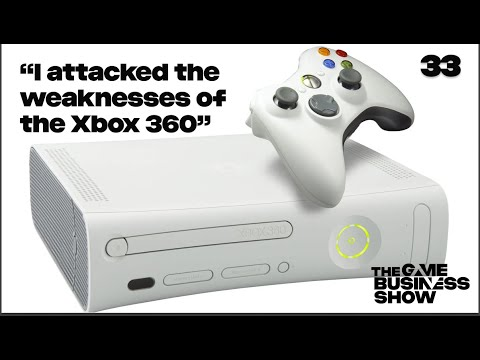
I don't think the industry would be anywhere close to what it is today if Microsoft wasn't involved. I've heard so much about this simulation that you all did. Do you play Ken Karaki? Did I read that? I I I did. Yeah. And squaringly I won. Hello and welcome to the game business show with me, Christopher Drake. It's terrifying to think it's been 20 years since the Xbox 360 was launched. This time back in 2005, we'd seen the games at E3, we'd seen the reveal show on MTV, and we were getting excited for its big release. To celebrate, we decided to catch up with Peter Moore, who was charged with launching the console back then. Now, we conducted this interview with Peter a few months ago. But with Xbox in the news right now after making so many cuts across its business, I felt now is the time to share this interview with you as it kind of provides an insight into a time when Microsoft was the underdog trying to find a place in this industry. Tried to compete with the big PlayStation and take it down a peg or two. I hope you enjoy it. Thank you
for joining us, Peter. Welcome to the show. You joined Xbox after your experience with say this is so I'm going to go back a little bit back before 360. So you join Xbox. Yeah. Well, well, you joined Xbox after your experience at Sega, right, with Dreamcast. And I mean, did that whole experience not scar you from from what we did from from the console space? Actually, quite the opposite. I mean, Dreamcast to me was a trailblazer. I mean, we had this, you know, and and Dreamcast, what are we now 26 years since its launch? Um, it's difficult to describe to people that are not in their 40s or 50s what Dreamcast meant to to gaming because of the online function. Uh, you know, albeit um dialup and clunky and inelegant and um frequent um drops of packets of information going through, but it blazed a trail. And I've often said the Dreamcast passed the
baton to the Xbox 360. Um, which with Microsoft's resources was able to take the Sega dream and build upon it and obviously put quite frankly billions of dollars behind it because of the belief in all of us coming together, no matter where we were in the world, to play games against each other, with each other, cooperatively, competitively. And no, I was I was I was disappointed and I was saddened. But you could see the opportunity. Uh it was clear to everybody during that period that online game was the future. And and and the phrase I coined there, we're taking gamers where gaming is going. Now we couldn't complete the journey with them, but certainly Xbox and obviously PlayStation um you know were able to do that and to a lesser extent Nintendo. Yeah. Well, you went you went so the Dreamcast obviously went up against it was basically PlayStation 2, right? I mean, it just it just that anything that went up against that, whether it was
even the Xbox, but like Gamecube and Dreamcast just found itself up against an a very formidable opponent. I guess you didn't feel that was an impossible mountain to climb. No, I mean, look what you you every every incumbent needs a challenger to punch them in the face, right? And you know, from the perspective of what Sega was was keeping PlayStation honest, they they would not have delivered the power of the PlayStation 2 without the spectre of the Dreamcast. They needed to step up their game. I've always admired them uh in in how they did it through fudding us fear, uncertainty and doubt placed in the minds of the uh of the gamer of that time calling the Dreamcaster transition platform that sure go buy one. But the moment the PlayStation 2 comes out in March of the following year, you you're going to buy one of those. And to their credit, they place that uncertain doubt uh into the minds of gamers. So, um, we just didn't have the resources to
fulfill the dream of online gaming. Um, you you know, it shipped with a 56k board modem here in the United States. And then eventually we got a broadband adapter to go in as broadband adoption. But when the Dreamcast was shipped, 80% of the world was still on dialup. And so we had to find ways to deliver a decent gaming experience through dialup. And um you know and and obviously I think we we had a strong relationship with Microsoft and towards the end as it was very clear that we were not going to be able um to survive against the juggernaut that was the PlayStation 2, Microsoft was very supportive and helped us and I think also saw what we were doing and thought we can do this except times 100 and I think that's where it ended up. Yeah. So, let's jump to 360, right? Because I've heard so much about this simulation that you all did. Do you play Ken Cutaragi? Did I read that? I I I did. Yeah. And squaringly I won, which was which then um it's called
Wargaming. And what you do um if I remember rightly, you know, consultants come in and I think it was McKenzie that comes in and sets up a wargaming um you know, two three days of okay, this is who you are. This is what's going to happen. how are you uh in my case Ken Kuraragi going to take on Xbox and it it allows you to expose the thinking of the competition and then what are you going to do to be able to combat that. So yeah, I took on the role of Ken Kuraragi and and and then you know basically attacked what I thought were the weaknesses of Microsoft and Xbox and the Xbox 360 and hard drive capabilities and all price points everything that you do in a war gaming environment and um and then you have independent judges who were typically the consultants and yeah scaringly I won which um shouldn't shouldn't have happened in the end in the end it all worked out very well but Yes. And it's part of it's part of what
companies do when they're going into a nose tonose competitive environment is that, you know, it's the art of war. You've got to understand what's going on in the head of the other guys. And the best way to do it is to go into a war gaming environment. Have you done Have you done that sort of thing before or or since? So, we did it a little bit in my Reebok days, unfortunately, against Nike and and and you do this simulations of situations. Um, and you've got to get inside the head of your competitor and then figure out how you can compete or in some way neutralize their competitive advantage. Yeah. I mean, it's maybe it's an American thing, uh, but it's pretty standard over here. Yeah. And how useful is it? How useful was it for Xbox 360 per pop? I think it, you know, again, this is 20 years ago. I'm trying to think through all of the details, but it was very much we immersed ourselves and we researched Sony, how they launched the original PlayStation, what we felt they would be
thinking in Japan and also in in the US. And so it was it was Ken Kuragi, it was Kazarai, it was I think it was already Jim Ryan over there in the UK. and would think through from their perspective how they perceive you Microsoft and how they would perceive the Xbox and what they would do with those perceptions to compete with them. So you're you're uncaling this onion as you research and then you you you game play, you stand up, you make presentations, you you have mock marketing meetings and um it it allows you to get into the head of the other guys. Uh and you take on that facade uh where I'm thinking like I'm Ken Kuragi. Yeah. Well, I I don't I don't I don't suspect you remember, but I'm guessing what really happened, what Ken Krai and Sony really did was not what you'd um had not. I mean, I think I think the price point
never envisioned the price point. Um, you know, look, if I'm cur arcades Microsoft, they've got no legacy. They're we're going to we're going to um, as we did with Sega, we're going to put them in a corner and we're going to place doubt in the minds of the gamer and they don't have the studios yet that that we Sony have. And we still have the legacy of everything that comes out of Japan is truly authentic. And here you've got a company that's more famous for Windows, Excel, PowerPoint, and Word. How on earth can they make can they be in the entertainment business and and and make you know entertaining games? And so this is these are the types of things that you do and and I recall being completely immersed in that world of PlayStation and picking holes in in Microsoft strategy that I also knew very well obviously because I was responsible for it. Well, you mentioned the fludding of the Dreamcast, right? And part of that I
remember you telling me last year you had like the bouncer on on stage. It was it was E3, right? Where they were showing off games that weren't real, right? looked very very impressive and looked certainly more impressive compared to what you were showing perhaps. Um now they did I believe they did try that again for the 360 Killzone 2 demo being Yeah. Um but demo you call it a demo. I I would call it a movie. But it was a but that was them sort of trying to go I don't know. It was exact exactly the same tactics of of placing uncertainty and doubt and creating a very expensive movie um using elements of the game but but when the game came out and if you could dig out the movie now and look at when the game came out completely um completely BS. Uh and I I knew it that night when I watched it. I thought there's no way they're delivering this experience. There is absolutely no way. Um but but you know
to the gamer they were doing the same thing to your point as they they did to to us at Sega which is go all right you guys Yeah. Yeah. Yeah. Cute little Xbox 360 coming out but the big boys will be out with the PlayStation 3 so you should hang around and wait for that cuz look what we can do. Yeah. But I don't think people believed them this time. That was the I think that was the key difference. It feels at least looking back and reading back on it and trying to remember the moment myself. Um, you said that with Killzone 2, there was a lot more doubt from games around that and well, I mean, I think that that lessons were learned, you know, the the um the positioning for for the PlayStation 2 was the emotion engine and and and some bizarre reason they said this will be like Toy Story coming to life and and you know, rich three-dimensional imagery and and super smooth 60 frames a second. All of the things that they're like politicians, right? you promise so that somebody buys it and then you know do you deliver on it probably not but too late there because you've got their vote
and so um I think but to your point I think the industry and games journalists in particular were going wait we've seen this uh we've seen this movie before no pun intended and um based on what we think we know about the capabilities and the specifications of what this PlayStation 3 is about and we're looking at this and you know we said there's no way there's no way they're going to deliver it. Um and you know I think that you know fool me once you know uh shame on you fool me twice shame on me and that's exactly what was going on in that second goound here. Well, I'll jump I'll jump back over XZ E3 obviously was spring. Um, and again, I don't know how well you remember this, but obviously the viral campaign for Xbox 360 according to the internet, and I don't remember this at all, was the alternative reality game Our Colony, which is, I think, a successor to I Love Bees, which was the Halo 2 um thing. Um it's such a trip down memory lane
looking at ARGs and these and these sort of quite I miss when marketing was this creative. Um was it but why what was it what was it about that route that made that made a a good thing to start with it came to 360? Was it because of the online capabilities? I think you so so yeah you do these viral campaigns and you start like putting things on the internet and little clues and little Easter eggs and people go wait what what's this all about and it unravels and so the the marketing team had created this viral journey to over a period of time. It also allows you to get your marketing going in a unique way um without disclosing what you know a lot of detail. And so it was this classic journey and this was popular in the 2000s of these kind of little viral journeys where um you know it's kind of preocial media remember but you're
you're going online and we're feeding you clues and and and little bits of direction and we're peing your interest and you're you're playing along. And so that was the idea. Um, with the thought that as you continue to solve these little p little puzzles and figure out where this thing is going, you're going to learn about the X. It wasn't clear at first whether this was anything to do with Xbox or Xbox 360. So, but but the team did an amazing job and enough people and it created enough buzz even if you weren't playing it because people go, "Wait, this is cool." you know, and and so you would talk to people like yourself, games journalists, and they would they were fascinated because it was unusual. This was still in the days again 20 years ago of, you know, you you're still doing magazines and and you're doing outdoors, you know, big billboards and you're doing TV commercials. So very sledgehammer over the head type marketing, not not what we were then
doing, which is very precise and and very intriguing, very intellectual. Um, we weren't talking down in any way to the gamer. In fact, we we we were giving them um psychological challenges and and and puzzles to solve. And I think they appreciated um if you will both the elegance and the intellect that would came along with it. It was very unique. According to the internet, GameSpot eventually caught on to it. I think a few weeks after it launched and did a feed did a story on it on their website and it crashed the Conley website. Suddenly everyone wanted it. So again that would have created another story and it would you would have that added. I actually read about some of the viral campaigns that followed our Connelly. One they sounded so obscure. One of them apparently featured talking rabbits. Um I worry that in today's world of brand guidelines and you need to fit within you know what the what's the overall picture the vision that it felt quite random some of this stuff it didn't necessarily match the you know didn't feel like it was very in keeping with the overall whatever the marketing
we we we we had as part of our team core part of our team Jay Allard and and and as I recall all of these Jay was uh little bit of the driving force behind all of this because that's the way his mind works. it it's not linear. And so the idea of we needed to be different, right? We we we just couldn't put up the same ads, the same kind of genre and we just needed to be different and we needed to show that we we being Microsoft that we could do things very differently and speak in a way to the community that that um showed that we we respected their intellect and actually try to do things in a very different kind of quirky way and I think it succeeded. On the flip side of that, so you did these viral sort of very gamer friendly sort of things. You then did the reveal which was with MTV and Elijah Wood and the Killers. Like it was like the almost
the polar opposite to all that. A big sort of celebritybacked um MTV reveal. I think the idea of games consoles being revealed on MTV feels feels strange um to to perhaps gamers today. Um where did the where did the idea come from? Was it something that um Yeah. Where did that come from? Well, MTV was getting uh was getting to what we needed to from its demographic and and and look, remember in the Dreamcast days, we launched on the VMAs, MTV VMAs um and did all of our marketing uh you know, it launched on $99.99 and uh we took over the the MTV Video Music Awards and uh in New York City and and fortuitously was also on $99.99. And then the following year we we did a takeover of the VMAs as well. So MTV had always been and from video game advertising, you know, quarter of a
century ago. Um it was a platform and certainly a network that allowed you to get to who the gamers were at that time. let's call it uh slightly older than than uh teens but but still um in a way that allowed you because digital advertising still was in its nasonency and really hadn't um kicked off to the level that obviously it is today but MTV delivered delivered demographically um from a cost per um you know what's known as a CPM we thought it was cost effective I had done it at Sega and I felt they were a great partner and we decided to do it um you Oh, and and you're also trying to get credibility still at this point. Um, in video games, it's not like it is today where where pretty much everybody plays and everybody takes it seriously. It was still very much, you know, the classic boys in their bedrooms and something that a phase you go through and and and uh a lot of people saw it as trivial. And look during that same period I had appeared
in print Senate hearings trying to justify uh the creativity you know the McCain Lieberman hearings um you know with um with Greg Fishbach of a claim and Strauss Zelnik who was not in video games then but was BMG music because it was ourselves in games and music that were trying to allow the artists to be creative and not have boundaries you know bad language and violence and all of this and it was about getting credibility to a generation that absolutely didn't understand what games were all about and poo pooed them as a waste of time and in fact as being a negative influence on society. So, so you know to your question MTV was was the perfect platform during those days to be ablely rebellious to be able to deliver a message to the demographic we needed to get to. Yeah, I I watched it back re recently. Um and um uh uh just
Elijah Wood and the Killers look so young for starters, but the um but my um um my there's a there's an entire element where they send a load of I think what you would describe as MTV kids um uh quite cool uh American teenagers to Rare in um in uh in in in the UK um in Warikshire and they're just walking around talking to Rare developers and it is it is unbelievably cringy the disco but it's obviously Obviously I you know I I can see why that was you know otherwise it would it would have looked very nerdy. Um uh but so after that you did the then you went to E3 and we talked about E3 a moment ago but that was like I I don't remember E3 2005. I was just before my time in the industry but um PS3 Wii or Revolution as it was called at the time. Um I don't know for me because I've been to lo I've been to so many E3s they start to merge into one but this feels like one I probably remember. Do you remember much about it? Well, yeah. I mean, we were we were this
was our launch E3, if you will, or or pre-launch E3 for for later that year. And um obviously, you know, from the perspective of um having to justify this is again, it's 20 years ago, but if if I recall, this was the E3 where Killzone 2 movie uh shows up. We obviously are showing launch games. Gears of War. If I recall, we did a live demo um of Gears of War um with Cliff Eye B and the guys from Epic uh showing off the Unreal. It's also, if you will, the launch of the Unreal Engine 3, uh which Gears of War was the poster child for it. and you know games that we had um we're we're looking at you know Cameo and Project Gotham Racing out there from from uh Bizarre Creations in in in Liverpool. Um you know all of these games coming together um that was and and it was I think it was just a monumental E3 because to your point the timing of
everything uh was going to be key. It was when I think again uh you know Jack Trenton and Kazarai decided that um you were going to work overtime to afford a PlayStation 3 at whatever that was $599. So all you know and and I'm with you E3s I must have done 15 of them. You know they do become a blur but that that 2005 would have been uh a big one because of the nature of what was coming down the pike before the next E3. Yeah. Well, it's interesting because I I I got I went to Matt at Sakana and I asked him say, "What what what h what was let's talk about the launch. Let's talk about what happened." And they said and he said there was only 19 games that launch in the first year of the 360. Um so the first two months basically which I thought was it feels really small um by um I guess nowadays in the digital distribution and the rise of of indies and stuff there's there's obviously a lot more game developers but it felt quite quite a a tight um lineup. The
bestselling game was Call of Duty 2, which like according um so um uh Xbox 360 sold in the US 605,000 hardware units in 2025. Um Call of Duty 2 sold 56,000. So only 100,000 people didn't buy that game on. That's a good attach rate right there. Yeah. I mean, look, we spoiled we spoiled you with the Dreamcast launch as regards the number and the quality of um launches. And remember, we're going into a world with the Xbox 360 of high definition, you know, 7.1 sound. This was not an easy transition for many developers and publishers. And and I also think there's something look how many games do you need at launch? Well, you know, it's it's it was very much for me. If we go back to the Dreamcast, I wish we' have spread out a little bit um some of the content so that there was always something to talk about next
month. And and you know, but but the publishers want to be there on on day one. They want the you know, the hype and and and and the focus that the console launches had and still have and to for their title to benefit. Yeah. Yeah. I mean, I didn't mind that at all. I thought 19 90 19 was probably about right. Yeah. And because I think there were stock shortages at the start and you know, so you sold probably as many as you could ship and um as you were pointing out, you know, you didn't have a competitor really. You know, you were launching, you were the only you're the first to market. The need to have um everything ready and everything firing perhaps wasn't this you didn't need. It wasn't necessary. And I look at Nintendo with Switch, they that's the approach they took with that. They launched it with one major first party game, then they launched another one a month later, then they launched another one a month after that. And it was all about building the momentum over time rather than just having this big. So I think it was I think that's probably right. I was looking at some of the games um Perfect Dark Zero, which um
was the big anticipated rare game. There's Madden, Need for Speed, Project Gotham 3, as you said, Kameo, Condemned, Quake 4. Um, yeah, it was uh it was was yeah, it was just I I don't know if you remember much about any of that lineup, but it's uh it's um you check your boxes. You tick your boxes in in genres, right? What do you have? You've got something Perfect Dog Zero bringing back Joanna Dart, you know, from the old days and and so you got a bit of nostalgia right there. Uh Cameo was very different and I loved Cameo because it showed off the visual fidelity. Um, and I demoed that a lot as I demoed uh Gears of War in the in the runup. Um, and and you know, you got to have your driving title. These are the days where you can't launch without a driving title. So PGR became, if you will, our our Gran Turismo um, uh, competitor, albeit slightly different type of driving experience. And, uh, you know, though,
and you got your shooters. I mean, you've got to be able to and you got obviously your sports games with Madden uh for the US anyway. Um because you got EA Sports on involved, which was great. And it it kind of ticked all the boxes. You got a game for everybody. Yeah. And it's a question of sequencing releases and and those are difficult conversations with publishers who need to make their quarter or whatever. And so you've got to a third party team did a brilliant job in managing, you know, difficult conversations like we think you should not ship this quarter, let's ship next quarter where it's got a open window and we can give you some support and you're not going up against this title. So those are the those are the conversations that are had still to this day. Sure. Um you know with with first parties. Yeah. I was reading about the launch event 360 um in a desert the zero hour launch event. What do you remember about that? A lot. Yeah. I think um again back to
the doing things differently, doing things uniquely and and making it gamer first. Uh which you know you go well of course but in those days it kind of wasn't that way per se. So I I would say in the summer, probably July, August of 2005, we were I can remember this meeting now, the marketing team, um you know, all coming together in in Millennium, which was our um kind of off-campus headquarters for for Xbox there and talking about unique ways to thank the gamer um in a way that we felt that we could do that maybe Sony couldn't do. Um, and so we started noodling around these ideas and you know it said why don't we why don't we find a desolate location um and bring enough units in and uh make it feel like this kind of Area 51 vibe
and um put for 24 hours gamers if they can get there uh from anywhere in the world uh then they deserve uh you know 24 hours unfeted access to all the gains we had at launch and that's what we did. So we found we found an area in Palmdale which is um in the kind of central valley of California not quite the central valley but very much uh part of uh US Air Force stealth bombers things like that that kind of vibe to it. and we found next to a US Air Force base some deserted hangers and um we thought all right and so we developed this zero hour concept. We uh you know everything was bright fluorescent green. Um and we decked out these hangers, massive hangers with white bean bags and demo units and games and made sure there was plenty of food
and and water and you know open these massive hangers hanger doors at midnight and then uh you know let games all rushed in. got themselves settled in a bean bag and and pretty much never moved for the next 24 hours. We did also allow them to buy a Xbox 360. Uh Best Buy as a partner came in and backed up trucks and and um gamers were allowed to go and and buy the first off-the-line Xbox 360 to take home with them. So, it was it was a unique event. uh my marketing team did a brilliant job in a short period of time executing against it and finding the right place and and doing all of the work that was necessary uh to give it this kind of cool discovery vibe. Um, again very similar to, you know, the types of stuff we had done earlier with Isa Bees and the colony concept. Um, but more to say thank you to gamers, right? And make it gamer first is what we said. Um, and and that's what zero hour was.
What I find really fascinating is how 360 really won over third parties like very quickly. And the thing that I always note is that during the Xbox 360 era, whenever a whenever we I went to a media event, a press event, it could be for the new Assassin's Creed, it could be for any game, the controller was always hand handed, whether it had a marketing partnership with Xbox or not, the controller I was always handed was an Xbox 360 pad, right? So, here you go. Here's the game. And everything was demoed on 360 during that era, whereas you could not say that for the PS4 era. You certainly couldn't say that to the the PS2 era. Um and that was quite a remarkable shift. You just had this place had this dominant platform that was that was number number one by a 100 miles and then suddenly the ve the very next generation it seemed the third party momentum you know the interest from from you know take 2 and EAS and and Activisions very much shifted to Xbox. What how how did you pull that off? Well, you know, Microsoft in in a
lot of ways was disadvantaged in in its legacy of who it was and what it makes and what services it delivers. But the one thing that they were and still are brilliant at is third party relations is is managing partners, whether it's P, you know, whether it's Dell, HP, um, you know, uh, IBM or whether it's Activision, EA or Ubisoft. And it was very much the team that came on board. this third party team, George Peekham, Blake Fischer, John Smith, that this team, seasoned team in working with third parties and bring them into the into the camp and asking them what they needed and how can we help and and that's where Microsoft was able to flex its muscles and deliver something that they were used to doing which was third party relations because they this they built platforms. Microsoft was a platform uh way before we started
talking about platforms in in in video games and so having developers uh feel good make money on your platform was key and Microsoft was brilliant at that. So we would make sure that our third parties and look it's it's a courtship. Um you know it's who's got leverage. Uh but but that team were absolutely superb and you know I would travel the world with with them Robbie Bach and I would go and with George and and and uh with with Blake and and whomever it happened to be um you know the the account managers there and we would do whatever they needed to make them feel part of our platform. Uh I I'm sure PlayStation did the same, but we we had a real focus on delivering for our third parties in the long game as as evidenced by where we are today 20 years later. You know, the payoff, the lifetime value of that is a mess. Absolutely. Yeah. Well, and obviously the big one
obviously Grand Theft Auto, which had been seen as a I know it had later come to other platforms, but it had been seen as a PlayStation um brand for so long and suddenly to have GTA 4 launch simultaneously 360 and I think you had a partnership with them and and that if I remember the tattoo as well that was probably the pinnacle of it. Obviously, Call of Duty and the relationship you had there um during that generation was so crucial to that. We spent a lot of time in in in Take 2's office in in in on Broadway in in New York City. A lot of time uh you know, a great bunch. Um you know, a wacky bunch to say the least. And you know, and and look, you also provide financial incentives. You build a financial model that makes it work for them. But yeah, we would you've got to win trust. And in those days, you know, my good friend Paul Ibler was was was, you know, kind of the CEO there. This is before Strauss came in and and we had to win over um
you know the Hower brothers and all of the the the I don't want to call him eccentric but the wildness of taking too much rockstar and um even bringing Steve Balmer into play to to talk uh to the houses at at one E3 and convince them of that we're for real and we're in the long run and we are a great platform for their content. Um and yeah, worked out well. Yeah. Yeah, obviously. So, we're mostly focused on the launch, but obviously that I think that was obviously um a long-term um reason for its success and then um when did you first how early was it before you before the the technical issues, the famous red ring of death? Um you started becoming aware that you might need to do something here. Was that was that was it was it shortly after launch or was it a little bit later? No, I think it was a little bit later. you know, when you when you launch, you expect some things to come back and and and and you learn when they come back and and and but it started to creep up,
you know, after a few months more and more and and this is where retail in this instance played a big part because they were still everybody went to, you know, retailers to get their consoles. And um we you start to hear little murmurings uh of we're getting a lot back more than we think. And uh so you know the technical team uh Todd Hol in particular who did an amazing job under the most intense pressure on this. You bring a few back and you start looking at them. You you're scratching your head what is going on here? Um, and then as the the problem starts to mount, and it takes six or seven months for you to like, all right, get get to grips with the magnitude of what's going on and you've got a bone pile of consoles that have come back just don't work and and colloally called the red rings of death from the the power button at the front.
when you get the four red rings there, um your your your console is bricked and strange things like these kind of home solutions of wrapping a towel around it and you know somehow that worked in some instances. I'm sure it didn't in in the great majority of instances, but then once you start to figure out then you've got to come up with a solution. Um and it it took us a while to figure out what was going on. um and and what the solution to it would be. And so eventually then once you've got a solution to the problem, not a solution to the technical problem, but you know, hey look, you know, your warranty is going to be extended. You've got a problem. We're going to send you overnight a box. Put your 360 in there. Keep your face plate if you want to. Keep your hard drive if you want to, but we need to get it back. uh we'll fix it or replace it and then we'll send it
back to you overnight. Um you know to um so you're you're receiving it overnight, you send it to us overnight and then we'll send you back in most instances a new one overnight. And that's where a lot of the money for all of this was was the overnight FedEx and DHL or whatever was being used at that time and UPS obviously and but then you know starting to figure out was it was it the fact that we were using all lead solder in in there which was actually an EU requirement and and get I say all lead no lead uh and get all the lead out and was that causing heat? Were the fans in the right place? all of these things trying to figure out whether uh you know and there was a theory that wrapping a tile around it would create more heat which would rejoin some of the issues of the cracks in in some of the units as all of this was going on and it was stressful but the one thing I will always say is you know
this was for us a defining moment and we you know if we hadn't have done what we did I'm not sure the Xbox brand would be around today. uh we spent a lot of money. I remember 1.15 billion was reserved against this and um we felt that that was money well spent to to hang on to a brand that we'd built that we felt had huge viability going forward and of course it does um and um doing good by the gamers um and and so yeah and it was a tough time. The 360 from my point of view was a phenomenally successful machine. I mean, I know it actually wasn't the number one selling for the generation, but to where Xbox where it was the generation before to where it finished, the market share it claimed. And in the and of course, I'm I'm a Brit. I'm in the UK. In the UK, the Xbox 360 was the most successful console of that generation. It outsold the Wii, right? It was it was it was number one in in in in the UK, and I suspect it wasn't too far off in the US either. But um but did the did the red
ring of death internally take the shine off that a little bit or or was that how it was viewed um amongst yourselves? No, I think look I the numbers are always up in the up in the air but you know I think by the time the dust settled on the 360 120 million units worldwide I mean it being long gone by then I was at the EA so it was difficult for for me to get a handle on all the but and then there's a you know it does that include red ring of death units shipped and you know how do you count all these but there is absolutely no doubt you're right I mean it it put us nose tonose probably both Sony and Microsoft said we both won because we both sold well over 100 million units. We grew the industry immensely. And why? Because we went nose to nose with each other and got the best out of each other and and invested enormously with third party publishers because we needed the best third party games to complement our first party
games. And so the amount of money going into the industry um was huge because the competitive juices of mega corporations like Sony and Microsoft, you know, multiund billion dollar market caps and and seeing the opportunity that that games provided to get to a demographic that they typically weren't, you know, I mean, Sony was leaning more heavily early on games because their dominance in television and music all of a sudden started to wne, you know, and the Samsungs of this world were coming in and you know the the their previous dominance in in in televisions for example with kind of the Sony Trinitron if you remember all of this and Bravia and stuff all of a sudden the the Samsungs and LGs were starting to come in and so Sony says all right where is growth coming from um and and games was was the answer competition is good I was going to say this a lot of the times when things fade way. I think it's when you've got a
dominant player that's you know, they're not they're saying I'm not saying they're being lazy, but there's there's no need there's no need to find that extra mile. If there's um if you're if you're on your own and you don't have um and you know, two two great competitors going headto-head, it's going to drive, it's going to improve quality, it's going to generate interest and attention and therefore grow everything. And you know, I think probably PlayStation view the P I know the PlayStation view the PS3 era is a bit of a downer because obviously they lost almost half their audience from one generation to the next, but it was it was still a you know I suspect they made more money you know when you factor in all the all the all the additional um revenue channels. So yeah, the way you look at I was lying here. Rising tide lifts all ships, right? And so Microsoft's entree into the market created a massive rising tide. Billions of dollars into marketing, advertising, R&D, and you know, I don't think the industry would be anywhere close to what it is today if Microsoft
wasn't involved. Um, let's not forget the amount of work we were doing in PC, which which was a core part of our business way before um, you know, the the, you know, games on Windows um, before it got into the console business and still still is for Microsoft and games drives, PC adoption, you know, and um, GPU CPU purchases and graphics cards and all the things in there. So the so games became this direct and indirect catalyst for technology to explode in a very different way than any other entertainment medium could do. I'll wrap up with one last question which is is there anything what sticks in your memory from those early years of maybe that first year of the X of the 360 launch is there anything that um that uh when you look back on that time is the first thing that jumps jumps to your mind. It was such a different vibe and environment for me. Um, from being a subsidiary,
president of Sager America and bluntly with my Japanese overlords on a on a regular basis to being right in the middle of the decision-m. So the real difference and it took me a while but you know when you're when you're a subsidiary of a Japanese company you know you're 17 hours time difference on the west coast and it's like and you got to be flying over there every 3 weeks which I did and you know and the pressure that was on you because Japanese SJ Sega Japan the kind of launch had stagnated a little bit SOE over there okay but you know wasn't there and and all of the eyes were on S SOA say you're America to deliver against it um out to keep this thing alive. So, but but you're constantly having to wait for an answer or get on a plane, you know, and fly 14 hours with a 17-hour time difference to go to Haneda, Tokyo, and sit in a room all day
fighting and arguing and trying to make your point. There was nobody at Microsoft other than us that were making decisions. The one thing I would say very much that that Bill Gates and Steve Balmer allowed us to get on with it and check in with them. They both had a great interest, Bill in particular, in what we were doing, but they also allowed us to be off campus. We were not part of what's known as the Borg. We were off campus and we had our own kind of bunch of rebels that that were either Microsoft employees that love games and and and joined there or we brought in key people from the industry and developed this camaraderie about what we were doing and it was refreshing to me um to be to be part of that and not having to look around for somebody to make a decision. Decision was ours. Brilliant. Well, thank you Peter for your time. Are you actually plugging your book yet or are you uh is that you're taking you know I mean uh I've got to finalize all of
the deals but but it will be uh it will be available this fall and it will be my life story warts and all for for my life from young lad in Liverpool all the way to being a PE teacher in North Wales to immigrating to America and selling soccer shoes and being involved in sports marketing. 44 years of age, changing my career to get into video games and then, you know, eventually uh getting out of games for the one job that I would ever move back to the rainy UK for, which is to be CEO of Liverpool Football Club. Yeah. So, an interesting journey. You know, I'm I'm not perfect and it's a proper autobiography. I, you know, my personal issues, my professional challenges, all of the things that I believe a real autobiography should have. Yeah, it'll be out um it'll be out this fall, this autumn in the UK, uh as well as in the here in the US. I I will I'll be there day one. Um it's
it's called Game Changer. So So that's the title. That's as much as I'll give you. Well, right. Well, I I'll have to, you know, come find you to get it get it get it signed. I'm hoping you do a book tour. Um I'll I I'll most definitely be over there. All right. But I'll let you go. Thank you so much for your time. Really appreciate this. You didn't need to do it and I and I really appreciate it. I found what Peter said there really interesting. Look, it's clearly a different industry today. This was a time when things like digital libraries didn't keep people within one ecosystem. It was time preocial media. Gaming communities existed, of course, but they were arguably less sticky than they are today. The idea of people going from one console to another wasn't quite as unimaginable as the idea of people switching consoles today. going from PlayStation to Xbox or vice versa. But even so, I think the fundamentals still ring true. Xbox made sure it had a strong slate of games on Xbox 360 led by Call of Duty. It promoted them strongly and in unique ways. It had the right
price and made sure to focus on what was important, delivering good games that really resonated with players. I think that's sort of what Microsoft is trying to do today. It's building a strong slate of games led by Call of Duty. is trying new ways of marketing and getting these games in front of players. It has various business models at different price points for different people and hopefully hopefully these good games that it's making can start resonating with its audience. That's always the crucial bit. Xbox might not be all about the console anymore. It is a very different organization in many ways, but I still think there's a bit of 360 in the modern Xbox. That's it for today's episode of the Game Business Show. Make sure to sign up to our newsletter at the game.com if you haven't already. Alternatively, like and subscribe to our YouTube channel or follow us on your podcasting platform of choice. That way, you'll never miss an episode. Until next time, thanks for tuning in.
Auto-generated captions from YouTube — names and numbers may be misheard.





















Comments