Game Development reports and market data
Documents

Let's Review Your Games — Ep. 021
The current landscape of independent game development reveals a critical tension between aesthetic polish and functional design.
- Market success requires balancing high-quality aesthetic polish with functional design, as seen in the contrast between the stylized engagement of 'No Way Home' and the generic, feedback-poor assets of 'Lunatics'.
- Developers must prioritize player agency by presenting challenges, such as locks, before providing the tools to overcome them to ensure progression feels rewarding rather than punishing.
- To maintain immersion during repetitive gameplay loops, developers should introduce atmospheric shifts or narrative pivots to prevent player boredom.
Trends at the Intersection of Entertainment & Games | BITKRAFT Summit 2024
The evolution of modern entertainment is defined by a strategic shift toward transmedia ecosystems where intellectual property is cultivated through deep, authentic audience resonance.
- Successful transmedia strategies require identifying the core emotional experience of an IP—such as the feeling of being a rock star or the tension of a specific narrative—and translating that essence across mediums rather than just replicating mechanics.
- When integrating external IP into games, developers must prioritize the player's desire for fun over brand restrictions, ensuring that new additions align with the existing emotional promise of the game world.
- Authenticity in IP expansion is driven by deep community engagement, whether through radical transparency and social media interaction or, conversely, by cultivating mystery and avoiding direct engagement to build anticipation.
Get Real: AI at Work | BITKRAFT Summit 2024
The BITKRAFT Summit 2024 panel, "Get Real: AI at Work," explored the practical integration of generative AI into the gaming industry, emphasizing the transition from experimental chatbots to sophisticated, game-aware character engines.
- Integrating AI into games requires custom infrastructure and model configuration, making it unlikely for studios to achieve high-quality results within a 1–3 month timeframe.
- To solve the problem of unpredictable, non-linear server costs, the industry is shifting toward on-device, end-to-end AI systems that run locally on PCs and consoles.
- Public foundation model endpoints often fail to meet the latency and performance requirements of core game mechanics, forcing developers to move to dedicated servers with strict service-level agreements.
Which Game Engine Is Best In 2025? UNITY vs. UNREAL?
The choice between Unity and Unreal Engine remains a central debate for independent game developers, particularly those focused on first-person shooters.
- Both Unity and Unreal Engine face significant performance bottlenecks regarding real-time shadow casting, requiring developers to manually limit the number of shadow-casting lights to maintain acceptable frame rates.
- Unreal Engine is often preferred for 3D and FPS projects due to its out-of-the-box support for features like Lumen, which provides real-time global illumination that is more difficult to achieve in Unity.
- The choice of game engine is frequently driven by team familiarity with specific programming languages, such as C++ for Unreal, and the need for cost-effective development tools for early-stage studios.

There is no going back for the video game industry
The video game industry has undergone a permanent structural transformation, moving away from traditional, product-based retail models toward a network-driven ecosystem.
- The video game industry has permanently shifted from a retail-based product model to a network-driven ecosystem where platforms like Fortnite and Roblox function as social utilities competing with social media giants.
- The traditional development model is financially unsustainable, as production budgets for major titles have ballooned to $300 million while long development cycles fail to generate proportional market demand.
- AI-driven automation is being deployed to reduce costs in mobile gaming, specifically replacing roles in level testing and user acquisition, which has contributed to widespread workforce downsizing.

Let's Review Your Games — Ep. 020
Independent horror and experimental titles often succeed by prioritizing unique, surreal atmospheres over technical polish.
- A strong, eccentric creative identity can allow a game to transcend technical limitations and resonate with audiences more effectively than conventional, polished products.
- Developers must balance atmospheric choices like heavy post-processing or excessive darkness with functional accessibility to ensure players can navigate environments without frustration.
- Weak opening sequences risk losing players before they engage with core mechanics, making early narrative hooks and clear combat feedback essential for retention.
Becoming a cross-platform company - Mihai Pohontu from Amber
Amber, a global game development agency, has successfully navigated recent industry volatility by prioritizing cross-platform diversification and a flexible workforce model.
- Amber, a game development agency, grew from 200 employees to 850 over the last three to four years by diversifying across platforms and genres to mitigate market volatility.
- The company successfully pivoted away from a mobile-first strategy starting in 2017, with PC and console projects now serving as the primary revenue drivers.
- Amber maintains a 'variable workforce model' by combining its 850 internal staff with a network of 3,500 external freelancers and partner companies to scale capacity based on market demand.
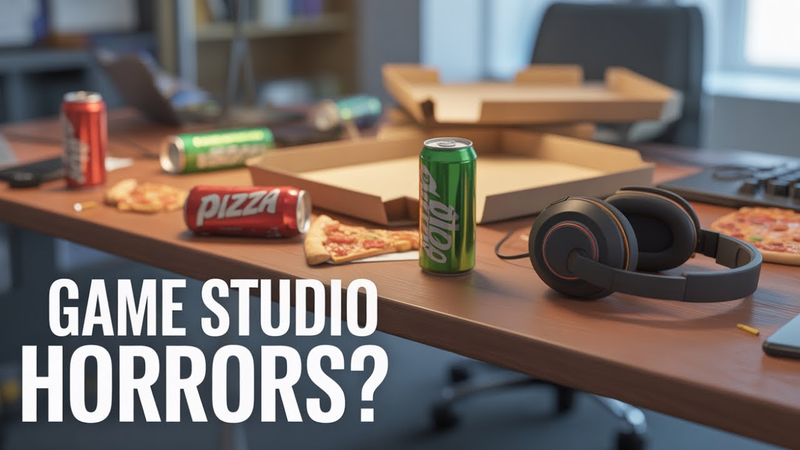
What Does a “Good Game Studio Culture” Actually Look Like in 2025?
The modern game studio landscape is characterized by a fundamental misunderstanding of organizational dynamics, where the focus on abstract concepts of culture often masks a failure to implement effective institutional policy.
- Organizational health in 2025 is driven by structural design, reporting hierarchies, and incentive systems rather than abstract cultural values or team-building exercises.
- Effective studio leadership relies on clear, codified policies regarding performance, hiring, and firing to dictate behavior, as culture is an emergent outcome of these institutional rules.
- Investor confidence is currently prioritized toward leadership teams with proven track records rather than novel technologies, reflecting a broader skepticism toward high-risk ventures like AAA Web3-integrated shooters.
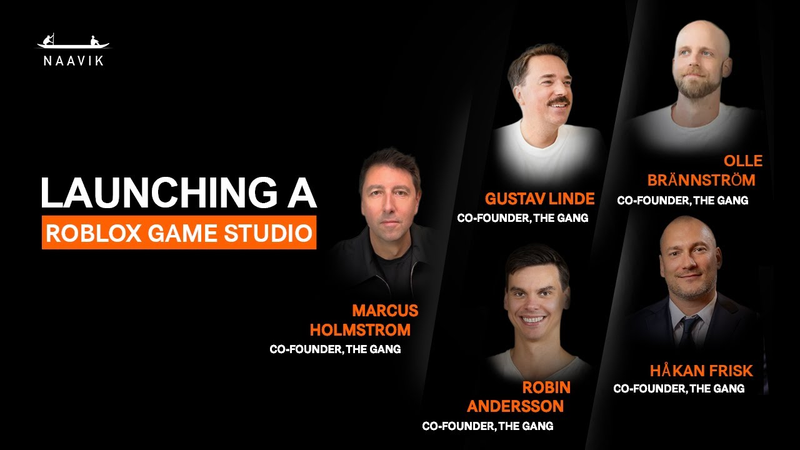
Launching a Roblox Game Studio with The Gang
The Gang has evolved from a five-person startup into a 220-person organization by capitalizing on the rapid development capabilities of the Roblox platform.
- The Gang scaled from a five-person startup in 2020 to a 220-person organization by leveraging the rapid development cycles of the Roblox platform.
- The studio employs a dual-track business model that balances revenue-stable branded experiences for partners like Netflix and the NHL with the development of original IP.
- Operational strategy mandates a strict separation between client-facing brand work and original game development to maintain focus and discipline.

‘Star Wars Hunters was no failure’ – The Big Zynga Interview
Zynga is currently executing a strategic pivot toward mobile-first development, emphasizing the creation of bespoke, high-engagement experiences over the adaptation of existing console intellectual property.
- Zynga is pivoting its strategy to prioritize wholly-owned mobile intellectual property over licensed console adaptations to reduce costs and improve marketing efficiency.
- The company has set a strategic growth target of reaching one billion monthly active users through scalable, social, and interactive mobile experiences.
- Zynga is actively shifting away from experimental technologies, specifically deprioritizing blockchain and console-specific development initiatives.

Let's Review Your Games — Ep. 018
Indie game development requires a rigorous focus on professional polish and intentional design to elevate projects beyond the perception of unrefined asset flips.
- Atmospheric immersion and narrative clarity are the primary drivers of player retention, requiring a shift away from generic musical scores toward reactive, thematic soundscapes.
- Effective indie storytelling should prioritize environmental cues and central mysteries over text-heavy exposition to maintain player engagement.
- Professional polish requires cohesive typography, modern lighting techniques, and directional shadows to prevent projects from being perceived as unrefined asset flips.
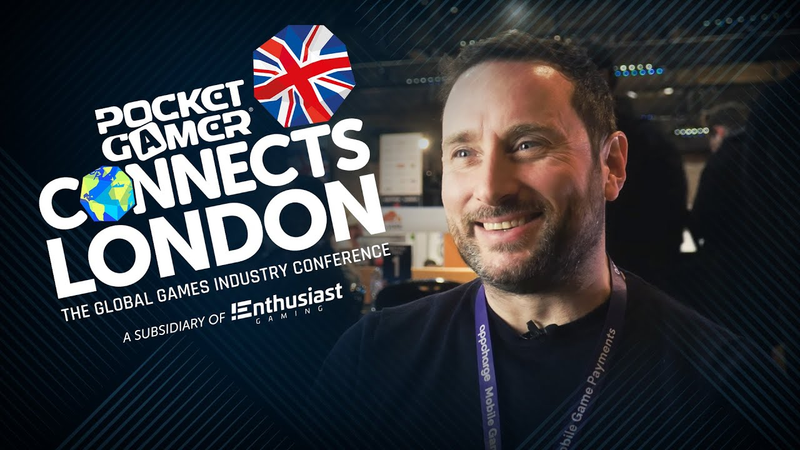
How to bring the player INTO the value chain - James Crabb from Almedia
The rewarded user acquisition (UA) model represents a shift in the mobile gaming value chain by directly integrating the player into the monetization ecosystem.
- Rewarded user acquisition (UA) platforms like Freecash.com allow advertisers to share a portion of their cost-per-install (CPI) revenue directly with players, incentivizing long-term engagement rather than just initial downloads.
- Modern rewarded UA focuses on high-quality, engaged users by tracking deep in-game events, contrasting with older, stigmatized models that used incentives primarily to manipulate app store chart rankings.
- The shift toward direct-to-consumer relationships is being accelerated by the European Markets Act, which encourages the growth of web-based stores that bypass traditional, centralized app store monopolies.