Transcript
[Music] Welcome to the Navit Gaming Podcast, where it is our mission to explore the business and future of video games. We bring together the industry's brightest builders, investors, and thinkers to keep a pulse on current events, dissect emerging trends and games, share lessons learned, and have a great time. This podcast is also part of Navik's growing ecosystem which ranges from free and premium research to consulting and advisory services. For more information, visit www.navic.co. [Music] This episode is brought to you by Heroic Labs, which powers some of the world's biggest games with its heroic game stack. Its composable products are Nakama, the open- source back-end game server, Hero, the game development framework for all your live service game features, including the complexity of managing offline mode, Sattorii, the
worldclass live ops product for maximizing monetization and retention. And lastly, the Heroic Cloud to provide massive scalability. After nearly 10 years of operation, thousands of studios trust Heroic Labs to help them focus on their games and not worry about game tech or scaling for success. To learn more and reach out, make sure to visit heroiclabs.com or check out the link in the show notes. This episode is brought to you by Listo. Listo is an AI native play testing platform helping game studios capture unbiased player feedback and convert it into structured actionable insights. Whether you're validating new features or catching us friction before launch, Listo empowers the entire game team to move faster with clear insights and less guesswork. To learn more and get in touch, visit listto.gg or check out the link in the show notes. And with that, let's jump into the episode. Welcome to the Noviet Gaming
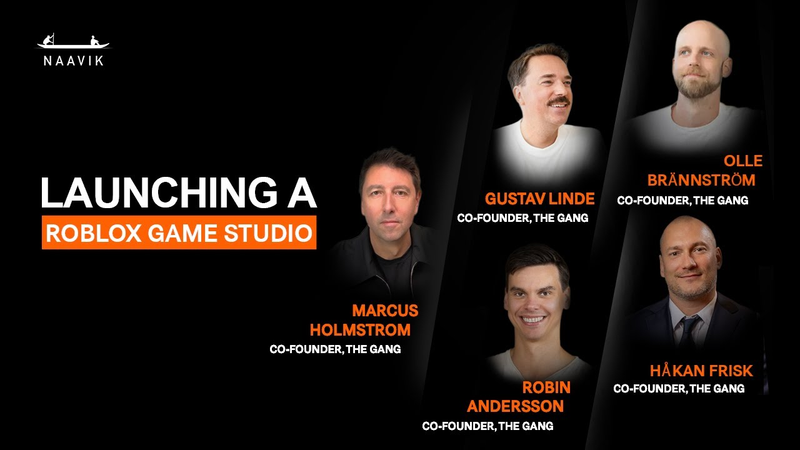
Podcast. I'm your host, David Taylor, and today we're joined by The Gang. And by that, I mean the whole gang. Originally a team of five entrepreneurs, The Gang was one of the first venture-back studios to go allin on Roblox back in 2020. They quickly made their mark with Strongman Simulator, an original game that shot to the top of the Roblox charts and has since racked up over 1.5 billion plays. While they started with hit original titles, the gang soon shifted focus to building branded experiences for some of the world's biggest entertainment and lifestyle brands, including Netflix, Vans, Shrek, Spotify, and the NHL, just to name a few. Most recently, though, they've been expanding beyond Roblox, licensing one of the platform's top IPs, Bladeball, for a Steam release, as well as developing the original cross-platform game, Out of Sight. In this conversation, we'll dive into the team's entrepreneurial journey and what it was like being early builders on Roblox, how the platform has evolved, and what's next as they explore new platforms and formats. Welcome to the the podcast, guys.
Thank you.
Thank you.
Um, just to kick us off, I'd love to get a quick introduction from each of you um to sort of give us a sense of who each of you are and and what you've contributed to to the gang over the years. Why don't we start with Gustav?
Okay. So, uh I'm Gustav. I uh my background and what I started doing at the gang is uh programming. Um I started out back in the '9s in the modding uh community and uh built mods for Quake, Quake 2, Quake 3. uh and then um started working uh as a professional in the gaming industry. Uh and I worked with everything from uh Return Cosle Wolfenstein to Candy Crush uh and have had a couple of uh gaming companies before and yeah uh it feels great to be
back on Roblox because it feels like the game uh modding communities. It feels like I've gone full circle um and I love it. Amazing. How about you, Ollie?
Hi. Um, yeah, I am similar to Gustav. I think we all come from a modding background in one way or another almost. Um, I was um aspiring artist to begin with, but now I'm a man with many hats. Um so I went from art to character art in uh uh mobile gaming to begin with and then did some stints in double A/A uh also done er in um capacity as a technical artist. Um but right now in the gang I'm acting as a producer on our original titles.
Very cool. Marcus, how are you? Yeah, nice uh nice to be here and thank
you for having us first of all. Um no, so I'm um my background is not from gaming originally. I started up companies in the digital marketing sector. So I uh created my first company late ' 90s and then I sold a few companies and I met Gusta by investing in his previous company. So, I was part of the board of directors and then um uh I was sitting there until that company got sold and that's kind of how we got to know each other and then most of the other guys are from his previous company as well and my role now uh I'm the group CEO so oversee businesses.
Awesome. So, we're starting to get into how this all came together. Uh Robin, how about you? Yeah. So, I'm CTO at the gang. Uh, I lead the technical side of our original
IP games, like everything from architecture to performance and making sure our developers uh have the tools they need to build uh our games. And my background is a mix of game development and more like traditional software engineering. So I spent uh like eight years in edtech industry and um yeah so that's short about me.
Very cool. And Hakan.
Yeah. Um nice to see you again David.
Nice to see you too.
Uh my background is uh within game design and and production. Um um I quite like late figured out you can actually work with game development. So I have had all of these you know normal jobs working within like industrial production and repairing robots and stuff like that. Uh but uh yeah slowly like uh figured out you can actually work with game development. So uh
educated myself within game design and then jumped into the industry like 10 years 12 13 years ago something like that. Yeah.
Very cool. So, I was hoping one of you would sort of tackle this, but like how did the how did the whole team come together? Like what was the what's the origin story for the gang?
Well, first of all, we we had a different idea. Uh so we were we were actually thinking to build a more traditional game on Steam in beginning and our first plan was to build a company. We wanted to build a a game and we wanted to work with people we like to work with and have fun more or less. And then we came into Roblox by coincidence. But um I would say Ghost was more the glue for everyone. So I hand over to him.
Yeah. I I think we were uh in 2019
um we were in a position where uh I had sold off my previous company. I was getting a bit restless. Um, and uh, we were in a position where we were looking to maybe not take a normal job, but instead work together, as Marcus said, with people that we like and do something where we thought it was more of like for pleasure instead of business. Uh, and it just happens uh to be that from all of the people that I had worked with before um the the top four people that I wanted to work with again were in kind of similar positions where they were looking for something new and something something else. So, uh it was a perfect time to to come together and say like let's make a game together. uh and it
doesn't really matter that much what game it is. Um we said that we'll we'll take a year without any pay. Um and uh we'll see where it goes from there. So we bootstrapped it entirely. We also said that we were never going to be more than 10 people. So we failed on that one. But uh but
surprising because your name is the gang. So
yeah. Yeah. But I mean, we still all work full-time in the company uh now, like almost six years later. So, so in that sense, it was a success and we keep true to only working with people that we truly enjoy working with.
That's amazing. How big is the company now in terms of employees?
We have approximately 220 people.
Oh my god. Do you know if you're the biggest uh Roblox studio or I know that you guys are not technically a Roblox studio specifically anymore but you know
we we yeah we are the biggest as far as I know in terms of employees.
Uh we are also the biggest in terms of working with uh brands. Uh we are not the biggest when you look into number of uh CCUs on Robus game for example.
Got it. But in terms of brands it would be like number of brand activations per year.
Then we are number one. Yes.
Okay.
Yeah. And employees uh we we do not like a lot of the big studios use a lot of contractors. We have full-time employees with a proper salary and and pension and all like that. And and with that, I think we're definitely the biggest.
Yeah. Yeah. I know Roblox is mostly contractors. Um even people I mean, which isn't to say that they're underpaid. I mean, there are certainly contractors who are making hundreds of thousands of dollars a year. Um but yeah, it seems to be sort
of like a uh a um you know, it's a creator economy. People move around to different projects very very fluidly. The uh the thing I I would love to get into is sort of the early days of of the gang. There there's sort of two questions that I want to ask. We'll start with one which is sort of the element of like you started off and you and you said we didn't imagine ourselves growing more than 10. So what were sort of the key milestones that allowed you guys to scale to where you are today of over 200 employees? Um, and then the next question is going to be around like what are some of the what are some of the funny stories of being on the Roblox platform? I know, you know, it can be ridiculous at times, uh, you know, working on on a platform that encourages uh, creativity, encourages, uh, um, you know, fast failing and um, also as entrepreneurs, I imagine you also have some pretty funny stories, you know, trying to raise money and whatnot. So
would love to just u give you guys the opportunity to share sort of that that path of starting with just the five of you and and growing and what are some some things that happened along the way.
I I I can kick off and then I hand over to the funny things to the guys who can talk about that talk about the corporate things. No. So I think from uh being entrepreneurs and uh looking into it from an opportunistic point of view uh very early on when we came into it, we saw that it's kind of blue ocean. There were no devs focusing on uh brand partnerships and uh building games with the focus that we came in with and with that also experience because there were and there are tremendous devs on the platform that are I'm I'm amazed every single day when I
see what they are building but um we are coming more from a more tradition I would Okay. Uh gaming perspective and when we came in there were no none of those. Uh so when we started the first game then we saw that there is a huge opportunity here and we believe this platform will actually grow. So when we said we're not going to be more than 10 people but then when we started to get request from clients uh we started to get traction on our own games it it was absolutely no possibility not to scale. So uh we just did it in order and we also scaled with profitability and that's what Gus has said before we were profitable year one and it didn't it it would have been a stupid mistake to uh not scale and grow and then if it came into what we're doing I'm going to hand over to the guys to talk about our first success for example
and that
yeah I think that kind of leads also into some of the funny stories like uh one very early story that I find uh funny in hindsight and that was very humbling is that like I worked professional in the games industry since the '9s. Uh I've done everything from like Facebook games to mobile games to console PC and I thought I knew gaming and all of us did. We were like, "Yeah, this platform I it's just a bunch of kids making games on it." Uh, so we thought it was going to be easy and our first game was horrible. Like it performed super super bad. It was such a bad fit for the platform and the players absolutely hated it. uh and so so we pulled it down and remade it entirely from from uh the from the start and uh then it performed much better and that's
how we started to to learn the platform like we were making mistakes and instead of trying to blame the platform or something else we were like yeah we don't know what we're doing like we have no idea and we started to play a lot of the games and we started to get more involved with the community and started to learn from it and uh It took us about 6 months until we had our first hit uh which was called Tapping Simulator and I think we peaked at 30K CCU on that. Uh and this is back in 2020 when the platform was much much smaller. So that was actually uh one of the top performing games on the platform. Um, and that was like I'm probably more proud of that moment than than Strongman because it was was the first time we felt like we had a hit and we were making money, we could uh start to take on employees and pay a salary for the first time. Um,
and just a quick question on this, like how in that six-month period, how many
games did you try? Uh, how many games did you launch and then how long did it take you to to build Tab Simulator? Uh, do you remember Robin? Do you remember?
So tapping must have been our fourth game, right? Or fifth.
We had zombie tag at the same window, right?
Yeah. Yeah. Then it's our fifth.
Yeah.
Yeah. And I think the development was around like the prototype of the game. I think we did like in a weekend or something. That was the guest of it. And then the full release was in was it? It was two two weeks or something. That it was a pretty fast really fast production.
That's amazing. I feel like it takes a lot of uh studios I've seen, especially the the venturebacked ones, a long time to sort of come to that conclusion of we need to make a lot of different games in
a short uh amount of time. I still see some companies investing millions of dollars into a single game and I'm just like, uhoh, that's going to be hard to make back. Yeah, we have made some uh expensive games that have taken way too long as well. But all of our successes have been like probably the fastest games that we make where we find uh like a core mechanic, we build the first version of the game very quick. like strongman was about uh 4 hours for the prototype. Um and uh and when we feel like this is actually really fun like this is a good game then we can start to build on it. Uh often when we have tried starting the other way around where we start with paper and we build this grand idea like you typically do uh in the traditional gaming industry then those games don't perform well.
Yeah, you guys also I had a recent game launch that had some success called Prison Pump. I'm curious like which one of you is the the weightlifter of the group?
It's everyone. Can't Can't you tell? We are all we're all strong men here. Uh but before we jump to that, David, I think it's one more project that is important to mention that kicked off like the gang on Roblox, and this is that's Vans. that was also like a monumental game for us because that has been our window towards all other brands and and Roblox themselves. So that's an important uh um project to mention as well and a game that we are super proud of. So yeah.
Yeah. I I remember when I was at Super Social Vans was one of like the few branded experiences that actually had like a sustained audience without the use of free UGC. Um, which I think is uh speaks to sort of you know your your guys' ability to
make uh you know uh an advertisement fun to engage with.
Yeah. But we also that game to be to be honest we built it also from the perspective of building a game and not
Yes.
not as an ad or similar. We um we wanted to have something that is actually fitting for the platform that is fun and um and also they are obviously super happy. So we continue to work for them after all this time. So um they were one of our absolute first clients who still work with them. So it's
yeah and it was a really process as well working together with them. They're great to work with and they really embrace this right away when we wanted to push them in the direction of we actually have to make a proper game. I know we threw out Tony Hawk a lot of times for example that was a strong reference uh
for this product. Um so no they were
they were great to work with and that's important as well that you have this great connection and relationship together with the brand.
Amazing. So before we get into sort of the the branded side of things, I also wanted to just understand you guys have been on the platform for for uh you know five years a lot has changed. I mean I've I've been on the platform for three and a half years and it's like night and day from when I be when I began and to to now. What are some of the things that you've seen changing and uh what are the ways in which you've had to adapt both on the branded side as well as the original game side? Um I think the like the biggest change we have touched on this already but how um how many more professionals are coming into the space how much more competitive it's looking right now. Um so from that perspective there has been a huge change but then also um touching on the development side
of things like it was always a pretty good environment to work in but what happened during these years is like it's leaps and bounds from what it was before. It's a completely different engine with way more features like the analytics tools. Everything is just better and that's also adaptations that you have to make now as well and you have to utilize all these tools in a different way. Um
when you say that it's there what what sort of has what have these tools enabled? Has it enabled you to make games faster? Has it allowed them to be more high fidelity? What's sort of the the unlock for the end product that we that me as a player might might see?
Not so much in terms of speed. Like Roblox is always going to be fast to develop the words, but definitely when it comes to fidelity, like making making stuff that can compete
with products on Steam as well with unlock of modern technology didn't really exist. um in the same sense. I mean, it's it's not on the same level, but it's getting there and you see it every year. It's it's too much to keep up with essentially. Um but yeah, we're trying to keep up with everything and uh especially the analytical tools are really important and you can work way more datadriven now than what you could before. Like in the beginning I think we used uh Google Analytics for everything which wasn't really feasible in the end but now you have this out of the box and you really need to utilize it uh to be able to perform on the on the game engine side. Do you feel like Roblox is headed towards being at the same level of fidelity performance um as as other game engines like Unreal
Engine or or Unity? Or do is it still is it never going to be there? It's really more focused on, you know, being easy to use. Like is there is there is there a moment where Roblox might catch up and still be easy to use but be just as powerful as those engines?
I don't think it would be beneficial for them to be an indirect competitor because that's also the beauty about Roblox that it's it's more about the games and to me it should always be more about the games than the actual fidelity. And you can see that on certain titles that come out now. I know grow a garden is generating a lot of buzz. It's
yeah,
the fidelity is not really needed in that sense. So
they could catch up. Should they? I'm not sure.
Yeah, I would probably turn it around. Like I'm saying that the other engines need to catch up to Roblox because but maybe that's because I'm a coder so I
don't care about like uh render fidelity or things like that. But the the Roblox engine is absolutely amazing especially for smaller teams like the collaboration tools where where you can actually see what's happening in real time while while adding it it and uh like the built you have built-in multiplayer and the social features and everything like the other engines have a lot of catching up to do and I worked with probably 12 different engines and I I worked as an engine developer as well on them and like the APIs from a tech standpoint point like this is the most beautiful engine I have ever seen. I absolutely love it and um you need to remember also that a majority of the players are on mobile devices. You don't want to push all even if you have the capability and there are some games that look amazing. We uh we have a horror game with like PBR realistic lighting called Dread Camp uh that when we show videos of it, people don't believe it's Roblox, but
it's not a good product for the platform because it's not available to the majority of the players,
right? Yeah, we definitely uh saw that at Super Social just the more memory usage the short the lower our session length would be because you'd have you know 50% of the player base on low-end devices and you know they can't they're not going to wait 30 seconds for a game to load. You know they'll wait 3 to 5 seconds and if it doesn't then they leave and then that just hurts hurts your session length.
Yeah. And also I I think we're seeing the and maybe we're straying away a bit from the topic, but I think we're seeing a trend on the nonRoblox platforms where the successful games are starting to look more like Roblox and less like Fortnite. Um, so I think that's very interesting. Like as I said, I think the other engines need to catch up. It's not the other way around.
Makes sense. Anyone else want to chime in here on sort of what makes Roblox
tools uh particularly enjoyable compared to other?
I mean you can summarize it that you if you have an idea to build that idea to cross uh publish that game to multiple platforms have it live and then also have user acquisition to that game. There is no other game engine or platform that can do what Roblox does like that process itself. It's just, you know, so good. Yeah.
Awesome. I this is sort of a another philosophical question, but you know given how easy it is to uh build games on Roblox, I'm curious how a company such as yourselves with, you know, 200 plus employees, how you guys are able to retain talent when you know the best Roblox developers on the platform are able to you know build these games without the support of a larger institution.
I I can start here. Uh so the way we did it because we work with a lot of brands. Um and also these guys have been in the gaming industry for a long period of time. Uh most our connections from the beginning were not from Roblox because we didn't come from Roblox. We're not Roblox native.
Mhm.
So u our first employees were more from the traditional gaming industry. So we hired them from uh uh working from other studios, gaming studios as artists, designers, coders and then uh we advocated Roblox to them and then we and that worked quite well for us. So that's what we have been continuing to do more or less.
Mhm. And I think that also makes us partly unique because most of the studios they work mainly with as we spoke about before contractors or native
Roblox. We are doing that from time to time as well but the majority of our employees are u more traditional uh from traditional gaming uh industry.
Got it. Okay. And something gohead
something we actually found that a lot of traditional game developers find it liberating to have like development cycles measured in months rather than years. Like that's something a lot of people seem to enjoy.
Yeah. Uh in my current role the the development cycle is around four to six years. So uh I feel for those who have been working on a project for 6 years and then that's when they find out if it's successful or not and then most of the time it's not successful just because of you know the hit rate in the video games industry. So yeah it can be I imagine very heartbreaking uh to go through that long cycle and you know
most likely being facing failure at the end and potential layoffs as well. Um, so yeah, I can understand why people would take shelter at the gang. Um, and in ter and so, so a key part of that is is the branded experiences, right? Because you are sort of guaranteed some amount of of revenue upfront through the contract. Um, I'm curious sort of how has that evolved over time? Like you guys were obviously early movers in 2020. How has the uh market for building branded experiences evolved? And I'm really curious about now because um you know, you've seen fewer branded experiences being built overall. More brands are leaning into activations, which in terms of reach are are probably the most efficient way to to market a product. Um, and then you have Roblox's advertising push, which is where they're trying to make this more programmatic
advertising. So, how are you guys sort of responding to that? How have you responded over the years to the evolution of of marketing on the platform?
Let's begin with why we started with branded work versus um original games. I think that's good to know. Uh so we when we created a company we um we didn't know if we were going to get a hit or when. So then we we thought it's good to work also with branded work because then we um have as you said some kind of platform some kind of stability in terms of revenues but not only we also knew that having brands like Vans for example um or um Hasbro or those that we worked with very early on those unlock possibilities for us um especially in the beginning new technologies and everything. So, Roblox wanted to test on the on the more
well-known brands. So, then we got opportunity to kind of unlock new technologies and uh then we also built our own experiences outside because we wanted to get a hit obviously. But um also the second thing which was really really good for brands was that we um tested on our own things. So we could uh test different genres uh different tools and everything. So when we spoke with a brand, we also know what worked and didn't work. So we didn't have to test on the brands. So that was kind of a a really really good thing in the beginning. Uh what we see now, yeah, it's it's been shifting and and moving quite a lot. Of course, what I think is the main difference now compared to before is that now brands have more knowledge on why they are actually doing something Roblox. It's not that they are stunt. It's not that
they create something else because they want to get headlines on a lot of uh newspapers. And in the beginning, I would say there were so many companies contacting us. had zero clue what Roblox actually were.
Yeah.
And um they could have just made something on uh Roblox or on any other platform at the time. It didn't man didn't matter if it was like um a platform that was for uh crypto or if it was uh Roblox. They they just wanted to be there somewhere. So I think the level of knowledge has increased quite a lot and also the the ROI the possibility to u get something back that you uh the reason why you spend the money that has also increased and Roblox have been pushing quite a lot
on this. They have been pushing technologies when it comes to uh ads as you mentioned um and and also integration possibilities. So it's easier now than it was before.
How are you guys adapting to that? Right. If if if uh brands are having a higher ROI expectation and Roblox is sort of pushing towards, you know, more scalable advertising solutions. What is that? What are you guys doing to adapt? Well, well, that has always been the case to be bonus that the brand should always have a high ROI possibilities. So, the way we do it is that we work alongside Roblox and not against.
Mhm.
And uh we utilize their uh possibilities technologies. So, we work a lot with ads for example together with Roblox. We also bring them into the room. So if you speak with the client, we have them alongside from the
beginning to talk about what are the objectives, how can we do it, what kind of possibilities do I have here in order to not work against each other or having someone else coming in from the sideline and doing something else in the end.
And I think that's quite natural. It's like with every single platform, not only Roblox, that you have to they they're obviously going to try to push in new technologies. So, they increase their margins and possibilities, but in the end of the day, that should also benefit the clients and it will benefit the clients and that's why they do it.
Mhm. What would you say are are the benefits of building an original experience today? Like I I still see a lot of brands doing original experiences. I uh you know I think Universal did both an original experience as well as sort of a a slew of integrations across multiple
experiences. Um so how what is the role of the original experience versus the activation? How do those things differ?
I I think I think it's um pros and cons for both first of all. So it's not that one is better. Um when you have your own experience you have full control first of all you can do anything within as you want. You can also activate or integrate other partners. We work with a lot of sports brands for example. If you take Wimbledon that is ongoing right now uh the tennis tournament there we have uh multiple of their partners in their actual competition that they have brought into the space. That's possible to do if you have your own space or a place. Uh so you can offset some of the cost to um together with your partners already.
Mhm. U and but mainly full control and
also build community over time. So you don't just take something in put it in someone else's experience for a short period of time but then you can actually build a community and foster community and speak with a community and use it as um similar as any other channel website or social media. integrations. They are really really good if you want to reach a certain audience. You know predefined which audience you want to reach. You want to know you also know how many they have. So you can calculate forehand exactly how many are you going to reach, who are you going to reach for which period of time. So so I would say it's depends what your what your objectives are and time frame. If you for example want to launch a product and you really need to uh reach a lot of people, you might be better off doing an integration. But if you're going to do this long term, uh you might be better
off building your own uh space
and long and you say better long term because why you might grow an audience over that time.
Exactly.
Are there examples of games that have grown you know significant audiences over time? uh Vans.
I would say Vans is one of them that uh there's a reason why we continue to work for them over time. Um we um we have I I would say Wimbledon as well. We're on the third year right now. So um in in the beginning it was only Wimbledon. Now we also work with US Open and Australian Open. and we have um quite good traffic when it's when the event is and then it goes down when it's not obviously. So they um they do see reasons for being there and also I would
also say reach reaching an audience that you cannot or is difficult to reach elsewhere. Of course you might be able to reach them on YouTube or Tik Tok but it's different platforms.
Yeah. And here you have a focused audiences.
Cool. I want to talk about the future a little bit. Um where so you know you guys have launched a crossplatform game. You have sort you're sort of dabbling on on these adjacent uh platforms. You know Bladeball being ported over it's not technically a port. It's a it's a a license of Bladeball and and bringing a version of that experience to Steam. what sort of is driving that exploration? Um, and and what is sort of what's sort of your views on on the gaming industry today that are leading you to take these these exploratory uh paths?
Um, I can talk a bit on that. Uh, I've been producing u blade ball. So
no
in case of uh in case of that I think sorry
and while sorry just to well since with with that information would also just love to understand sort of what it's been like doing that because I think it's a really interesting uh strategy and I'm sure if you guys are successful everyone's going to probably be piling in trying to do the same thing. Um, so I'm sure people's ears have perked up uh to just sort of understand how that all came together if you're able to share. Uh, and and what are some of the hypotheses behind it?
Um, I mean they I don't remember exactly number now how much they peaked in CCU and that's what peaked our interest. I think it was up to half half a million or a million even. Um,
yeah. And they've stabilized around 20,000 10 to 20,000. I mean, and they're always in the top 10 earning games. They're around number 10 or 11.
No. So, that's a big part of it. Like, it's a very strong community. Uh, it's a
very creative concept. And I think that's what it comes down to these creative ideas um that you can find on Roblox uh in another sense. And that's what we wanted to tap into. So doing this uh as a collaboration with Bladeball, then we get to utilize their community um to actually help shape the product into what it's going to be eventually. Uh I'm actually going to play this in 10 minutes. I accidentally double booked the stream that we're going to do, so I'm going to have to play a little bit on the side here while we do this. Um
it's all right. We can try to wrap up by then, too.
No, but it's fine. like I I'm I know it by the back of my hand, so I don't really have to focus when I play it anymore.
I'm sure you wouldn't be the first person on the podcast to play video games while he was being interviewed.
Yeah. No, I can imagine. Um, no, but that's uh so that's how we're working
with it right now, like playing together with the community now. We're collaborating collaborating together with two streamers are going to play it. Um, so essentially just building it up until we feel that it's ready for release and that we get a thumbs up from the community essentially that uh now it's good to go.
Do you think that there will be new audiences that come or are you really sort of anchoring towards being able to get people who are typically on Roblox to come over and play on Steam?
Um, both in a sense. Um, but what we have been trying to do, we realize that the games don't take the exact same shape as they do on Steam for example versus Roblox. There there will be differences. So we have tried to shape this game in being in this case it's a it's a bit more complex than what you would see um on Roblox like uh we
don't have to really have a mobile in mind as much so we can rack up the complexity a bit and by that we want to try to scare players from that like games like Rocket League for example or uh similar multiplayer brawler games Um, so that's our hypothesis like take a really good creative concept uh in this case do um this collaboration together with uh Bladeball and try to shape it into a new product. I see them working side by side essentially. They they are not competitors in any sense. They are the same in many ways but they are different games. Um,
yeah. I mean, Bladeball was uh heavily influenced or inspired by Genji Ball, which is an Overwatch creative mode, and I think that was inspired by another game mode from Team Fortress 2.
Pyro Pyro Ball.
Yeah.
Yeah.
Pyro dodgeball. Yeah.
Presumably there is an audience off of Roblox that's interested in playing this game as well.
Yeah.
But I think that's where we're coming from as well. Like we we have not only worked with games for a long time, we have all been playing games since we were kids as well. And we have seen this before like uh Dota started out uh as a mod and uh and a lot of good game ideas go through different platforms and they evolve and change and we felt with Bladeball especially we felt like this is a brilliant game mechanic like this has been been on so many platforms and it has evolved into something that is a very very good core gameplay. Uh and we also see again uh as I mentioned earlier like we we see a trend on on Steam and consoles where a lot of the hit games like Lethal Company was a hit game last year on Steam and it was made by a
Roblox developer and we're seeing like the top games when we play them and we see them we're thinking like hey this is a Roblox game and it's doing really well. So we think that the creativity is so high on the platform uh and uh and there are so many good games and we think they should be available to a broader market.
Yeah. Uh I mean that's why why I love the platform is just getting exposure to all of that creativity. Uh it's, you know, it's delightful to just look at the the charts every day and just see what's popped up lately and and hop into it and see what it's about. Um so, so we talked about Playball. How about the um out of out of sight? How how did that come about? How did you guys decide to to explore just an entirely original game that's crossplatform?
That that is actually uh that's a fun story. Um so uh I was uh I was doing a
talk at uh at an event here in Stockholm and after me a student team went up on stage and uh they had won like all of the awards all the student awards in Sweden that year and one of the guys were working at the gang. So I was like, "Hey, that's Simon and he's part of this team that like won all of the awards this year." Um, so uh, so after their presentation, I just grabbed them and said like, "Hey, let's make this into more than a student project. Let's make it into a full game and do it with us."
So Simon didn't tell you he was doing this. You just happened to
He had he had done this uh during his education. So he joined us when uh when uh after his education uh straight from school. Um so so they were presenting like their their final exam uh which was this game and and that game had also
gone viral uh through it.io and uh and had a lot of YouTube views. So and it's a brilliant game like it's it's very different from what we typically do like single player horror uh game. Uh but uh it was just such a good game and uh we thought like if you see a good game why why pass on it that that let's see this game realized as as they would have wanted to see it and not on a student budget.
So I I imagine you guys are sort of new to launching crossplatform games. How have you sort of taken the approach of marketing this and and getting it getting people aware aware that the game exists?
Uh we did the boring thing and went with a publisher. Uh uh really like we have we have had a lot of releases
before the gang on uh on like traditional platforms but we have always worked as developers and not publishers. We started out thinking like, hey, we self-publish on Roblox. Let's uh self-publish outside, but that is a different beast altogether. Uh so we just signed with a publisher.
Awesome. Well, I hope that the publisher knows what they're doing when it comes to marketing. Not all publishers do. Um yeah. So, okay. So, cool. So, um I guess like just you know just to sort of wrap up the conversation would love to sort of reflect on the the five years that you guys have been on this journey given what you know now. I'm sure you've learned a lot over over your time on the Roblox platform at least. Um but what would you do differently if you were starting the game today? I I can start first of all I don't regret a second that we jumped on Roblox because it's u
super super fun and we and also testament to that we still work together all of us full time and um we haven't gotten tired of each other yet which is um quite amazing um but I think what we would probably have done differently we have been doing a few larger uh investments early on in games. Like you said before as well um that the the hits that we have had are way shorter uh time spent on building uh the prototypes for. So we would probably we should have probably have done focused more on that and not been doing the more grandiose game types.
Mhm.
I think uh and the second thing from a company perspective I think we should have kept original games versus brand
business a bit more separate from day one. It was very entangled and um for a reason it it worked for us but I think u we have been working for quite some time now to separate it.
Yeah you guys have I I remember seeing sort of new CEOs popping up of different different parts of the gang like how did that all come together just out of curiosity. No. So what what we did was that we we noticed it was actually uh counterproductive to have everything on there or entangled too much. So we separated the brand work that we do uh the work work for hire versus the original games into two separate entities and then we put um two people to lead each part. It's Max and Yo. Yeah.
And the reason for it is that we will have way better focus on each part
instead of stealing resources to one or another and mainly from a regional games to uh to brands. So when we got the big new client coming in, it was all hands on deck and then we stole resources from a regional game development. Uh and that's why we needed to do this because we wanted to have 100% dedication very full focus forward and then we can grow much better and also the platform has evolved quite a lot. So it's different way of working with brands today were 5 years ago.
Yeah.
And um so I think this makes a lot of sense and that's probably something we would have done earlier.
How about the rest of the gang? Any other things that you would have done differently? No, I think I think the most important thing is kind of what Marcus said like more focus. Um, we consider ourselves t platform agnostics. Um and we have built
like games on UFN and and we have built on um like a lot of the other platforms that are not as big. And we have been trying to stay on top of like the trends across so many different verticals that somehow we ended up being like spread thin on our original Roblox games, I think. Uh, and we kind of lost focus. Um, and yeah, I would have if I were to redo it, that's the thing I would change like more focus saying like this is where we're going to be uh the best and and execute on that instead of saying that we're going to be good at everything but but really don't maybe excel at our own games. Like I don't think we currently have a game in top 10. Uh, and I think we would have had
that if we would have kept a super focus on on that goal alone.
Amazing. I can only echo what the guys says here like uh focusing more on our own productions and I mean the platform proves it year on year like we think we've seen the biggest game ever but then next year you know you have the new hit game or you think that oh this is a vertical where it's like there's no room to go in and uh compete within this vertical and then a game like I don't know dress to impress comes or then a game like fish comes and you know the the platform just keep on proving us right in that sense that we should focus on building our own games and our own IPs.
Yeah, couldn't agree more.
Awesome. Well, I know Ola has to get to a to a uh Bladeball stream, so I think we can wrap it up here. It's been amazing to have you guys on the podcast.
Appreciate you all finding time to be in the same virtual space at at the same time. Uh this has definitely been the largest uh group of of podcast guests that we've ever had on the podcast. I'm glad we all fit on the same screen. Um but yeah, this has been super enlightening. Really appreciate you guys coming on and and best of luck in in the in the coming year.
Thank you so much for having us.
Thank you, David. [Music]
If you enjoyed today's episode, whether on YouTube or your favorite podcast app, make sure to like, subscribe, comment, or give a fivestar review. And if you want to reach out or provide feedback, shoot us a note at podcastnavic.co or find us on Twitter and LinkedIn. Plus, if you want to learn more about what Navic has to offer, make sure to check out our website, www.navic.co. There you can sign up for the number one games industry newsletter, Navic Digest, or contact us to learn about our wide-ranging consulting and advisory
services. Again, that is www.navic.co. [Music] Thanks for listening and we'll catch you in the next episode.
Auto-generated captions from YouTube — names and numbers may be misheard.



















Comments