VideoThe Game Business
‘Star Wars Hunters was no failure’ – The Big Zynga Interview
15 Jul 202541 min video
Transcript
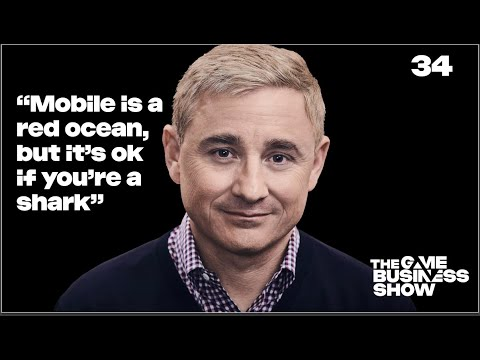
It is a red ocean, I guess, but it's okay if you're a shark. So, you know, the idea is that, you know, be be sharp, be aggressive, understand the dynamic that you're in, which is somebody has to lose market share for you to gain market share. One of the things we talk a lot about at the company is in developing markets. There's another billion gamers in mobile coming through South Asia, Africa, South America, the Middle East. Those are very hot markets that are starting to develop. Hello and welcome to the game business show. This week we're delving into the world of mobile with Zinger, one of the most influential mobile game companies in the world. And specifically, we're talking to CEO Frank Kabote, who spent nearly 24 years in various leadership roles at EA before taking charge of Zinger in 2016. He played a pivotal role in turning that business around before leading it through its acquisition by Take 2 in 2022. Frank, welcome to the show.
Thanks, Christopher. It's great to be here. you came up well your business came up when I spoke to Strauss only last month and he called out a couple of
recent successes that you had um I think he match factory was one he brought up but also color block jam I think has has they both done very well for you I I thought I'd start by asking about those cuz I know it's notoriously hard to launch new things in mobile in in 2025 so congratulations what made these work thank you very much the um both games are built out of Istanbul
won by Peak and one by our studio at Raleigh. And I think what they represent is Zingga's new approach to game development on mobile. We're going very rapid in terms of our prototyping, our testing. We're using a lot of techniques to allow us to mix and match things that will allow us to get the right types of KPIs from the audience, clickthrough rates, retention, engagement, monetization. So, we've been really looking at the market and and observing why things are working, why things are not working. We've we've learned from some of our hits and some of our misses and we've applied this new approach which is inspired by some of the things that the hyper casual guys do. Those
types of companies like Ralele are very used to generating tons and tons of ideas going into rapid testing and understanding how to separate potential hits from what are most likely to be misses. So, we've combined a few of those different techniques into an approach. And it's it's working okay so far. You know, we uh we have both games out. They're both in the puzzle category. They've both reached very large audiences and from a financial standpoint, they've been very very positive. The quality of the games are are both very high. And one of the things that, you know, I've been in the industry a long time like yourself, you know, just when somebody thinks they've got it all figured out or something's not going to work, you get a curveball or you get a new idea or you get a new approach that allows you to kind of unlock the market. Again, I know there was a lot of discussion, debate about how hard it is to launch new titles on mobile, but if you look around at Dream, at Scopely, at Zingga and others, there's a fairly large number of new titles hitting the marketplace and finding very large audiences for the first time postco.
I'm going to dig into this development approach. Does it work exactly like it does in hyper casual in terms of how you're greenlighting new projects and and highlighting new projects? Can you go a little bit deeper? Tell me how that works. Well, I think what we try and do is is shake it up a bit where understand what is the hardest thing to do in mobile. It's to find an audience that you can grow and that's profitable. And so what we've done is is looked at how ad model driven hyper casual games went into the marketplace and and found footing and and momentum. And then we changed the mix on the monetization to IP and then we tweaked some things in terms of how we would actually test. So it's inspired by and and started with that foundation. Uh but then we we started to look for what are the things that you need to solve for that is different than hyper casual which would be engagement long-term engagement retention and then a shift from ad model to to IEP. So our data science and and product management teams combined with the studios developed a series of techniques using you know a lot of good designers and engineers but also a lot
of new uh ML and and AI techniques to allow us to rapidly test not only the game design but also how does it how does it stack how does it scale and what does the market look like overall in terms of receptivity on an organic level. So it's a it's a variety of techniques. cuz I don't want to give away the secret sauce here.
Secrets,
but uh it was a pretty interesting set of things that we looked at over the last eight or nine months that has has really proven to be successful for us.
I guess it might be the same thing in many ways. Have you made any changes to your user acquisition approach in terms of
We have Yeah,
we have. We've looked at uh some new channel partners. We found certain channels and combinations to be more predictive than others. And so we've focused more of our testing in some of those areas. There's a couple of things you said I want to pick on. I'm trying to work out which one to start with. I'll pivot to to Take Two because I I haven't spoken to to Zinger since the acquisition really. And I know usually Take Two leave their divisions alone. They leave Rockstar to be Rockstar 2K to be 2K. But what's the collaboration with
you like?
It's very similar. Uh we work together with Take 2 on an annual business plan on the strategy of the company multi-year strategy. There's a lot of collaboration with uh Take 2 senior leadership as well as Zingga. They act very much like a board of directors. We present our plans and and then we go off and execute and then we utilize uh the resources of Take 2 to basically scale the business or do more with the business that we couldn't do when we were an independent company. In many ways, we have access to more intellectual properties. We have access to technology and other systems. they've been benefiting from a lot of the investments that we've made in data science and AI also in in terms of mobile direct stores and things like that. So there's probably at least half a dozen material collaboration points between the two companies that was really a lot of the things that Strauss and I first talked about when we started to explore the opportunity of coming together as one company. I'm very
pleased with with how we've come together. The integration is complete. that went very smoothly. We found ourselves to be very culturally compatible as well as the operating model that you described gives Zinga the opportunity to continue to to chase mobile in in in the most effective way possible, but at the same time leveraging the resources and talent of a much larger company. Uh and that's so far the thesis for the the uh combination has proven to be true.
Is there more to come? Where where does the collaboration go next?
Well, I think we're growing faster together. uh we are in a position where intellectual property from Tate 2 will start to find its way uh to mobile. We're starting to see the techniques and approaches that we use via AI, ML, data science, direct to consumer that's propagating back into take 2. So I I think you'll continue to see that incrementally scale up over time. And the ambition is look, we we want Zinga to be the number one mobile game company in the world and we want to reach the
largest audiences worldwide, have the most, you know, franchises and generate great returns for shareholders. And that's that's going to continue to be the mission. One of the things that you touched upon there was some of Take 2's IP. And obviously that's a big conversation point at the moment around how traditional PC and console brands might be able to utilize mobile to grow. And we've seen games that have been completely bespokly made for mobile audiences. We've seen games that have sort of been adapted a little bit. And a lot of this is targeting new markets where there isn't a PC and console industry really, which is exciting. But how big do you think that opportunity really is? There's a little bit differing opinion on that whenever I speak to people.
I think there's an opportunity for it, no question. But the last few years is littered with examples of it not working. uh where uh it's brought over in a very conventional and expected way and it's not fit for purpose for how mobile games are played. You have to look at how are your uh players going to engage with the content on a mobile device as they move through their day.
It's a lots of little sessions. Many times it's it's uh places where some of the features around PvP don't work the same way in terms of how you play against each other. So, there's a lot of nuance in how you have to redesign the content in the uh the player experience so that it it maximizes what mobile brings to bear. If you just bring it over and play it as you would on a PlayStation, it's just it doesn't work. It doesn't scale, doesn't the audience size doesn't necessarily always generate. It can work as a premium product, but as a free-to-play live service that can last years, you have to rethink how the intellectual property will work on this device. And I think you're starting to see that type of work happen and that's certainly how we think about it.
The Mrones are starting to become a lot more capable in terms of graphically what they're able to do. But we had Matthew B on the show a couple of months ago and he was he he we talked about the Resident Evil example about how those games haven't they've just basically tried to port Resident Evil over to mobile and it hasn't quite worked. But he thinks that that could work in the future if we get to a point where
they're being launched at the same time and they're sort of targeting broad audiences. I'm I'm not so convinced. We had a bit of a debate around that. I don't uh I don't subscribe to that. I don't think it's a another platform like the Switch or the Xbox or the PlayStation where you're looking at a multiplatform launch, which I I've done a lot in my career when I was at Electronic Arts. It fundamentally plays different and it it it serves a different entertainment need. That doesn't mean that they can't be linked or crossplay. There's good examples of that working at scale with things like PUBG and and other titles, but I think when you're talking about a linear game or a game that's narrative based, predominantly single player, those are the ones that are a little bit more tricky to bring over. And in general, games that have a free-to-play uh business model versus a premium model tend to do better on mobile because you reach larger audiences globally. And so you have to decide is the intellectual property appropriate for that type of business model. many many IPs are not and so it's it's really looking at the nuance of how you can go wrong in mobile
trying to figure out if if the audience will give the permission for that intellectual property to be applied that way or be be developed that way that's also an interesting component is sometimes you'll get I just don't see it happening that way or they don't want to engage with it and players the ultimate judge so you got to take that into account of course and so from my perspective I think that it is absolutely true that broad-based AAA a IPS will be successful on mobile and can be successful on mobile. But I do believe that you have to be almost restarted the fundamentals to understand how people are going to engage with it. If it's just your PlayStation game on your phone, you're not going to play for 45 minutes to get through a level
on your mobile device. You got power, you got where are you? Are you on the bus? Are you at school? Are you at work? You're getting text messages while you're playing, you know, work emails are coming in, whatever, right? So you have to understand that this is a multifunctional device that's mobile that's that's part of your busy life. And when you want to bring that intellectual property over, you want to be able to do it in a way that makes
it's very accessible and very fit for purpose for how you engage with mobile games. Our player audience are busy adults. That's the majority of mobile gamers are are people that don't consider themselves quote gamers. They play games, but they don't really think of it as as a major part of their identity. Most of of the games at Zingga are casual in nature. Mo most of our players are women, but even for the games like CSR that are a little bit more traditional, it's a very different take on racing, right? It's not a high-end simulation experience where you're doing a the Nuremberg Ring for 14 minutes on your phone, right? So, you know, you're you're actually collecting cars, you're upgrading, you're doing quick races. It's actually designed much more for for the device. And that's why I think CSR reaches such a large audience and has been so successful. I mean, CSR2 is 8 years old now and still doing very well. It's entertaining millions of people every day. And so, I think it's because it's it's a racing game that's rethought for mobile as opposed to just brought over. We did a
our event, the game business live in LA in June and and we had Blizzard on stage and they just done Diablo Immortal, which I guess is a good example of that. That game was built from the they didn't just port Diablo across, right? They took what what was core of Diablo and then built a bespoke mobile game for that experience and as a result they have more people you know that's that's most people's first Diablo experience right it's not DL fan they're targeting it's a different audience as you were just talking about there I think that's an excellent point that you know conventional wisdom would have been oh every Diablo player has a phone therefore they will play Diablo on their phone they didn't Diablo came over to the phone it was a different experience it was fit for purpose and it found an all new audience and generated an incremental experience for that intellectual property and that franchise. But I think the initial kind of expectations were probably misplaced as a result of that. Oh, it's just going to bring over and play just like the other one. It it didn't.
No. Are you having to do that education or that having those discussions with other take 2 divisions departments at
the moment or is that a future thing? Uh yeah, we we talk a lot about this uh stuff at the company and uh it is is a topic that we discuss quite a bit um in terms of what makes sense. So for for some of the the intellectual properties that we have, they're brought over very directly uh and are premium products on device and those those are good businesses and those work fine. Examples are like Grand Theft Auto and obviously NBA 2K.
Yes. But then there's other intellectual properties that uh we discuss that might have be able to reach a larger audience as a live service, as a free-to-play experience. Uh and we have this conversation in relation to those.
Okay. We're talking quite uh positively, but there there's been a few things that haven't worked out lately. And one of the things you've just closed um Extra Games
when you acquired that business, I remember you talking about it being part of your crossplatform vision or strategy. Has your views on that opportunity changed? It has certainly as part of take 2. Uh the need for Zinga to be able to go after that isn't a top priority. Those
resources and that approach made much more sense in another part of the company or as as part of another uh endeavor. Our view was to focus exclusively on the mobile platform. It's over half of the uh total business of of games. It's a growing audience. There's you know one of the things we talk a lot about at the company is in in developing markets. There's another billion gamers in mobile coming through South Asia, Africa, South America, the Middle East. Those are very hot markets that are starting to develop. They're premonetization, but they're opportunities. So, when you think about going onto the PlayStation or the Xbox for Zingga, that's not as precious as 2K and Rockstar doing that.
And what's more important is for us to go after um the opportunity in mobile where frankly our expertise and our talent, our capabilities are strongest. And so that was part of a thoughtful conversation with Take 2 about how do we dep prioritize that strategy relative to some other opportunities that were larger for us. And that's a function of becoming part of take 2. I I you know I
think that's it's negative sure the decision and the impact but at the same time I think for the team and for the company it's the right call and obviously anytime we divest a business or or start to look at not doing something uh we handle it in a very transparent and professional manner with everyone. You also does it last year I think you backed out of Sugar Town um I think I've got the name of that right. Yes.
Which was the web free blockchain thing. Is that also an area that's no longer a focus for you?
It's not. One of one of the things that's true about Zingga is that if a market is starting to develop, we like to build product for it to see if it works. So, a good example was uh Facebook instant. We built games for when hey can we can you build games for social um you know chat text type capability uh platforms. And so we built a game there and in fact Words of Friends is still running on Messenger and doing well. It was the same case here which was there was a lot of discussion and debate about blockchain and NFTTS and and can that be part of an
entertainment experience. There had been a couple of examples of companies that built some interesting and and valuable uh franchises. So we embarked on building a product to see what types of things worked, what what didn't work and ultimately we found that it wasn't the right opportunity for us at this time. The technology is very interesting but it's a very complex and undeveloped market. let's just say legally. And so from our perspective, it was uh worthwhile going through the exercise. We learned a lot, but it at the same time we felt that we really weren't able to build something significant there. So we moved on to other ideas, but that's that's part of our culture is build something uh you know to see if it works as opposed to you know debate over powerpoints.
Yeah. Well, have you been looking into Telegram at all or Discord or those other emerging areas that people are looking into at the moment? you know, we haven't announced anything, but if you take what I said earlier, it is, you know, we're always looking for audience and you know, obviously if you look at
Tik Tok, the emergence of Discord, the emergence of Telegram, there's a lot of new platforms out there that people are spending time on and uh we believe that interactive experiences are compelling and if the platform is technically capable and we're able to figure out how to distribute and and reach audience, then we'll definitely go after that. So, Uh, anytime new platforms develop, we're we're interested in in checking them out.
Okay, it sounds like I'm just asking harsh questions now, but I promise I got some more positive views coming.
But I'm interested to know cuz I saw early doors Star Wars Hunters and I thought that looked quite exciting, but it didn't seem to have worked out. What didn't work there?
Well, I think we built a great tech base and we built a fun game with a great core loop. Problem was it wasn't a viable business. uh we weren't able to generate the organic installs from the license. Um we had some issues with how we could explore the intellectual property in the game. Could you play Darth Vader? Could you not? That sort of
thing. And ultimately what we found was uh we ended up with a crossplatform game on Switch and mobile that ran perfectly. It was fun, but it didn't engage over the long term and it and it wasn't a viable business. And so one of the things that you know you find uh in in running studios and and game teams is sometimes you'll miss on the first shot but there's something of value in it. You learn something about the market. You also learn about your team and then ultimately you know you have many times some great leads and a great tech base but we didn't quite get there commercially. Uh and so we're looking at another idea in that category. the uh the action shooter category on mobile is is a very large and growing category and we'd like to be there and now that we have a an Unreal based uh tech base with some great leads in terms of the engineering and developers and designers now take the learnings from Star Wars Hunters and apply it to another shot on goal uh with another intellectual property.
Ian Livingston in the UK he calls it um
there's no such thing as failure. It's all just success work in progress which is a uh
you know I love that. I I'm going to use that.
Well, you know, is I always think the Wii U is the best example of that, right? You know, it was a a complete failure, but without it, we wouldn't have had the Switch.
Yeah. We don't really consider them failures at the company, right? So, we have, you know, for the point that you made earlier in this conversation. It's very difficult to get new products out on mobile in a successful way. So, you're going to have a lot of misses and you have to have a strong stomach and you have to have a culture for uh learning
that's oriented to, hey, it missed. Why did it miss? why don't we try this instead? And so for every game that doesn't reach its full potential in the market, we go back postmortem, figure out what went right, what went wrong on the team, on the tech, on the go to market, any number of reasons that we look at and then uh we apply that and share that learning across the company. Uh one of the things that uh is really important to Zingga is is sharing across
teams. We have a very distributed and decentralized studio organization each with their own identities. We believe that that leads to the best games. But the the way that you get better as a company is you break down the walls of not sharing the data. Everybody at Zingga can see the data on Toon Blast and understand why the latest release on Toon Blast has been incredible. They have all the data on Color Block Jam. They have all the data on Match Factory. And so game teams that are working on new games or even game teams on live services are sharing and looking at those techniques and being inspired by it. So when a new game comes out from a particular studio and and is a big hit, everybody it gets better because of it. Uh if a game comes out and misses for whatever reason, everybody gets better because of it because they see that mistake and and they're able to apply it in their business or avoid it in that case. We talked about it a little bit, but I I would love to understand a bit more. When you've got a new project that's out there or or when you're in sort of you haven't quite green lit the project or it hasn't quite gone live,
how do you decide which ones go forward and which ones don't? I know you do all these tests, but what determines go and or not go?
Well, I think a couple things. Uh, in fact, this is just part of a conversation we had this week as a company. All of the studios have their own individual approaches to new game development. there there's some tools and techniques and and platforms that they can use that can aid their decision- making but ultimately small giant builds games differently at the earliest stages than peak than natural motion than you know Graham for example so our view is that's a good thing we get we get a lot of different cultures and teams taking approaches on a problem the challenge is though you have to be consistent in understanding is it a viable business there's a million ways you can build a very fun game that engages players but is difficult to monetize. And as much as that's cool, we are in the business of a business. Uh and so we have very clear and kind of
objective milestones, very few milestones, there's only two that go through to prove whether the the game is a viable business. And so we're kind of like, hey, do it however you want to do it, but these are the two gates you have to get through. And we have to see these types of results in order to prove to the company that this is a great place to deploy some capital. At one level, my job is the most boring job ever because I'm a capital allocation manager. I just decide where people and money go to make uh you know to build audiences and make money, right? That's I'm making it really sound boring. So my view is that when you look at mobile games, the capital intensity is in the marketing, not in the development. It's the reverse in console. Console, it's very expensive. It's very difficult to know if you have a great game as you're developing it. In mobile, in a matter of weeks, with a very small number of people and a small amount of money, you can quickly understand if you have an idea and a core loop that will connect with somebody, we'll connect with an audience. And then what you do is you try and understand, okay, is this a a
business that we can actually scale? And so that's where the business testing comes in. and it's further along in development, but ultimately those are really important steps because the majority of the capital that you expend in mobile is on marketing and it's a performance-based marketing model. So, you can turn it off if it's not working. So, it's very flexible. It's actually low risk capital, lower risk capital versus R&D capital. And so, you know, at a basic level when you're thinking about it, that's ultimately what we're doing. Now, the fun part is, hey, I'm making a game. We're going after this. You're doing all this cool creative stuff. But part of the discipline is understanding those undercurrents of what you're actually trying to do and how it's how it's moving through a studio system, for example.
Does and I know Zing has always gone direct to consumer. I say always. I know it's been a it's been a it's not a new thing for you, but obviously there's the recent ruling around the app store in the US and and that perhaps makes it even less there's less friction, I guess, for for your users to to come direct to you. Does that change anything to you other than potentially improve your margins?
Well, look, I think it's a profound change in the platform. The notion that you can have a direct relationship with your players uh and serve them better and give them more value is huge. So, it's not just about making more margin from the platforms cuz we're going direct. It's we can perform better CRM. We can build better communities. we can understand more clearly what's happening in the games because while we get a lot of telemetry sometimes you just like to ask a question you know and and see how things are doing. So the idea that we can communicate directly with our players in a much more direct manner uh is going to create a more valuable relationship between the developers and their players uh and at the same time we're going to be able to serve them faster, more efficiently and generate more value for them. Ultimately that will create more profit for the company which would allow us to invest more money in development, more money in uh user acquisition so we can scale games better and it also allows us to be more profitable. uh as a business. So this is
uh you know whether they're APKs on Android or the recent changes to iOS in North America thanks to the court case with Epic. This is a big change for mobile. It's been something that we've been going after very aggressively. I I know that you know that Strauss has talked about it on earnings calls about how significant this has become. It's only going to get bigger and it's only going to be more important long term. But it's not just a money play. No, it is really about um the CRM and and the the community and VIP relationships that we can have with our players.
I think there's an element of the app stores weren't maybe early doors they were delivering that value, right? So the the fees, the tax, whatever you want to use it, you're comfortable paying it because you were getting that value back. And I just feel like in the last not going to put a number on it, but whatever years you've not been getting that value and I think that's a problem for the whole market. And I this whole thing should hopefully be a good thing for everybody including Apple in terms of growing that ecosystem.
I agree. I again we or I wouldn't dispute what you just said.
Yeah.
In the early days getting app store placement was a godsend for generating organics and you could build hits by getting that placement and that merchandising on the app stores. Just isn't true anymore. And so when you look at the marketing and the value that you would generate from some of those programs, it's diminished completely. Um, and so the question is is how much value am I getting for these fees? They're just not in balance anymore. And so with this change, I think we're going to be able to invest in the business more aggressively, uh, reach new audiences and and and create more value for players, which is a good thing
and that's that's very much our belief. And I think that this is going to be a tailwind for for Zingga for for many years. sort of changing the subject slightly. You've worked with, we mentioned Star Wars earlier, but you've also got IP partnerships of brands like Game of Thrones and Harry Potter and stuff like that. How significant are those to your overall business and performance?
It's a pretty good portion of our our portfolio, but it has been declining as
we launched intellectual properties like uh Color Block Jam or or Match Factory. The percentage of the overall portfolio that is licensed has been declining. M Strauss has been very clear that uh Take 2's primary objective is to create intellectual properties that are wholly owned and that is absolutely the bias at Zinga as well. That doesn't mean that our partnerships with with Harry Potter or or Game of Thrones aren't valuable in and things that we're investing in. But as we look at new projects to greenlight, our point of view is that uh we can reach audiences without the benefit of a license uh probably cheaper and more efficiently because much of of reaching audiences now is about ad creative. How many ads can I put out that are tailored and specialized? How can I experiment? And when you're working with somebody else's uh intellectual property, it's very difficult to be generating
300 ads a week pushing it through their systems for legal approval or can I do this, can I do that? So, in many ways, those those guard rails and that inefficiency that's built in in working with a partner is particularly painful
in how dynamic the market has become. But having said that, I think, you know, there's clear examples like Monopoly Go, uh, like our titles in in Harry Potter and Game of Thrones that are reaching very large markets, uh, and doing very well. I just don't think it's going to be as significant a portion of our portfolio going forward as it has in the past. Maybe things are changing with the app store um, shifts, but mobile growth has slowed. I mean, it's we've talked about it um, quite a bit on the show. What has that meant for you? How has that altered your approach to things or or has it?
To a degree it has, but the scale of the market is so big now that it it's hard to imagine you can you can see that double digit growth. You have to kind of break the market apart to start to look for where growth is. Western Europe, North America, singledigit growth. Japan, Korea, same deal. China's a bit harder of a market to get into as a Western developer. So, it's big and it's growing fast, but it's it's got a lot of friction in terms of how you can get in there and build an audience. But then you start to look further a field and you see that India, Middle East, uh
those markets are growing double digits comfortably. Um and for the long term those are going to be significant markets for us. Very high performance smart devices are going into those markets that are very inexpensive mainly from China but from other uh manufacturers as well. And really mastering the complexity uh for those markets is what we're looking at right now. Do we look at geo pricing? How do you localize? How do you culturalize? What are local partners? what are the payment differences in these markets? Um, so mobile isn't declining. It's growing slower in the western markets and is growing aggressively from an audience standpoint uh in emerging markets and monetization is lagging but it'll catch up. And so that's how we that's how we kind of perceive it and look at it. The other shift that we think about is this might sound cheeky but you know it is a red ocean I guess but it's okay if you're a shark. So, you know, the idea is that, you know, be be sharp, be aggressive, understand the dynamic that you're in, which is somebody has to lose market share for
you to gain market share sometimes. And so, that orientation is not something that's uh unknown to some of us in at the company. We've been through it before in other in other platforms and other industries. So, it's just it's more that orientation of, you know, understanding that these are very large markets. Growth isn't as easy as it's just going to fall to us. we have to actually have a really sharp positioning. We have to understand who we're competing with uh and have a proposition that that players are going to love and want to spend time with us. So that it just uh it raises the stakes. But when you're a company like Zinga that's at scale that has a lot of uh categories, a lot of genres, a lot of platforms, a lot of studios, we have a much better chance of succeeding in that environment than a subscale single product mobile studio that has difficulty reaching capital. I mean that's that's another dynamic that I think probably is understood a little bit but could could be talked about more is there's not a lot of capital coming into gaming.
Yeah.
Most of it's gone into AI or platforms or other things biotech and so it's very
difficult for small companies to get off the ground with funding to be able to do these things. It doesn't mean that there's not great talented people out there building games. And I think the indie community on on Roblox and on Steam is a is a great example of where it works. But I think in mobile where the capital intensity is very high in order to get to a hit, uh, you've really seen that dry up and so it's become much more of a a large company game as opposed to Flappy Bird just came out of nowhere.
I wasn't planning to ask this, but if you're growing in new markets, targeting new territories, it's hard for people to break in. Are you looking to make acquisitions or investments into things that that can that can help you achieve that?
I think we're always we're always looking at inorganic opportunities. it was a powerful part of of how Zingga got turned around was was acquiring talented uh developers. So we're never we never uh say no. I think we have incredible organic growth opportunities. We've got a lot of resources and capability inside the company that's not at its full potential yet. So we we typically you
know are looking at organic opportunities right now first and then if we do uh discover a partner or an idea or a company in a region or even in in kind of our established markets that makes sense obviously we have that conversation and and look at it.
I know that maybe there's been a few that haven't quite worked out but actually you've had quite a bit of success with acquisitions and partnerships at Zinga perhaps in contrast to some of the experiences you had during your time at EA. That's why I sort of I didn't really have a question there, but I I did I do think it was quite interesting that perhaps there was to see that.
Oh, no. Absolutely. When I got to Zingga, I took all the learning from Electronic Arts. I mean, my experience at EA was fantastic. I love that company and I had an amazing career there for for over two decades. And I learned a lot of great lessons and and I learned a lot from the failures that we had there, too. M
we had a hero to zero to hero journey at EA if you remember and along the way um I had a lot of experiences that armed me
for the Zinga job in ways that were particularly unique and one of them was in acquisitions and we took a very you know a very much a company first approach to the acquisitions which was our belief was we're we're acquiring this company for a reason. They do something amazingly well. They have an incredible culture. They have an incredible product. So do nothing to screw that up
was kind of the idea.
Yeah.
And so we approached a very light integration approach. Um and we our pitch was we grow we grow faster together. And the acquired companies were able to opt in to whatever they wanted from Zinga. Our pitch was we work for you. What do you want? A data scientist? Do you need this from product management? We would share data with them about, you know, hey, if you've got a money sync problem inside your economy, we've done that 50 times over here on other games, here's five examples or techniques or tools that you can use. And so it was very much in service of the developers approach and we we always kept a very light central
organization at Zing to do.
We pushed a lot of the resources and decision-m into the field and and that was at its core the philosophical approach that we undertook and you know we never changed anybody's name to Zingga Finland or something like that. it was small giant, you know, or his peak in Istanbul. And so that that approach continues to serve us well because um our studios have the creative autonomy and and cultural autonomy continue to prosper and be great places to work. Microsoft adopts the same model now after their Minecraft acquisition after they acquired Moyang, they they basically let them be Moyang. Don't don't don't ruin Minecraft. Leave it alone. And then they've adopted it to all that they did to LinkedIn isn't just games acquisition. So it's um yeah it does seem to be the right approach. I'm I'm conscious of the time so I asked a couple more questions. You were talking about the single digit growth in the west and the challenges there. And one of the thing that seems to be it used to be a time where games was of the rival to everybody else like film and TV and all the other entertainment mediums were looking at games a bit crossly you know
stopped taking all our audience and all our time and now we've got one in terms of like short form video in Tik Tok and things like that.
What do we do about that? How do you counter that? Well, I I think I start at the fundamental level like linear content versus interactive content. I think they both have places in people's lives. They engage and reward you emotionally and and and creatively and competitively in different ways. Um, so I think that one doesn't obsolete the other necessarily. So, that's kind of the first thing I think about. The second thing I think about is what can we learn from these these new platforms like Tik Tok and Reels and other things. What we found is that if you don't set the hook fast in a game, if it's not challenging very quickly, you're gone.
So, if you're watching quick videos and you're swiping through them quickly, I mean, I do this all the time myself, it has to hook you very quickly. And traditionally in mobile games, it was think, hey, I got to wait 80 levels to get to the challenge, right? I want to
ease you in, get you to play. It's a very permissive, nice environment. But what I think what you're finding in interactive right now is games that are more challenging earlier. Elden Ring on console, you know, Color Block Jam on mobile, it sets the hook really fast on this is hard and challenging and therefore it compels you and you attach to it much quicker. So we think much more aggressively about day 1 3 and 7 uh in terms of the user experience and what degree of engagement and and frankly monetization as a result of a lot of the short form video that's been coming out. We also mine a lot of it for ideas. If there's a particular type of video that's working or or something that's fun and funny that can be inspiration for a game a game design
oh or a game concept. So, I think there's a symbiotic thing. I think obviously there's a a zero sum. I only have so much time in the day. Am I going to watch Tik Tok videos or get a few turns in on our games? So, I think
there's going to be kind of a constant one-upsmanship on that. U but I think there's a lot of crossover there that people don't necessarily talk about. We had Twitch on stage at our event I mentioned earlier and they were I asked them about what they're doing to sort of to counter that and their answer was nothing at all. We we're going we're almost going to push in the opposite direction. Yeah. And I thought that was also quite an interesting approach to
Yeah, I kind of my point. Look, we're interactive. So, revel in it. Uh maximize the fact that it's an interactive experience as opposed to I'm watching I'm either laughing, shocked, or you know, compelled to continue, right? Not not to be dismissive, but I I think those are the things. And then streaming, you know, most streaming I think the most popular channels in streaming are still gaming based, right? Yeah.
Or a fairly substantial number of them are. And that's complimentary in many ways. So again, I think it's here to stay. We look at overall uh user demographics in terms of what are you watching? Is it up? Is it down? A lot of those studies are difficult to operationalize in in an individual product. Um but you can actually learn from some of the more macro trends by
looking at behavior and consumption rates and see if that's applicable to to your business.
I'll ask one more question, Frank. I'm conscious of the time. I'd like to end with this one. Um which is sort of where do you see Zinger in five years time? I still say 10 years a lot of the time but in this industry 10 years is absurdly long is tough.
Yeah. Yeah. It's 10 years the day games full stop.
I think three is about as far out as you can plan many times. Uh look you know I think we we start with the mission of connecting the world through games. That was the founding idea of Zinga still is today. We believe that games are essentially a social pursuit and and that interactive entertainment uh is the best form of entertainment. we're biased. And so our pursuit is to continue to to chase that dream uh to build the the the number one mobile game company in the world and to increase, you know, someday I'd love to see a billion people on a monthly basis, our MAU. And so we're going to continue to chase that dream. We want to entertain people all over the world uh and expand the business, build more franchises. Um,
and and really importantly, we want Zinga to continue to be a culture and a destination for people to want to come here to do the best work of their careers. Uh, and to innovate and to entertain on a scale that you just can't find anywhere else. And so, we think of those things over the course of the next 5 years. If it's a there's a new phone, a new platform, if I'm playing uh games in my glasses, I I don't know. But, you know, we'll we'll continue to look at platforms and we'll continue to look at where the audience is and and try and create a highly connected, highly social entertainment forum.
Brilliant. Thank you so much. That's all we have time for. Frank, thank you for joining us on the show today.
Great. For everyone listening or watching, stay tuned to the gamebus.com for future episodes. If you've not subscribe to the newsletter, just put in your email and that way you won't miss a show. Until next time, thank you for tuning in. Greatest movie of all time?
Bladeunner. I like that. If you could be the CEO of any other video games company, what would it be? Steam.
Oh, Valve.
Greatest game you've ever worked on?
Battlefield.
Oh, any particular Battlefield?
I was there on all of them pretty much.
I think Battlefield uh three or four uh were probably our pinnacles.
Will game streaming ever be a mainstream proposition?
Not for a while. What's the first thing you do when you get into work in the morning?
I check my moves and empires and puzzles, words with friends, and play a couple levels of Toon Blast.
Wish I had that job. What's one thing games companies should be thinking about, but probably aren't?
The change in how players are playing? I think they're playing differently now, and I think AI is going to disrupt that even more. We didn't ask about AI, did we? [Music]
Auto-generated captions from YouTube — names and numbers may be misheard.


















Comments