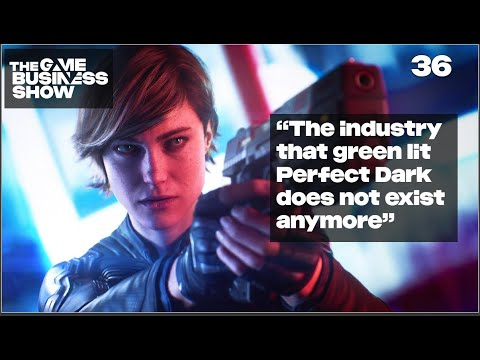
Transcript
Hello and welcome to the game business show. This week, recently laid off King Staff claimed they were being replaced by artificial intelligence. Craftton has publicly fallen out with the leadership of its studio Unknown Worlds. And Roblox has launched a new licensing platform. But our big topic of the week is a little different actually to what we've done in the past. Jenvid CEO uh Jacob Nuk who's also the former director of business at Square Enix put together a Twitter thread an ex thread on Square Enix the Microsoft layoffs AI and and Metcast law and sort of discusses the current realities facing video game companies. It's created plenty of conversation among senior leadership in video games. So I thought why not dive into that and the conversation that that has started and who better to discuss this very thing than our guest host this week. Uh it is Jacob Neuk. Hello Jacob. Welcome to the show. Thank you. Very happy to be here.
For those who are listening that may not know who you are or who Genvid is, I start a little of an introduction. Um, who are you? What do you do?
So, my name is Jacob Novok. I'm the CEO
at Genvid. I've been running this company for close to 10 years now, which is scary to think about.
Uh, we started off doing interactivity for the Counter-Strike majors. We ran a whole bunch of them for Twitch and for Valve back before CO. From there, we did Rival Peak for Facebook, which had about a 100 million uh minutes feuded and starred Will Weaton. Yeah.
After that, we did Pac-Man Community with Band Dynamco, The Walking Dead Last Mile with Skybound,
Silent Hill Ascension, which I won an Emmy for, just launched uh a little while back, DC Heroes United with Warner Brothers, and we've got some other exciting stuff coming this fall. Uh before starting this company, I spent a third of my life in Japan. uh and I ran worldwide business development and strategy for Square Enix Holdings which is the parent of the Square group. I worked for two CEOs of Square Enix Yoiada as well as Yoski Matsuda. My title in Japanese was shhatski which means attached president uh but which English would uh basically means
president office holding this is the very small parent entity that manages the entirety of the group. And so I've been in the industry now two decades going on my third in few years. Yeah.
Yeah.
Scary to think about.
Yeah. Genvid it's this it's interactive sort of live events is is the sort of
Yes. Exactly.
What does that actually involve?
Well for example in our DC Heroes United um game we have a TV show where the audience is influencing what's happening on a regular basis. And the way in which you influence it is by playing its associated video game that allows you to generate the points you need to be part of decisions with regard to the show.
Okay,
for example, should uh Clark Kent tell Lois Lane that he's Superman and all this as a community lets you influence the content that you're seeing. So a lot of the writing staff are are ex Telltale or chief creative officers. Famber guy
was the uh chief creative officer at Telltale then at DJ2 who did the Sonic movie and before that he was at 12 12 years at Pixar working on Wall-E the Incredibles 2 and stuff like that. So you know we were a team who come from storytelling and and writing stories with branching narratives.
Interesting. Well, it makes your opinions or your analysis, let's say, uh, even more fascinating. So, let's talk about this Twitter X Fred. Um, actually, you know, it probably makes sense to recap it a little bit. I can't assume everybody listen to this has has read the thread because it goes back to your time looking over the annual reports at Square Enix, right?
Yes. Yeah. Exactly.
Because even then, Wild Sam was talking about networks being the future, right?
And he wasn't necessarily thinking about the networks that we know today. So, so I'll let you take it off.
So, we used to be in the business of selling you a game, right? I I went to join Square Annex because I loved Final Fantasy and you'd play Final Fantasy 7
and then move on to your next game and your next game. Hopefully, you bought Final Fantasy 8 two years later, Final Fantasy 9 two years after that. And that was the way in which we thought about content. similar to consuming movies or music, you were just constantly looking for that next hit of something to do. But as the industry began to change, we saw first the onset of MMOs, then the onset of always on mobile titles, and then the onset of titles like Fortnite where it just never ends. There is no other content to go to. They give you new experiences forever. And that means as an industry we have changed from being closer to the m movie business toward being closer to social networks
where there's just constantly new content being created by
people creators by the developers themselves. And that is a radically different business than the one that we had been in as an industry for a very
long time because there are not many winners in the social network space which is to say like Facebook bought Instagram bought WhatsApp since then we've had Snapchat which has been fairly minor and after that Tik Tok
and that's on what 20 years of social networks I mean they destroyed Friendster and MySpace you barely even remember them and So once you get these social networks which are really driven by metap's law which is you know the value of a network increases as more users come to it you don't really get out of that space you stay in there kind of endlessly
and those companies are ruthlessly efficient at driving network value and making sure that if new social networks come up that they are able to very quickly spin up something similar. So, do you remember, you know, in early COVID when Clubhouse was very popular?
Yeah. Yeah.
Yeah. And then X introduced spaces and
Facebook introduced audio. They just are really, really, really good at making sure that they copy everything. And so, if you've got a platform like a Roblox or a platform like a uh Fortnite, you're going to find that many of the kind of great gaming ideas start to be built, if not by the developers themselves, by by others in the community, right? And so there's grow a garden on uh Roblox.
There are people making gardening games on Fortnite right now. And these things just spread. And you know, we've seen these in microcosms in the past, which is to say like Harvest Moon became Stardew Valley. But that was like a 10 15 year difference in journey between those. These things are instantaneous. Almost overnight you're going to see these things popping up. And obviously that's creating a problem for the whole industry in terms of time and discoverability as in people's time to play games.
Yes.
And this might be a really minor point, but I've always saw Tik Tok as like a
YouTube. It's like a as like a video platform rather than a social network,
but obviously it is a little bit of both. And I think that's what we're talking about here. There a lot of these platforms, even things like Fortnite. Fortnite's a game, right?
And it's a platform. It's a tool. I love the way you said that. Online.
Yeah, it's very hot in Manhattan. And I turned off my air conditioning trying to avoid the noise, but Jesus. Yeah. You know, it it's miserable in New York right now. When I think of Tik Tok, I think back to Vine.
Mhm.
Vine was a video platform that Twitter acquired, what was it, 15 years ago? And they shut it down because even though the functionality is effectively the same as Tik Tok is today, which is a short form video plus some simple editing tools, it didn't get much use. What is the difference between buying and Tik Tok? It is the algorithm. It is the AI behind it that gets you interested, engaged in that next piece of content, the next piece of content, that next piece of content. And it's not dissimilar to like a Warriorware style
miniame collection, right? And if you're bored with one video, you just swipe to the next one, swipe to the next one, and swipe to the next one. It's incredibly good at giving you this hit of dopamine as you're finding a video you like. And it's very similar to a video game in that way. And as a result, you could literally grasp Tik Tok hours per week going up and gaming hours per week going down. And if you have a billion people spending 2 hours more a week on Tik Tok, where did those hours come from?
Yeah. I think there's an element of red ocean here, right? In that we now live in this industry where if something is going up, something has to be going down, right?
Yeah.
It's interesting your train of thought. I read the Fred. I was really fascinated. I then went back to the beginning and there was a bit at the beginning talks about network and content. That's what you started talking about on the Fred. We moved into a network business. This might seem mad, but I started to question whether or not there is even such a thing as the video game industry, right? So, because I
started to wonder to myself, is it really we've got a network industry and then you've got a it could be content industry, could be entertainment industry. I don't know what media industry you know what label you put on that but you've almost cuz I I sit there and think of something like Tik Tok is taking time away from my Switch and um Candy Crush in a way and those sorts of games because it's something that I I used to do in between things. Now I do that or I don't just do that but I it's one of the things I do but I then think of something like War Zone or my game is Sea of Thieves and that's almost a different I feel that's a diff I don't I don't just play Fortnite and think that's all I'm in that world now I don't need anything else. I do want a story or uh as something a little different a snack or or something like a different type of experience. Let me just get that the the message you said. Would Perfect Dark Reboot take any measure amount of time away from Fortnite, GTA 6 or Call of Duty? Will it grow the market? If
not, should I spend on it? This is a question Microsoft should be asking themselves.
Yeah, but actually I don't think Perfect Dark was supposed to be about Fortnite or Call of Duty at all. I think it's in the other industry. It's in that media, entertainment, content industry that that's lived in because it's it's about a story Bladeunner meets James Bond style spy thriller. I know this sounds might sound strange, but it actually got me thinking into a completely different way of looking at this industry. you know, if you're making a game like Perfect Dark or making a game like Ever Wild or those sort of games, are you competing in the Fortnite, the network world, or are you trying to go after the other forms of entertainment? Um, I would argue that a game like Perfect Dark is competing with HBO and Netflix rather than Facebook. you you're making the right point, but the challenge and what's changed about the industry is the cost and audience demand equation have broken. And so there are thresholds where what you're saying is accurate, but from a development forecasting
perspective doesn't work anymore. If you don't mind, I'll illustrate.
Yeah, please do.
And I apologize for for cutting you off.
No, no, no. I want you to let's pretend we're still for a second. I'm going to use completely madeup numbers about perfect dark. I have no clue.
So, we've got Daryl Gallagher at the Initiative. He's former Square Annex. He was the head of Crystal Dynamics.
Tim Raider.
Tim Raider. Really a guy, incredible guy. Knows how to build amazing games. It's 2018. We're greenlighting his idea. We love it. We're in the PlayStation 4, Xbox One era, and game budget cost what? 150 million.
Just pulling a number out of a hat.
So game budgets cost 150 million. And if you remember my Square Enix thread last year on how ROI works, it's not just we need to make back 150 million. It's we have to make back 150 million plus the time value of money. So we need to generate
say $200 million worth of revenue to break even and also we have marketing costs. We've got other management overhead costs that are publishing side and not just development side. Let's say our real break even number is probably close to $300 million.
Given marketing cost should be you know 50% plus overhead of what have you. And time passes and we're in 2020 now and you know how game development works, right? We're always perfect and sometimes mistakes get made. But also some things start to change in our industry, right? On the one hand, you have new tools coming out. 2020 saw the release of Unreal Engine 5. It saw Tim Sweeney saying, "We're going to reduce the cost of development. development costs are way too high and we're producing Lumen and Nanite and all these other tools that should make development cheaper. We're like, "Thank God.
Hallelujah." And so these new tools come out, but your your developers don't really want to use them. We're in the midst of development. We're about to go from prototype to full production. I don't know these tools. I'm going to need six months to study them. I face this stuff, right? I had three different titles of Genvid. My sound people kept insisting that they use audio kinetics wise instead of Unreal Engine sound tools because they're like I don't want to learn the new tools. I we don't want to switch from Unreal 4 to Unreal 5 because it's going to set us back by 6 months. So they don't use the new tools, right? And then as an industry we start to move away from crunchface development cultures. Well, okay. So, if you weren't working, you know, 70, 80 hours and you're now doing 40 hours, all right, well, time has to go somewhere. By the way, I'm not defending crunch.
No, no, that's not the point. The games are taking the longer, right? Games are taking longer. Costs are there. And also, I started in this industry in my
20s. I'm in my 40s with a child now. He's 8 years old. Life is different for us.
Yeah,
we're slower. And so game development costs that at the start were 150 million became 200 million again ignoring the marketing and ROI became 250 million and now we're in 2022 game is behind need some changes staff costs are up. We didn't adopt the new tools. What's our new budget? The other bit is obviously there was all that competition for talent during the pandemic when everybody was growing.
It was insane. All that salaries went up. Correct.
Then there was the uh cost of living crisis which also caused a rising cost of business.
Correct.
So that all all had this um
Yeah. I mean 20 if you hired and staffed up in 2020 and 2021 as we did for several of our projects, you're not going back and telling your staff, hey sir, you know what? We overpaid for you several years ago. Please take a pay cut.
Yeah. You're not able to do that. And so
now it's 2024 and your $150 million project now costs $300 million and that's before marketing. What do you do? Is your demand equation now higher? Do you believe that there are more users? Actually, there are fewer users because your time is now taken by Tik Tok and this is the reason you have the layoffs because you are no longer able to justify the new cost. If you had gone in 2018 and you had said $300 million at 6 years, would that game have been green lit? Probably not.
It's interesting. I look at a game like Perfect Dark and actually think if you commissioned it today, it would probably be a 35 person team with a load of outsourcing.
Correct. Made in 3 years.
Exactly.
And it wouldn't be they use the word quadruple a development team. I I you wouldn't even you would have gone you would have gone straight to Crystal Dynamics. he wouldn't have gone through the the process of of trying to build a team. It was a very ambitious thing.
These single player games, Final Fantasy, Perfect Dark, I do believe there's a market for them. I just think that market now needs to scale to the scale down.
Yeah, exactly. That is it. You are 100% correct. They cannot produce it because the demand never came. The challenge for a public company is if you are Square Enix and you say we are going to reduce our revenue forecasts by 20 to 30% cuz keep in mind the way in which they did this was saying development costs are up market is growing we will increase price point
airgo we will have higher revenue because companies must increase revenue. Yeah,
if you don't have increased revenue over time, you are losing money because of inflation, which is a death spiral. You want to look at the result of those death spirals, you solve it.
You cannot as a public company go and say, "We're going to shrink our revenue base. We don't expect as much money in the future, but don't worry, we'll be
profitable because our costs are down." That is a hugely problematic statement to make, which is why you see places like Sony saying, "We're going to be successful in the games as a service business." There's generations upon generations, new generations of gamers coming in. And the generations, to be slightly morbid about it, the generations that are sort of dying off are not necessarily gaming generations. So you in theory, you should have more players coming in. But you're right, they're going into Roblox. And this is what I found. There's a story, and we're going to talk about it later, but there's that story about Roblox sort of having the licensing division. Brilliant.
And I just think where people go from Roblox, where do they go next? And a lot of that's Fortnite, they don't just go to Fortnite. If you look if you look at like with funnels, like the size of Fort size of Roblox and how in terms of users and where that goes and if I'm trying to grow Final Fantasy, you sometimes you do need to bring the cost down because you know the the margins don't make sense on it anymore because of the way the industry going. But I still think there's opportunity for growth. It's just how you deliver that growth might be working with the platforms that are sucking up all the time out of the market. like there's opportunities
within those platforms.
There are more gamers today than there were yesterday because of, you know, older people who didn't play games dying off and younger people like my son coming in and assuming interactivity. But his assumptions on interactivity are very different than mine. So, he was 2 and a half years old when the pandemic hit. It's March 2020. He's at home. He's not able to go to daycare and you know we're working. We put a phone in his hand. He watches YouTube. He even at 2 and a half years old he's able to learn how to swipe. I remember distinctly he goes up to the television. He tries to swipe the television and it doesn't react to him. And he starts balling because it's like why this broken? I don't understand. And so his generation grows up with interactivity as a default. But those school-based networks are so strong. He doesn't know anything
about Pokémon. He has a Pokémon card collection because all of his classmates
have them.
None of them have really played the video games. They were five, six years old, but they have them.
Then they start with Roblox and they start with Minecraft. They have Minecraft parties. They go to the Minecraft movie together. I took them. I had three sevenyear-olds all sitting in a row next to me. They were laughing their asses off. That culture is very strong. I've tried to get him to play a Mario game.
No interest.
I maybe it was 3D stuff like I put a controller in his hands like regular Xbox that tried to get us to play Spider-Man 2 on PlayStation 5 together. He just I mean the camera just goes wild. At his age, I was able to navigate these things just fine, but he's so used to a phone and he's so used to phone navigation and the way in which those things work and he prefers it and his friends reinforce that. So, his only exposure to Mario is having seen the
Mario movie last year. That's it. He has none of that memory that I have as a child. And I went to go work for Square Enix because I love the Final Fantasy series. Next one will be Final Fantasy 17. That's intimidating. Do I think he's going to start at Final Fantasy 17 or be interested in it if he sees that number decided?
Probably not. And so these are challenges that a lot of the older IP and a lot of the older places have to navigate. What's interesting is you can use movies and Netflix and Tik Tok and other things to start to expand your audience. Yeah. And bring those new people in, but I don't think that the games that they're going to play are going to be like what we've been building before. That said, if what Square Enix was doing was building its next great game on UEFn, the business model for UFN is not set up for that.
Yeah.
They will never be able to recreate those revenues. And so, where do they go from there? I don't know.
It's interesting cuz obviously we're talking about anecdotal examples here. My son's just started getting into gear games. He's five. Even now, it's a little habit of mine. If I'm, you know, in between things, I'll get out Mario Run. So, his first touch point of Mario was actually the mobile Mario game.
Yes. Makes sense.
And he really liked it. And then he um and then he was watching me play um Mario Kart World when it came out only a month ago. He's also seen me play Astrobot. I tried to get him to play Astrobot, but he wouldn't control the camera. He you use the analog stick to move the character around, but he couldn't move the camera behind. It was too much to begin with. But then in Mario Kart World, they have this open world area where you could just drive around. You don't have to race anything. You're not losing all the time. And I just gave him the controller and he's slow. He's learned how how to control 3D Mario games. And it turns out all his friends are into Mario Kart and it's created a W. But it just obviously that's that network effect happening.
Correct.
But anyway, it's sort of a side point to what you what you're saying there. But here's the thing. I discovered Final Fantasy with Final Fantasy 7 and so did
everyone I know who liked Final Fantasy amongst my old friends because that was the PlayStation generation. It brought in a huge new audience of people and then the people discovered Final Fantasy 7. And I know that Final Fantasy 7 was a commercial product that you could make money from and it made sense. But when you see kids discover Final Fantasy for a UFN, even if those aren't the commercial plays, they could be the the first experiences of those sorts of things and movies obviously and TV shows and all these sort of things as the way as the entry points into those franchises. I'd like to hope that through these different platforms that are sucking up a lot of time consumers, they are potential avenues for these franchise in which to find new audiences. Um, I don't know how effective it is though because Nintendo didn't do many more Mario games on mobile after Mario Run. They didn't. Um, Nintendo is unique and I don't like to say that about any company other than them, but like they are similar to Disney. They've managed to have their IP remain incredibly
strong and resilient and they think of their products as toys and they are going to be very comfortable staying in a content business probably for decades to come. But like you you can't go and be like, you know what, my business strategy is to create Mickey Mouse. That's not a real business strategy for really anybody other than Disney. And so just as you can't build your business on the hopes and dreams of I'm going to beat the company who primarily profits off of theme park. Yeah. You can't really build your business assumptions off of I'm going to be like Nintendo. It it's weird when my brain went down the the sort of avenue of there isn't a video game industry. There's a network industry which is where Call of Duty War Zone sits and then there's a content industry and that's where Call of Duty single player sits. And you've got these sort of separate things. I actually thought, where does Nintendo fit into that? And I thought, oh, they're in the toy industry.
They're in the toy industry. It's, you're 100% correct, right? There is no
other way to think about it because they are incredibly exceptional. If you try to graft them onto normal assumptions, you will fail just because nobody else is able to build a business around intellectual property the way that they have. We're talking about IP here, but if we step back from IP and just talk about games that are linear experiences, which is what we're saying is a challenge of business here. If we assume that video game industry does exist, go back to that and we to widen our audience to become more ubiquitous because we're not we make loads of money, but we're not as ubiquitous as as film and TV and music. if in order to reach what we need a variety of different experiences and I just think I think storytelling is a key component to that telling stories that are that reach different people or just inspire I think that's an absolutely essential part of that and we talked about Microsoft and yes Microsoft shut perfect you know and I've been critical of Microsoft for at least that may be sad or cross about the situation even though I do understand it
they are still investing in those experiences you know we saw just their summer showcase Clockwork Revolution, that new game from Double Find Keeper. They're still good. They didn't close Ninja Fury. I I actually was when I heard first heard the rumors, those were the concerns. These smaller studios making games that aren't 10 hours long that don't really work in Game Pass. They're still investing in them because I think they still see the value in that these experiences potentially bring in different, you know, Tony Hawks Pro Skater may not sell millions and millions of copies. In fact, it may sell a lot less now than it did it does sell a lot less now than it did 20 years ago. But it it hits a culture and an audience of people that perhaps don't play games all the time or might be might come in through this title. And I I just think as an industry as we look to try and find growth. I would like to think that those sort of single player maybe not single player but certainly one hit beginning, middle, and end games as someone calls it are part of that story.
Well, let me let me put it this way and I made this point in the thread and people didn't really pick up on it and so I I do want to reinforce it. I
believe that Steam is like YouTube and I believe that it's a great place for you to be able to find individual two to three hour videos to watch, right? YouTube is not some jackass with a camera doing tricks or making a funny video of their baby anymore. Like Mr. Beast videos cost what 10, 50, $100 million to produce these days and generate significant advertising revenue for him, but also are like sometimes two, three hours long. And so you can go to Steam and you can be successful as a creator on Steam if the algorithm gods deem you well on it. And so content lives there on the platform similar to the way it lives on Steam. I also went to see the Superman movie over the weekend. It was great. I saw it in a movie theater. Now, if you
were putting a dollar into YouTube as a platform, I'm just talking investing into the company, you would see a return far greater than if you put a dollar into Paramount or Warner Brothers or anything else. And so those media businesses that make $200 million revenue generating Superman films exist. They are there, but they mostly have had their value supplanted by platforms like YouTube and others like Netflix. And so the amount of movies they make, the type of movies they make, their experience creating movies has not changed, will continue to exist. theaters are not going to go away tomorrow. But if I had to give you investment advice, I would not suggest you put that money into AMC.
I don't think that you would do that either. No, certainly if you want a big
return, but he look you talk about these platforms. Stra Selnic whenever I ask him these sort of questions, he's so matter of fact and I sometime I used to think he was being dismissive but I think he's just he just likes to boil it down simply and he said like if everyone's playing on Roblox, everyone playing Unreal or Fortnite, if everyone's watching on YouTube or whatever it is they're doing, then that's where they put the games. Like if you're in the content business, if your business is making films or you know or whatever it is or games, yeah, it might be steam and it might be this over here, but you just follow where the audience I think in his head it's that simple. Um, obviously the business models and monetization then comes into it and that's where things get a little bit more complicated. And then you need to scale your business to suit the economic realities of that. as a publisher being established in the 1980s and the 1990s. The way that Font worked was you market, you distribute it to GameStop, Babages, you know, where it used to be.
Yeah.
Right. You buy the standes at the store,
people come, they acquire it, you've set your price point, you've acquired your customer. On YouTube, you can't really acquire your customer. They are YouTube's customer. On Steam, you can do account linking, but at the end of the day, the reason that nobody successfully challenged Steam or Steam users are Steam users, right? They're very, very satisfied with their platform and it is incredibly sticky. Now, luckily on Steam, you still get to set your own price point, but there are significant challenges for a number of these platform like products where you don't necessarily have customer ownership. You will have challenges selling and managing your marketing. You will have challenges being able to do price point setting. you are far more disrupted
through them than you are on what the game industry has been up until now.
Yeah, that's true.
In the same way that
you'll notice when I said you're a creator on Steam, it's the same word that they say for YouTube. You could be a film studio on YouTube, but you're not really a film studio on YouTube. You don't own the advertising inventory. You can't control it. you can't really compete for what those prices are.
That's a very disrupted business, which is why YouTube's value is so high. And so, it's challenging for us as content creators. I'm not going to name him, but four or five years ago, I was out for lunch with a former PlayStation executive, and he said to me, and he was he was talking about for coming from the perspective of consoles. The problem with modern consoles is that once upon a time, a console manufacturer made a box for you to put your games on. Now a content manufacturer is someone you who's your retailer and he's your distributor.
Sure.
And and and they're increasingly becoming your media as well, right? So
it gives them more important power. And what what we're seeing that happen in digital seen happen digital before with Steam, but obviously in the comes to a game like Fortnite and one of the issues that you've got is that even the things you're selling is related to stuff you buy in Fortnite because it's a game as well, right? Now now the platforms are also the content. You get a situation where the you know the way the monetization works in Fortnite is people buy costumes and things for the characters that are in the game.
Correct.
And that's what you get a cut of and that's like you don't even have a control over the things that you even you have none whatsoever. Correct. At least on Roblox you're able to set price point like grow a garden is somewhat evil. I went and I played it for several hours. It's like you want to pay to grow this faster? Do you want to pay to steal from someone else's garden? feel free to throw us money and we will let you win this game incredibly fast. And by the way, that's very similar to how mobile games work. But that is pushing toward the edge. And by the way, the edge is not very dissimilar from gambling. And
if you look at a lot of these mobile games, that's the way they look. And by the way, the mobile market is even worse because do you want to acquire customers? Do you want to go up the mobile rankings? Several billion dollars in user acquisition. Please, please pay Mr. Zuckerberg, please pay Google, please pay Apple, and they will let you buy ads on the store. And that's how you get your customer. And your entire business is the arbitrage between your cost of customer acquisition. And the amount of money you can squeeze out of that customer within the 14 days before they completely never open your game again. bringing earlier we were talking about being parents because I am I I play grow garden uh also for a similar professional research and I was surrounded by I don't know how old they were seven eight year olds talking to me and I was like you know what there's a reason for almost the opposite network effect here I understand why Roblox is struggling to break out of the uh the kids side of things but um I don't want my children playing these games
I don't want them
and I don't I don't really like them being on YouTube the kids YouTube app's pretty good and because I'm a savvy parent. I said, I know it'll be a safe game to get. I downloaded Angry Birds onto a tablet. Thought this will be one that they will um he like he played. There's a game. There's a CBB's app um which is a children's um TV channel in the UK and there's a game a TV show called Hey Douggee and there's um there's a basically it's a ripoff of Angry Birds game and it's he loves it but it's not it's not as good as Angry Birds. So I thought I'll get him Angry Birds and I downloaded it and it's constantly pay extra money to get an extra bird and it was advertising advert. I was like ah what have they done? Yes. I don't know. I I do I do wonder about that sort of Roblox experience because there is there is some parental push back and you're starting to see it being reported in the mainstream but we'll see I'm conscious that we could talk for ages but there was one I guess the only the only thing I was trying to say is reading your your points is when I look at a game like Tomb Raider for instance or even Final Fantasy and I think about what they're competing with I just see them more competing with TV and film and cinema
than Fortnits and Call of Duty War Zones or whatever. And I think if you're making a game, if you're somebody industry building a business, okay, sure, if you're investing in businesses, it's different. You probably wouldn't want to invest in that space. But if you're building a business um that looks at those sort of games, I think those are the things you should be looking at. Those are the things you're trying to compete for and for the time with.
Do you mind if I make a small tangential point to what you're saying? Actually, one of the biggest challenges as an industry that we're facing is the hollowing out of the journalism part of it, which is to say, if you're a small developer, Steam is really hard, just as it's really hard for you to break out on Twitch or YouTube. And so, how do you get people aware of your product? Used to be that you would be able to go to these journalists and get them excited. We were trying to pitch DC Heroes United last fall when we were getting ready for its early access launch. I would email a
journalist that we'd worked with for years and I'd get a bounce back and they were fired that day. We don't have people covering these titles anymore. And so if you're a new place and Steam is hard, you don't even have people you can get excited that can bring audience to you
anymore. It really is harming the ability for the industry to help smaller developers and studios and it really unfortunate.
Yeah, in a way it's part of the same system in that it's all driven by algorithms now, right? So the cons say the consumer games media space it's the big stuff that drives the traffic. So this and that's the traffic that makes the money. When it was the days of magazines they had pages to fill, right? I used to work I worked on okay an industry magazine and I had on an average week I'd have let's say 50 pages I had to fill every week and I'm like well I obviously knew what was put on the cover I knew what the big stories were the big games were but I would sit there and spend a page on the latest Hello Kitty DS game and I would do all of this stuff because I had pages to
fill and so there was opport so we we learned new things we met new things we discover new things you think with the internet it creates an infinite amount of pages you can write about everything you want but actually because it's the business model's changed people aren't paying5 or2 however it is, $5, whatever, for the magazine that it's all driven by advertising. You end up having to you you're going to try and do the things that drive the most traffic so you can get the most advertising dollars.
Yes.
And that creates the scenario where um the big the small stuff doesn't get covered as much. Journalists like covering small and interesting and innovative stuff, of course.
So, they will try to do those sort of things, but then when the numbers get smaller and smaller and smaller because, you know, Yeah. But what you're describing is the job has changed from writing and promotion to customer acquisition. When you are thinking about how do I drive more numbers to my article, your job is now user acquisition and SEO rather than what it used to be.
Yeah. And before when you had bigger editorial teams, you could have members of your team doing indie games or quirky
games. But when the numbers are getting smaller, you have to you have to deliver those numbers. It's not a world I completely inhabit because I'm in the business media space.
Even when I was at gamesindustry.biz, we had writers that would write about things that were really important to write about. It could be about, you know, the diversity of the industry, uh, you know, company culture. It could be about those sort of issues. Um, looking at ways to improve them. We had people writing loads of stuff about that. They didn't do huge numbers. They didn't generate huge amount of attention attraction, but they were important things to write about. But it was okay because you had the other two or three journalists doing the big interviews and doing that sort of stuff. when the numbers got smaller, well, it wasn't the big interviews and the commercially viable things that were the ones that the stuff that went got reduced and that's Yeah. Yeah. We've talked about the media quite a bit on the show. It's uh it's a bit I'm conscious of the time and we do have a couple of other stories to talk but one is connected. One thing I didn't mention actually you did mental talk about the June games that didn't do very well in your tweets. You talked about um I get the name wrong. Smallgate 2. Is that the name of the game?
Splitgate 2.
Splitgate 2. M's eye, FBC, Fire Break, and Marathon.
Yeah. Well, I will say Mai wasn't very good as part of the issue, but there were games that did do very well in June. Dune Awakening did did pretty good numbers. And then we also had like I think it's Rematch, the the football game from Kepler that did that particularly against numbers.
What was the developer on Dune Awakening?
Funcom. So, it was the age of Conan folks.
What percentage of the player base was West versus China?
That's a good question. um when you start to see very large concurrent breakout hits, ask that question first and also look at the peak concurrence because then you can start to model it out. What I have found is when you see big breakout hits, they have a large Chinese player base contingent.
Now, I don't know that for a fact with June. I literally asked the question because I didn't know the answer to it. But the Chinese player base has been one of the things that's been helping Hell Divers 2 stay with good concurrency on
Steam. Certainly made a big difference for a number of the successful titles. And by the way, that's a good thing. You want large player bases worldwide, but effectively, if you can get the Chinese player base excited, you're able to build those concurrencies. I'll move on to some of the other news items. We talk about these quite quickly, but um uh one of them is actually connected to the main topic. We did talk about it already, which is Roblox has launched a new licensing program. The license man license the license manager license catalog is is designed to enable rights holders of creative works including major brands to provide uh game licenses to Roblox creators. Uh it basically means that these creators can add popular IP into games on Roblox. I found this really interesting the the early things they've signed. So, the companies that have signed up include Netflix, who have brought Stranger Things and Squid Game, Lionsgate with Twilight, Saw and Now You See Me, and Sager with Like a Dragon. None of these are kids properties. They're all um they're all
some of them very adult properties, I would even I class it as. So, I thought that was quite I did wonder if that might be because they view it as a as a user acquisition opportunity for um at least a marketing opportunity maybe for some of these titles for when they graduate from Roblox. If you are any IP holder these days and you want any hope of reaching that young generation, you should probably go and join that licensing program. I don't really see a downside to it and there's only upside in the early days of being in IP that kids get interested in that can then drive other parts of your business. That may not be the right advice four, 5 years from now, but today when it's really, really, really hard to reach those audiences to start to allow them to build memories with your IP seems to me to be very important. And by the way, this is only upside like you will generate money from it. It won't cost you anything. I would be doing it in a
heartbeat.
The other next story, um, as part of the recent Microsoft cuts, this is reported by mobile gamer. is a friend of the the the publication. 200 staff have been cut by developer King as part of the recent Microsoft cuts. Speaking to mobile gameb staff claim that they've effectively been replaced by the AI tools they help build. The Londonbased Farm Hero saga team has been cut in half and the morale of the company is unsurprisingly at an all-time low. This is staff talking to mobile game. King's always been very very big on AI and in fact I remember going to see them only at GDC um a couple of years ago now and they talked about how they test and how AI has allowed them to test levels in Candy Crush so much faster. You know they assign the difficulty level um does it work and then the creators can tweak it. So in a way I'm I'm not sure if if we can you know I do it feel it feels like I can I could certainly believe that there has been um certain jobs they may have hired for in the past they don't need to do anymore because of that that sort of speeding up and that AI
automation process and obviously in mobile I think when it comes to the impact of AI on um games workforces I think probably uh areas of the industry where it's a little bit more there's a process to the creation there is a uh there is a um uh as an algorithm to the uh uh to those sort of things. The AI will will likely have a bigger impact. Um but also I think it's worth noting this is coming from the King staff themselves. It's not a Microsoft. Do we know if those staff were in art and game design or if they were in user acquisition cuz most of these mobile companies are half staffed at user acquisition right now. And it wouldn't surprise me to see that, okay, we've trained the AI to do the buying and selling of ads, testing AB work behind the ads, but the game part is a radically different story.
Most of level design has been wiped and spent months building tools to craft levels quicker. Now those AOL tools are basically that. So it's the person who made the statement on the in this story is somebody who works on the level
design side of um side of things. Although I suspect it's not the level designers themselves, it's the sort of testing component of that level design.
Yeah, I I would imagine so.
Yeah,
we've used a lot of these tools. The stuff for art is okay. It's not great. The game design and coding parts have huge problems and don't really scale well to putting it into your existing stack. It is the user acquisition and testing sides of it which are not I mean they were never like the part of the creative engine that I felt was going to be a a major differentiator for you as a company testing your level design and acquiring users. But they're core parts as a business. Don't don't get me wrong, but they're not the thing that's like this is what makes the gameplay itself differentiated from an art or story or or even gameplay itself perspective. And
so I I just don't want people to be scared thinking AI is going to gameplay out your jobs shortly.
I don't think that that's going to happen.
I think the only thing that I've had with AI and interesting I've gone on a bit of a journey with this myself is that when I started in games journalism, I came out of university, I didn't have the skills needed to be a top tier. I wasn't have the confidence. I joined the bottom rung of a magazine and I think if you think today that had happened 75% of the things I did when I started could be done by AI just as well right um and I what I worried about is people coming out of education who are looking for that bottom rung first you know foot in the door job where they learn the industry they learn in my case it would be learning the industry learning making contacts learning the basics of interviewing how to interview someone all of those things that um I learned doing really back of the magazine stuff um would be gone today. But then I then I guess back in my day getting a job on a magazine was what you did. Getting a job on a website is what you did. You
know nowadays it's you launch a YouTube channel, you set up a blog, you develop a substack. And it's the same I guess with content creators. You know I I the amount of game designers today including ones that are like leading development games like Fortnite and Call of Duty who started off testing video games, right? and and the journey that they've gone on from that point, learning from the people they were helping and supporting and and and that kind of experience I think is really valuable. But I just think perhaps the way the next generation will learn how to make games is just going to be different to the generation. I think that's the journey I've been on. I've gone from AI is a problem because there's no it's getting rid of the bottom rung. But then I I I think that we just it's just perhaps it you just you just do an element of self motivation really to sort of learn these things yourself.
I think AI is a problem. The the problem with industry jobs is separate from the problem of demand. And let me explain. If we go back to the discussion on Perfect Dark, for example,
Mhm.
costs no longer work relative to the
amount of demand that the game would get at a $400 million production cost relative to $150 million production cost. That was my argument, right? demand did not triple enough to justify that price differentiate. As a result, that didn't get cancelled. Those people lose their jobs. And if production costs continue to increase andor stay at their current level, we agreed that a 35 person team was the right size as opposed to a 350 person team. Where are those 90% other people going to go? That's where I don't have the answer. And they're not being replaced by AI. They're being
Yeah.
put out of jobs because the market isn't there.
Yeah.
And as an industry, let's start with that problem and then realize that what's going to happen with AI, and I touched on this in the thread, all
is a fundamental realignment of pretty
much all acts of human creation. And I know that that is a very lofty and weird phrase, but I know of no other way to explain it. The AI animation models are moving so fast. I worked on um a threeinut video preview for a client that would have cost me hundreds of thousands of dollars in a full team of people to produce that got produced by one person in six hours or an AI. That doesn't mean I can produce the product with that AI thing, but the the prototype video, right, showing what the experience could be like was done instantaneously and at a good enough quality that it's convincing, right? And that's with today's tools. And the point I'm making is next year's tools and next year's tools is going to allow for the creation of Hollywood quality video by anyone.
That's a problem possibly for Hollywood, but that's I'm not making the argument of job displacement. I'm making the argument of are we as humans ready for anyone anyone to be able to create that level of quality content? What does that mean for demand? What does that mean for deep fakes? What does that mean for presidential elections? Like that is what I mean when I say it's a fundamental realignment of everything. And I don't know where that goes. I hope that they seriously start debating universal basic income because there is going to be a lot of change in our lives in the next 10 years as a result of this. Richard, who's our he's the producer who probably remains silent, tells me that the AI tools that he uses to help with the audio and the video um editing, it does things that he physically wouldn't be able to do in any reasonable time. Um, and um, that's not just, you know, it allows them to speed
things up and do things faster and do things more efficiently or cheaper. It allows you he just wouldn't have done otherwise.
It it makes the product better. So, I'll I'll give an an argument, you know, in favor of these things, which is I have an animator working on my DC title. He could produce way more characters for me if he didn't have to do the inbetweens and the AI could do the in-betweens of the animation for him, right? He's one animator and he has to deliver a Clark Kent skin, right? It takes him two weeks to he does the key frames and then he does the animations in between. If they did the in between, he could deliver me five more skins, which means that I would have more skins to sell, which means that the business could grow better. These are all good things, but at the same time, we're not ready for what that mean, the macro skin.
Well, that terrifying for I'll end on a on a slightly more gossipy uh uh uh story. Um,
this is Crafton.
Crafton. Um,
yeah,
Craftton and the leadership of its developer, Unknown Worlds, have had a
very public falling out over the game Subnautica 2. This actually started much earlier in the month, but continues to escalate. Um, to keep it simple, Craftton replaced the leadership team of Unknown Worlds, including Ted Gil, Charlie Cleveland, and Max Magcguire, with Steve Hustess, who previously led Striking Distance Studios. It's another Craftton studio. Craftton then delayed the game game's early access from this year until 2026. Potentially could get risk $250 million in developer bonuses. The outer leadership team says it is ready. The game is ready. It can release it. Craftton said no. The game isn't good enough. Um uh he said the 250 there was a back and forth of who was going to get that did budget bonus and now Bloomberg is reporting that actually they're making it available to everybody. Craftton that there's been a leaked um document. Do we know if that 250 was supposed to be in cash or in RSUs?
It probably does say in one of the various um reports that I tried to compile all this stuff together. I hear of stories like this in games publishing and development all the time. It's very rare to see it. Um I think the the one
that springs to mind is the Infinity War bust up between Activision the creation of um Respawn. It's very rare to see it because it is not good for the public company, right, to have these kinds of problems. Which is why for all the people who think that Craftton's trying to get out of paying $250 million, which would most likely be in RSUs, which is why I asked the question, that money was earmarked years ago. The cost of legal and discovery alone, plus the brand damage,
yeah,
are not reasons why you do these things. And so for me when I see for example there was a rock paper shotgun oped yesterday about this kind of cynicism toward crafting listen I'm bidding at the executive levels of public companies pay that you pay them like they're not cash poor and they're certainly not stock poor they're not trying to do these things to save out on a trifling swing for them it'd be hard for four horse
yeah yeah it's um yeah it's there's not
much to say about this other than It's quite unusual to see it play out in quite a open way because you talk about brand damage but like the conversation around this game now is the game isn't good enough which I don't think is a message you want to be sending out which is why the publisher would not like the rock paper shotgun oped yesterday was saying maybe they intentionally leaked it from the crafting side. That's insane.
If they wanted to leak it they would have leaked it. You understand how that stuff works? They wouldn't have a employee take a screenshot and put it on Reddit. Like there there is no world where they're purposely trying to sabotage their brands, have to deal with this from a management perspective.
It's not worth any of the headache or the risk. And so my default assumption is that probably Captain is correct. We will see what comes out of this. But there are very few situations that I see where it's like, yeah, this is how they wanted it
to go.
Yeah, I still think this will probably end with uh uh settlement outside of court and uh it'll be quietly, you know, um nothing more will be said about
well because they don't want to deal with discovery, right? Like you can there's no interest in those things. But it is much more likely that that game was not ready. If you are Cracked in and you earmark that money four years ago whenever that acquisition happened and you're paying it out in RSUs, you are hoping that they built a really good game and you are wanting to see it released and have your brand increase and have your CEO talk about its great sales on their next quarterly IR call. You don't want them talking about this stuff. And so they are not going around purposely sabotaging green lights to avoid paying money yet.
Yeah. The odds are the game wasn't ready.
Yeah. Well, hopefully the game gets ready. Hopefully, we'll all forget about this. Sorry, Shane. And the game is a hit and everyone lives happily ever
after. And Jacob, I thank you so much for your time. We've gone uh I've taken so much time talking to you and I appreciate you taking time out.
I appreciate it as well.
That's it for today's episode of the Game Business Show. We'll be back next week with more features uh news and market data. To make sure you don't miss any of it, head to the gamebus.com, put in your email, and you'll receive alerts and emails and writeups of all future shows that we have plat. Uh, until next time, thank you for tuning in.
Auto-generated captions from YouTube — names and numbers may be misheard.

















Comments