Game Development reports and market data
Documents
Ludo Mix as an Aesthetic Experience: Designing Games for Franchises
The document explores how game designers can approach the "ludo mix," defined as a convergence of products centered around one or more games, drawing inspiration from the "media mix" or media franchise concept.
- The paper proposes that designers of 'ludo mixes' (franchises organized around one or more central games) can resolve the tension between creative world-building and marketing demands by adopting John Dewey's pragmatist concept of aesthetic experience.
- The central idea is that player and consumer experiences should be unified under Dewey's notion of an experience that is 'whole' and 'complete,' where each component meaningfully fits the larger whole rather than fragmenting the intellectual property.
- The ludo mix is framed as a descendant of Japanese media mix and franchise models described by Ōtsuka, Jenkins, and Steinberg, in which each product should contribute to a 'grand narrative.'
Video Games Production Networks in the Periphery: The Chilean Case
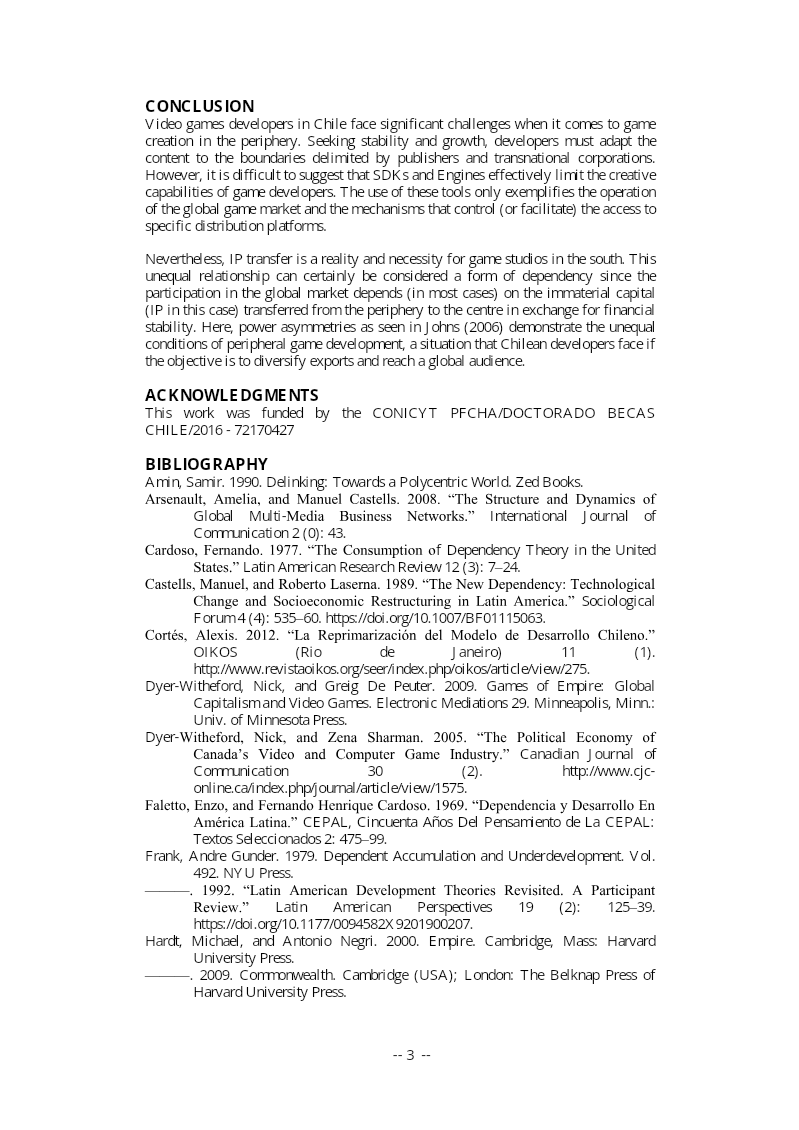
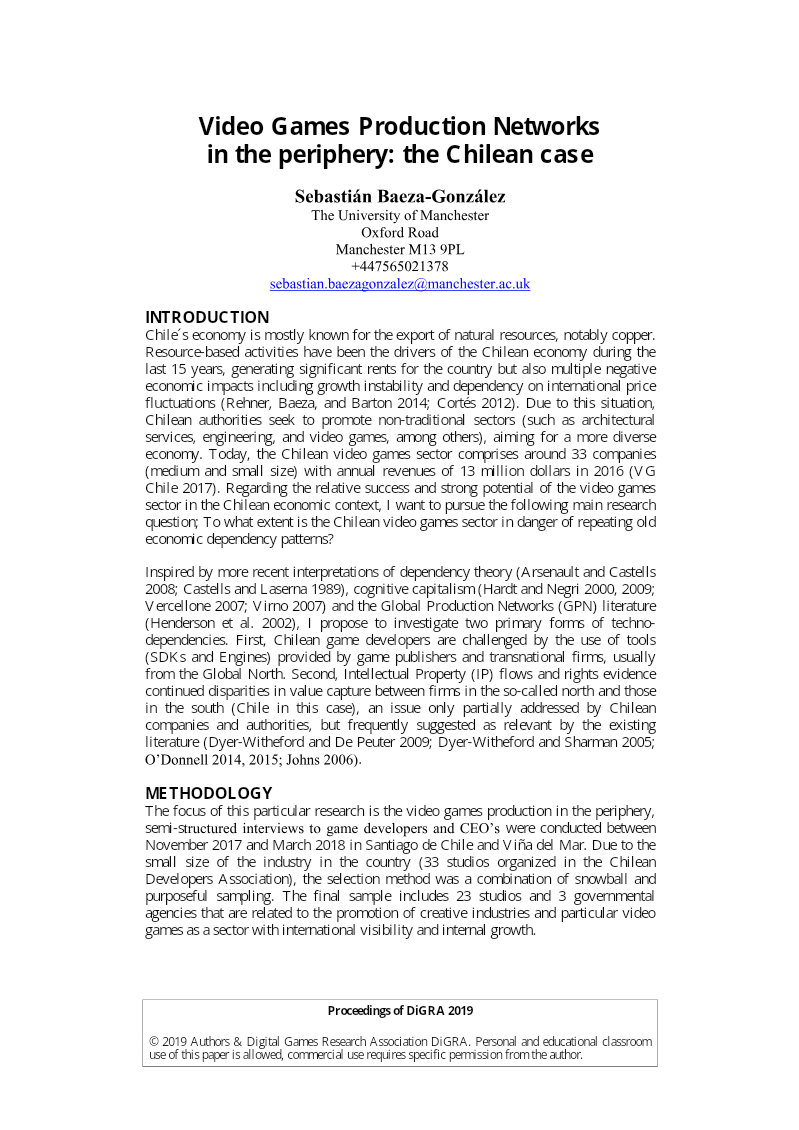
The document examines the Chilean video game sector to determine if it risks replicating historical economic dependency patterns, moving beyond traditional resource-based dependencies to focus on techno-dependencies within global production networks.
- Chile's video games sector in 2016 comprised around 33 medium and small companies generating roughly 13 million dollars in revenue, within a national economy historically dependent on copper exports.
- The study frames Chile's games industry through dependency theory, cognitive capitalism, and Global Production Networks, asking whether it risks reproducing older patterns of economic dependency on the Global North.
- Dependence on development tools such as SDKs and engines, largely controlled by publishers and console manufacturers in the Global North, is a central concern, with console certification requirements imposing strict technical and stylistic standards on developers.
In Situ: Researching Corporate Diversity Initiatives with Game Developers
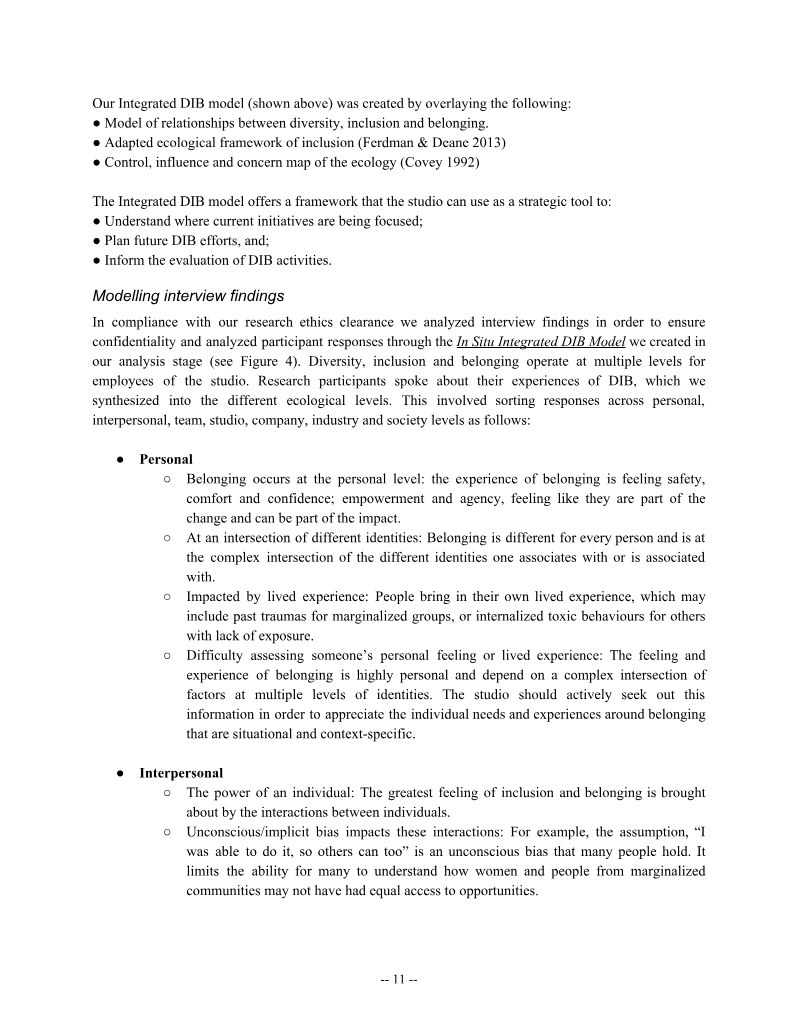
"In Situ: Researching Corporate Diversity Initiatives with Game Developers" presents a pilot study examining Diversity, Inclusion, and Belonging (DIB) initiatives within a major game development studio.
- The study was an eight-month feminist action research pilot conducted in 2018 within a major Canadian game studio, examining diversity, inclusion, and belonging (DIB) task forces aimed at women game developers.
- Its findings rest on rapid interviews with five senior leaders and twelve DIB-invested employees, plus environmental scans of companies including Riot Games, Microsoft Xbox, and Intel.
- The authors conclude that inclusive practices are the mechanism linking diversity to belonging, because diversity alone may produce assimilation or differentiation rather than genuine inclusion.
Port or Conversion? An Ontological Framework for Classifying Game Versions
The document proposes a formal ontological framework for classifying different versions of video games, addressing the current ambiguity and inconsistency surrounding terms like "port," "conversion," and "remaster."
- The paper argues that 'game port' is a conceptually vague and historically inconsistent term, yet indispensable for game analysis and preservation, and that existing definitions based on names, platforms, marketing, legality, or literal code transfer fail to yield a stable academic category.
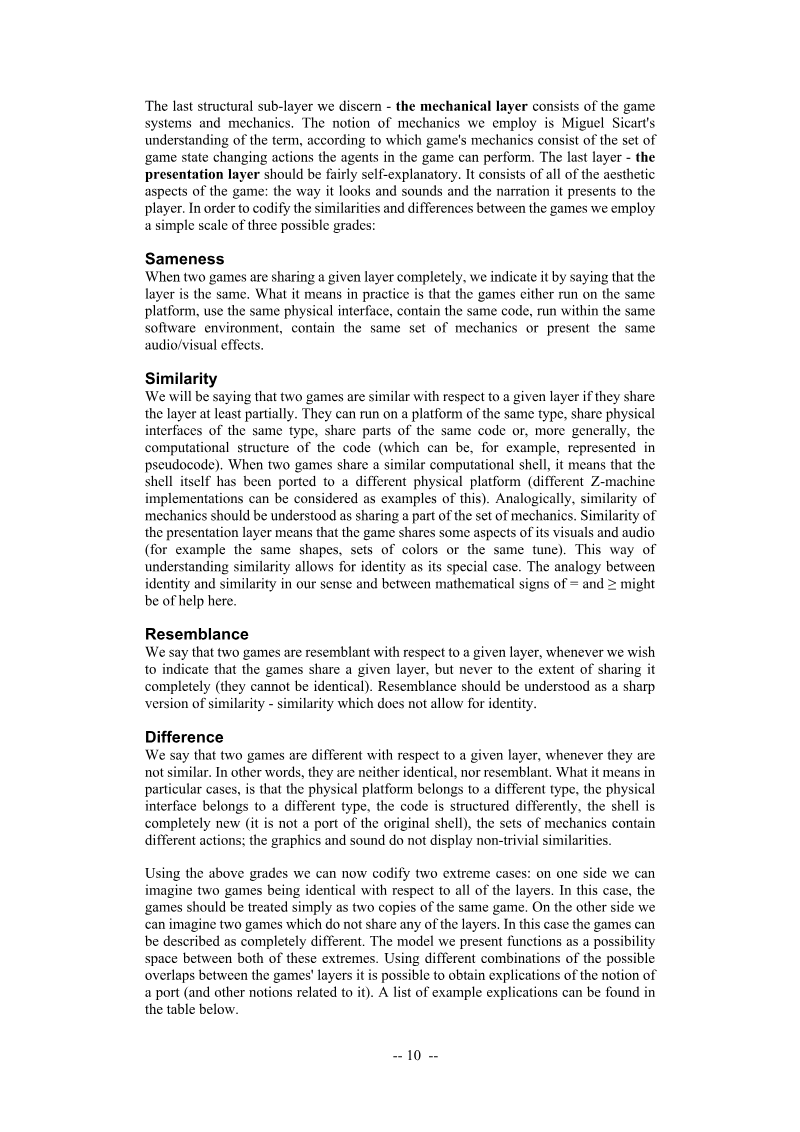
- To fix this, it proposes a Carnapian explication built on a three-layer ontology (physical, structural, and presentation layers) paired with a graded scale of sameness, similarity, resemblance, and difference for classifying game versions by fidelity.
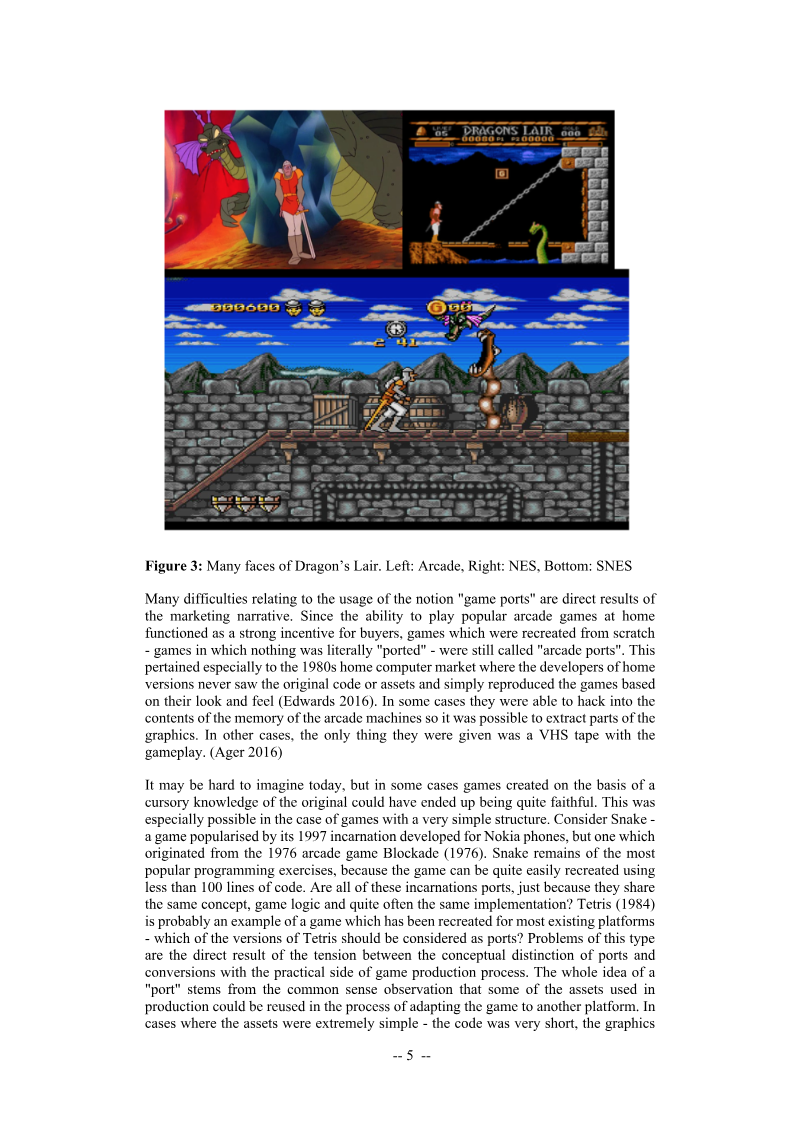
- Case studies such as multiple Pac-Man versions, Thunder Blade's Atari ST and Amiga releases, and Marvel vs. Capcom on PlayStation 1 show the same title can differ dramatically across platforms, with fidelity expectations focused far more on mechanics than on audiovisual presentation.
A Challenge of Developing Serious Games to Raise the Awareness of Cybersecurity Issues
This document outlines a project to address the shortage of cybersecurity professionals in Japan by developing serious games for awareness and education.
- Japan faces a cybersecurity personnel shortage of roughly 80,000 people, which motivated the use of serious games to raise awareness of threats such as targeted email attacks.
- A 2014 Serious Game Jam for Cyber Security produced 42 game concepts from about 60 university students, of which six were prototyped in two days and three were refined into finished games: Mail Stock Farm Story, Security Growth, and The Multi-tasking.
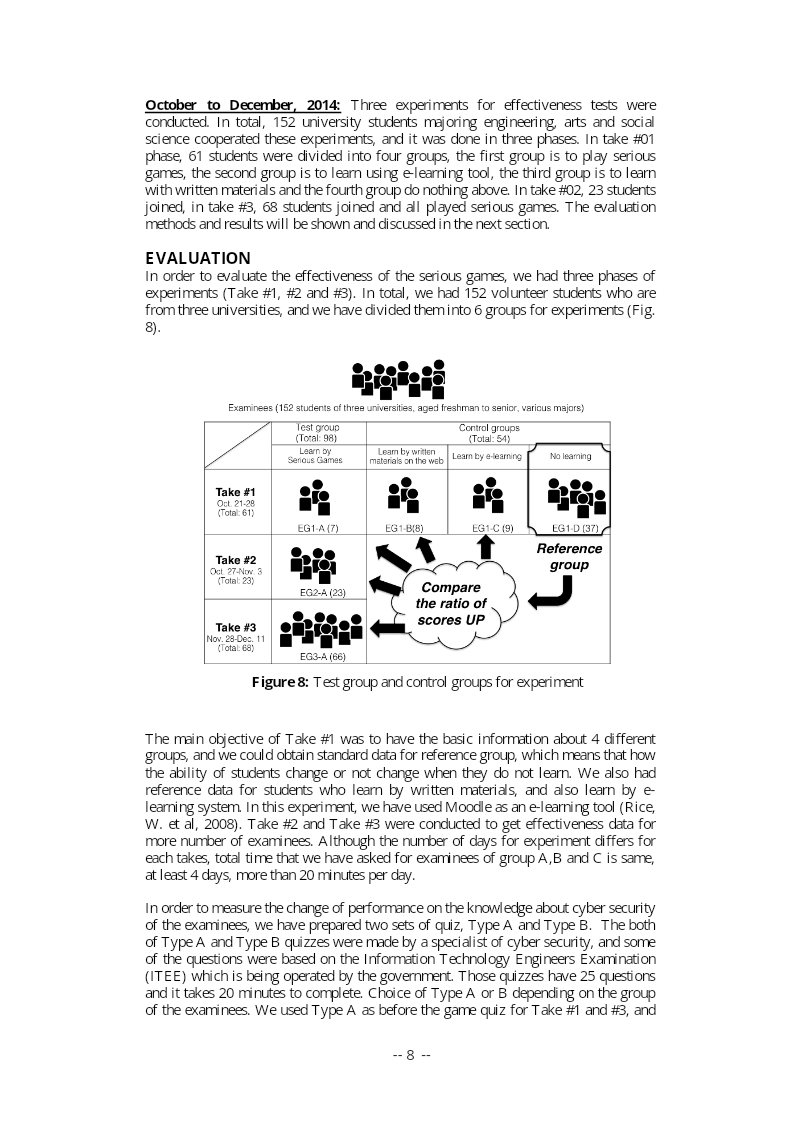
- In three experiments with 152 students at three universities (October to December 2014), about 50% of serious game participants improved their quiz scores, versus 24% in the no-learning control group, 37.5% for written materials, and 44.4% for e-learning (Moodle).
Sami Game Jam: Learning, Exploring, Reflecting and Sharing Indigenous Culture through Game Jamming
The Sami Game Jam 2018, held in a Sámi village in Utsjoki, Finland, served as a significant initiative to revitalize Sámi language and culture through game development.
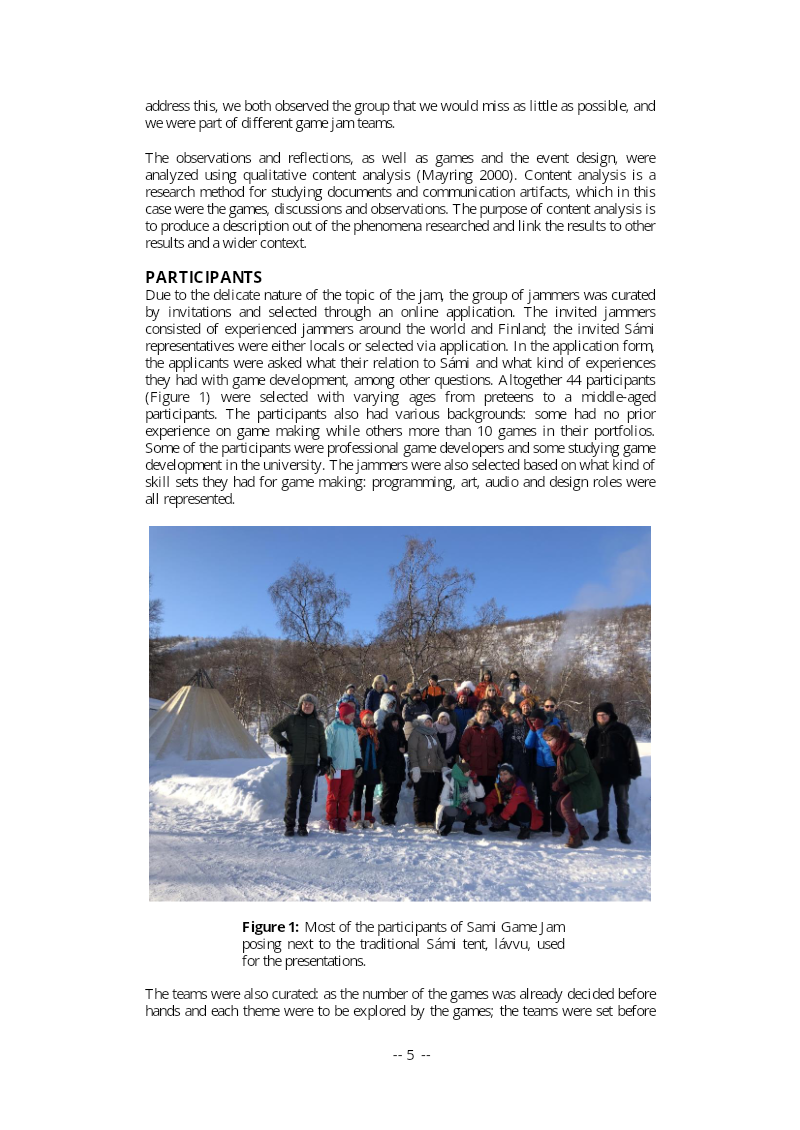
- The Sami Game Jam 2018 in Utsjoki, Finland, ran for five days in February with 44 participants, including Sámi community members, Finnish and international game students, and experienced developers, organized into teams paired with local Sámi experts and working on twelve Sámi-themed prompts such as language loss, border divisions, and ethnostress.
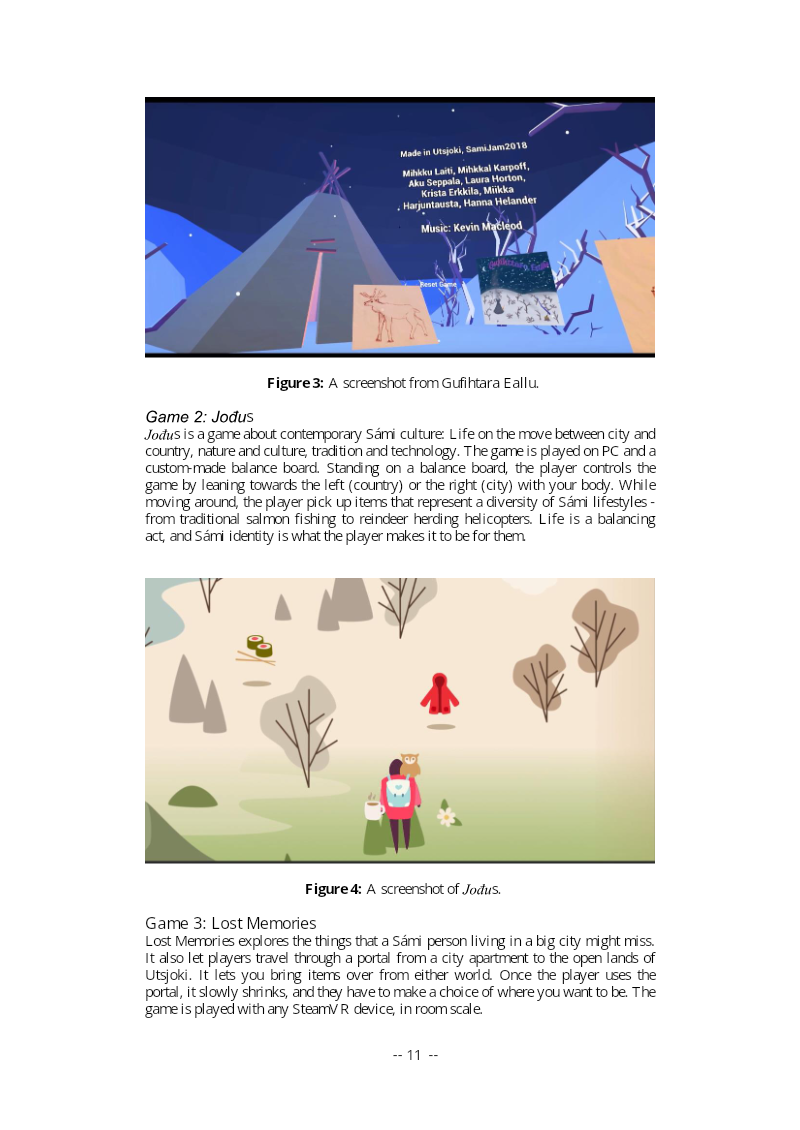
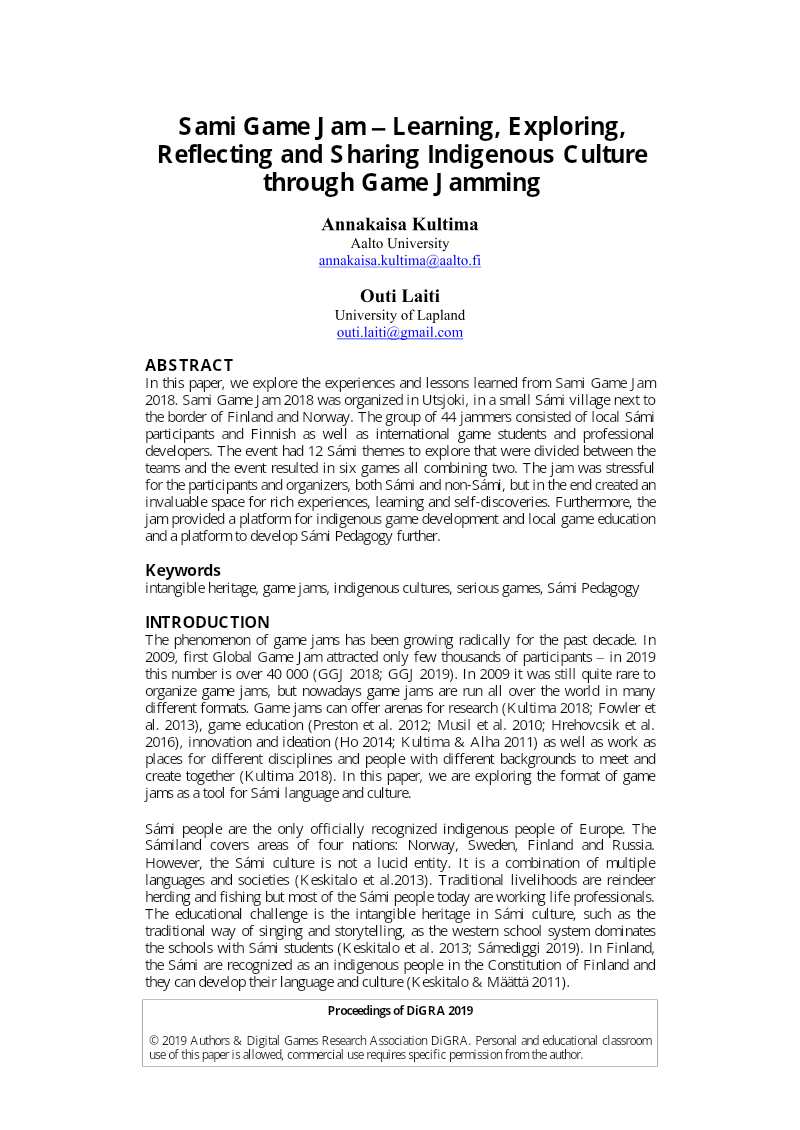
- The jam produced six games across VR, tablet, PC, and custom-controller formats, among the first computer games published on Sámi topics or in Sámi languages, drawing on all three Sámi languages spoken in Finland and largely avoiding common cultural clichés.
- Qualitative ethnographic participant observation and content analysis suggested the event was effective for learning and reflection and aligned well with the goals of Sámi Pedagogy, a culturally grounded educational model responding to the historical assimilation of the Sámi people.
The Politics of Game Canonization: Tales from the Frontlines of Creating a National History of Games
Glas and van Vught's paper examines how the Netherlands Institute for Sound and Vision assembled a national games canon, arguing that canonization is a politically charged process rather than a neutral act of documentation.
- Canonization of national game history is a politically charged act rather than a neutral documentation exercise, and the authors frame the Dutch case through the 'politics of acquisition', where preservation goals and socioculturally driven historiographical aims become entangled.
- The Netherlands Institute for Sound and Vision justified including games in its national collection through its 2016–2020 strategic plan, citing new media's importance for a representative record of Dutch multimedia production, and drew on populist, maturation, and instrumental arguments.
- The initial selection began with a 600-title longlist divided into five-year periods, and the resulting canon blended commercially successful titles with obscure 1980s niche games, shaped by pragmatic archival needs.
GDC vs. DiGRA: Gaps in Game Production Research
"GDC vs. DiGRA: Gaps in Game Production Research" identifies a substantial disconnect between academic game research and the practical realities of game production, particularly in content-creation domains.
- Academic game studies research on actual industry production is sparse: of roughly 2,278 initial articles reviewed from DiGRA proceedings (2006–2018), only 60 contained genuine industry empirics.
- The academic literature concentrates overwhelmingly on game design, management, and software engineering, while audio production, visual arts, narrative and writing, content-focused programming, and community management are almost entirely unexamined despite audio's prominence at GDC.
- Research on UX and programming exists but tends to approach these areas from a technical or software-engineering standpoint rather than a creative one.



Video Game Détournement: Playing Across Media
The analysis, "Video Game Détournement: Playing Across Media," investigates the phenomenon of creative remix practices within video games, termed "video game détournement."
- Fanny Barnabé's paper treats video game détournement (mods, machinima, let's play videos, speedruns, fanfiction) as a marked form of ordinary play rather than a separate activity.
- The paper distinguishes two modes: "détournement of the game," which modifies the game object itself (e.g., Kaizo Mario World hacks), and "détournement by playing," which transforms meaning through performance (e.g., the Halo machinima This Spartan Life).
- Its central thesis is that the boundary between playing and remixing is theoretically hard to fix, and both can be understood through the player's playful attitude rather than the game as a stable formal system.



Epistemological Issues in Understanding Games Design, Play-Experience, and Reportage
The document, "Epistemological Issues in Understanding Games Design, Play-Experience, and Reportage," primarily aims to address the inherent challenges in accurately understanding and analyzing game design and player experience.
- Designing and analysing games are both 'second-order' problems: designers only indirectly shape player experience, and analysts can reach in-the-moment play only through reconstructive, error-prone memory and reportage.
- The authors propose a flat-ontology 'Game Space Model' in which a game exists as multiple linked 'units of being' (designed, created, published, expected, played, recalled, reported, analysed), and argue that critics and designers must specify which unit they mean.
- A mismatch between player expectations and actual gameplay tends to produce strongly negative post-play criticism, as seen with Amnesia: A Machine for Pigs, Brütal Legend, and No Man's Sky.
Is This Still Participation? A Case Study of the Disempowerment of Player Labourers
This analysis critically examines the disempowerment of player laborers within the game industry, challenging common justifications for unpaid co-creation.
- The study argues that claims of consent, enjoyment, and mutual benefit do not justify unpaid player labour, because these framings can conceal a substantial power imbalance between developers and players.
- Drawing on Carpentier's power-analysis framework and three expert interviews plus the author's insider experience, the analysis contends that aspirational and hope labour frameworks can mask exploitation when players lack meaningful control over the systems they help build.
- In the core case, add-on creators such as the developers of CTMod contributed to Blizzard's design of an API that removed certain automation features while still letting add-ons display game information.
Finnish Game Industry Report 2018
The 2018 Finnish Game Industry Report, produced by Neogames from interviews with 140 companies, assesses an industry that has moved from explosive growth to a period of stabilization.
- The Finnish game industry has a strong history of significant international investments and acquisitions, including Softbank acquiring 51% of Supercell (2012-2014) and Tencent acquiring 80% of Supercell (2016), alongside numerous game studio acquisitions.
- Helsinki is a global leader in mobile game development, hosting over 80 companies, 1,600 employees (28% non-Finnish), and generating a 2018 turnover of 1.7 billion EUR, with 98.4% from exports.
- Finnish developers are rapidly adopting Nintendo (Switch) as a target platform, with its popularity growing from 4% in 2016 to 20% in 2018; chat games also emerged as a new focus (5% in 2018).
Writers
Games and companies
Games