1 free read left. Create a free account for unlimited reading + AI research.
Create free accountWhitepaper DiGRA
1 free read left. Create a free account for unlimited reading + AI research.
Create free accountWhitepaperDiGRA
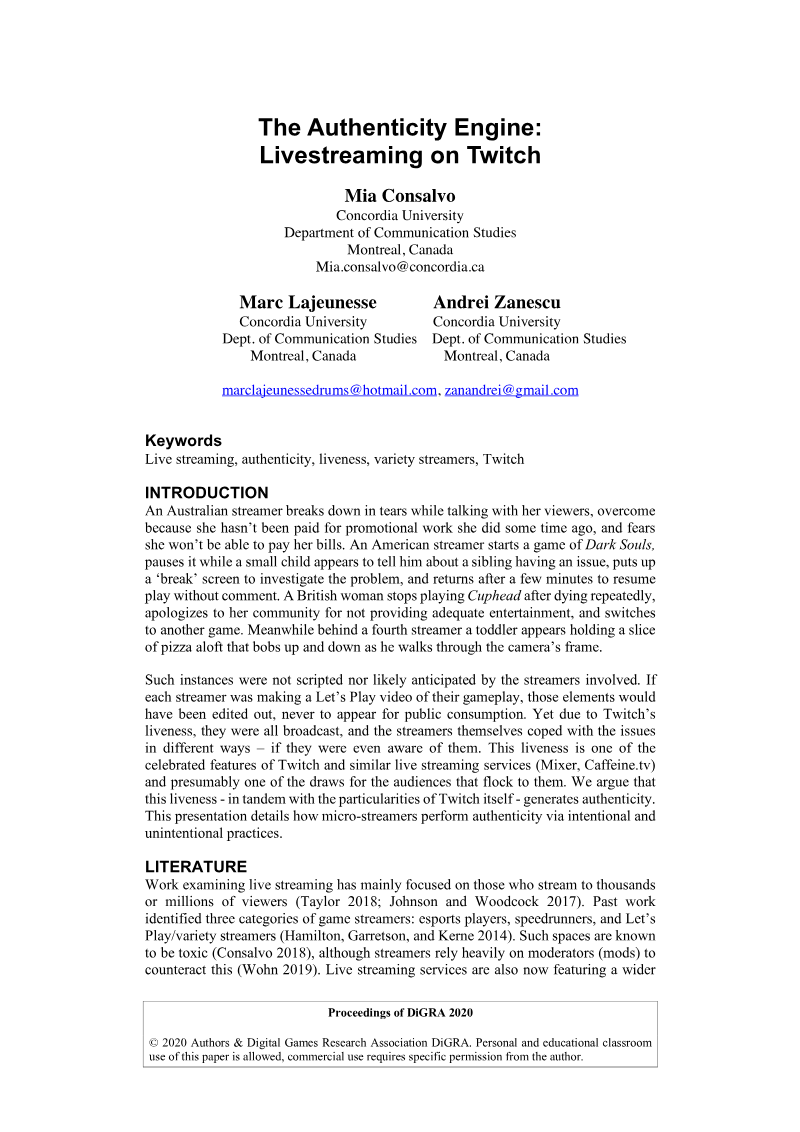
The study examines whether unpaid contributions by player-creators in World of Warcraft can be justified by claims of consent, enjoyment, and mutual benefit.
Prax's study examines whether the unpaid contributions of player-creators in World of Warcraft can be justified by claims of consent, enjoyment, and mutual benefit. Drawing on Carpentier's power-analysis framework and grounded in three expert interviews alongside the author's own insider experience, the analysis argues that such justifications obscure a substantial power imbalance between developer and player. The central thesis is that aspirational and hope labour frameworks, which tend to frame participation as freely chosen and rewarding, can conceal exploitation when players lack meaningful control over the systems they help build.
The core case concerns add-on creators, such as the developers of CTMod, who contributed to Blizzard's design of an API that removed certain automation features while preserving the ability of add-ons to display game information. While these creators exercised genuine generative power over the design, Blizzard retained overwhelming restrictive power through control of the technical infrastructure, legal enforcement, and the ability to remove add-ons entirely. Compensation was limited to a three-year subscription coupon, and non-disclosure agreements kept the contributions hidden. The study finds that participation was real but deeply unequal, with creators' attachment to their work and fear of losing it rendering them vulnerable.
The conclusions extend beyond a single game to a broader set of platform relationships, including streaming on Twitch and esports. The author contends that unpaid player labour is exploitative because creators hold little influence over design, payment, or the fate of their work, and that companies could acknowledge or compensate contributors at minimal cost. Proposed remedies include informed consumer support for player creators and collective organising, though the author notes current unionisation efforts exclude non-employee creators. The study ultimately rejects voluntary consent, mutual benefit, and enjoyment as sufficient justifications for free player labour.
Each row is a game or company this document names, each column a document, oldest first. A mark means that document names it. Select a row to see those documents.
DiGRA · 2020
DiGRA · 2020
DiGRA · 2020
DiGRA · 2020
DiGRA · 2020
DiGRA · 2020
DiGRA · 2020
DiGRA · 2020
DiGRA · 2020
DiGRA · 2020
DiGRA · 2020
DiGRA · 2020