Classic Game Postmortem: Command & Conquer
10 Apr 201957 min video
Transcript
[Music] Center. Center. Sound hardware initialized. This program will install Command and Conquer to the following directory. If you wish to install to another directory and or drive, please type it in below. Thank you. Installing. Please stand by. While you are waiting, please fill out your registration card and send it in.
[Music] For last minute changes and notes, please examine the readme file. [Music] Walking was not exactly, but it seemed more like [Music] installation complete. We are going to have to act if we want to live in a different world. Heat. [Music]
Heat. [Music] Heat. [Music] Heat. [Music] [Applause] [Music] [Applause] [Music]
Beautiful. [Music] [Applause] [Music] All right, I need my mic, I think. So,
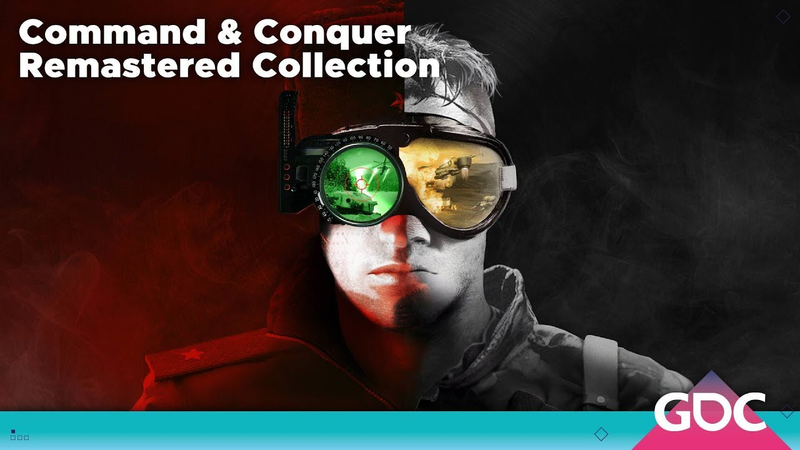
as Frank said, everybody, Frank Le one more time, welcome to the welcome to the CNC classic game postmortem. Um, I got to tell you, I knew that was going to be really hard to follow, but at 10 o'clock in the morning on Thursday, we got to wake everybody up a little bit, you know, excited. Plus, we want everybody in the other rooms to go, "What the hell is going on in there?" So, um, you know, I'm Lewis Castle. I'm the co-founder of Westwood Studios, the company that created Command and Conquer. And, um, when I was, uh, every year I'm on the game developers, uh, the board, the conference board, and every year we talk about doing class post of class post, sorry, classic postmortems. We talk about CNC. And the problem that I always had with CNC is that we've got some folks that, um, aren't in the games industry anymore. Um, and we've got other folks that just don't want to be on stage and talk about it. They're really important and pivotal to Command and Conquer. And so, uh, I just I just always said, "No, I just really don't think it's right." But this final this
this year and kind of serendipitously, um, they I finally just said, "You know what? I have a way of doing this. I figured out what we're just going to do is we're going to go record all of these folks on the ones that we can visual video and wells audio and we'll put it all together into something um, and that'll work." So, um, it's a different format. You guys probably never see a GDC talk like this. If I had proposed it to myself, I'd probably refuse it because it's too many people too complicated and really a live guitar. That's crazy. So, um, so, um, on the stage, oh, sorry. On stage, uh, myself, Lewis Castle, Frank Leak, we've already talked about, we have Steve Weather is a technical director for Command and Conquer, and Eric Yo, who is a lead designer. [Music] So, as I already said, this is going to be a little bit of a different format for a talk. Um, like most great games, Command and Conquer, um, it really wasn't made by any one person. And, you know, we have this, um, cult of personality that we build in our games industry around our our heroes. And
there are certainly some creative directors that without them, the games could never be made. But, we can't forget the fact that so many people, so many people like everybody in this audience, put their hearts and souls into the products that we build. And it's when all that stuff comes together, when so many people put it together that it makes it work. So these are the people that I was able to um both con into putting themselves on video for me and get them to do a recording. And um I I will point out right on the front um I recorded this all in Frank's um little cassita, which is like an audio recording booth. So this is not professional video. This is uh very much like Command and Conquer. It's just a bunch of people who are passionate um just throwing something together to try to entertain people. So, I hope that you appreciate the authenticity of it and you know, don't don't review it badly because the AV uh production is is not terribly great, right? But it's more important about what people are saying. Um, so on the on the video, you're going to have Brett Sperry, who's the uh co-founder of Westwood Studios, and and he's definitely the creative director behind Command and Conquer. Uh Joe Cukin, who played Kane, who many people may not realize was actually a video and
um uh video director also. So, he actually cast and directed all the talent. Ed Del Castillo who is our producer. Um Eric Gu one of the many artists that contributed to the videos. Um Maria Del Delmare McCreaty Le who is um the engineer who did all the introduction sequences to all of the Command and Conquer games all the way up to Renegade. I thought it was really cool to get her on there. And uh Ted Morris who was our first community manager. Um Bill Randolph who was um one of our uh lead designer or lead coders. And then um Kaia Montgomery who was Kaia Huninger at the time who is the voice of Eva. So that's who you're going to hear from today. Uh again, uh this many people in this talk, um I'm going to be moving pretty quickly because there's a lot to get through. So um I guess without further Oh, oh, sorry, I don't forget this too. Uh and that actually is just a very very small sample of all the people that contributed to Command and Conquer. In fact, these are the credits, the official credits from the original just the development team for Command and Conquer. And this is 1995 when many games were only made by four or five people. So it was quite a large group of
people. And the the bold names are the ones that you're actually going to be hearing from today. You can see it's just a small sample. And I would really be remiss um I hope they're watching or they'll watch it on the vault. Um if I didn't thank all the folks at Virgin uh from from a series of things maybe we can get to in the Q&A. Uh Virgin put so much effort behind the Westwood Games, especially Command and Conquer. And without all the effort they put into it, um I don't know that any of you would be here today and I don't know that it would have been a success. It's impossible to tell because um when so many people contribute so much, how do you set how do you sort it all out? It's just like a big bowl of spaghetti. Um, and that's how I've always felt about it. Um, you'll see that, um, I'm not in the credits, actually. Uh, although I did a lot of stuff on the compression and a bunch of other things. Um, at that time I was working on, um, on, um, oh gosh, Lion King and Bladeunner and Monopoly and a bunch of other stuff, too. And there's a bunch of folks in the f front row here that contributed to Command and Conquer, but also not in the credits. So, it's it's actually only a small sampling of the people that were kind of on it from the beginning all the way to the end and really drove the vision of the game. So, I I guess without uh further ado, um let's hear
from Eva. Tell us what inspired Command and Conquer. Oh, Command and Conquer. It came about as a result of um years and years of me thinking about what kind of game I wanted to do next and a little bit of the Zeitgeist, the spirit of the time, and also a uh kind of a bet that I made with another industry executive about um real-time strategy games. And uh the basic bet went something like this. He said, "Nobody wants to play strategy games." And I said, "Well, no offense, but the reason why nobody wants to play your strategy games is because they're really, really boring and you're not doing anything new. You're not pulling anybody into the the real meat and the guts and the fun of what it's all about." Um, and that's Brett Sperry, of course, the um creator of Command and Conquer. And um I think uh the next thing I would like to hear from is Frank because I I
don't know if you guys have picked up on this or if you remember, but this the music of Command and Conquer was like nothing else anybody's ever heard. So Frank, if you could tell us a little bit about what installed the what inspired the style of CNC music and you know where you got your inspiration from and what what kind of guided your choices. Yeah, so um basically at the time I was uh 20 years old and uh it was a new kind of thing. we were uh technologically moving from uh what at the time was MIDI playback only through sound chips and whatnot from sound cards and we were going into streaming audio. Uh Command and Conquer was one of the first games to do that. So I was using, you know, synthesizers and live guitar for the first time in a soundtrack that was going to be used that way. So the kickoff meeting went something like this. I gotten uh Paul Mudra, who's the audio director, uh went into his office with Brett Sperry, and the three of us sat around and just had a listening party basically with a stacks of CDs, compact discs. Uh and we
shared uh different music influences that we thought would be fun to include into the game. The only problem with that was it was all over the board. It was everything from movie soundtracks, orchestral stuff to heavy metal, techno music, hip-hop, uh you know, and anything between ambient moody stuff. And so the takeaway from the meeting was, okay, well, we figured out we like a lot of these different elements from all of these things. Why not try to put them all together and see what sticks? So, it was a big experiment really. And the cool thing about this process was that I was allowed to be experimental and have creative freedom to kind of do what I wanted with that. So that ended up being what CNC became, which was a variety of styles put into that game that were all allowed to coexist together and somehow made that environment work in that capacity. And then the other cool thing we added to that of course was the jukebox mode which uh allowed players to select which
tracks were their favorites that they wanted to go and annihilate their enemy to. So that was another uh another fun tidbit. Thanks Frank. Um and we're going to hear from Brett now a little bit more about the Command and Conquer universe. Um just one little riff because it's not in the presentation but I still remember when Brett said hey you know we've got to have the full screen audio video for Command and Conquer. And I was working with Steve and some other folks on the video compression because new technology that was built on some stuff I had written way back in the past and um and I go I don't know Brett you know that that if you look at data entropy and the conversion rate I I just there's no video codec that can play on a single speed CDROM at 44 kHz full screen audio and video it just doesn't exist. He goes oh Lou you're just being lazy. So on to Brett CNC and the CNC universe was developed very very slowly over a long period of time. Um partly it it was created by u fiction that I had in my brain about some kind of future world and this
central character who we call Cain and the rise of a global defense initiative as the various armies of earth um countries as it were were kind of starting to fade away and there's the rise of sort of a new world order. I have to remember this was in the late 80s and early 90s when I was thinking about all this kind of stuff and then working with team members and saying well hey I want to do this and I want this central theme and I want this central character and here's this massive backstory you know that I've been thinking about for a long time and so you know they would contribute parts and and pieces to that whole thing but um yeah it took like a lot of good stories and a lot of good uh backstories you know the foundation upon which the the game fiction was built on took many many years of just just quiet contemplation and notes and thinking about how this can uh make sense also where is the intersection between the fiction and the game play
and so um Eric could pet you up next then why don't you tell us a little bit about um developing Command and Conquer and what did the world mean to you and what are your favorite memories of the development process? Well, the world world was really interesting at the time and it was rife with inspiration which was really helpful. There was a lot of stuff going on in the world at that time, but I think you know as Brett noted there's there was a lot to draw from from the backstory that he and Joe Bostic had been created. So that was a big inspiration and trying to work with the writers and meld the the story that was being built into the missions and then back out again uh was interesting and difficult but also really really fun. Um, but I think that was one of the more interesting parts for us was trying to find that intersection and and trying to merge the two pieces together. Yeah. And um, a lot of folks have asked in the past too, where do we get the visual in you visual inspiration stuff? And at the time there's like Soldier of Fortune magazines, all that stuff. There was there was no real internet. We're talking pre-195 before before uh, you
know, Windows put browsers into the operating system. So you couldn't just go Google it. Um, you know, you had to go find stuff. So we had uh we they probably thought we were ready to go do some great takeover of the government or something because we had all these subscriptions to um magazines that would bring in all these new technologies and and we were trying to really be fans of of what's happening in the world and what might be being done by the government. So Command and Conquer was always meant to be a near future um version of the world and we're going to hear from Ed Del Castillo next who is the produ producer. I think my favorite memory revolves around those things that we did that were unexpected and unasked for that push that product above and beyond to be the success it was. So I'll give you one example of that and for me that's uh the mission briefings. So, you know, we were on a path of doing mission briefings that were going to be straight teletype, you know, just,
you know, just spitting text out slowly across a screen to tell people what they needed to do. And, you know, the the team was so enthused about the game and was so in love with the game that that just didn't seem like enough for us. And so we came up with this idea to uh kind of take at the time it was really early, but take television style graphics and put them on top of a video briefing to produce a a briefing that was something people hadn't seen before. something that, you know, the story we had come up with was that there was this interactive panel between the player who was this remote general commanding uh armed forces from afar, and the guy giving the briefing, be it Kane or be it uh General Sheepard, and that that interactive screen could be touched by the briefing giver, could be could have graphics thrown up onto it, could have, you know,
all sorts of wonderful things done to it. And so one day we kind of we went into the studio, you know, we just did this really really really bootleggy kind of demo. We spent the we did it on a weekend so we weren't pulling away from company time. We edited the whole thing using Lightwave and and you know the the guy I was doing it with Felix was was really good. We had come from New Tech. He knew Lightwave and we just kind of spent that whole weekend. I mean, we barely slept putting graphics onto a briefing and making it so that, you know, it was it was me doing the briefing. It was I was throwing maps out onto a screen between the player and the and the and the briefing giver. Um, we were showing, you know, I would open my hand and a world appeared in my hand. I pointed at the world and Angola got highlighted and zoomed out. I mean, we did all of these really, really cool things and no one had asked that of us. One of my favorite memories from the first Command and Conquer was when the user interface worked as well as I had
hoped, the refinements and some of the additional changes that came as we kept perfecting it more and more and more. you know, I would play the game and and see the interface that Joe and some of the other guys had come had put together for for me along the lines of what I was really really hoping for. And then when it worked so well finally because it took a lot a lot a lot of it iterations in the precursor to CNC and CNC itself that when it finally came together you just had this I had this great heartfelt this is it finally what it really really wants to be and it was a lot of fun and it was so elegant and smooth and it allowed you to just play the game in a a whole new way. In fact, you got to focus more on playing the game than in controlling the game, which was one of the DNA components of the CNC universe. Um, one of my favorite stories about Command and Conquer was actually about
Joe Bostic. a group of us had decided to go skiing and we were sitting I think at dinner and I looked over at him and he had this notebook out and he was working on something and I asked him what are you doing and he said oh I'm working on command and conquer and I was just so struck by how dedicated and passionate he was here we were trying to have a vacation and he was just living and breathing command and conquer was really like that for everybody on the game was truly an amazing experience. My favorite moment my my favorite moment from Command and Conquer development uh was uh something I always just kind of remember was the the way that we could all provide input into the game experience and the development. Um I was a community guy. I was a customer service guy at the time. my my my
input into the game wasn't as great as other people obviously, but the great the nice thing is that we all got to play in the evenings and we would play multiplayer and then we would all submit ideas into it. And because the game team was so small, we all had a really valuable voice into the into the game. And so things that I would suggest got in there. Things that other people would suggest got in there. And it was very quick because we were such a small team at the time. So, you know, I would mention something to Joe Bosik and then like an hour later he said, "Okay, there's new build and your ideas in there." I was like, "Oh, that's awesome." You know, and so it was uh it was really fun to to play a even a small part in the development of of the original Command and Conquer. It was just it it felt like it felt like a very small and dedicated team and we were just so uh involved in every in every way uh in making it better because we just loved it so much.
But it was people going above and beyond because they love the product and they really really really wanted it to be better than even expectation. My favorite memory was uh I think it was Mike running into my office with one of the PC games magazines and it was awards and Command Conquer of course was nom, you know, was nominated. But in the corner was this little block that said we should have a special category for installations because this one was so awesome. And that just made me feel so good because somebody, you know, the audience out there, the players appreciated all the effort that went into it. So that that was a really good moment for me. Um, one of the interesting things that CNC did was this idea of kind of telecast or broadcast interruption. We even did it during the uh installation of Command and Conquer and that was really, really fun where the game play actually began at a space that it
normally didn't begin. And the idea of course given the limits of you know technology then and the graphics was oh there's this kind of interruption like it's a it's a signal a video syn signal coming from somewhere it's encrypted it's actually breaking onto your onto your game screen. So that was really really fun and the idea of continuing to use cinematics and outtakes and things like that just felt right. It made sense for the time and the place and the game and to create this this immersion, this larger than life sort of strange mythos that only you, the game player, you were being talked to directly. It's kind of like a secret agent commander sort of thing. It was a lot of fun. It started really with the art because I would get all the art of what they wanted the whole thing to look like and then I had to have them break those animations down into pieces. Then I used the last image of each animation as my
background because some of them already had built in where they wanted all the gadgets to be. So, I had to basically do my gadgets on top of that background and fill it in. Sometimes they had invisible backgrounds, sometimes not, just depending on what they wanted to do. But that way, uh, we got through in pieces and sections. And as soon as that information was gathered, we play the next animation and seamlessly go into the next sequence. Um, so there's a lot of things that I I won't remember. Uh, but I'll do my best. So, in putting together the the video sequences, what I recall was that it was relatively peacemail. And it feels now like we made a lot of stuff up as we went along. There were things that were being written and then rewritten. I I I remember doing some writing myself on some of the the monologues and some of the scenes because um uh you know, we had hired a screenwriter to come in who
was completely unfamiliar with the genre. I I guess as unfamiliar with the genre as any of us were because it was such a brand new genre, but um I remember doing a lot of rewrites. I remember sort of doing a lot of things uh peacemail. We were in a smaller space at at at this point. Westwood was um we were growing and we were soon to move to our larger space and the and the big, you know, 40x40 um green screen and then the back lot and the sound stage that we had. But that hadn't happened yet. So, what we had done is we had rented another space in the same complex, but it was, you know, it was a quarter of a mile away across three parking lots and and upstairs. So, when it was time to record, you we'd go over to the studio and we we we'd hike ourselves over there and and everything was upstairs. Now, you know, all of these were shot with a like this on sticks with a with a you know, a dead hung camera, but any sort of movement across the stage, you know, we were sort
of bouncing on a suspended floor. Um, like it it feels very primitive in recollection and uh I don't think it felt that way at the time. I think it felt very new and um uh you know on guard and exciting and and uh envelope crushing and brave new world envelope pushing and brave new world and all that. When we first started out with our videos it was so seat of the pants. It was kind of hilarious. Um, I don't know if you remember, but we had rented a separate building where we were where we were shooting our videos initially and it was just sort of this big empty warehouse and I had gone to a carpet store and bought a roll of lenolum flooring, brought that back and we stapled that to the wall and and we didn't even have chroma key paint. I just went like to our hardware store and said, "I need some green paint." and then uh painted that and that was
our first green tree. So um Eric, why don't you tell us a little bit about um the design process of CNC? Uh how did how did we work? How did you guys work with the technical team and how did you come up with the missions and and the you know deal with the AI and all those things? I think um for me it was probably one of the most collaborative games I've ever worked on. Um as other people have noted the tech team was really approachable. So you could walk into Joe's office or talk to Steve and go, "I've got this idea." And then they'd look at you crosseyed and and say, "Oh, we'll figure it out." And inevitably they would. And one one of the really great things was you could ask Joe for something and you'd get it really quick and it would be like 90% right. You know, there wasn't this high iteration back and forth where you had to go, "It's not really what I wanted and this and that." And and he'd add his stuff on top of that. So you get this really great collaboration of pieces parts. So that process was really seamless and it wasn't necessarily by design. It was just we
had such a good group of people that worked really well together and uh it the whole process felt like lightning had kind of struck. You know, we had the right people working on the right product at the right time and it just felt good. I don't I don't remember any of the process being by design. It was just a group of people that had an idea and wanted to make it work. And as others have noted, we did a lot of stuff just unasked for and just because it sounded cool at the time. Thanks. Um and so Steve, why don't you tell us a little bit about um your favorite memories and maybe some of the technical challenges uh and things that you guys might have run into. Yeah. So favorite memory for me is around the multiplayer. And you know, many people over the years have told me that they played Command and Conquer in their dorm room. And um it's always great to hear that and I think there was a sort of a viral aspect to that too because there were two discs with the game. You had the nod disc and GDI disc so you could play with a friend with one copy of the game and I think that actually benefited us but um the
thing about it is you know as a player you don't see how the game is created. You know the multiplayer obviously was evolved over time. And so for me, um, I I remember the first, uh, the very first time you could play multiplayer. And the only thing you could build were rocket soldiers. That was the only thing you could build. And so, you know, you had four guys would jump in. You'd all build your horde of rocket guys, send them over to the other guys horde of rocket guys, and, you know, and try and win. It's very, very primitive, but it was the the baseline for the tech. And then that over the coming days and weeks after that, we'd add more and more units. The buildings, the tech tree, all got into the game. And so the memory for me is sort of a realization moment that, you know, every night after work, basically the whole company was staying behind to play multiplayer. And there's tons of excitement in the office. You know, what new new unit got added to the game that's in the commando is in the
game today. You can blow buildings up, you know, that kind of stuff. and uh lots of excitement using the company phone system intercom for the real-time communications. So, you know, you're going to form an alliance with your friend and get the other guys, all this kind of stuff. And the realization was, wow, we're actually building something that's pretty freaking special. And it kind of hit me at that point that, wow, we got something very unique on our hands. So, that's my favorite memory. Um, in terms of technical challenges, there were a lot, you know, there was multiplayer, talked about that. Um, but I think the thing that stands out is the sort of computation limits that we ran into. And I'll explain what I mean. So I think there were three components of that. The first one is all of the 3D animations that became like a signature part of the game. All of the mission briefings, all the tanks and planes and all this action going on. And of course the artists wanted to render out these animations and it was prohibitive. It took hours to render, you know, seconds
of um animation. And so at the time Autotodesk came out with their network render uh functionality so you could have a farm of machines which we did. So we we set up 10 20 30 40 machines in racks and it got bigger over time. I think we got up to over 100 machines eventually something like that and but we started out with these machines and so the artists could then submit their animation jobs and get reasonable turnaround times. So so the compute cost in that respect was solved. But the next problem was of course uh we have all this live action and we're going to do this compositing with the the 3D videos and we have all this video we have to play in the game. So we came up with our own as Louis mentioned we had we built our own video tech. So the real time part of that was fine. You know we could play back at a reasonable frame rate you know glorious 15 frames per second uh 32200 which was fine for the time and it fit on a CD but again the compression times were crazy. it
would take hours and hours to render a couple of minutes of video. So, um, one of the lead engineers at the time, Bill Randolph, said, "Hey, I think I think I can fix this." And so, he spent some time and he came up with a way of using the render farm to to batch out the video compression. So, he had these machines and we could, you know, use them for the 3D rendering, could use them for the video compression. But of course the artists wanted to render their movies and we wanted to also the video guys wanted to compress the the uh their movies and there weren't enough machines. So to solve that we came up with a policy and we we basically realized that when people went home in the evenings there was a machine sitting there doing nothing. So we came up with this policy where when you left for the day you ran your machine in VQ slave mode. So we went from 50 machines to 100 machines and you know we're able to get decent turnaround time on the movies that way. Um so the third thing though we we sort of uh ran into code complexity issues. So we were using C++. Uh we were
learning C++ and using every feature the language has. And so the build time started to increase. And we were talking about an hour plus build time which was crazy for us. So again, Bill Randolph, I think it was said, "Hey, I think I can fix this." And he came out with a way of using the render farm and the slave machines to do distributed builds. So, we got the build times. We could build in parallel and it and it brought the uh build times down dramatically. And a sort of interesting footnote to that, I was talking to the Petetroglyph games guys the other night and you guys may have heard they're doing the uh CNC HD remasters and uh so it's come full circle. Petroglyph is basically the the sort of uh uh continuation of Westwood. I guess the co-founders of Petroglyph are from Westwood, Mike, Joe, and Steve. And I was talking to Steve and I said, you know, I'm going to be talking about the buildtime problems we had. And he said, oh yeah, we're we're working with the original CNC source code and it takes five seconds to build.
So I guess that's 25 years will do that, right? That's awesome. Um, just a bit off script here, too. The thing was really funny. Eventually, we had hundreds of these Pentium 90s in racks, gorilla racks, all lined up, and they were sitting in an area that was kind of a common area. And what was happening was the we got toward the it was fine in the winter in Vegas, but it was started getting toward the summer. Um, these were basically little BTU farms, and they were driving the heat up in the building. We were like, we were basically cooking ourselves with our computers. And so, we created our our own zero pressure room by taking a small room, closing it all off, having a big uh air conditioning unit added to the roof. It was like a 15 ton air conditioning unit and having only little slits at the door at the bottom of the door with a brush was the only way for the air to get out. So you would actually open the door and we you feel a pop, you know, and that cold air would come in and cool off the whole room and it had no return air. Mike Leg, no return air. So um anyways
um we have a little bit more from Brett. We played every single night and um as you can imagine probably already got a sense of Brett's personality. Um, so, uh, I wanted to conclude this little clip here because he talked a little about, um, his play sessions at night. I know it sounds like bragging, but I could beat almost anybody headto-head playing any side anytime. Every time there would be this argument because I had this big um, I had these strong feelings about what makes a game balance and what made our game really, really balanced and fair. And so, every now and then somebody would challenge me and say, "Hey, you know, NOD is stronger than than GDI or this is this unit's better than that." And I said, "No, you're just you're not taking the unit on its own merits and watch him just play headtohead." And so he would beat everybody every time to be overlord. I think Brett's very overlord. Yeah. Memory's a little fuzzy. I think it might be a little fuzzy. Brett Brett does have his own version of reality that is uh it's very very cool.
So, uh, Steve, um, why don't you tell us a little bit about the technical challenges that you, Joe, and the team faced? Um, I think there was actually two of them. There's the networking stuff because there were multiple networking layers and then there was pathfinding stuff. Yeah, the networking was interesting. It was uh pre- internet. So, we had local area network play with IPX. Then we supported modem and null modem connections. So, you know, the latency and bandwidth characteristics of those are very different. and we would uh add a bunch of stuff that worked great in the local area network and then poor Dave Demo was doing the modem connection stuff. He's like there's too much data it will never work. Yeah. So we spent a lot of time with um trying to figure out ways of minimizing the amount of stuff that was sent over the wire. And unfortunately that one of the things that we didn't get into the game that we wanted to get into the game was internet play. But uh that would follow in Red Alert. We figured that out. So yeah, some interesting challenges there with the networking and the
pathflining stuff. I was actually it was a challenge. I was generally pretty pleased. I mean you could select you know 50 100 units and they behaved in a pretty solid manner and would path around each other and there were there were no practical limits on how many units you could select and they would behave predictably. Uh except maybe for the harvesters, which uh sometimes had a mind of their own. Me and Steve Weather and Jonathan Laneir were pulling an allnighter uh trying to find a bug. And we left the office around 2 a.m. to go get donuts to try and keep us awake because we thought donuts would keep us awake, I guess. And I had this car that I'd inherited from my dad. It was a really hideous car, but it was the car I drove. So, we hopped into the station wagon and drove to the doughnut place and it was 2 a.m. and uh we were leaving and I I got lost in the parking lot and I couldn't find the way out. And so, one of the guys says, "What are you, a harvester driver?" And from
that moment on, that car became known as the harvester. How did the cast of CNC get assembled? So, casting was uh kind of a challenge. I you know I had come from a um theatrical background. My my um the entirety of my career was spent either in teaching or directing in theater in in Las Vegas. And so I had some access to uh to actors, but um a great many of them were were community theater actors. They were hobbyists, people that were bankers during the day and actors at night. So sort of reaching out into the professional acting community of Las Vegas. uh another brave new world for me. So I talked to the talent agencies in town that I was familiar with and we set up auditions and we started bringing people in and we found pretty quickly that you know we we started getting access to some of the performers on the strip that were
looking to expand and and do some things. Um Eric, I can't remember his last name played Shephard. He was actually a um one of the Blues Brothers impersonators back in the day when Imperial Palace was doing uh impersonator shows. So he came from from that that call. Uh a lot of the performers were people that I knew and truth be told a lot of the performers were people that were in or around Westwood at the time because it was just easier um to snag somebody once a script had been finished and bring them over, you know, to to the studio for a quick recording session. Joe Cooken was in my office one day and we were talking about some shots that were coming up because we we rendered our own background plates and then after we shot green screen we would drop that footage into those plates. So, we're talking about plates and Joe said something like um and that's when we see Seth and then he stops all of a sudden. He's like, "Oh crap." I'm like, "What?"
He said, "We forgot to cast Seth." And I'm like, "Who's Seth?" And he looks at me, goes, "You could be Seth. Do you want to be Seth?" So, I said, "Uh, yeah, sure." So, that's how Seth started. Well, I was working at Westwood at the time. I believe I had been uh the receptionist for a while and so my voice was on all the uh away messages and voicemail messages for Westwood. And one day Paul Mudra came to me and asked me to record some holder lines, place lines for Command and Conquer. And we went into this little tiny room basically. It was I think a closet that he had put up a whole bunch of soundproofing and he had me read the lines from there and so I did and I think the team you know liked what I had done and so they decided that they wanted to use me going forward. So a lot of uh other people at Westwood had done various voices for the
game. I was super excited. It was my uh first time doing something like that and uh I was just tickled pink that that he liked what I had done and that they wanted me to do even more. So I was super super happy. Yeah. And it was the closet. It was the janitor's closet that used to be attached to the k the bathrooms which we turned into our server farm which we later got sued for. We bought an orangutang and we shaved the orangutang down. Uh, and we we put the orangutang in front of the the camera and we hang that we put a whiteboard with his with the cane lines over the orangutang and so that you know we would change and wipe them off and change every line. Um, but when we put when we compressed all that down into the the game uh you couldn't read the lines at all. The orangutang was great, don't get me wrong. Everyone loved uh everyone loved the orangutang. I think his name was Sparky or Yeah, Sparky. Uh anyway, everyone loved the Orangutang,
but we couldn't read his lines. So, um I went in and I dubbed all of the uh orangutang's lines and uh we had um a guy in in a green screen glove come in and moved's mouth like this. Just move his lips while I would say the lines and then we took out of course the green screen glove. Uh but that wasn't very convincing either. So, finally we looked around and we said, "Who looks the most like a shaved orangutang?" Uh and it was me. So, I uh because of my and if you look at the original game, a lot of people don't know this. If you look at the original game, a lot of those sequences, we have used some of the frames of the orangutang and just switch me out really quickly and it's nearly impossible to tell the difference. It was really remind us what it was like to work on CNC. actually that I'm really really really demanding and I'm in everybody's little details and I'm very very specific about what I want. So it can be uh at times a
little bit um challenging but you know what in the end that's how we kind of got to create this amazing amazing game. You know the meetings where we would all get together with bread at the head of the table. Yeah. You know, we used to some of us used to call those uh the our the Savannah meeting because because the way we the the way we would say the way we would say it is there was this hungry lion who would come into the room and he was always looking for the slowest moving gazelle. And it was everybody's job not to be the slowest moving gazelle because the lion was going to eat. No matter what which day it was, what meeting it was, the lion was going to eat. It was just a matter of who he was going to eat. The dinosaur levels came about through this odd way where um Joe Bostic introduced a little bit of code and there was a little bit of art for a
couple of dinosaurs and I learned about it when I stumbled across this in the code and I asked him about it and he told me, "Yeah, this is a little Easter egg we're putting in, but Brett Sperry doesn't know so you can't tell him." So I said, "Okay." Um, but then the art guys made a big art plate for the sidebar that was an homage to the Jurassic Park logo and they made more dinosaurs. And then the sound guys got involved and made sounds. And then the video guys got involved and made a whole video. And at this point, Joe and I realized Brett still didn't know about this. And when he found out, we didn't know what was going to happen. And we were both really scared about what what was going to happen because we were ending up using company resources on this dumb little toy. So, uh, one day in QA, a bug caused that sidebar art to reveal and suddenly the sidebar became a big dinosaur head and Brett was there
when it happened. So, he and some QA guys showed up in our office and they he was pretty mad. He pulled Joe into his office and they closed the door and I don't know what all was said but when Joe came out he looked pretty shaken and I said, "Joe, what what happened?" And Joe said, "We're pulling it all out. We're taking it all out. It's just gone. It's over." And I'm like, "What?" And so we gave Brett some time to cool off and I I went into his office, I think in the next day or two, and I begged him to keep this stuff. I just pleaded with him and and he basically said, "Okay, but you have to do it all yourself and you have to do it all in your spare time. cannot impact the game with this. I said, "Okay." And you know, Command and Conquer, I didn't know it at the time. We were creating such a a big and amazing game. Um, I had no idea how much it would move the needle in in game development itself and how many people would uh quite liberally, directly take and copy
elements of our interface, our gameplay, etc. But it created this huge wave of of um of other games and admirers and things like that and and so that was a a form of it was a little frustrating sometimes when the copying was so direct and then other times it was very very flattering to see that people were building on our work and sometimes even taking it to the next level a little bit. So, one of the things I'd really love to leave people with is the idea that just because something's hard or just because you don't like the way something's going from it and that you won't become better for it. You know, there were there were a lot of unforgiving days in CNC. There were a lot of days when I walked home feeling incredibly defeated, like I did not accomplish what I was supposed to for any number of reasons, right? Whether whether my boss was saying that or I was feeling that, it doesn't even
matter. But I would go home feeling defeated. And what pulled me through that was not quitting. was just the the idea that I'm going to stick this through and rather than having the situation dictate me, I'm going to dictate that situation. I'm going to learn and I'm going to be better. And I can say today that I have never had a more challenging time than when I was at Westwood. And I can also say today that I never learned more from any institution than when I was at Westwood. It had everything that that I wanted. It It met every every goal that I wanted to set out. It was fun to play. Had lots of replay. It was balanced really really well. I like the graphics. I like the effects. I like the story. It came together beyond my wildest imagination. So, it was it was incredible. So, um that's the end of the material we
have. We're going to move to Q&A. But before we do, give me a round of applause for all the people that worked on Command and Conquer. So they hear this and um I I as a as a good uh as a good advisory board member, I always like to leave a little bit of time for questions. So, we have about five minutes because there's a special thing we want to close with just before the end. So, if there are any questions, uh there are microphones. Some people have already figured out they can stand up to them and we'll be happy to answer those um to the best of our ability. Thankfully, we don't have to worry about lawsuits anymore, so we can be pretty candid. Uh hi, I just wanted to say to Frank, your song Mechanical Man is incredible. And uh as you may know uh World of Warcraft, you know, released a take or
riff on that song, I'm a medieval man, which was a lot of fun. Uh I wanted to know what you thought of that and are you planning on releasing a riff to their riff? Uh thank you for that, first of all. Um yeah, that was a popular theme for sure. And I I did hear the medieval man version and I actually met the composer of that uh at a video games live show a few years back and so we we had a a fun chat about that. Um, yeah, it's just, uh, you know, it's just one of those things where, you know, you just come up with a a a fun idea and you make a song out of it and it ends up in the game and and it catches on. You know, it's uh same thing with uh, you know, like the main theme to Red Alert, like Hell March. Everybody just caught on to that. It's still a video meme for so many people to this day. So, um, it's a fun homage. So, thank you for that. Appreciate it. Thanks. Uh, we got to both sides so we get everybody. Go ahead. Yeah. Um, during development, were there any expectations uh of what would be more popular, single player versus
multiplayer? And were you guys surprised by reactions to it? Take that one for design. Yeah, sure. Um, I think at the time multiplayer was still pretty new, so we didn't have a lot of expectations on it, but as people noted, uh, people were staying late every night to play, which made my job balancing the game really easy because I just wander around the office and lurk over shoulders and and get ideas. Um, so I think going into it we didn't know it would be as popular as it was, but we did get a sense of that before it came out because people were literally staying 10, 11, 12 at night to play on their own time, on their own dime essentially. Cool. Thanks. So for for me, the first uh RTS was mostly uh Dune 2, which I was surprised wasn't mentioned at all during the talk. I don't know if there's a specific reason for it. No, none none whatsoever. Dune 2 was absolutely the first of the style of games that I recognized as RTS's and it had animated sequences. They just were on a single floppy. So they weren't uh they weren't full screen and video and all that. Uh Postmort is about Command and Conquer but you're absolutely right.
That's the very first also made by Joe Bostic and he was a principal um designer as well as coder on that which was amazing. Uh thank you for that. I was wondering if uh if um because for uh one of the biggest additions was being able to move multiple units at the same time which was a huge pain in the ass in Dune but uh did you take other inspirations? Did you try to improve on what was done with Dune? Because yeah, multiple people worked on both games, right? Yeah. I mean I I don't want to I mentioned earlier there's some folks that just don't like doing public speaking. So I'm not going to Okay. I'm not I'm gonna hit poor Joe. He is here, but I'm not going to make him do that. So, I'll answer for him and he can correct me if I was wrong later. But we absolutely got inspiration from all sorts of games. Um, everything from Horox VI to um Sitron Masters. There was three games. There was um Rescue Raiders. Oh, Populace 2 Rescue Raiders um Military Madness. Military Madness and I can't remember the third one, but there were these three games that um mil military madness on the NEC. and they
they had this um sort of feeling about them of being able to do strategy games at the time were thought to have to be turnbased so you had time to think and these all these games um had a way of putting you under pressure and making you have to think and move at the same time and so there was lots of inputs from all that and I have to say somebody mentioned it earlier for the songs. Um in the beginning there was some tension between Westwood and um Blizzard. I can tell you all about this some other time why that was. But once the team started really deviating um the products and there were they were clearly distinctive. Um I always found that it was really inspiring and having another company out there that was trying to one up the game really made you work a little bit harder and I think um healthy competition uh is really important in any medium and it's it's great to have somebody like Blizzard that you know kept us on our toes and each time we would want to outdo each other. Um, and obviously you see where they've gone as far as quality is one of the most revered and rightfully so game companies in the world. So, uh, yeah, we took inspiration from all sorts of places. And I don't know if you guys want to add any. Yeah. Uh, if I remember correctly, I I
could be misremembering, but I think early on with CNC, um, we wanted to make it so you didn't have to sort of repeatedly click on the sidebar to the actions. So, I think early versions of the games, you could click a unit and move it, but you could not drag select. And the drag select was added. It's like, hey, what if it wasn't sort of a design, it wasn't sort of, hey, we will do massive drag select. Well, we experienced the same pain that everybody else was experiencing. Yeah. It was like, you know, we want to move a lot of stuff at once. So, I I kind of have this memory of staying late one night and sitting with the engineers and it's like, what if we just try drag select? And we just put it in and it seemed very natural and we went with that obviously. So, yeah, but I think initially we had, you know, it was more context driven way. You could click on a unit and then click move, but it still didn't feel quite right. And so the drag select I think made it a lot more fluid. Absolutely. Thank you very much. Um here, thank you all. And uh I got to say that Command and Conquer had a big influence
on not only me but also my entire family and our go-to is always Red Alert. Um, so in uh if Red Alert came out, as I'm just sort of double checking, Red Alert came out in 1996, but you mentioned that making Command and Conquer, which came out in 1995, took a long time. Can you talk a little bit about the the uh sort of the transition into the second game and what was easy to easy to redo and what wasn't easy to redo? You want to take? Yeah, I think and again, you know, it's been 25 years, so my memory is hazy as well. Um, as I recall, Red Alert was originally going to be an add-on to Command and Conquer. That's right. And it just kept growing and taking on a life of its own and eventually became its own product. But um yeah, originally we were just going to do a release for the 50th anniversary of World War II or something. Yeah, I think it was supposed to be like a four month project. Actually, I can I can add a little bit because um the original one was supposed to be I told you earlier the inspiration a lot of discussions with Brett about the near future um technology that was just around the corner that was command and conquer was supposed to be just beyond reach. We could imagine it
existing today. Um and so uh Red Alert as we were doing historical research came up quite a bit that there was a lot of stuff like the Philadelphia experiment and um most of the stuff in the original in fact everything in the original Red Alert was actually somebody thought that would work right so that was the fun of it was like the attack of the 50oot woman the the 50s where science was kind of like magic anything could happen um that was actually inspiration and it was like hey after after covert operations which were really just hard versions in the dino missions let's do something that's more thematic around this this sort of historical um almost magical kind of technology, this magical re revering of technology. And um as it started getting bigger and bigger, it was pretty clear that it just had a different sense to it. Um and it was uh certainly in the early days people always ask this, you know, was it part of the Command and Conquer universe? In the early days, it was undecided. It was intentionally not forced to be one thing or the other. And that's actually why Kane shows up in there and everything. That's more about Kane's backstory than it is about Red Alert. And it was fun, too. just we we ended up
asking some what if questions about a lot of it to determine what would happen. And one of the questions was, you know, what if Einstein had invented a time machine? No, he's too smart. He would never have actually used it. He knows the repercussions. Well, maybe he would remove Hitler from history. So then that led to a lot of other ideas and it just kept going and going and going until it was out of control and had to be its own product. So we got one time for one more question. Got two minutes because then we have a special thing to end this with. Okay. Hi. Uh, my question for each of you four is GDI or not. When those Tiberium crystals crash land on our planet and kick off the eternal war, who will you swear your allegiance to? Brotherhood, unity, peace. Brotherhood, unity, peace. You know, I can't take sides because then it Hey, if I had taken sides, one side would have been way out of balance.
It wouldn't have been fair and everyone would would have complained about how I favor GDI over not. Yeah, in my mind I want to say GDI, but I suspect in real life I might be tempted by the knots. Well, I wore the knot jacket at Magfest, so I think that, you know, that's been an appearance. So,
Auto-generated captions from YouTube — names and numbers may be misheard.
Key insights
6 takeaways · ~2 min read- 01Command & Conquer was a pioneer in transitioning game audio from MIDI-based sound chip playback to streaming audio, allowing for the integration of synthesizers and live guitar.
- 02To overcome severe rendering bottlenecks for in-game cinematics, the team implemented a 'VQ slave mode' policy that utilized idle employee workstations overnight, effectively doubling their render farm capacity from 50 to 100 machines.
- 03The game's multiplayer functionality was designed to support local area networks via IPX, as well as modem and null-modem connections, though internet play was ultimately deferred to the sequel, Red Alert, due to technical constraints.
- 04The iconic 'drag select' mechanic was not part of the original design but was implemented late in development by engineers to solve the frustration of moving multiple units individually, significantly improving gameplay fluidity.
- 05The development process was highly iterative and decentralized, with many features—including voice acting and specific narrative sequences—emerging from ad-hoc contributions by staff members rather than a rigid top-down design document.
- 06The game's distribution strategy inadvertently encouraged viral growth; because the game shipped on two separate discs (GDI and Nod), players could share a single copy with a friend to facilitate multiplayer sessions.
Ask AI about this video
Cite this video
Citation
Generating citation…




















Comments