Game Development reports and market data
Documents

Catching up with the Industry with Matthew Burns | Game Dev Unchained Episode 209
The Japanese game industry has successfully revitalized its global standing by modernizing development paradigms and business models, effectively contrasting with the inefficiencies often found in Western AAA studios.
- The Japanese game industry has regained global standing by modernizing development paradigms, contrasting with the inefficiencies, feature creep, and protracted pre-production cycles common in Western AAA studios.
- Small, agile teams like the five-person studio Zachtronics achieve high output quality by prioritizing iterative development and annual release cycles over the over-engineering of massive titles.
- Indie developers face a critical discoverability crisis as traditional media coverage loses effectiveness, forcing reliance on the unpredictable impact of streamer influence and word-of-mouth.
The 2019 Failure Workshop
The independent game development sector is frequently defined by a culture of unsustainable labor practices and high-stakes financial volatility.
- Studio longevity is driven by collaborative workflows, transparent communication, and operational redundancies rather than individual brilliance.
- Financial instability is frequently caused by signing unfavorable publishing agreements that prioritize immediate survival over long-term profitability.
- Sustainable growth requires a shift toward human-centric management that prioritizes team well-being and strategic scoping over reactive market pressure.
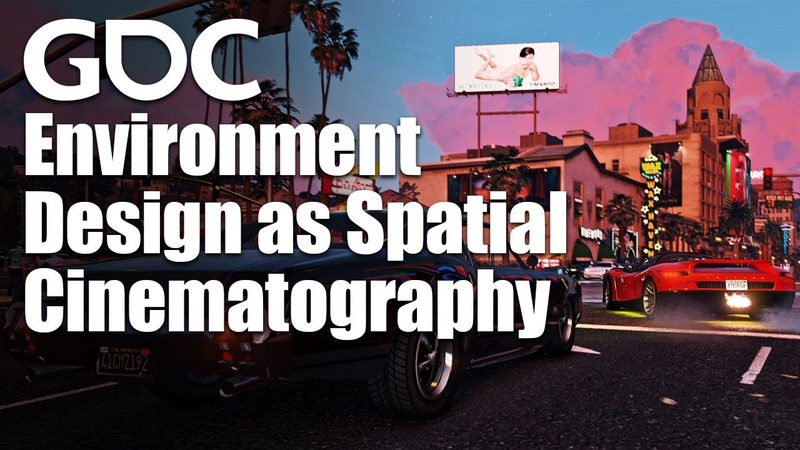
Environment Design as Spatial Cinematography: Theory and Practice
Environment design functions as a form of spatial cinematography, where 3D environments are meticulously crafted to control how they appear on a 2D screen.
- Environment design functions as spatial cinematography, where 3D spaces are crafted to ensure strong 2D compositions through techniques like the rule of thirds and the avoidance of visual tangents.
- Designers influence player navigation and focus by balancing bottom-up contrast, such as lighting and parallax, with top-down meaning derived from architectural cues.
- Shape psychology is used to evoke specific emotional responses, utilizing circular forms to signal safety and jagged lines to generate tension.

GAME DEV: I Played Your Games. (Again.)
Solo game development requires a disciplined approach that prioritizes polish and intuitive design over sheer content volume.
- Prioritize high-quality polish and intuitive design over content volume to avoid the negative stigma associated with asset flips.
- Focus on smaller, highly refined projects rather than overly complex scopes to ensure consistent UI and asset quality.
- Improve player focus by placing critical status indicators near the player character instead of in peripheral screen corners.
Composer Confessions: Massive, Often Painful, Lessons Learned
Professional game composition requires a fundamental shift from individual artistic expression to a service-oriented, collaborative mindset.
- Professional game composition requires shifting from individual artistic expression to a service-oriented mindset where the composer prioritizes the functional needs of the project over personal creative control.
- Composers must detach their ego from the creative process to navigate the reality that marketing teams, producers, and financiers may alter or discard their work at any time.
- When writing for live orchestras, prioritize player ergonomics and logical instrumentation over the aesthetic perfection of digital mock-ups to ensure session feasibility and efficiency.

2.5D is Easier Than You Think (Unity Tutorial)
The development of 2.5D games—defined as 2D gameplay experiences that incorporate 3D depth and environmental elements—can be significantly streamlined by leveraging native Unity tools.
- Developing 2.5D games in a 3D Unity project environment eliminates the labor-intensive process of manually layering individual 2D PNG files.
- Unity’s native terrain system enables rapid environmental iteration by allowing developers to paint background depth and mountains directly into the scene.
- Sprite shapes serve as an efficient alternative to traditional tile-based systems by generating walkable surfaces as lightweight meshes with custom textures and edge colliders.
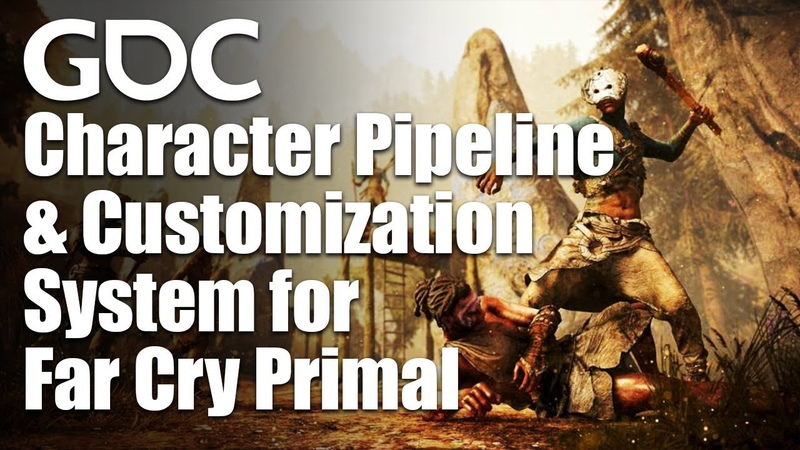
Character Pipeline and Customization System for Far Cry Primal
The development of Far Cry Primal necessitated a fundamental shift in character production, moving away from restrictive, software-specific workflows toward a flexible, cross-platform architecture.
- The character pipeline transitioned from a 3ds Max-centric model to a flexible, Python-based architecture that supports both Maya and 3ds Max, enabling a unified interface for artists.
- The 'Wolfskin' data-oriented system enables real-time asset hot-reloading and modular development, reducing character integration time from hours to minutes.
- A deterministic DNA-based generator replaced random spawning to allow for curated asset combinations, simplified debugging, and seamless integration of gameplay-driven gear upgrades.

Ironsource Gamefest 2019 | Day in the Life at a Games Conference
The 2019 IronSource Gamefest in Tel Aviv served as a strategic nexus for the global mobile gaming industry, convening 120 senior leaders to address the sector's rapid evolution.
- The 2019 IronSource Gamefest in Tel Aviv convened 120 senior leaders from major studios including Jam City, SYBO Games, and Wildlife to address the mobile gaming industry's strategic evolution.
- Industry discourse focused on transitioning beyond the hyper-casual trend, specifically emphasizing the operational differences between zero-to-one game development and one-to-n scaling and optimization.
- Executives identified the cultivation of deep interpersonal relationships as a fundamental requirement for long-term success, particularly as the industry shifts toward remote operations.

Get Hired: Portfolio Design - How to Build a Portfolio - Extra Credits Game Design
The primary purpose of this guidance is to instruct aspiring game industry professionals on how to construct an effective, high-impact portfolio.
- Prioritize quality over quantity by removing all mediocre or outdated work, as hiring managers evaluate candidates based on their strongest pieces.
- Tailor portfolios to specific roles by creating distinct pages or separate documents for different disciplines to avoid confusing potential employers.
- Design the portfolio for immediate impact, ensuring the layout is clean, professional, and intuitive to reflect competence.
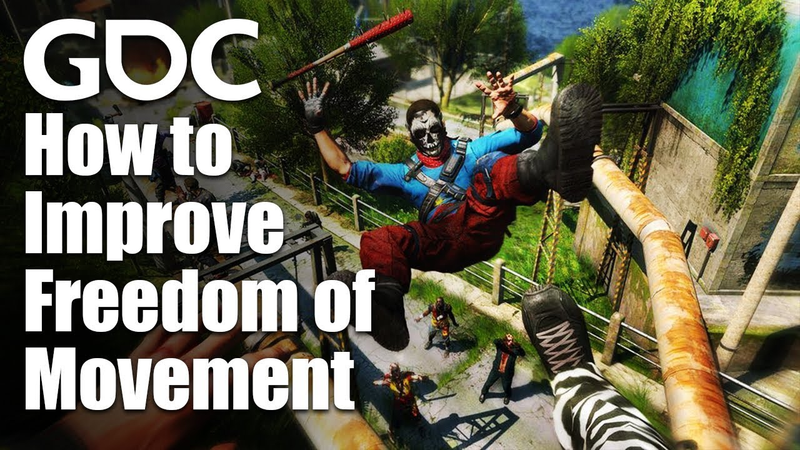
Parkour: How to Improve Freedom of Movement in First-Person Games in 20 Simple Steps
The development of parkour mechanics in the first-person game Dying Light required a shift from manual level design to a dynamic, runtime-based ledge detection system.
- To detect climbable ledges in 3D space, Techland used a series of forward traces to identify obstacles, validated the space above and below for player fit, and performed vertical traces to pinpoint the exact climbable edge.
- Techland optimized performance for complex parkour environments by implementing a 'carpet of traces' algorithm, which reduced computational overhead by batching geometry and processing traces with identical lengths and directions.
- To solve precision issues in first-person jumping, the developers implemented a 'coyote time' mechanic that allowed players to jump even when slightly off an object, effectively extending the jump window by approximately 20 centimeters.
Tips from the Trenches: An Indie Guide to Contracting
Contracting serves as a vital, sustainable revenue stream for independent game studios, provided teams move beyond the misconception that they lack negotiating power or must rely exclusively on fixed-bid models.
- Shift from fixed-bid models to time and materials structures with a 'not-to-exceed' cap to accommodate the iterative nature of game development while maintaining fiscal control.
- Standard industry contracting rates for independent studios typically range from $60 to $100 per hour, depending on project complexity, developer experience, and geographic market.
- When accepting lower rates for high-profile projects, use formal sales discounts on invoices to document the studio’s investment, which preserves leverage for future rate negotiations.
Streaming Wars, Loot Boxes, Indie Dev Future | GduX.me
The gaming industry currently faces a period of significant structural transition, characterized by the rise of subscription-based models, evolving distribution strategies, and persistent labor challenges.
- Subscription services like Xbox Game Pass currently struggle to replicate the success of passive media platforms due to technical latency and a lack of original content.
- Indie developers should treat streaming platforms as supplementary marketing channels rather than primary revenue sources to avoid marginalization by blockbuster-focused algorithms.
- The industry is unlikely to adopt effective self-regulation regarding loot boxes, as regulatory intervention remains inconsistent due to a lack of technical literacy among policymakers.
Writers
Games and companies
Games