1 free read left. Create a free account for unlimited reading + AI research.
Create free account
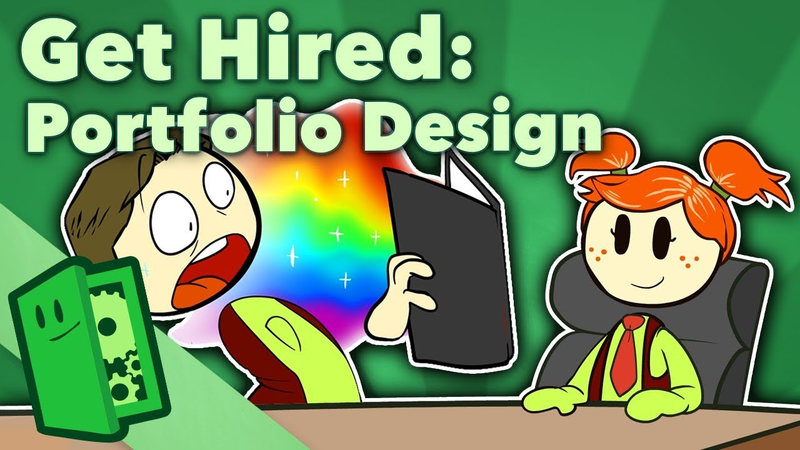
Get Hired: Portfolio Design - How to Build a Portfolio - Extra Credits Game Design
Key insights
6 takeaways- 01Design the portfolio for immediate impact, ensuring the layout is clean, professional, and intuitive to reflect competence.
- 02Tailor portfolios to specific roles by creating distinct pages or separate documents for different disciplines to avoid confusing potential employers.
- 03Maintain a strictly professional tone by excluding non-relevant hobbies and personal social media links.
- 04Treat the portfolio as an active networking tool that must be paired with professional outreach rather than relying on it as a passive application document.
- 05Prioritize quality over quantity by removing all mediocre or outdated work, as hiring managers evaluate candidates based on their strongest pieces.
- 06Include role-specific evidence: programmers must provide well-commented code, designers should showcase gameplay clips with decision-making commentary, and sound designers should re-score existing trailers.
Ask AI about this video
Transcript
On this show, we usually talk about how to make great games, but all the time we also get asked how to put together a good portfolio. So today, in order to prevent that mountain of mail from growing any larger, we're going to answer that very question. And we're going to do that thanks to Wix, because a little while ago they came to us and said they wanted to sponsor a video. But they knew we really didn't do much topically that ties in with websites. Then as we peeked through our above-mentioned email pile, we were like, wait, hold the phone. Portfolios use websites. And right then, a beautiful informational YouTube video was born. So thanks once again to Wix for kicking us into finally putting this episode out. So let's get to it. If you want to get a job in the games industry, or most any creative industry for that matter, then you're going to need a portfolio. Why? Because they're the second stop toward getting you an interview. Step one, of course, is your resume, which is meant to get people to take a closer look at who you are and what you can do. Whereas
your portfolio is meant to wow them in such a spectacular way that they say to themselves, we have to get this person in for an interview. So how do we make a portfolio that's going to make someone do that? Well, design it, just like you design a game. First off, ask yourself, who's your target audience? People who are both high enough up in whatever company that you're applying to that they're called in for hiring decisions, and also have the skills to actually assess your portfolio. And what's the one thing that's almost certainly going to be true of anyone who meets both of those criteria in the game industry? They're busy. Like crazy busy. Often by the time someone's looking at your portfolio, your resume's passed through the HR screening, and now your work is in the hands of somebody whose actual job is making a game. And they've got dozens of these to look at, and they're acutely aware of every minute that they're going through them they could be, you know, actually making a game. So how do you grab your viewer's interest? Well, first and foremost, you need a hook. Ask yourself, when someone clicks
on that portfolio link, what's the first thing they're going to see? What's going to make them stop and say, "I need to see more." This should be your most impressive work, the thing which really says that you've got something special. And it absolutely, positively should come at the very top of your page. Don't just put your stuff on there chronologically, and definitely don't just upload a bunch of your work and leave it at that. Make sure you grab them with the first thing they see. Next, we have to talk about what a portfolio is not. It's not a giant record of every piece of work you've ever done. You probably already know this, but take off your older work, the work you're less proud of, or the work that doesn't show your full potential. A small amount of good stuff is powerful, so don't dilute it. Also, know your audience. If you're applying for a design position that I'm hiring for, I really don't want to have to sift through a bunch of audio files to find examples of your design work. And I know that there are many of you out there who are multi-talented and want to show that you can draw, script, and do game design. But, your resume should tell me that. When you build your portfolio, if
you're really thinking about applying to several different disciplines within this field, make portfolio sites for each one. Or at the very least, make sure each one has its own page, because the last thing you want is to apply for a position, say as a texture artist, and then someone looking at your portfolio thinks, "Huh, kind of looks like they really want to be a sound designer." Okay, so we've got our audience and we've got our guiding principles. Now, let's talk about the nuts and bolts of actually making a portfolio. We'll start with some general pointers and then move to specific tips for each discipline at a game studio. First, keep your portfolio clean and simple. As a designer or an artist, no one's going to hire you if your portfolio page is ugly or poorly laid out. And honestly, if your page looks amateurish, people are going to be less likely to look at it, even if you're applying for a sound design or a programming gig. But, if graphic design isn't your thing, use a template. If only we knew of where we could find some of those. Huh. Seriously though, they're a great starting point and no one's going to fault you for that, especially if it's not in your field. Next, focus on the work. You
don't need to post a full bio about you. And in fact, text should be kept to a minimum. Use it to explain your thought process, or use it to point out really interesting things about your work that might not be immediately obvious at first glance. But, think of words as expensive here. Only use them if you're going to get a great return. Because remember, the person looking at this is probably in a hurry. Also, be sure not to intermix your portfolio with your non-professional life. Now, I know I shouldn't even have to say this, but I have seen people send over their personal Instagram as their portfolio. And if someone's looking at your work and thinking, "Oh, great piece. Ah, that's awesome. Oh, and that is them chilling with their giant bong and anime love pillow." It's not going to do you any favors. And it doesn't even have to be that extreme. Look, I of all people know that your cat is awesome, but it's just not what people are looking for when they're trying to figure out if they should hire you. Sure you will, bud. Then there's the most common question we get, "How much stuff should be in my portfolio?" And to that I say, "Well, how much stuff do you
have that's great?" And of course, this is a pretty subjective area, because artists will want to show more things to demonstrate the consistency of their work, or that they can work in multiple styles. While designers will probably want to be a little more focused and add some more detail about their work. When you're starting out, it can feel hard to have enough, but that doesn't mean you should add bad or broken work. Trust me, quality wins over quantity every time. And the person reviewing your portfolio is probably looking to eliminate candidates. So, don't give them a reason. Lastly, and this might sound silly that I have to say it, be sure to put your contact information on there somewhere. It doesn't have to be big or bold, but if one of your friends gets hired somewhere and passes your portfolio off to their boss, or if someone you sent a resume to decides that you're not right for them at that moment, but man, they were just talking to one of their buddies who seems like they're looking for exactly what you have to offer. You want these people to be able to contact you as easily as possible. Oh, and on that subject, please make it a professional email address because people will take you a lot less seriously if they have to write out
[email protected]. Okay, so now that all the generalities are out of the way, let's rapid-fire some advice on specific disciplines. If you're a coder and your sample code is uncommented, it's going to go straight to that great recycle bin in the sky. Don't do this. If you're a designer, don't just upload your finished games as no one's really going to have time to play through the full thing. So, in addition, put together some video clips of the most interesting parts of the games you have from a design perspective and then talk over them explaining your decisions and showing off how you think as a designer. Sound folks, sometimes it's hard to come up with a reel when you're just starting out. So, if you need to, don't hesitate to take a trailer, remove all the audio, and then replace it with your own. Actually, fun fact, I did this with a few TV and radio commercials for an early VO reel. But, and there's a big but, make sure you're clear about what it is you're exactly doing and why so no one thinks you're trying to take credit for doing the audio on a Final Fantasy. Artists, focus on the area you're most interested in. James has seen a lot of portfolios from people coming out of game schools where
they try to prove that they can rig, animate, skin, and do some effects work. But, once you're out of school, nobody's going to be hiring you to do all of those things. You can put an image or two somewhere lower in your portfolio to show that you understand them, but really try to have your portfolio focus on what you're passionate about. Basically, build the portfolio for the position you want. And finally, the last piece of portfolio advice I'll give you is that your portfolio alone is not enough. If you build this awesome thing and just wait, they will not come. The only way to get eyes on your portfolio is by putting yourself out there. Go network, go send your resume, and go out for the jobs you'll know you'll be great at. So, good luck, good hunting, and we hope to see you all at GDC in a few years. Once again, thanks so much to Wix for sponsoring this episode and making it possible for us to share these portfolio tips with all of you. Once you're ready to create your own online portfolio, Wix can really make the whole process a breeze. Their creation tools like Wix Stories, Wix Video, and Wix Booking makes crafting unique and personal pages
super straightforward, no matter what your medium. And that lets you focus on sharing your craft with the world while they do all the heavy lifting. So, if you'd like to start your new portfolio, business site, or even just upgrade your sweet but aging EC fan fiction page, just a thought, click the link in the description below and create your professional website today.
Summary
The primary purpose of this guidance is to instruct aspiring game industry professionals on how to construct an effective, high-impact portfolio. The central thesis is that a portfolio serves as a critical tool for securing an interview, and its design must be treated with the same strategic rigor as game development itself. Because hiring managers are typically time-constrained, the portfolio must be curated to showcase only the highest-quality work, immediately capturing the viewer's attention with a strong, professional hook.
Key recommendations emphasize quality over quantity, advising candidates to remove outdated or mediocre work that could dilute their professional image. The content should be strictly professional, excluding personal social media links or non-relevant hobbies. For those applying to multiple disciplines, the guidance suggests creating separate portfolios or distinct pages for each role to avoid confusing potential employers. Furthermore, the layout must be clean and intuitive, utilizing templates if necessary to ensure a polished aesthetic, as an amateurish presentation can negatively impact a candidate's perceived competence regardless of their specific field.
Specific technical advice is provided for various roles: programmers should ensure code is well-commented, designers should provide video clips of gameplay with commentary on their decision-making process, and sound designers can demonstrate their skills by re-scoring existing trailers. The guidance concludes by stressing that a portfolio is not a passive tool; it must be paired with active networking and professional outreach. Ultimately, the portfolio should be tailored specifically to the role the candidate desires, demonstrating a clear focus and professional intent to stand out in a competitive hiring environment.















Comments