Game Design reports and market data
Documents
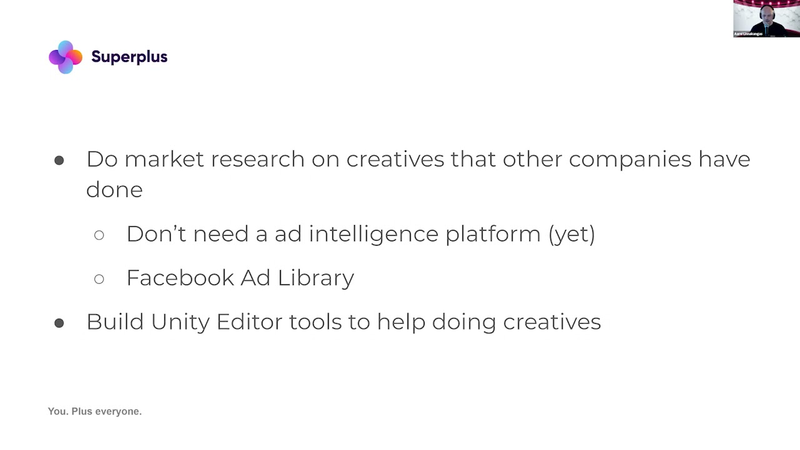
Five Silver Bullets for New Teams
New development teams must integrate marketing as a foundational pillar of game design rather than treating it as a post-production afterthought.
- Integrate marketing as a foundational pillar of game design from the start to align technical development, user acquisition, and creative strategy, rather than treating it as a post-production task.
- Validate market appetite before full-scale production by using low-budget ad campaigns and functional mockups to ensure development resources are directed toward concepts with proven commercial potential.
- Design marketing assets capable of capturing user attention within a two-second window to effectively compete in a saturated gaming landscape.
Stories that Haunt and Heal: Mental Health and Game Narrative
Narrative games are increasingly serving as a medium for exploring complex mental health topics, including PTSD, disordered eating, and the aftermath of sexual assault.
- Developers creating games about sensitive mental health topics, such as sexual assault and disordered eating, should consult with mental health professionals and survivors to ensure due diligence and responsible representation.
- Games can effectively use visual and auditory mechanics to simulate mental health conditions; for example, the visual novel 'Shrinking Pains' uses dropping frame details and narrowing fields of vision to mimic the progression of anorexia.
- Lived experience can provide significant narrative authority and credibility to a game, though developers must weigh the personal cost of publicly disclosing their own trauma against the potential impact of their work.

Panel:Going Mainstream: How is a Successful Blockchain Game Different to a Successful Standard Game?
The integration of blockchain technology into the gaming industry represents a fundamental shift in the relationship between developers and players, moving away from closed, centralized ecosystems toward collaborative, decentralized models.
- Successful blockchain games must prioritize core entertainment and community engagement as their foundation, using decentralized technology only as a backend economic layer to enhance the user experience.
- Blockchain integration enables a shift from closed, centralized ecosystems to models featuring true digital ownership, asset interoperability, and shared economic participation for players.
- The industry is currently hindered by significant technical friction, including complex wallet integration, scalability issues, and jargon that alienates mainstream audiences.
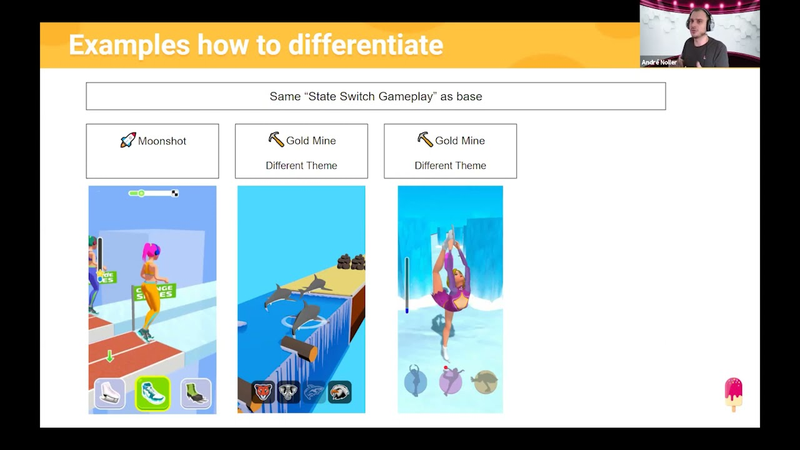
Mastering the Market - Ideation for Your Next Hypercasual Hit
The hypercasual gaming market is characterized by intense competition, requiring developers to adopt systematic ideation strategies rather than simply chasing current top-chart trends.
- Success in hypercasual gaming requires a systematic ideation strategy that balances trending mechanics with sufficient novelty to avoid saturated 'red ocean' markets.
- Developers should categorize concepts into four quadrants—moonshots, gold mines, clones, and gambles—to evaluate the risk and innovation potential of each project.
- Market timing is critical, as player interest follows a predictable lifecycle where audiences eventually tire of overused tropes and seek fresh, innovative mechanics.

Panel: The Challenges of Being Innovative & Unique in the Hypercasual Market
The hypercasual gaming market is currently undergoing a significant transformation, moving away from simple, disposable mechanics toward more sustainable, hybrid-casual models.
- Hypercasual development requires a mindset shift toward rapid failure, where studios often test dozens of prototypes over several months to identify viable projects.
- Successful hypercasual strategies often involve aligning game concepts with a team's specific internal strengths and passions rather than blindly chasing market trends.
- Developers can pivot failed hypercasual concepts with high user retention into more complex, successful products by adding meta-progression systems, as seen in the transition of the game Spire Blast to Apple Arcade.
Superstar Session: Long-lasting Publishing- How to Create Hypercasual Hits That Cross 100M Downloads
The hypercasual gaming market is undergoing a significant maturation phase, shifting from a model defined by short-lived chart dominance to one characterized by long-term engagement and sustained growth.
- The hypercasual market is shifting toward a 'hybrid-casual' model that combines low customer acquisition costs with deep retention mechanics to sustain titles beyond the traditional one-month lifecycle.
- Achieving 100 million downloads now requires robust live operations that transform simple gameplay loops into dynamic environments through progression and self-expression features.
- Long-term player retention is driven by integrating social and creative mechanics, such as competitive contests, voting systems, collectible items, and photo albums for sharing in-game designs.
Panel: What Lessons Have we Learned from our Game Economy Mistakes?
The modern gaming industry has undergone a fundamental transition from traditional retail models toward complex, hybrid monetization strategies.
- Game monetization has shifted from purely progression-based models to include vanity-focused economies, exemplified by Fortnite's success in selling cosmetic items to a growing Gen Z audience.
- In the current freemium landscape, approximately 96% of users do not make in-app purchases, leaving the primary revenue burden on the 4% of players identified as 'whales'.
- Developers should simulate their game economies before launch, modeling player behavior across multiple segments over years of gameplay to identify potential imbalances or infinite scaling issues.
Fireside Chat: Ad Monetisation - Best Practices with Wooga
This discussion outlines best practices for mobile ad monetization, emphasizing the strategic balance between revenue generation and user experience.
- Prioritize user engagement and retention over aggressive ad tactics to ensure long-term success in free-to-play titles.
- Target an engagement rate where 80% to 90% of daily active users interact with at least one ad.
- Implement a robust mediation strategy using three to five ad networks from the start to maximize fill rates and eCPMs.
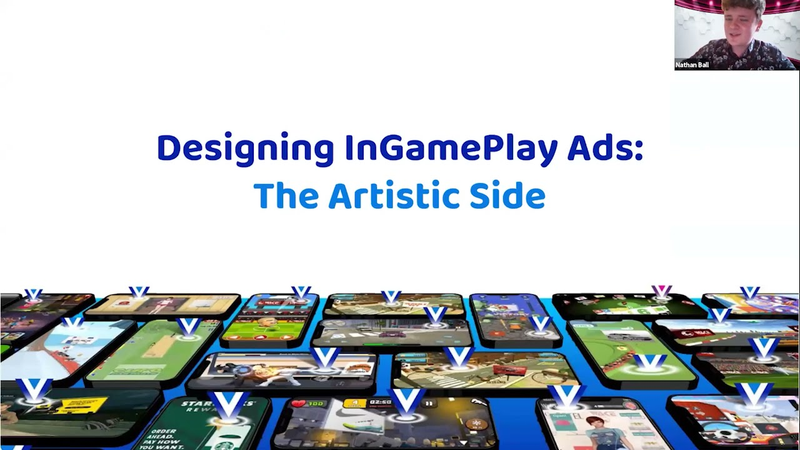
How to Design In-game Ad Placements
In-game brand advertising offers a monetization strategy that integrates ads directly into the game environment as native objects, providing a non-disruptive alternative to traditional banner or interstitial video ads.
- Integrated in-game advertising is preferred by 70% of consumers over traditional banner or interstitial video ads because it maintains immersion.
- Revenue for in-game ads is driven by viewability metrics—based on screen duration, size, and angle—rather than traditional click-through rates.
- To maximize impressions, developers should prioritize high-traffic static environments such as main menus, character customization screens, and level selection screens.
Fireside Chat: Multiplayer - The Power Chat
Multiplayer game development hinges on the fundamental tension between technical constraints and the human desire for social connection.
- Multiplayer success relies on prioritizing player perception over rigid simulation to mitigate the impact of latency, jitter, and packet loss.
- Scaling to millions of daily active users requires utilizing web-based infrastructure, specifically memory-based databases and caching, to maintain stability under high traffic.
- Technical constraints must inform design choices from the earliest development stages to prevent unnecessary complexity and ensure global accessibility.
Superstar Session: The Secret Sauce of Multiplayer Games
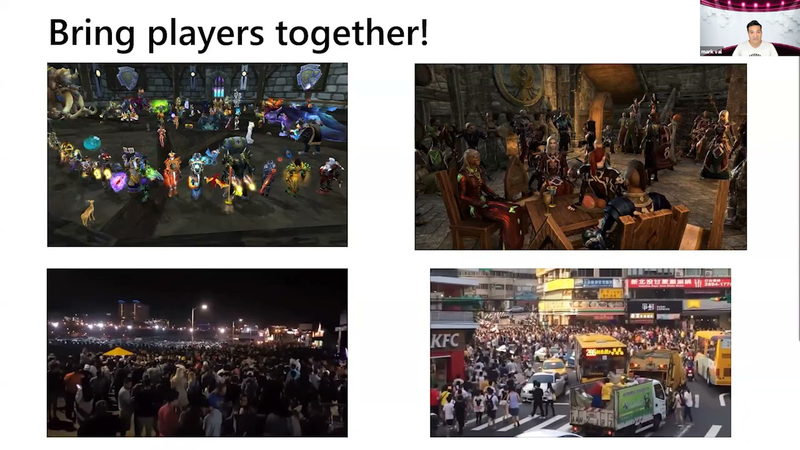
Multiplayer game development requires a fundamental shift in strategy, prioritizing network architecture and social infrastructure from the earliest stages of production.
- Multiplayer networking must be integrated into the initial production phase, as retrofitting network architecture into completed single-player titles is technically inefficient and prohibitively expensive.
- Developers should implement server-authoritative architectures to mitigate cheating and ensure competitive integrity, which is a foundational requirement for long-term player retention.
- Matchmaking systems must prioritize a balance between player skill, network latency, and queue speed to maintain engagement and minimize user frustration.
How to Build a Player-centric Business Model (That's Resilient Enough for the Next Decade)
The primary objective of this analysis is to provide a framework for building resilient, player-centric business models in the gaming industry.
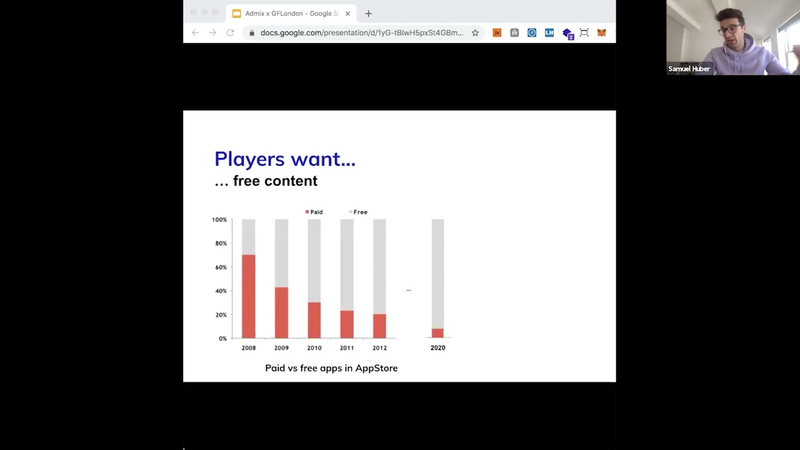
- Approximately 98% of mobile gamers are non-paying users, a figure expected to rise as the global gaming audience grows toward three billion monthly users.
- In-play monetization, which dynamically integrates branded content into the game environment, serves as a resilient alternative to traditional, intrusive ad formats like interstitial videos.
- Traditional interstitial ads negatively impact player retention once a specific threshold of impressions is reached, necessitating a shift toward non-disruptive advertising models.