Game Design reports and market data
Documents

Breathing Life into Greek Myth: The Dialogue of 'Hades'
The development of Hades represents a significant evolution in narrative design for the roguelike genre, demonstrating how extensive voice acting can transform the experience of repeated player failure into a compelling storytelling mechanic.
- Supergiant Games produced a fully voiced experience for 'Hades' featuring over 21,000 lines of dialogue and 30 characters, despite initially underestimating the final scope of the project.
- To differentiate the game's setting, the team utilized a cultural accent divide where characters native to the underworld speak with American accents, while those of Greek or surface origin use British accents.
- The narrative design used extensive voice acting to mitigate the frustration of failure in a roguelike, ensuring that even repetitive gameplay loops remained engaging through constant dialogue updates.
A DAY IN THE LIFE of a Game Developer (THE TRUTH!)
Game development involves a repetitive, often frustrating cycle of technical troubleshooting and asset integration, particularly when working within the Unity engine.
- Independent game development is defined by a repetitive cycle of technical troubleshooting, specifically managing complex interactions between triggers, colliders, and physics-based movement within the Unity engine.
- Developers maintain project momentum by frequently pivoting between debugging code, consulting documentation, and utilizing external tutorials to resolve unexpected object behavior.
- Production efficiency is achieved by sourcing low-poly models and down-rezzing textures from free asset libraries, which allows for cost-effective environment population.

Google Maps, Not Greyboxes: Digital Location Scouting for 'Untitled Goose Game'
The development of Untitled Goose Game relied on a shift from abstract, conceptual level design toward a methodology rooted in digital location scouting.
- To achieve spatial authenticity for 'Untitled Goose Game,' the developers abandoned traditional 'greybox' level design in favor of digital location scouting using Google Maps and Street View to study real-world British villages.
- The team used specific real-world locations like the village of Orford to inform level layouts, finding that basing designs on actual geography provided a logical, consistent, and 'grounded' world that enhanced the game's comedic tone.
- By treating real locations as primary source material, the developers could quickly populate levels with authentic props and geometry, such as fruit stands, hand trucks, and benches, sourced from historical Street View imagery dating back to 2009.
Designing the Bustling Soundscape of New York City in 'Marvel's Spider-Man'
The creation of a believable, non-fatiguing soundscape for Marvel’s Spider-Man relies on a sophisticated hybrid architecture that balances dense environmental immersion with strict technical performance constraints.
- The soundscape utilizes a hybrid architecture that blends static 2D ambient beds with dynamic 3D point-source emitters to balance environmental density with technical performance.
- Audio clarity during high-intensity gameplay is maintained through global state management and side-chaining, which automatically ducks background noise during combat and cinematics.
- Technical art tools were used to automate the generation of reverb and delay volumes across 8,300 individual buildings, eliminating the need for manual asset placement.

The State and Future of Board Games
The board game industry is currently undergoing a period of rapid expansion and transformation, characterized by an annual influx of approximately 4,000 new titles.
- The board game industry is experiencing rapid expansion with approximately 4,000 new titles released annually.
- Consumer behavior is shifting away from long-term lifestyle games toward a model that prioritizes variety and shorter-term engagement.
- Advancements in manufacturing technology have lowered barriers to entry, allowing designers to target increasingly niche audiences.
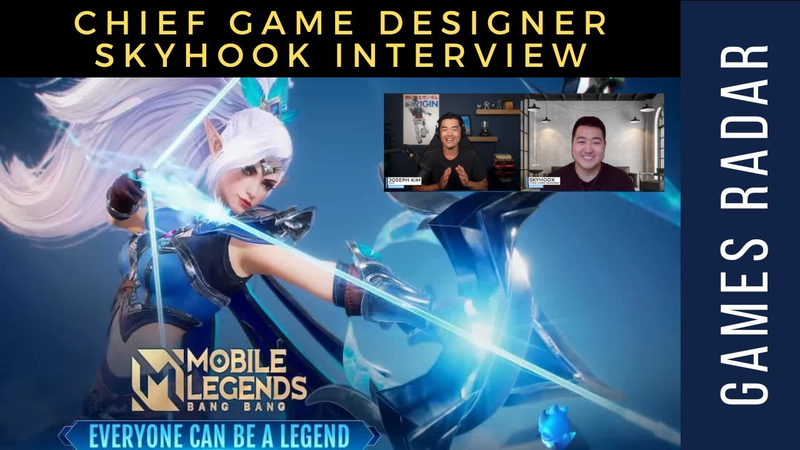
Moonton's Mobile Legends: Bang Bang Secrets to Success! With Chief Designer Skyhook
The success of Mobile Legends: Bang Bang is rooted in a design philosophy that balances the high-stakes strategy of Real-Time Strategy (RTS) games with the immediate, visceral satisfaction of action-oriented gameplay.
- Mobile Legends: Bang Bang achieved success by distilling complex PC-based MOBA mechanics into a mobile-first experience that lowers the barrier to entry while maintaining a high skill ceiling.
- The development team prioritized accessibility by removing high-friction mechanics like last-hit requirements and implementing screen locking to simplify operational complexity.
- Core gameplay design focuses on a hybrid model where visceral action mechanics provide immediate engagement, while deep strategic layers ensure long-term player retention.
Monetization Madness - How Games Make Money - Extra Credits
The monetization of video games is a foundational element of game design that dictates how developers support their projects and interact with their audiences.
- A game's chosen revenue model is a foundational design element that dictates gameplay mechanics, development processes, and long-term player engagement strategies.
- Modern monetization has shifted from simple pay-to-play arcade models to complex, hybrid strategies that combine premium purchases, free-to-play access, and ongoing microtransactions.
- Free-to-play models, which originated in South Korea and the mobile sector, rely on continuous revenue streams such as cosmetic microtransactions, subscriptions, and randomized loot boxes.
14 Years Development on Hanoka with Matt Canei | Game Dev Unchained Episode 284
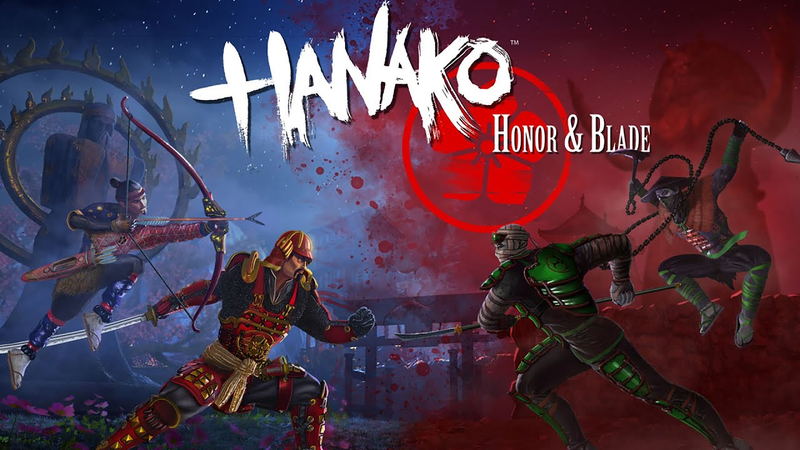
The development of Hanako: Honor & Blade serves as a case study in the endurance required for long-term indie game production.
- The 14-year development of Hanako: Honor & Blade required a total labor investment equivalent to only 14 to 18 weeks of work for a 100-person studio, demonstrating the efficiency of a volunteer-driven, methodical approach.
- The project successfully navigated major technical shifts, including migrating the entire game from Unreal Engine 3 to Unreal Engine 4 while adapting to evolving market trends like the rise of battle royale games.
- By positioning the project as a mentorship platform for junior developers to build professional portfolios, the team effectively mitigated the impact of high turnover over the project's decade-plus lifespan.
Key Challenges for Blockchain Gaming ft. Lars Doucet
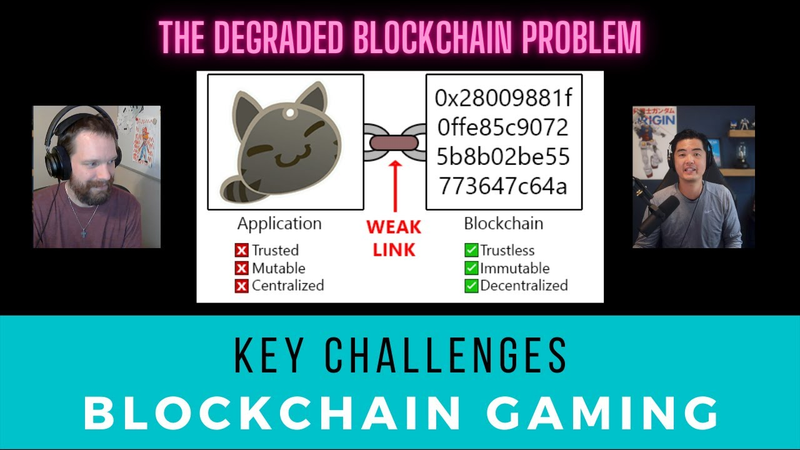
This analysis examines the fundamental challenges facing blockchain technology within the gaming industry, focusing on the disconnect between theoretical promises and practical implementation.
- The 'degraded blockchain' problem occurs when game assets rely on centralized servers, nullifying the benefits of decentralization because a central authority can still arbitrarily alter or remove user assets.
- Play-to-earn models frequently function as unsustainable finance-driven schemes that rely on continuous new investment rather than genuine gameplay value to maintain economic stability.
- Digital land speculation creates artificial scarcity that mirrors real-world housing crises, leading to rent-seeking behaviors that alienate the broader player base.
'Moss': Design Before Sound
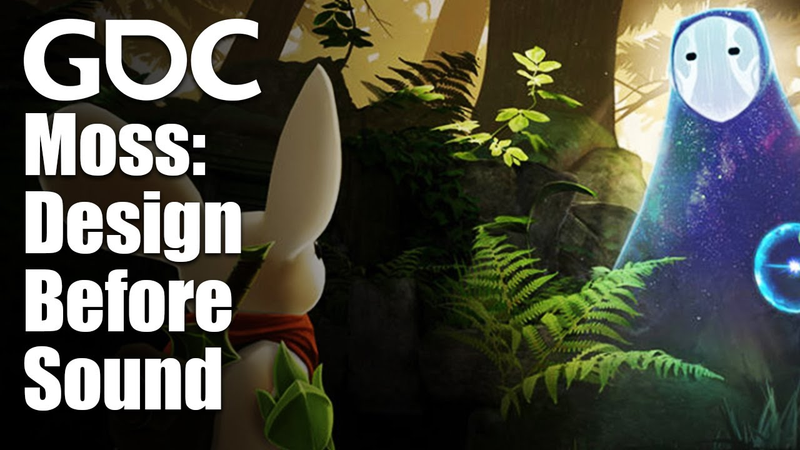
The design of sound in virtual reality environments functions most effectively when audio development begins during the earliest conceptual phases rather than as a post-production layer.
- Audio development must be integrated during the earliest conceptual phases of VR design rather than treated as a post-production layer to ensure it serves core narrative goals.
- Sound should be utilized as a strategic tool to foster empathy and deepen the player's emotional connection to the protagonist.
- Developers can mitigate the physical and psychological fatigue associated with VR by using high dynamic range, modulated ambient textures, and seamless audio transitions.

Scaling Up a Merge Game with Antti Hattara, CEO Starberry Games
The merge genre has evolved from a simple casual category into a highly competitive landscape where long-term retention is the primary determinant of success.
- Long-term retention beyond 90 days is now the primary metric for success in the highly competitive merge game market.
- Developers can differentiate their titles by pivoting from simple idle mechanics toward complex city-building simulations.
- Scaling requires a dual strategy of consistent content updates and advanced performance marketing, leveraging automated tools to overcome IDFA deprecation challenges.
Three-Way VR Audio Postmortem
Effective virtual reality audio design requires a tailored strategy that prioritizes specific project goals, such as immersion, impact, or information, rather than relying on a universal technical approach.
- Effective VR audio design relies on a hybrid methodology that layers mono, stereo, and binaural formats rather than depending on a single technical solution like Head-Related Transfer Function (HRTF) technology.
- Prioritize project-specific goals—such as immersion, impact, or information—over universal technical approaches to ensure audio serves the narrative and gameplay needs.
- Successful spatial audio is achieved through psychoacoustic techniques and creative placement, which prioritize the brain’s perception of an object over computationally expensive, strict acoustic simulations.