Game Design reports and market data
Documents


Benefits of Video Games in K-12 Education
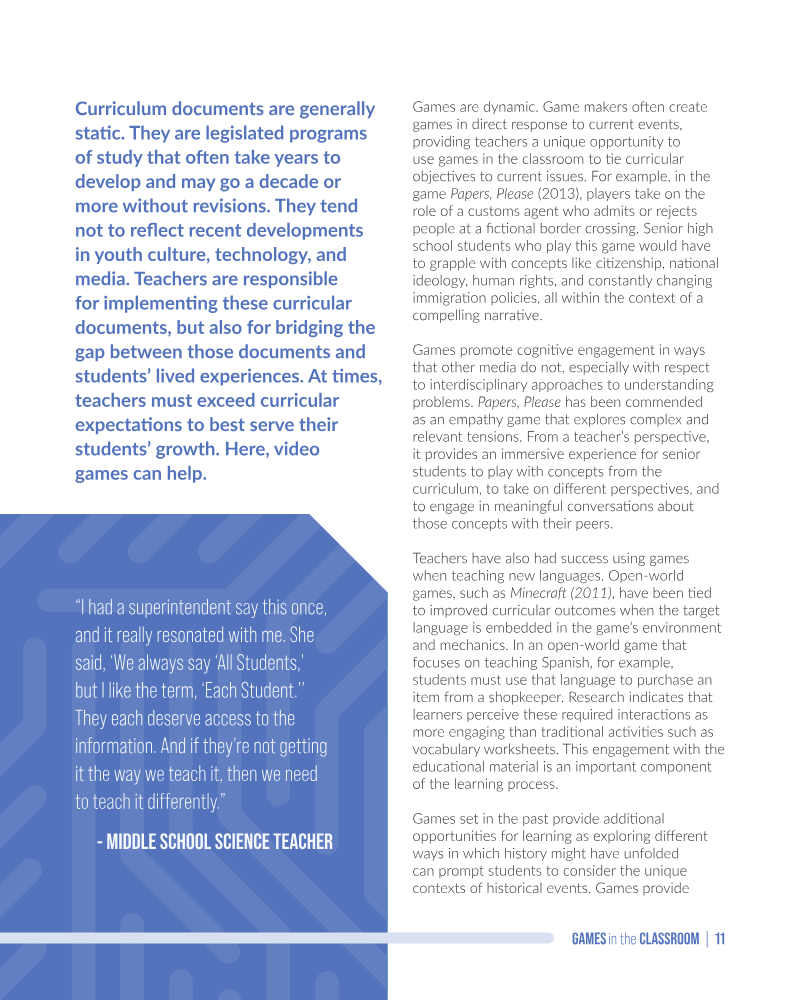
Video games function as transformative pedagogical tools within K-12 education, shifting students from passive recipients of information to active participants in their own learning processes.
- Video games shift K-12 students from passive information recipients to active participants, fostering critical thinking, complex problem-solving, and resilience.
- Effective implementation requires strategic pedagogical integration rather than superficial gamification, utilizing short-form game segments aligned with specific learning objectives.
- Game-based learning accommodates diverse learning styles and provides personalized pacing, bridging the gap between rigid academic standards and student experiences.

The Rise of Battle Royale: An Overview of the Hottest Game Genre
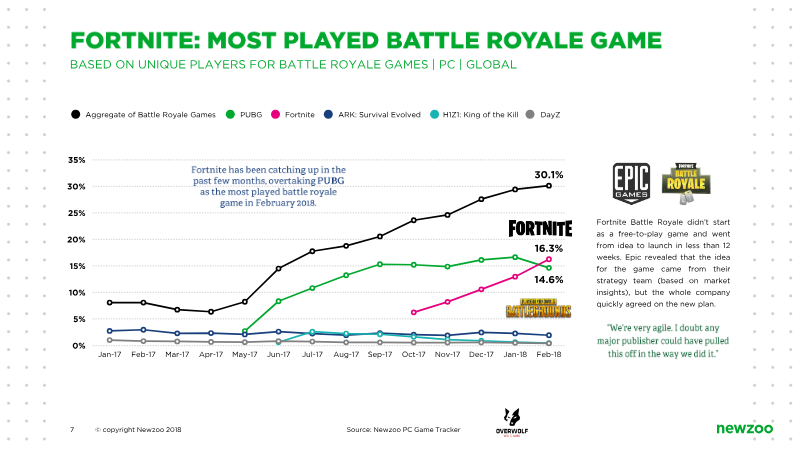
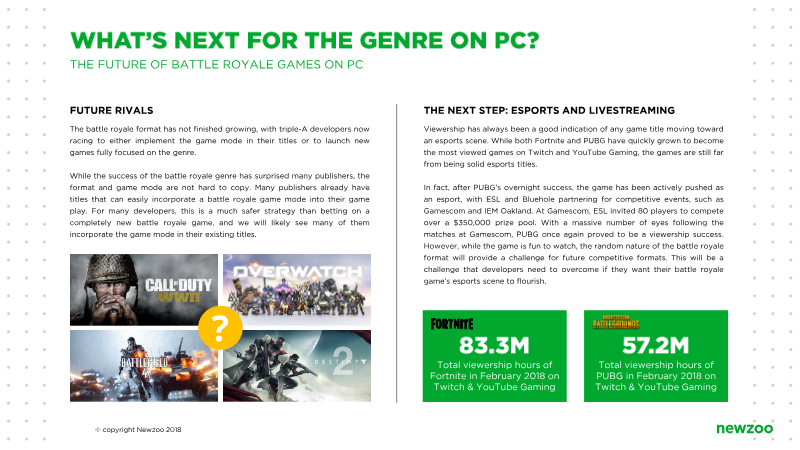
The battle royale genre has emerged as a dominant force in the global gaming industry, characterized by a unique blend of survival, exploration, and last-man-standing mechanics.
- The battle royale genre has achieved mainstream dominance by distilling survival and shooter mechanics into a highly replayable, spectator-friendly format.
- PUBG and Fortnite serve as the genre's primary anchors, with PUBG maintaining a strong foothold in Asian markets through partnerships with Tencent, while Fortnite captures a broader Western audience via a free-to-play model and cross-platform integration.
- The mobile sector is a primary growth driver, led by publishers like NetEase and Tencent who have successfully launched mobile-optimized versions of major titles to capitalize on mobile-first gaming cultures.

Game Analytics 100: The Retention Curve
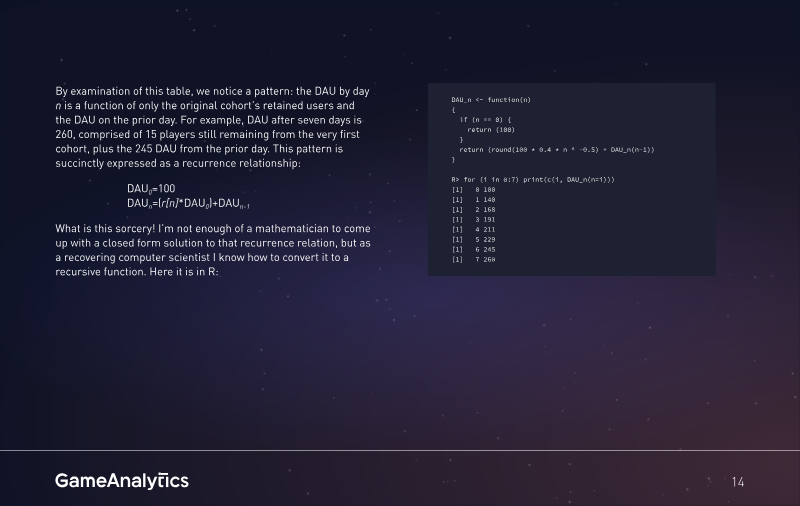
The analysis demonstrates that player retention in mobile games can be accurately modeled with a power-law curve, expressed either as \(r(n)=a\,b^n\) or \(r(n)=a\,n^{b}\).
- Mobile game retention follows a predictable power-law curve, modeled as r(n)=an^b, which allows analysts to forecast long-term player behavior using only day-1, day-3, and day-7 cohort data.
- Fitting retention curves enables precise lifetime value (LTV) projections; for example, an average revenue of $1.00 per daily active user results in an LTV90 of 7.65 and an LTV180 of 10.17.
- Analysts can derive the initial retention level (a) and decay exponent (b) by applying the LINEST function to logged cohort values in Excel, yielding representative curves such as r(n)=0.396n^-0.472.



Your Data Tracking Plan: A Step-by-Step Guide for GameAnalytics
GameAnalytics presents a structured framework for designing and implementing data tracking within games, emphasizing the creation of a comprehensive tracking plan that aligns analytics teams with development stakeholders.
- Establish a structured tracking plan by aligning business objectives and player behavior questions with seven predefined event categories: Session, Business, Resource, Progression, Error, Ads, and Impression.
- Limit custom events to a maximum of 50 unique identifiers to maintain data integrity and prevent system clutter.
- Adopt a consistent Category > Sub-Action naming framework to ensure clarity and prevent redundant or misleading data collection.

What Good Are AI NPCs?: Lessons from a Large-scale Player Study
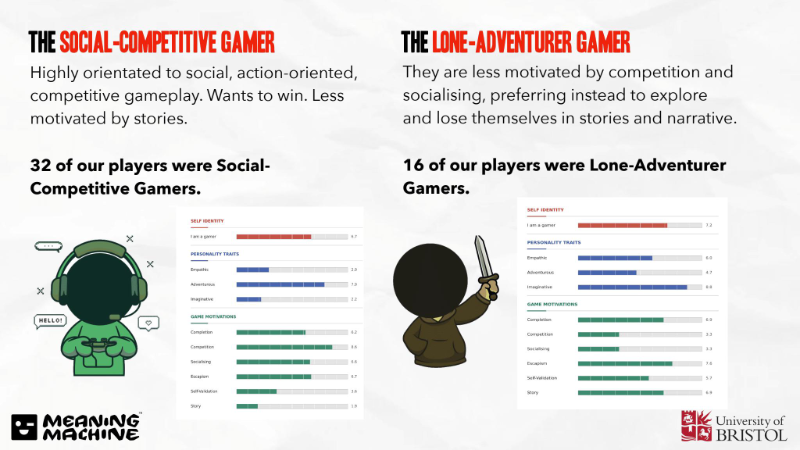
The study demonstrates that generative AI-driven non-player characters can deliver deeply engaging, emotionally resonant gameplay.
- Generative AI NPCs drive high player engagement, with 97% of participants reporting high immersion and 96% rating their overall enjoyment as high.
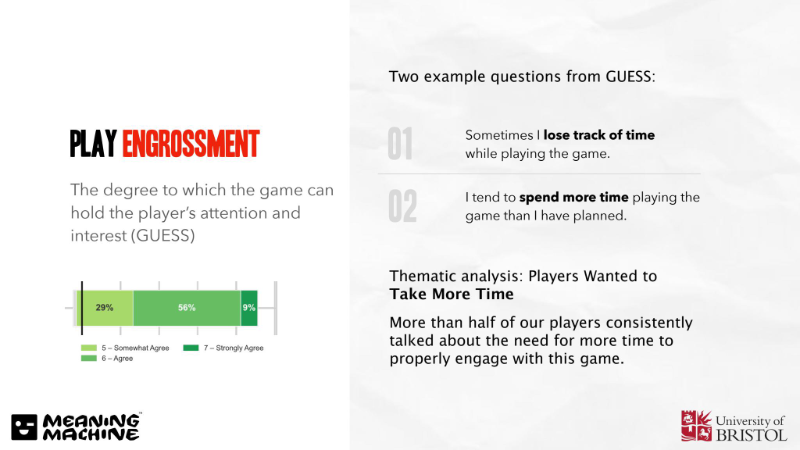
- The integration of AI NPCs maintains a balance between agency and guidance, as evidenced by 80% of players achieving top scores for play engrossment and 90% praising the creative freedom of the open-ended design.
- Cognitive load remains manageable during AI-driven interactions, with participants reporting NASA-TLX mental demand scores of 64.7 and performance scores of 52.7.
Gamer Motivation Profile: Empirical Research Methodology
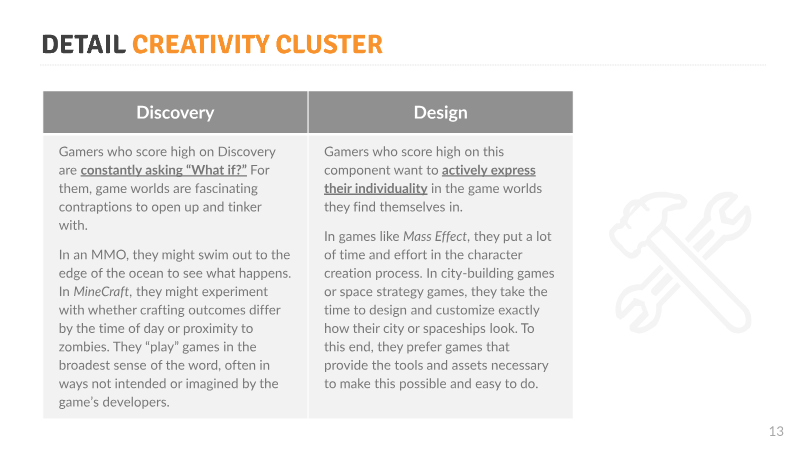
The Gamer Motivation Profile provides an empirical framework for understanding player behavior by categorizing gaming preferences into twelve distinct motivational factors.
- The Gamer Motivation Profile categorizes player behavior into twelve distinct factors grouped into six thematic clusters: Action-Social, Mastery-Achievement, and Immersion-Creativity.
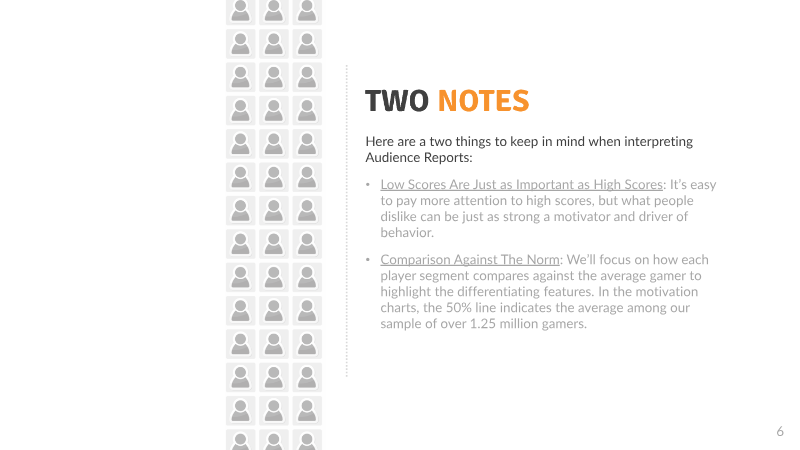
- The model is built on a global dataset of over 1.25 million unique gamers, providing a statistically significant foundation for analyzing player engagement.
- The participant demographic is 74% male, 22% female, and 3% non-binary, with a median age of 23 and a primary geographic concentration in North America (33%) and Western Europe (14%).

Wojciech Ozimek: Profile and Expertise
Wojciech Ozimek has led one2tribe Sp. z o.o. for eleven years as CEO, overseeing organizational growth, product launches, sales and key client relationships.
- Wojciech Ozimek has served as CEO of one2tribe for 11 years, overseeing the development of online games and services that have reached four million subscribers globally.
- His professional focus centers on gamification and business-oriented game design, supported by his role as a senior consultant for the Cutter Consortium’s Business-IT Strategies and Enterprise Architecture teams.
- Prior to one2tribe, Ozimek held leadership roles at Infovide, where he directed development and architecture for major clients including Nordea Bank Polska, Telekomunikacja Polska S.A., and Onet.pl.