Game Design reports and market data
Documents
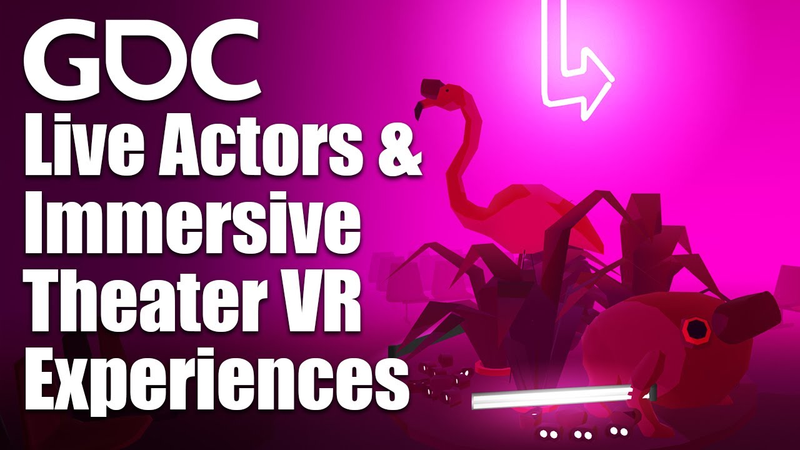
Integrating Live Actors into At-Home VR Experiences
The integration of live actors into at-home virtual reality experiences represents a significant evolution in digital storytelling, shifting the medium from static, pre-recorded content toward dynamic, emergent performance.
- Tender Claws integrated live actors into the VR experience 'The Under Presents' by allowing performers to inhabit avatars and NPCs, creating 'uncanny' moments that blend human improvisation with pre-recorded narrative content.
- To manage live performance at scale, the studio utilizes a distributed network of actors working from home via Oculus Quest headsets, rather than centralized location-based motion capture.
- The system uses a persistence layer to track player history, allowing the backend to prioritize and match players who have not yet encountered a live performer into shared spaces.

Designing the Secret Game that Helped Win World War II
During the height of the Battle of the Atlantic, the British Admiralty faced a catastrophic threat from German U-boat wolf pack tactics, which decimated merchant shipping and endangered the nation’s essential supply lines.
- The Western Approaches Tactical Unit utilized floor-based wargaming simulations to identify and counter German U-boat wolf pack tactics that were decimating Allied merchant shipping.
- By reconstructing historical engagements, the unit debunked the assumption that U-boats attacked only from the perimeter, revealing that they were infiltrating convoy lanes to launch point-blank torpedo attacks.
- The team developed the 'Raspberry' maneuver, a coordinated defensive strategy that shifted the Allied response from disorganized individual reactions to a unified, lethal defense.
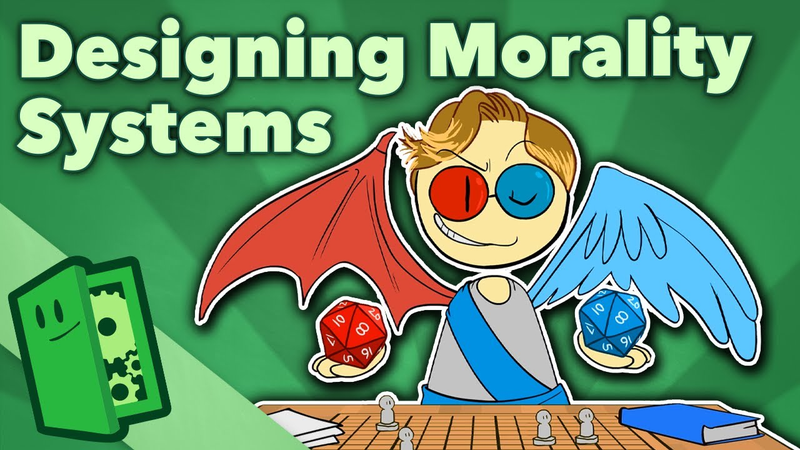
Designing Morality Systems - World Building and Morality in Gaming - Extra Credits - Game Design
Effective game design relies on the intentional construction of moral systems that force players to engage with difficult, ambiguous choices.
- Effective moral design requires moving beyond binary choices to create ambiguous scenarios where every option carries both significant benefits and downsides.
- Restrictive morality systems use external codes or rules to limit character behavior, creating conflict when those mandates clash with immediate situational needs.
- Contradictory morality forces players to prioritize one virtuous tenet over another, as the system presents multiple positive values that cannot be upheld simultaneously.
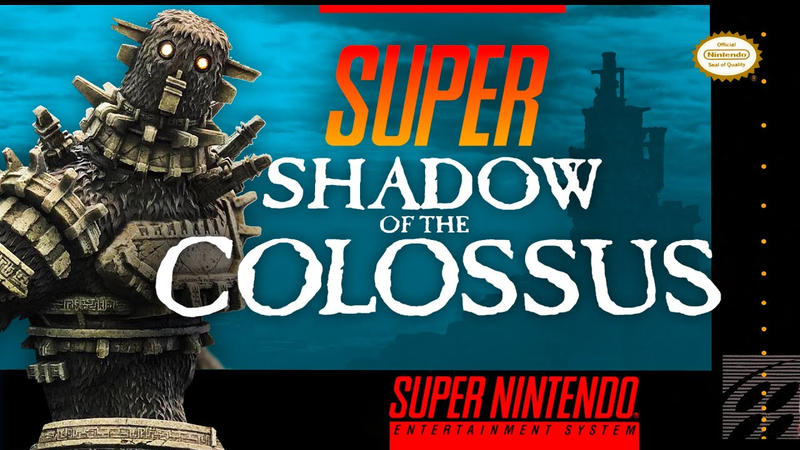
I made Shadow of the Colossus... BUT IT'S 2D
The challenge of translating the atmospheric scale and complex mechanics of Shadow of the Colossus into a 16-bit, 2D Super Nintendo-style experience serves as the primary focus of this development project.
- The project successfully distilled the core emotional experience of the 3D title Shadow of the Colossus into a 2D, 16-bit format through a compressed three-day development sprint.
- To achieve a retro aesthetic, the developer created 4K assets in Photoshop and used nearest-neighbor resampling to downscale them into crisp, pixelated visuals.
- A dynamic orthographic camera system was implemented in Unity to simulate the original game's sense of vast scale by adjusting zoom levels based on player proximity.

How to Ship Successful Word Games with Michael Martinez, CEO of Funcraft
The strategy for achieving success in the mobile word game market centers on a rapid, iterative development model that prioritizes market validation over prolonged production cycles.
- Funcraft achieves market success by prioritizing rapid iteration and market validation, having launched six distinct word games since 2020 to identify high-retention niches.
- The company maintains a lean operational model by keeping design and live operations internal while outsourcing technical execution to external studio partners.
- Ad monetization is the primary revenue driver for the company's portfolio, accounting for approximately 90 percent of total income.
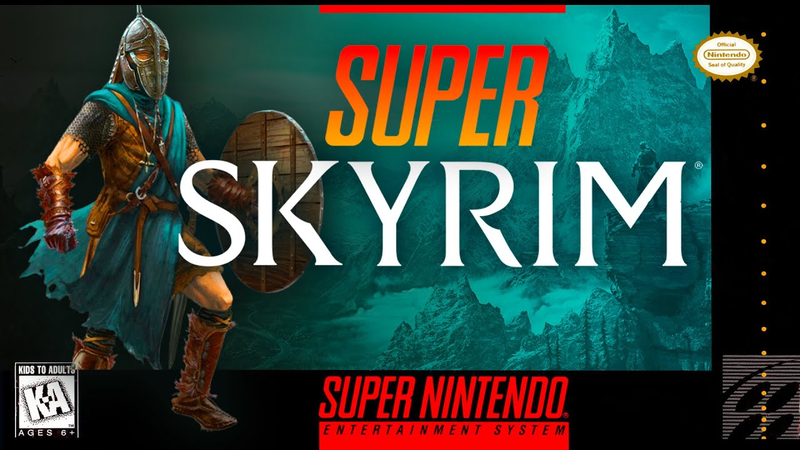
I made Skyrim... BUT IT'S 2D
Recreating the complex, three-dimensional world of Skyrim as a two-dimensional side-scrolling adventure requires significant artistic adaptation and technical simplification.
- Adapting 3D open-world titles to 2D requires significant creative liberty and technical simplification, as demonstrated by a seven-day development project using Unity and Photoshop.
- Visual depth in a 2D side-scrolling format is achieved through layered illustration, parallax scrolling, and the strategic use of foreground elements like moss or stones.
- To maintain visual fidelity, the project utilized a 4K canvas and color palettes sampled directly from the original Skyrim assets.
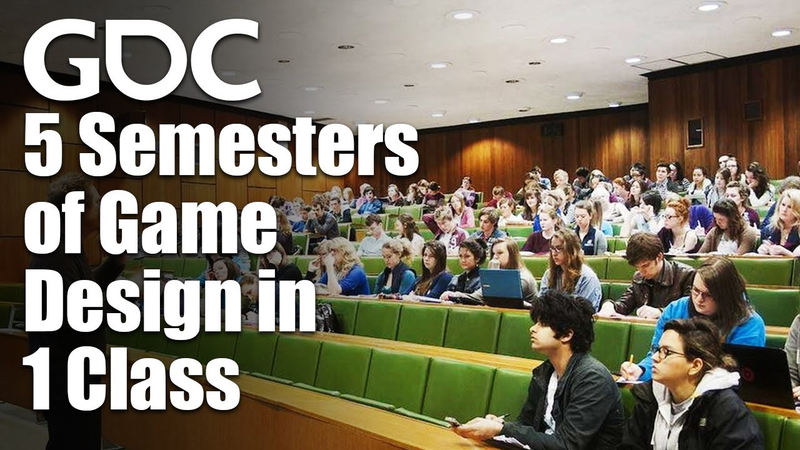
How to Teach 5 Semesters of Game Design in 1 Class
The game design curriculum at Tufts University achieves an accelerated pedagogical model by condensing five semesters of traditional instruction into a single term.
- Jason Wiser’s game design course at Tufts University condenses five semesters of traditional curriculum—including tabletop design, Unity/C# programming, 3D/2D art, and project management—into a single, high-intensity term.
- The course utilizes 'stacking theory,' which focuses on mastering one concept at a time while layering them to build complex skills, allowing students to learn multiple disciplines through rapid, iterative prototyping.
- The first half of the semester focuses on tabletop game design with pass/fail grading to lower the pressure to succeed, encouraging students to prioritize experimentation, teamwork, and radical revision over polished final products.
I PLAYED YOUR GAMES! | Game Design Feedback
Indie game development often hinges on the delicate balance between innovative core mechanics and the accessibility of the user experience.
- Indie titles like Hoverblade, The Court of Wanderers, Raw Shire, and Sky Tale suffer from a disconnect between atmospheric ambition and the practical clarity required for player engagement.
- Poor execution of fundamental design elements—specifically unintuitive controls, poorly paced tutorials, and cluttered UI—frequently obscures the core gameplay quality.
- Developers should prioritize visual distinction by utilizing ambient occlusion, color grading, and environmental depth cues to improve immersion and readability.
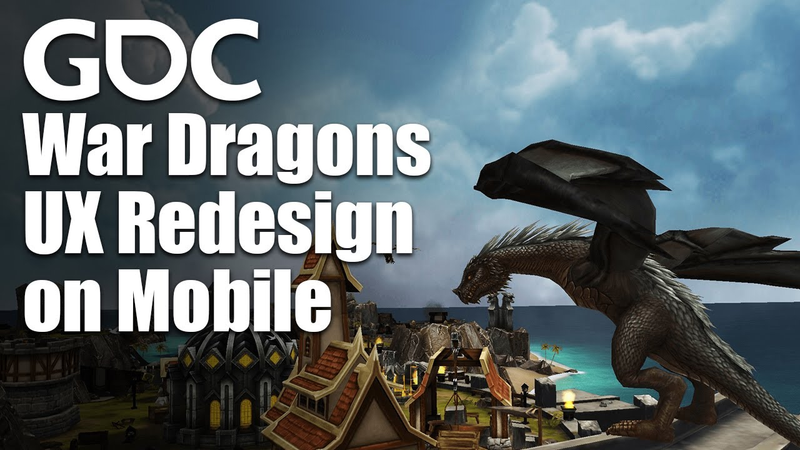
Changing Navigation Mid-Flight: 'War Dragons', a UX Redesign on Mobile
The modernization of the mobile title War Dragons centers on a comprehensive user experience overhaul designed to resolve navigation inconsistencies and inefficient screen utilization.
- The 'War Dragons' UX redesign resulted in a 30% increase in time spent in-game, a 27% increase in daily active users (DAU), and a 10% improvement in early player retention.
- A phased rollout strategy—moving through concept, engineering, and testing phases—allowed the team to mitigate risk and gather continuous feedback while maintaining a live product.
- To modernize the 2015-era interface, the team replaced fragmented, undersized windows with standardized mobile design patterns, such as carousels and consistent sidebar navigation, to improve ergonomics and discoverability.
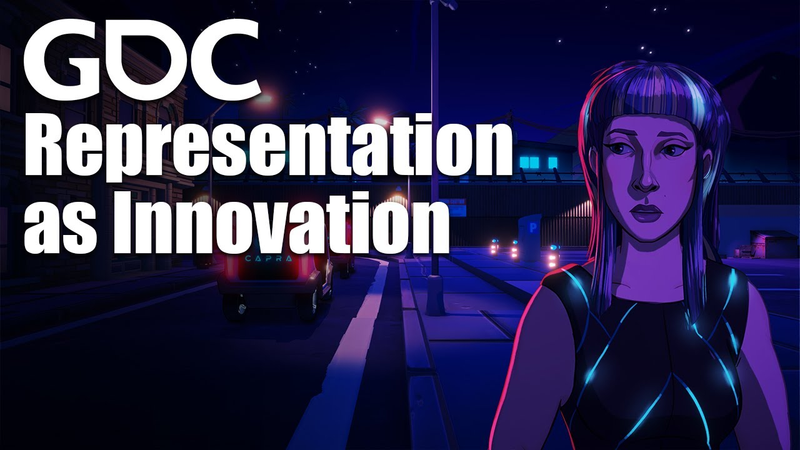
Now You See Me: Representation as Innovation
The narrative design industry often treats representation as a risk-mitigation exercise rather than a creative opportunity.
- The narrative design industry currently treats representation as a risk-mitigation exercise to avoid offense, which stifles creative innovation and limits the potential of the medium.
- Developers should shift from viewing diversity as a defensive measure to utilizing it as a tool for authentic, joyful storytelling that expands the appeal of their games.
- Relying on outdated demographic assumptions that prioritize a cisgender, heterosexual white male audience creates a cycle of fear that prevents studios from exploring new, compelling narratives.
Theming for Live Ops Events: The Power of Modularity & Storytelling
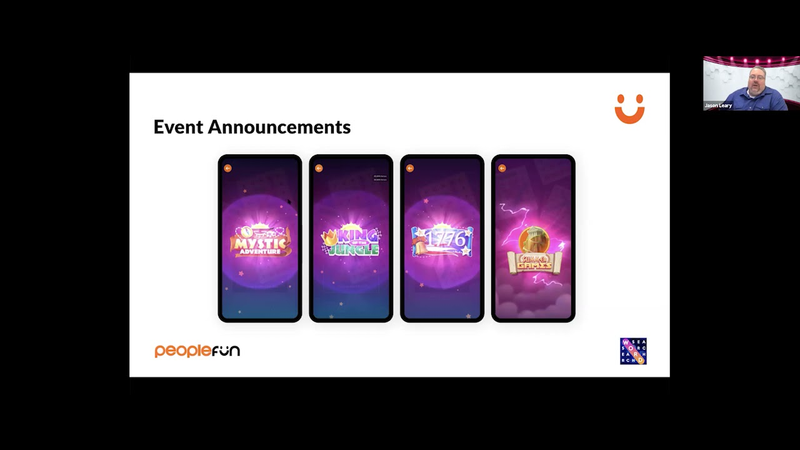
Modular Live Ops frameworks serve as a critical strategy for boosting weekday engagement and long-term retention in mobile gaming.
- Implementing modular Live Ops frameworks can drive a 16–20% lift in ad ARPDAU and a 21–25% increase in daily minutes played.
- Modular systems allow small teams to launch new events within a three-to-four-week production cycle while simultaneously developing core game features.
- Operational efficiency is achieved by utilizing consistent, re-skinable components that can be adapted to any game genre.
Ghost in the Machine: Authorial Voice in System Design, 'Frostpunk' & Beyond
The concept of authorial voice in game design posits that a creator’s worldview is inherently embedded within their work, manifesting not only through narrative, visuals, and audio but also through the underlying mechanics and system balance.
- Game mechanics are not neutral; they carry the authorial voice and worldview of the designer, meaning every systemic balance decision communicates a value judgment.
- In Frostpunk, the design team realized that balancing mechanics—such as the penalty for amputations—required careful ethical consideration, as purely functional math can inadvertently express a worldview the designer does not hold.
- Designers must be aware that players increasingly analyze games beyond surface-level narratives, interpreting the underlying systemic rules as a form of communication or ideological statement.