Europe reports and market data
Documents
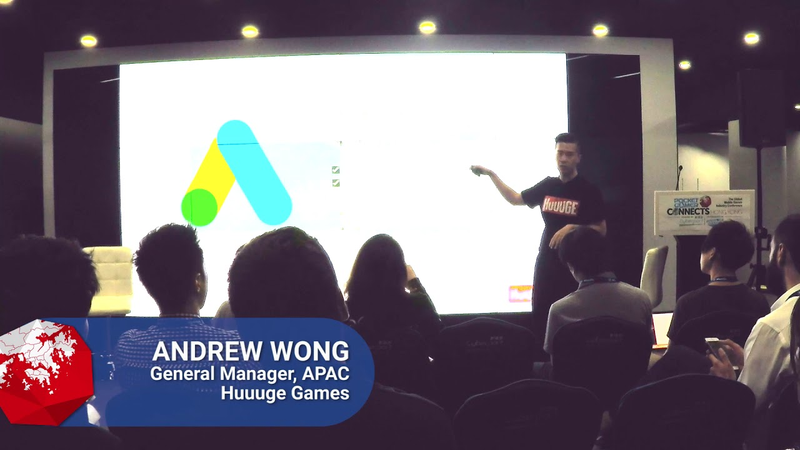
From Europe to Asia Pacific, From Social Casino to Casual Games; the Secret of User Acquisitions
This analysis examines the user acquisition strategies employed by Huuuge Games as the company expanded its operations from European markets into the Asia-Pacific (APAC) region.
- Culturalization of game assets—including visual themes, UI, and event messaging—can increase pay rates by over 100% compared to standard Western-style assets in the APAC market.
- Automated, machine-learning-based advertising tools like Google’s Universal App Campaigns and Facebook’s automated bidding outperform manual install-focused campaigns in long-term return on investment.
- Scaling user acquisition requires an initial period of capital investment and patience to allow algorithms to optimize for high-value users through features like 'max conversion' campaigns.
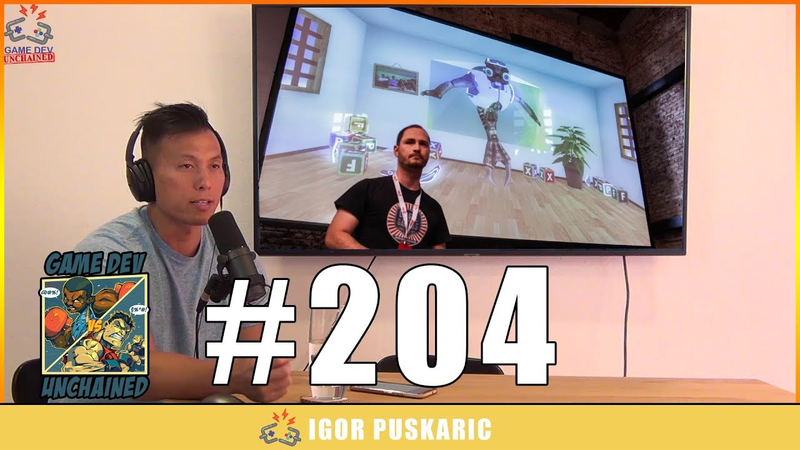
Winning with Few Resources featuring Igor Puskaric | Game Dev Unchained Episode 204
Success in the modern game industry is increasingly defined by individual resourcefulness and practical application rather than formal academic credentials.
- Individual resourcefulness and a portfolio-first approach are more effective for career success than formal academic credentials or geographic location.
- Developers should prioritize project-based learning, acquiring technical skills only as they are required to execute a specific creative vision.
- Cultivating a robust personal brand and proactive self-marketing allows independent developers to bypass traditional industry gatekeepers.


Action Plan to Strengthen Game Industry in Helsinki
The Action Plan to Strengthen the Game Industry in Helsinki serves as a strategic framework to foster a sustainable and competitive gaming ecosystem within the Helsinki-Uusimaa region.
- Helsinki serves as the primary hub for the Finnish game industry, hosting over 100 of the nation's 250 total game studios.
- The 2019–2020 action plan aims to transition the regional ecosystem from a phase of hyper-growth to a more sustainable, mature competitive model.
- The strategy addresses industry-wide talent shortages by leveraging public-private partnerships to attract global professionals and their families to the region.
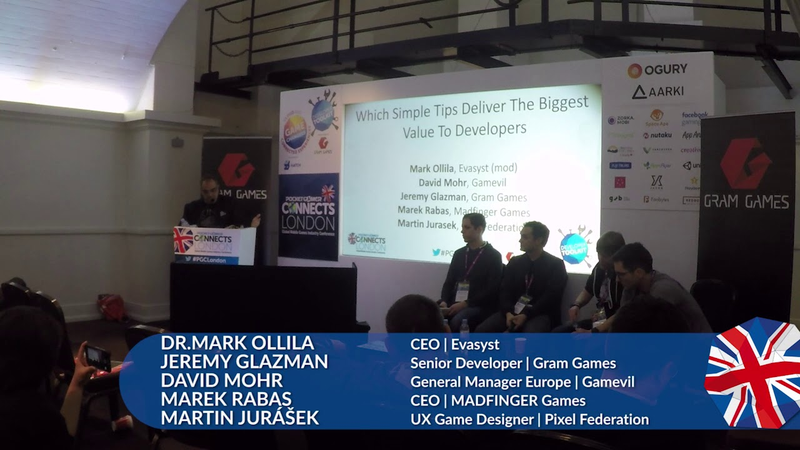
Which simple tips deliver the biggest value to developers
Early-stage game studios achieve the greatest value by prioritizing core development craft over the creation of proprietary technology.
- Prioritize core development craft over proprietary technology by utilizing established game engines and build systems to focus resources on iterative, player-centric design.
- Shift from rigid waterfall methodologies to flexible, autonomous team structures that enable rapid feedback loops and reduce the high costs of late-stage production adjustments.
- Integrate qualitative research and user experience design from the earliest stages of production to gain a deeper understanding of player behavior.
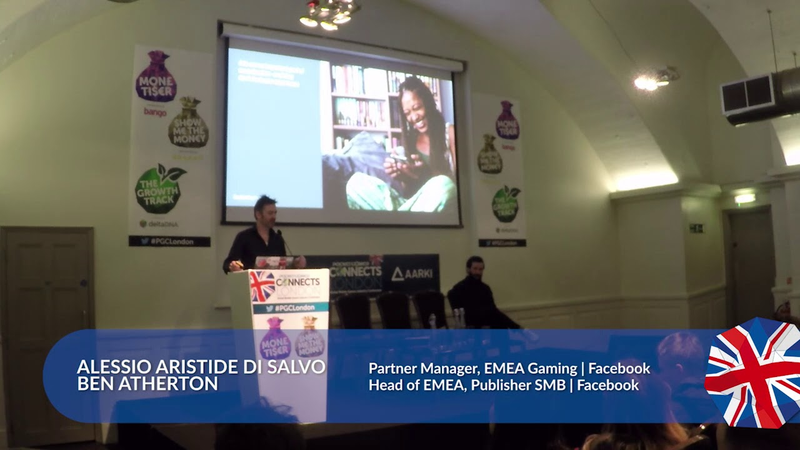
How to monetise with Facebook Audience Network
Facebook’s Audience Network provides a comprehensive ecosystem for mobile game developers to manage both user acquisition and monetization.
- Facebook Audience Network paid out $3.2 billion to publishers in 2017, leveraging data from 2.2 billion users across Facebook, Instagram, and Messenger.
- Developers implementing advanced optimization and bidding solutions have reported revenue growth ranging from 20% to 100%.
- Rewarded video is a primary monetization tool that consistently delivers high fill rates and competitive CPMs for mobile game developers.

What happens to the UK games industry after Brexit?
The UK games industry faces significant uncertainty regarding the long-term impacts of Brexit, with the primary challenge being a lack of clear policy direction from the government.
- The UK games industry faces significant investment and recruitment volatility due to a lack of clear government policy and ongoing political deadlock.
- Studios are increasingly establishing satellite offices within the European Union to mitigate risks related to data protection compliance and the loss of free movement.
- The industry is experiencing tangible operational friction, including the postponement of initial public offerings and increased difficulty in attracting highly skilled international talent.

THQ Nordic AB Acquires Warhorse Studios: Investor Presentation
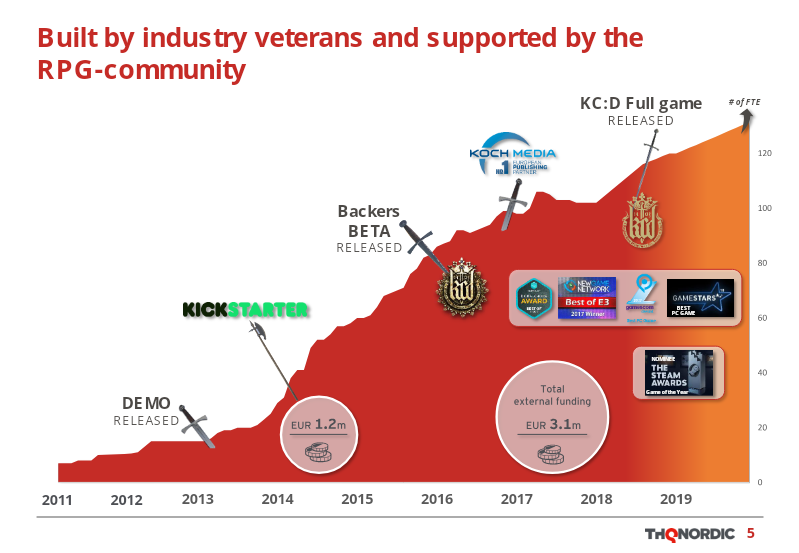
THQ Nordic AB finalized the acquisition of Warhorse Studios on February 13, 2019, to integrate the developer’s award-winning intellectual property and creative talent into its global portfolio.
- THQ Nordic AB acquired Warhorse Studios on February 13, 2019, for a total purchase price of EUR 42.8 million, consisting of EUR 40.4 million in cash and EUR 2.4 million in shares.
- Warhorse Studios reported strong 2018 financial performance with EUR 42.0 million in net revenue and an adjusted EBIT of EUR 27.8 million, reflecting a 61 percent EBIT margin.
- The acquisition was driven by the commercial success of Kingdom Come: Deliverance, which sold over 2 million units across PC, PlayStation 4, and Xbox One within its first year.

Level Design Saga: Creating Levels for Casual Games
The Saga model serves as the foundational framework for modern casual mobile game design, prioritizing linear progression, frequent content updates, and social integration to maximize long-term player retention.
- The Saga model optimizes long-term retention by utilizing a modular, linear progression framework that supports frequent content updates and social integration.
- Designers employ the ki-sho-ten-ketsu framework—introduce, train, twist, and conclude—to structure a difficulty rhythm that balances tutorials with increasing player-driven complexity.
- Effective level design requires a synthesis of creative intuition and quantitative analysis, using metrics like drop-off rates and average attempts per level to refine difficulty curves.
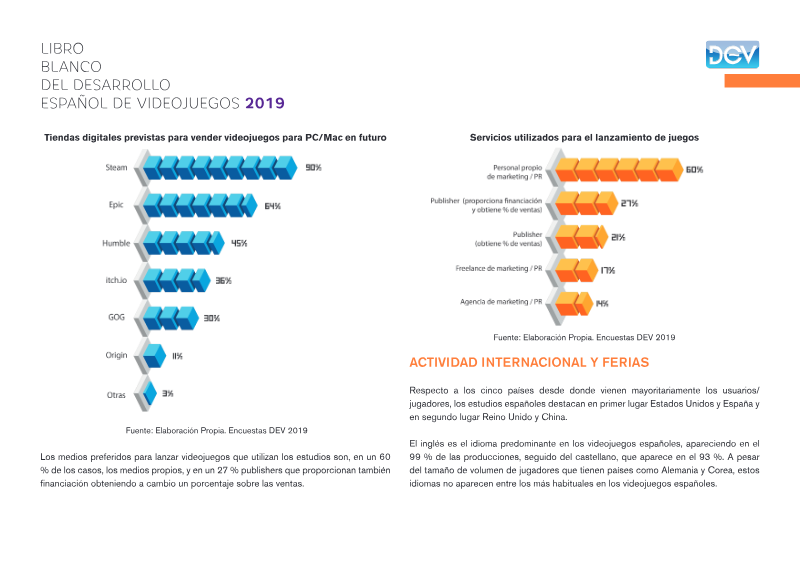

Libro Blanco del Desarrollo Español de Videojuegos 2019
The Spanish video game industry stands at a critical juncture, characterized by high creative potential and a robust talent pool that remains hampered by structural limitations and a lack of institutional consolidation.
- The Spanish video game industry is young, with 80% of companies less than 10 years old, and 61% of companies generating less than 200,000 euros annually. Only 3% of companies exceed 10 million euros per year, but they contribute 67% of the total annual revenue.
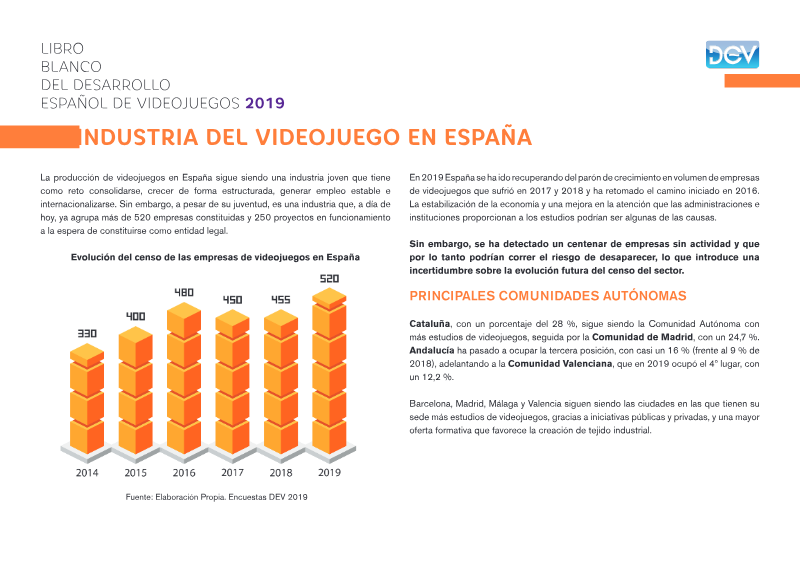
- In 2019, Spain's video game industry recovered from a growth stagnation in 2017-2018, now boasting over 520 established companies and 250 projects in development. However, a hundred inactive companies introduce uncertainty about future growth.
- Catalonia leads in the number of video game studios (28%), followed by Madrid (24.7%), and Andalusia (16%), which surpassed Valencia (12.2%) in 2019.

Czech Video Game Industry: PC, Console and Mobile Game Developers in Czech Republic 2019
The Czech video game industry has established itself as a high-growth, export-oriented pillar of the national digital economy.
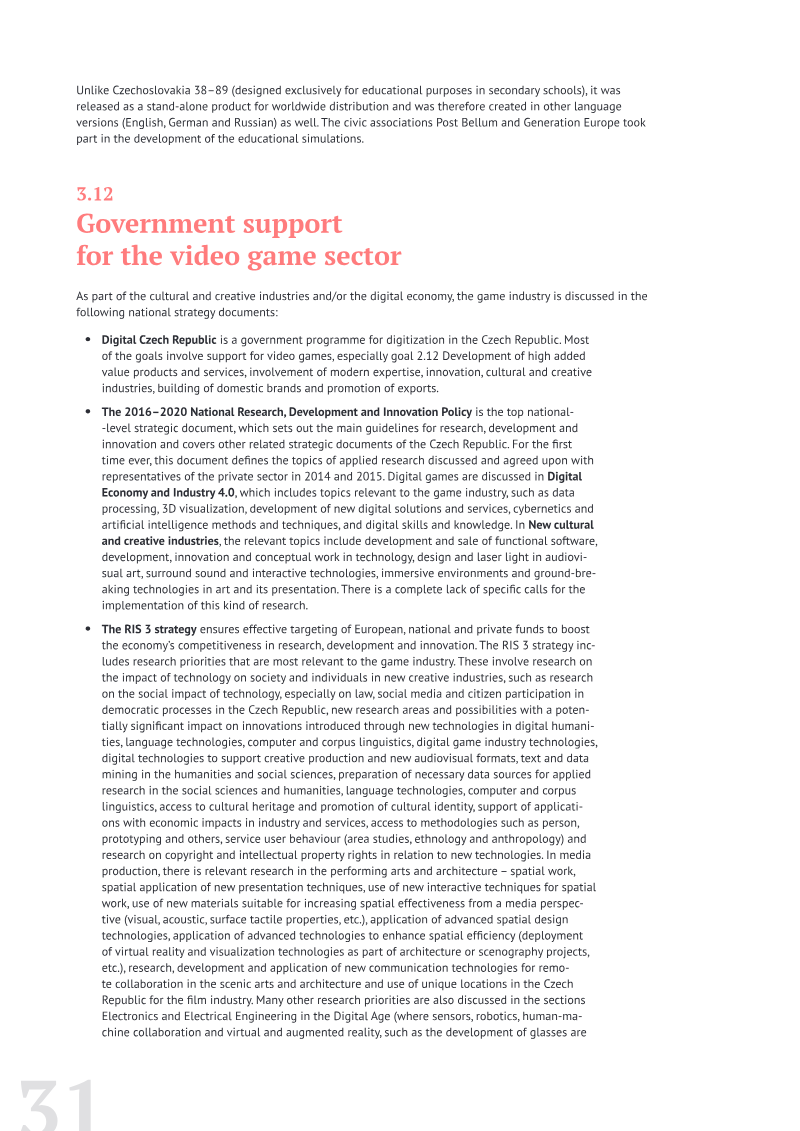
- The Czech video game industry, despite lacking government support, is a significant part of the digital economy, with Czech companies comprising roughly 10% of all game companies in Central and Eastern Europe and generating twice the revenue of the Czech film industry.
- In 2018, 31 games were created in the Czech Republic, contributing to a total of 136 games released by Czech studios between 2015 and 2018; PC and console game development (67%) dominates, though over half of studios also focus on mobile platforms (61%).
- The industry faces a major obstacle in the lack of skilled developers, with almost 1,500 individuals working in game development in 2018 (83% male), and over 60% of Czech game development companies experiencing labor shortages.
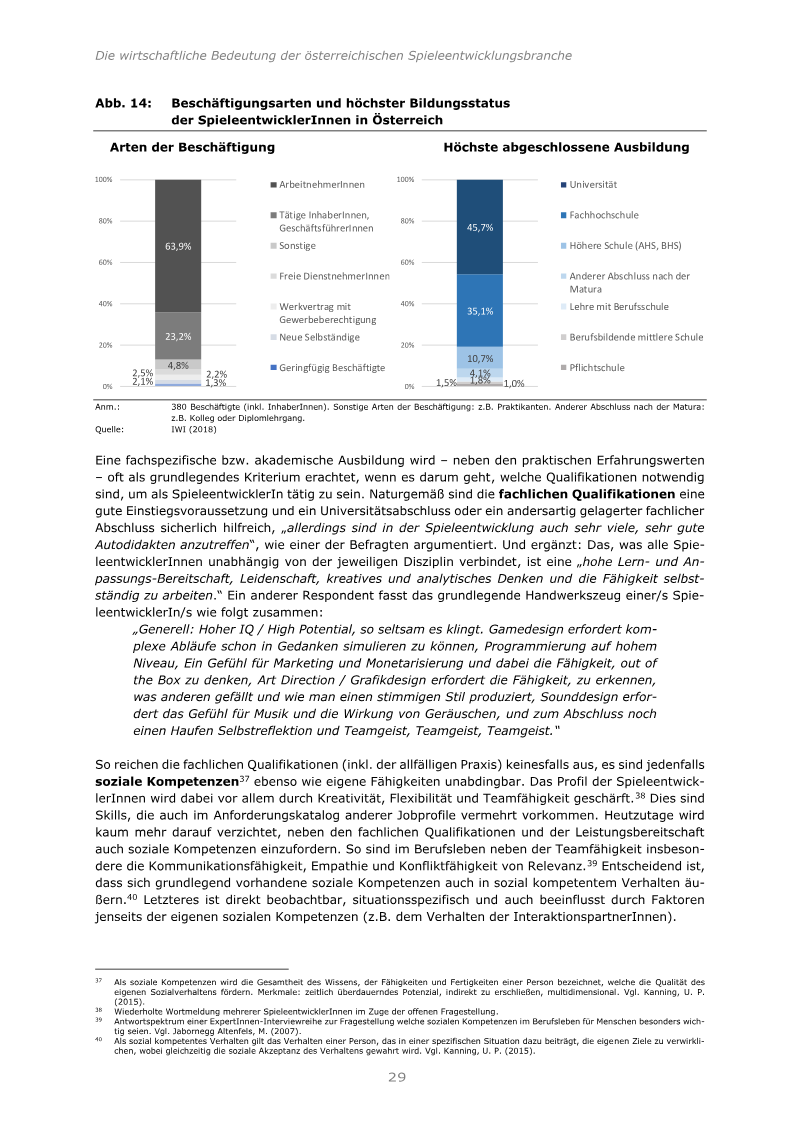
Die Wirtschaftliche Bedeutung Der Österreichischen Spieleentwicklungsbranche 2019
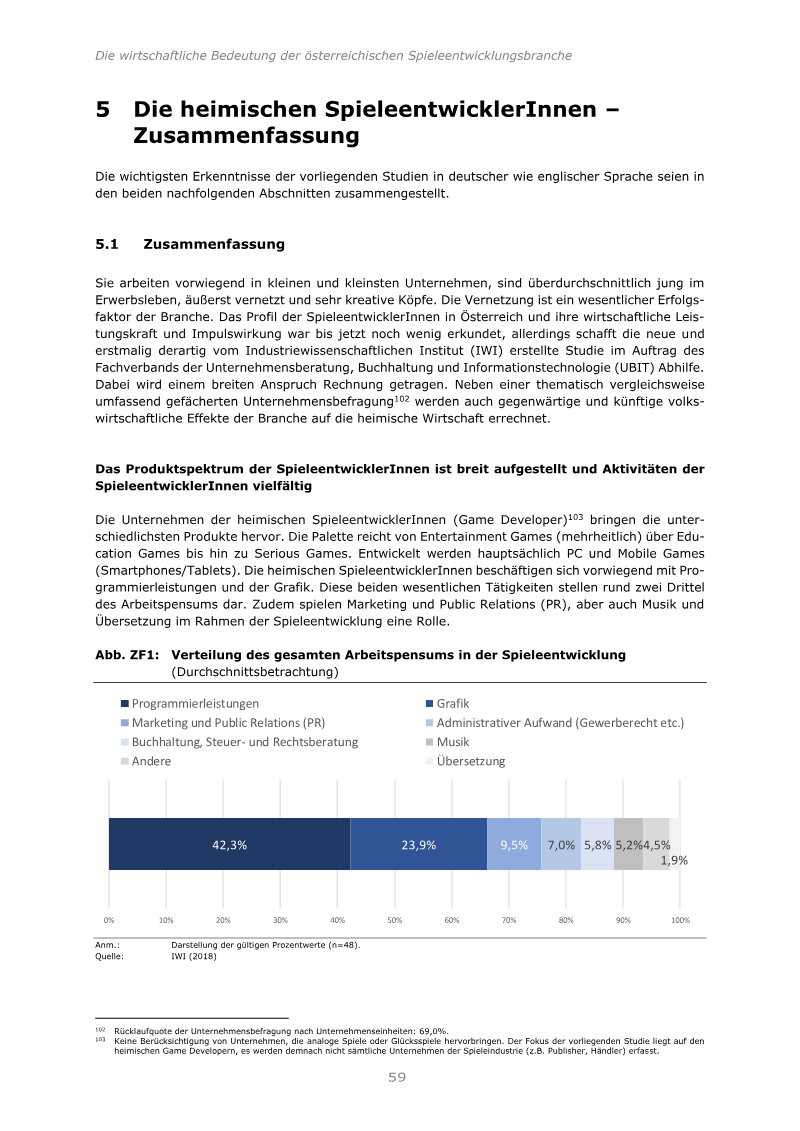
The Austrian game development industry serves as a high-growth, export-oriented sector characterized by a young, highly educated workforce and a concentration of small, agile enterprises primarily based in Vienna.
- The Austrian game development industry generated 24.1 million euros in revenue in 2017, with projections to reach 26.4 million euros by 2021. For every 1 euro of revenue generated by an Austrian game development company, an additional 1.11 euros of revenue is generated nationwide.
- Four out of ten Austrian game developers (37.5%) use Augmented Reality (AR), 34.4% use Virtual Reality (VR), and 28.1% use both technologies in their games. Austrian developers use VR more than their German counterparts, where 24% use AR and/or VR.
- Personnel costs account for seven out of ten euros (70%) of total costs for an average Austrian game development company, similar to the 68% found in a comparable study by Hamburg Media School.

Romanian Game Development Industry Report 2019
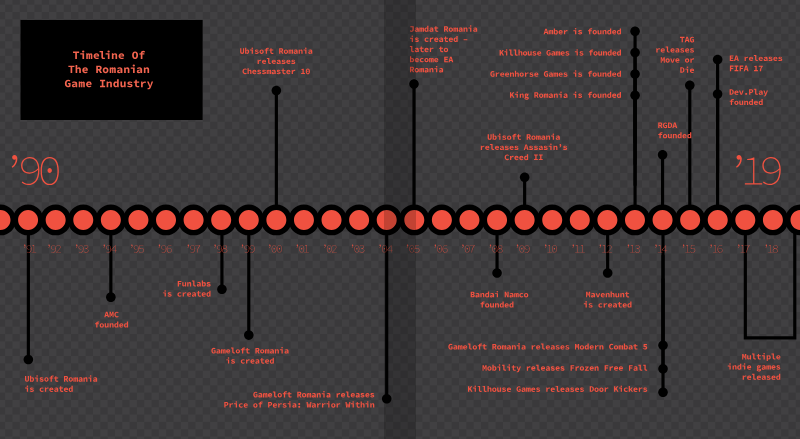
The 2019 Romanian Game Development Industry Report establishes that Romania’s gaming sector is rapidly maturing, delivering a notable economic contribution and expanding its global footprint.
- The Romanian game development industry generated $188.5 million in 2018, representing a 19.2% year-over-year growth.
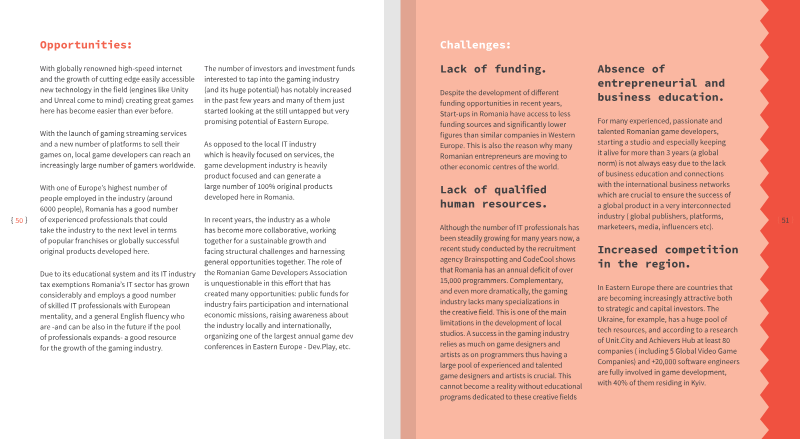
- The sector employs over 6,000 professionals across approximately 103 active entities, primarily concentrated in Bucharest, Cluj-Napoca, and Timișoara.
- 77% of industry firms focus exclusively on game development, while the remainder provide ancillary services like quality assurance, testing, and publishing for international clients.