1 free read left. Create a free account for unlimited reading + AI research.
Create free account
Diversity in Gaming | Addressing Inequality for Women
Key insights
6 takeaways- 01Addressing the gender diversity gap requires tackling systemic issues at the source, specifically by mitigating the impact of inadequate early education in technical fields and entrenched industry stereotypes.
- 02Recruitment strategies must shift from narrow, legacy-based hiring criteria to prioritizing transferable skills to overcome systemic supply-side barriers and unconscious bias in executive search networks.
- 03Achieving gender parity requires viewing diversity as a core business imperative, as recruiting female talent requires approximately 30% more interaction than traditional hiring processes.
- 04Organizations must move beyond performative gestures by holding managers directly accountable for the retention and advancement of women rather than relying on superficial mentoring programs.
- 05The gaming industry’s reputation for toxicity and harassment acts as a primary barrier to entry, necessitating the implementation of robust, independently enforced workplace policies to ensure cultural reform.
- 06Companies that fail to align their corporate rhetoric with demonstrable, value-driven actions risk losing their competitive advantage as modern talent increasingly favors inclusive, emotionally intelligent work environments.
Ask AI about this video
Transcript
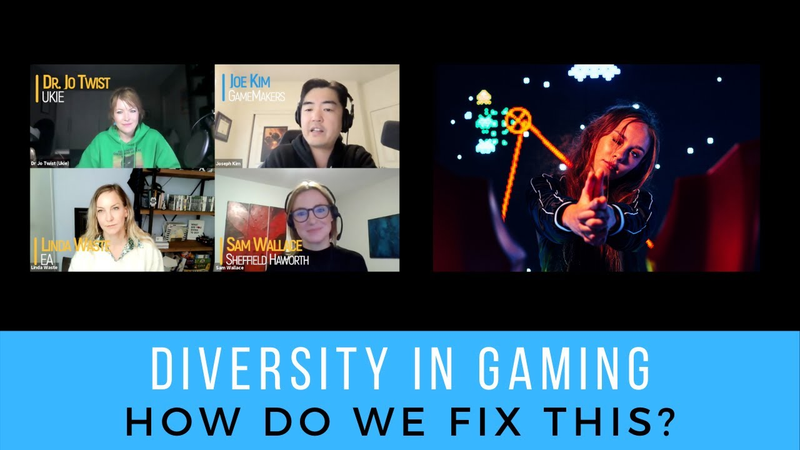
hey everybody and welcome today we're going to be talking about a very important important topic that not only impacts the video games industry but many other industries as well and that is the issue of diversity in the workplace more specifically we will focus on gender diversity with respect to women in the video games industry but we should certainly talk about other diversity topics in due time as well on future panels but for today to speak on this issue we have three incredible speakers first we have dr joe twist ceo of yuki the uk interactive entertainment a trade body for games in internet interactive entertainment business in the uk secondly sam wallace director of executive search firm sheffield howarth and third linda waste senior director talent acquisition inclusion and diversity and employer branding at electronic arts
thanks very much for joining me today um to be here just to kind of jump right in i thought we could start with this first topic which is essentially why aren't there more women in the gaming industry and maybe we could start with you dr joe what's what's going on okay well uh thank you very much for for inviting me on this i i think there's a number of issues that are going on that i think are sort of fairly well known and i'm going to speak from from a uk perspective which is what i know best i mean first of all we all know that making games and being in games businesses requires so many different skill sets you know whether that be a programming or business skills or arts to technical creative and business skills which are also technical and creative the accountants will tell me um but you know in in the uk in particular we haven't really had a very good track record of teaching computer science and programming and that kind of literacy at a young enough stage and also in a compelling way and
and encouraging young people uh to get this sort of foundational computational thinking literacy so that they don't have these stereotypes about computer science or the kinds of careers that it can lead to so i think there are some systemic problems just in in the education system and that may may be different across the world i know that we in the early days we ran a campaign to get computer science actually onto the high school curriculum and you know if we we looked at israel and places like that where they were doing computer science really well and i think critically in the uk and you know likewise with other territories combining that with art humanities and creativity is critical and getting the awareness of games as an industry let alone as a career path is so important we at uk doing loads of work in education we run a 500 people strong video game ambassadors scheme and we want to get as many different faces in front of people you know we all know that kids kind of relate to
different kinds of people with different stories and backgrounds so i think there's a there's an issue with the supply you know of people coming through into our industry i think the industry is doing pretty well to to to try and address that that's number one i'll stop there for a moment what about you linda i agree um with the you know especially when it comes into the tech hiring you know it it's surprising sometimes for people to hear how many kind of software engineers a gaming company needs um what what percentage of our overall hires are actually in the tech space it's quite a lot and we in the us and in the uk we haven't seen an increase in women graduating with these degrees despite the pushes all the things that both countries and many other countries including canada you know where we operate as well you know there's been a lot of work that's been done to try to get women girls to stay in stem and to go into these areas and we still haven't seen the graduation rates increase by any
significant amount so there's definitely a supply problem definitely i think on the flip side of that where um we really have to challenge ourselves in is in some of the legacy thinking about what what what do you need to have in your background in order to work in gaming and first and foremost if you start looking for people to fill a job and your first requirement is that they already work in gaming you're kind of doing it wrong right from the start because you're working from a pool of candidates that's inherently non-diverse to begin with so you have to start to think about relatable skills in other fields um in order to try to bring an influx of different talent into the business and and by the way that has incredibly positive knock-on effects with creativity and innovation and all the other things that are important to a gaming company and sam yeah i mean i i agree absolutely that from a sort of systemic perspective the the getting the younger generation actively engaged in computer science earlier on is such
an important thing and it's something that i think across the uk as well as in the us it's being um there's more intentionality around making that happen but it definitely means that there's a supply challenge coming in um and i think to linda's point there there's this preconception that um you have to have industry experience in order to be successful in the industry and i think that that can be off-putting and so there's not necessarily the sort of looking up and across to gaming from women executives who haven't been in that industry it's not a natural path necessarily and so i think that that's something that that needs to be addressed as well which is um making that something that is a decision that women can make and that doesn't feel unusual whereas at the moment i think it's kind of it feels like an unusual turn in a career if you haven't been there before right so it does sound like it's a serious problem both you know supply side as well as on the demand hiring side and i want to actually maybe dig a little bit further on the on
the hiring side in terms of is there an unconscious bias in hiring or even in promotions so and just to kind of highlight the point that i'm trying to make there was i'm not sure if you're familiar with chama paula hapatia who's like this billionaire investor but he actually conducted a study on the venture capital industry that showed that there was you know a lot of you know white males in venture capital there wasn't a lot of diversity and so he himself kind of changed his hiring practices in one of the interviews he talks about how for his firm he kind of changed the hiring practice so that it you really couldn't see who the candidates were to kind of eliminate unconscious bias and in fact then he wound up hiring more diverse people to his firm and so wondering if you guys could talk about this notion of unconscious bias whether you know and maybe it's just not even intentional but that because there might be preconceived notions of the type of person that we're hiring for that we may not actually be hiring against the specific skill that
would actually allow the company to hire a better candidate or not what do you guys think about that maybe starting with you dr joe yeah i mean unconscious bias exists in everybody and it's unconscious and yeah that's the problem with it and um you know and in all walks of life in all kinds of industries and i would say you know um people have tried uh that there's so many different kinds of unconscious buyers training um or conscious recruiting you know and i think it's is is very much about um offering that guidance to companies you know we we we we this year only this year it feels like 10 years ago launched um our first ever census of the uk games industry which is the first uh study of this scale it's like three thousand two hundred people who filled it out and there were some really interesting findings in there particularly around seniority positions and age and demographics and social demographics um but i think the unconscious bias it can be counted by sharing of best practice by
training um by highlighting them making these things conscious but companies need that guidance and when we launched the census we also launched a raise the game pledge um which you know has three pillars and the first one is the guidance and and really focusing on how do you widen your pool of recruitment and again that's like really you know it's hard work to do that and it can be difficult um but when you get it right and when companies are given that guidance and you're learning from each other it really really pays off dividends and i think that's really critical importance and i think at this moment in time where we're seeing so many people unfortunately be hit by by uh covert in terms of their industries unlike games you know we've got so many potential women in particular who might have been displaced in other sectors like film or television or whatever and actually they've got so many of these skill sets so i think there are different techniques so long as you just don't leave it down to artificial intelligence
because we know how that ends an excellent excellent piece of and advice how do you guys think about this at ea this is all i think about ea honestly this is what i do this is what i do for a living and i and um i'm very fortunate that when i came to ea earlier this year even before kind of all the tumultuousness in the us around race and diversity um i had asked for for this job i had said i i want to do this we have a huge opportunity here we're not yet doing it right um it's a journey and we're on it just like a lot of other gaming companies and a lot of other companies all over the world right i think everything dr joe said about conscious because i love the phrase conscious recruiting by the way i hope you don't mind if i borrow it um when i'm talking to people i probably stole it from someone else i think it's brilliant um we we have to look at this there's the only way to do this is to take a serious long hard look at your hiring practices
and to think very very consciously about what you're doing at every moment in the process where you're making a decision about a candidate is this candidate moving forward or am i passing on them why we can't let people just use their gut which is what happens because i think dr joe said this we're people we are people we have unconscious bias we all do and i tell the recruiters this all the time like what power you wield you're the person who decides whether this candidate gets in front of that manager and we were talking yesterday in a team meeting and there was some stat that someone pulled and i i will admit that i don't know where this stack came from but i believe it to be true a recruiter might look at a resume for about six to ten seconds before they make a decision on whether or not this person is the right person like that has to change and think about it maybe a manager looks at it for 10 seconds so now we've taken 20 seconds to decide someone's fate on a job that's human nature that's not
an ea problem that's a human problem and we as companies have to solve that human problem we have to educate people how do you look at a resume what should you be looking at and how should you be interpreting that information so that you can make the right decision about these candidates where you're looking at applicable relatable skills not i've always done it this way and this is the same job description i've used the last five years and this is what i need and i'm not going to compromise on my requirements well your requirements are biased and they're full of legacy and they often don't even like relate to on-the-job performance success so there's a bunch of things in the system that are broken that have to be fixed and if companies aren't going to look at that they're not going to have success no matter what pledges they make public statements they make how many people they're going to hire what the doesn't matter don't care if you're not actually changing how you're fundamentally looking at your hiring process so as you can see i'm very passionate
about it that's great and sam from an executive search perspective i know you guys are making very high level placements in the games industry but is there anything that you can do or are you getting clients who are asking you to also consider diversity yeah i mean i think several things um and and one of the things i'm really passionate about is thinking about the search industry's responsibility when we think about diversity because what we what we rely on is the strength of our networks to be able to access the best talent for the work that we do um and if you take a rough glance at the executive search industry particularly in the tech space it's predominantly white men um and that's a big generalization people might argue with me on that but but my view predominantly white men and they build their networks with people that are like them and so the people that get the first call are people who are
keeping that gender and that diversity and balance in place at the top of the house and so i think there's a place for female executive search leaders and just more intention within the search business to think about diversity and it's definitely the forefront um i think the conversation that we often have is that the intention is there but the ability sort of the emotional intelligence to get what needs to be done done isn't there so they you know we get you know clients will come to us and say that we have to have a diverse slate that's ab that's an absolute um but then when it comes down to making a decision about diverse candidates they're less able to find ways to make the different fit into the organization because they've hired in a certain way for the longest time that then when somebody different comes in um they don't know how to either make the decision and and take that uncomfortable decision for something different and then the other piece is the assimilation into the business they don't know necessarily how to make those people successful um and so
it's there's sort of so much of the top of the house in terms of training and and educating to think about how to make diversity um better easier for the organization right and maybe the next question i can ask you guys about is that for so for example we've talked about a potential supply and demand problem but i think the other issue may just be having appropriate role models and so when people are coming up in the industry to have somebody to identify with and so when we think about women in leadership positions the gaming companies uh you know sam you you mentioned there's a lot of you know white males there what should we do or how should we think about increasing women leadership at gaming studios and again maybe starting with you dr joe well this is a i think quite a big problem when we looked at the data in the census and it's a 62-page report available on wikipedia i'll provide a link for people um but you know what was really interesting again is this uh is is this sort of um retention problem
full stop uh two thirds of the uk industry are 35 and under which is extraordinarily young and that they tend to be obviously in in junior roles and then when you look at it in terms of gender you know it's it's really bad in terms of the senior leaders and you know people talk about mentoring schemes but i think sometimes people use mentoring as a blunt instrument i i i when i hear people talking about mentoring it's often quite patronizing and you know that there's sort of some i love mentoring i think mentoring is really important but i think the way some people treat mentoring it's quite patronizing and makes some women feel at the beginning of their career that unless they get mentoring they're not going to succeed and that's a narrative that i strongly push back against uh i mean i've had a library of people in my life uh that i i i pull upon and i i call upon and i'll shout and scream at them and then i'm very professional on screen you know but you know i think it's mentoring is important but it's really that support and and that
this sort of friendship and you know other kinds of leadership support and training and i don't think we're very good at that at the moment in the uk um and again i think it's it's not necessarily the case you've got to give people choice of people that they want to talk to to get guidance and i think it's really it's champions i prefer the word champions you know people who champion you uh or people who champion a particular kind of need to to really make that change at the top and and that you know we all know that organizations the change needs to come from the top as well as from the bottom you know when i joined uh yuki in 2012 i had one woman on my board of 12 people i've now got a board of 26 people and it is more or less more or less half half male female and more diverse than it ever was and that has taken a long time and hard work but when you see those senior leaders around that you know as the the board of yuki representing diversity representing
different skill sets different businesses then that is inspiring i hope so it's a very complicated one again but i think you know mentorship or or support programs um championing people people always push back against lists you know why do we all have these lists of top 100 blah blah blah blah they're important they are important because actually a good leader will look through those lists we'll go meet those people we'll try and reach out to them we'll keep an eye on their progress and and actually they're really good hot talent you know so why wouldn't you have these lists and profile these success stories from from from women coming up uh the ranks and people who are already there you know siobhan ready in the uk is a fantastic role model so people like debbie besswick so the more that we can champion and the more that we can be champions for people i think the better linda yeah there's there's a lot there i think in terms of how we figure out
you know what the career progression is and the career advancement i think you have to be you just have to be intentional about it um in some way shape or form and you've got to hold people accountable so the idea that your leadership team is the one pushing all of this and they're modeling it it's absolutely critical you know i've gone over the course of my career been in the advertising industry before the gaming industry another industry sort of fraught with diversity issues right and and i've seen a lot of strategies get you know attempted for all of this you know whether it's hiring or retention or promotion um and the one thing i think is really key is you have to look at the two things together you know you really can't isolate these things you have to look at representation as a company you have to take a look at what is our current representation and where do we need to get and then you take a look at those things together you look at your hiring rate your retention rate and you hold managers accountable for both um you know one of the things that i'm sure happens to sam happens to me it's like we need more diversity so you know recruiting go solve that
you know that's not going to solve it if you're not doing the things that you need to do to to make to grow retain and advance the people that you have so you know having that intentional approach knowing who those people are within your company that you need to be intentional that was really important um you know how many leaders actually know like these are the people that i'm keeping an eye on because you know we've got the next time i have a job opening i'm going to look here first before i look outside you know for example and we try to drive that in recruiting we try to drive that conversation at the very beginning is there anyone we should be thinking about who should we be talking to and we'll scour especially when it comes to leadership roles at a certain level and above we'll start talking to our hr partners who's here in the company that we need to be um keeping an eye on so i think that's incredibly important and those role models are important you know i'm really you know we're very fortunate and i say fortunate because we've had laura miele with us for 20 years now i'm our head of studio
um but we're very intentional about putting her in that role and she's run publishing for us for many years and laura is an outstanding studio leader um and that you know makes a difference damn yeah i mean i i think it is it's finding that balance between making sure that as executives who are coming from outside the companies come in that they get to see some kind of gender representation across the organization i think that's an important piece of an interview and selection process the challenge with that is if it doesn't exist or it's created falsely then you bring these people in they have an expectation that they'll be working with a diverse group of people and if that's if it's been a little bit of a dog and pony show to to make the experience real for the candidate but it isn't realized when they get into the role then that can be a real problem um i think one of the other things so we've been doing some research in this space recently and one thing that came up um and i think this plays into it is the idea that if you if you haven't been in the industry you
can't be in the industry um which is which is a little bit sort of back to the topic we talked about before but it it's thinking about the gaming industry as analogous to film and television right if you haven't made a tv show before then you can't suddenly get into tv if you haven't worked in a gaming company before you can't suddenly get into that and i think that perception has to change and again that that's going to be by bringing more diversity into the industry and it's such right you know the most successful horrors and the really scaling uk-based companies you know you talk to them and they most of the most of my team have come from outside of the games industry when i joined when i joined i thought this was a really weird term that people kind of said what's it like coming from outside the games industry and i thought that i don't i don't hear this in other sections no but you know the most successful hires and companies they they are hiring producers or product managers who have come from other other other
sectors diversity is two-dimensional you know it's it's it's not just about who you are and who you represent what you represent it is also about your experience and your perspective and that that means if you've got someone who's dealt with you know a number of different kind of sectors in product management or in a role brilliant well i know when linda and i were speaking um previously one thing you said which i thought was brilliant was like there are some roles where you have to have gaming experience absolutely and when you look at those positions right then then that then then there's a yes you must have experience of a specific nature to do a specific job but when you're looking at let's just take hr for example what is it about hr that requires gaming experience now you know you could you could argue the case that it does but fundamentally the skills of hr and managing an hr team effectively it's not about the gaming it's about the company it's about culture it's about all of those other really important
things and so maybe speaking to this topic about role models and in particular about getting women more exposure for example at talks panels things of that nature i'm wondering if we could talk about that because for example i think that there may be an unconscious bias and even with myself like i'm trying to change in the sense that you know a youtube comment i got uh you know like a few months ago was hey you never have any women on any of your your youtube videos what's going on and so then i have to think about well what maybe there's something i'm doing wrong right and so i am trying to make a more conscious effort to think about it and to improve but i also just to be honest i do think it is a little bit harder i mean not not with the three of you but just in general trying to get like for example like in a slack
in some slack channels i'm in some guys could be talking about something and i'm like hey instead of just talking about let's just jump on a video and talk about it and they're like oh okay yeah yeah but i think with and maybe it's like the approach because it's too casual it's just to like yeah yeah let's just go do this but i do think for me personally it has been a little bit harder not that it's not worth it i think it's absolutely worth it to put in the effort and to think about it but maybe we could talk about this issue of trying to ensure that whether it's a panel or webinar is that women get more exposure to those things what can we do uh dr joe well of course it's entirely unacceptable not to be thinking about this i'm not saying you you you i agree i i need to do a better job 100 percent but but i think and and i'm sure you know this is going to be echoed we're i think a lot of people particularly women are fed up of being the go-to token person who is supposed to know all the networks and doing your labor for you um i had a
stand-up kind of shout at someone uh last year who is helping to pull together a conference by a legal firm which will remain unnameless and you know i pointed out and so did several women uh point out to me that the whole day of speakers was they had one woman and and they said well it's legal no no that's not that's not this is an industry conference not a legal conference and um and so the person who was helping sort of came in with like a to spare and ask me he said i don't know these women i don't know the women you know the women it's like this is not acceptable you know i am not going to do your job for you you know i know the women not because i'm a woman and inherently women magnetized toward women it's not just how it works i i have gone out i've looked at those lists i've met those people i've gone and tried to make you know network i have built my network up and that's why i know them so you go do that in a week because i'm not helping you and i didn't help them because you know we cannot and you hear
this all the time we know you know even approaching women to be uh putting themselves up for election for my board um we all know the the the the answers that people will give it's the same with uh applying for a job and writing your cv or looking at a job description and going well i don't have 100 of that so i'm not going to reply you know we know that it's a well-trodden past so it does take that that extra mile to say no no no if you just pop onto this podcast with me now it's fine you don't need to you know it's your very presence is brilliant and you're very the very reason i'm asking you is because you have a lot to say so i think there's part that kind of um i don't want to stereotype women but but in my experience there is still that sort of i want to give you 100 to be on your panel or be on your board and i can't i can't right now i've got too many other things i need like running my business uh and then the other thing is the emotional or the the labor that sometimes is overloaded on those women or other
kind of people diverse people who seem to be the go-to people and they're like they're trying to get their day job done as well yeah linda yeah you know i i have a lot of passion around you know trying to stop the outsourcing of diversity to the afflicted populations um you know let's go solve your own problem ladies um this happens in the us when it comes to african-american black talent latinx talent you know we have a particular unique mix of challenges when it comes to diversity here in the us but it is this outsourcing right you know it's dr joe go call these people for me because you're a woman and you know them oh let me go to my ergs they'll help me let me go to my recruiting team it's your job to solve it oh wait no wait let me go to the dni team like what are they what are they going to do and at the end of the day if you're a manager you own it and if you don't take responsibility for owning it and do what you're doing too which is right take a cold hard look in the mirror like
i am a woman and i still have to like i but i in the u.s like i am a privileged white woman so i have to look at my own place in all of this differently i have to look in the mirror and decide what it is that i'm going to unlearn in order to be part of the solution here you know and that's what you're the process you're going through as well and if managers don't really take it on or if the leadership is not asking them to do this and by the way it's not just the ask it's providing the tools i think dr joe mentioned earlier training we need to do both we have to have respect for the fact that everyone's on a journey and we have to provide them the education and the tools to think about things differently so that they can unlearn those things those behaviors but at the end of the day what we've got to try to do almost and i don't know that we'll ever get there but there there's a idealistic sort of future scenario where everyone owns diversity and you don't even need an outside diversity separate diversity inclusion team because you've inculcated that thinking that behavior and that expectation into your culture so deeply that everyone gets it
so that's that you know to me it really is are you willing are you willing to you know put your money where your mouth is and and walk the talk by acknowledging your unconscious bias respecting the fact that you're human as an individual and that you wield great power when you make decisions about other human beings and how you're going to show up in that moment that's the real test of what i think a real true leader that's going to be successful in the future by the way because this is the way things are going it might be slow it might be hard it might be a lot of us railing about all of these things but i do believe this is the way the world is going and i think those that don't do this will be left behind eventually and it's it's a really important point about um you know the sort of edi is everyone's responsibility you know i keep getting asking my team you know who who's who's who's whose job is it edi it's like it's all of your job
people instinctively need someone to be leading that and and sort of do but it's like i always use the analogy in the early days of my career at bbc i was in uh like multi-platform commissioning and uh and digital would always be the thing that was tagged on you know to a tv program as opposed to thinking about it as a content experience and a concept you know and so it's kind of like that when i think we're we're moving away slowly moving away from that um a bit that's how i see edi as well you still need someone who's going to ultimately kind of direct things and say right you know as you would as a manager but you know it's everyone's responsibility and and and hopefully yeah we won't need these these these titles to that i'm sorry let me just uh and i'll stop but i i think to that you know there's a role to be played in that education front and i think that that's where we really need to focus if your your dni programs need to educate people to do
this work rather than do it for you yeah and that's that at the end of the day that's what your dei or whatever you call it should be doing as in addition to your recruiting team like i look at our recruiting team and the talent acquisition i tell people all the time your job now is to educate give them the information so that they can make better decisions yeah well and i think that's such a key point is about having that information so some of the research that we've done um when we've been engaging talent we look at how much time and how many points of contact we have to have with an individual to engage them and take them through a process and and what we found is it takes about 30 percent more interactions with female candidates to get them to the final placement and and that's a really important data point and it's again this is sort of back to the point about training and educating it's an important data point because just because a candidate picks up the phone first and responds with a positive yeah i'm interested in that role moving forward it doesn't mean
that we've spent enough time in the market to find all of the right candidates and if we know that it takes that much more interaction to engage female candidates then we have to educate the hiring managers and we have to educate the teams about the process and the time that it takes and the time that needs to be invested i also want to see you know i want to see more um kind of panels where we've got diverse people but particularly women talking about not talking about talent and not talking about skills and not talking about diversity but talking about business plans talking about projections talking about you know really hard business stuff again i sort of shouted down i didn't shout i do shout sometimes but i didn't shout this person but i really railed against this conference organizer who who you know said oh joe you can talk about skills and talent and i said are you saying that because you think i'm naturally a nurturing person because i'm a woman and that might be my own bias coming in but my counterpart in another trade body
um was there to talk about tax relief and and scale-ups and business and i'm like i would rather talk about those things right why what's the basis of the decision because we have so many more programs that are doing that and blah blah blah so you know i'd love to see it it's it's like not even acknowledging that actually this happens to be an all-female panel and we're talking about really hard hitting business issues you know it's that kind of world i want to see yeah but i do think that the education piece could be very valuable so even in my case as i mentioned it it required somebody to like call me out to then make me think oh yeah actually i've i'm i'm not thinking about it enough and i think you know uh especially if you are responding you know if you're organizing a big conference or if you you know if you have control over a platform like maybe not so much the youtube channel which is more niche but the deconstructor podcast reaches a you know large number of people and is very influential so i think to the extent that if you are in one of those
positions having that education so that we think about the responsibility that we have i think that would certainly help and at least it has for me but the power dynamic it's about power right when you have reach you have power when you are a manager you have power when you're a recruiter you have power like we talk about this all the time when it comes to all the isms that come into play in the recruiting process and all those unconscious biases that come into play it you know you have a responsibility to again take that look in the mirror and really decide how you're going to show up right and now kind of shifting to a potentially sensitive topic i wanted to talk about what i'm sensing as kind of a politicalization of diversity and this kind of takes a form of like what i'm this is just my own opinion but what i sense is kind of anti-woke messaging and some degree movement against political correctness and sensitivity and movement against cancel culture and
again not to get too political but it's also in my opinion to some degree also manifested in support for you know president trump whether whether you're pro against president trump but he kind of represents in my opinion a shield against political correctness so i wanted to like i want to hear your opinions in terms of what you would say against the people out there who would argue that the movement for diversity has gone too far and this again in my experience i'm kind of sensing this this you know kind of anti-movement as we're trying to also now broaden the message about diversity and and that kind of thing and so i guess two questions one are you also sensing a similar movement or is this just me because i'm also just like hearing from from folks and i i think i mentioned some of the comments uh before we start recording that i'm hearing but then how would you respond to the
the anti-woke movement and starting with you dr joe walk and move on block and move on honestly um i mean i think this is the the world we live in it's great to see people being far more politically engaged than they ever were i did worry in 2016 with the american elections and the referendum in the uk that people might just not uh vote anymore um but uh but i think people have been much more political much more politically active which is fantastic you know we have social media we have these platforms that really amplify these voices uh but you know what i learned a long time ago not to delve deep into that murky world um and i just do what i do because i know it's the right thing to do and i know we're not an equal footing we don't even have equal pay we are not on the right footing we know that the creativity and diversity is the absolute engine of innovation right and we know that that comes from diverse uh representation we know that our products
our games do not even you know we've got a three billion uh global game-playing audience but what about the whole african continent what about the whole of the indian continent what about the absolute potential for wonderful games to be made in those territories in those places we do not have equality i will block and move on if anyone thinks it's gone too far um and uh you know that's my view well i think i kind of alluded to this earlier i think those individuals will will be left behind eventually if they hang on to that antiquated thinking um there is you know still a serious amount of work that that we need to do and and when we look at something like you know who plays our games for example at ea when i joined ea i was talking to my family and i realized that my dad was on one of our platforms with pogo and he's like 78 and my son was 16 at the time was playing nhl and you know other games that and star
wars games so even in my own family there was this incredible range of age diversity you know uh in our players and we have a you know we have to produce games that are engaging for them that feel safe for them that are creative interesting that speak to them you know the world that people live in when they're in their games needs to reflect you know what's motivating for them and exciting for them and engaging for them and inclusive for them and if we don't have employees working on those games and developing those games that bring this different thought and experiences to the table we won't deliver for our players and at the end of the day it's a business imperative and um the numbers are very clear so i i i i can't even accept the the notion that we've gone too far you know um this is the last gasp right and i think about this politically and i tell myself this and perhaps it's
because i i have this idealism that i i i'm stubborn about but even in the united states with the election and the fact that like i mean i still have to grapple with the number of people that voted for trump which still talks amazes me that 71 million americans actually thought that was a good decision um but i do feel palpable last gasp of this mentality this is people who are afraid you know when you're saying that this has gone too far it's because you're afraid of losing power you're afraid of not getting control anymore you may not identify it that way consciously for yourself but somewhere subconsciously fear is the motivator for that sam yeah i mean there's not a lot more to say is that i mean it's sort of like we we haven't gone too far linda to your point if people think that they will be left behind i mean there's just so much more work to do and and it's work that's not about fixing the women it's work that means creating a platform for greater equity
across all diverse aspects of society and i think that that has to be deliberate and it has to be worked at and we have to keep pushing that but i i think to engage with people who say it's gone too far it it's it's not a good use of time because there's there's more work we have to do to make change happen it's worth reminding those people that or people that the inclusivity means inclusivity so it's not at the expense of it excluding you know um white boys or middle-aged white men you know the experience that a lot of um men in our industry have had because uh they were you know as well as some women not enough but you know there are men and women who have been at the beginning of our industry you know we're only 40 something years old and they're still alive it's amazing so you know that experience is incredibly important so inclusion is not at the exclusion of everyone else yeah i would say that oh sorry go ahead i'm just going to add to that and say
that you know when we really truly have inclusive environments everyone benefits everyone bets it's it it is like all boats rise right we all get better together um so it is not to say we're taking over screw you we're leaving you behind it's hey guess what if we do this we all have a better work environment we get better benefits guess what the white men benefit from that too when we have more inclusive benefits that are more diverse and allow for more ways of living your life you know that everyone benefits we don't have to have this cut throat culture that we used to have right i guess the other thing that i wanted to try and um highlight was that so there's the one issue about has diversity gone too far which i i think when you really look at it it's not it's like we obviously have not gone too far but then the part that i'm more afraid of is if this issue of diversity gets politicized then just looking at where we are today
as soon as issues do get politicized then everything becomes like you know right versus left white versus black and you it's very hard to have a discussion because then everything just gets so sensitive and people but that's why you just that's why i think um i i would say that places like twitter are not the places for those discussion you know that's where um you know working groups where associations where uh you know having constructive conversations is the place to have that you know it's not on on social media i'm afraid that's my view you know i i i i listen to you know i listen to opinions but you can get as i say down a rabbit hole and and in a quagmire yeah i'm terrified of twitter personally i i i don't spend much time there you know i i think that the you know how you talk about diversity and how you um sort of
i think i mentioned this earlier it's really for for me it's been about how do i respect where somebody is on the journey without totally giving in to them and accommodating you know their their point of view right um because you know my role is to educate and everyone i meet that comes into like i run our hiring training for example and everyone that comes into those sessions with me is coming in with their own life experience and their own education on the topic up until that moment in time and it's my job to take them from that moment in time to a further moment in time where they're more educated and can go out in the world a little bit better prepared um but i do have to have respect for where they come in at and if i just start by saying you know bad bad bad white men you know then you're right we have this conversation where everyone gets polarized you know um it's hard to do sometimes because sometimes there are things that people say that quite frankly are rage inducing and you know i really want to go like what is wrong with you but i you know i have to go wait stop my job
is to educate my job is to bring people with me on the journey so that you know our company is a better place for all of us to work you know but it can be if you start to you know when we start to put out things like we're going to hire x number of more this population by this date then people start to go oh that means at the exclusion of someone else or it means they interpret what those things mean and i think you have to really connect the what with the how to help everyone understand that like all the things we're saying it's not at the exclusion of everyone else it's not to say we're not hiring white men it's not that we're lowering the bar on talent and we're now going to hire b players because oh women couldn't possibly be a's you know it's it's a whole perspective shift along with the education and tools to look at things differently ma'am yeah i mean i i think the the observation about things being right or left or being very
politicized i think that's a present day moment because of the outgoing president and i think that that is going to start to change over the coming months where people will say you know what we can have conversations this isn't a black and white issue this is something that we can engage in a debate and we we can agree that we have different points of view and i think at the moment people are just really so firm in their views that that there's not a willingness to hear the other side and i think that's sort of what you're alluding to i i think that's um like i said i think that's as a result of where we are with the administration and i'm optimistic that as we move forward um that's going to change and people are going to start to want to educate and engage and have more discussion great uh and just to talk about even more sensitive topics in terms of my next question so i wanted to talk about the the issue of potentially harassment and discrimination against women in our industry and is there
in your opinion do we have a unique problem because when i think about some of the incidents that have occurred in the video game industry whether it's gamergate and or there have been a number of high-profile incidents especially with like gaming influencers and you know and not to get super sensitive but there are a lot of rumors and i'm not going to mention any names of leaders at various very high profile gaming studios that kind of seem to indicate that there is a problem with discrimination harassment against women in our industry so i wanted to you know turn it over to you and get your perspectives in terms of whether you think there is a problem how big is it and then what can we do to try and address some of these things that might be a problem and starting with you dr joe i mean look this is not something that is um unique to the games industry i've been in many different uh roles in different industries and you know you see it around everywhere
and i think it's getting much more um i think it's getting i think in terms of gains again i think part of it is that we're we live on social media in the games industry and so a lot of the stories are amplified are there are present they're in the public immediately um and i think we have to be really careful uh about rumors versus what we know and i think this is not something that's unique to the games industry but i think we have unique characteristics within the games industry and the way that we work that may amplify this as a as an issue and i think that's a good thing and that we're hearing about stuff and you know in the uk the second pillar of the razor game pledge is about workplace culture you know we have different employment laws throughout different countries and harassment and discrimination is against the bloody law where we live you know and it's completely unacceptable and it should not happen doesn't mean it doesn't happen so i think again that's a that's a leadership
issue of taking a responsibility and making sure and sometimes even when you think things are going really well and there's no such problem you as a leader have to pick up those stones and turn them over because you will find under those stones uh unfortunately and and that i don't think i think the industry beats itself up a lot about it from where i sit but i think we have to recognize that this is this is this happens in other sectors and i'm very relieved to be in the game sector compared to other sectors that i hear even more horrific stories from linda yeah um there's no doubt that it happens you know and because again i think we all know that it happens in every industry so why would gaming be any different right um and i and i agree with dr joe that you know there's a unique environment with gaming in general and i think it it it sort of permeates the entire experience whether you're working at a gaming company or whether you're actually a gamer and you're online you
know we all know about um the harassment that women face online and have faced four years in the games themselves and that sort of seeps that that sort of the two are like in interdependent and interconnected right the people that work at the companies and what's happening in the games you have to kind of you know look at that as as you've got to solve the harassment in-game it's not just you know to me it's not just you know how you show up as a as a company and what you're doing in your company it's you have to believe that people shouldn't be harassed in general you know and and and for things and you have to control that as well and it creates a huge problem for us when it comes to recruiting because it creates a negative impression of the industry so all of the sort of toxicity in games can lead to a problem when you reach out like sam mentioned you have to spend 30 percent more time with maybe a female executive candidate well there's a reason for that there's a hesitancy when you reach out to someone i had this hesitancy when i got the call to talk to ea it was like ooh gaming like i don't know i don't think
that's a place that's welcoming for me and it took some conversations it took quite a few conversations for me to start to go like oh okay this is a gaming company that i can get on board with and i think they're doing the right things you know again we're on a journey just like everybody else but it is an inhibitor to you know we have we don't have a great brand like industry image when it comes to just reaching out to women and saying hey i work in gaming the initial reaction is huh i don't know right let me think about that the initial reaction isn't like yes absolutely i'm dying to work in gaming unless you're a gamer then you might say that right so it's a huge problem for us when it comes to attracting more women this is the beginning of the topic like why aren't there more women what's getting in the way that's the harassment and the stories about harassment are definitely a barrier yeah yeah i i agree i think um as as dr joe mentioned like it's harassment isn't unique to the gaming industry right it happens across all industries i actually think
one good thing about the sort of high profile nature of some of the incidents that have been reported over the years is it it's shining a light on it and it's actually forcing companies to say you know what this is about creating a culture that people feel safe and and where behavior which would be demeaning or harassment is unacceptable and there are consequences for it it's not just something that gets kind of you get told off and then you carry on doing your work there are there are consequences and there's training and development that go around it i think i think that's really important and i think the other thing um linda to your point is about how how people identify gaming and sort of the preconceived notions they have of it and i think you know my experience of working with female executives in the gaming space and trying to attract new talent in is that there's this perception that gamers are the the teenage kids in their room and they're kind of plugged in and and that that's what gaming is and and yet that's so so wrong and i think it's important to
again back to the education point educate um women and diverse talent about what the gaming industry is and the complexities of it and the nuances of it because it isn't the stereotypical image that that i think people jump to as the first place to go right and sam to your point about shining a light on the industry and having improvements i think that one good success story would seem to be riot and they brought in angela roseboro their chief diversity officer and it seems like there have been in some cases a problem the problem seems to have been addressed and there's improvements so to your point i i do think that one good thing has been highlighting the problem and hopefully that will lead to better outcomes and so i wanted to talk about that what can we do as a gaming industry as you know leaders in various game studios what should we be doing and what are things that have worked in the past to help improve the situation again starting with you dr joe well i
think it is about the second pillar um which is you know creating that inclusive uh uh and welcoming workplace culture i think having policies that are really clearly laid out in plain english and values as a company is incredibly important um and and and advertising them advertising not just digitally but in your actual office this is not acceptable you know in the uk you walk down a train station paddington station or you go on a bus when we used to do that kind of thing you know um and you see these signs everywhere that is we do not tolerate abuse to our drivers you know and to people who work here and it's like that is public posted so i think you know making your values and sort of having your policies in place is incredibly important i think one of the issues we see is is and i mean there's so many when it comes to this kind of thing but we have a lot of small and medium companies you know people with companies with 10 people or less they always look to us at uk they're
like do you have a ready-made hr handbook you know do you have a policy that we can adapt or adopt because they don't necessarily have in-house hr they don't have these these kind of support mechanisms so again sharing good practice policies here's a you know the bfi and bafta worked on anti-bullying harassment principles for all companies to adopt after the weinstein movement moment and you know giving equipping companies no matter what size they are with the clear policies when i was at university um i was doing my my uh phd and i actually this is in like 1998 99 must be 98. um but i was being sexually harassed at the time uh by a fellow student and it was in 1998 remember so you know he was actually sending me photos and really weird physical male you know that's not how it was very strange anyway um i i i said i took it very lightly and it was actually my supervisor at the time he said i sort of
joked about it and showed him these pictures and he was absolutely appalled and he encouraged me and supported me to take this to a further and actually the good thing was even in 1998 the university had a sexual harassment policy they had a conference procedure they had a very clearly stated this is what's going to happen and i felt supported and i could do it and it was a good outcome and i think that's one of the big issues is how we help people in the company to feel supported to have those policies in place and clearly advertised um it doesn't it it's not always the case and i think what what's happening in the states with you know we're looking at should there be a a a another kind of form of sort of legal advice hotline in the uk because i think that's really important if you can get free objective legal advice rather than feeling like you might have to go and speak to the hr manager or someone in the company who happens to be best mates for the ceo
that's not going to make that's not that's not encouraging trust and and a and a good culture so it's complicated is is the answer linda yeah i think it is really complicated you know the few thoughts that i have on this is that you know if you're an industry leader executive leader in any way somebody with any kind of power you know i think you have to you know you've got to first of all believe that there's a problem to be solved you know there's got to be a belief in place because otherwise you're just giving lip service to something for political reasons you talked about the politicizing of this whole issue it becomes politicized when people say oh yeah i'll go speak at that conference and talk about how important diversity is to us but at the end of the day i'm not really going to empower my hr team to conduct an investigation on sexual harassment i'm going to you know i'm best buddies with my hr director for example right you can't behave that way and and expect to to make any any changes so i think you
know you talked about this earlier like where there's you know maybe a wave of of kind of a pendulum swinging you know and i think those pendulum swings are going to keep happening and i think we're going to see that happen until things sort of settle out a little bit so i think first of all you've got to believe that you know there's a problem to be solved you have to kind of pause and question your approach you really have to have that vulnerability as a leader to say maybe they're right maybe i need to look at this differently maybe i need to take a step back maybe i need to listen to the experts maybe i need to listen to my hr team maybe i need to listen to my recruiting team and if you've got the right experts in place allow them to do their jobs and allow them to do their jobs as an independent body that gives you consultation and advice and not a service that's in your company that you go tell them what to do there's a real danger in this sort of service mentality ticketing system when it comes to your recruiting team your hr team your employee relations team your benefits team you want those teams to be experts and you want to allow them to do
their job because we we we have an expertise that we can bring to the table and we can help but you gotta let us sit you gotta let us in and you got to believe that we have the expertise to help you damn yeah i i think sort of to further to that point linda i think it's also recognizing that there has to be an investment in this from organizations it's one thing to say we diversity is the top priority for us but then if you break that down and say well what what investments are you making in this what what are you going to be held accountable to and and what are the consequences if you don't make that happen right if if none of those things are really put in place then it is paying lip service to the topic and i think that's a really dangerous thing because people will hold themselves up or companies will hold themselves up as leaders in diversity but unless there's that commitment financial as well as outcome based then i think there's some issues um the other thing i think is recognizing that there is no band-aid solution to this so
once a problem is identified to hire a chief diversity officer and say job done we've got it sorted that doesn't solve the problem it's a journey because you have to then unpack the problem and recognize that it's the proverbial peeling the onion right once you've identified one thing you just can keep going deeper and there's just such so many different ways to make improvements and i think it's recognizing that you know even when big hires are made that show an investment in diversity they are then going on a journey themselves and i think that that has to be supported um through financial commitments and and as i say the outcomes and just like with peeling an onion there will be tears right absolutely and that investment is a time investment as well you know we often go to business learners and say i don't need money from you right now but what i need is three times more hours looking at resumes or screening candidates because if we're really trying to do this and screening candidates in for example i need you to talk to more people because
you can't judge them just by a piece of paper or resume you know i'm gonna need you so i'm gonna need 3x the investment in recruiting so there's things as well that that managers and leaders can do outside of just financial commitment but both are tend to be important yeah well and back to dr joe your point about the lists that that we keep in the industry about who was up and comers and who's at the top it's also finding the time and making sure that leaders invest time and getting to know those people you know some of the projects that we get involved in are simply to do market mapping find you know five amazing people a month and have the ceos meet them so that they know who's in the market not because they're hiring for a particular role but because they want those relationships and they want that network and that's i mean that's awesome work for search people because we get to connect great people and not have to focus on placing someone we just kind of build the relationships but i think it's that that level of intention about who do who do you know
um how do you know them do you have a real relationship with them or did you just exchange business cards and so now they're in your network and what's the value of those relationships so it's sort of the informal um coaching or championing or mentoring or all of that is sort of that that investment of the stuff that sort of sits off the side of the desk i think it really needs to be made yeah but you know i think at the end of the day here's here's what i'm seeing as a as a recruiting leader in this industry candidates are really a lot more savvy and they don't really look at this as the company having all the power in the relationship when they're interviewing a lot more candidates feel in control of that situation so we have to sort of we have this sort of mentality that we hold all the power when we're hiring like they try to impress me candidate you know it's not the case anymore super savvy candidates they're asking really savvy deep questions about these topics of their companies they're evaluating your values as a company
and the work you put out in the world and and not just what you're saying but what you're actually doing they're asking our recruiters some really tough questions so you know what at the end of the day if you decide that this isn't your thing and you don't really believe there's a problem and you think the pendulum swung too far in this diversity space and that you know we're over correcting cool guess what you're not going to get your fair share of the best talent you just won't the companies that do make these changes will right all right well thank you very much for your time those are all the questions that i have just kind of to wrap things up maybe you could also talk a little bit about uh like if you have a final message to the audience and then if people are interested in getting in touch with you uh how could they do that and maybe starting with you dr joe uh sure i mean i i i think that um you know we've covered so much material here we know that this is a business and a moral and just a human imperative you know the exclusion shouldn't happen and
difference is critical to community to everything that we do um you can get in touch with me through uh joe at uk.org.uk great linda or you can follow me on twitter so long as you're not always i'll block and move on um look you know i think um again so many amazing topics i think you know at the end of the day you have to really own your part in the process and you know we all have a part to play and you know building your own emotional intelligence around this is something that whatever industry you're in um will only benefit you in your career i think in the future um you can get in touch with me on linkedin um that's where i'm posting these days and the best place to find me i am not i am on twitter but i only follow hockey teens on twitter so don't [Laughter] yeah um yeah i i i mean i sort of echo what dr joe and
linda have said i think it is about recognizing that we have to be deliberate in these conversations and that we have to influence and engage and educate to start to make a real difference and and it's not a moment in time this is ongoing in order to get to a place of change that we want to and i think that's just going to be an evolution um and it's i mean it's such a big topic we've talked for an hour and we've kind of scratched the surface of what can be done and how things can improve so i think we need to continue having these conversations as well um and same for me linkedin um best way to reach me all right well thank you very much again i really appreciate this conversation it's definitely a conversation i personally need to need it to have and and it's very beneficial for me so again thank you very much and that's it thanks bye thank you [Applause] [Music]
[Music]
Summary
The gaming industry faces a persistent gender diversity gap rooted in systemic supply-side barriers, including inadequate early education in technical fields and entrenched stereotypes. To rectify these imbalances, organizations must transition from performative gestures to conscious recruiting practices that prioritize transferable skills over narrow, legacy-based hiring criteria. Addressing unconscious bias within executive search and recruitment networks is essential, as current processes frequently favor existing demographics and fail to facilitate the successful assimilation of diverse talent.
Achieving gender parity requires a fundamental shift toward intentional, accountable talent management. Leadership must move beyond superficial mentoring programs, instead taking personal responsibility for fostering inclusive cultures and championing diverse candidates. Because engaging female talent often requires a more sustained and patient recruitment approach—demanding approximately 30% more interaction than traditional hiring—companies must view diversity as a core business imperative rather than an isolated human resources task. Managers must be held directly accountable for the retention and advancement of women, ensuring that inclusivity is integrated into the daily operational fabric of the organization.
The industry’s reputation for toxicity and harassment remains a significant barrier to entry, discouraging potential candidates who perceive the workplace as unwelcoming. Dismantling these obstacles requires the implementation of robust, independently enforced workplace policies and a genuine commitment to cultural reform. While some resistance to these initiatives persists, such opposition is increasingly viewed as an antiquated response to shifting power dynamics. Ultimately, long-term success depends on a sustained investment in inclusive practices and emotional intelligence. Modern talent is highly discerning, and companies that fail to align their corporate rhetoric with demonstrable, value-driven actions risk losing competitive advantage in an evolving global market.