1 free read left. Create a free account for unlimited reading + AI research.
Create free accountPresentation International Game Developers’ Association
1 free read left. Create a free account for unlimited reading + AI research.
Create free accountPresentationInternational Game Developers’ Association
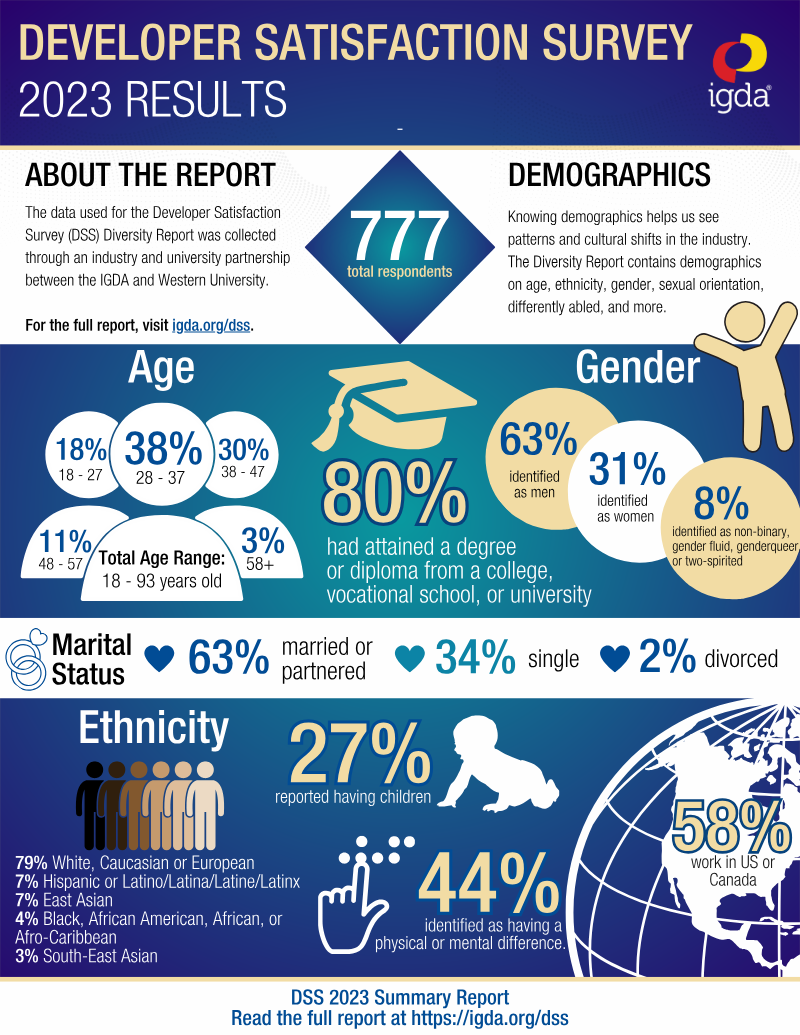
The 2021 Developer Satisfaction Survey (DSS) Diversity Report provides a comprehensive analysis of the demographic landscape, compensation structures, and workplace experiences within the global game development industry. Conducted through a partnership between the International Game Developers Association (IGDA) and Western University, the research examines how factors such as gender, ethnicity, age, and disability status influence career trajectories and professional outcomes. The primary objective is to identify systemic patterns and cultural shifts that impact equity and representation across various professional roles.
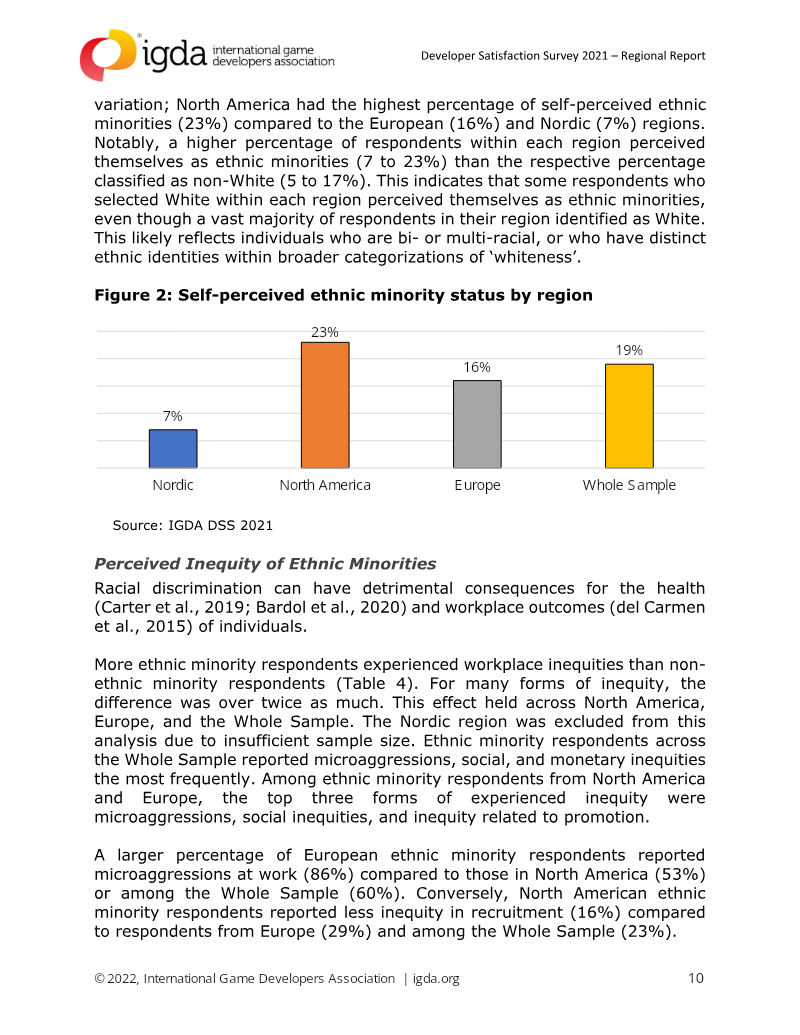
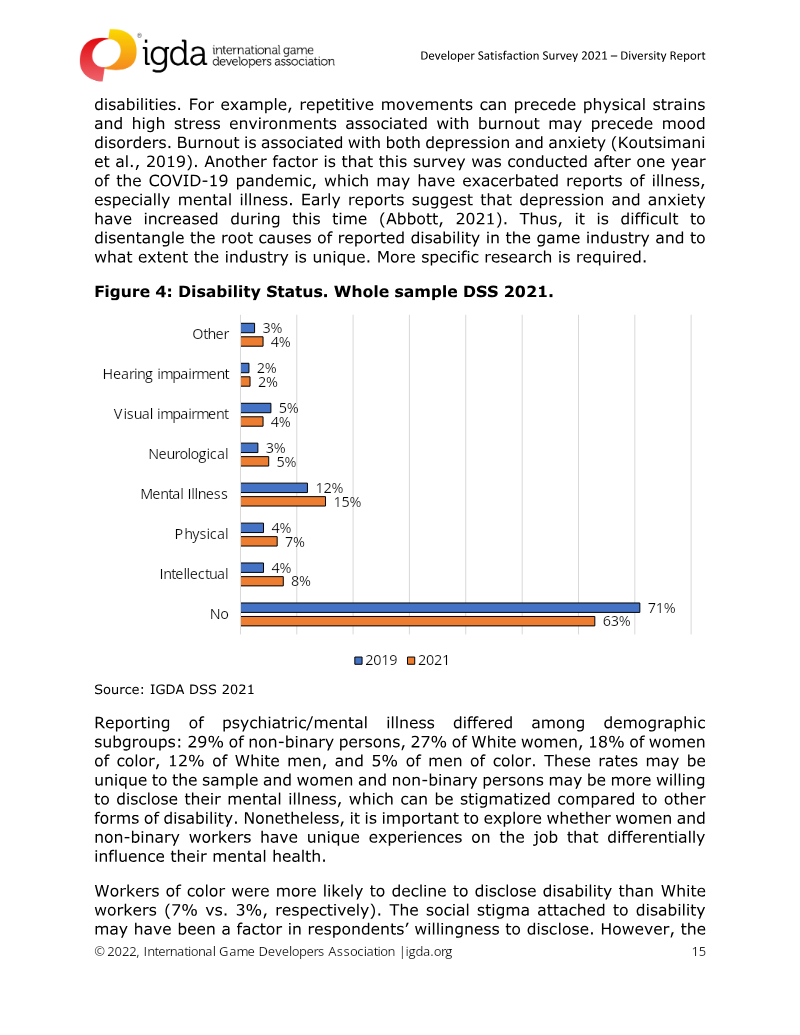
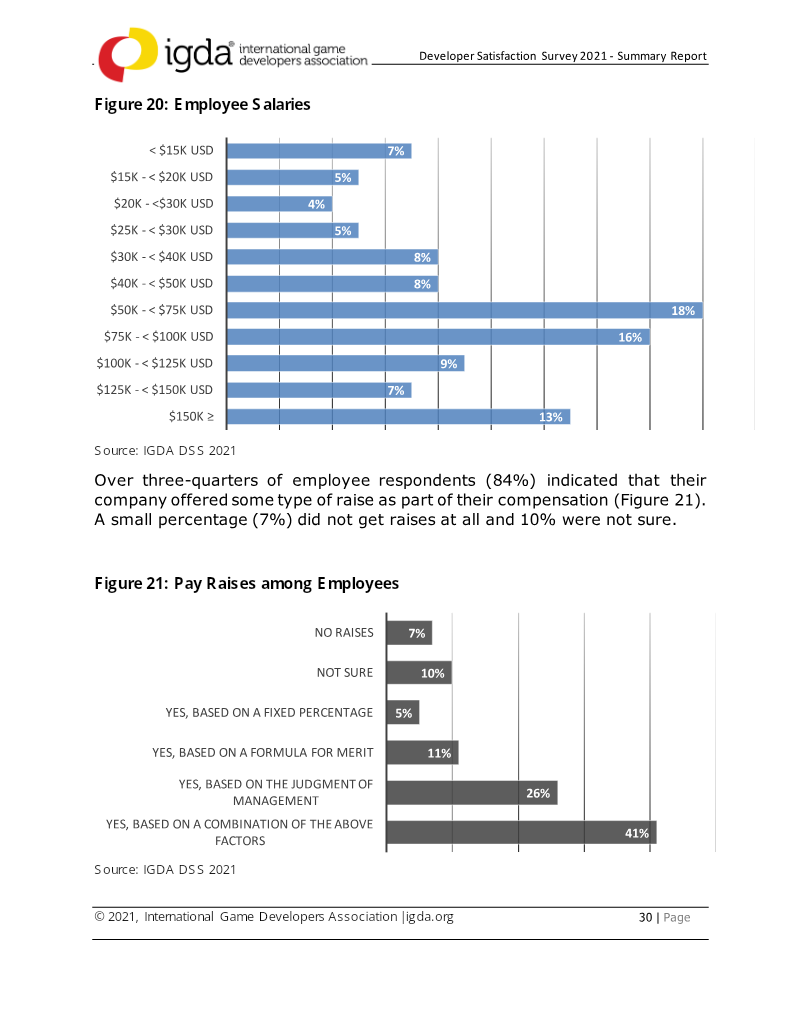
Key findings reveal a significant lack of diversity in senior management, where White workers remain disproportionately represented. Compensation data highlights a persistent gender and ethnic pay gap, with men and White employees more likely to occupy higher income brackets, while women and people of color are more frequently represented in lower-income tiers or precarious employment roles, such as freelancing and part-time positions. Furthermore, mental health challenges are prevalent, with non-binary individuals and White women reporting the highest rates of mental illness. Notably, developers of color are more likely to decline to disclose disability status, suggesting potential barriers to workplace inclusivity.
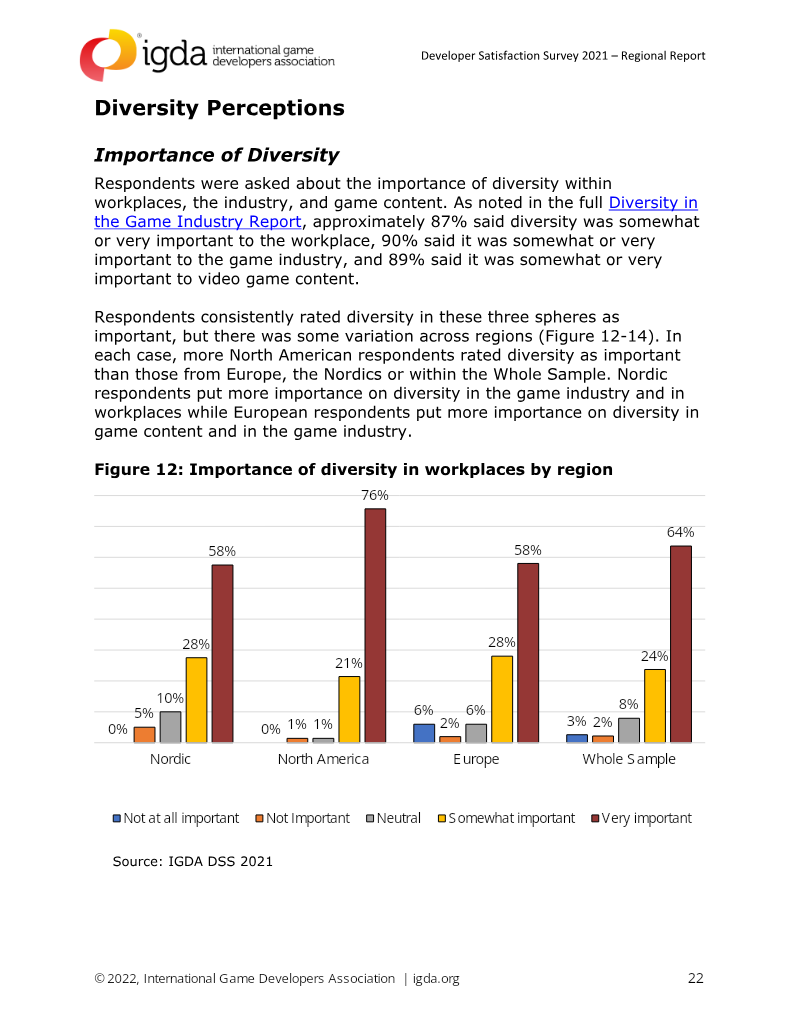
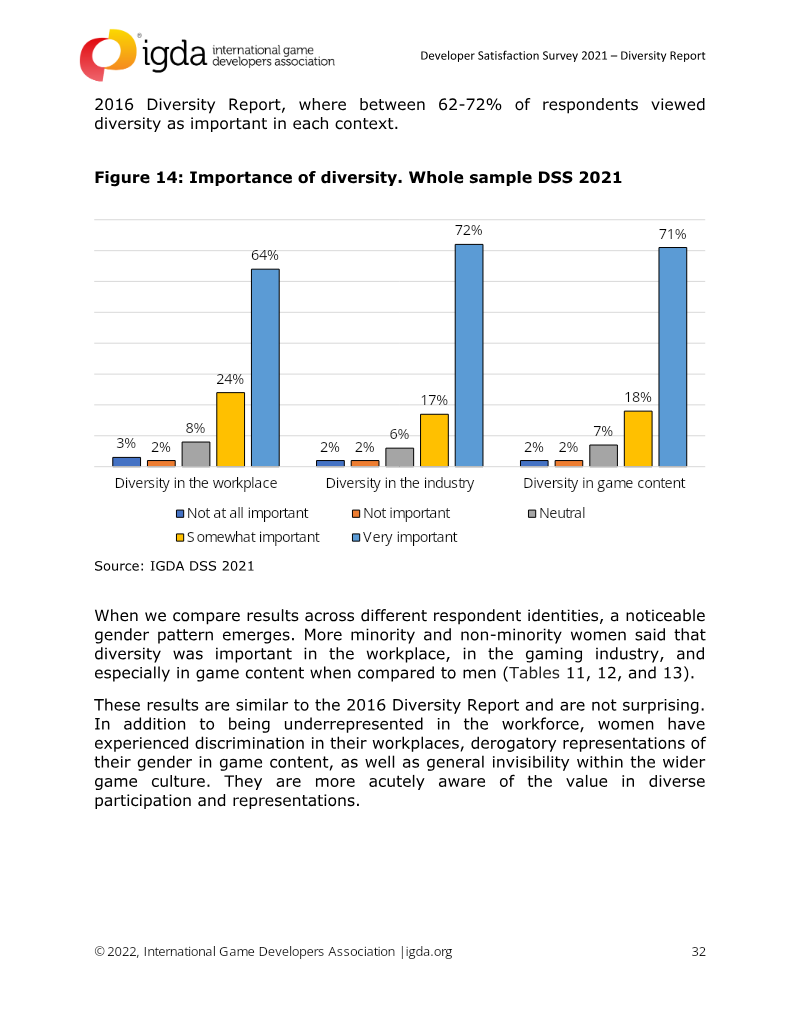
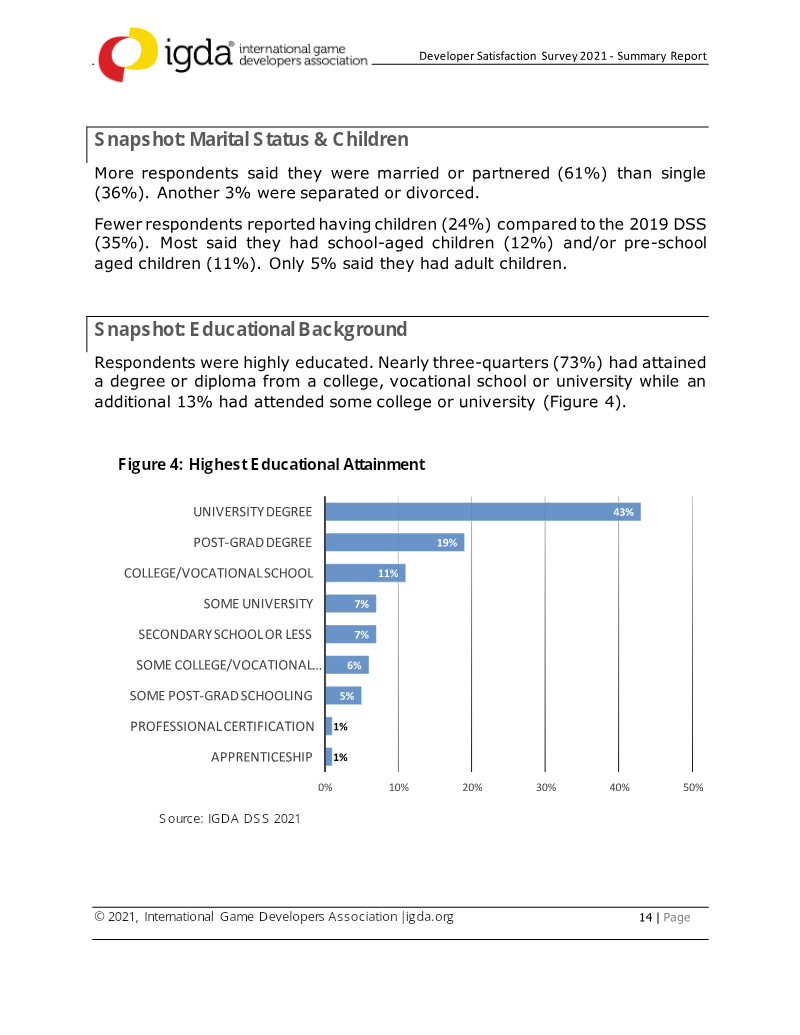
The industry exhibits a strong reliance on formal education, with the vast majority of professionals holding university or post-graduate degrees. Despite a widespread recognition of the importance of diversity, 74% of respondents believe that equal treatment and opportunity are not currently achieved within the sector. The most cited obstacles to progress include decision-making bias and the presence of a homogenous workforce in leadership positions. These findings underscore a critical disconnect between the industry's stated values regarding diversity and the lived experiences of its marginalized workforce.
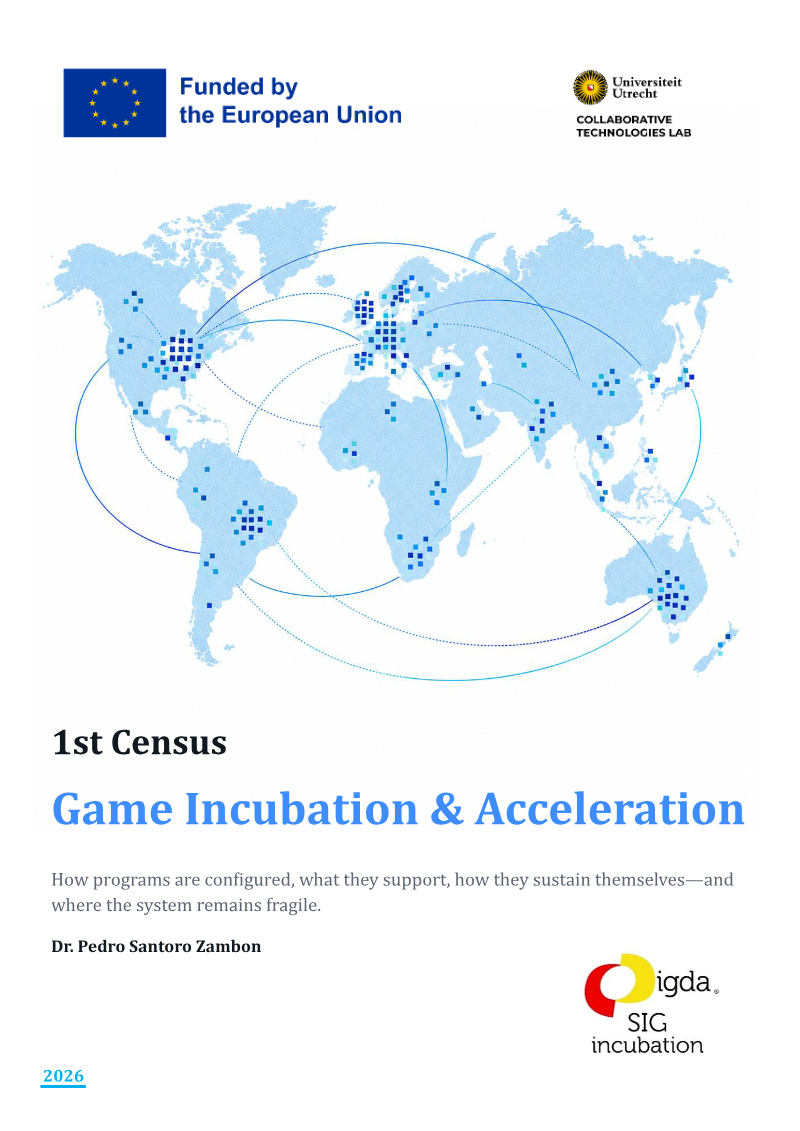
International Game Developers’ Association · 2026


International Game Developers' Association · 2024
International Game Developers’ Association · 2023
International Game Developers’ Association · 2023
International Game Developers’ Association · 2022
International Game Developers’ Association · 2022
International Game Developers’ Association · 2021
International Game Developers’ Association · 2020
International Game Developers’ Association · 2020
International Game Developers’ Association · 2016
International Game Developers’ Association · 2016
International Game Developers’ Association · 2015
Develop:Brighton · 2025