White Paper on Video Game Development Sector in Spain
20218 pages~17 min full read
The Spanish video game development sector has emerged as a vital component of the national digital economy, characterized by rapid growth, high innovation, and a strong global orientation. As of 2013, the industry comprised 330 companies, largely concentrated in Madrid and Catalonia, with a workforce that is notably young and highly qualified. The sector generated 313.7 million euros in turnover in 2013, with projections suggesting a compound annual growth rate of 23.7% through 2017. This expansion is driven primarily by online distribution models, which account for 78% of industry revenue, and a robust export market that represents 56% of total sales.
The industry is defined by its youth, with 68% of firms established within the last five years and 97% of capital originating domestically. Employment trends are equally positive; the sector supported 2,630 direct jobs in 2013, marking a 29% increase from the previous year, with a high proportion of permanent contracts. Despite this success, the industry faces significant challenges, particularly a talent gap, as 63.6% of businesses report difficulty finding qualified personnel. This highlights a misalignment between current educational curricula and the specialized technical demands of the video game market.
To sustain this momentum, the sector advocates for an integrated support plan that includes fiscal incentives for research and development, public funding for prototypes, and streamlined internationalization efforts. Recommendations emphasize the need for specialized technology clusters, improved tax treatment for intangible assets, and stronger synergies with transversal industries such as health and education through the development of serious games. By addressing these structural needs and fostering closer collaboration between public administration, private investors, and academic institutions, the industry aims to solidify its position as a competitive, high-productivity leader within the European digital landscape.
DEV · 2023
DEV · 2022
Fondo Europeo de Desarrollo Regional · 2021
DEV - Spanish Association of Video Games and Entertainment Software Producers and Development Companies · 2020
DEV - Desarrollo Español de Videojuegos · 2019
DEV – Asociacion Espanola de Empresas Productoras y Desarrolladoras de Videojuegos · 2018
Direcció General d’Innovació i Cultura Digital · 2025

AEVI · 2020
8Bit · 2026

Ukie · 2025
Dataspelsbranschen · 2025
InGameJob · 2025
AEVI · 2025
Konvoy · 2025
Polish Agency for Enterprise Development · 2025
AEVI · 2025
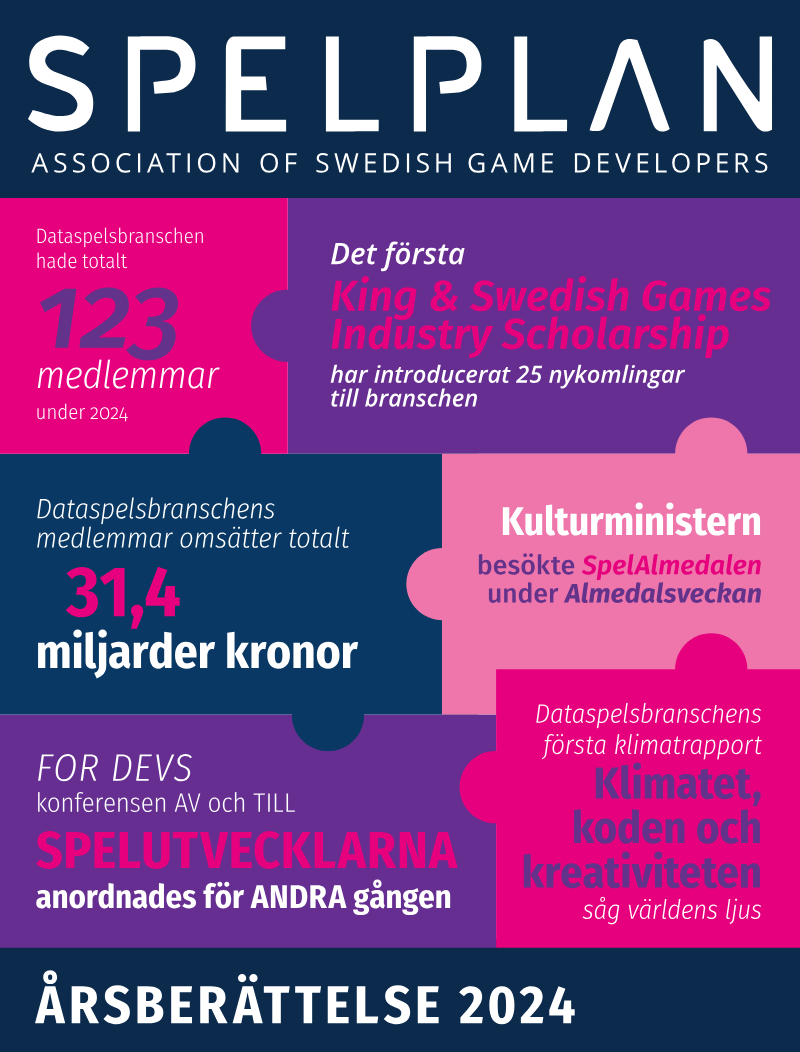
Spelplan-ASGD · 2025

Swedish Games Industry · 2024