Educational reports and market data
Documents
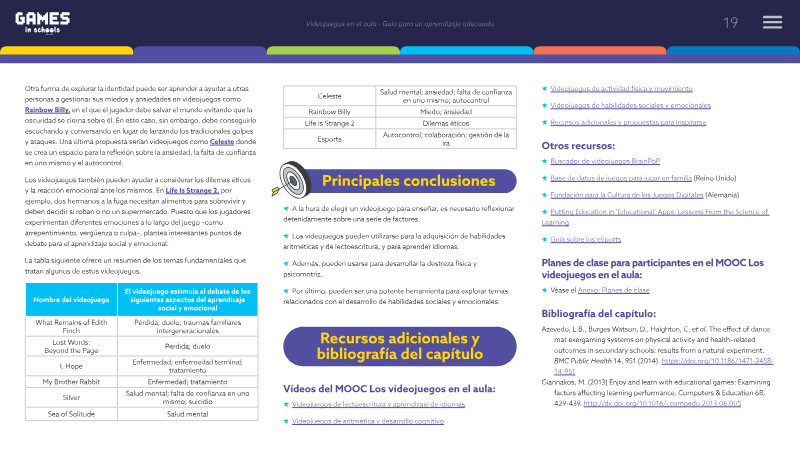
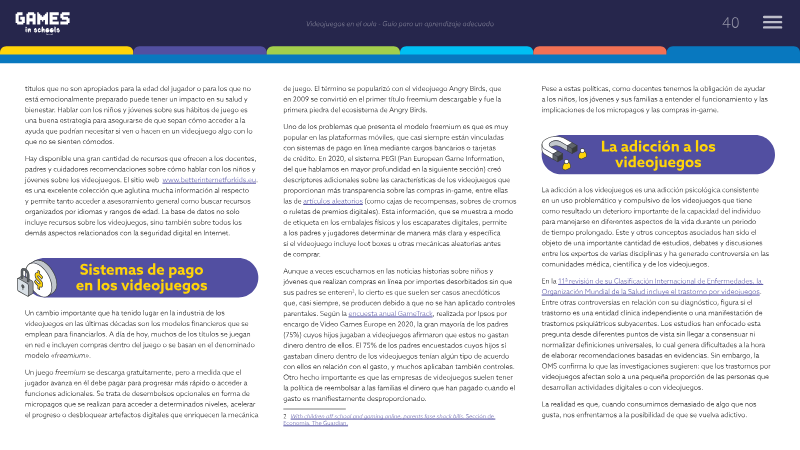
Videojuegos en el Aula: Guía para un Aprendizaje Adecuado
The guide argues that video games, when deliberately selected and scaffolded, can become powerful learning tools across primary, secondary and vocational settings.
- Video games are effective pedagogical tools that improve cognitive functions like memory and problem-solving, with studies such as Parker & Thomsen (2019) linking game mechanics to measurable gains in literacy and clinical ADHD assessment.
- The global games market now encompasses over three billion active players, including 70% of Europeans aged 6–24, providing a massive, accessible platform for cooperative and project-based learning.
- Educational integration is most successful when educators use a continuum from free play to structured activities, utilizing titles like Minecraft and Assassin’s Creed Discovery Tour to support interdisciplinary curricula.
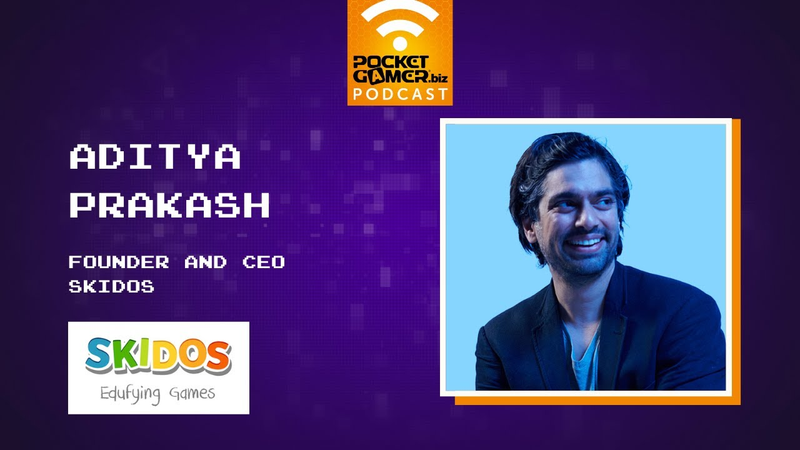
SKIDOS’ Aditya Prakash On Mastering Organic Growth And Multiple Demographic Targeting
The edutainment sector is undergoing a significant transformation through the integration of pedagogical content into casual mobile gaming.
- SKIDOS operates an ecosystem of over 50 applications developed through a network of 30 studio partnerships, focusing on integrating pedagogical content into casual mobile games for children aged two to ten.
- The business model replaces traditional advertising and predatory in-app purchases with a subscription-based framework that provides parents with granular progress tracking and performance reporting.
- Organic growth is achieved through a sophisticated App Store Optimization strategy that leverages a vast portfolio of game versions to capture a wide array of search keywords.
Lessons from Duolingo: From Startup to IPO
Duolingo’s trajectory from a small startup to a publicly traded company demonstrates the efficacy of a disciplined, data-centric approach to scaling.
- Duolingo maintains a high-frequency experimentation cycle by conducting approximately 300 A/B tests per month to drive rapid, evidence-based product iteration.
- The company scaled by sequencing business objectives, focusing exclusively on user acquisition before introducing monetization and pedagogical efficacy layers.
- Organizational structure evolved from a flat hierarchy into cross-functional, metric-oriented teams that utilize OKRs for planning alignment rather than individual performance evaluation.
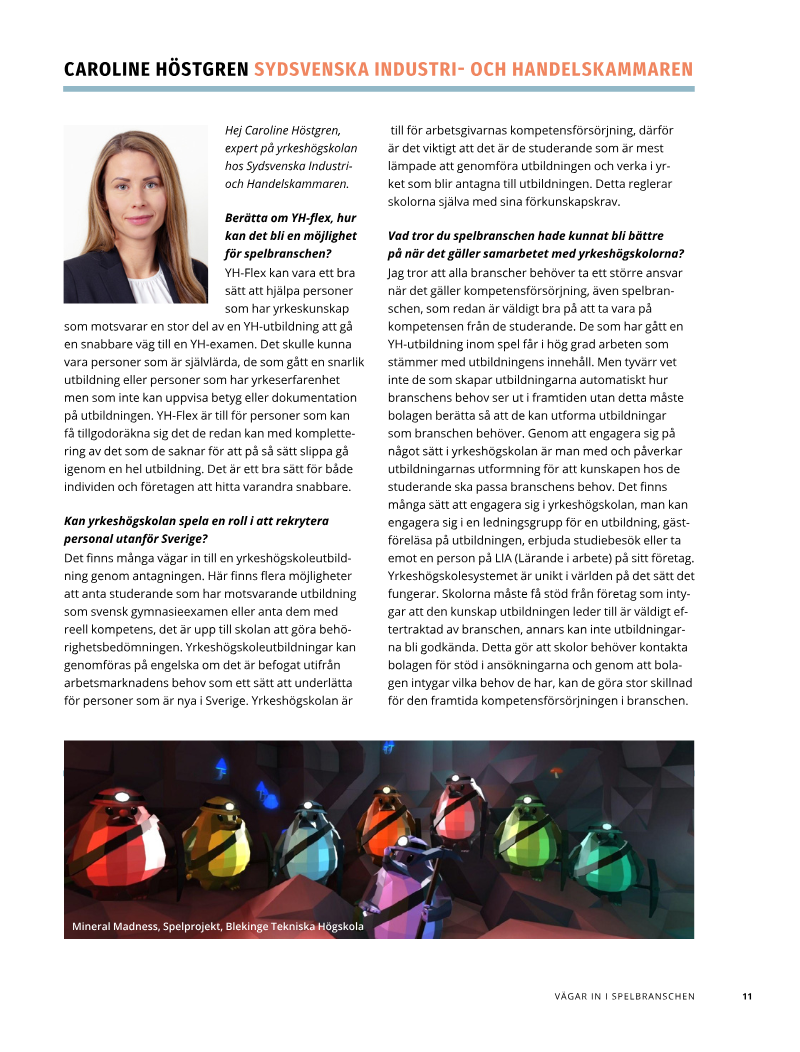
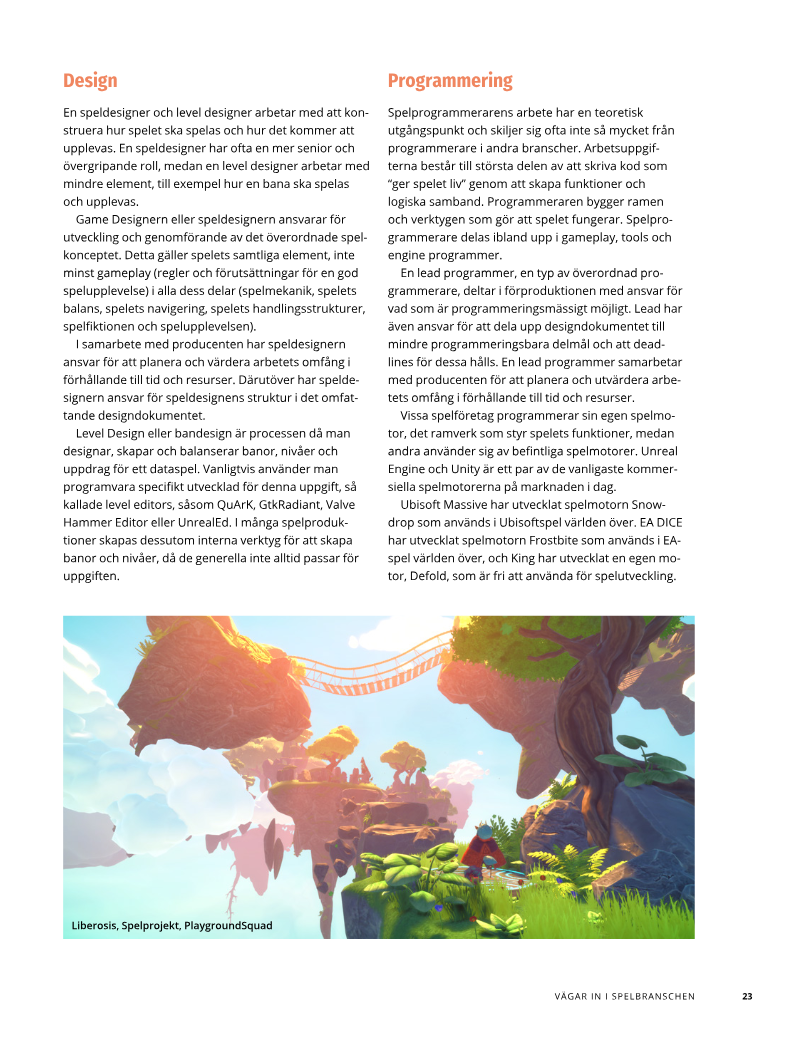
Vägar in i spelbranschen: Kompetens, utbildning och konsten att skapa spel (2023)
The Swedish game industry is currently experiencing a critical talent shortage that threatens its long-term competitiveness and growth.
- The Swedish game industry faces a critical talent shortage, with domestic educational institutions producing fewer than half of the professionals required to meet the demand of 1,348 new hires recorded in 2021.
- Between one-third and one-half of the current Swedish game industry workforce consists of international talent, highlighting a heavy reliance on global recruitment to sustain growth.
- Restrictive work permit policies for non-EU vocational students and complex regulations regarding international remote work act as significant bureaucratic barriers to maintaining the necessary talent pipeline.
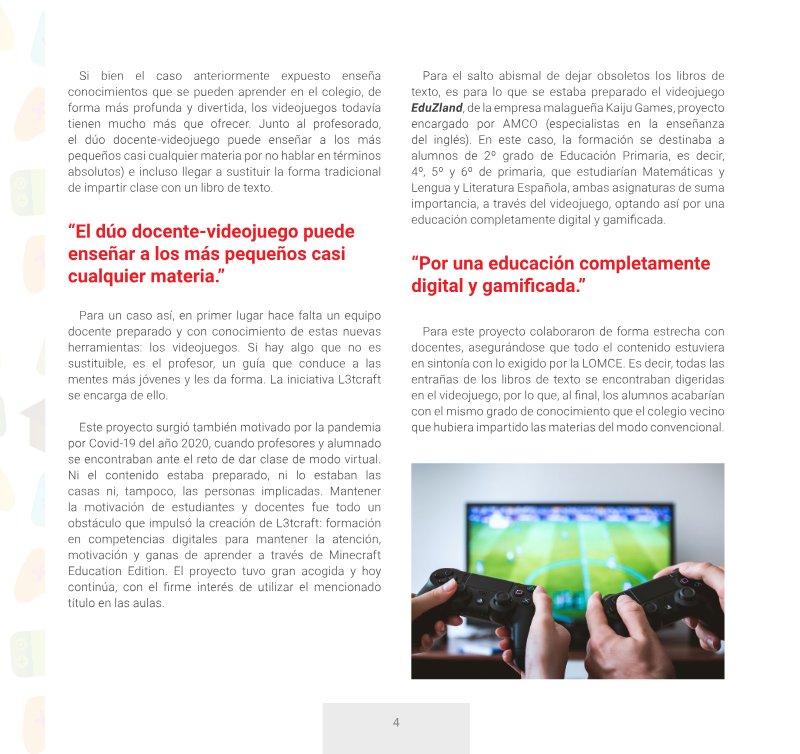
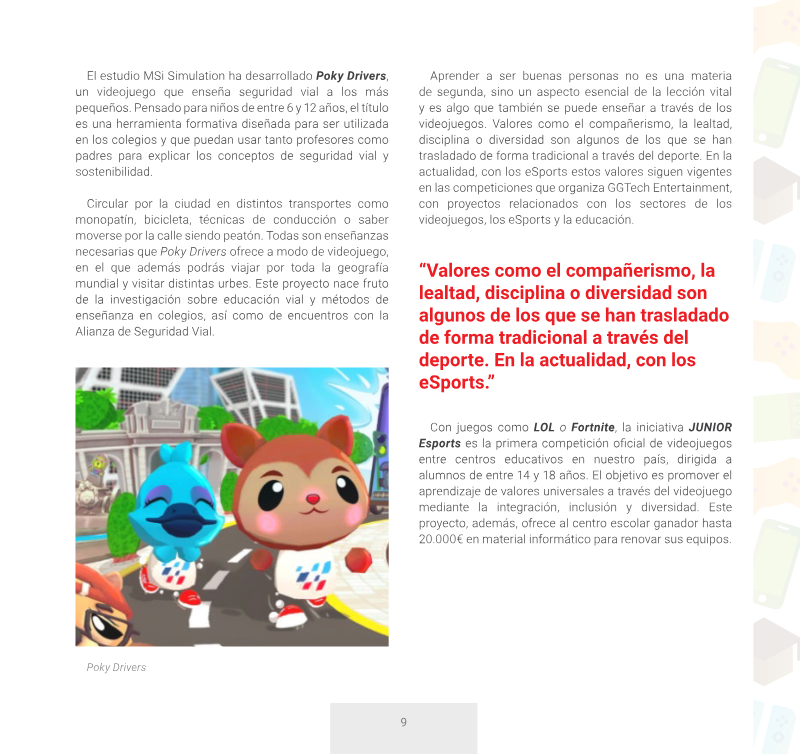
Videojuegos en el aula
Spanish educators are progressively integrating video games into classroom practice, positioning interactive media as legitimate learning tools rather than mere entertainment.
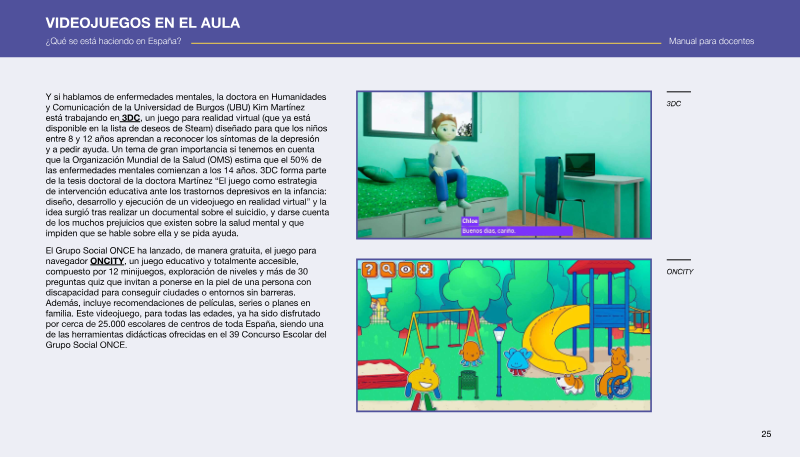
- Video games are being integrated into over 1,000 Spanish schools as legitimate pedagogical tools to teach subjects ranging from mathematics and language to civic values and mental health.
- The Spanish educational ecosystem utilizes a diverse portfolio of serious games, including Minecraft Education Edition, EduZland, BetterWorld, Planet Rescuers, Koral, Endling, and Teacher+.
- Game-based learning in Spain is supported by a broad coalition of major global publishers, including Riot Games, Ubisoft, and Take-Two Interactive, alongside specialized university-based game schools.
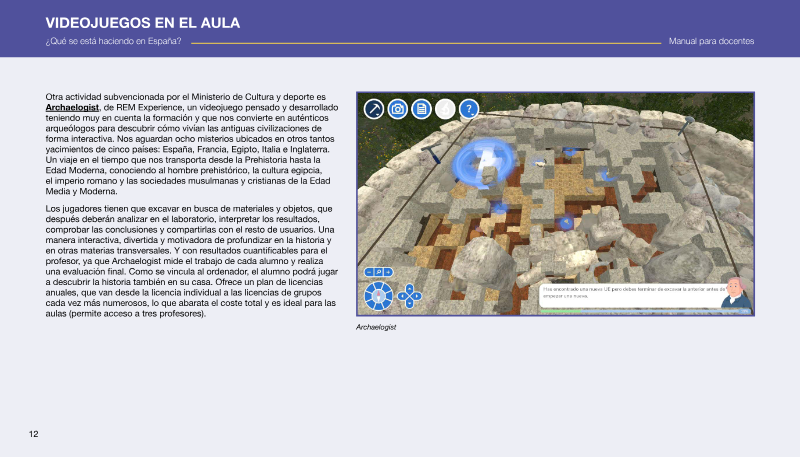
Videojuegos en el Aula: Qué se está haciendo en España
The integration of video games into the Spanish educational system represents a significant shift toward utilizing interactive media as a versatile pedagogical tool.
- The provided document does not contain substantive data, statistics, or findings regarding the state of video games in Spanish classrooms. The content is limited to a meta-discussion about potential ways to summarize a report rather than the report itself. Consequently, no factual insights regarding the integration of video games in education can be extracted from the provided text.

Living the Dream or Surviving the Nightmare: Making Commercial Indie Games as a Professor
The integration of academic tenure-track roles with commercial indie game development offers a unique pathway for creators to pursue experimental projects while enhancing their pedagogical efficacy.
- Academic game developers should prioritize securing exhibitions, awards, and grants over commercial sales figures, as these metrics carry significantly more weight during tenure and promotion evaluations.
- University-based game development requires a modified production pipeline where projects are designed as extended, long-term experiences to accommodate the high turnover and limited availability of student collaborators who typically contribute only 10–15 hours per week.
- To ensure project coherence when working with students, faculty should adopt a 'key-frame' workflow where the professor handles core design and animation, then delegates in-betweening or specific feature implementation to students based on their individual talents.

Leveraging Games in the Fight to Protect Local Cultures
The intersection of digital entertainment and cultural preservation serves as a powerful mechanism for combating the illicit trade and destruction of historical artifacts.
- The Cultural Antiquities Task Force, established in 2004, partners with federal law enforcement and international agencies to combat the illegal trafficking of cultural heritage, which is often exploited by organized crime syndicates and terrorist groups.
- Games are being utilized as a medium to raise awareness about cultural heritage protection by allowing players to experience the emotional impact of looting and the loss of identity that occurs when artifacts are removed from their communities.
- The Global Game Jam, which hosted 49,000 participants across 118 countries and 935 sites in 2020, serves as a primary vehicle for fostering collaborative, educational game development that highlights diverse cultural perspectives.
Approaching a Pedagogy of Game Writing
A robust pedagogical framework for game writing must prioritize adaptable, student-centered learning over the pursuit of fleeting industry trends.
- Effective game writing pedagogy should prioritize core higher-order thinking skills over specific software mastery, as technology evolves too rapidly to rely on tool-based instruction alone.
- Game writing curricula should be built upon established academic frameworks from fields like rhetorical genre studies and activity theory rather than relying solely on game-specific literature.
- Instructional design for game writing must emphasize the writing process—including multiple drafts and feedback workshops—to move students beyond the misconception that writing is merely about having ideas.
Games that Care: Lessons from Teaching Grief-Based Game Design
This analysis examines the pedagogical shift toward integrating care-based methodologies into game design education to address the industry’s systemic instability and the burnout of creative talent.
- Game design education should shift from a focus on 'hireability' and labor-market integration—which often leads to student burnout and the sacrifice of personal well-being—toward fostering reflective, empathetic, and sustainable development practices.
- Participatory design, historically rooted in Scandinavian labor unions to include end-users in workplace development, can be adapted into game curricula to help students create games that address complex, stigmatized human experiences like grief and bereavement.
- When designing for sensitive topics, educators should use 'cultural probes'—activity packs like scrapbooks and postcards—to facilitate meaningful, non-quantifiable feedback loops between students and participants, rather than relying on traditional usability testing.
Why My Students Design Escape Rooms
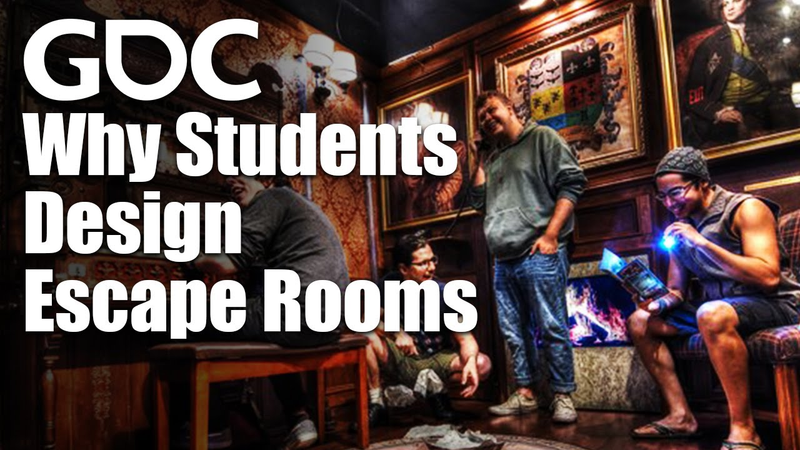
Designing escape rooms functions as a highly effective pedagogical framework for teaching foundational game design principles.
- Designing escape rooms is an effective pedagogical tool for teaching game design fundamentals because it allows students to practice brainstorming, rapid prototyping, iteration, and fine-tuning without requiring complex coding or software skills.
- Escape room projects are highly egalitarian and accessible, enabling teams of four to five students to function as dedicated designers who can collectively build, test, and balance physical puzzles using low-cost materials.
- The curriculum utilizes a three-week structure: week one focuses on research and thematic brainstorming, while subsequent weeks prioritize rapid prototyping and live playtesting.
Games as Community Driven Care: A Case Study of Co-design for Aphasia
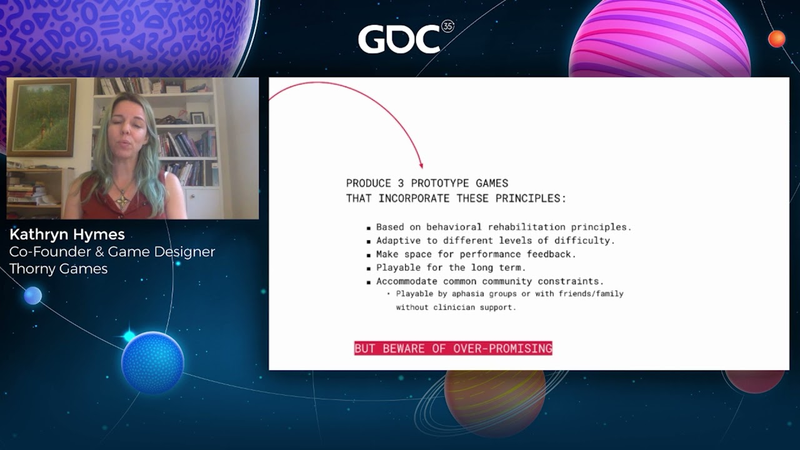
This analysis examines the potential for video games to serve as a community-driven, accessible form of therapeutic care, specifically through a case study of a co-design project for individuals with aphasia.
- Aphasia affects over 2 million people in the United States, yet access to traditional speech-language therapy often drops off significantly after the initial recovery period.
- The 'Aphasia Games for Health' project demonstrated that video games can provide a scalable, cost-effective, and social alternative to clinical therapy by allowing for home-based or group-based rehabilitation.
- The project utilized a year-long co-design methodology, including a three-month intensive phase of remote workshops and iterative playtesting involving speech-language pathologists, game designers, and patients.