Educational reports and market data
Documents
The Digital Museum - Assassin’s Creed Origins Discovery Tour - Extra Credits
The Discovery Tour mode in Assassin’s Creed Origins represents a significant milestone in the integration of interactive entertainment and formal education.
- The Discovery Tour mode in Assassin’s Creed Origins establishes a proof-of-concept for AAA studios to repurpose commercial game engines into formal educational tools for historical study.
- By removing combat and incorporating expert historical consultation, the mode successfully transforms a high-fidelity game environment into a digital museum experience.
- The current implementation relies on a restrictive, linear 'on-rails' design that mirrors traditional audio tours, which limits the medium's potential for self-directed learning.
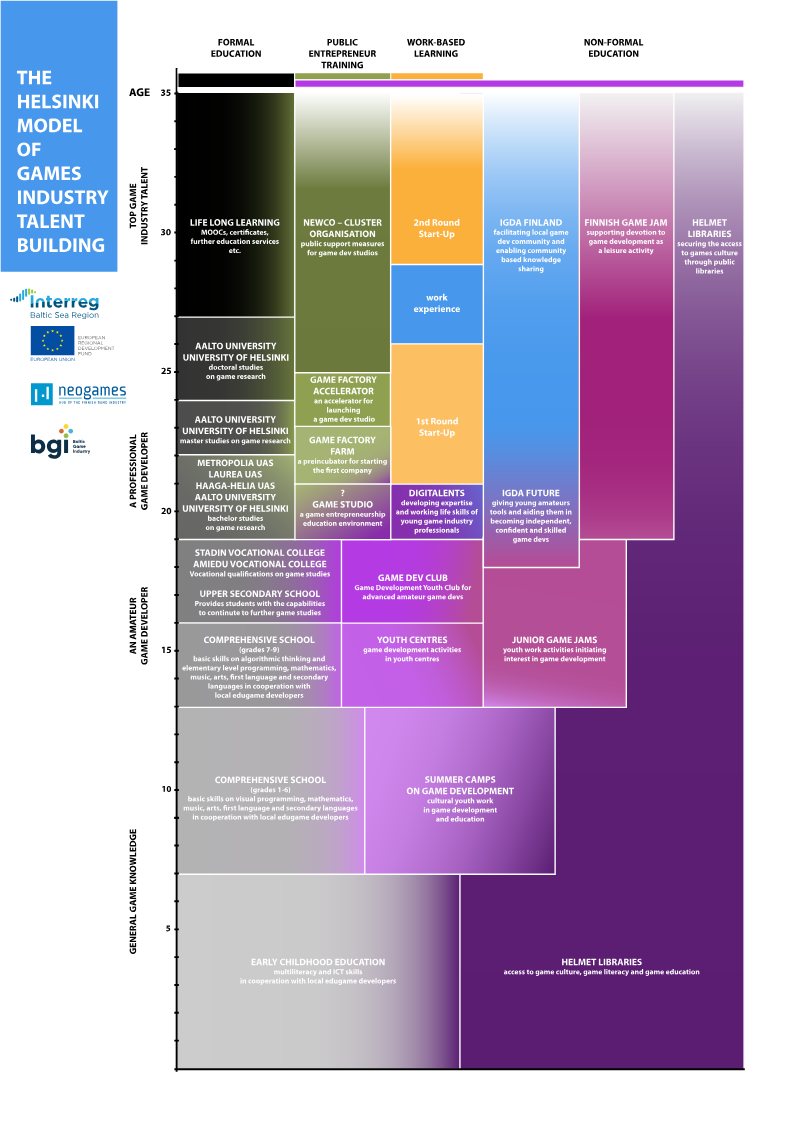
The Helsinki Model of Games Industry Talent Building
The Helsinki Model of Games Industry Talent Building establishes a comprehensive, lifelong educational framework designed to cultivate professional expertise within the Finnish gaming sector.
- The Helsinki Model creates a lifelong educational pipeline for game development that spans from early childhood literacy programs to doctoral research.
- The ecosystem relies on formal integration between academic institutions like Aalto University and the University of Helsinki and industry-focused infrastructure such as the Game Factory accelerator.
- Public-private collaboration between local government, educational bodies, and industry stakeholders is the foundational mechanism for sustaining the region's game development culture.
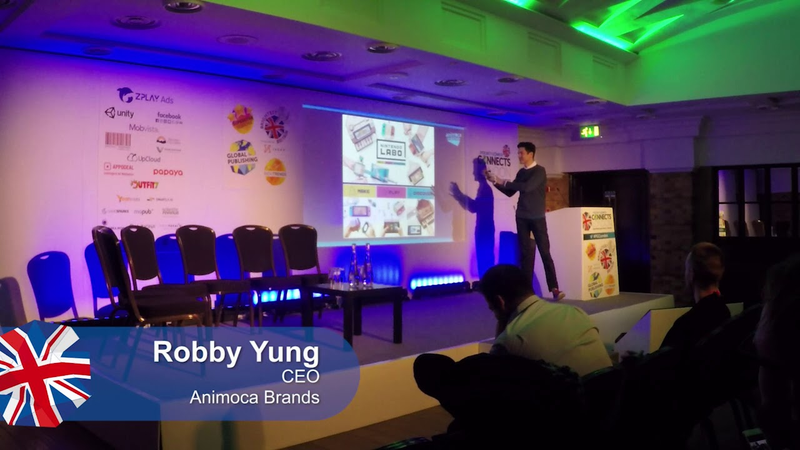
How we can leverage games to help people learn
The integration of education into gaming, often termed edutainment, succeeds when the core gameplay experience remains primary and the educational content is seamlessly embedded rather than forced.
- Effective educational games succeed by prioritizing core gameplay mechanics, ensuring that learning objectives emerge as a natural byproduct rather than a forced academic exercise.
- Users frequently reject products that merely wrap traditional schoolwork in superficial entertainment layers, necessitating a design approach where education is seamlessly embedded into the play experience.
- Successful educational titles often repurpose proven game genres, such as replacing standard monetization mechanics with math problems in endless runners or using logic-based commands to teach coding.

Precision of Emotion: A New Kind of "Fun" Approach in Educational Games
The Sophia model redefines the concept of fun in educational gaming by framing it as a sophisticated psychological transformation where fear is converted into happiness through the acquisition of insight and mastery.
- The Sophia model defines educational 'fun' as the psychological transformation of fear into happiness through the achievement of mastery and insight.
- Effective game design should prioritize the player's emotional arc over simple performance-based tasks to foster deeper engagement and more durable learning outcomes.
- Designers should utilize the 'pain of absence' framework, which treats gaps in a player’s mastery or social efficacy as opportunities to build interconnected emotional loops.
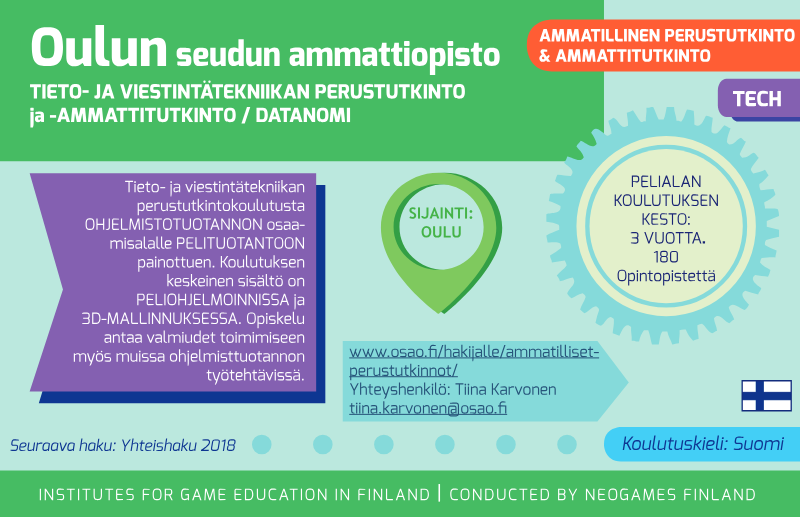
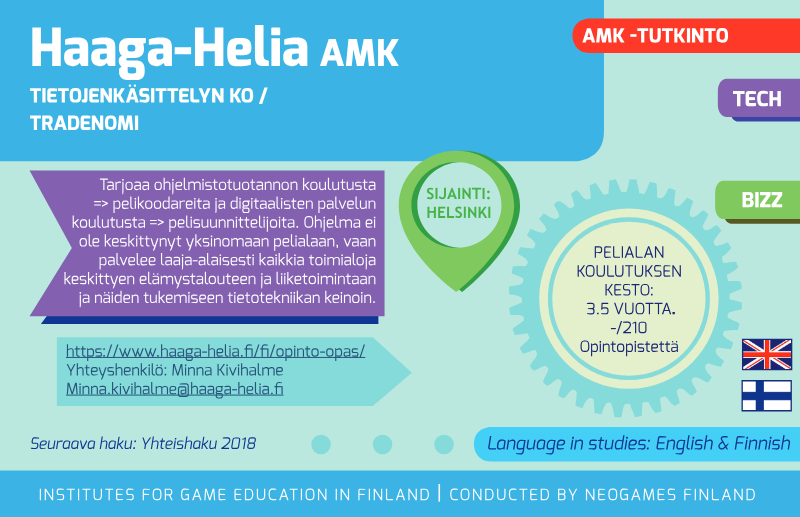
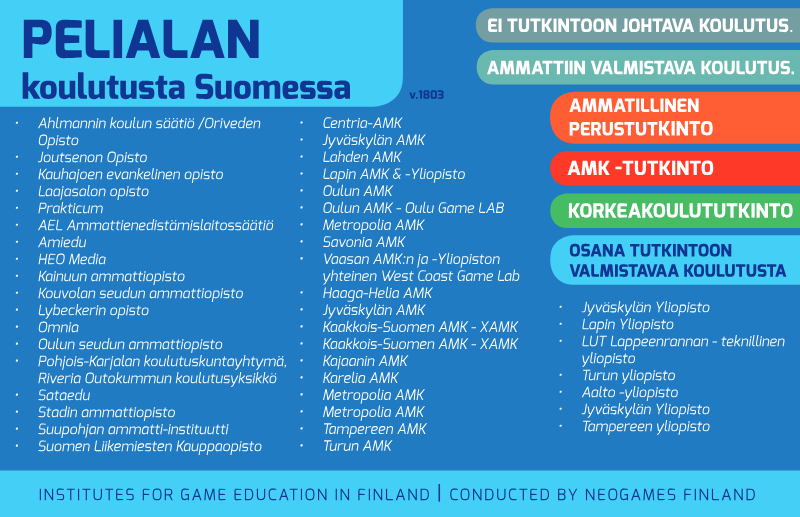
Koulutusta Suomessa
Finland maintains a robust and multifaceted educational ecosystem designed to supply the domestic game industry with highly skilled talent.
- Finland offers a wide range of game industry education, from vocational training to university degrees, including programs focused on game programming, design, art, and business.
- Vocational education (AMMATILLINEN PERUSTUTKINTO) includes programs like Datonomi, Media-alan perustutkinto (Animation and Game Industry), and Peliohjelmoija, with durations typically ranging from 2 to 3 years.
- Universities of Applied Sciences (AMK) offer Bachelor's degrees (AMK-TUTKINTO) in fields such as Information Processing (Tietojenkäsittely) and Culture and Arts (Game Design), generally lasting 3.5 to 4 years.
The 2017 Education Soapbox
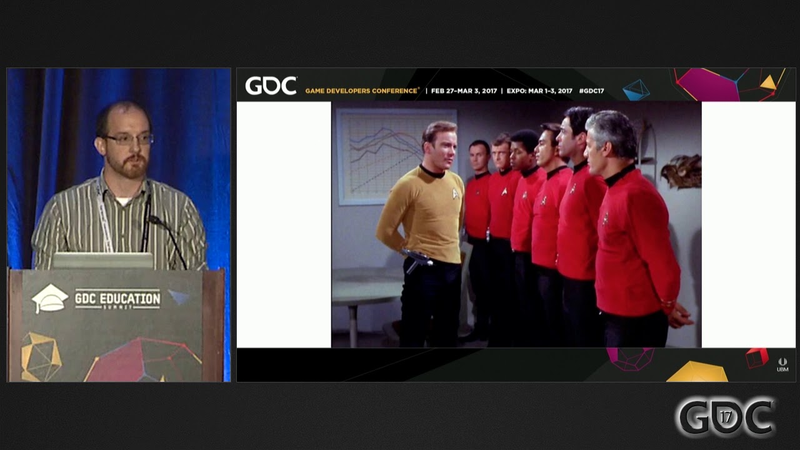
Game education requires a fundamental shift from purely technical training toward a holistic model that prioritizes critical consciousness, artistic expression, and social responsibility.
- Game education must shift from purely technical training to a holistic model that integrates fine arts principles and critical theory to foster artistic expression and social responsibility.
- Curricula should be redesigned to move beyond replicating industry standards, encouraging students to challenge dominant cultural ideologies and the social contexts of their work.
- Professional success in the gaming industry increasingly relies on non-cognitive skills, specifically public presentation and storytelling abilities.
The hidden potential of learning in games
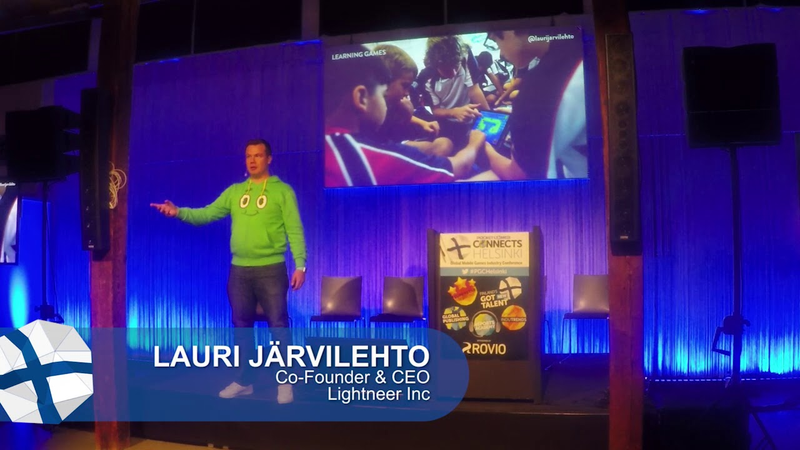
The gaming industry possesses a significant, largely untapped potential to revolutionize global education by bridging the modern attention gap.
- The global education market represents a five trillion dollar economic opportunity for developers who can successfully integrate high-retention game mechanics into learning.
- Effective educational games must prioritize high-quality, immersive game design over traditional, dry pedagogical methods to bridge the modern student attention gap.
- Successful commercial titles like Civilization and Clash Royale demonstrate that players naturally acquire complex strategic and historical knowledge when the gameplay itself is inherently engaging.
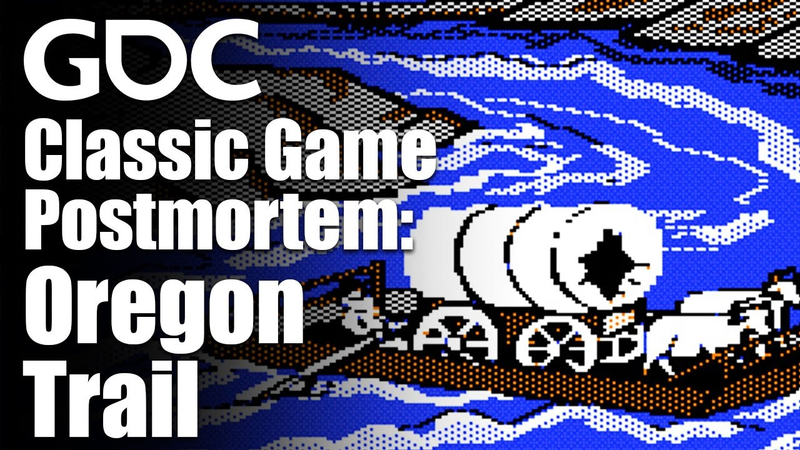
Classic Game Postmortem: Oregon Trail
The Oregon Trail originated in 1971 as a classroom simulation designed to transform history education through interactive technology.
- The Oregon Trail was created in 1971 by student teachers Don Rawitsch, Bill Heinman, and Paul Dillenberger to shift educational computing away from math-centric applications toward interactive history simulations.
- The game achieved significant commercial success after moving to the Minnesota Educational Computing Corporation (MECC), eventually accounting for one-third of the company's annual revenue.
- Developers enhanced the game's historical authenticity by integrating primary source materials from historical diaries, which helped facilitate its widespread adoption in schools.
Teaching AI-Based Game Design
The educational approach to AI-based game design focuses on empowering students to integrate advanced computational technologies into their artistic and design practices.
- AI-based game design is most effective when AI is treated as a foreground design element rather than a background utility, allowing students to move beyond standard game conventions.
- Anchoring complex AI systems in real-world metaphors, such as personality psychology or social behavior, is the primary driver of innovative and accessible game design.
- The 'SimCity effect'—using rich metaphors to make complex systems transparent—is a critical design strategy to avoid the 'tailspin effect,' where AI logic remains invisible and confusing to the player.
Swedish Game Education: 2001-2016
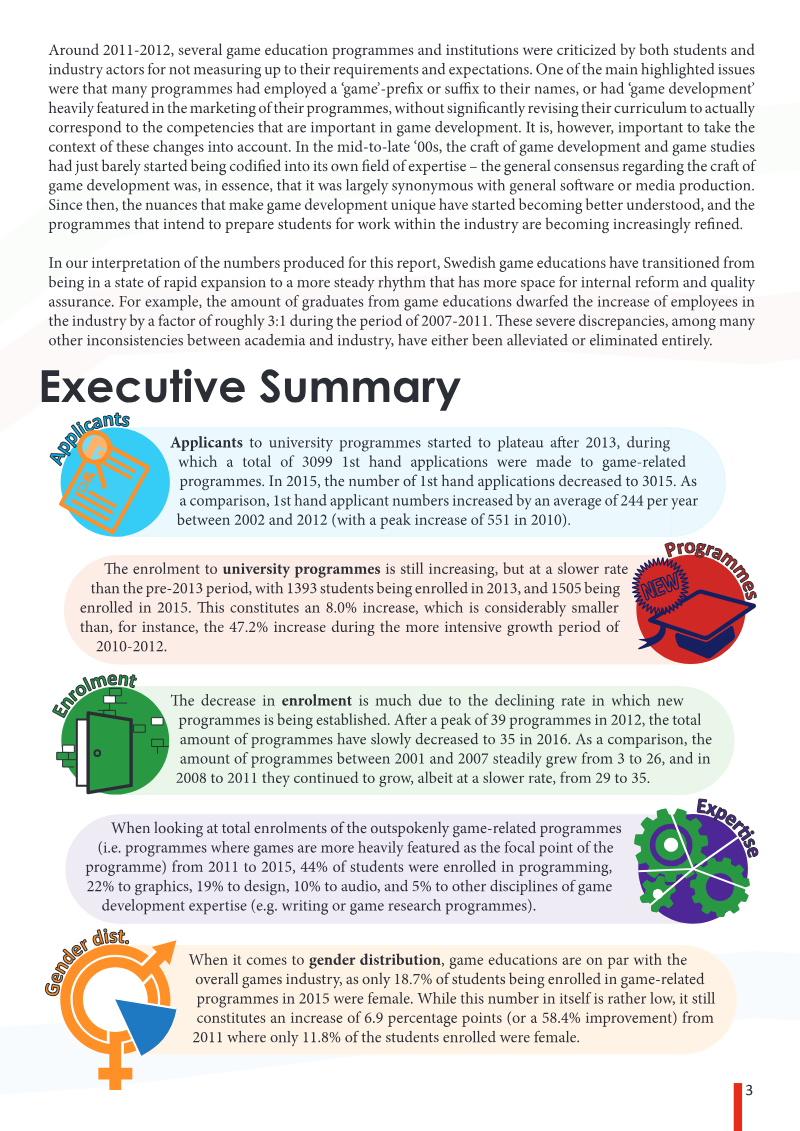
This analysis examines the evolution of Swedish tertiary game education between 2001 and 2016, documenting a transition from a period of rapid, unchecked proliferation to a more stable, mature phase.
- Swedish game education reached a peak of 41 programs in 2012 before stabilizing at 35 programs by 2016, signaling a shift from rapid proliferation to a mature phase.
- Despite the expansion of academic and vocational training, the Swedish game industry continues to face persistent labor shortages that limit its growth potential.
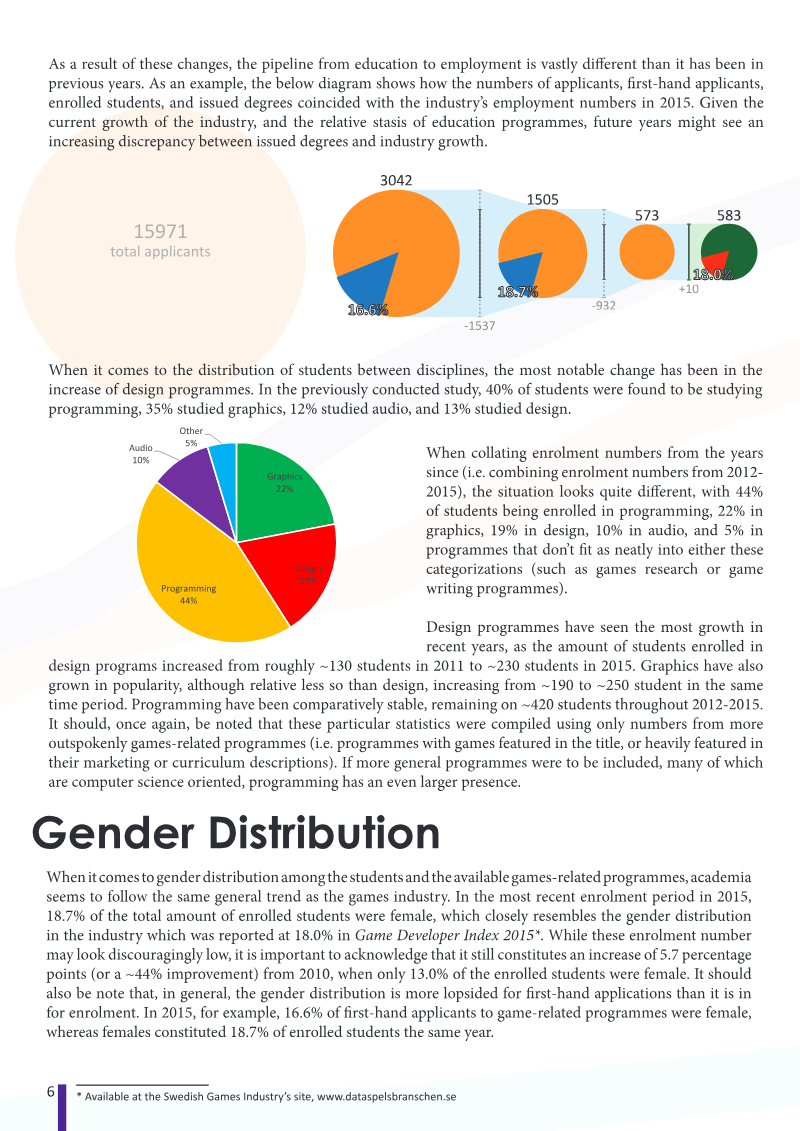
- Programming remains the dominant discipline with 44% of total enrollment, followed by graphics (22%), design (19%), audio (10%), and other fields (5%).

Classroom Metrics - Real World Case Study for Games in Schools - Extra Credits
The integration of digital games into educational environments serves as a powerful pedagogical tool, provided they are utilized as a force multiplier rather than a replacement for traditional instruction.
- Combining game-based learning with traditional teacher-led instruction yielded a 10% average score increase, outperforming both standalone methods.
- Traditional teacher-led instruction alone resulted in a 6% average score increase, while game-based learning alone showed negligible improvement at 0.1%.
- The Sun Prairie School District study, conducted in partnership with Filament Games, demonstrates that games function most effectively as a pedagogical force multiplier rather than a replacement for teachers.
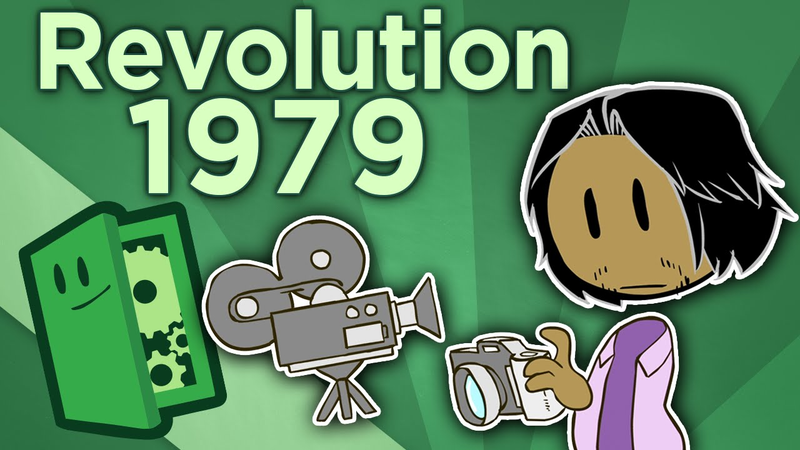
Revolution 1979 - How to Make a Documentary Game - Extra Credits
The game Revolution 1979 serves as a foundational blueprint for the documentary game genre, demonstrating how interactive media can educate players about historical events without sacrificing the medium's core requirement for agency.
- Documentary games succeed by casting the player as a minor participant, such as a photojournalist, rather than a history-altering hero, which preserves historical accuracy while maintaining player agency.
- Agency in historical games is best achieved through narrative-driven decision-making regarding interpersonal and familial conflicts rather than by attempting to change fixed, large-scale historical events.
- The 1979 Iranian Revolution serves as a case study for using interactive media to explore complex societal divisions, terror, and excitement without relying on traditional textbook formats.