1 free read left. Create a free account for unlimited reading + AI research.
Create free account
SKIDOS’ Aditya Prakash On Mastering Organic Growth And Multiple Demographic Targeting
Key insights
6 takeaways- 01SKIDOS operates an ecosystem of over 50 applications developed through a network of 30 studio partnerships, focusing on integrating pedagogical content into casual mobile games for children aged two to ten.
- 02The business model replaces traditional advertising and predatory in-app purchases with a subscription-based framework that provides parents with granular progress tracking and performance reporting.
- 03Organic growth is achieved through a sophisticated App Store Optimization strategy that leverages a vast portfolio of game versions to capture a wide array of search keywords.
- 04The company is shifting its long-term focus toward building brand equity and pursuing intellectual property licensing to remain competitive in a saturated mobile market.
- 05Future scaling strategies include expanding into sports and multiplayer sandbox genres, alongside cross-platform growth into web-based environments and alternative app stores.
- 06Developers are integrating generative artificial intelligence to create personalized, interactive storytelling experiences that adapt to the individual needs of young users while maintaining safety standards.
Ask AI about this video
Transcript
[Music] thank you hello world welcome back to the pg.biz podcast with your co-hosts myself Brian bagloo and the truly Globe spanning Peggy insults hello Peggy has it really been a week already it has indeed and uh up to globetrotting I'd say one more trip Brian and then I am down for the summer the next thing I look at is Gamescom fantastic so it's so uh we know that you've been at Mao we know that you've been all over the place but where's next on the on the salts itinerary okay so it's at promotion Summit um great Fireside I'm doing with uh Ryan Kim from Spotify so talking about uh UA then it's down head down doing some work and to maybe having the summer until Gamescom and maybe even having a couple
of people down in my studio which is now just about done so we might be doing some very interesting sort of uh yeah live maybe that for a change from the studio downstairs oh fantastic oh well that's that's very exciting but well um I I hope it goes well and and in case for anyone out there who's new to the podcast Peggy goes out and attends all of these incredible conferences Expos Summits you know you name it and brings back some truly astonishing guests so we're delighted to welcome along um I guess again doing something really quite different something that I don't think we've even discussed on the podcast before so so Peggy who do we have laying down up well that's it we never had this before so by way of background I was speaking at games form in Hamburg and I met up with the head of UA growth brand at this company and she blew me away because one it's a company we haven't heard of with a business model that's very cool
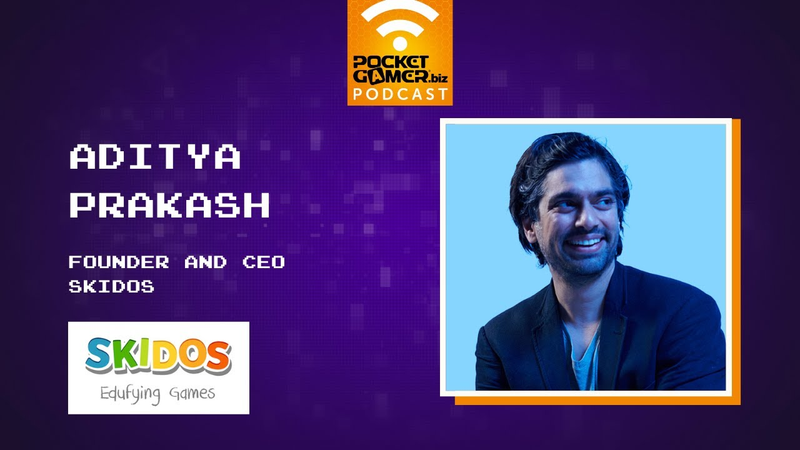
two super important all the growth is organic now that's something wow so yeah a growing games company not even just a games company a games ecosystem so what is it well it's gaming for children but it's also a fascinating spin on the subscription business model and much more because games companies as we'll hear can become part of the ecosystem so our guest is Adi prakash he is founder CEO of skiddos that's the company an award-winning creator of children's educational apps based in Copenhagen backed by some of Denmark's leading early stage investors but first a little bit about ADI Our Guest right he describes himself as an entrepreneur with a passion for technology especially within education and gaming he's also we're gonna love this one Brian he's an adrenaline junkie right so he's eager to push his boundaries we're keen to unleash it so I would say
we bring it on welcome Adi thank you so much Peggy and Brian it's my pleasure to be here and I hope I can be a good guest and part in part wisdom to a lot of your listeners with all the knowledge I know about gaming and subscription and organic growth let's let's start with skidos so you say you're building the Netflix of learning apps for for children aged between two and seven it's an amazingly catchy tagline but but why the comparison with Netflix so there are two reasons uh where we feel we are very similar to how Netflix began as a company so when Netflix began they chose a strategy to license with existing content providers uh to expand their library of content we are like a four-year-old four and a half year old company we followed a very similar strategy where we are licensing partnering with game studios to license their content uh the second part is after several several years Netflix I started understanding what their users what Their audience really prefer in
terms of watching shows or movies or even kids content We are following the similar path we are understanding our audiences which are like kids and families parents with kids who are three to ten and we understand their preferences and our roadmap is also following that direction that we will start creating content producing our own games our own learning content our own other kind of format content for kids over the next several years uh and I think just like Netflix is known for being the global brand for entertaining audiences with the best movies shows documentaries we want to be the global brand for edutainment for kids uh in the age group of three to ten so you're turning any casual game into learning game for kids there are some technical constraints so for example our SDK is built on Unity engine so typically we could convert any casual game which is built on the unity engine
uh how this model Works uh so majority of casual games make money either to ads found inside the game or through in-app purchase economy users paying real money for virtual Goods right now when we partner with the game Studio what we do is we remove the ads found inside the game we remove the in-app purchase economy and instead replace it with learning content so when a child interacts with any one of our educational apps instead of watching an ad in between gameplay they have to solve for example a math fuzzy uh another another way we integrate instead of paying real money for a virtual item in the game or a power up a child has to solve a reading puzzle or a coding puzzle but that's how the child experiences our product and how we end up making money is we have a b to see freemium subscription model targeting parents and so if parents subscribe to
Skittles which they can do through any one of our 50 plus apps they will get access to this ever growing library of edutainment apps where the children can learn as well as play at the same time how did you do this with existing games can you is it appropriate for any any game suitable for for age three to ten so the way we classified game studios internally uh there are two types of games in our universe one which are designed specifically for that age group so games designed for young Early Childhood three to ten right and then the second segment is which are games designed for General audience including adults but kids also end up playing those games so in both these segments we are okay for partnering with game studios who have such games of course there is a disclaimer any game which we find unsuitable for children like game which has a lot of violence or promotes any any kind of inappropriate content that's obviously a stick no no for us
but as long as a child can play the game then we are relevant for them I'm loving the vision you know the whole notion of of kind of building this ecosystem out for education but where did the inspiration the spark come from well that's I think that's a my own personal Journey so I'm I'm originally from India uh Delhi that was the capital of India uh I was fortunate enough to be born in a family who could send me to one of the better private schools in India uh yet I've realized that you know my school could have done a much better job than it did when I entered my professional life because that was the period I became really really interested in subjects like History Science literature whereas in school and I'm supposed to be interested in those subjects the teachers kind of failed to ignite any curiosity and I realized that you know my experience was not unique to me I spoke to a lot of my friends and they shared a very similar experience I went back to my school after 15 years of graduation graduating and I spoke to the
kids and they were going through the same experience and as I researched you know this whole education space I realized this is a global problem right our education system is is a 150 year old system designed for for the Industrial Revolution to get human beings ready for the Industrial Revolution the world has dramatically changed for the education system by and large is the same so I felt extremely passionate about the space that this is a big Global problem not enough is being done so I felt like I could spend a lot of part of my life to trying to do something about it and the reason why I combine education with gaming is I ended up being a sports person and my love for sports extended to games and when I thought of this idea I said okay if learning can be made into a game then maybe children will not experience what I experienced and then of course that was the ignite for starting the journey basically tell me a little bit about the
experience in the game I understand that you take the ads out it's going to be you know child friendly as a game but maybe you can tell us you know how that works what it looks like yeah so I think that two paths to our product one which is the onboarding which is common across all our apps that's specifically designed for parents uh and it's designed to make sure that the parent sets up the account so that the learning as well as the gaming journey is customized to the child's interest and age group uh once that is done the parent can actually hand over the device to the child and then more or less the child is independently interacting with the game and the learning content without much parental supervision uh we do send parents weekly reports on how the child is performing in all the learning aspects of the product uh including like things like whether they're improving in math or how they improving their ability to read
everything which is in the learning content they'll see the child's progress so the reason why we also have a very positive feedback from parents is they actually see the child file have fun with an educational game whereas most of the other products which are gamified learning content kids are forced to do them whereas in our case the parents sees the child oh wow my child is actually enjoying this game and is also getting to learn something which is useful for them and they don't have to worry about inappropriate ads or in-app purchases right so we kind of cover all all the aspects parents usually are scared about with digital products it's interesting that you have to sell to parents to appeal to Children how do you how do you balance that how do you approach that because it one you've got basically two segments you have to place for parents it's very important that any digital activity is productive so it's our job to convince them and
show them demonstrate that using our product the child is actually learning something and hence the reports we share with parents becomes very important in that story uh for the child children have very low attention span they get bored very easily for the child it's important that they get access to a large variety of content which is easy to use Easy to engage with else they will abandon the product and because we have such a large portfolio of content whether whether it's games whether it's videos or puzzles activities they have they never get bored if they get bored from one game they can switch to the second game or the third game so that kind of takes care of the child's engagement needs and those two are the most important keeping the child engaged keeping the parent mentally like secure there's amazing stuff ADI and um so where are you guys are in your journey
right now in terms of the catalog relationships with the developers where do you kind of see yourself in 2023 so we've already crossed more than 50 learning apps on the App Store and uh every year we end up launching close to 12 to 15 new games uh often we also on publish apps which are not engaging enough for the children maybe two to three every year so in a year we end up adding close to about 12 new apps educational apps and these come from game studios across the world we have more than 30 Partnerships ranging from listed companies to mediums size Studios to Indie Studios so yeah all all kinds of Studios have found success with us I know you are you still looking for for developers are you still looking for new games if you have a call to action for for our listeners which includes a lot of game studios out there tell us what you're after typically the genres which
do well uh what we've seen role playing games open sandbox games do really well for the younger audience then car racing games sports games endless Runners do well for the slightly older kids and then you have puzzles which do well across all age group we typically currently are looking for genres in the sports section because we don't cover all the sports as of now and we've seen that kids are playing a lot of these sports games so if there are any Indie Studios out there with a nice sports game then they should definitely reach out to us and also multiplayer sandbox games those are two genres which we are looking to kind of find Partners in that seems fantastic Academy but what's in it for developers if you're taking away the IEP it's a revenue share I'm guessing but but exactly how does it work for for your development partners yeah so we don't necessarily take away the IP uh we don't force developers to
stop making money through ads or in-app purchase with the original game they have the freedom to do so but disclaimer a lot of them choose not to because they make enough money that our revenue is enough for them uh but what we do is create a new educational version of their app which is only found under our publishing account they create an additional Revenue stream which is focused using the subscription model and targeting a specific audience whereas maybe the original casual game is targeting a general audience doesn't have subscription model so we I mean when we pitch to Indies or any kind of game Studio we always tell them that this is an additional Revenue stream over and above advertisements and in advertisers and that's how you should look at us how they typically make money is yes it's very when you share their two buckets which they can make money through one is if any new subscriber
comes in through their app then they get a certain uh Revenue share from that and then the second is the usage pool if our growing active pace of subscribers uses their games then they get a certain percentage of Revenue share from that large Revenue pool are there any kind of forms of accreditation or is there any kind of um requirements you put forward to to developers do you do you have to be a recognized educational expert or is it open to to Studios of all types it's it's open to Studios of all types the only disclaimer is if someone reaches out to us we usually play test their games with different age group children to see whether the children are engaged with the game right uh and if if that is the if that's a success then we would definitely partner with the game Studio I was fascinated to learn that you have grown the app organically which is a profitable and challenging model in and
of itself maybe you can just share a little bit of what you've done to achieve this growth without investing in UA I'm assuming ASOS A ton of it but probably knowing you there's another Twist on it somewhere I think you're right ESO is our biggest channel of Discovery but uh our business model our product approach gives us that unique Advantage where every new app which we publish under our account gives us a chance to rank for a certain set of keywords right and get more share of Impressions on the Apple App Store or the Google Play Store if a studio has only one game or two games then there's limited on how many keywords they can Target right because they have only two two games there There's a constraint on terms of the metadata Apple and Google enforce on developers so they cannot go crazy targeting thousands of keywords whereas in our case we have 50 apps we
keep expanding that portfolio of apps so every new app gives us a chance to rank for a new keyword and then we have a huge long tail of keywords which brings in brings in a lot of traffic for us right and we've mastered this entire ecosystem of getting fairness to discover us over the last four years this we mastered ASO and we kind of understand how parents search for kids related products across the stores across different countries and that has enabled us to kind of grow organically and have a profitable business model I mean it's gone really well 95 percent organic right but you hit a ceiling somewhere and here we have it here with you Audi you've got a profitable model but you're nearing saturation point a bit right what are you going to do to keep the momentum are you going to look at paid are you going to do some really cool thing with ASO to keep it the way it is what's next there was the first move advantage in ASO which so companies
who launched apps five four five years ago they have inherent advantage over any new player coming in and trying to do what we're trying to do so there is a saturation and of course uh our volume of downloads and Impressions will only increase if more parents start searching more on the app store right and that is a function of how many iPads are sold how many iPhones are sold and whether parents actually bother to search so there is a saturation there it grows every year but the growth is not exponential right so we have no option but to look at other avenues like Peggy you mentioned so there are three things we are focusing on one is actually building brand skills so it's slightly away from Paid user acquisition but kind of uh communicating spending money but communicating to parents what we stand for as a brand uh why they should emotionally be invested in our brand so that's something which
we want to do in our Target markets uh the second thing we're looking at to explore we haven't necessarily cracked it as of now but we find that uh that's a high uh opportunity to kind of crack is a partnership model so uh find more Partners who can help us reach out to parents and create awareness of brand skills and these could be it could be as simple as the HR department of a large multinational company because parents work there can we partner with let's say a Google and you know offer the parents of all Google employees some sort of a benefit to kind of subscribe to schedule so things like that so finding partnership models which are and out of the box uh user acquisition brand awareness strategies so that's the second thing we're thinking of none of this is successful as of now but it's an attempt in that direction and the third one is moving to
newer platforms so one of the uh one of the big bets we're making uh already is moving to the web platform so because a lot of parents also search on the web and we don't have a product on the web so we currently in the process of building one and uh let's see that that will help us also create more awareness more usage on the web uh as a platform of to consume the games and the learning content so exactly what we do on the mobile will also be available on the web uh and also we're looking at new app stores like at least in the kids space there is decent traction with Amazon app store a lot of uh the other companies who are in the space are available on the App Store Amazon app store we are not so we also consider doing that as another uh Avenue of trading awareness have you done any kind of research into into Brands you know there are a lot of
kids Brands out there that have tremendous followings and it doesn't even have to be the top tier you know there's there are brands in each sort of country each region that do particularly well do you have any kind of interest in sort of engaging with some of the characters um that kids know and love yes uh so that's more about licensing IP and we are considering that as well because uh that will help us to create awareness by launching a game with a known IP let's say for example Peppa Pig so if skills partners with Peppa Pig of course millions of kids are already familiar with Peppa Pig so they will get familiar with Skittles as well that is something which we actively exploring as well the pester power is a particularly strong phenomenon is is your son on Minecraft or Roblox or any of these uh mine Minecraft is a growing thing we're resisting Roblox right now but but Minecraft is a growing thing he he changed schools at the beginning of the year and his new friends all play
Minecraft so there's a lot of Minecraft happening in this house okay yeah so that's a trend right the minute a child goes to school a lot of the decision making is now based on the peer groups what the what the friends are playing Even in our case we need to crack that how do we get friends to like really talk about kiddos and engage with Skittles and that's where you know kids also like these open sandbox multiplayer games right we don't have that so that's something which we are looking for as well I was just thinking about other business models in the other direction because I do a lot of writing and Reporting I look at the publishing industry like the real publishing industry where where many companies are lamenting the fact that they missed mobile and just barely got webbed so there's probably a lot of opportunities to speak out to the the book publishers the the media publishers and players and say look you know you missed a vote on games well hey you can come back in you know that that is very true we have in the
past uh partnered with large European Publishers but the the challenge with such large companies is yeah they're large I guess they're large so they're very very slow to work with so they cannot keep up with the pace of uh how we work right and it becomes very frustrating for startups so but I'm not saying we should not do it but it's just I think there are many other things we can do now uh which can give us Roi rather than working with this large company who's very slow in making decisions um and that's how we are right now looking at that great segue to a question I'm going to ask because we started it by talking a little bit about you now you have an impressive track record I was looking from launching luxury cigars in India to launching the first iPhone in India and helping one of India's largest media companies set up a new business in Mobile and entertainment and make it profitable within two years so you clearly are not just an adrenaline
junkie but you love a challenge as well what is the next big challenge that you want to take on beyond the business models we're talking about what do you want to do and what do you want to maybe be telling Brian and us next year that you did I think I'm I'm very excited about generative AI but with the word of caution on okay because when the kids space safety is very important but uh there's so many use cases which we are internally discussing and we're trying to build pocs proof of Concepts uh but I feel the opportunities are unlimited especially I mean for General audience for sure with kids I think the only thing we have to be very careful of is making sure that the child is safe so we cannot have an open open AI conversation with a child but there are ways to technically and using user experience to kind of limit it but at the same time use the power of
generating AI for example if a child uh before going to bed parent wants to read a bedtime story or the child wants a bedtime story based on in that moment if the child wants a story about dinosaur can we use generative AI to create a story around dinosaur which is customized to the child's interest needs on that specific moment and then read it out to the child with the illustrations and the entire story made using generative Ai and it is possible and that's how we're looking at uh generative Ai and kind of use cases that would be a phenomenal and piece of software that I think could get an awful lot of of interest um strangely enough a few weeks ago Peggy and I spoke to a gentleman called guy gadney and from Charisma AI here in the UK who's who's doing just that albeit aimed at an adult audience so they're they're working on a new version of the uh John Windham book
um the Kraken wakes so there may be a potential crossover or link up that we can make through the pg.biz podcast nice look forward to that yeah it makes sense it makes a lot of sense so I'm very very bullish about that uh and I think there's a lot going to happen in the next a couple of months years in this space I'm also thinking Brian you know I have a couple of friends I have uh young children as well and they're telling me how much of a joy it is when they give their children these books where the child is built into this story so you could imagine like not just a great story on demand and with AI but also personalization you know you are part of it yes this is very very cool I think that might be the one Audi yeah I agree I think the only thing which is going to be challenging is the safety aspect and the the actual product user experience companies will have to really innovate there to ensure that the product is safe and the user experience is seamless and really really fun for the child and the
pet so Addie I could carry on talking to you all day I want to find out more about this I think it is a huge growth area and it's one that far too few companies really kind of embrace in the way that you are sadly however I think we're out of time for now we will have to have you back on and find out more about skidos and and your whole journey because um it just sounds absolutely fascinating but we can't let you go without asking you two final questions and we ask these of all of our guests the first is what game are you playing right now you know what's kind of obsessing you what's making you happy at the moment and the second much deeper question is favorite game of all time so again no pressure so I think the first one is very easy for me because I have a 12 year old nephew I'm very close to uh so I end up following what he is currently playing and currently his favorite game is smash cards it's a cross-platform game uh and I I've also become addicted to it but I
play with him whenever he wants to play so I kind of use that to kind of spend time with him the second one I think that's it's pretty hard I I would judge if a game is extremely addictive it's probably designed really well um and I think the last game which I got really addicted to that I had to end up deleting it was uh Battle Royale I think I yeah because I was so in it and I was doing well I'm like spending a couple of hours every day I'm like okay this is this is taking away a lot of my time I need to like do something about it yeah when you end up deleting something that's usually a sign that that maybe it's a little too engaging yeah exactly yeah and that's fantastic thank you so much Eddie it's been an absolute pleasure talking to you uh so thank you for your time thanks for being so you know um fantastic I guess and and again we will do our best to get you back on at some point in the future just to to find out more about where this is all going
thank you so much for Brian it's been a real fun thank you this has been a real fun conversation for me as well I'm glad I took part in this this show is all about how to do your job better how to make an amazing game how to Market it and you have a say so if you have a story or know someone we need to shine a light on then we would love to hear from you we want to hear from you we want to reflect the reality of the mobile games market and all its wonderful complexity and strangeness so if you have any suggestions for us if you have any feedback for us you can always get in touch you can email us at podcast pocketgamer.biz you can find us on Twitter at PG Biz and you can reach out to us through the pocketgamer.biz website if you're interested in listening to all of our podcasts you can find them at pocketgamer.biz forward slash podcast and we would love to hear your thoughts on future shows and we've got you covered on all the major platforms so subscribe to the audio
podcast as Brian said look for us on YouTube if you want to read it hey you can do that too because we have a companion post for you as well on thepocketgamer.biz website tune in again for the next edition of the puppetgamer.phys podcast and we look forward to speaking to you in the near future until then I'm Brian baglo I'm Peggy Ann saltz and that's a wrap until next week foreign
Summary
The edutainment sector is undergoing a significant transformation through the integration of pedagogical content into casual mobile gaming. By embedding educational puzzles directly into Unity-based titles, developers can convert standard entertainment experiences into structured learning tools for children aged two to ten. This model prioritizes user safety by replacing traditional advertising and predatory in-app purchases with a subscription-based framework, which simultaneously provides parents with granular progress tracking and performance reporting. The ecosystem currently encompasses over 50 applications and relies on a network of 30 studio partnerships to maintain a diverse library, with a strategic focus on expanding into sports and multiplayer sandbox genres.
Organic growth within this competitive landscape is driven by a sophisticated approach to App Store Optimization, which utilizes a vast portfolio of game versions to capture a wide array of search keywords. As the mobile market faces increasing saturation, the strategy is evolving toward long-term brand equity, strategic industry partnerships, and cross-platform expansion into web-based environments and alternative app stores. Furthermore, the potential for intellectual property licensing remains a key lever for future scaling.
Technological innovation serves as a critical component of this growth trajectory, particularly through the exploration of generative artificial intelligence. By leveraging these tools, developers can create highly personalized, interactive storytelling experiences that adapt to the individual needs of young users. This shift toward AI-driven content aims to enhance engagement while maintaining the rigorous safety standards required for the children’s digital market. Through these combined efforts in platform diversification and technological integration, the sector continues to bridge the gap between recreational gaming and early childhood education.