Educational reports and market data
Documents


Uso de Videojuegos Didácticos en el Aula: Pautas para el Éxito del Aprendizaje
The central aim is to furnish educators with an evidence-based framework for selecting, deploying and assessing video-games that serve pedagogical goals, arguing that, when moderated and integrated with clear learning objectives, digital games can substantially enrich cognition, spatial-motor development, ICT competence and…
- Structured integration of video games into curricula—supported by teacher-led debriefing and clear learning objectives—significantly improves student performance in mathematics, geography, health, ethics, and language.
- National initiatives like 'The Good Gamer' have successfully scaled game-based learning to over 1,000 schools, demonstrating measurable gains in student engagement, competency tracking, and interdisciplinary learning.
- Effective pedagogical deployment relies on selecting age-appropriate titles based on PEGI ratings and utilizing a taxonomy that matches specific genres, such as RPGs or simulations, to targeted cognitive and technical competencies.
Lessons from 'Duolingo': How to Make Learning Hard Things Easy
The primary objective of modern educational software design is to bridge the gap between complex skill acquisition and user engagement through rigorous, data-driven experimentation.
- Duolingo increased day-one user retention from 13% to 55% over the past decade by prioritizing rigorous, data-driven experimentation over user intuition.
- Effective educational design relies on scaffolding difficulty through implicit practice and just-in-time assistance to prevent cognitive overload without relying on heavy text-based instruction.
- Gamification mechanics such as streak tracking, health systems, and difficulty-based progression are essential for fostering the daily engagement required to turn learning into a sustainable habit.
Skill Transference - Extra Credits - Game Design
Video games serve as more than a source of entertainment; they function as effective training grounds for developing a variety of practical, real-life skills.
- Video games function as low-stakes, iterative environments that allow individuals to cultivate complex professional competencies like goal setting, resource management, and strategic planning.
- Research from Nottingham Trent University and University College London indicates that game mechanics, specifically feedback loops and goal-oriented tasks, directly foster increased perseverance and independence in players.
- Strategy games improve self-regulation and impulse control by requiring players to consistently balance immediate short-term gains against long-term objectives.
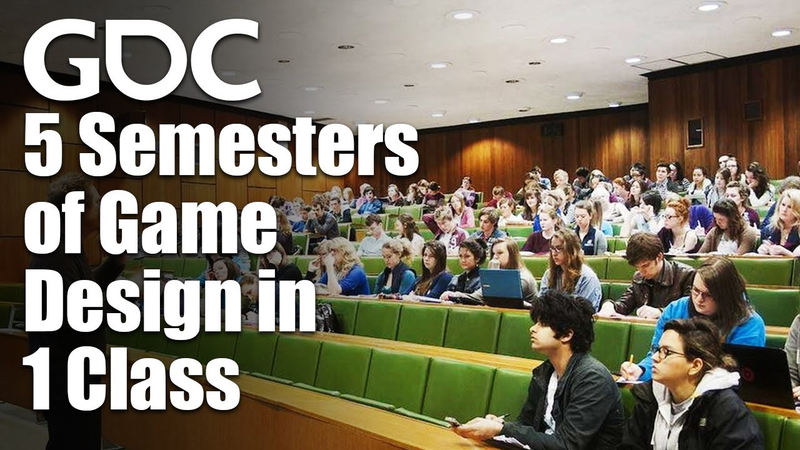
How to Teach 5 Semesters of Game Design in 1 Class
The game design curriculum at Tufts University achieves an accelerated pedagogical model by condensing five semesters of traditional instruction into a single term.
- Jason Wiser’s game design course at Tufts University condenses five semesters of traditional curriculum—including tabletop design, Unity/C# programming, 3D/2D art, and project management—into a single, high-intensity term.
- The course utilizes 'stacking theory,' which focuses on mastering one concept at a time while layering them to build complex skills, allowing students to learn multiple disciplines through rapid, iterative prototyping.
- The first half of the semester focuses on tabletop game design with pass/fail grading to lower the pressure to succeed, encouraging students to prioritize experimentation, teamwork, and radical revision over polished final products.
Because Games Matter - Jane the Concussion Slayer - Extra Credits
The primary thesis of this account is that the psychological strengths cultivated through video games—such as resilience, optimism, and creative problem-solving—can be effectively applied to manage real-world trauma and chronic health challenges.
- The SuperBetter methodology, which gamifies recovery to manage trauma and chronic illness, has been used by over 1 million people since its inception 11 years ago.
- Peer-reviewed research from institutions like the University of Pennsylvania and Ohio State University indicates that engaging with the SuperBetter method for just 10 minutes daily can accelerate concussion recovery and reduce symptoms of anxiety and depression.
- Game designer Jane McGonigal developed the 'Jane the Concussion Slayer' framework in 2009 to treat her own Post-Concussion Syndrome, utilizing role-playing elements like secret identities, allies, and power-ups to regain agency.
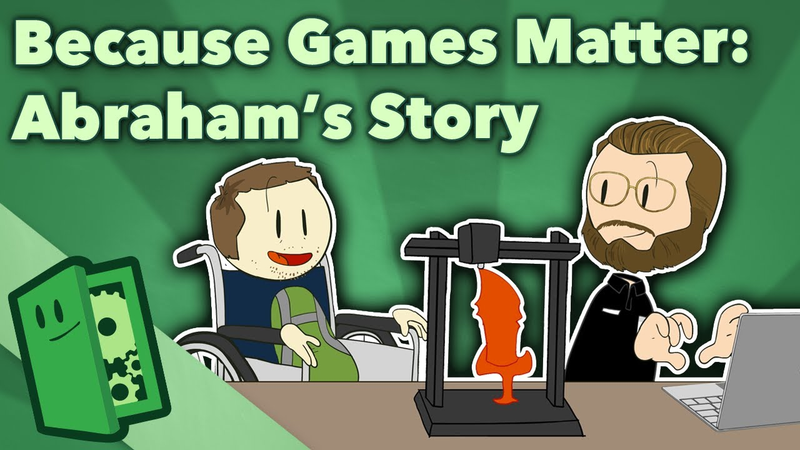
Because Games Matter - Abraham's Story - Extra Credits
The integration of gaming technology into clinical environments serves as a powerful therapeutic tool, capable of augmenting medical treatments and improving the quality of life for hospitalized patients.
- Gaming technology is being integrated into clinical environments as a therapeutic tool to provide distraction, pain management, and emotional support for hospitalized patients.
- The Child's Play charity currently supports this integration by providing funding and equipment to approximately 180 hospitals worldwide.
- Specialized roles, such as the Gaming Technology Specialist at Children's Hospital Colorado, utilize diverse platforms including VR, AR, 3D printing, and robotics to improve patient quality of life.
Improving Games Accessibility in Children's Games Through QA
The BBC’s children’s games division, which produces content for audiences aged two to twelve, has successfully integrated accessibility into its quality assurance (QA) processes to ensure inclusive gaming experiences.
- The BBC children’s games division eliminated all accessibility-related complaints for over 50 consecutive releases by shifting from reactive testing to a proactive, integrated QA lifecycle.
- Following a 2016 critical failure involving a broken screen reader, the division overhauled its process to mandate accessibility standards from initial project kickoff through to final release.
- The studio implemented a formal, console-style certification process that requires all games to pass specific technical accessibility tests before they are permitted to launch.


Using Educational Games in the Classroom: Guidelines for Successful Learning Outcomes
Digital games serve as powerful pedagogical instruments capable of enhancing student motivation, cognitive development, and technical proficiency when integrated into formal education.
- Educational games function most effectively as supplements to traditional instruction rather than replacements, requiring structured reflection and debriefing to connect game mechanics to curriculum objectives.
- Successful integration relies on a rigorous evaluation process that balances pedagogical alignment with technical feasibility, including accessibility for students with disabilities and compatibility with existing school infrastructure.
- Game-based learning leverages constructivist theories and immersive environments to facilitate trial-and-error experimentation, which is critical for mastering complex problem-solving and technical skills.
Lessons from Duolingo: How to Turn Good Intentions Into Good Numbers
The primary objective of this analysis is to demonstrate how game developers and technology companies can reconcile ethical values and educational missions with the pursuit of profitability and data-driven growth.
- Duolingo scaled from zero to over $100 million in annual revenue within 3.5 years while simultaneously increasing day-one retention fivefold.
- The company maintains a high-volume experimentation culture, having conducted over 3,000 A/B tests to drive growth and product development.
- Organizations can protect core values during rapid growth by implementing 'guardrail metrics' that prevent teams from optimizing isolated KPIs at the expense of overall user experience or company health.

Doing Good is Hard! - The Challenges of Making Games 4 Good PG Connects Digital #2
The mobile gaming industry faces significant structural and regulatory hurdles when attempting to integrate social impact and charitable giving into business models.
- Platform policies from Apple and Facebook create significant barriers to integrating charity, with Apple restricting mentions of charitable giving to prevent fraud and Facebook frequently flagging social or environmental ad content.
- The traditional model of donating a percentage of game profits is complicated by tax regulations and the difficulty of maintaining transparent communication with players without appearing disingenuous.
- Developers are shifting toward alternative funding strategies, such as securing equity-based charity investments and using corporate sponsors to underwrite campaigns, to bypass the limitations of in-game monetization.
Saving the World with Games - Citizen Science and More - Extra Credits
Games serve as powerful tools for citizen science and real-world problem-solving, moving beyond entertainment to facilitate tangible contributions to medicine, urban planning, and physical therapy.
- Gamified citizen science projects leverage human pattern recognition to solve complex research problems faster than traditional algorithms, such as when 57,000 Foldit players deciphered an AIDS-related enzyme structure in three weeks after a decade of scientific stagnation.
- Large-scale crowdsourcing through games can mobilize massive participant bases, exemplified by EyeWire engaging 250,000 players to map complex neural circuits.
- The United Nations’ Block by Block initiative has utilized Minecraft across 35 countries to facilitate community-led urban planning and identify local safety concerns.

Leveling up to Remission - A Clinical Study of Playing Toward Your Strength
The digital gaming industry is increasingly exploring the intersection of game mechanics and psychological health, specifically targeting the needs of young people facing chronic illnesses.
- Approximately 40% of individuals under age 24 face chronic conditions, with 60% of that demographic experiencing secondary psychological issues.
- The game Shadow’s Edge was developed by analyzing 14.2 million social media conversations to identify common emotional struggles like anxiety and isolation among teens.
- Preliminary studies, including a 55-participant trial and an ongoing 196-patient clinical trial at Lurie Children’s Hospital, indicate that gameplay improves user optimism and self-confidence.