Educational reports and market data
Documents
Game Literacy: Games in Education - Should We Teach Game Basics? - Extra Credits
The integration of digital games into educational curricula faces a significant, often overlooked barrier: the lack of universal game literacy among students.
- Uneven game literacy among students creates a significant equity barrier, as prior exposure to gaming conventions like controller manipulation and terminology varies drastically based on home environment.
- Lack of foundational gaming knowledge prevents educators from using digital games as reliable instructional tools, as students without experience often feel alienated or frustrated by the medium.
- Integrating game literacy into early childhood education is the most effective long-term solution to ensure all students possess the mechanical familiarity required for later game-based learning.
Welcome to Extra Credits EDU: A Resource for Educational Games on Steam!
Digital games serve as powerful pedagogical tools, yet educators and parents often struggle to identify high-quality titles suitable for classroom or home learning environments.
- A curated Steam resource has been established to categorize commercial off-the-shelf games based on their specific educational utility for classroom and home learning.
- The initiative bridges the gap between mainstream gaming and formal education by providing a vetted library of titles aligned with subjects like history, physics, and ethics.
- Practitioners utilize established commercial titles, such as the Civilization series for sociology and history, to foster critical thinking and subject mastery.
Education: 21st Century Skills - How Games Prepare You for Life - Extra Credits
Modern educational systems face a persistent challenge in teaching 21st-century skills—specifically critical thinking, communication, collaboration, and creativity—which are essential for future economic success but difficult to impart through traditional rote learning.
- The primary barrier to educational gaming is the lack of conscious transference, where players fail to connect in-game actions and skill-building to real-world applications.
- Teachers must act as the essential bridge between gameplay and curriculum, helping students explicitly relate interactive experiences to external, real-world problems.
- Games inherently foster 21st-century skills—critical thinking, communication, collaboration, and creativity—that traditional rote learning systems struggle to impart.
Education: Responsive Learning - How Games Help Teachers - Extra Credits
The integration of digital games into educational environments offers a transformative solution to the limitations of standardized instruction.
- Digital games function as a force multiplier for educators by automating diagnostic and remedial processes, allowing teachers to focus on high-impact, one-on-one instruction.
- Educational games utilize behavioral data tracking—such as input timing and decision-making patterns—to identify specific conceptual hurdles that traditional lecture-based instruction often misses.
- Games mitigate compounding knowledge gaps by dynamically adjusting difficulty levels and providing targeted micro-tutorials tailored to an individual student's learning pace.
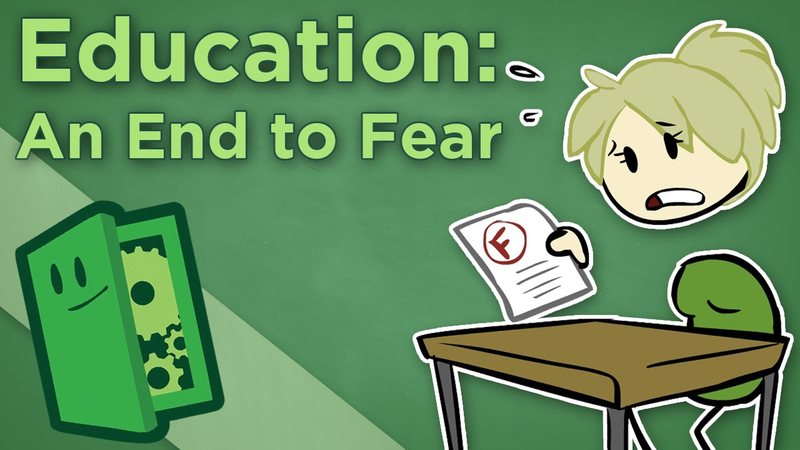
Education: An End to Fear - Why Students Hate Homework - Extra Credits
Traditional educational systems are fundamentally flawed by their reliance on assessment-based homework, which prioritizes rote memorization and penalizes students for initial mistakes.
- Traditional homework systems prioritize rote memorization and penalize initial mistakes, which fosters a culture of fear that discourages the risk-taking required for modern workforce success.
- Video games offer a superior educational model by utilizing rapid feedback loops that frame failure as a necessary, iterative step toward mastery rather than a final judgment.
- Automated digital tools can offload repetitive grading tasks, allowing educators to shift their focus from administrative assessment to facilitating deep learning and critical thinking.
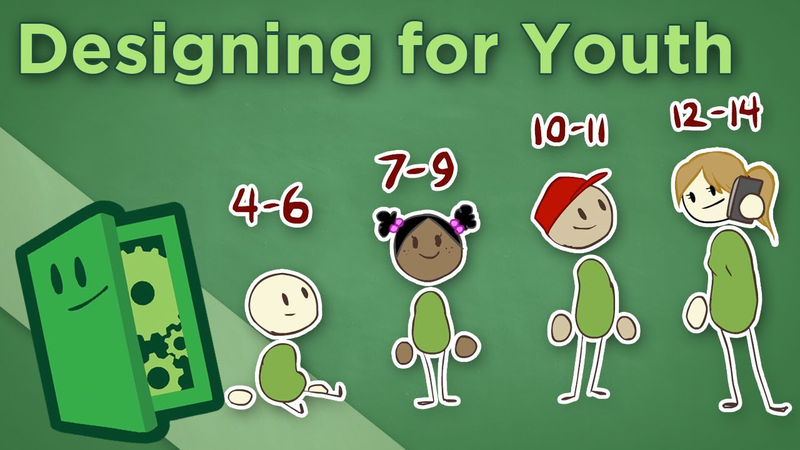
Designing for Youth - Making Games for Players Under 14 - Extra Credits
Designing games for children under 14 requires a fundamental shift in development philosophy, moving away from the historical reliance on licensed intellectual property and low-budget production toward creating genuinely engaging, age-appropriate experiences.
- Developers must segment the youth market into four distinct age brackets—4–6, 7–9, 10–11, and 12–14—to account for rapid shifts in cognitive, social, and literacy development.
- Designers should avoid the 'box art' strategy of relying on licensed intellectual property and instead prioritize gameplay quality to meet the expectations of increasingly discerning parents.
- Games should incorporate multiple levels of success to ensure accessibility for novices while providing sufficient depth to reward strategic thinking.

Fishing Cactus reveals why their next game will teach everyone to code
Fishing Cactus, a Belgian game development studio, is currently prioritizing the creation of educational titles that teach programming logic, reflecting a broader industry shift toward recognizing video games as powerful pedagogical tools.
- Fishing Cactus prioritizes game design over educational objectives, operating on the principle that a title must be inherently entertaining to function as an effective learning tool.
- The studio utilizes a dual-track business model, balancing consumer-facing projects with B2B work-for-hire services to provide the financial stability required for high-risk educational development.
- The studio aims to demystify computer science by formalizing the inherent learning processes found in all video games, such as resource management and reflex development.
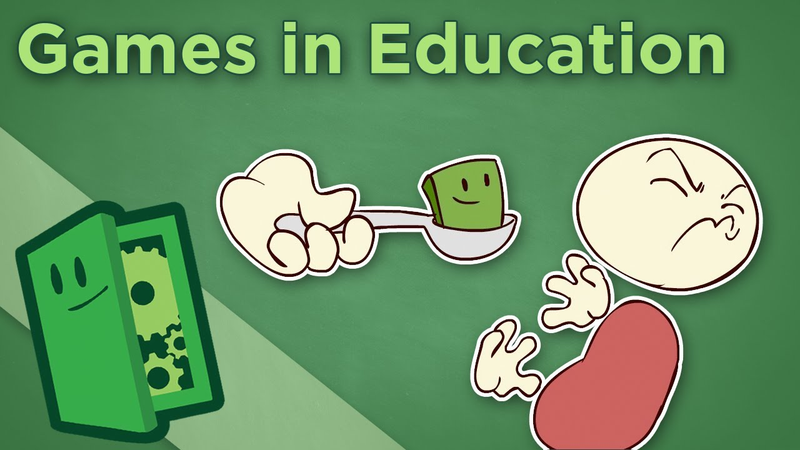
Games in Education - How Games Can Improve Our Schools - Extra Credits
The integration of games into educational environments requires a fundamental shift in pedagogical philosophy rather than a simple adoption of digital tools.
- The efficacy of games in education is fundamentally dependent on their voluntary nature, as mandating games as assignments strips away the intrinsic motivation and cognitive investment required for effective learning.
- Educational institutions must shift from a top-down, content-consumption model to a mentorship-based approach that fosters student curiosity and self-driven discovery.
- The 'Reality Ends Here' program at USC achieved nearly 100% student participation by using a low-tech, card-based alternate reality game to pique interest rather than requiring attendance.

Ken Scott-Brown explains how Tapology might alleviate eyesight issues
Tapology is a collaborative research initiative designed to explore whether mobile gaming can mitigate the effects of age-related macular degeneration (AMD).
- Tapology is a collaborative research initiative between the University of Abertay Dundee, Glasgow Caledonian University, and the Fife Society for the Blind aimed at using mobile gaming to mitigate age-related macular degeneration (AMD).
- The project utilizes five iPad-based mini-games designed to improve visual performance by leveraging the 'useful field of view' to stimulate peripheral vision in patients with central vision loss.
- Researchers are testing whether a consistent, short-duration gameplay regimen of approximately five minutes daily can lead to measurable improvements in visual function and user confidence.
Moving Forward - Games That Do Good - Extra Credits
The video game industry faces a persistent public relations crisis, characterized by a reactionary stance that defends games only when they are scapegoated for societal violence.
- The game industry must abandon its reactive, defensive PR strategy and instead proactively promote the medium's tangible contributions to science, education, and global empathy.
- Games like Foldit demonstrate high-level scientific utility, as seen when players successfully solved the structure of an HIV enzyme that had remained elusive to researchers for over a decade.
- Games serve as effective educational tools that assist students in overcoming learning disabilities like dyslexia, while also facilitating mathematics and language acquisition.
Gamifying Education - How to Make Your Classroom Truly Engaging - Extra Credits
Gamification in education serves as a powerful tool to increase student engagement by shifting the focus from punitive grading to a system of continuous progress and agency.
- Replace traditional letter-grade systems with experience-based point accumulation to shift the focus from penalizing mistakes to rewarding continuous growth.
- Implement class-wide achievements to incentivize teamwork, encouraging high-performing students to support peers in unlocking collective rewards.
- Foster student agency by explicitly demonstrating the link between decision-making and meaningful outcomes to build resilience and goal-oriented behavior.
Tangential Learning - How Games Can Teach Us While We Play - Extra Credits
The gaming industry currently suffers from a rigid divide between entertainment-focused titles and educational software, often referred to as edutainment.
- Tangential learning bridges the gap between entertainment and education by sparking a self-driven desire in players to research game-related concepts outside of the play environment.
- Developers can implement tangential learning by embedding kernels of information—such as historical, scientific, or philosophical references—directly into a game's narrative or mechanics.
- Effective integration methods include the use of in-game codex systems, referential naming conventions, and loading screen trivia to provide context without disrupting the core gameplay loop.