Diversity & Inclusion reports and market data
Documents
Accessibility on a Shoestring
Accessibility in game development is defined as the removal of unnecessary barriers that prevent players from experiencing a game as intended.
- Accessibility is not about medical conditions but about removing design-based barriers, such as small text or inflexible controls, that prevent players from experiencing a game as intended.
- Considering accessibility early in development is the most effective strategy for small studios, as demonstrated by Naughty Dog's shift from Uncharted 4 to The Last of Us Part II.
- Developers should prioritize the five most common accessibility complaints: text size (avoiding anything smaller than 28 pixels at 1080p), remapping controls, background transparency for text, motion sickness triggers (camera shake/blur), and photosensitive epilepsy risks.
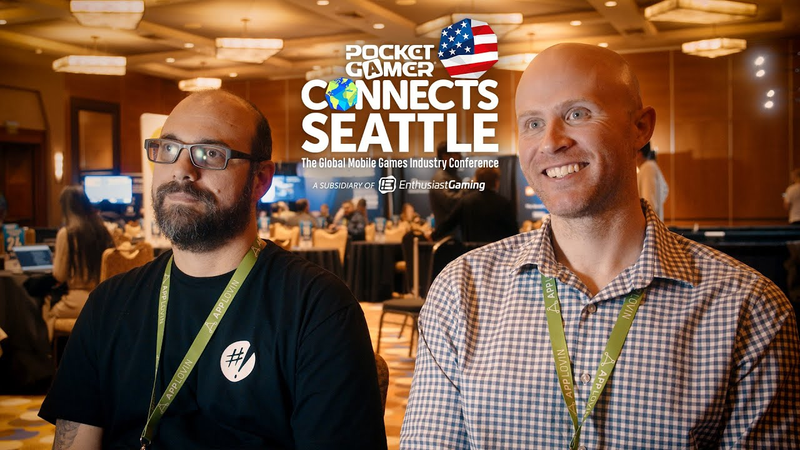
How to get into the games industry with Hashbang and AIE
The partnership between the Academy of Interactive Entertainment (AIE) and Hashbang Games illustrates a collaborative model for bridging the gap between specialized game industry education and professional studio employment.
- The partnership between the Academy of Interactive Entertainment (AIE) and Hashbang Games demonstrates that studios can mitigate the risks of hiring junior talent by pairing them with senior mentors within a culture of continuous learning.
- The game industry currently faces a significant talent imbalance, characterized by a surplus of applicants for creative roles like character artistry and a shortage of specialized professionals in rigging, game design, and production.
- There is a specific industry-wide deficit of producers who possess a nuanced understanding of game-specific agile development, as many candidates lack experience beyond general project management.
Ask Me Anything: Q&A with Global Game Jam's Kate Edwards
Culturalization serves as a critical strategic pillar in the modern gaming industry, functioning as a bridge between creative intent and global market viability.
- Culturalization is a strategic risk-mitigation tool that prevents international public relations crises and costly product recalls by aligning creative intent with global market sensitivities.
- Effective cultural representation requires moving beyond basic localization to incorporate deep analysis of regional, religious, and political nuances throughout the development lifecycle.
- Studios should avoid creative laziness and harmful stereotypes by conducting due diligence and actively collaborating with subject matter experts and representatives from the cultures being depicted.
A Hotline for the Games Industry: Lessons Since 2020
The Games and Online Harassment Hotline, established in 2020 by Feminist Frequency, serves as a specialized, text-based emotional support resource for individuals within the gaming industry and player communities.
- The Games and Online Harassment Hotline, established in 2020, provides specialized, text-based emotional support for both industry professionals and players experiencing workplace hostility, burnout, and harassment.
- Data from the hotline's first year shows an even split between industry professionals and players, with gender-based harassment identified as the most frequent form of identity-based abuse.
- Developers frequently report compounded trauma stemming from a combination of systemic marginalization, toxic management, and unsustainable labor practices that undermine their professional passion.
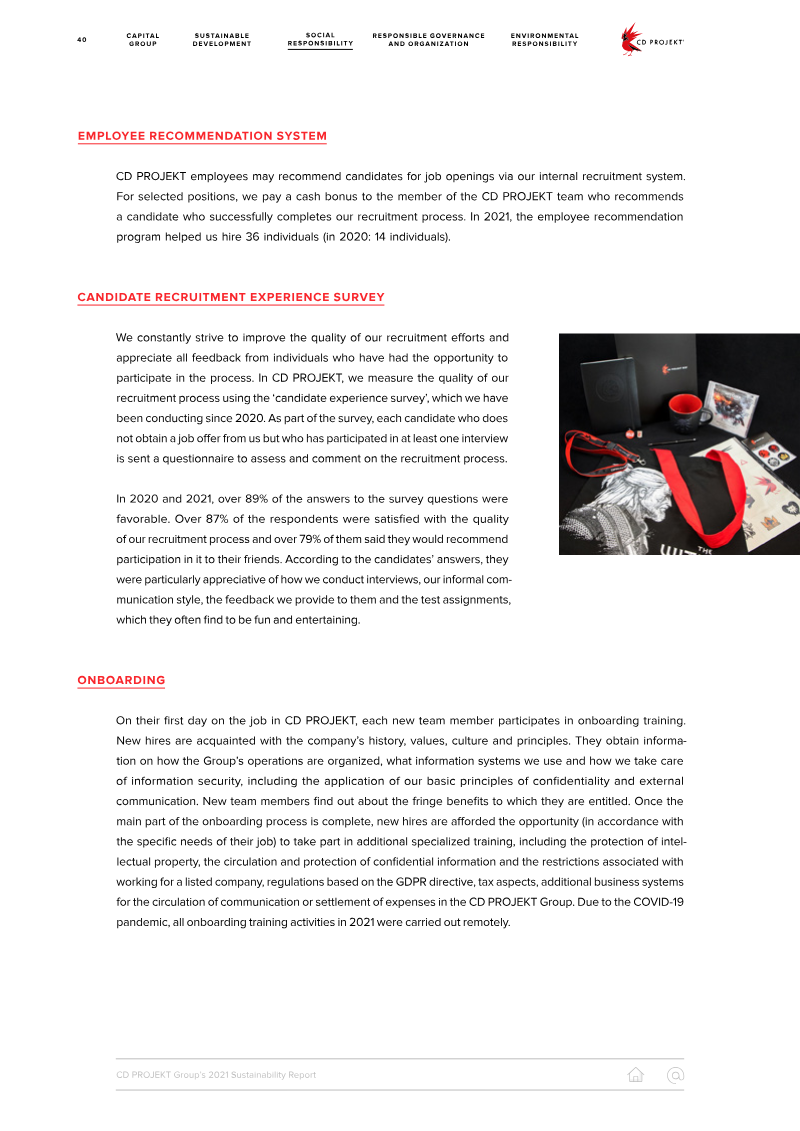
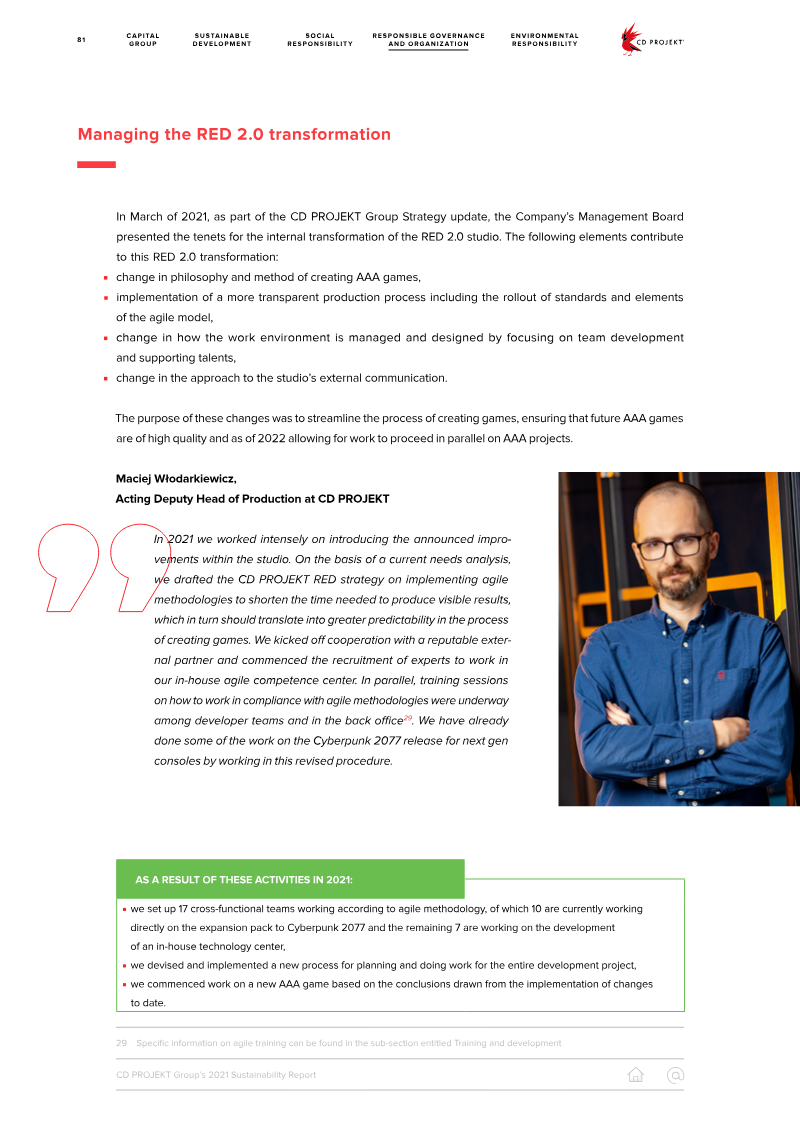

CD PROJEKT Group's 2021 Sustainability Report
The CD PROJEKT Group’s 2021 sustainability disclosures establish a formal environmental, social, and governance (ESG) framework designed to align the company’s creative and financial independence with long-term operational stability.
- CD PROJEKT Group implemented the RED 2.0 transformation strategy in 2021 to transition toward agile, parallel AAA game development while formalizing its ESG framework.
- The company maintains a workforce of approximately 1,200 employees with a 29% female representation rate, which exceeds industry averages.
- Operational emissions from building infrastructure were identified as the primary source of the company's carbon footprint, prompting investments in renewable energy and efficiency upgrades.
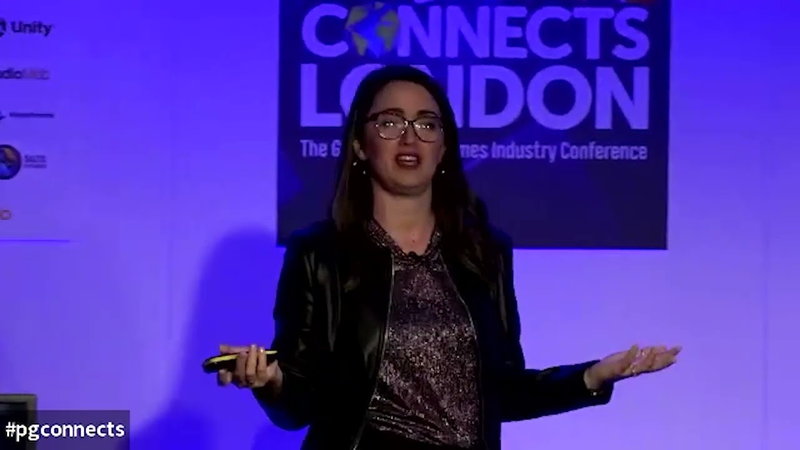
Internationalisation, Content, & Diversity: Reaching New Markets Through Technology
Effective game localization is a critical, often overlooked component of global market expansion that requires a strategic, integrated approach rather than a last-minute translation task.
- Localization must be integrated into the development cycle from the start, as hard-coding text creates significant technical barriers that increase costs and delay global market entry.
- Data shows that 64% of users are willing to pay more for products in their local language, while 40% of internet users avoid non-localized websites entirely.
- Effective localization requires more than translation; it involves adapting art assets, legal requirements, and cultural nuances to specific regions like the Asia-Pacific, Latin American, and Middle Eastern markets.
UK Games Industry Census 2022: Understanding Diversity in the UK Games Industry Workforce
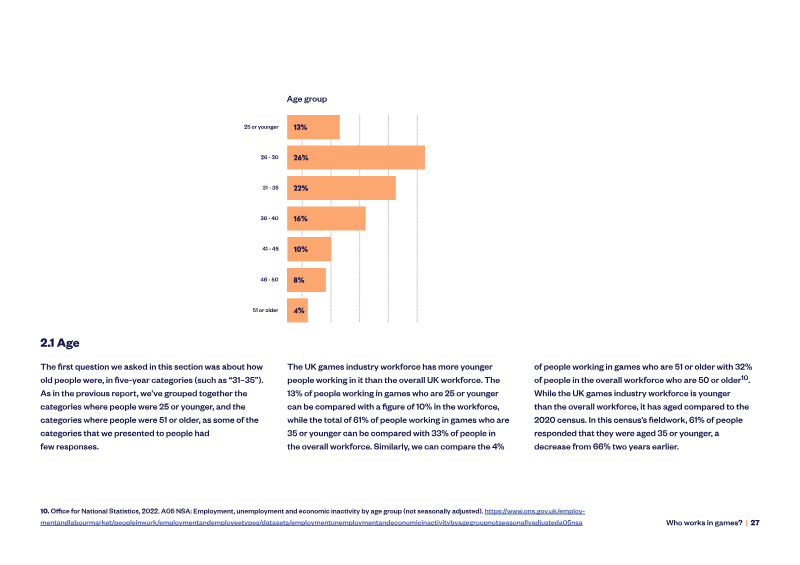
The UK games industry workforce is characterized by a highly educated, predominantly white, and relatively young demographic that remains largely consistent with findings from 2020.
- The UK games industry workforce is highly educated, with 82% of professionals holding at least an undergraduate degree, yet it remains predominantly white and drawn from professional or managerial socioeconomic backgrounds.
- Workplace culture is characterized by a significant 'crunch' culture, as two-thirds of employees report working weeks exceeding 40 hours during peak periods.
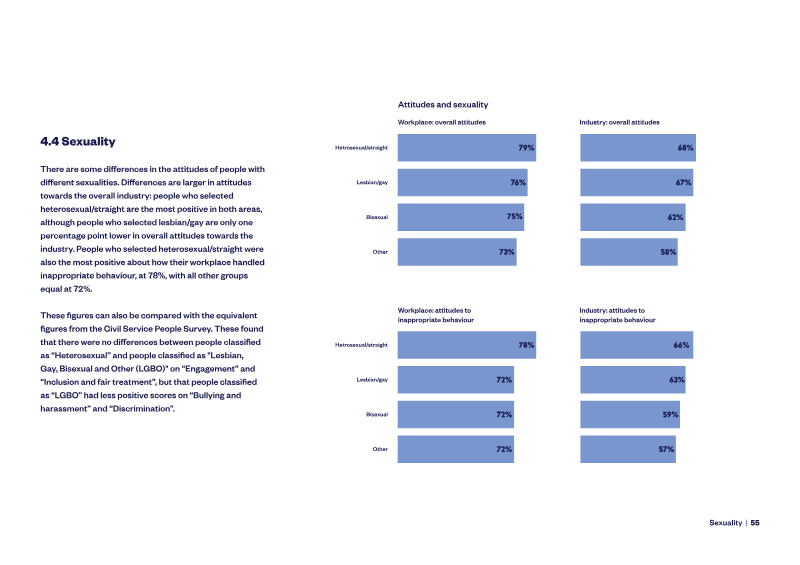
- Rates of anxiety and depression in the industry significantly outpace those of the general UK population, with particularly elevated levels reported among LGBTQ+, non-binary, and trans employees.
All Tomorrow's Stories: The Future of Representation According to Gen Z Storytellers
Inclusive representation has transitioned from an optional marketing consideration to a fundamental strategic imperative for brands seeking to engage Generation Z. This demographic views the accurate portrayal of diverse identities not as a trend, but as a baseline responsibility.
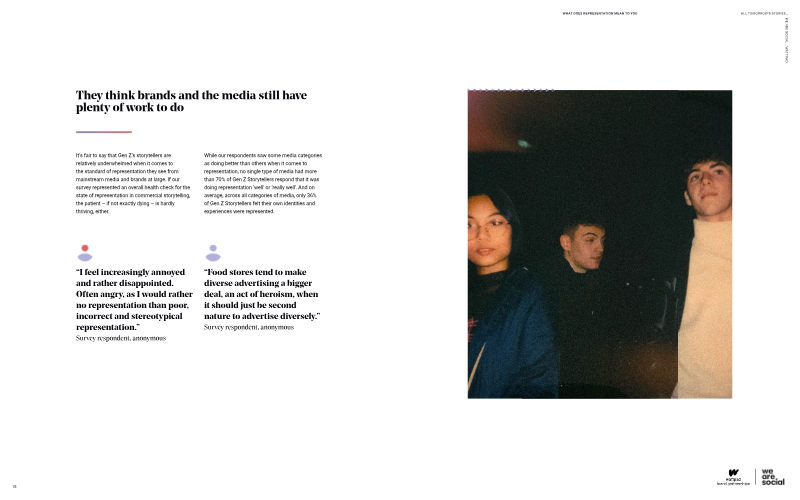
- While 87% of Gen Z storytellers advocate for greater inclusivity, only 36% believe contemporary media accurately reflects their identities.
- Satisfaction rates regarding representation drop to between 8% and 15% for non-binary, disabled, and ethnically diverse individuals, highlighting a critical failure in current content strategies.
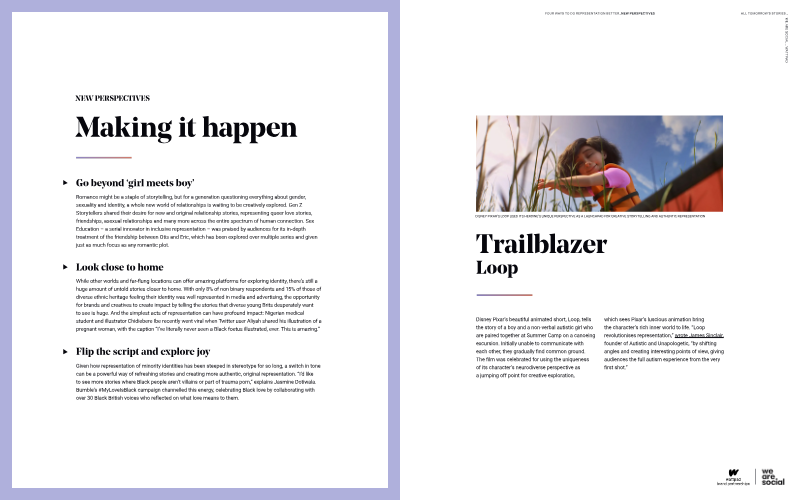
- Gen Z audiences actively reject performative tokenism and inclusivity-washing, identifying superficial efforts that rely on rigid stereotypes or hyper-fixation on marginalized traits.
Charter for Change: 2022
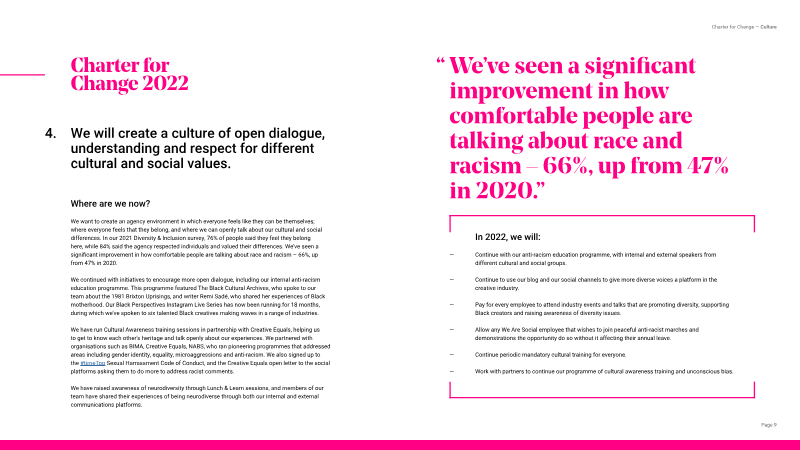
The 2022 Charter for Change outlines a strategic framework for We Are Social to advance diversity, equity, and inclusion within the advertising industry.
- We Are Social failed to meet its 2021 multi-ethnic representation target of 25%, with actual representation remaining stagnant at 19%.
- The agency exceeded industry benchmarks for gender diversity, with women comprising 54% of the total workforce and 46% of leadership roles.
- LGBTQ+ representation within the agency saw significant growth, increasing from 12% in 2020 to 21% in 2021.

Change Your Attitude, Change Your Life - From the Laws of Human Nature (Philosophy Friday #13)
The provided content outlines a philosophical framework for personal and professional development, drawing on the life of Russian writer Anton Chekhov as a case study for overcoming adversity.
- Personal and professional growth requires shifting from a victim-oriented mindset to one defined by self-responsibility, active observation, and a commitment to work and love.
- Individuals can break self-imposed psychological patterns by identifying and mitigating five specific negative attitudes: hostile, anxious, depressive, resentful, and avoidant.
- Deep observation of oneself and others serves as a primary tool to understand underlying motivations and historical contexts, preventing reactions based on autopilot behavior.
Charter for Change 2026
The Charter for Change 2026 outlines a strategic framework for fostering an inclusive, diverse, and equitable workplace within the creative agency sector.
- The agency has set a 2026 production target of 50% representation for directors and photographers from underrepresented backgrounds.
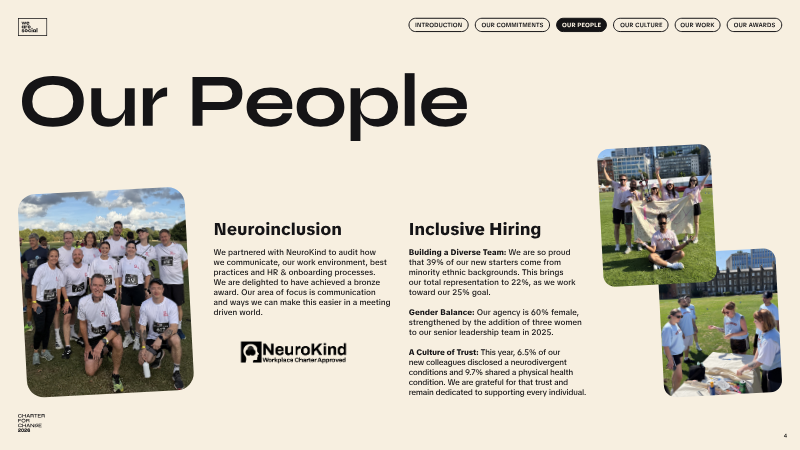
- Minority ethnic representation among staff reached 22% in 2025, with 39% of new hires coming from these backgrounds, moving toward a 25% total workforce goal.
- The agency maintains a 60% female workforce and is launching the 'Women Worth_' leadership program in 2026 to further support professional development.
How to Represent Mental Illness in Games
The gaming industry holds a significant moral responsibility to refine the representation of mental health, given that up to half of the global population will encounter mental health challenges during their lifetimes.
- Media portrayals of mental illness often rely on harmful tropes—such as the 'terrifying' asylum patient or the 'evil' psychotic—which discourage individuals from seeking professional help due to fear of institutionalization or personality-altering medication.
- When writing about mental health, developers should prioritize accuracy by conducting basic research, as even simple fact-checking can prevent the trivialization of complex conditions like OCD or anxiety.
- Accurate representation in games provides a significant benefit by allowing players to identify their own vulnerabilities, which can serve as a powerful tool for self-recognition and validation.