1 free read left. Create a free account for unlimited reading + AI research.
Create free account
Internationalisation, Content, & Diversity: Reaching New Markets Through Technology
Key insights
7 takeaways- 01Effective localization requires more than translation; it involves adapting art assets, legal requirements, and cultural nuances to specific regions like the Asia-Pacific, Latin American, and Middle Eastern markets.
- 02The global gaming market is projected to reach $200 billion, making strategic internationalization a critical component for scaling titles into successful global products.
- 03Localization must be integrated into the development cycle from the start, as hard-coding text creates significant technical barriers that increase costs and delay global market entry.
- 04Providing translators with comprehensive context, including style guides, visual assets, and character limitations, is essential to prevent poor user experiences and brand damage.
- 05Developers should utilize translation memory databases and cloud-based audio recording to maintain consistency and reduce production overhead while accessing high-quality voice talent.
- 06Rigorous linguistic and functional quality assurance is required to ensure localized text fits within user interfaces, which directly impacts player retention and lifetime value.
- 07Data shows that 64% of users are willing to pay more for products in their local language, while 40% of internet users avoid non-localized websites entirely.
Ask AI about this video
Transcript
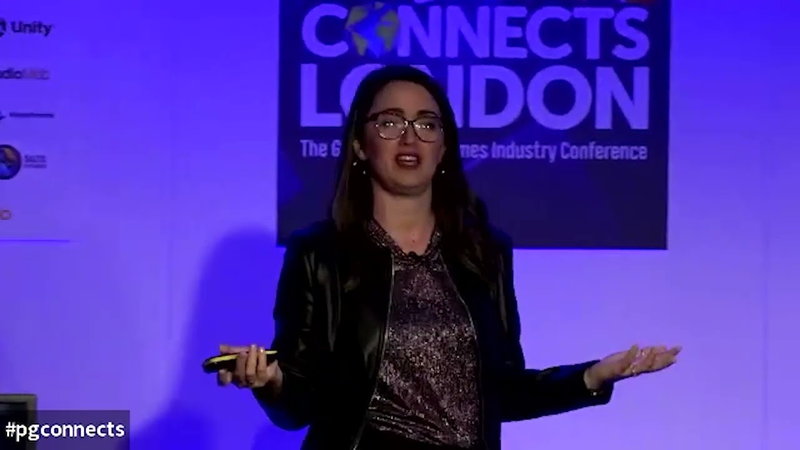
[Music] [Music] cool um the great thing about the dev toolkit uh track is it covers a lot of different uh areas we're now gonna move on a couple completely different things we're looking at internalizationalization trying to saying that quickly three times fast content diversity and reaching new markets through technology we've got trans perfect here kayla is that correct come on kayla come to the stage 15 minutes that's all the time i have today to explain one of the most overlooked pieces of taking your game global which is localization and so some of you in the audience might already know what that is so can i just get a quick poll raise your hand if you think you know what localization is
okay a few of you that's good so for those of you that don't know what localization is let me clarify um localization is often confused with translation so for us today we're going to consider localization is the entire process of adapting your content or your brand or your product for a specific location or market so translation is a piece of that puzzle but it's not the only piece you have to consider right so this includes um adaptation of cultural nuances market preferences altering art assets creating new packaging sometimes adapting your manuals it can also mean re-recording content or audio it can mean cutting out parts of your game which are potentially illegal or don't meet legal requirements in certain markets and it can potentially mean re-recording content to replace the cut content right and so i spent the last 10 years in localization working across several different industries and what we sent
what we tend to see in all the different industries is that after localization is thought of as an afterthought so it's something that comes at the very end after i thought of my game i've thought of my project i've launched it in english or whatever your source language is and then i'm like oh no now i have to localize it or i want to launch in other markets right and so you see game developers and publishers who spend hundreds and thousands and millions of dollars developing their game right they might take years or months creating the perfect game look and feel and style and then um two weeks before they're about to launch they'll call up a translator and say hey can you translate my whole entire game in eight days and you wonder why it doesn't work out well right so i wanted to show you a few things of what can go wrong when you don't take localization into account i'm sure a lot of you know some of these headliner global failures that you'll see for example don't worry i didn't do any gaming once yet i don't want to embarrass anyone in the audience coors light for any of you that speak spanish this colloquially means get diarrhea so
that wasn't a great one making you want to drink a beer um one of my favorites it's it's quite old nothing sucks like an electrolux so that was a translation into english which it makes sense for a vacuum but it also you know isn't the greatest and lastly even giants like coca-cola right you think like oh someone who's this big who has this much marketing budget money and resources won't make a mistake when coca-cola originally launched their name in china there was two different versions of what it meant depending on the dialect one was a uh stuffed i have to look because it's so weird bite the wax tadpole or a female horse stuffed with wax and google on my team can attest to this because we talked about it and so in a desperate effort to change their brand name in china they searched over 40 000 characters to try to find the match of these that means like tasty or delicious or happiness in your mouth and so it's actually phonetically very similar and so there's a couple fun
ones um for the gamers out there these are old so hopefully i'm no offending anyone a winner is you from ghostbusters and welcome to die was magento's x-men's expression in english when it was translated poorly um when i was preparing for this this presentation i actually looked up online there's a translation gaming fails hall of fame so check it out i mean it's quite funny i hope your game's not on there but it's actually not really funny right because what it means is that potentially business-wise there's a lack of localization strategy which can be really detrimental to the launch of your brand and your game right so i'm going to take you through a few things today on how to ensure that you can avoid you know all of these things and avoid being on the gaming translation failure hall of fame so but before we get into that um i want to say i want to ask you know why why should this matter to me or why do i care why can't i just publish my game in english right so let's start by zooming out and looking at the opportunities that exist today which were already
actually covered in the opening presentation so i think it's just great to talk about them again so the gaming market is going to be about 200 billion dollars 200 billion dollars guys in just a mere two years right so there's a huge opportunity out there um it's worth looking at um some of the reports that came out so this is by new zoo we're all quoting them they're great um if you look at 1.6 billion players in asia pacific right we're looking at specifically recent studies are talking about southeast asia countries like vietnam thailand philippines indonesia malaysia and singapore so they're making up a large percent of that specific region's growth and then we want to zoom in on latin america and uh middle east and africa where you're having huge year-on-year growth in terms of players which is mostly due to the growth in the online population right and the increasing infrastructure that they have in the region which is going to mean there'll be more players for all of you
and so another report i really liked were these two from app annie is macro mobile trends report and you can see among the top 20 countries that they have only two of them are english-speaking countries right so english isn't going to be enough if you want to reach all the global players that are out there and so what does this mean for you i'm going to break it down and give you four tips on key considerations for localizing your game when you want to go global the world is becoming more global people are more connected and as you launch your game you have to be thinking about where are these players coming from if you want to increase your revenue your downloads and your player experience ratings right so i recently caught up with an industry expert over zoom just before the event and she had been telling me she was working in localization at a game company for about 12 years and just before kovid she had been at an event in person and the likes of square enix and disney were telling her that even in 2019 so two years ago
there were developers that were coming to them with these great games and they were still committing mistakes that made it very difficult for them to then localize or launch their game in other markets so for example developers are hard coding the text onto the game which makes it impossible or very difficult and time consuming and costly to localize right so it doesn't matter where you are in your localization journey um if you're a giant publisher and you have a localization team if you're an indie developer and you've never thought about it but you're trying to figure it out i'm going to give you four considerations on how to do the best practices for localizing so the first one don't leave it as an afterthought right i've already mentioned that a couple times but i'm just going to keep harping on it until you all leave remembering kayla's presentation don't leave it as an afterthought so there's a lot of risks as i mentioned if you don't consider it up front because it will be twice as costly and take twice as long later so give yourself enough time right um
to give you like an example um or some context so a normal translation team which you guys don't really care about but just for context can translate about 2 000 words a day right and a tester a linguistic tester can test about 8 000 words per day so if you think about like a 3 million word mmo game like you're going to need months even if you use several teams to translate and localize your full game let alone the testing regression testing bug fixes regression testing again right so um if you're a hyper casual mobile title with maybe a couple thousand words you can get it done in a couple weeks right um and then secondly there's some best practices around the actual designing of the content so please like i said don't hard code text into your game think about expansion you'll need special characters potentially you know a lot of people forget that they're languages that go from right to left instead of left to right you also need to think about design interface dates times and formats things that
might need to be changed or adapted for different markets remember that icons and colors mean different things in different markets as well so the very typical one is you know red what the meaning is in the west versus in the east um and don't forget about you know like i said languages that can go from right to left or special characters if if those are markets that you want to look at an example of this recently that i came across was a really simple puzzle mobile game that they had actually launched and they they had expected to launch into a few specific markets and the game was actually picked up in markets that they weren't expecting and they started to get downloads however since they hadn't adapted or localized their app storefront um they weren't able to really ride the wave where they could have gotten more and more people to download um like think of wordle for example now there's wordle in spanish there's wordle in a lot of different languages so as those games get picked up and you see in different markets people are starting to like your game like how quickly can you react to get your game localized and then lastly it becomes part of your cycle right so
you can't just think like oh it's one and done like i translated my game and now i'm never gonna have to think about this horrible thing again no you have to remember that every time you make a release every time you make updates to the game you're gonna have to think how long is it gonna take to do it in the other markets how long is it gonna take to localize to translate to test so remember to incorporate that into your into your pro into your projects and then lastly um that's um sorry and then lastly um no that's the wrong one sorry here we go and then the second consideration so provide context in our industry across all different um sectors travel retail banking finance one of the biggest challenges is having context right so strings get exported from files and you get random words or strings and someone says translate this so two well i think there's three things in this section that i want you to think about one is the context of the translators you're working with and making sure you're finding translators that you know
are actually gamers or that know about the gaming industry and obviously if you can give them as much access as possible to your game the better and some of the things you should think of here are are you giving them glossary of key terms like mpsis which we call names places skills or items in your game are there terms that should not be translated the other thing is for example are you giving them a game design document or video access a stream if not can you please at least give them a screenshot so that they know what they're translating right and then clarifying things like what platforms is it going to be played on and then creating query logs and you might ask like what's a query log basically it's something where if you don't have enough context even if you're a great translator you could leave questions for the dev or production teams that gets sent back to them they'll answer the questions around that context and then it'll go back to the localization team to fix if needed and then imported back into the game and then tested right in context so
um another example of this is actually a italian publisher they had a lot of challenges of this up front but their localization team actually began to solidify these steps which helped them speed up their sim chips and sim launches of all the languages and markets and they've published over 200 games in eight languages so by pre-writing game references character limitations their gdd they've been able to really really speed up the process and make sure it goes smooth and it's the best quality of the game and the third consideration leveraging existing technology i know there's tons of technology out there vr ar you know nfts we're talking about blockchain but there's a few things related to localization that can be really helpful in developing your game for other markets so the first is translation memory basically this is a tool or a database that saves all the content you've previously translated and why does that matter right well one it means you're going to have a consistent experience across all your
channels all your different platforms in every different space right and maybe the best one is you're never going to pay twice for the same translation right so you'll have cost savings as well and it also standardizes how the translators can actually translate the content so it doesn't matter if it's app web coded xml csv json files they're able to work in this context in this tool and then the second one is audio recording in the cloud so historically um like 20 years ago a aaa game would support maybe 500 lines of dialogue right and it was usually just in one or two languages and today a typical a typical triple a game can easily feature between 50 to 100 000 lines of dialogue that's a lot of dialogue to record right and it's not uncommon to see those games or titles in 12 to 15 languages and so there's a revolution happening around the technology around audio being able to record in the cloud being able to interact with the live talents
in on the cloud or in the studio in real time and this reduces costs around sending bulky transfers where you used to even have to have specific tools or platforms to be able to send these audio files right and then lastly the democratization of voice talents is what i like to say historically there was a monopoly let's say on the people that could do voice recordings or that were high-end voice talents and so it was a really high cost and usually they would charge you right to travel to the major cities or the studios and they would charge you for their lodging in their hotel and you're like wow this is really unaffordable and so there's a really funny example that i love i'm from spain um where subbing subtitling dubbing and voiceovers are very common everything is dubbed and so there's a historically a guy named jordy brow and he would dub over 10 hollywood actors this is the same guy he was doing robin williams tom cruise dennis quaid sean penn i was like this guy just
imagine trying to get on his calendar and imagine how much it would cost you so now with the opportunity to be able to record from home studios there's a lot more voice talents that are being trained that are being available to to record the content in any home studio with the same high quality and there's a lot of even netflix and hbo series that during the last two years were recorded at home right so you don't have to worry about like oh that's going to be really poor quality it's it's really top quality if the otts and entertainment fields are using them as well and then lastly test test and test again and this one's always a fun one because a lot of times developers will come to us and be like oh well if i already translated my game and there are good translators and i'm going to have high quality translations why do i have to test right and what someone said to me recently that i really loved was okay well if you're such a great developer why do you have to do functional testing on your builds right and so testing is a really essential part of the process um
linguistic or localization qa linguistic testing teams will detect text that doesn't fit in your boxes that's not fully visible that will make your text wonky or covering up which is really critical because it can affect the ux or the user experience which in the end is really critical when the quality or the perceived quality of your game will likely affect your retention right of your of your players and the lifetime value of those players if they realize that you know it's not being taken care of in their markets so make sure you're testing in all your languages on all your devices and all the different platforms and to wrap up these are the four areas that i think you really need to remember when you're thinking about taking your game international the first don't leave localization as an afterthought right think about timing think about giving resources to your teams and don't hard code your text please if that's the only thing you take away today the second is around the context again use the right translator a translator is
just not any translator right find them in the right context in the right vertical make sure you're providing as much context in terms of style guides character guides character limitations anything that you can share with the teams leverage the existing technology because there's great tools out there today that can make things more cost affordable and faster for time to market and then test test test and test again um so the question really isn't is kayla how much should i pay for a translation or what's the price per word that's good on the market that's what you'll come and ask me at my booth later what you should be asking yourself is can i succeed in this market without localization 40 of internet users will not shop on websites that aren't localized and 64 are actually willing to pay more if the local if the product is in their local language so how do you avoid being on the game gaming translations fails hall of fame when you do localization correctly you
can take your niche title into an international phenomenon and when done poorly you'll end up here so that's why understanding that the process of video game localization is critical for publishers who want to take their games global and increase their sales internationally and that's all i think i'm a little over on time so if you guys have any questions or want to know more we actually have our booth upstairs it's right on the corner when you walk up and me and my team will be available all day and you can email or connect with me on linkedin um okay yeah i think we need to get your mic i think she says grab your mic so that was whilst whilst uh that was fantastic look there's a lot of paper there that's like reminds me it's okay no it's great um but i thought was really in interesting really insightful and and uh yeah we sort of learned a lot there um i was gonna ask you do we have a question because we do have time for one question probably is there a question for trans perfect over there he's stretching sorry i can't
this light's right in your face that's a great presentation really love all the graphics hello um so you mentioned the the value of localizing uh globally and thinking having that global mindset how do you think about the trade-off between obviously you could keep localizing and localizing in more and more and more languages but there's going to be this sort of long tail where the roi of doing it starts to become negative um how do you think about evaluating that if you're going into it sort of without any existing data about where the roi is yeah that's a great question i don't know if you guys are hearing this yeah um is that i'll just talk really loud that's a great question because that's something that comes up a lot and you'll see with like large publishers and large companies right there's always going to be a point on the access on the axis where it doesn't make sense right to keep investing and especially in terms of um for example what i said about recording obviously it is more cost effective these days but there is content that
it doesn't make sense uh financially right so you're gonna have to look at things like trends in the market you know um one of the things we can do is we have like consultants that can look at trends that are existing comparisons with other games but also um in terms of like your own game right you have to look at the data around your game and the potential so there's there's obviously like a capex or a cost analysis you have to do up front to look at that it depends on each game really cool fantastic and on that we got you a question but that was do go check them out at the booth and do do uh ask questions there but thank you so much for that presentation [Music] [Music] you
Summary
Effective game localization is a critical, often overlooked component of global market expansion that requires a strategic, integrated approach rather than a last-minute translation task. While the global gaming market is projected to reach $200 billion, success in diverse regions—particularly in the Asia-Pacific, Latin American, and Middle Eastern markets—demands more than just English-language releases. Localization encompasses the entire process of adapting content, cultural nuances, art assets, and legal requirements to specific regional preferences. Failure to account for these factors early in the development cycle frequently leads to costly errors, poor user experiences, and brand damage, as evidenced by historical marketing and translation failures.
To successfully navigate internationalization, developers should adhere to four core best practices. First, localization must be integrated into the development cycle from the start; hard-coding text into a game is a major technical barrier that significantly increases costs and delays. Second, providing translators with proper context—such as style guides, character limitations, and visual assets—is essential for maintaining quality and consistency. Third, developers should leverage modern technology, including translation memory databases for consistency and cloud-based audio recording, which has democratized access to high-quality voice talent and reduced production overhead.
Finally, rigorous testing is non-negotiable. Linguistic and functional quality assurance ensures that localized text fits within the user interface and maintains the intended user experience, which directly impacts player retention and lifetime value. Data indicates that 40% of internet users avoid non-localized websites, and 64% are willing to pay more for products in their local language. By treating localization as a continuous, strategic investment rather than an afterthought, developers can effectively scale niche titles into international successes while avoiding the pitfalls of poor cultural adaptation.