Diversity & Inclusion reports and market data
Documents
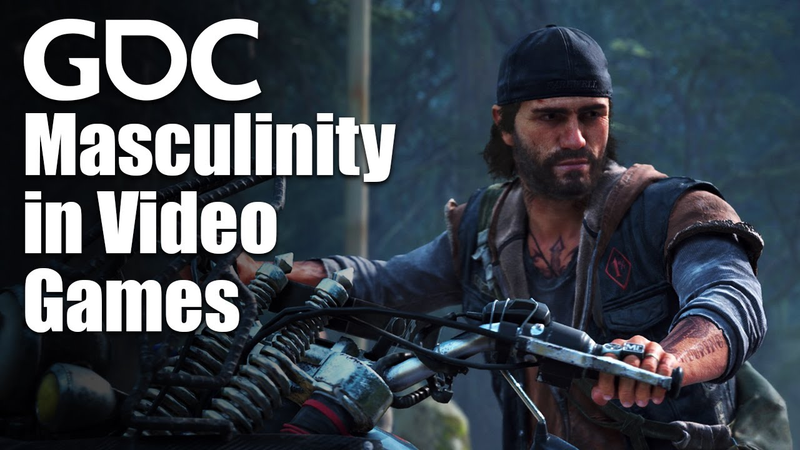
Geena Davis and Mitu Khandaker on Masculinity in Video Games and the Gaming Community
Popular video games and streaming platforms currently reinforce a rigid framework of hyper-masculinity, often referred to as the man box, which prioritizes aggression, violence, and self-sufficiency.
- Popular video games exhibit significant representation gaps, with male characters outnumbering female characters 4:1 and white characters outnumbering characters of color 3:1.
- White male characters in video games are twice as likely to carry weapons compared to male characters of color and are statistically more likely to be depicted as violent.
- LGBTQ+, disabled, and large body-type characters remain nearly non-existent in popular gaming content.
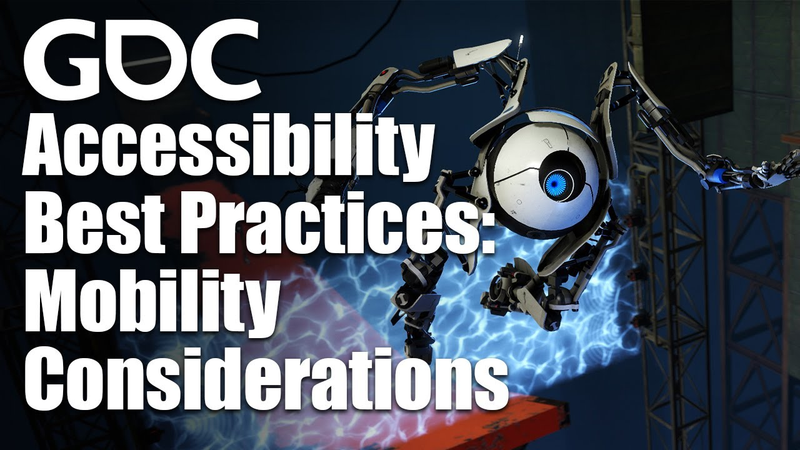
Accessibility Best Practices: Mobility Considerations
This presentation outlines essential accessibility best practices for game developers, specifically focusing on supporting players with mobility-related impairments.
- Accessibility is a critical design consideration, as CDC data indicates that one in five people have a permanent disability, a figure that rises to one in two by the time individuals reach their mid-seventies.
- Developers should prioritize input flexibility by supporting multiple device types, such as keyboard-only gameplay in Minecraft or allowing remappable controller inputs to accommodate varying dexterity levels.
- Implementing granular control settings, such as adjustable analog stick dead zones and independent horizontal/vertical sensitivity, helps players compensate for motor control issues and controller drift.


2022 European Video Games Industry Insight Report
The European video game industry demonstrated remarkable resilience and expansion throughout 2022, solidifying its position as a major economic contributor with a total turnover reaching €18.9 billion.
- France and Germany have a significant number of game development service providers, with 261 companies reported in 2022, indicating their importance in the industry.
- Poland had 494 game developer studios in 2022, a notable increase from 412 in 2018, and its industry employed 15,000 people in 2022, up from 9,710 in 2018.
- Spain's video game industry has shown consistent growth, with 447 developer studios in 2022, an increase from 375 in 2018, and employed 9,621 people in 2022, up from 6,900 in 2018.
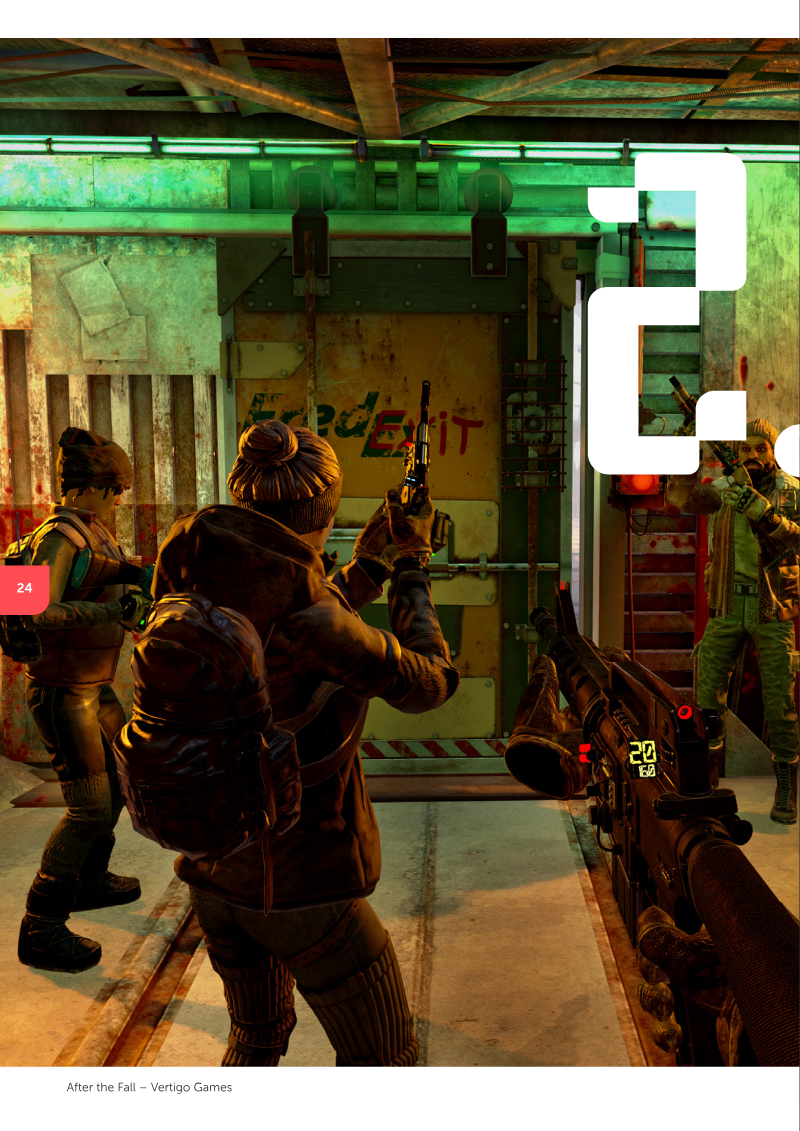
Dutch Games Monitor 2022
The Dutch games industry underwent a period of robust maturation between 2018 and 2021, evolving into a sophisticated ecosystem of 630 companies and 4,560 professionals.
- The Dutch video game industry generated €420-€440 million in revenue in 2021, growing almost 18% annually between 2018 and 2021. The number of companies with over €1 million in revenue increased from 18% in 2018 to 24% in 2021.
- The industry employs 4560 people across 630 companies, with approximately 700 graduates annually. Companies with more than 50 employees doubled from 6 to 12 between 2018 and 2021, indicating significant scaling.
- The Dutch games industry is maturing, with a majority of companies having existed for over 7 years. The largest potential for scaling up is seen in companies with 4 to 12 years of experience.
Dutch Games Monitor 2022: Factsheet
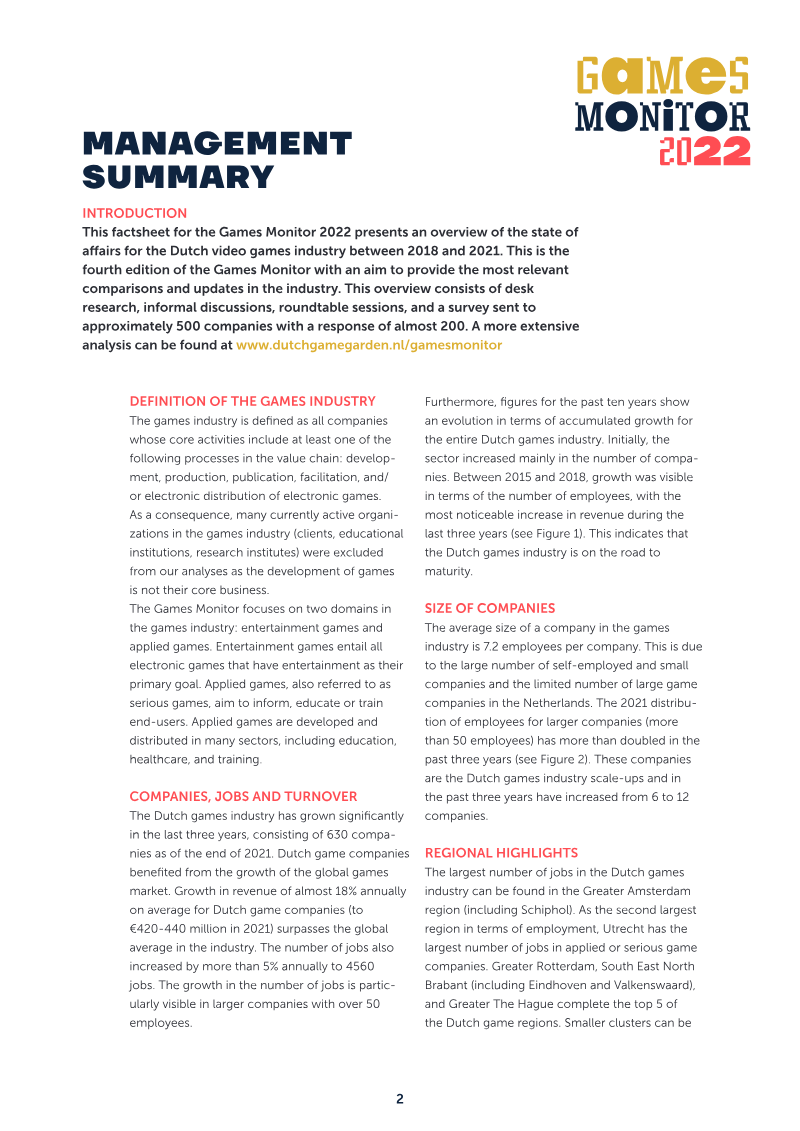
The Dutch Games Monitor 2022 provides a comprehensive analysis of the Netherlands' video game industry, covering the period from 2018 to 2021.
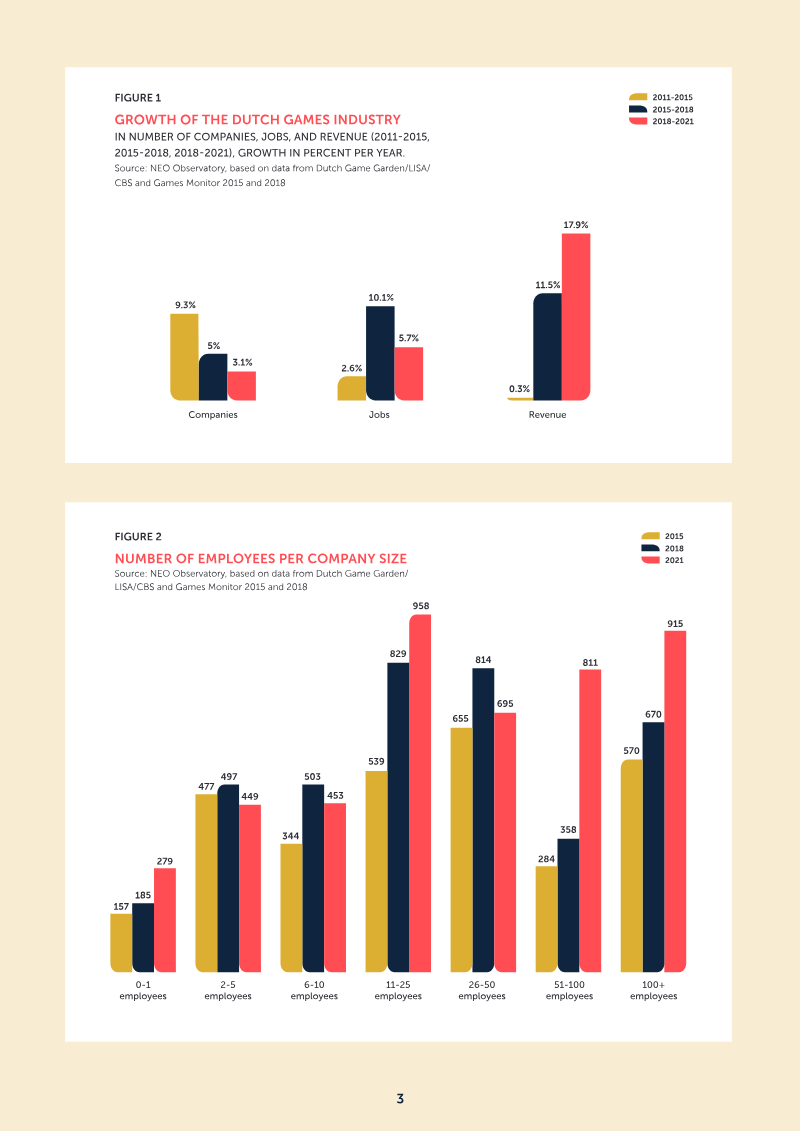
- The Dutch games industry generated between €420 million and €440 million in annual revenue by the end of 2021, achieving an average annual growth rate of nearly 18%.
- Total employment in the sector reached 4,560 jobs by 2021, reflecting an annual growth rate of over 5%.
- The industry is scaling up, with the number of companies employing more than 50 people doubling to 12 firms between 2018 and 2021.


Construyendo un Sector del Videojuego en Igualdad
The Spanish video-game market now serves more than 18 million players, with women representing 48% of the audience, yet women occupy only about 20% of development roles across Europe’s roughly 90 000-person sector.
- Women comprise 48% of the 18 million players in the Spanish market, yet they hold only 20% of development roles within the 90,000-person European industry.
- Systemic hiring reforms—including gender-neutral job advertisements, transparent salary bands, and multi-reviewer processes—are essential to increasing the entry and retention of women in development roles.
- Companies such as Wooga have achieved higher retention and increased female representation in senior leadership by utilizing unconscious-bias training, inclusion nudges, and data-driven KPIs.


Campo da Gioco Equo
The guide argues that gender equity is both a commercial necessity and a social responsibility for the European video-game sector, which employs roughly 90 000 people while women constitute only about 20% of developers despite half of Europe’s population being gamers.
- Women currently represent only 20% of the 90,000-person European video-game workforce, despite comprising half of the continent's gaming population.
- A persistent 14.1% gender-pay gap exists within the EU gaming sector, exacerbated by promotion disparities rooted in biased assessments of employee potential.
- Proactive, data-driven interventions—such as AI-enhanced moderation and diversified teams—successfully reduced toxic in-game chat by 5% in pilot programs.


Gaming in Europe: Key Facts 2022
The European video game industry demonstrated significant economic resilience and social expansion in 2022, generating €24.5 billion in revenue and achieving a 5% year-on-year growth rate.
- The European gaming industry generated €24.5 billion in revenue in 2022, marking a 5% year-on-year growth rate and supporting a workforce of over 110,000 employees.
- The player base has reached 126.5 million people, with the 45-64 age group now representing the largest demographic and women accounting for 47% of all players.
- A critical talent shortage threatens future expansion, highlighted by a projected deficit of 25,000 developers in Sweden alone by 2031.


State of the Game Industry 2022
The global game development landscape in 2022 is defined by a tension between technological tradition and evolving labor standards.
- PC remains the primary development platform for 63% of developers, while the PlayStation 5 is the leading console for current and future project cycles.
- Industry interest in decentralized technologies is low, with over 70% of studios expressing no interest in cryptocurrency or NFTs and one-third of professionals predicting the metaverse will fail.
- Workplace culture remains a critical challenge, as 62% of companies have failed to formally address reports of toxicity and misconduct, despite 60% of developers now working 40 hours or less per week.

Being Black in Game Audio
Black professionals in the game audio industry face systemic underrepresentation and persistent racial stereotyping, often being pigeonholed into specific genres like hip-hop or urban music.
- Black professionals in game audio frequently face the burden of 'proving' their professional legitimacy, often requiring significant high-profile credits before feeling comfortable in industry spaces without fear of being stereotyped or dismissed.
- Stereotyping remains a pervasive issue, with industry peers often making biased assumptions that Black audio professionals are only qualified for or interested in specific genres, such as hip-hop.
- While the social climate of 2020 created a temporary groundswell of support and awareness for diversity, the momentum has since waned, leading to a more relaxed commitment to systemic change in 2021.
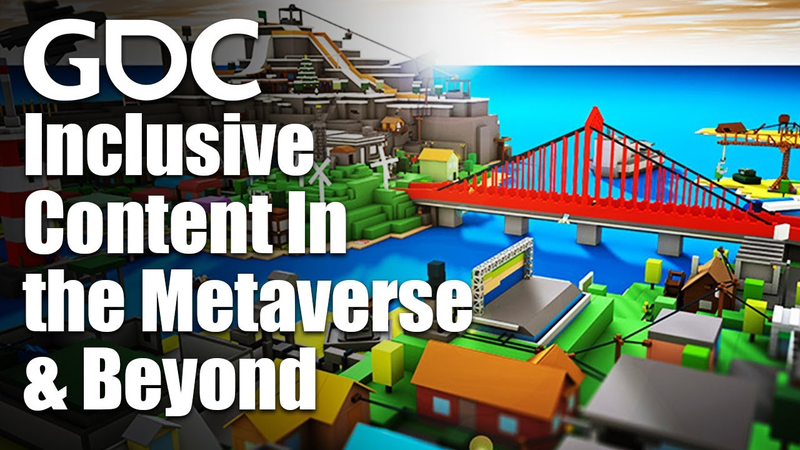
Creating Inclusive Content In the Metaverse and Beyond
The development of inclusive metaverse experiences necessitates a fundamental shift from traditional, hierarchical game design toward models that prioritize equity, empathy, and authentic representation.
- Inclusive metaverse development requires moving away from traditional, military-centric, and hierarchical design models toward structures that prioritize equity and authentic representation.
- Development teams should implement inclusive recruitment practices, such as anonymized resumes and flexible work environments, to integrate diverse cultural and neurodivergent perspectives.
- Creative abrasion—the practice of challenging conventional tropes through vulnerable, play-based communication—should be used as a tool to embed inclusivity into the organizational culture.
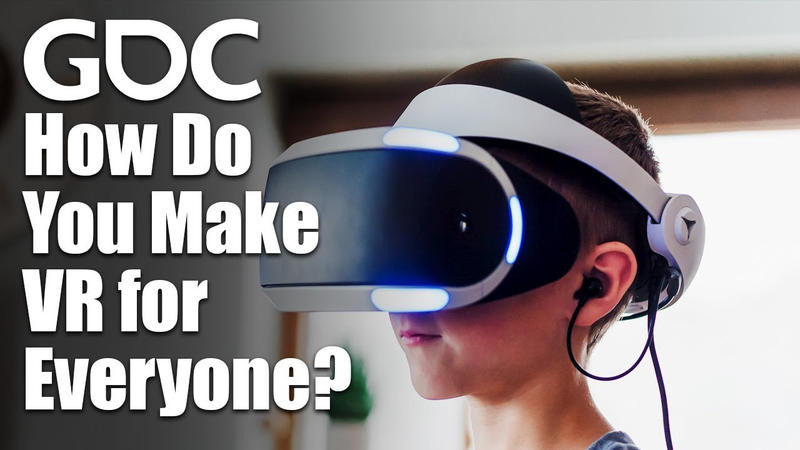
How Do You Make VR for Everyone?
Virtual reality currently stands at a critical juncture where the transition from a niche technology to a mass-market medium depends on overcoming systemic fragmentation and exclusionary design practices.
- Developers should prioritize accessibility by design, such as implementing hover mechanics for ground-level objects to assist users with mobility issues, rather than treating it as an afterthought.
- The VR industry must move away from 'walled gardens' and proprietary systems toward open-source protocols and shared documentation to prevent fragmentation and lower the barrier to entry for new developers.
- Diverse teams are essential for creating inclusive VR, and funding should be directed toward diverse creators and unique content rather than relying on traditional, non-scalable game design paradigms.