1 free read left. Create a free account for unlimited reading + AI research.
Create free accountReport Ukie
1 free read left. Create a free account for unlimited reading + AI research.
Create free accountReportUkie
A significant majority of professionals in the UK games industry hold at least an undergraduate degree.
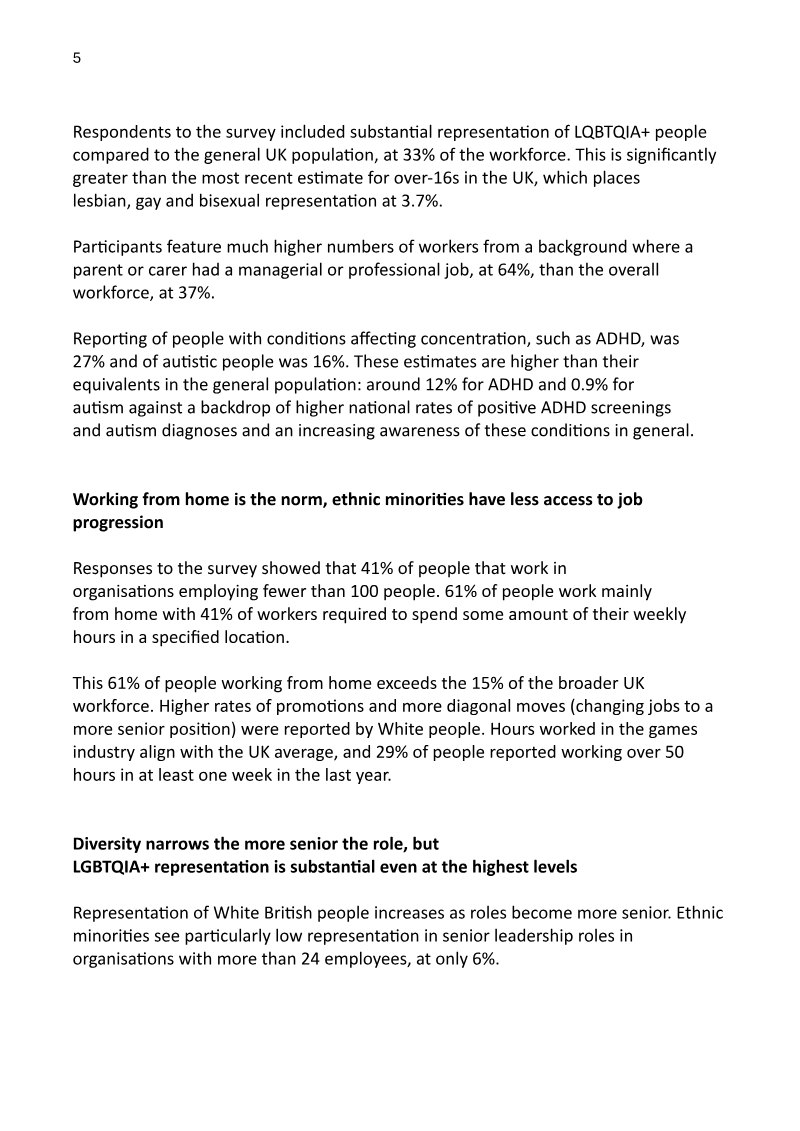
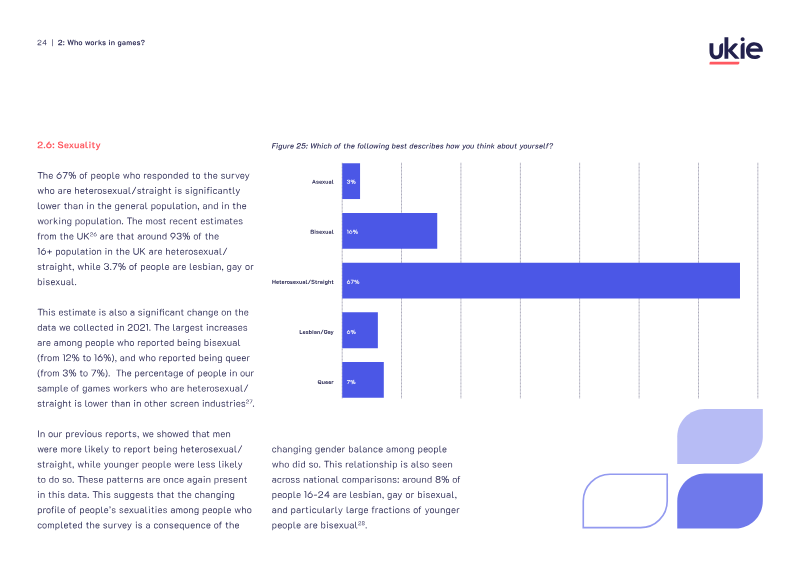
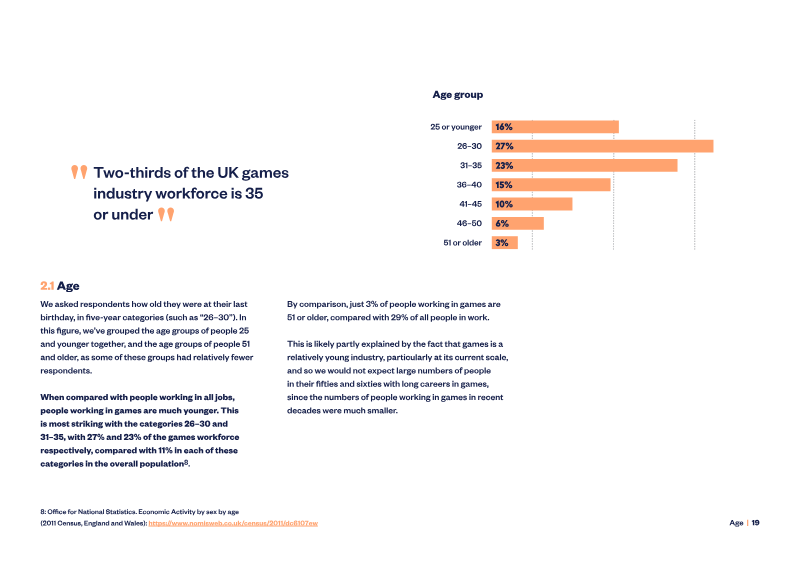
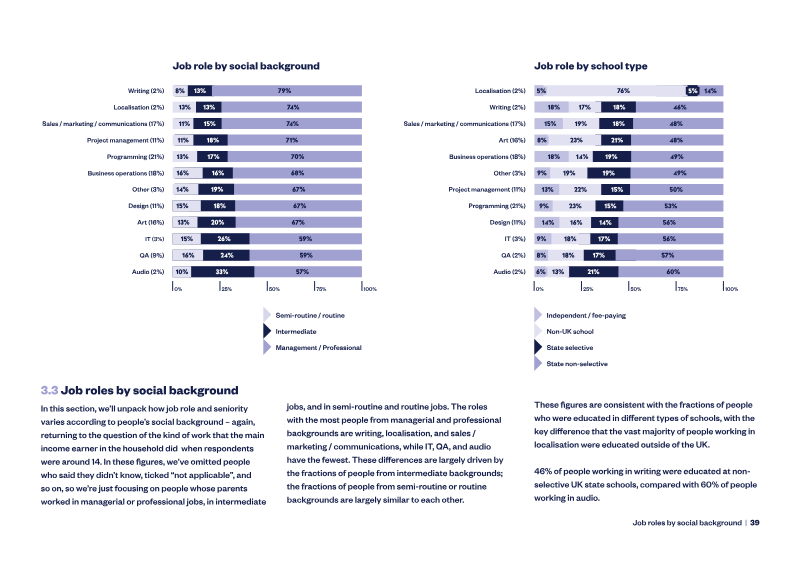
See it on page 9The UK games industry workforce is characterized by a highly educated, predominantly white, and relatively young demographic that remains largely consistent with findings from 2020. Based on a survey of 3,603 professionals, the sector exhibits a strong international presence and higher rates of neurodiversity and LGBTQ+ representation compared to the general UK population. However, the industry continues to struggle with gender imbalances, particularly in senior leadership, and maintains a workforce profile disproportionately drawn from professional or managerial socioeconomic backgrounds. While 82% of the workforce holds at least an undergraduate degree, systemic barriers to career progression persist, with Black, Asian, and Minority Ethnic professionals and neurodivergent individuals facing notable challenges in securing senior-level appointments.
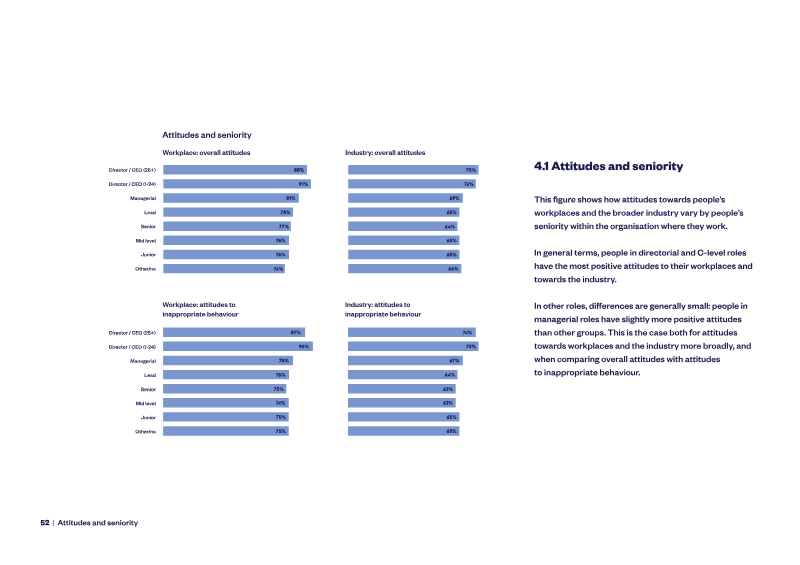
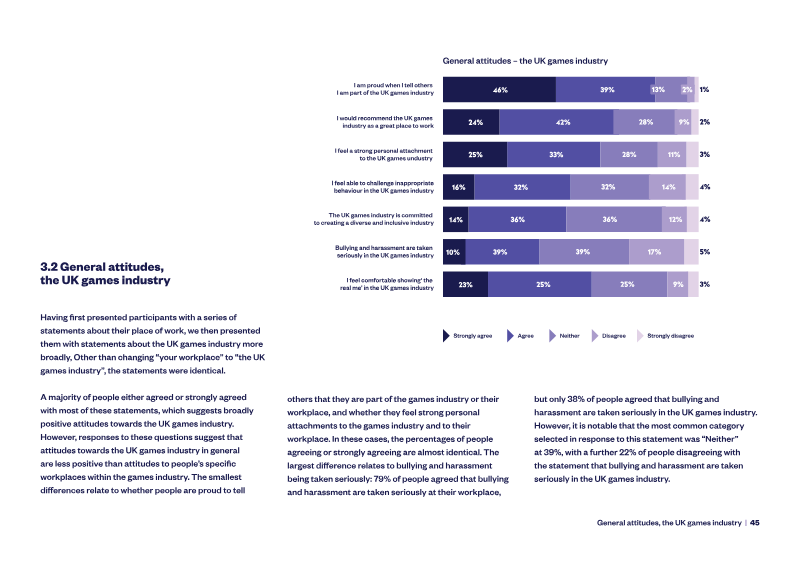
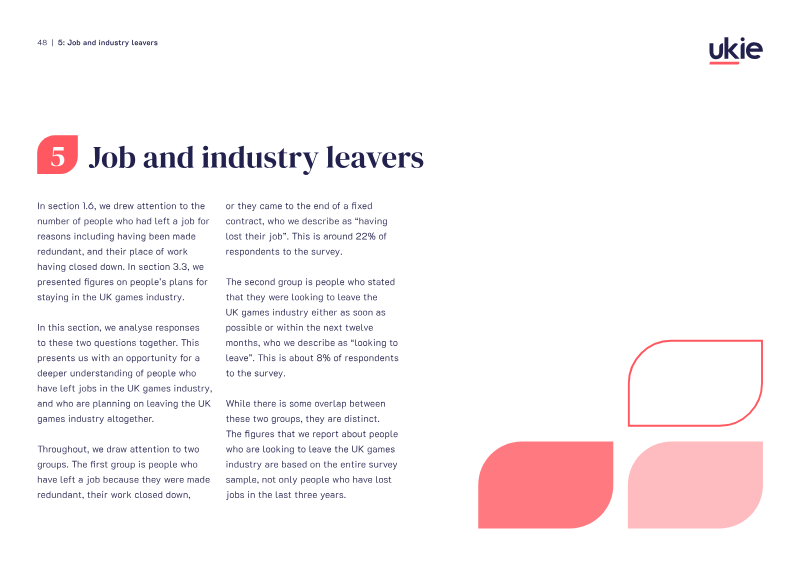
Workplace culture presents a dichotomy between individual company satisfaction and broader industry skepticism. While employees generally report pride in their specific organizations, there is widespread concern regarding the industry’s collective commitment to diversity, inclusion, and the effective management of bullying and harassment. These sentiments are stratified by seniority, as directors and executives consistently express more positive views than junior staff. Furthermore, the prevalence of "crunch" remains a significant issue, with two-thirds of employees reporting work weeks exceeding 40 hours during peak periods.
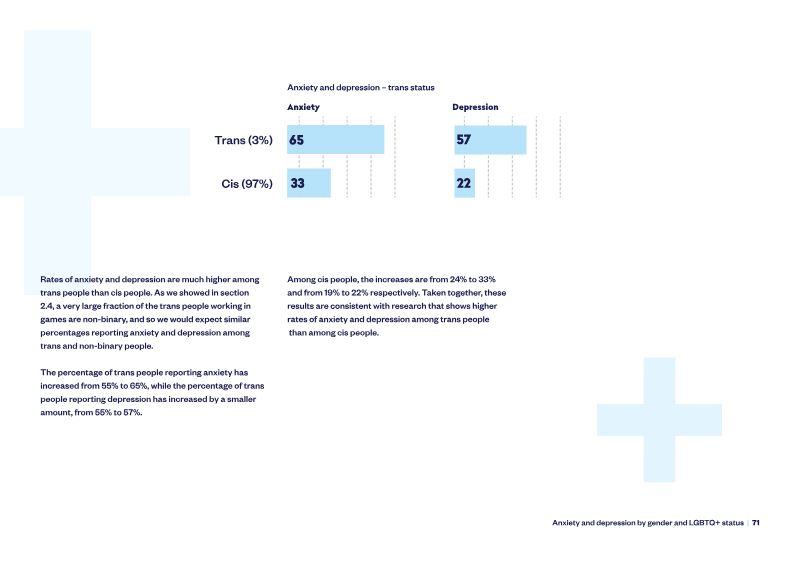
Mental health remains a critical concern, as reported rates of anxiety and depression significantly outpace those of the general population, with particularly elevated levels among LGBTQ+, non-binary, and trans employees. These challenges are compounded by the industry's shift toward larger organizations and the ongoing transition toward remote work models. To foster a more equitable and sustainable environment, the sector must address these systemic disparities through targeted interventions in career development, improved mental health support, and more robust, transparent policies regarding workplace conduct.

Ukie · 2026
Ukie · 2026

Ukie · 2026
Ukie · 2026

Ukie · 2026
Ukie · 2026
Ukie · 2026
Ukie · 2026
Ukie · 2026
Ukie · 2025
Ukie · 2025
Ukie · 2025
Ukie · 2025