1 free read left. Create a free account for unlimited reading + AI research.
Create free account
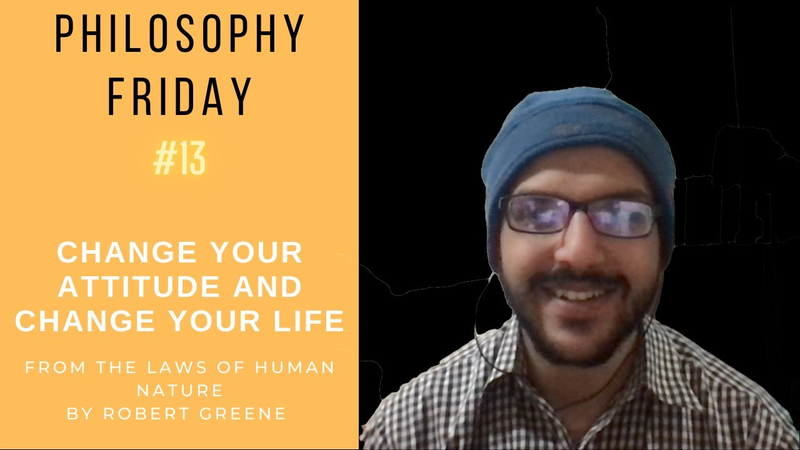
Change Your Attitude, Change Your Life - From the Laws of Human Nature (Philosophy Friday #13)
Key insights
6 takeaways- 01Deep observation of oneself and others serves as a primary tool to understand underlying motivations and historical contexts, preventing reactions based on autopilot behavior.
- 02Individuals can break self-imposed psychological patterns by identifying and mitigating five specific negative attitudes: hostile, anxious, depressive, resentful, and avoidant.
- 03Practical habits such as regular physical activity, maintaining a reflective journal, and scheduling dedicated time for introspection are essential for countering modern high-pressure stressors.
- 04Personal and professional growth requires shifting from a victim-oriented mindset to one defined by self-responsibility, active observation, and a commitment to work and love.
- 05Resilience is built by reframing obstacles as learning opportunities and focusing on the creation of value rather than dwelling on external circumstances beyond one's control.
- 06The life of Anton Chekhov serves as a historical case study demonstrating that individuals can transcend childhood trauma and adversity through an expansive, proactive attitude.
Ask AI about this video
Transcript
no [Laughter] all right uh are you ready okay we're all ready to go hello everybody welcome to philosophy friday we're here with debashish bindra who is running hr for us here at lila games now we actually had debushy's present on a specific learning topic for us and we do this on occasion here at lila and maybe we can pull into this screen a little bit more hey but debra sheesh could you talk a little bit about what you're going to present on and then go ahead and feel free to present the way great uh so basically just a little bit about me so like i love reading a lot right and this presentation is also inspired by one of those books which i like you know really found out to be very fascinating so this presentation let me just quickly share my screen here so this
presentation is basically by this author uh by the name of robert greene and he had written this book called laws of human nature wherein he documented various stories across history and like you know how it is relevant to us in our working lives and in our professional lives roughly speaking so let me just quickly start here with one of the stories which the author says uh basically it is about a russian writer he's a very famous writer uh by the name of anton chekhov right so like he was born in a very poor family where his father used to beat him every day and he had five siblings right so what his father used to say that he did not beat him out of anger or any apparent malice but out of love it was god's will that children should be beaten right to instill humanity but on the other hand the justification that he was giving he was also seeing that like his father was a living contradiction right he was lazy a drunk
and a quite dishonest person with his customers despite his religious yield and his correct moralism if you might recall so what this did is that like you know this instilled a fear in him and he always had major anxiety and panic attacks in moments he had to himself he would always go to the graveyard since that was the only safe place in his tough neighborhood right uh so living in russia during the 19th century was a very tough task because the roads were always in ruins and you know prisoners were lit lose to like you know hunt tree dogs and there was there were open potholes which can cover up your cup cover up your right till your head right and the entire streets were filled with those potholes so what happened after that so one day his brother decided that like you know enough is enough and let us go to moscow to pursue our dreams and two of his brothers finally left to pursue their dreams and soon depth started piling up on antin's father and
fearing priest prison he also fled to moscow in secrecy so his mother was left all alone to clear dips and they had to sell everything including their house right with nowhere to go she also fled to moscow as soon as possible so anton was left all alone at 16 to fend for himself and complete his education so like you know he was completely abject by his circumstances and there was a there was quite a feeling of despair feelings of anger depression that visited him daily that why is he going through all this at such a young age with such tough times right so like through very hard times he finally found himself a job and like you know that was more of a tutor more of an educationist where he would go to families and like you know whenever they would go on vacation so he would not earn four days and he would sleep hungry right but that was his day job which he was only able to find so what happened that during all this struggle and all he
decided to work one day as a doctor and study very hard right for this in the only library that was available to him during that time in russia so there along with the studies when he was studying medicine he also devoured a love for philosophy and literature and suddenly started connecting with the world in a very deep way because he started seeing perspectives from a very different light right he finally began to like settle down new thoughts and like you know new emotions came to him work was no longer something that he dreaded so he loved absorbing his mind and his studies and tutoring had made him very proud and dignified of himself right earlier he used to see from a very victim perspective okay why the hell am i doing this even in the first place but then suddenly a shift started happening in him and he started seeing this from the perspective of okay this is something reputable right i can take care of my my own self at such a young age but meanwhile what happened in moscow so his brothers
had turned to drinking and that same pattern started again that same blaming of the blaming their father for their misdeeds right the whole environment family environment was very negative and not conducive so they were living they were also living in a very small grant room because they were very low finances that the family was having in general so what happens after this right how realization happened to him and like you know how did he started becoming the famous auntie jacob this is where his journey started so one day after being abandoned for several months he started feeling this like you know tremendous sense of empathy and overwhelming sense of love for his parents just by like you know one day he was going to work and suddenly they started coming to him now this was a very big realization if you're coming from a perspective of like 17 18 year old children who has been beaten in life for roughly five to six years or even more than that so he started seeing the contest from which his father was coming from and like you know dropped all negative
emotions towards him that was very huge for him so he decided to move into moscow with his family and instead of complaining he decided to solve his family problems one step at a time right santan started taking charge of small and daily things like he started doing the houseworks and seeing him his brothers also started taking up responsibility for their own life and like you know he had written this in his diary uh a motto that no more bowing and apologizing to people no more complaining and blaming no more disorderly living and waiting the answer to everything was work and love work and love so this is quite a huge statement from coming from an 18 year old boy right so what all changed in his life right so roughly speaking like he got into a medical college at 100 scholarship and from that he started saving money and got more money from his father and elder brother to put all his younger siblings into school so that all of them could go into education right he
inculcated a sense of reading among all his brothers and they would discuss late till night about the various scientific and philosophical findings so the complaining and the self-pitting attitude now changed to a very proactive behavior various family was excited about the future instead of complaining and going into a victim loophole right so now you might ask me that how is this entire story related to us right should we wait for realizations in life should we start reading literature and drop our current day jobs or like how to integrate all this right so not really like it's not rocket science it's just one simple tool that we need to observe in our daily life and that simple tool is observation observation right so what do i mean by observation roughly speaking so you just observe yourself and others deeply right so this story is a paradigm granting checkup story is a paradigm for what we
all face in life right we all carry with us traumas and hurts from early childhood so in our social life as we get older we accumulate disappointments and a lot of slides for not having things go the way they should go in our own lives right at times we are often haunted by sense of worthlessness of not really deserving the good things in life right we all have great moments about ourselves a great doubt about ourselves and like you know this also leads us to you can say negative patterns about the self-esteems right and then that further leads us to habits to numb that pain it could be excessive drinking or excessive smoking or patterns of those sort right so without realizing it like we assume a very negative and fearful attitude towards life right this becomes a self-imposed prison and instead of taking more and more risks in life as we grow older we start shrinking from taking risks right so how can we free ourselves from this prison right this usually comes from a
very simple thing it's just a choice a change in attitude a change in your mindset right we all can follow such a path just like antoine did so this freedom essentially comes from like you know adapting a very generous spirit towards ourselves and others by accepting people by understanding their nature like you know we can liberate our mind from obsessive and pity emotions like what he might be feeling about me like instead of us being the actors and protagonists we totally let we totally do whatever is needed in the situation and we stop reacting to everything people do and see around us right so what this does is that it gives us a superpower a mental space is freed up for higher pursuits for more creative pursuits that would give us value in the long run when we are on a deathbed like you know we will not die off regrets so this is roughly speaking like some common patterns which you might see across the board like in your working life or let's say whenever you're going somewhere these tendencies
might be in you right so these are very common maps which i might say so the first one is the hostile attitude right now this is a person who looks at the world from a lens filled with hostility right they seek to control the world by becoming the source of hostility themselves so they always write the i know a tall guy and their life is full of battles betrayals and persecutions but it does not originate from them right it's always the other person who is responsible for their own hostility the second type of person is the anxious attitude right which we all have on one level so these types anticipates all kinds of obstacles or difficult situations that may arise in future they are not even certain that it would come but they may arise so with people they often expect some sort of criticism or even betrayal but what they in reality feel is losing control of the situation right their solution is to limit what can possibly to narrow the world they deal with like you know basically just
trimming off all response all greater risks and just trimming it to their own comfort zone so at work you might see them as ferocious perfectionist right and and micromanagers trying every one and everybody to go things they'll be right but what this does is that it eventually sabotages them in the long run right because they are trying to keep on top of too many things and it is not possible for human mind because on average we can just stay on top of roughly five to seven things right the third type of attitude is the depressive attitude so if you go to their childhood right as children these type of people did not feel loved or respected by their parents and instead of like you know seeing that there was a fault with their parents they they internalized all that negative judgment and imagine that they are indeed unworthy of being loved right so they have a secret need to wound others encouraging behavior such as betrayal or even negative criticism that
will feed their depression and make them happy because all are at my level that is their thought process that is their understanding of the world and no one should go ahead of me because then like you know they'll prove me wrong the fourth type of attitude is more of a resentful attitude so they always see that they are being wronged in the world right they tend to project this even on the outside world seeing a oppressors everywhere so they are experts at scanning people for possible signs of disrespect like you know they are not other people are not respecting them and you'll often see these type of people are prone to pick up very pity battles right that i haven't got in my tea or something or those kind of things right they are always resenting their circumstances and they are unable to contain their resentments which they have developed over time and they keep on lashing at every simple thing the final one like this is one of my favorites because this is very predominant in the culture which i come from right that
these type of people just want to avoid responsibility all the time in their life so people with this attitude see the world through the lens of their insecurities and they are generally related to their doubts about their intelligence and competence right the main goal is to avoid any responsibility or challenge in which their self-esteem might be at stake for which they might be judged in a larger audience right they constantly tend to seek escape routes right and they will find the perfect reasons for leaving a job early and changing careers so they become alcoholics like deep alcoholics or addicts of some sort always falling off the wagon at the right right time but blaming this on everything else and their bad upbringing in life so now you might ask me like how should we live our life right what should be our ideal attitude towards life challenges in general right so of course this is what i feel would work like this usually works in most of the
circumstances this is not a perfect way of living but usually this goes so what robert greene calls is that like you know we should build an expansive attitude a very positive attitude so like you know it's a state where you view everything in your life as a part of a larger hold right instead of being too specific on specific problems right you ignore those specific problems and the and then see how this problem challenge and person can contribute to my growth in the long term rate so what this would help us to do is that like you know it would help us to create a distance uh ins like you know just because most of the times we are too immersed in the present right and it would help us to create a distance and see things from a longer larger term perspectives so how to view the world basically as an explorer as a crusader as a captain of a ship right who is out there to just explore the abundance of the world and what this world has to offer to us right whenever any adversity comes so how should we embrace like how
should we view that right we should simply embrace all the obstacles as learning experiences as a means to getting stronger in life and asking ourselves right that how can this learning impact me let's say five or ten years down the line maybe writing a diary also helps but yeah this should be a general attitude how do you view yourself right it's simply to break your limitations every day and embrace your fears one step at a time because that would help you develop self-esteem how to view the people around you right because people can be nasty all the time right it's not totally in our control but how we respond to them is totally in our control so we can just simply ask ourselves these two questions right that am i creating joint value for the world around me late let's forget about the other person he might not be doing so but am i creating joint value for the world around me or am i spreading negativity in the word rate so whatever your situation is these two tools or
these two questions can really help you come out of those negative you can say self-doubt or self-critiquing that you go when someone sees you something right and how to view your energy and heal because this is by far one of the most important things you can pick up any physical activity right it could be walking dancing running jogging whatever like turns up your crank right and then try doing that thing at least three times a week you'll see your confidence energy would increase massively your self-esteem would go off the roof because you are consciously creating steps to improve your own self right so just to summarize it what the whole point of this presentation was like you know the first tool is observation right you observe people deeply don't take them at face value at what they present but understand what type of people they are based on their past experiences like you know where are they coming from what are their true motivations the usual five the they are usually like you know five types of common attitude
which you'll see across the board right it would be the hostile one the anxious one the wider twin the depressive one and the resentful one and finally we should always aim in our own life to like you know go towards a more expansive attitude towards ourselves as well as others well thanks debbie sheesh i think that it's been a number of weeks since you first gave that presentation on our all hands but i feel you know just just as good as the first time yeah yeah absolutely you know the one of the things i think about is just how closely my life mirrors and no i'm just kidding my my life compared to handheld check out my i've lived a very easy life but having said that i also feel like maybe some of these negative attitudes you know might i i feel like i have some of those negative attitudes which one do you think i have depreciation i might say the hostile one working with you closely the hostile one usually does the job for you yeah for me personally i think that the
anxious attitude is something that i have at times and i i realize that though and i i do feel like i that's something i need to work on um one other thing i kind of realized is that for people who study stoicism it does seem like there are some similarities where you know the stoics say that you can't control the world outside of you but you can control how you interpret the things that happen and you can control kind of the the inside instead of the outside and you know marcus aurelius ryan holiday um kind of popularized the concept of the obstacle is the way so if you see a problem in life how to interpret that in a positive rather negative way but um i definitely feel like this is something that it's really great to remind people to do is to like try to interpret things positively and to your point on observation i i felt like there were uh two parts of the observation like one part you said these are common at negative attitudes that we should watch out for but then very interestingly and this is something
paul talked to me about before um i think it was based upon a book by david data that suggested that you know as you're growing up in your childhood there may be things that have happened to you that impact how you react to the world and so just like with anton chekhov or i think when you were presenting you mentioned you should also observe like if we're observant about what may be things that happened earlier in life and how that impacts us that may be something else for us to also observe in addition to those five um those five negative attitudes but um paul's got his sleigh coffee which is the world's greatest coffee but uh it's pretty good um so yeah i kind of comments on this i was writing down some stuff as your presentation was going on and i was like wondering do i really have it so bad when i hear some of those stories like is am i really that am i really unfortunate you know do i really have a reason to be or feel bad
i do i don't go to sleep hungry um i don't you know get i i wasn't beat you know for no reasons and all those things and so that's the first thing that i took that i took just from your presentation that i think is a priceless wake-up call and i also had some things that i wrote down like do i really love my studies like how this man loved his studies and i was also reminded of the dangers of alcohol and how i've seen that go upon people in the gaming industry i was just telling someone the other day i saw they're drinking a red bull and uh they're also a smoker and stuff like that and i said hey you better watch out i said in a big project like this i've seen at least 20 people change dramatically in their body getting uh larger in weight and saved your money that guy saved his money
and he helped out everyone and i wrote that down and then it started getting into attitude and this is one where i'm having kind of troubles with my own personal self you know some i was uh trying to talk to a girl on a dating app and she said are you a morning person and i said you know what to tell the truth i don't know what kind of person i am anymore and i've completely lost sight of anything and i don't know what my attitude is and i don't know what my attitude was when it was anything at all uh right now to be to give you a little bit of a little bit of insight for those listening um i'm building a company from zero to one and i'm willing to do anything to go i'm willing to go anywhere and um that comes with uh you know the universe has responded to me you know i'm in bangalore i got here and got a stye in my eye i got covered i got a rash on my arm i'm
out of whack i'm out of you know i'm out of whack someone was asking me oh are you sick and i said i think so i don't know i can't even know if i have covert or not i said if i'm covered i i maybe i'm like living in a constant state of you know eating aspirin for breakfast and stuff like that and so when i wrote down uh what what which one am i you know i'm all i don't even know anymore and um i think the biggest thing about the presentation was observing ourselves deeply and uh from this presentation i'm gonna actually spend some time to try to remember who i was before i had 60 emails you know responses in my slack that i needed to get to who i was and who i want to be before i was having to decide how to increase my own output or what can we do to get better estimates on the art pipeline or how we can fix uh you know culture
issues within the design team and if i need more people to hire and so there's just so much time and so much stuff that i've actually just i'm not even sure and i'm learning more about myself through other people's observation of myself than i am from my own observation of myself people are telling me oh you need to relax or you could be more chill or i think that was rude and stuff like that and it feels conflicting to ways i've been trained and talked to about you know just eight months ago or something like that oh i'm the weakest leader i should be more tough uh most of my guys aren't working on the weekend and uh what's up with your team are you teaching them how important this is and stuff and it's like be graceful be aggressive be this and then the observer effect right i don't i don't spend much time observing it i think that in the midst of the feedback that i get from my team
i don't bring enough feedback on my own self and so when i receive feedback from someone i it's all new to me you know i'm saying i i'm not like you know what i've noticed that [Laughter] you have a suggestion for me well you tell me what it is because i don't have one for my own self you know what i'm saying and so i actually feel like i need more suggestions for myself i need more observation of myself and um i i may actually work on skit and in fact today i scheduled an hour to walk away it's in my calendar you can check it it says paul is spending an hour away from his desk to think it's a meeting that i've made for my own self so and this has really helped me uh i think was timely i'm really glad that you invited me because i could definitely use these kind of talks and the way that you presented it is so well broken down taking a huge subject to something really small i mean i needed this super bad i hope other
people find the value out there out there yeah thanks so much maybe like a few other points that um i could raise is that one it i think for anyone who feels like they have a problem like anton chekhov's story so powerful because of the circumstances that he had and he was able to rise above it and so for us living in today's world for most of us i would say you know we on a relative basis probably have a lot easier and so if he can do it we can do it the second thing is like the library right the library was opportunity the library saved anton chekhov if i interpreted the story correctly and so you know i would definitely recommend other people like we're trying to create an opportunity platform at lila and so for other folks out there as well other companies like how do you create opportunity for other people that's one of our missions at leela and finally
um i i love that notion of work and love so what that tells me is that when i ask people to work the weekends that's that's just love right right it's working live work anyway all right well with that do you are there any sort of last minute messages or other things that you think it's important for our audience to to know wh i think you're definitely just to uh give some practical hooks like how we can integrate this in our own lives right so usually what happens is that like you know we live on an autopilot daily regularly right so if we can just take a small notepad like you know there are 14 15 lines in that note card and at every r we are just breaking down maybe just one word we are feeling right so maybe we can just do a hourly alarm clock kind of method thing right and just whenever that alarm goes off we just like you know reflect in that small notepad okay this is how i felt in this
hour is this more productive for me in the long run or is it harming me in the long run that can be a good way to integrate like you know both the observation of it as well as like you know how you can improve it maybe something on these lanes just a practical tool i wanted to end this on okay that's awesome thank you so much yeah thank you debbie sheesh there you have it hopefully you can do more of these in the future i know you're going to be doing more presentations for us at all hands so thanks so much and for the audience we will catch you next time bye everybody [Music]
you
Summary
The provided content outlines a philosophical framework for personal and professional development, drawing on the life of Russian writer Anton Chekhov as a case study for overcoming adversity. The central thesis posits that individuals can transcend negative life patterns and childhood traumas by cultivating an expansive, proactive attitude. By shifting from a victim-oriented mindset to one defined by observation, self-responsibility, and a commitment to work and love, individuals can liberate themselves from self-imposed psychological prisons and achieve greater creative and professional success.
The analysis identifies five common negative attitudes that hinder personal growth: the hostile attitude, which projects blame onto others; the anxious attitude, characterized by micromanagement and fear of losing control; the depressive attitude, rooted in internalized feelings of unworthiness; the resentful attitude, which focuses on perceived slights; and the avoidant attitude, which seeks to escape responsibility. These patterns are often exacerbated by modern stressors, such as high-pressure work environments and the tendency to rely on unhealthy coping mechanisms.
To counter these tendencies, the framework advocates for the practice of deep observation—both of oneself and others—to understand underlying motivations and historical contexts. Practical recommendations include engaging in regular physical activity, maintaining a reflective journal, and scheduling dedicated time for introspection to break the cycle of living on "autopilot." By viewing obstacles as learning opportunities and focusing on creating value, individuals can foster resilience and maintain a long-term perspective. This approach is presented as a universal tool for navigating life’s challenges, emphasizing that while external circumstances may be beyond one’s control, the internal interpretation and response remain a matter of personal choice.