Video Game
Game
Documents about Video Game
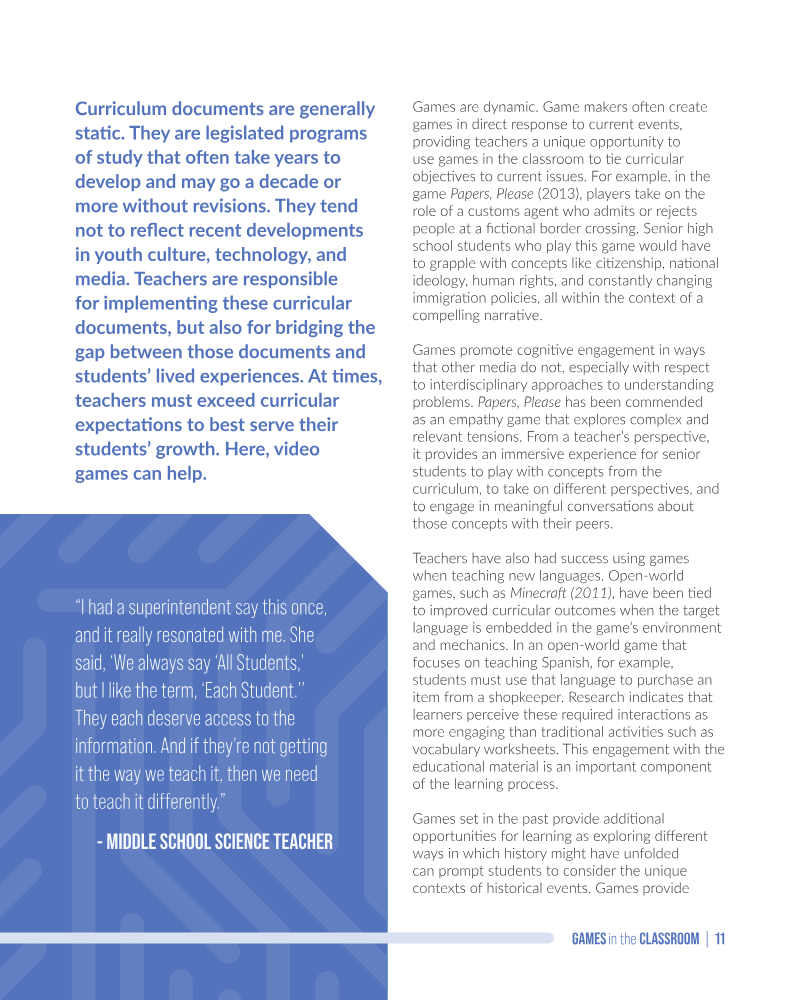
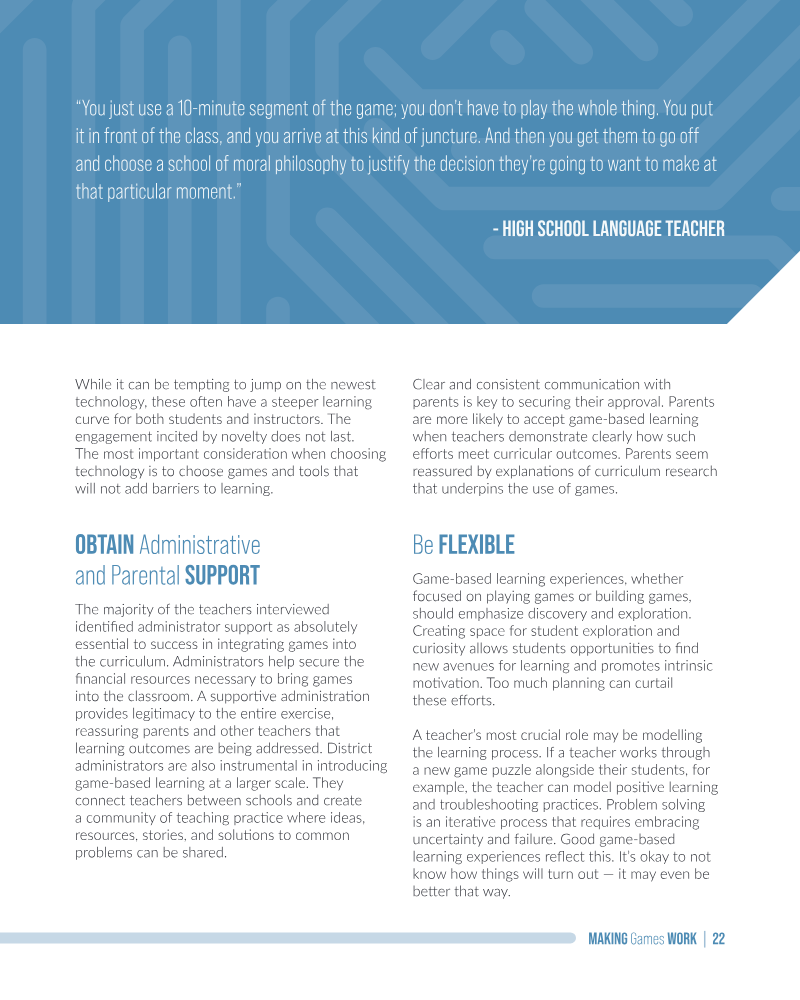

Benefits of Video Games in K-12 Education
The document is a report from the Higher Education Video Game Alliance (HEVGA) and the Entertainment Software Association (ESA) on the use of video games in K-12 education in the United States.
- The report cites ESA research indicating that more than three quarters of children under 18 play video games at least weekly.
- The authors state that there is good evidence to suggest that students develop better attitudes toward learning and demonstrate higher levels of engagement when game-based learning is included in the curriculum.
- The authors argue that games let students work through problems at their own pace, since a student can repeat a well-designed game as many times as needed.
New European Parliament Report: Europe's Video Game Industry's Role in the Creative and Cultural Economy
The European Parliament's Culture Committee has adopted a report on esports and video games, led by rapporteur Laurence Farreng, that recognises the sector's place in the EU's creative and digital economy.
- The European Parliament has officially recognized the video game industry as a vital component of the European creative and cultural economy.
- The sector employed over 98,000 people in 2020, representing a 7.6% growth in jobs compared to 2019, with a heavy concentration in small and medium-sized enterprises (SMEs).
- Europe’s video game market generated €23.3 billion in revenue in 2021, maintaining stability despite shifting market conditions.
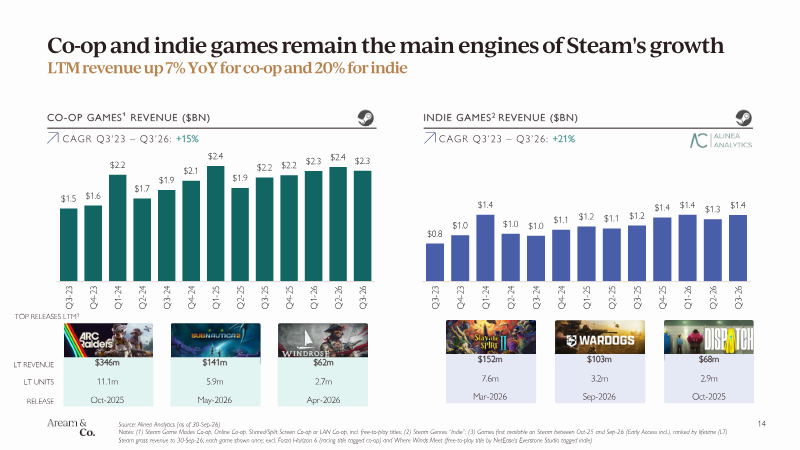
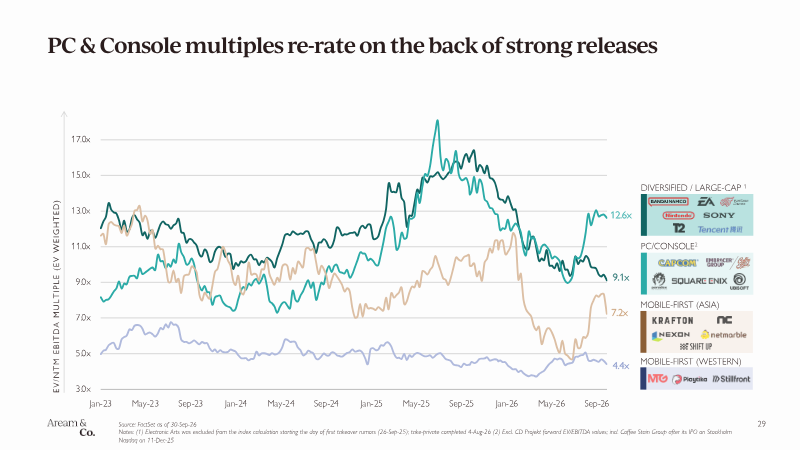

Video Game Market Update: Q3 2026
This Aream & Co. market update, covering Q3 2026 and subscriber-only, reviews the video game sector using data from InvestGame, Sensor Tower, Alinea Analytics and FactSet, with figures as of 30 September 2026.
- Q3-26 M&A recorded 54 deals worth 57.8bn, with the 55bn EA take-private closing in August.
- Mobile IAP spend fell 7% year on year in Q3-26 to 19.6bn, on a smaller installed base.
- Console revenue fell 12% year on year to 14.1bn in the latest reported period, the steepest quarterly drop in two years, with all three platforms declining.

The Video Game Industry: A Resource for Organizers
The document is a 2022 resource published by UNI Global Union, supported by the Strategic Organizing Center, that profiles the video game industry for workers and unions.
- Low pay was the most commonly cited workplace problem among survey respondents who reported at least one issue, at 66 percent.
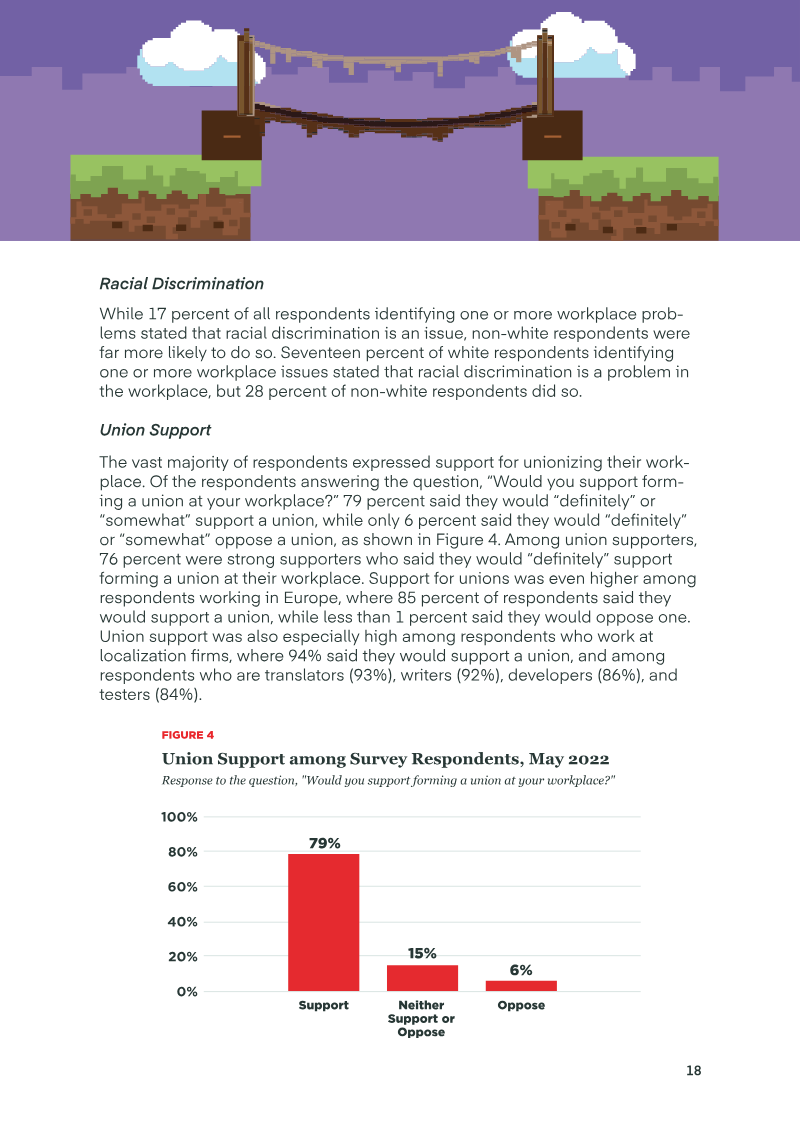
- Of respondents answering the union question, 79 percent said they would definitely or somewhat support forming a union at their workplace.
- Mobile games accounted for 52 percent of industry revenue in 2021, roughly US$90 billion, according to NewZoo.

U.S. Video Game Industry: Technological Advancements and Privacy Issues
The U.S. video game industry, a significant global economic force with over two billion gamers, faces critical challenges related to rapid technological advancement and escalating privacy concerns.
- The U.S. video game industry is a $60.4 billion annual revenue sector employing 240,000 people across more than 42,000 businesses.
- Gaming platforms face severe cybersecurity threats, evidenced by 12 billion cyberattacks recorded against gaming websites over a 17-month period.
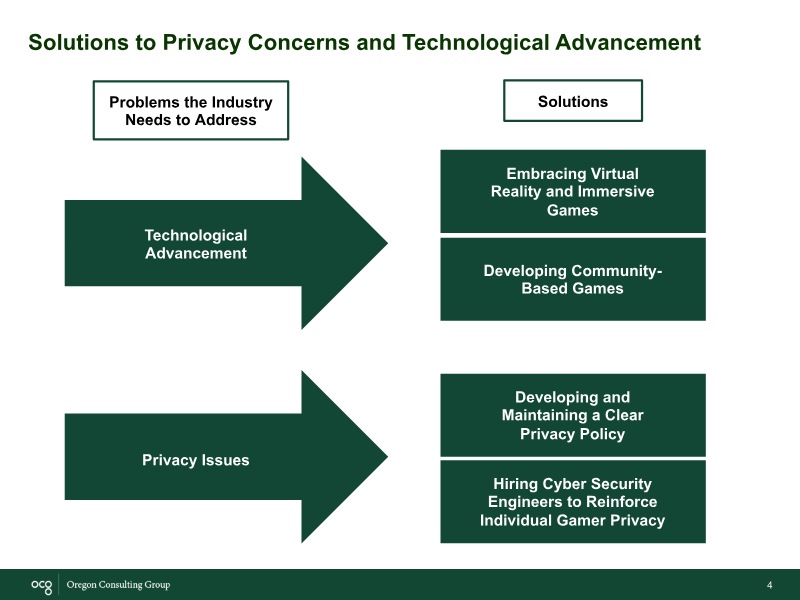
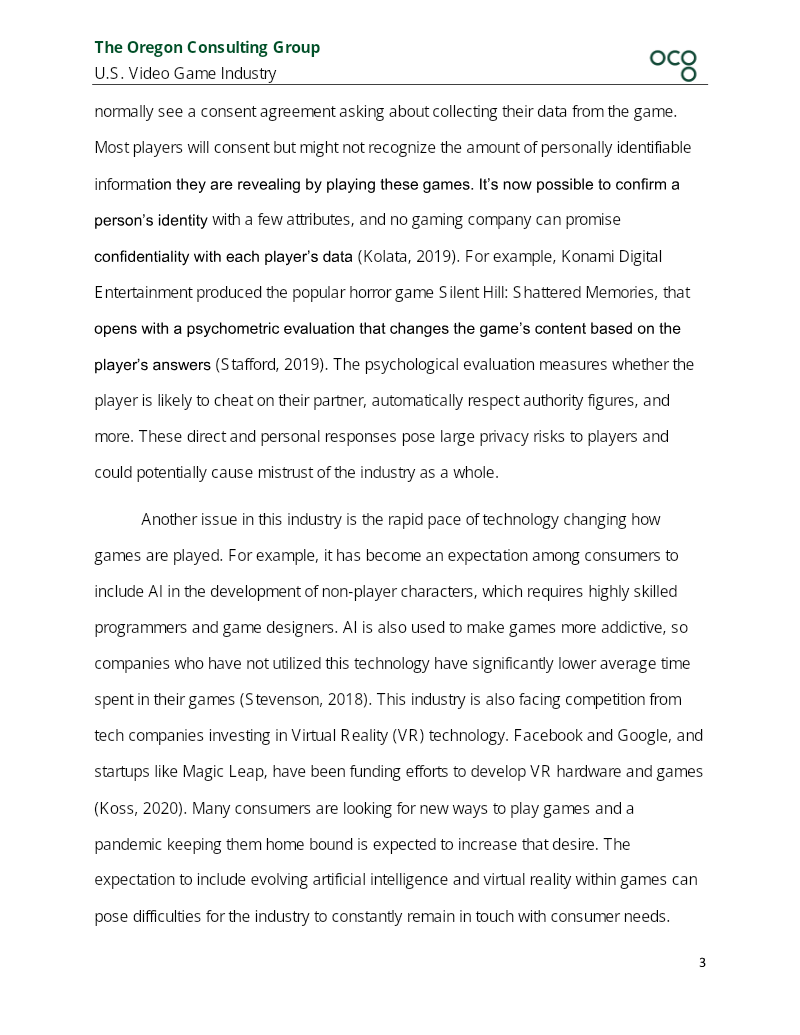
- Privacy risks are exacerbated by the re-identification of anonymized data and the use of psychometric evaluations, necessitating investments in specialized cybersecurity engineering similar to models used by Microsoft.

Video Game Market Update: Q2 2026
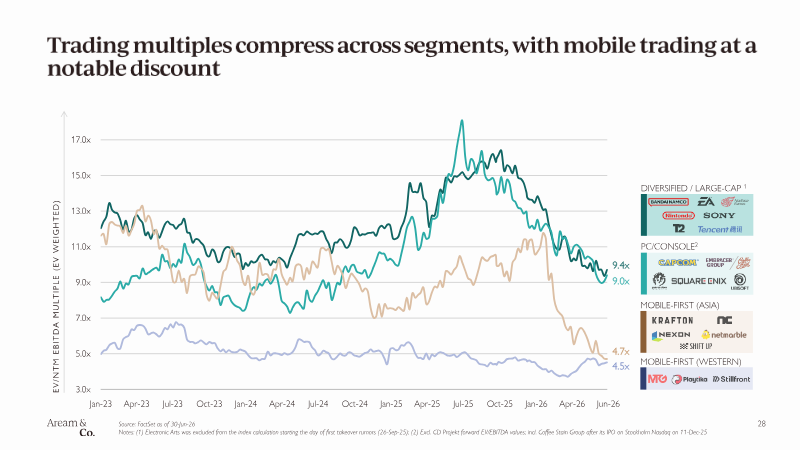
Aream & Co., a gaming-focused investment bank, publishes this Q2 2026 market update covering the video game industry.
- Private gaming investment reached 3.1bn in Q2 2026, up roughly 6x year on year, on broadly stable deal count.
- M&A reached 54 transactions with 2.3bn of capital deployed in Q2 2026.
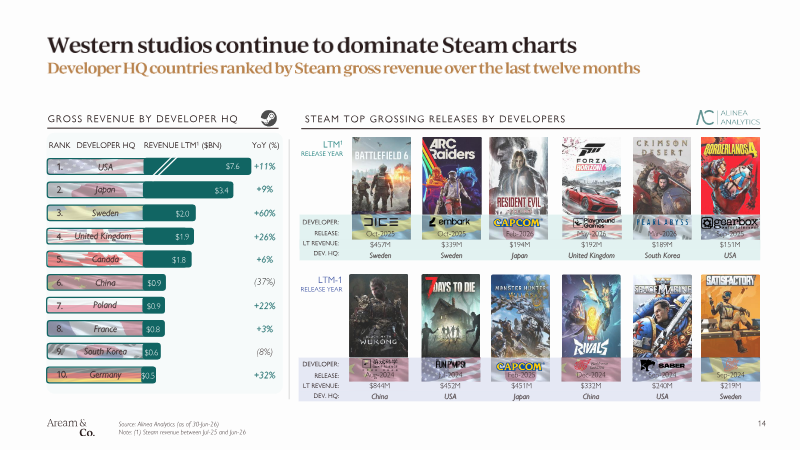
- Steam posted double-digit growth, with trailing twelve-month revenue up 13% year on year.
Essential Facts About the U.S. Video Game Industry: 2026
The "Essential Facts About the U.S.
- The U.S. video game industry reaches 212.3 million Americans, representing 67% of the total population.
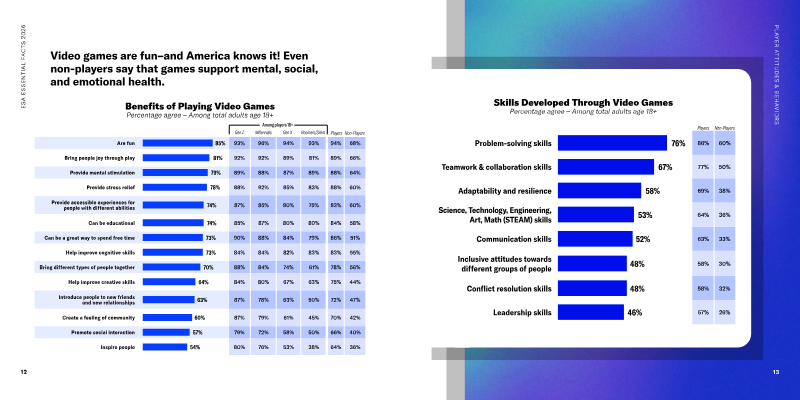
- The average American gamer is 37 years old, with a gender distribution that is nearly equal across all generations.
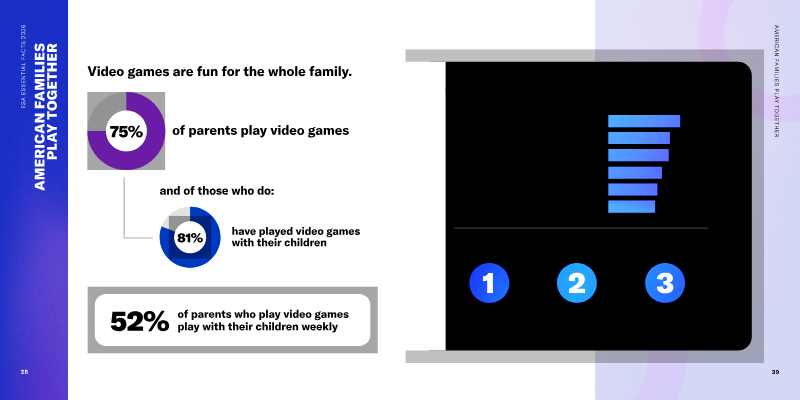
- Gaming is a primary social activity, with 70% of players interacting with others and 81% of gaming parents playing alongside their children.