Essential Facts About the U.S. Video Game Industry: 2026
23 pages~22 min full read
Key insights
8 slides
Key number
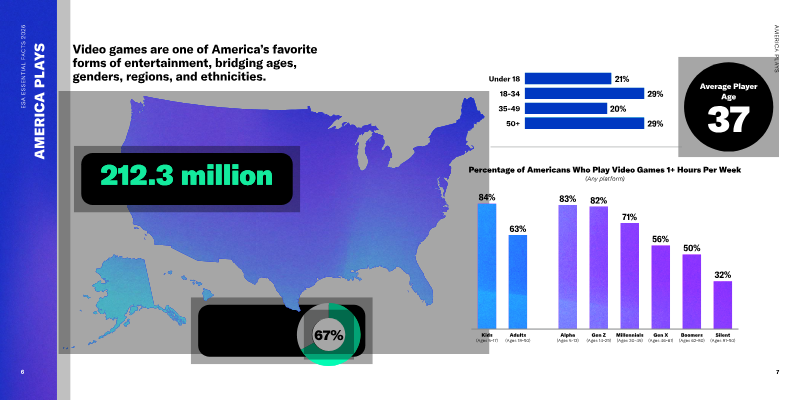
212.3 million Americans play video games at least one hour per week.
The industry reaches 67% of the total U.S. population. The average American gamer is 37 years old.
Who plays
The average American gamer is 37 years old with a nearly equal gender split.
Gaming spans from Generation Alpha to the Silent Generation. The gender distribution is nearly equal across all generations.
Social play
70% of players interact with others while playing video games.
Gaming is a primary social activity. Many players report that gaming helps them maintain relationships or build new communities.
Family gaming
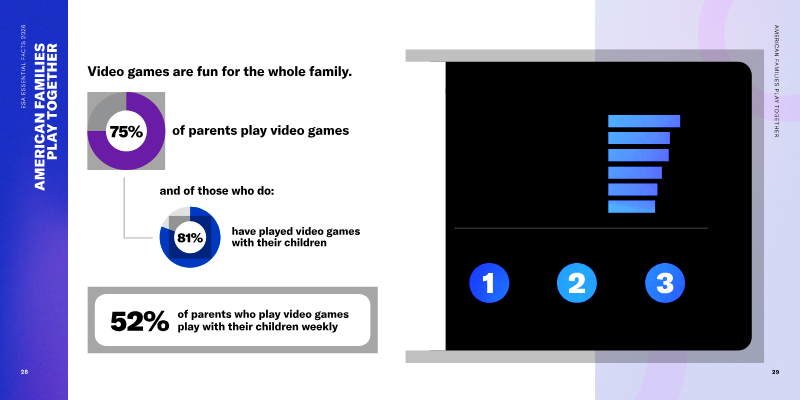
81% of gaming parents play video games alongside their children.
Approximately 75% of parents play video games. Gameplay is increasingly integrated into family life.
Personal benefits
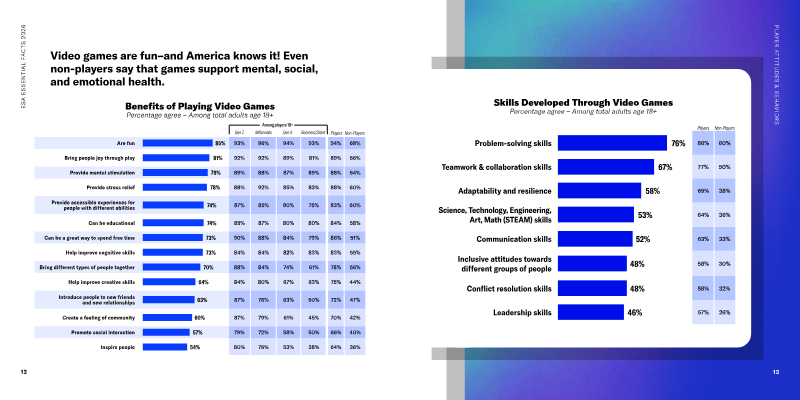
Players report stress relief, mental stimulation, and skill development from gaming.
Players cite the development of problem-solving and teamwork skills. Social connectivity is a core driver for many.
Player benefits. Players report significant personal benefits from gaming, specifically citing stress relief, mental stimulation, and the development of teamwork and problem-solving skills.
Economic driver
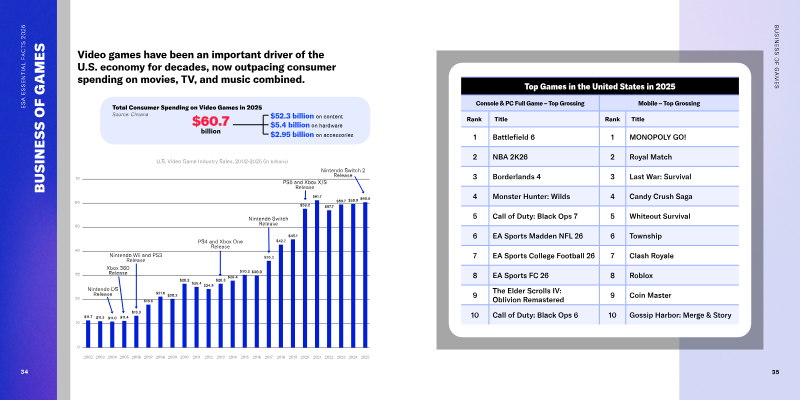
Consumer spending on content, hardware, and accessories drives the U.S. economy.
Spending reached significant levels in 2025. Players generally view games as a high-value entertainment investment compared to other media.
Economic impact. Consumer spending on content, hardware, and accessories remains a robust driver of the U.S. economy.
Parental oversight
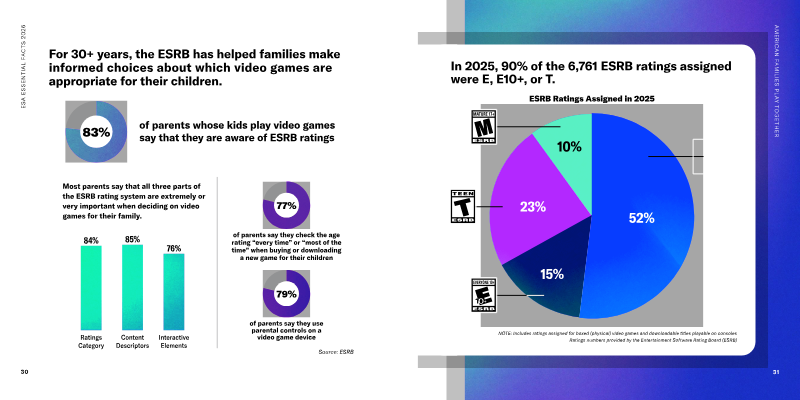
84% of parents check ESRB ratings when acquiring games for their children.
79% of parents utilize parental controls. Safety and oversight remain important to parents.
Methodology
The 2026 survey used a weighted sample of 13,545 respondents.
YouGov conducted the survey, including both gamers and non-gamers. Weighting ensured results are representative of the U.S. population.
1 / 8
Ask AI about this report