1 free read left. Create a free account for unlimited reading + AI research.
Create free accountReport Aream & Co
1 free read left. Create a free account for unlimited reading + AI research.
Create free accountReportAream & Co
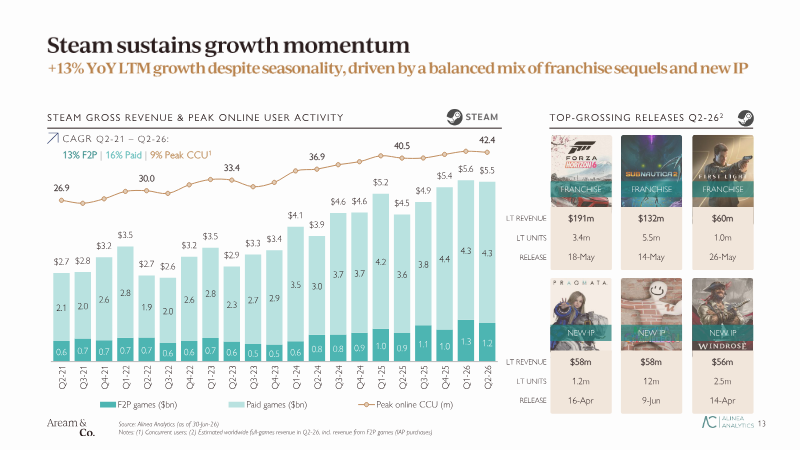
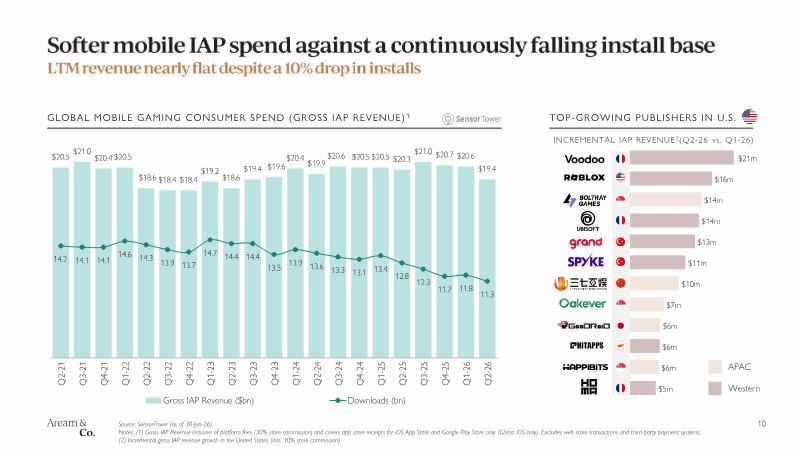
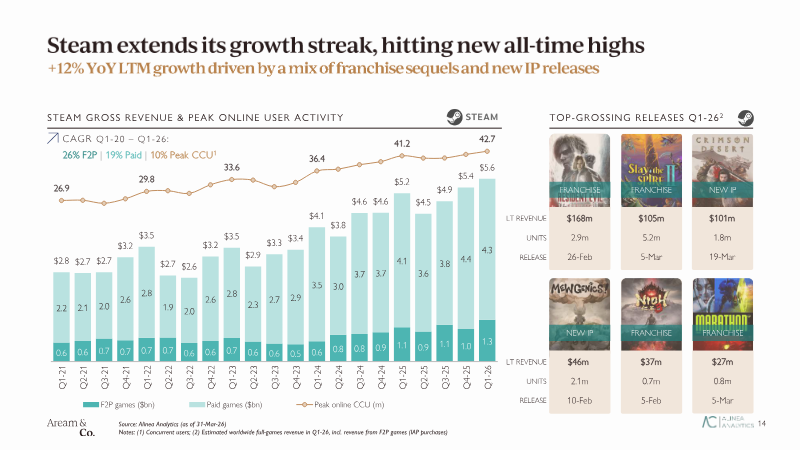
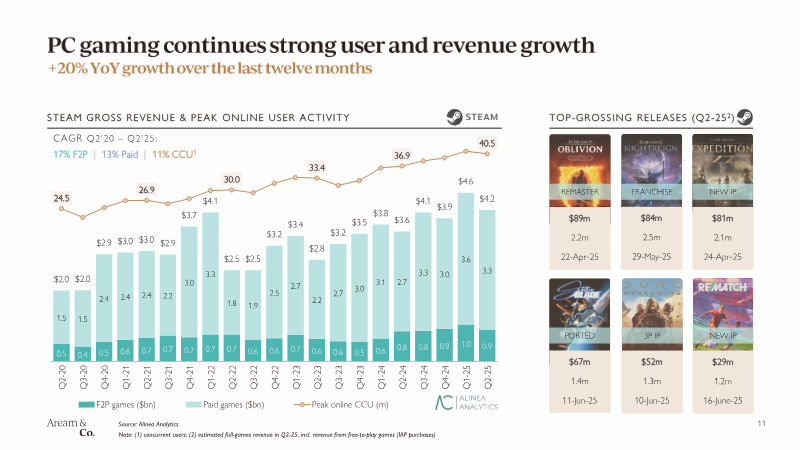
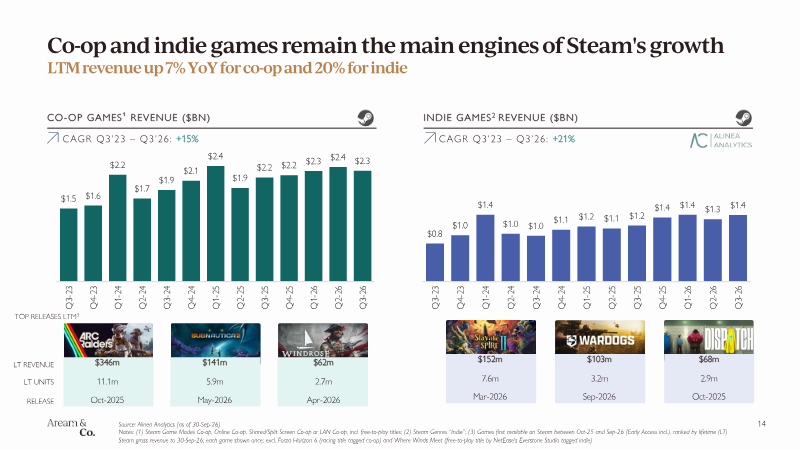
Steam recorded a 13 percent year-over-year revenue increase. Mobile gross revenue contracted 4 percent and new installs declined 12 percent.
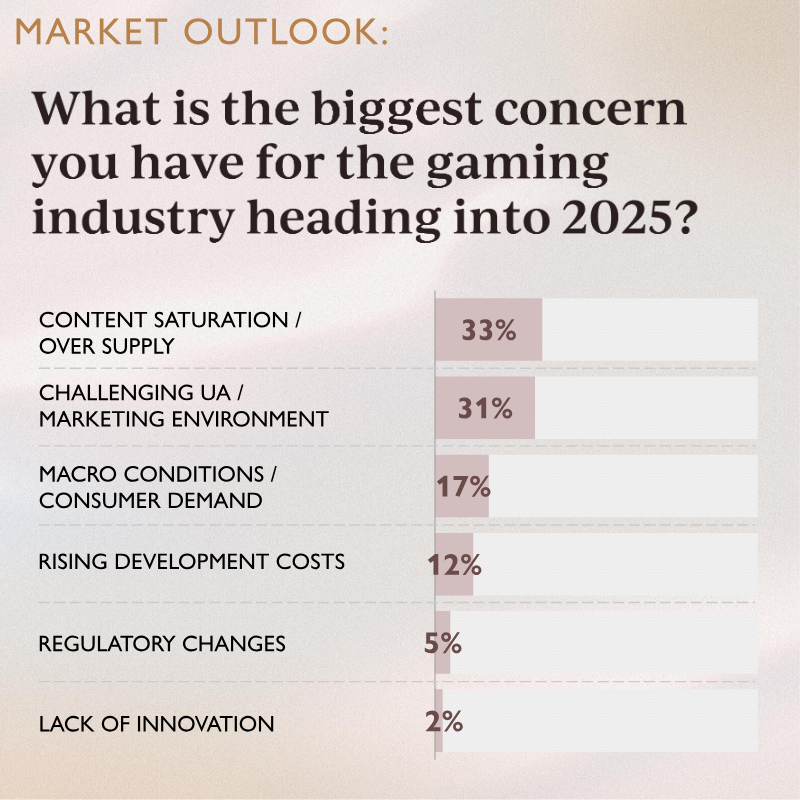
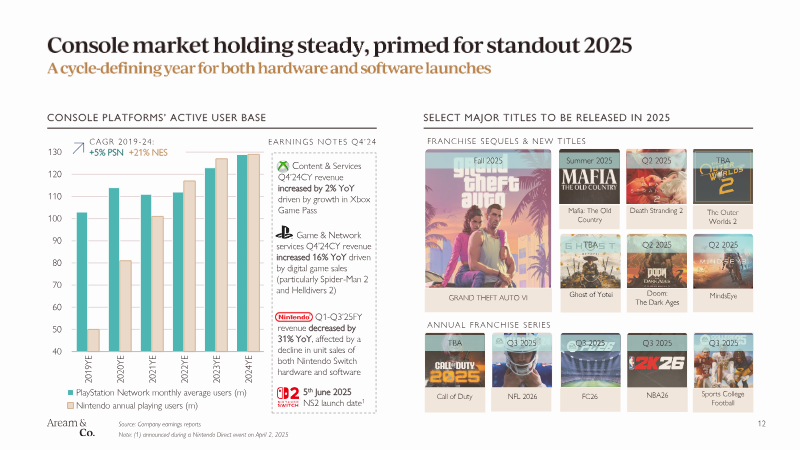
The global video game industry experienced a period of divergent performance during the second quarter of 2026, characterized by a resilient PC sector and a stagnant console market. While Steam sustained a 13 percent year-over-year growth trajectory, console revenues remained flat as the successful launch of the Nintendo Switch 2 balanced out declines in PlayStation and Xbox hardware sales. Conversely, the mobile gaming segment faced significant headwinds, marked by a 4 percent contraction in gross revenue and a 12 percent decline in new installs. This mobile stagnation is compounded by a lack of innovation in top-grossing charts, which remain dominated by legacy titles released more than four years ago.
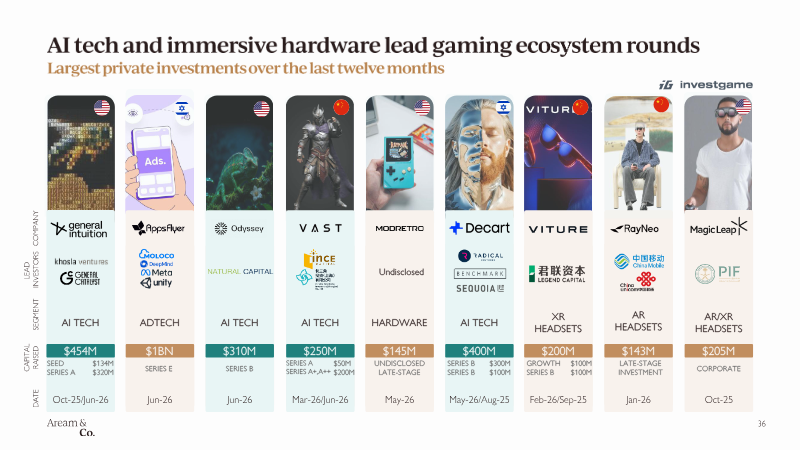
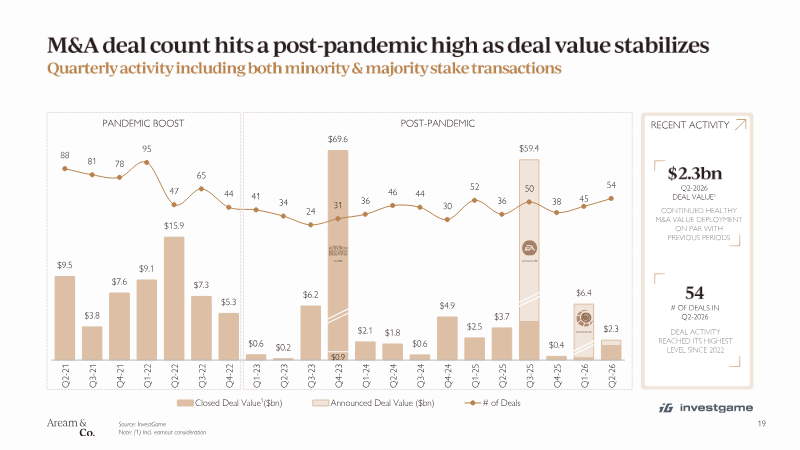
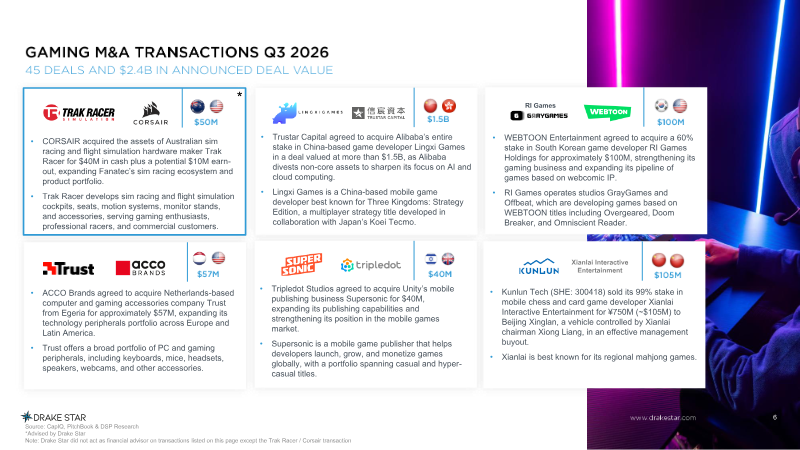
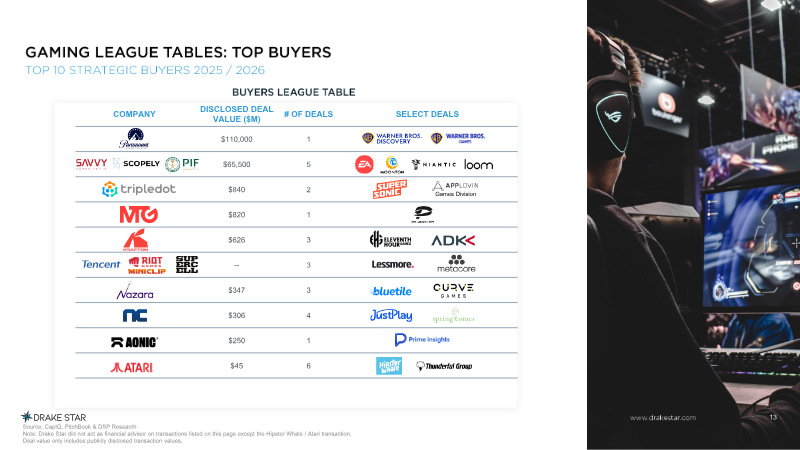
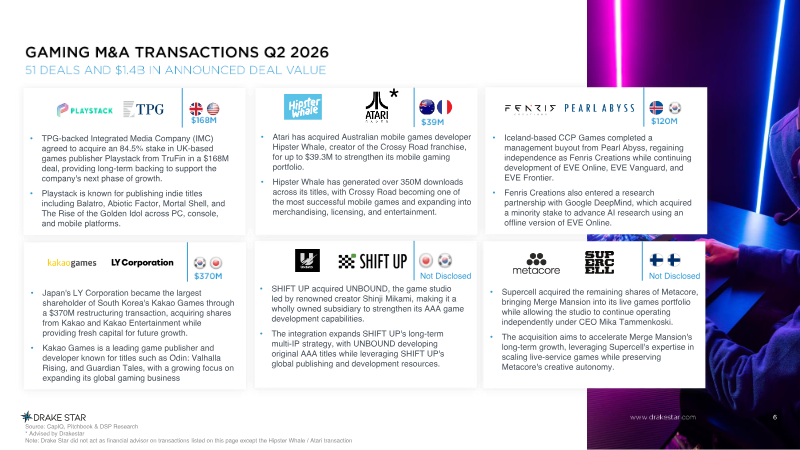
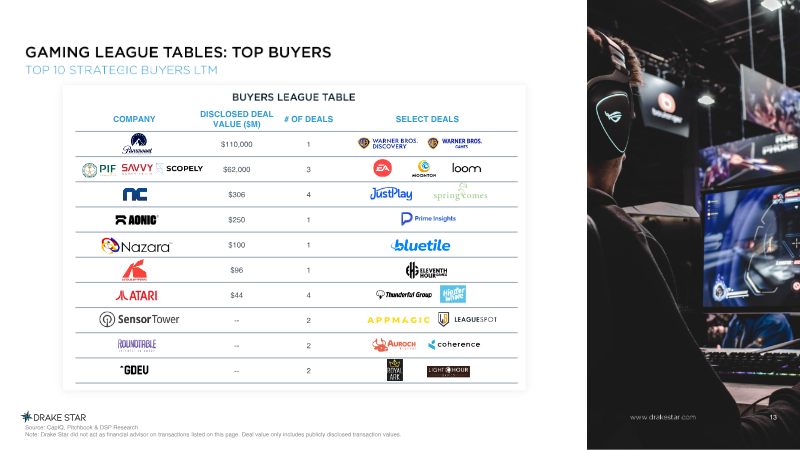
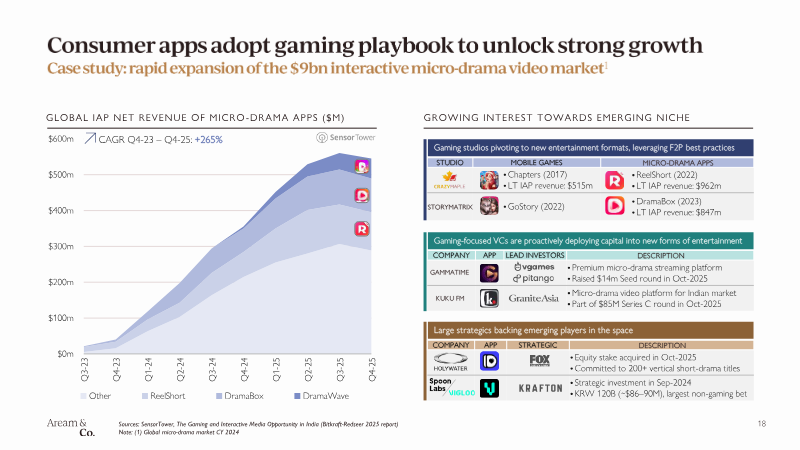
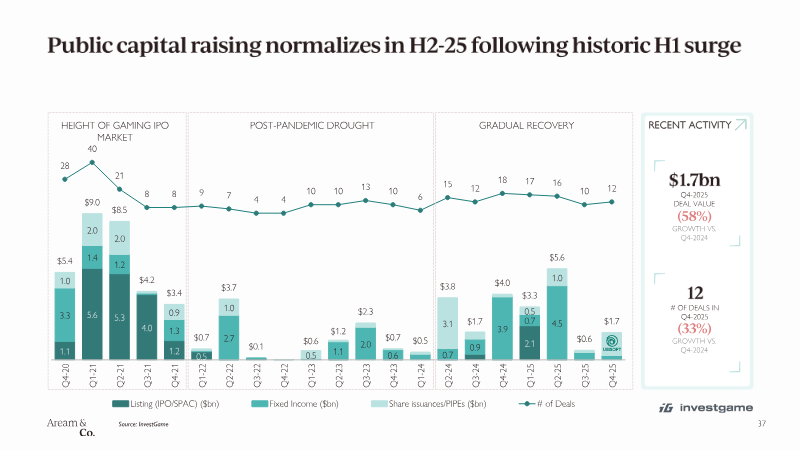
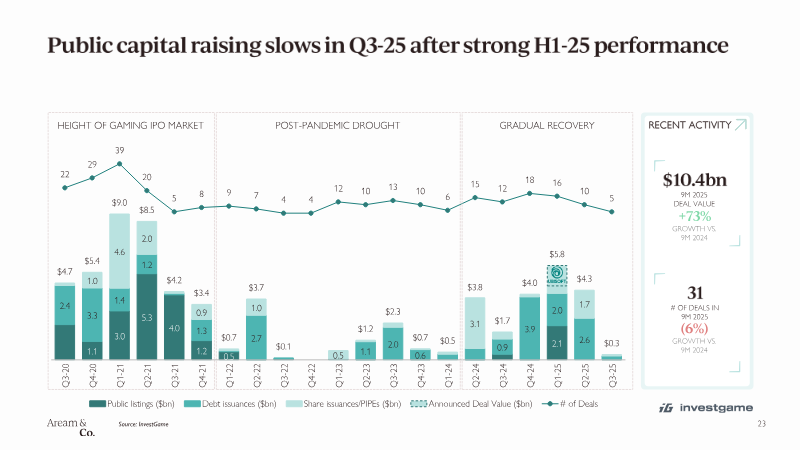
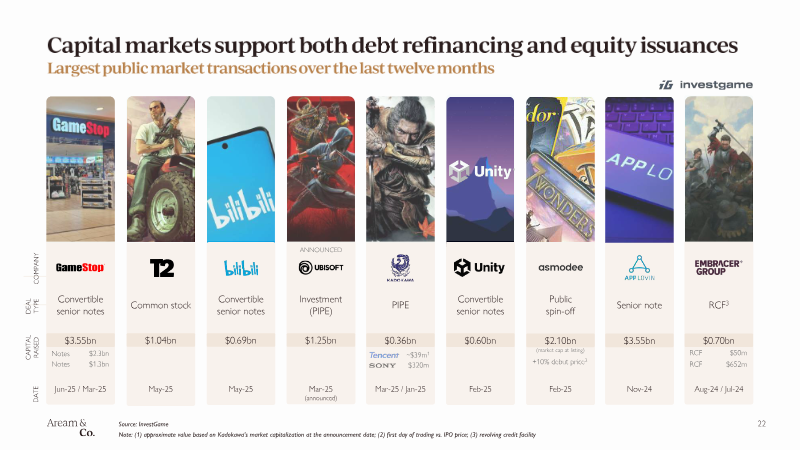
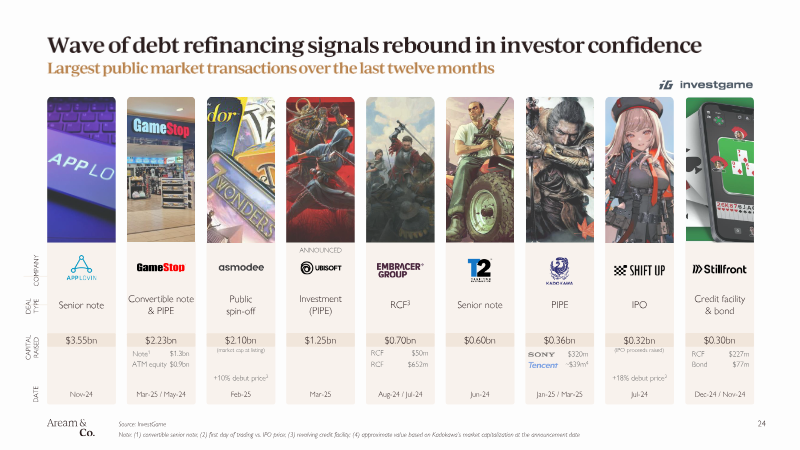
Financial activity within the sector showed signs of a robust recovery, with 54 merger and acquisition transactions deploying $2.3 billion in capital. Private investment experienced a dramatic sixfold year-over-year surge, totaling $3.1 billion, driven largely by mega-rounds focused on artificial intelligence, adtech, and immersive hardware. This shift in investment strategy reflects a broader trend where capital is increasingly concentrated in infrastructure and enabling technologies rather than traditional content-focused development.
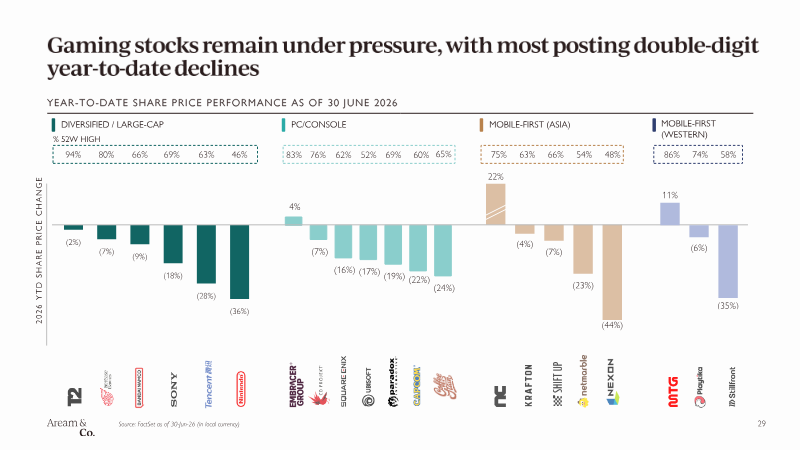
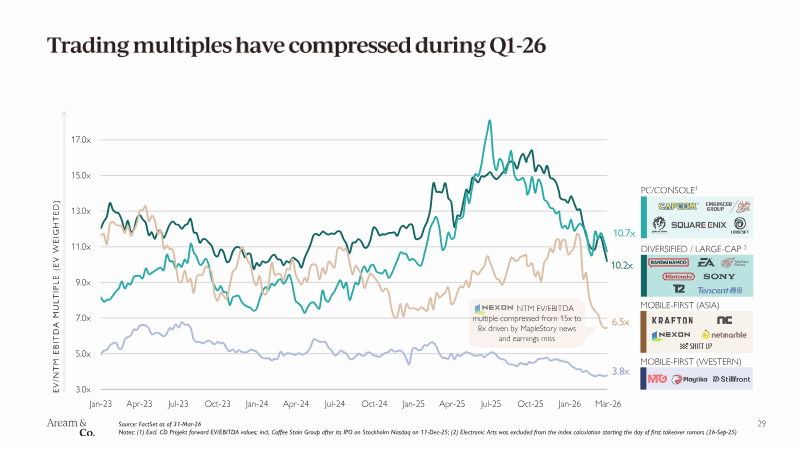
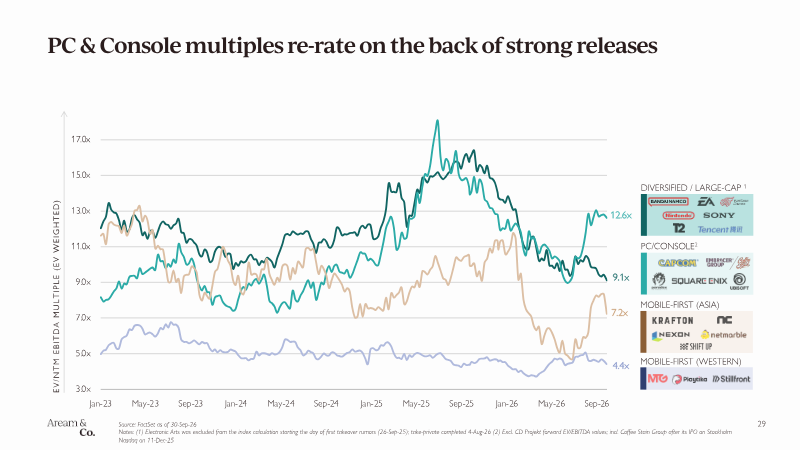
Despite this transactional health, public gaming equities remain under significant pressure, suffering from double-digit year-to-date declines and compressed valuation multiples. Investors are prioritizing profitability and sustainable growth, favoring large-cap publishers that demonstrate resilience in a volatile equity environment. While early-stage venture activity persists, the industry continues to undergo widespread consolidation through strategic divestments and M&A, signaling a transition toward a more mature, efficiency-focused market landscape.

Aream & Co · 2026
Aream & Co · 2026
Aream & Co · 2025
Aream & Co · 2025
Aream & Co · 2025

Aream & Co · 2025
Aream & Co · 2025
Aream & Co · 2025
Aream & Co
PCF Group · 2026