1 free read left. Create a free account for unlimited reading + AI research.
Create free accountReport Higher Education Video Game Alliance
1 free read left. Create a free account for unlimited reading + AI research.
Create free accountReportHigher Education Video Game Alliance
It fosters critical thinking, complex problem-solving, and resilience.
Active Learning. Video games shift K-12 students from passive information recipients to active participants.
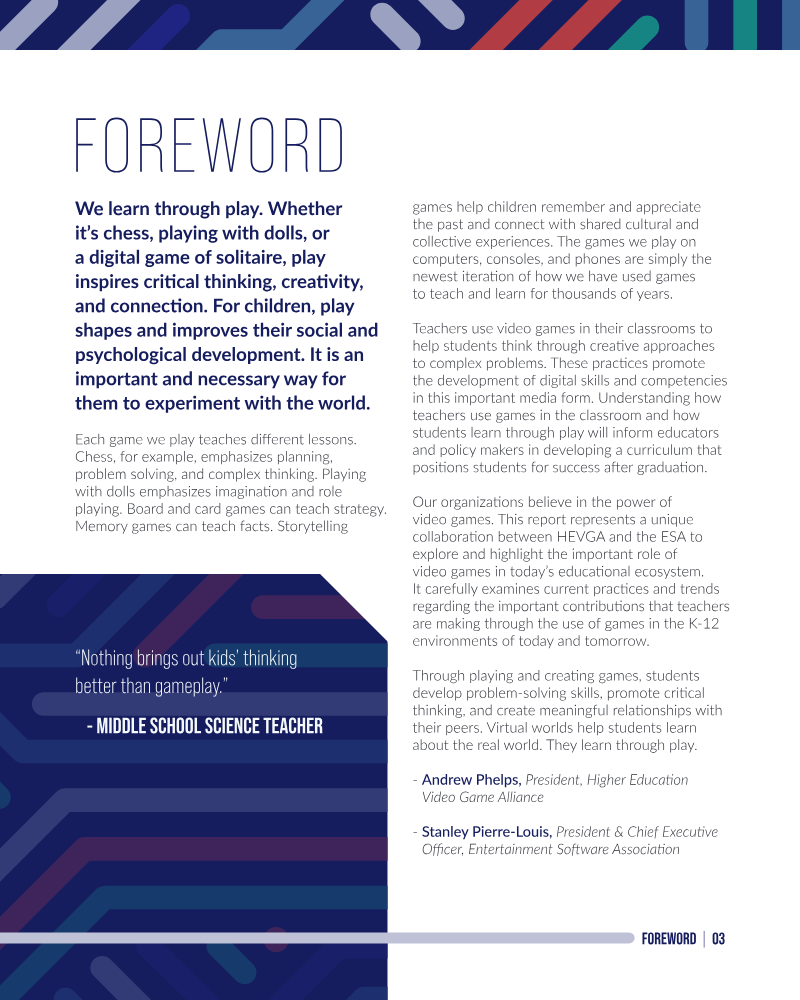
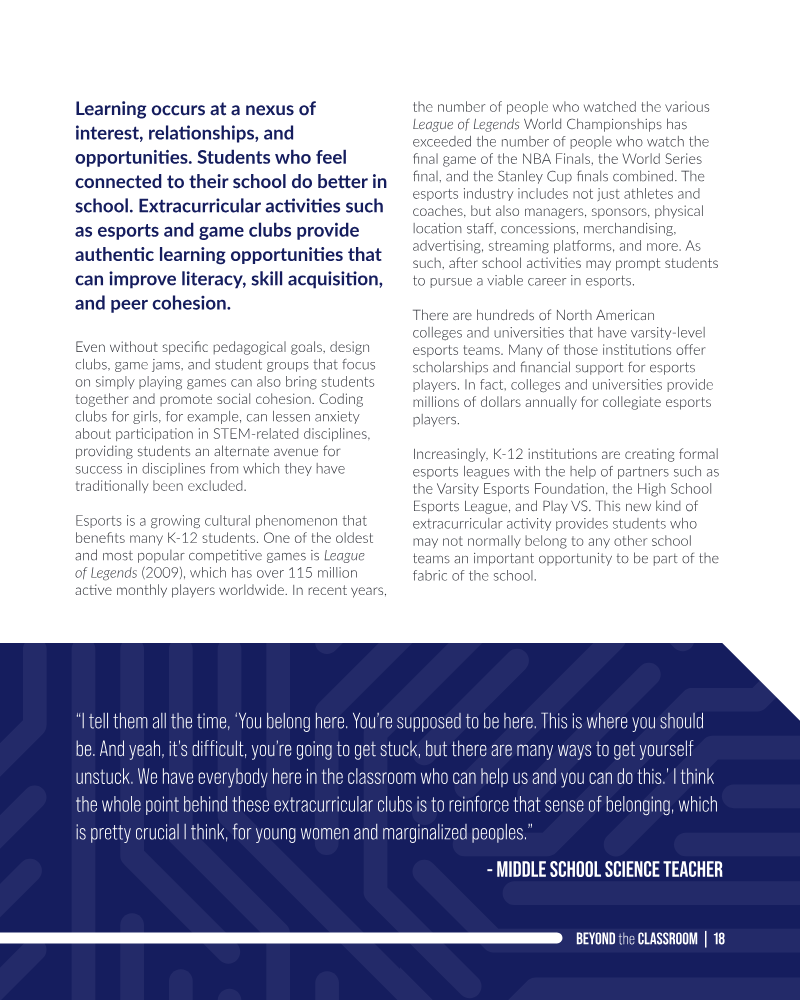
Video games function as transformative pedagogical tools within K-12 education, shifting students from passive recipients of information to active participants in their own learning processes. By leveraging the interactive nature of digital environments, educators can foster critical thinking, complex problem-solving, and resilience. These systems accommodate diverse learning styles and provide personalized pacing, effectively bridging the divide between rigid academic standards and the lived experiences of modern students. Beyond core subject mastery, the integration of game design and esports programs cultivates essential social-emotional skills, including collaboration, peer mentorship, and a heightened sense of school belonging.
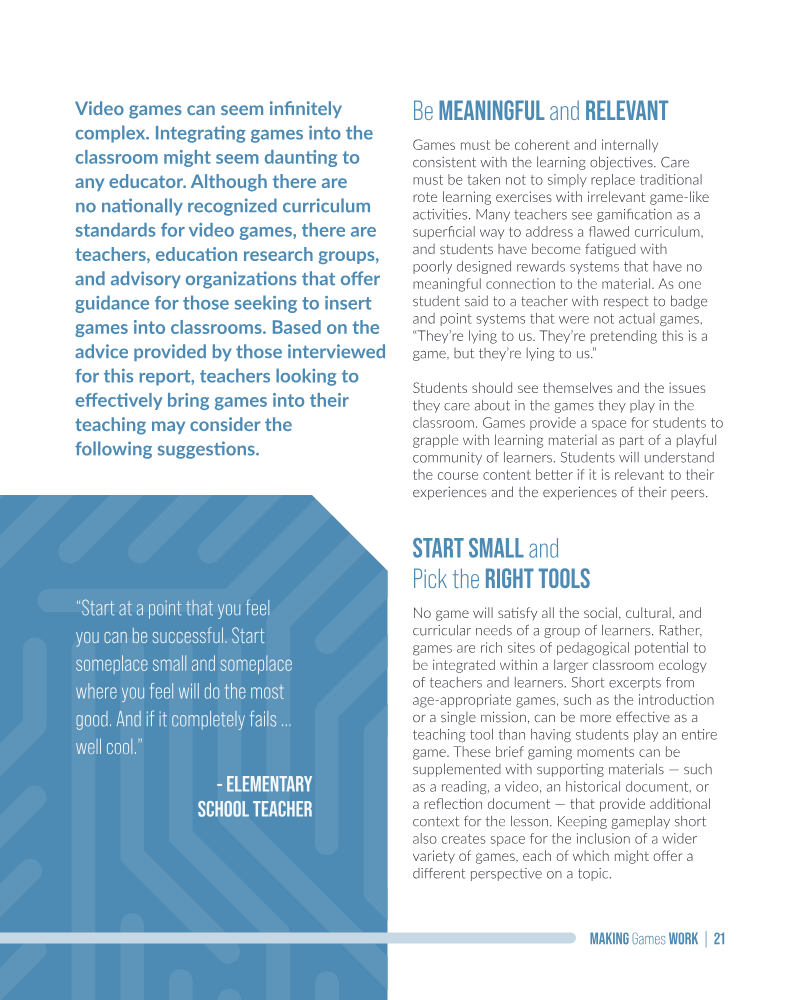
Successful implementation requires a strategic, pedagogical approach rather than superficial gamification. Educators are encouraged to utilize targeted, short-form game segments that align directly with specific learning objectives, supported by robust instructional scaffolding. This methodology ensures that game mechanics serve as a bridge to real-world concepts rather than a distraction. Furthermore, the sustainability of these programs depends on administrative backing, equitable access to technology, and transparent communication with parents regarding the curricular value of digital play.
This analysis, supported by extensive academic research on game-based learning across disciplines such as science and history, underscores the growing consensus on the cognitive and motivational benefits of serious games. Organizations like the Higher Education Video Game Alliance and the Entertainment Software Association advocate for this integration, positioning video games as vital components of a modern, comprehensive educational framework. When implemented with intentionality and institutional support, video games serve as dynamic environments that promote both technical proficiency and the development of a collaborative community of learners.
Entertainment Software Association · 2026

Entertainment Software Association · 2026
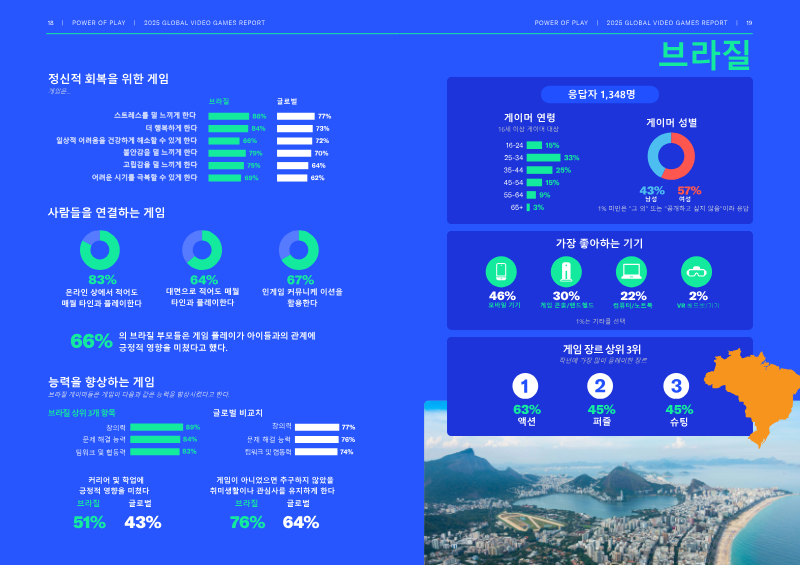

Entertainment Software Association · 2025
Entertainment Software Association · 2025

Entertainment Software Association · 2025

Entertainment Software Association · 2025

Entertainment Software Association · 2025
Entertainment Software Association · 2025

Entertainment Software Association · 2024
Entertainment Software Association · 2024

Entertainment Software Association · 2024


Entertainment Software Association · 2024