
Sid Meier's Civilization
GameBy MPS Labs · Released Sep 30, 1991
Documents about Sid Meier's Civilization
Take-Two Interactive Investor Presentation: May 2025
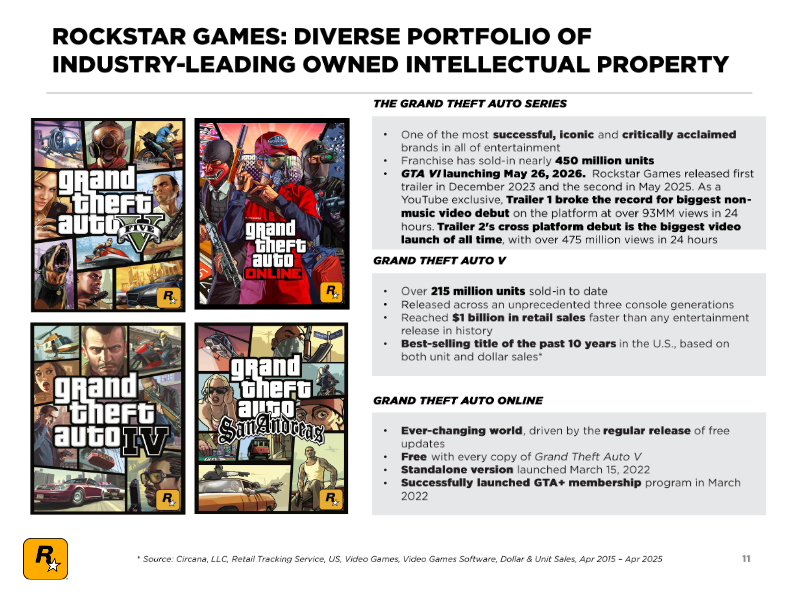
Take-Two Interactive occupies a dominant position in the global interactive entertainment market, underpinned by a diversified portfolio of thirteen major franchises that have each surpassed five million units in lifetime sales.
- Take-Two Interactive generated $5.6 billion in net bookings for fiscal year 2025, supported by a portfolio of thirteen franchises that have each exceeded five million units in lifetime sales.
- Mobile gaming has become the company's primary revenue driver, accounting for 51% of total net bookings.
- The company is targeting sustained growth through fiscal year 2028, anchored by a development pipeline that includes Grand Theft Auto VI, Borderlands 4, and Mafia: The Old Country.
Top 10 New Releases on Steam: February 2025
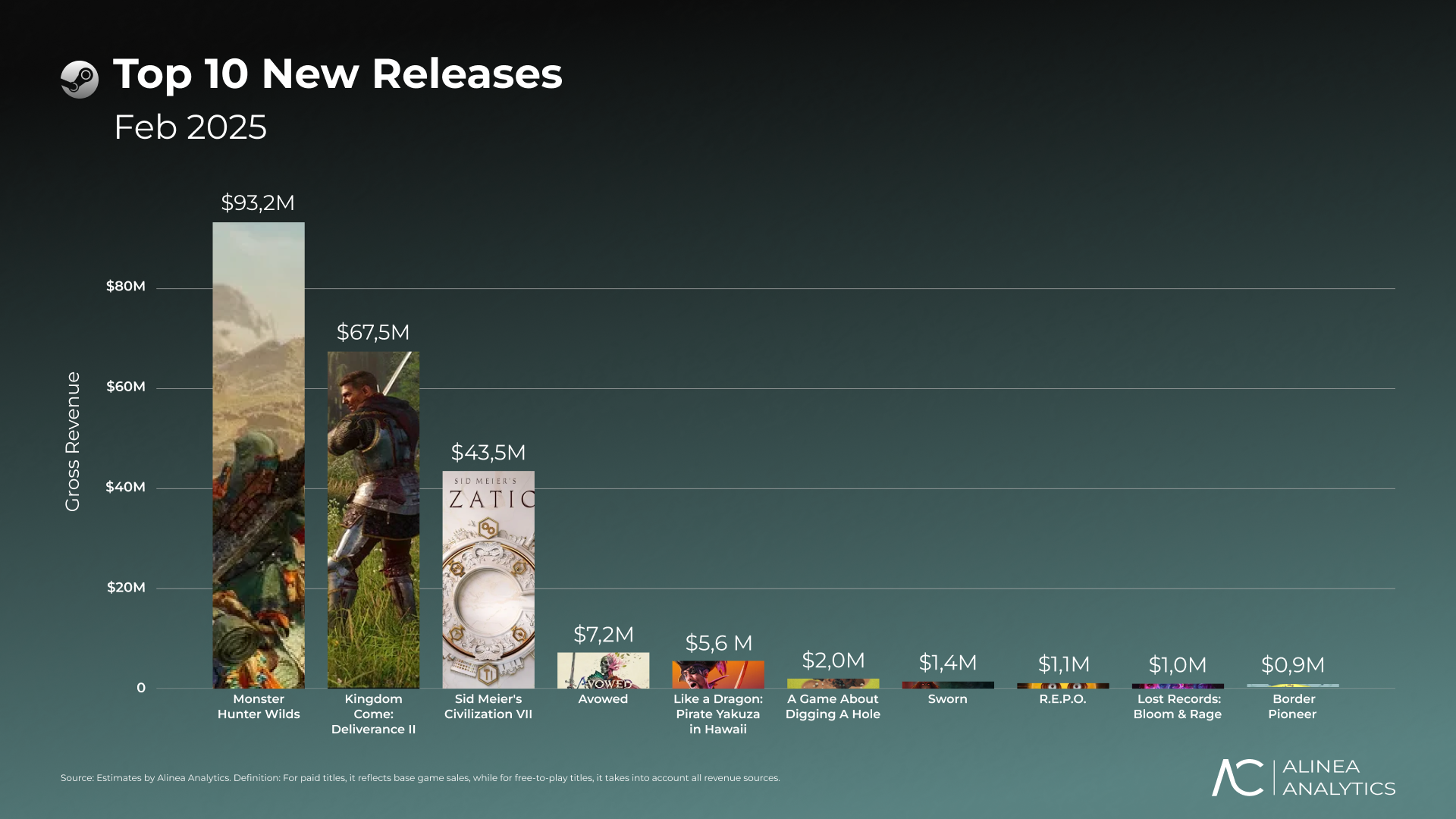
February 2025 represented a high-performing period for the Steam platform, characterized by the launch of several major franchise titles that generated significant gross revenue.
- Monster Hunter Wilds dominated February 2025 Steam releases, generating $93.2 million in revenue despite launching on the final day of the month.
- Kingdom Come: Deliverance II grossed $67.5 million on Steam in February and has reached approximately 2.5 million total copies sold across all platforms.
- Sid Meier’s Civilization VII generated $43.5 million on Steam during its launch month, despite experiencing mixed player reception.
Top-Grossing New Games on Steam: February 2025
The gaming industry experienced a significant surge in revenue on Steam during February 2025, driven by several high-profile releases.
- Kingdom Come: Deliverance II was the top-grossing new game on Steam in February 2025, generating an estimated $118.9 million in revenue and selling over 2 million copies on the platform.
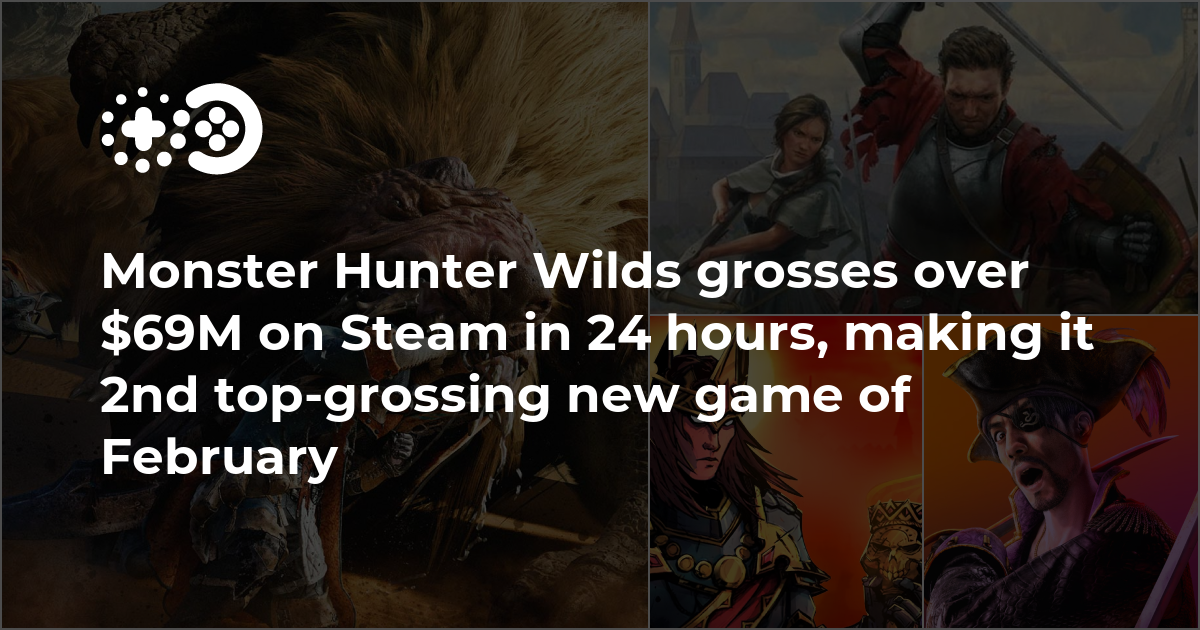
- Monster Hunter Wilds grossed $69.1 million on Steam within its first 24 hours of release on February 28, with total Steam revenue exceeding $150 million by March 2.
- Monster Hunter Wilds achieved a peak of over 1.38 million concurrent players on Steam, ranking as the 5th biggest release in the platform's history by that metric.
Take-Two Interactive Q3 Fiscal Year 2025 Earnings Results
Take-Two Interactive’s third-quarter fiscal year 2025 earnings report highlights a period of solid financial performance, characterized by significant outperformance in the NBA 2K franchise that successfully offset moderation within the company’s mobile gaming portfolio.
- Take-Two Interactive reported Q3 fiscal 2025 net bookings of $1.37 billion, maintaining its full-year guidance of $5.55 to $5.65 billion.
- NBA 2K25 drove significant growth with a 30% increase in recurrent consumer spending and a 20% rise in daily active users.
- Grand Theft Auto V has surpassed 210 million units sold-in, while Red Dead Redemption 2 has reached over 70 million units.
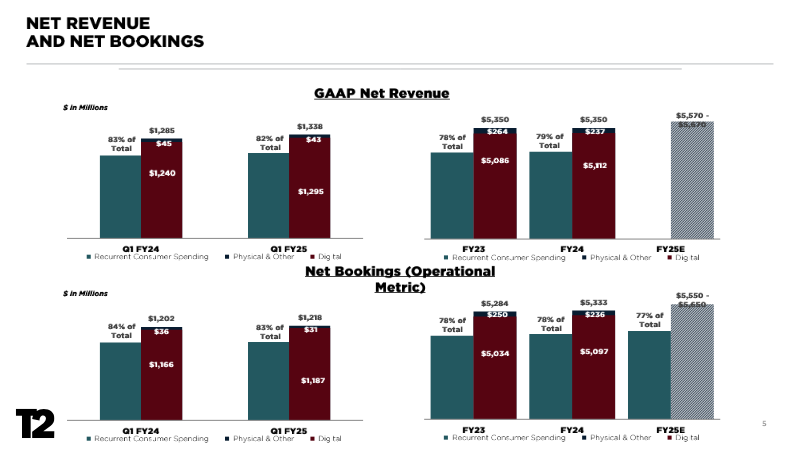
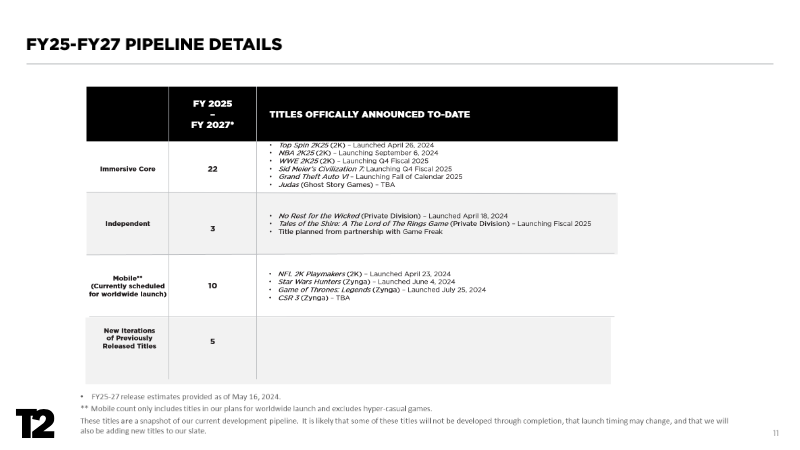
Take-Two Interactive First Quarter Fiscal 2025 Results
Take-Two Interactive’s first-quarter fiscal 2025 results reflect a period of transition characterized by strategic investments in its development pipeline and ongoing operational adjustments.
- Take-Two Interactive reported Q1 fiscal 2025 GAAP net revenue of $1.338 billion, alongside a GAAP net loss of $262 million driven by reorganization costs, acquisition expenses, and currency devaluation.
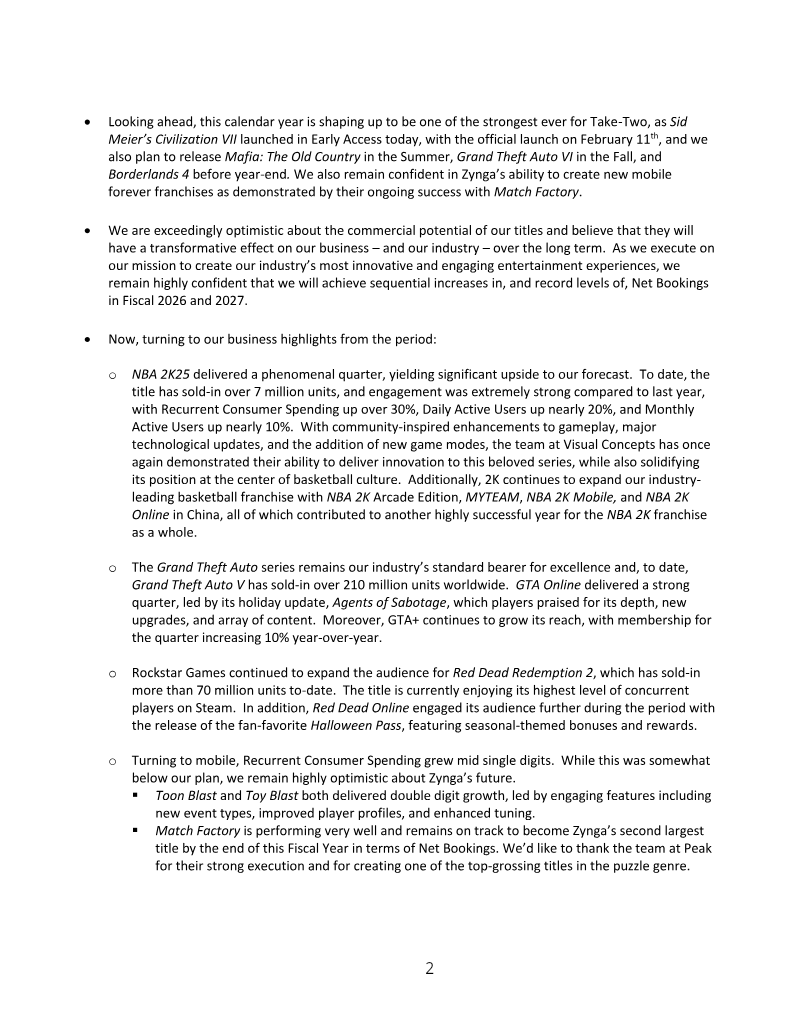
- The company maintains its fiscal year 2025 net bookings guidance of $5.55 billion to $5.65 billion, anticipating future growth from the releases of Grand Theft Auto VI and Sid Meier's Civilization 7.
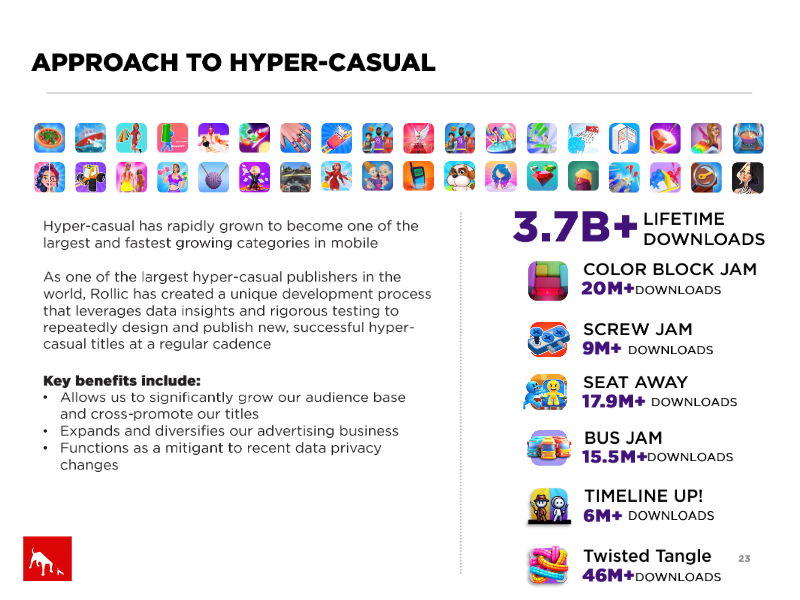
- Recurrent consumer spending remained flat year-over-year, as mobile growth from Match Factory! and Toon Blast was offset by declines in hyper-casual titles, Grand Theft Auto Online, and NBA 2K.
On Being Stuck in Sid Meier's Civilization: The Promise of Freedom in Historical Games
Sid Meier's Civilization promises players the freedom to rewrite world history through counterfactual "what-if" play, yet this promise is argued here to erode as the game advances.
- The report argues that Sid Meier's Civilization promises freedom to rewrite history through counterfactual play but progressively erodes that freedom as the game advances, leaving late-game play feeling stuck and unrewarding.
- It proposes three freedoms as an evaluative framework for historical games: the freedom to move, to disobey, and to create, drawing on David Graeber and David Wengrow's The Dawn of Everything.
- Civilization constrains player agency through mechanics such as cultural borders, algorithmically hardened diplomacy, locked government structures, and punishing government reversions.
Climate Crisis and Video Games
Video games possess a unique capacity to model complex systems, making them an ideal medium for exploring the climate crisis.
- Video games are uniquely positioned to model the systemic nature of the climate crisis, allowing players to navigate complex political challenges and structural dependencies that traditional media struggles to convey.
- Modern commercial titles like Civilization VI: Gathering Storm effectively simulate the game theory problem of global cooperation, forcing players to balance individual factional gains against the collective necessity of emission reductions.
- Games such as Fate of the World utilize actual scientific models to teach players about the interconnectedness of climate issues, moving the medium beyond entertainment into the realm of educational simulation.
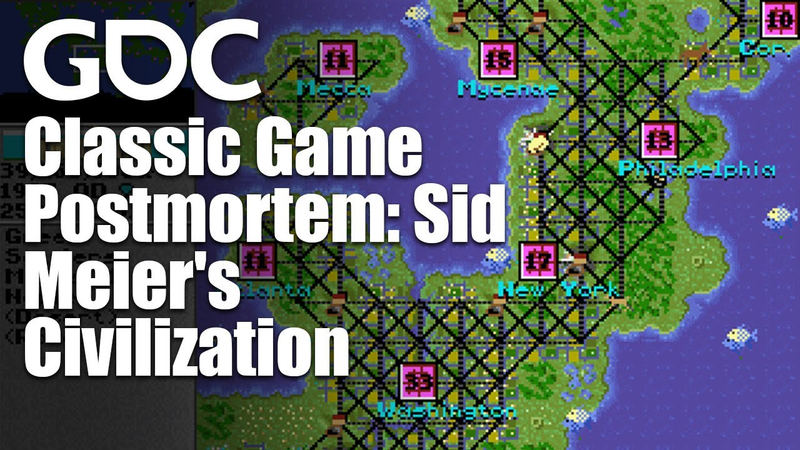
Classic Game Postmortem: Sid Meier's Civilization
The development of Civilization represents a pivotal shift in strategy gaming, moving away from rigid historical simulation toward a sandbox experience that prioritizes player agency and long-term strategic planning.
- Sid Meier and Bruce Shelley developed the original Civilization in under one year, beginning in early 1990 and shipping the title in 1991.
- The game's design was heavily influenced by existing titles like Empire, SimCity, and Railroad Tycoon, as well as Francis Tresham’s board game, Civilization.
- The 'tech tree' mechanic was a core innovation that provided players with a sense of progression and long-term strategic goals, such as unlocking railroads to improve unit mobility.
Wargaming and Computer Games: Fun with the Future
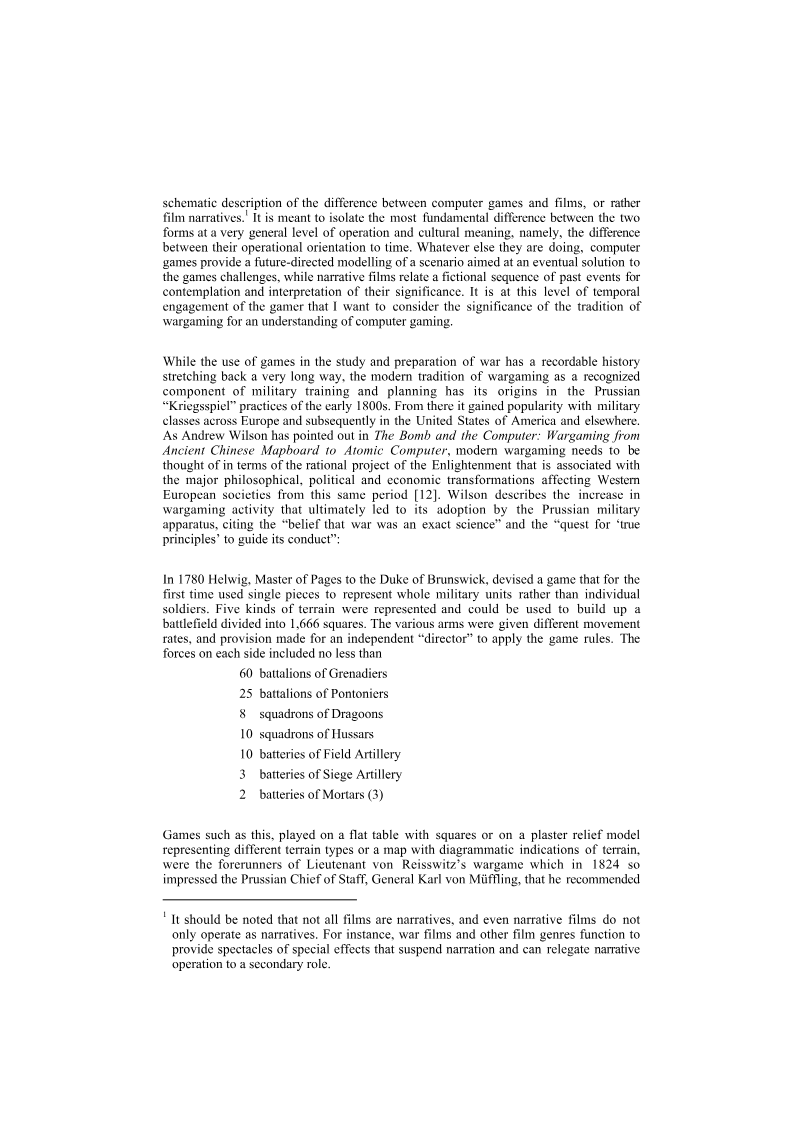
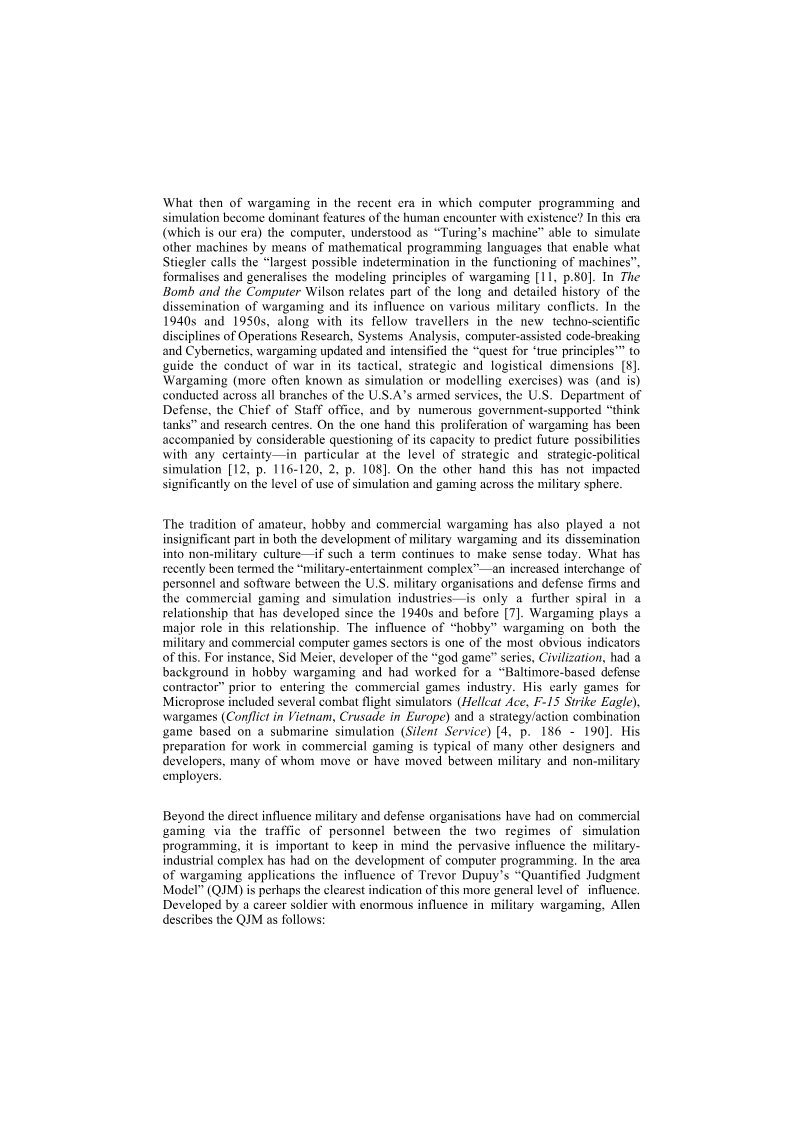
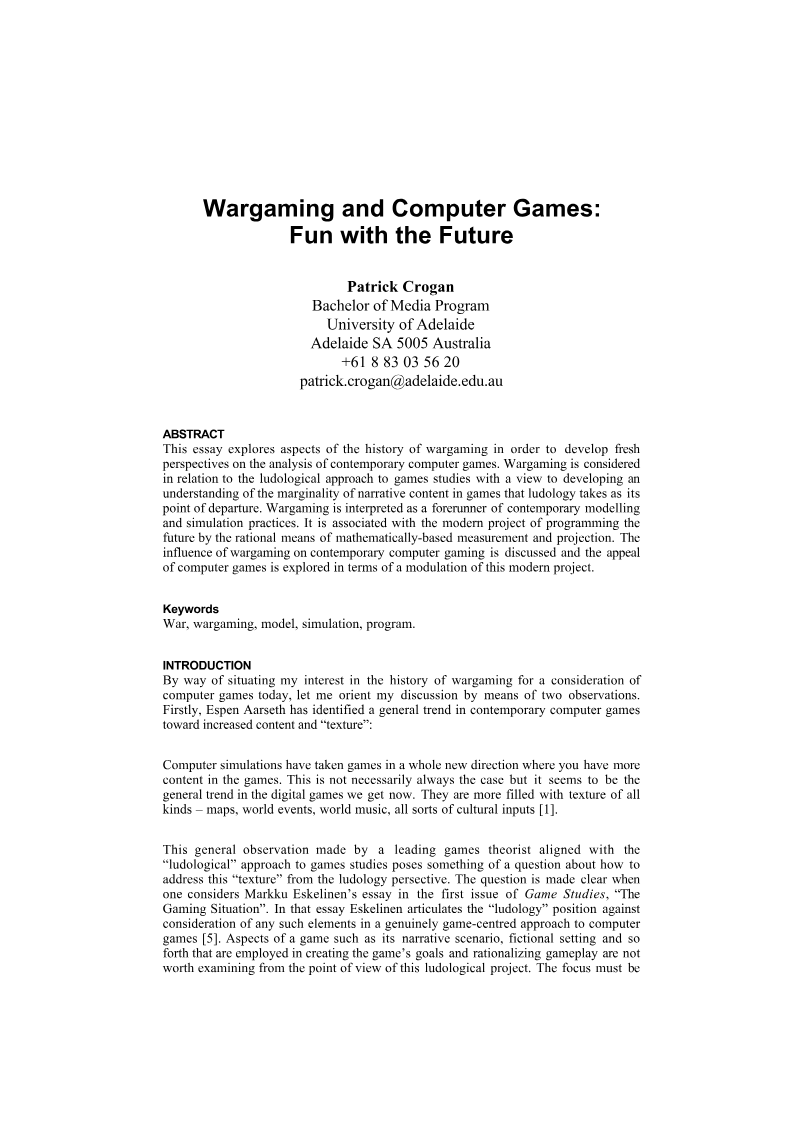
Patrick Crogan's essay traces the history of wargaming to argue that modern computer games carry forward a distinctive relationship to the future, one rooted in the Enlightenment project of rational prediction and control.
- Patrick Crogan argues that modern computer games extend a relationship to the future rooted in the Enlightenment project of rational prediction and control, with the core activity being modelling and simulation.
- Narrative and cultural 'texture' are treated as marginal in games because the central pleasure lies in modelling complex systems, a claim that positions the essay within the ludological tradition while challenging its positivist tendencies.
- Wargaming is traced from Helwig's 1780 squared-board game through Reisswitz's 1824 Kriegsspiel, which impressed the Prussian military and was adopted into officer training, and on through postwar American military and research simulation.
Companies behind it

As the documents state it.