
Sid Meier's Civilization
GameBy MPS Labs · Released Sep 30, 1991
Documents about Sid Meier's Civilization
Why are Historical Games so Crunchy? | Design Club
Historical games frequently employ high levels of mechanical complexity, or "crunch," to satisfy a player base that demands rigorous authenticity and factual fidelity.
- Historical games utilize 'crunch'—complex, detailed systems—to achieve verisimilitude, the emotional resonance that makes a setting feel authentic to players even if it isn't perfectly accurate.
- Historical accuracy is often prioritized because players have deep, real-world cultural and personal connections to historical events, making them sensitive to inaccuracies that would be ignored in fantasy settings.
- Crunch in historical games does not require numerical systems; it can manifest through authentic environmental details, such as the specific sound of a weapon, period-accurate equipment, or complex mechanical systems.
Number Go Up Featuring Orb of Creation 1.0 | Design Club
Incremental games, often categorized as idlers or clickers, are defined by a core design loop centered on the optimization of systems to achieve exponentially increasing values.
- Incremental games shift the player's role from a passive clicker to a manager of complex, interdependent systems by prioritizing the optimization of exponentially increasing values.
- Orb of Creation distinguishes itself within the genre by requiring active, strategic input across multi-layered systems like alchemy, gardening, and combat rituals rather than relying on passive idling.
- Long-term engagement in incremental games depends on balancing accessible early-game loops with high-complexity thresholds that prevent optimization traps and time-based penalties.

How Valve (And Apple) Broke Game Sales | Design Club
The digital distribution landscape has undergone a profound transformation, shifting from a model defined by physical retail to one dominated by centralized storefronts like Steam.
- Steam has fundamentally altered consumer price anchoring by normalizing frequent, deep discounts, training players to wait for sales rather than purchasing games at full price.
- Developers are now forced to build 'sale-proof' pricing models, ensuring that even after significant discounts, the revenue per unit remains profitable after platform fees.
- The frequency and depth of Steam discounts have increased significantly over time, with standard promotions moving from 10–20% to 30–60% or higher to capture consumer attention.
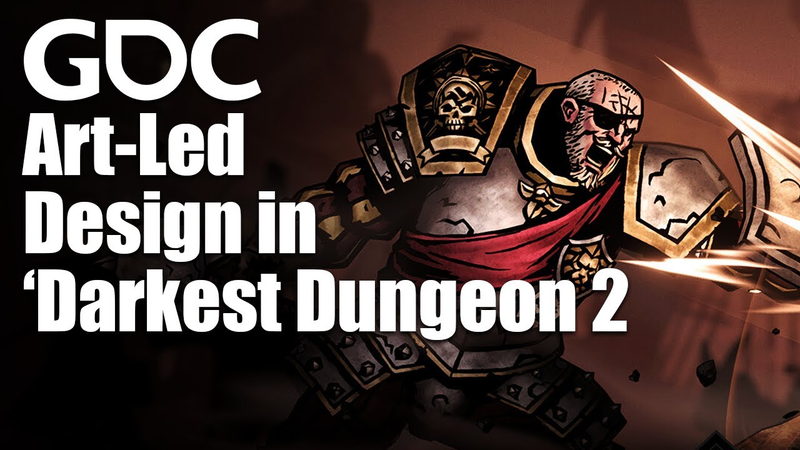
Evolving Worlds from Chaos: The Art-Led Approach of 'Darkest Dungeon 2's' Procedural Generation
The development of Darkest Dungeon 2 centers on a deliberate shift toward an art-led procedural generation system, prioritizing the game’s distinct, painterly aesthetic over traditional, programmer-centric automation.
- Red Hook Studios shifted from a programmer-led procedural generation system to an art-led approach for Darkest Dungeon 2 to ensure the game’s distinct, painterly 3D aesthetic remained consistent across generated environments.
- The team abandoned an initial 'sequential plate' system because it created an unsustainable workload for the art team and failed to support the desired game design direction.
- The final solution utilized a grid-based system where environment artists defined a minimal set of road tiles, allowing Unity to generate complex, seamless biomes without requiring constant developer intervention.

291. AI in Games: Innovation or Ethical Time Bomb? With George Ng, CTO of GGWP
Artificial intelligence is fundamentally reshaping the gaming industry by acting as a powerful catalyst for operational efficiency while simultaneously introducing profound ethical risks.
- AI is currently serving as a supplementary tool for operational efficiency in prototyping, asset creation, and narrative design rather than a replacement for human creative vision.
- The industry expects only incremental efficiency gains over the next two years rather than a total paradigm shift in game development.
- AI-driven monetization strategies, such as hyper-personalized matchmaking and variable drop rates, pose significant ethical risks by potentially prioritizing engagement over player well-being.

Session: Pushing To The Edge: Unlocking Gameplay Potential With The Cloud - Jason Attwood.
The gaming industry increasingly relies on cloud infrastructure to manage the complex requirements of modern titles, ranging from real-time multiplayer games to asynchronous experiences like turn-based strategy and leaderboard-driven titles.
- Cloudflare utilizes a global network of 335 points of presence across 125 countries, employing an anycast system to route traffic to the nearest data center for low-latency performance.
- Serverless 'Workers' allow developers to execute custom logic at the network edge, billing only for active computation time rather than total request duration to optimize costs.
- The platform provides integrated security layers designed to mitigate volumetric DDoS attacks and credential stuffing, acting as a proxy between users and core infrastructure.
Climate Crisis and Video Games
Video games possess a unique capacity to model complex systems, making them an ideal medium for exploring the climate crisis.
- Video games are uniquely positioned to model the systemic nature of the climate crisis, allowing players to navigate complex political challenges and structural dependencies that traditional media struggles to convey.
- Modern commercial titles like Civilization VI: Gathering Storm effectively simulate the game theory problem of global cooperation, forcing players to balance individual factional gains against the collective necessity of emission reductions.
- Games such as Fate of the World utilize actual scientific models to teach players about the interconnectedness of climate issues, moving the medium beyond entertainment into the realm of educational simulation.
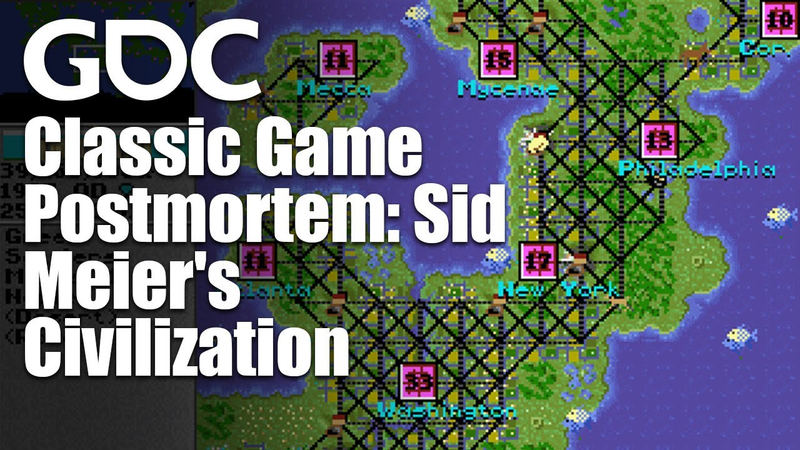
Classic Game Postmortem: Sid Meier's Civilization
The development of Civilization represents a pivotal shift in strategy gaming, moving away from rigid historical simulation toward a sandbox experience that prioritizes player agency and long-term strategic planning.
- Sid Meier and Bruce Shelley developed the original Civilization in under one year, beginning in early 1990 and shipping the title in 1991.
- The game's design was heavily influenced by existing titles like Empire, SimCity, and Railroad Tycoon, as well as Francis Tresham’s board game, Civilization.
- The 'tech tree' mechanic was a core innovation that provided players with a sense of progression and long-term strategic goals, such as unlocking railroads to improve unit mobility.
Companies behind it


As the documents state it.