
Sid Meier's Civilization
GameBy MPS Labs · Released Sep 30, 1991
Sid Meier's Civilization is a turn-based strategy computer game created by Sid Meier for MicroProse in 1991.The game's objective is "...to build an empire that would stand the test of time".
Connections
Each row is a game or company named alongside Sid Meier's Civilization, each column a document, oldest first. A mark means that document names it. Select a row to see those documents.
About the game
- Released
- Sep 30, 1991
- Developer
- MPS Labs
- Publisher
- MicroProse Software, Inc.
- Genres
- Strategy, Turn-based strategy (TBS)
- Platforms
- PC-9800 Series, Atari ST/STE, PC (Microsoft Windows), Mac, DOS, Amiga
- Links
- Wikipedia
Game data from IGDB.com
Key figures from the reports
Sid Meier’s Civilization VII generated $43.5 million on Steam during its launch month, despite experiencing mixed player reception.
Alinea Analytics, 2025 · Top 10 New Releases on Steam: February 2025
Sid Meier’s Civilization VII secured the third spot for February revenue with $66.1 million, bolstered by record-breaking pre-order numbers for the franchise.
Game World Observer, 2025 · Top-Grossing New Games on Steam: February 2025
The company maintains its fiscal year 2025 net bookings guidance of $5.55 billion to $5.65 billion, anticipating future growth from the releases of Grand Theft Auto VI and Sid Meier's Civilization 7.
Take-Two Interactive, 2024 · Take-Two Interactive First Quarter Fiscal 2025 Results, p. 8
Documents about Sid Meier's Civilization
Star Wars Zero Company: Market Performance and Non-Game IP Trends
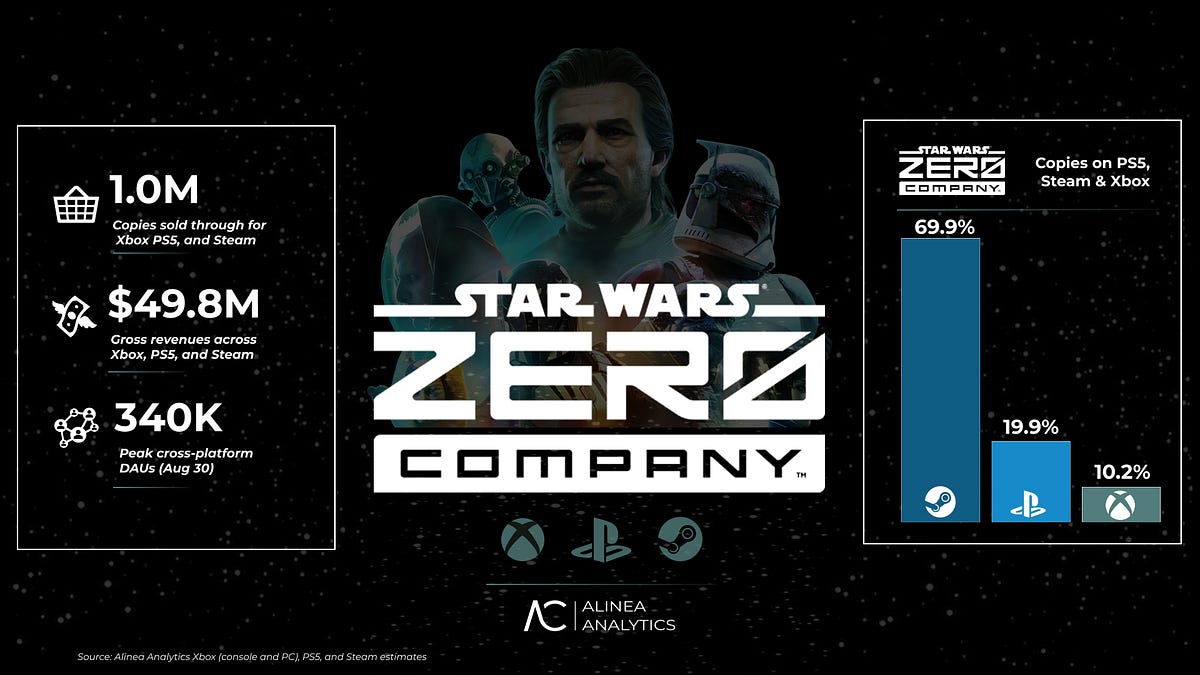
Star Wars Zero Company has achieved one million units sold across Steam, PlayStation, and Xbox, generating approximately $50 million in revenue since its August 2026 launch.
- Games based on non-game IP have generated over $900 million in revenue during 2026, with the top three titles accounting for the vast majority of that total.
- Star Wars Zero Company has sold 1 million units and generated approximately $50 million in revenue since its August 27, 2026, launch.
- 007 First Light is the leading non-game IP title of 2026, generating $309.8 million in revenue from 4.5 million copies sold.
Why are Historical Games so Crunchy? | Design Club
Historical games frequently employ high levels of mechanical complexity, or "crunch," to satisfy a player base that demands rigorous authenticity and factual fidelity.
- Historical games utilize 'crunch'—complex, detailed systems—to achieve verisimilitude, the emotional resonance that makes a setting feel authentic to players even if it isn't perfectly accurate.
- Historical accuracy is often prioritized because players have deep, real-world cultural and personal connections to historical events, making them sensitive to inaccuracies that would be ignored in fantasy settings.
- Crunch in historical games does not require numerical systems; it can manifest through authentic environmental details, such as the specific sound of a weapon, period-accurate equipment, or complex mechanical systems.
Number Go Up Featuring Orb of Creation 1.0 | Design Club
Incremental games, often categorized as idlers or clickers, are defined by a core design loop centered on the optimization of systems to achieve exponentially increasing values.
- Incremental games shift the player's role from a passive clicker to a manager of complex, interdependent systems by prioritizing the optimization of exponentially increasing values.
- Orb of Creation distinguishes itself within the genre by requiring active, strategic input across multi-layered systems like alchemy, gardening, and combat rituals rather than relying on passive idling.
- Long-term engagement in incremental games depends on balancing accessible early-game loops with high-complexity thresholds that prevent optimization traps and time-based penalties.

Take-Two Interactive Investor Presentation: May 2026
Take-Two Interactive maintains a dominant position in the global interactive entertainment market by leveraging a diversified portfolio of industry-leading intellectual property.
- Take-Two Interactive is scheduled to launch Grand Theft Auto VI in November 2026, serving as the primary anchor for the company’s largest development pipeline in history.
- The company reported $6.721 billion in net bookings for fiscal year 2026, supported by a portfolio that includes 13 franchises with over 5 million units sold each.
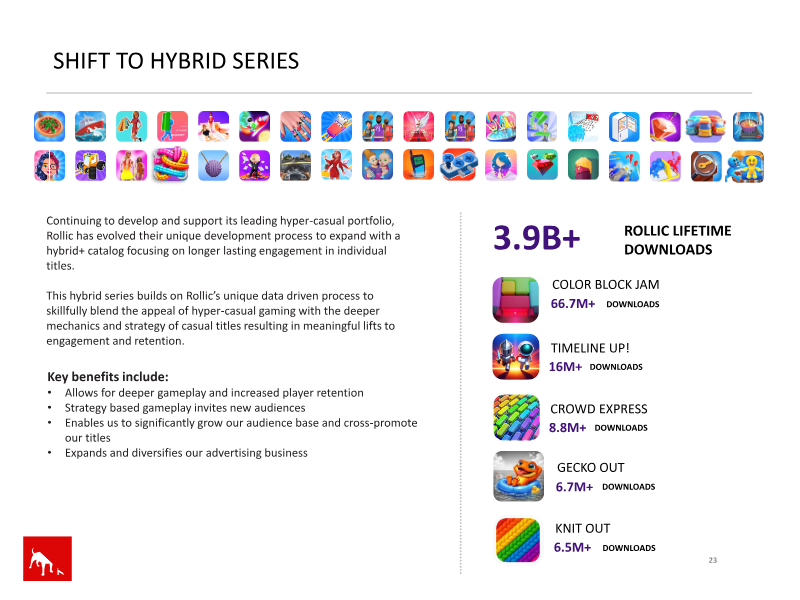
- Mobile gaming currently accounts for 49% of total net bookings, with the company's broader mobile catalog exceeding 10 billion total downloads.
An Interview with Take-Two CEO Strauss Zelnick
The interview with Take-Two chairman Strauss Zelnick, conducted by Stephen Totilo ahead of an iIcon panel in Las Vegas, offers a concise glimpse into the executive’s leadership style and Take-Two’s strategic priorities.
- Take-Two has officially postponed the release of Grand Theft Auto VI from November 2025 to November 2026.
- CEO Strauss Zelnick maintains a lean senior-management structure that coordinates all major business decisions through weekly meetings rather than external email communication.
- Take-Two is actively managing the industry-wide challenge of rising game development costs while maintaining a focus on disciplined project management across its portfolio.

Take-Two CEO: ‘Google’s Project Genie AI is a great sign of things to come’
Take-Two Interactive CEO Strauss Zelnick recently addressed the industry impact of Google’s Project Genie, framing the generative AI technology as a significant opportunity for game development rather than a threat.
- Take-Two CEO Strauss Zelnick views Google’s Project Genie as a positive technological advancement for the industry, despite a 12% drop in Take-Two's share price following the AI's release.
- Take-Two reported strong financial performance with $1.6 billion in revenue, driven by a 19% increase in Zynga mobile revenue, 27% growth in GTA Online, and a 30% jump in NBA 2K.
- Grand Theft Auto 6 remains on track for its scheduled release on November 19, 2026.

How Valve (And Apple) Broke Game Sales | Design Club
The digital distribution landscape has undergone a profound transformation, shifting from a model defined by physical retail to one dominated by centralized storefronts like Steam.
- Steam has fundamentally altered consumer price anchoring by normalizing frequent, deep discounts, training players to wait for sales rather than purchasing games at full price.
- Developers are now forced to build 'sale-proof' pricing models, ensuring that even after significant discounts, the revenue per unit remains profitable after platform fees.
- The frequency and depth of Steam discounts have increased significantly over time, with standard promotions moving from 10–20% to 30–60% or higher to capture consumer attention.

UCLA's Miracle & Battlefield's 7M Sales: The Leadership Alpha No One Talks About
The primary thesis of this analysis is that effective leadership and organizational structure serve as the most critical, high-leverage variables in game development, capable of reversing project failures and driving commercial success.
- Battlefield 6 sold over 7 million units in its first 3 days, achieving 747K peak concurrent users on Steam (4x the previous franchise record) and demonstrating a successful redemption story for Western AAA games.
- Effective leadership is identified as the most powerful variable in game development, capable of transforming failing teams into high-performance units and turning disasters into record-breaking launches.
- The turnaround of UCLA Football from a 0-4 record to 3-0 after a mid-season coaching change illustrates that leadership and strategy, not just personnel, can dramatically alter team performance.

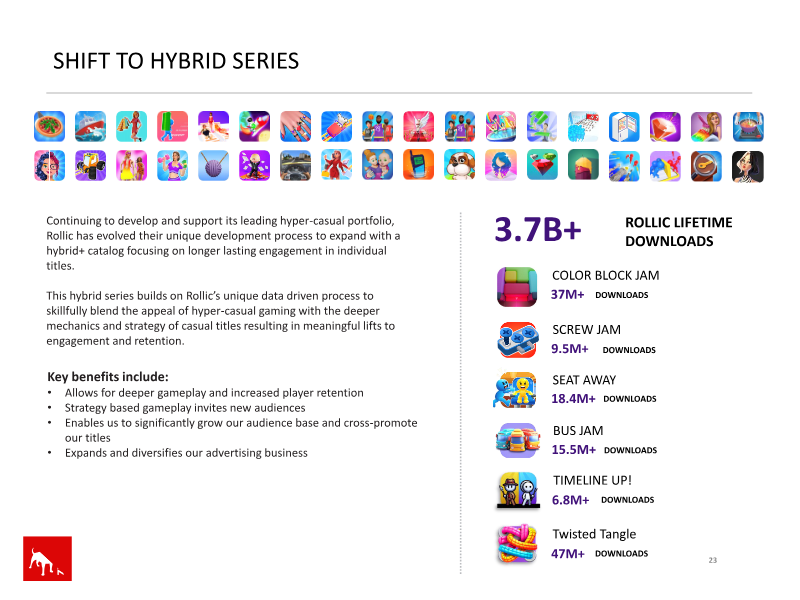
Take-Two Interactive Investor Presentation: August 2025
Take-Two Interactive occupies a dominant position in the global interactive entertainment market, underpinned by a diversified portfolio of thirteen major intellectual properties and a strategic focus on long-term engagement.
- Take-Two Interactive is prioritizing the May 2026 release of Grand Theft Auto VI as the cornerstone of a development pipeline extending through fiscal year 2028.
- Mobile gaming is now the company's primary revenue driver, accounting for 51% of the $5.648 billion in total net bookings reported for fiscal year 2025.
- The company's revenue distribution is split between mobile (51%), console (38%), and PC (11%), reflecting a strategic shift toward hybrid-casual mobile titles following the integration of Zynga.
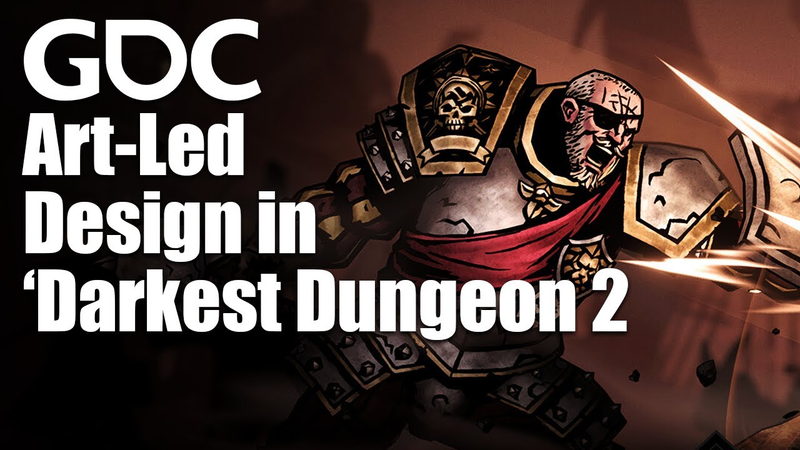
Evolving Worlds from Chaos: The Art-Led Approach of 'Darkest Dungeon 2's' Procedural Generation
The development of Darkest Dungeon 2 centers on a deliberate shift toward an art-led procedural generation system, prioritizing the game’s distinct, painterly aesthetic over traditional, programmer-centric automation.
- Red Hook Studios shifted from a programmer-led procedural generation system to an art-led approach for Darkest Dungeon 2 to ensure the game’s distinct, painterly 3D aesthetic remained consistent across generated environments.
- The team abandoned an initial 'sequential plate' system because it created an unsustainable workload for the art team and failed to support the desired game design direction.
- The final solution utilized a grid-based system where environment artists defined a minimal set of road tiles, allowing Unity to generate complex, seamless biomes without requiring constant developer intervention.

291. AI in Games: Innovation or Ethical Time Bomb? With George Ng, CTO of GGWP
Artificial intelligence is fundamentally reshaping the gaming industry by acting as a powerful catalyst for operational efficiency while simultaneously introducing profound ethical risks.
- AI is currently serving as a supplementary tool for operational efficiency in prototyping, asset creation, and narrative design rather than a replacement for human creative vision.
- The industry expects only incremental efficiency gains over the next two years rather than a total paradigm shift in game development.
- AI-driven monetization strategies, such as hyper-personalized matchmaking and variable drop rates, pose significant ethical risks by potentially prioritizing engagement over player well-being.
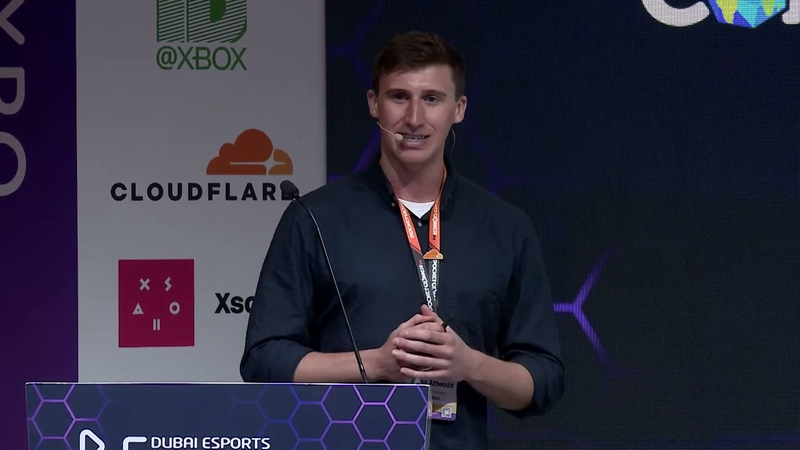
Session: Pushing To The Edge: Unlocking Gameplay Potential With The Cloud - Jason Attwood.
The gaming industry increasingly relies on cloud infrastructure to manage the complex requirements of modern titles, ranging from real-time multiplayer games to asynchronous experiences like turn-based strategy and leaderboard-driven titles.
- Cloudflare utilizes a global network of 335 points of presence across 125 countries, employing an anycast system to route traffic to the nearest data center for low-latency performance.
- Serverless 'Workers' allow developers to execute custom logic at the network edge, billing only for active computation time rather than total request duration to optimize costs.
- The platform provides integrated security layers designed to mitigate volumetric DDoS attacks and credential stuffing, acting as a proxy between users and core infrastructure.
Companies behind it


As the documents state it.