
Heroes of the Storm
GameBy Blizzard Entertainment · Released Jun 2, 2015
Heroes of the Storm is a multiplayer online battle arena video game by Blizzard Entertainment. The game brings together characters (known in the game as heroes) from multiple Blizzard universes, such as Warcraft and StarCraft and puts them against each other in an arena in a 5 versus 5 battle.
Connections
Each row is a game or company named alongside Heroes of the Storm, each column a document, oldest first. A mark means that document names it. Select a row to see those documents.
About the game
- Released
- Jun 2, 2015
- Developer
- Blizzard Entertainment
- Genres
- MOBA
- Platforms
- PC (Microsoft Windows), Mac
- Links
- Wikipedia
Game data from IGDB.com
Documents about Heroes of the Storm
Blizzard’s Biggest BlizzCon in Years: Can They Deliver?
Blizzard’s recent product announcements represent a strategic pivot toward aggressive long-term content scheduling, likely intended to secure budgetary stability under Microsoft’s ownership.
- Blizzard is shifting to an aggressive, multi-year content roadmap—including a new StarCraft shooter, Diablo 5, and World of Warcraft expansions—to demonstrate operational efficiency and secure budget stability under Microsoft.
- The studio is diversifying the World of Warcraft franchise into three distinct SKUs (Retail, Classic, and Warcraft Forever) to increase average revenue per user and stabilize a subscriber base that has historically fluctuated between two and three million.
- Analysts warn that managing three simultaneous live-service MMOs creates significant operational strain and development pipeline complexity for the Irvine-based team.

Steam’s VR Sellout, Pokemon Saved & Is Blizzcon Back? | Games For Breakfast
The gaming industry currently faces a period of significant transition, characterized by hardware stagnation in the virtual reality sector and a strategic pivot toward legacy content and community-driven initiatives among major publishers.
- Blizzard is reviving the MOBA 'Heroes of the Storm,' signaling a renewed focus on legacy titles following recent announcements at Blizzcon.
- Dungeons & Dragons leadership acknowledges the need for long-term recovery, admitting that the brand must move beyond promises to repair community trust after a year of public missteps.
- Market data suggests that VR adoption remains niche among core gamers, with estimates indicating that only 30-35% of the enthusiast audience actively engages with virtual reality hardware.
Premium: Driving Back Catalogue, DLC, and the Long Tail
Super Evil Megacorp has successfully pivoted from a high-cost, free-to-play competitive PvP model to a sustainable, premium, cross-platform strategy centered on PvE experiences.
- Super Evil Megacorp (SEMC) achieved a 'reverse curve' in user engagement for TMNT: Splintered Fate, with daily active users (DAU) growing year-over-year for three years post-launch rather than experiencing the typical post-launch decline.
- The studio successfully transitioned from a free-to-play mobile-first model (Vainglory, Catalyst Black) to a premium, cross-platform strategy by leveraging their proprietary 'Evil Engine' to ensure high-quality, native experiences across mobile, PC, and console.
- SEMC manages a portfolio of five active titles—four live and one in production—using a fully remote workforce spread across 11 countries, maintaining profitability by avoiding over-scaling and relying on internal cash flows rather than further venture capital.
Esports is Shaping the Future of Live Entertainment
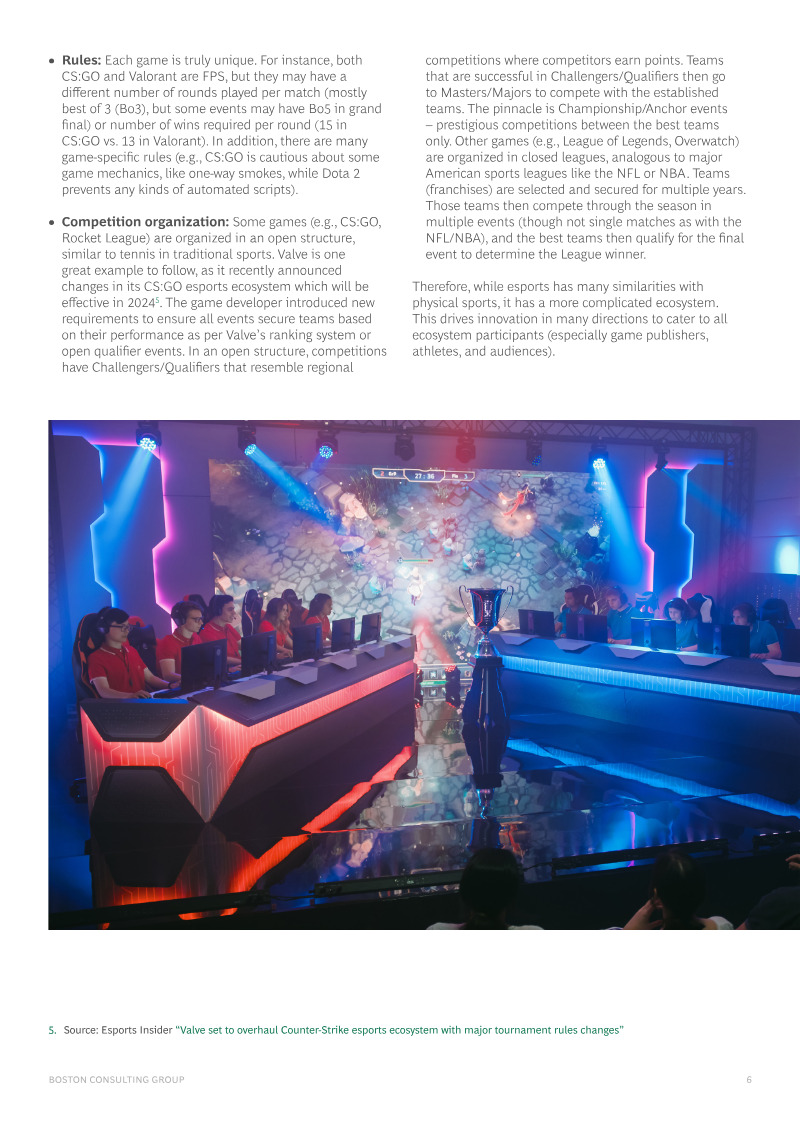
Esports is rapidly evolving into a mainstream live-entertainment sector, with viewership surpassing 100 million hours and prize pools doubling since 2018.
- Esports is outperforming traditional sports with a 10% year-over-year growth rate, while viewership has surpassed 100 million hours and prize pools have doubled since 2018.
- Five core titles—League of Legends, CS:GO, Mobile Legends: Bang Bang, Dota 2, and Valorant—account for 70% of total viewing hours, yet $2.5 billion in gamer audiences remains untapped.
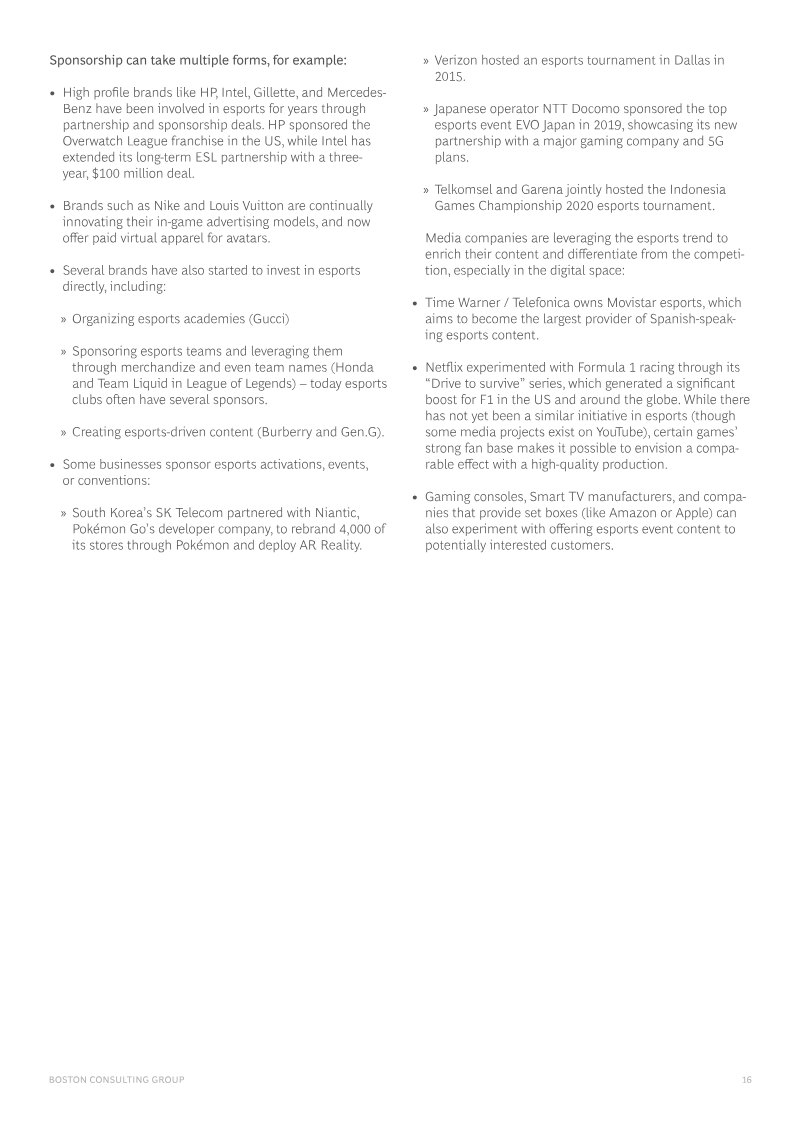
- Non-gaming brand sponsorship has reached 45% penetration, supported by emerging institutional structures like university scholarships and government investments in infrastructure and tax incentives.
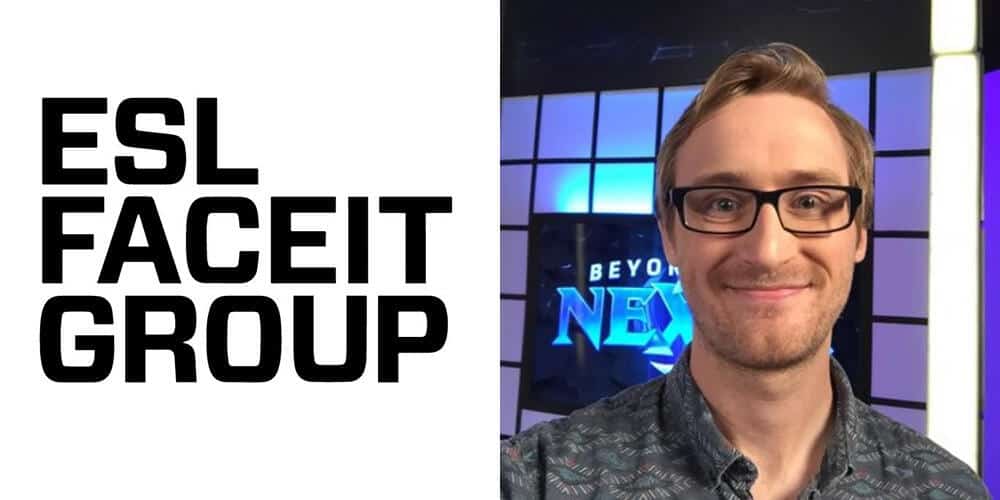
Industry Veteran Sam Braithwaite Joins ESL FACEIT Group
ESL FACEIT Group (EFG) has appointed industry veteran Sam Braithwaite as its new vice president of game ecosystems for mobile.
- ESL FACEIT Group (EFG) has appointed industry veteran Sam Braithwaite as the new vice president of game ecosystems for mobile.
- Braithwaite will lead the strategic direction of the Snapdragon Pro Series, a mobile esports circuit operated in partnership with Qualcomm Technologies and Samsung.
- Prior to joining EFG, Braithwaite served as the global director of esports at Activision Blizzard for nearly four years, managing titles including Hearthstone and World of Warcraft.
Game Design for Competitive Gaming
The core thesis of this analysis is that competitive game design succeeds by prioritizing high skill ceilings and mastery over artificial complexity or financial incentives.
- Competitive viability is driven by high skill ceilings that allow for individual mastery, rather than artificial complexity or financial incentives like large prize pools.
- Games should follow the 'easy to learn, hard to master' philosophy to ensure broad accessibility without sacrificing the depth necessary for a sustainable competitive ecosystem.
- Design choices that remove the ability for individual players to become 'legends' or playmakers—such as those seen in Heroes of the Storm—undermine competitive value and long-term engagement.
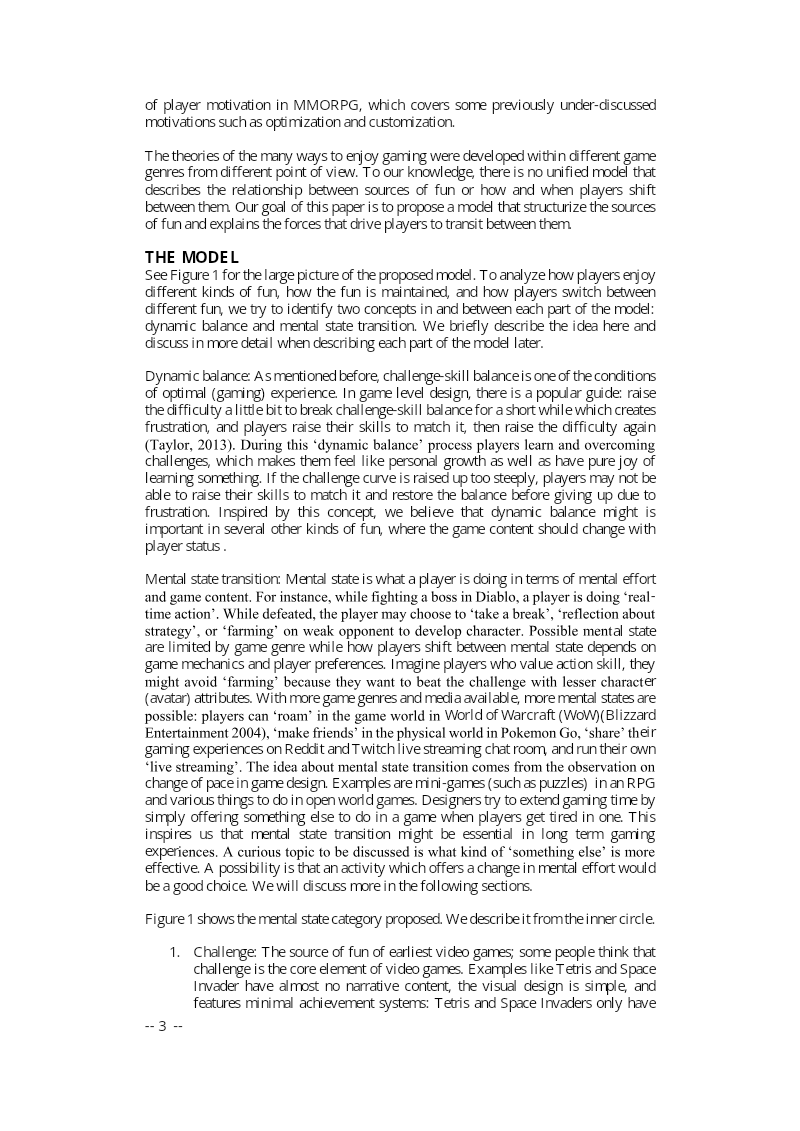
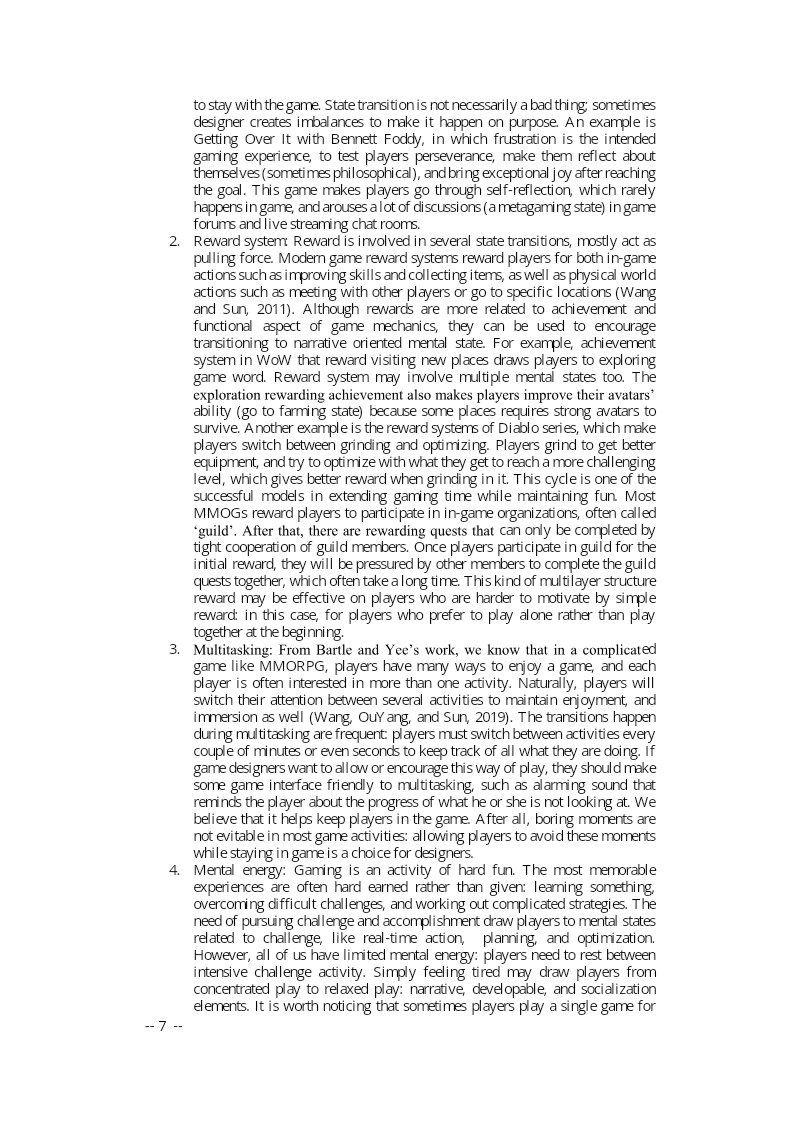
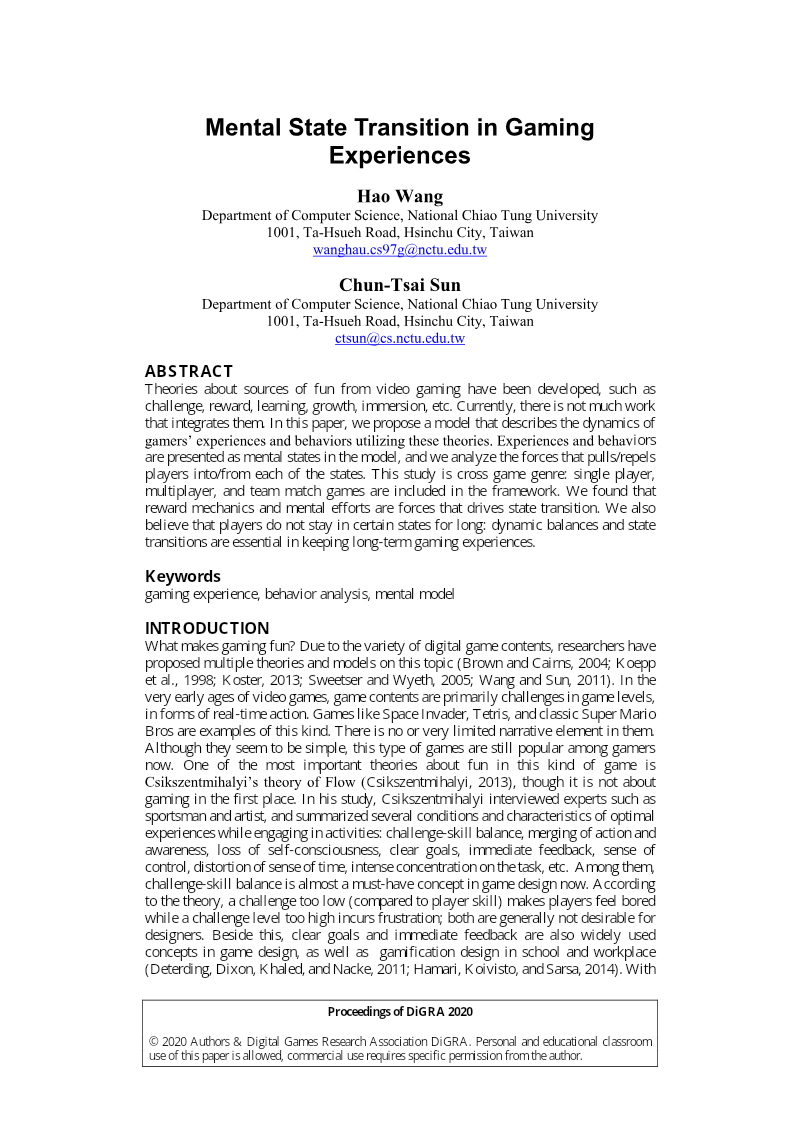
Mental State Transition in Gaming Experiences
"Mental State Transition in Gaming Experiences" proposes a framework for understanding how players move between distinct mental states during play, integrating established theories of gaming enjoyment such as flow, player typologies, and MMOG motivation models.
- The authors propose a framework of how players move between mental states during play, combining flow theory, player typologies, and MMOG motivation models, with reward mechanics and invested mental effort as the main drivers of those transitions.
- Sustained engagement depends on dynamic balance, meaning difficulty and progression must rise in step with player growth; imbalances in challenge, or in the mix of teamwork and individual achievement, push players into other mental states or out of the game entirely.
- The framework is primarily conceptual and literature-based, supported by qualitative evidence from two case studies, Getting Over It with Bennett Foddy and Heroes of the Storm, built from live stream observation and interviews with eight players.
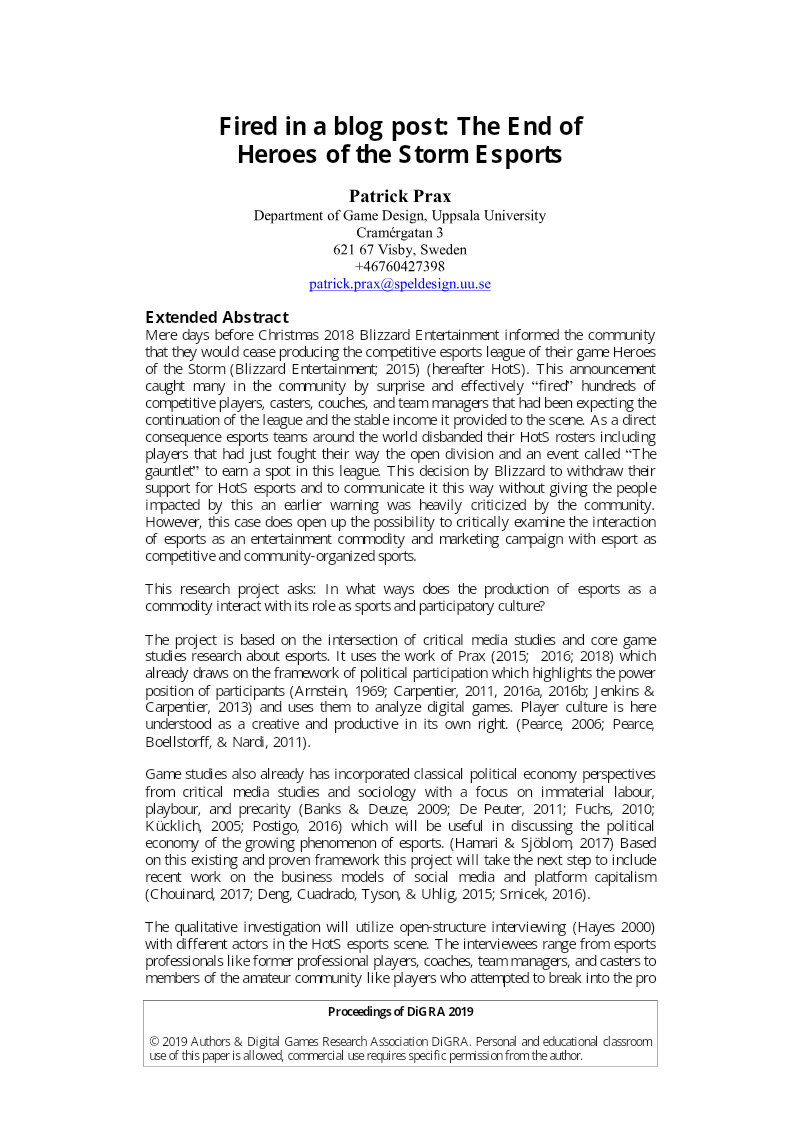
Fired in a Blog Post: The End of Heroes of the Storm Esports
Blizzard Entertainment's decision in December 2018 to end the professional competitive league for Heroes of the Storm (HotS), announced with little warning, forms the starting point for this DiGRA 2019 paper by Patrick Prax.
Companies behind it
As the documents state it.