1 free read left. Create a free account for unlimited reading + AI research.
Create free accountWhitepaper DiGRA
1 free read left. Create a free account for unlimited reading + AI research.
Create free accountWhitepaperDiGRA
The authors propose a framework for how players move between distinct mental states during play. It combines flow theory, player typologies and MMOG motivation models.
"Mental State Transition in Gaming Experiences" proposes a framework for understanding how players move between distinct mental states during play, integrating established theories of gaming enjoyment such as flow, player typologies, and MMOG motivation models. The authors argue that reward mechanics and the mental effort players invest drive these transitions, and that sustained engagement depends on dynamic balance, where difficulty and progression rise in step with player growth. The framework is primarily conceptual and literature-based, though it is supported by qualitative case work.
The empirical component centers on two case studies, Getting Over It with Bennett Foddy and Heroes of the Storm, drawn from live stream observation and interviews with eight players. These cases suggest that imbalances in challenge, or in the blend of teamwork and individual achievement, push players toward different mental states or out of the game altogether. The authors contend that the model can help researchers track motivation over time and help designers, particularly in game-based learning, shape desired patterns of engagement. They acknowledge its limits: it does not account for intentionally frustrating games or for highly demanding activities.
The closing section addresses that gap through a first-person account of a months-long guild activity in an online game. The experience required several hours of uninterrupted focus and carried social penalties, including harsh criticism or expulsion, for leaving mid-activity, making it feel more like work than leisure. The author argues that these demands are precisely what make the experience memorable, fostering a sense of achievement and social bonds forged through shared challenge. The sources span game studies, flow and immersion research, and gamification scholarship.
Each row is a game or company this document names, each column a document, oldest first. A mark means that document names it. Select a row to see those documents.
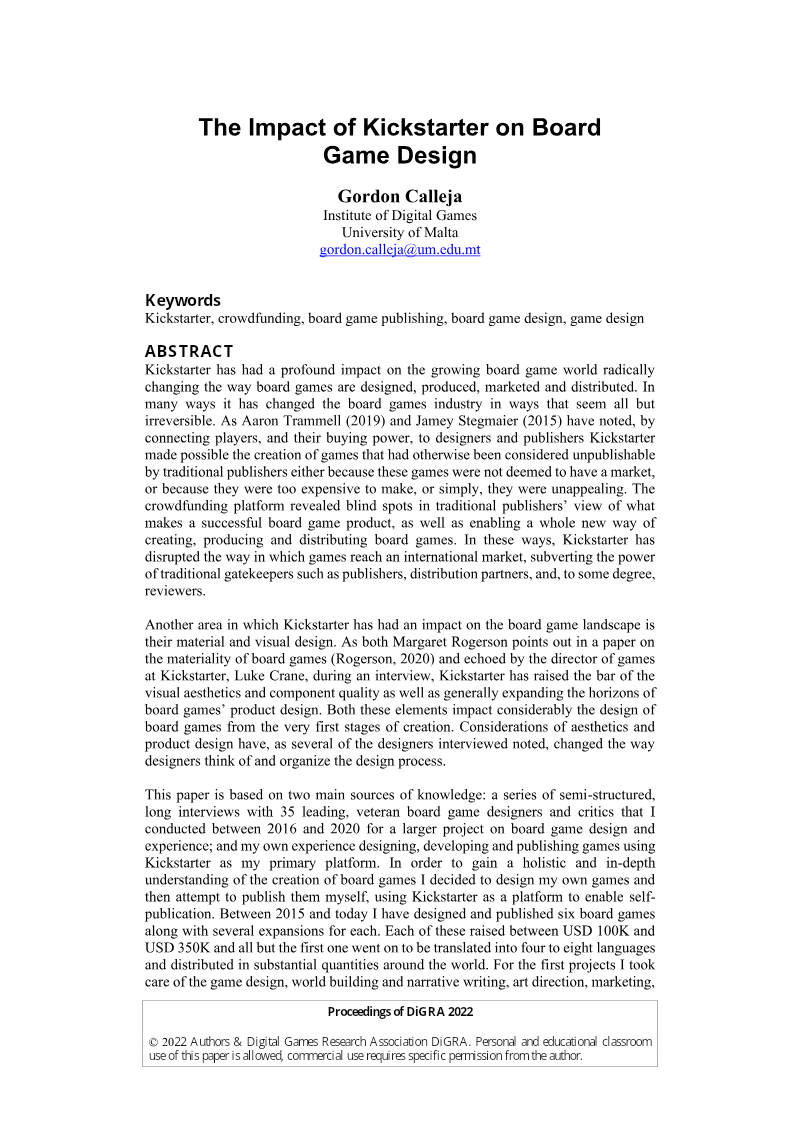
DiGRA · 2022
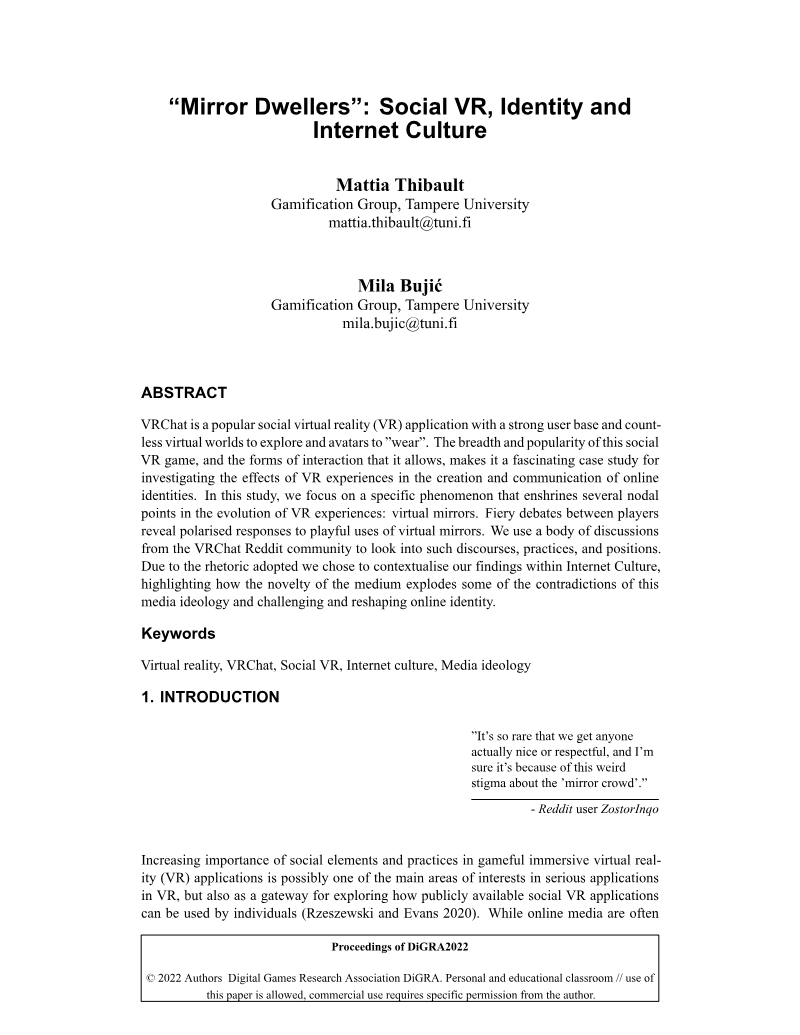
DiGRA · 2022
DiGRA · 2022
DiGRA · 2022
DiGRA · 2022
DiGRA · 2022
DiGRA · 2022
DiGRA · 2022
DiGRA · 2022
DiGRA · 2022
DiGRA · 2022
DiGRA · 2022
Two & a Half Gamers · 2026