Transcript
Welcome to the Naavik Gaming podcast, where it is our mission to explore the business and future of video games. We bring together the industry's brightest builders, investors, and thinkers to keep a pulse on current events, dissect emerging trends in games, share lessons learned, and have a great time. This podcast is also part of Naavik's growing ecosystem, which ranges from free and premium research to consulting and advisory services. For more information, visit www.naavik.co. This episode is brought to you by Overwolf. With over 1,500 games supported, 178,000 creators, and 113 million monthly active users, Overwolf is the guild for in-game creators. Whether you're a gamer, creator, or game studio, Overwolf is the ultimate destination for integrating UGC
into games. For game studios, Overwolf offers CurseForge for studios, a white-label solution that lets game makers and publishers easily integrate mods safely and seamlessly into their games, both existing and new, at zero cost. It's battle-tested by AAA studios and games, including Krafton with Inzoic, Studio Wildcard with Ark, Take-Two Interactive, and others. Alongside this, Overwolf is the all-in-one platform that enables creators to build, distribute, and monetize in-game apps, mods, and game servers. In 2024, Overwolf paid over $240 million to in-game creators, proving that they truly value the talents and contributions of the gaming community. You can check out all Overwolf has to offer at overwolf.com or simply check out the link in the show notes. Now, let's jump into the episode.
All right, what's up, everyone, and welcome to the Naavik Gaming podcast. I'm your host Alex and this is the interview and insight segment.
Here's something that happens a lot today. A premium game launches, it doesn't hit in its first week sales target and within months, maybe sometimes even weeks, the game is reorganized, the title is deprioritized and the studio moves on to whatever the next thing that they might be doing is. And the default playbook has become, if it doesn't spike, kill it. Um, cut your losses and move on. And I think the reaction is that this is a hit-driven business, it didn't hit, so it's time to go. Um, and I think in some cases that might be the right call, but there are examples of titles with long tails and big comebacks from those that literally struggled at launch like No Man's Sky and Cyberpunk 2077 to games that just simply have long tails. Diablos, Civilizations, Stardew Valley, Hades, Terraria. These are titles that have earned more in years two, three, and four than they did at launch, shipping a crazy number of units over years after their their their birth. Um, so today's episode is about what it takes to manage a premium back catalog, how to respike a game with DLC done right, what done right even means, um, and the harder question underneath all
of it is how does an independent mid-size multi-IP, multi-platform, self-publishing studio survive in today's climate at all. Um, and so to do that, um, we're going to talk about Super Evil Megacorp. Um, SEMC has had one of the more interesting independent studio arcs of the past decade. They started in 2012 as the team that bet that mobile could host, you know, core console quality games. Um, many of us listening to this show will remember their first title, Vainglory, um, which was a massive mobile MM, uh, mobile MOBA. It went on to be played by 45 million plus players and was for a while actually the largest mobile esport in the world. I remember this very particularly during my chapter on Heroes of the Storm at Blizzard. Um, they followed that again in 2022 with Catalyst Black, um, a battleground shooter and in 2023 they pivoted into IP partnerships. First with a Paramount title, um, Teenage Mutant Ninja Turtles: Splinter Fate on Apple Arcade, and then with Netflix and Zack Snyder on Bloodline, um which launched in July of 2025. They've raised over uh 70 million
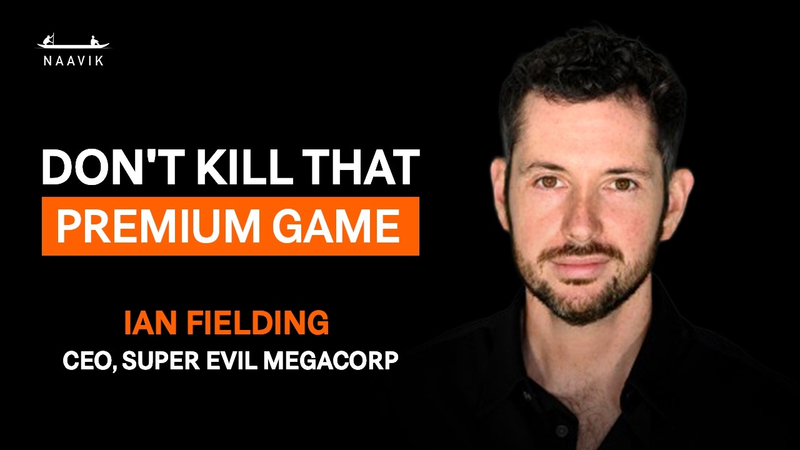
dollars across several rounds from A16Z, General Catalyst, Index, and others. And they're fully remote across 11 countries. And as of March of 2026, I've been told that TMNT Splinter's Fate, a game that is nearly 3 years post-launch, has hit an all-time DAU, peak review ratings, and its highest monthly revenue. And of course, I'm never alone in the studio. My guest today is Ian Fielding, CEO of Super Evil Megacorp. Um he was named CEO in January of 2025, succeeding the original founder, and has a background at Riot and Insomniac. So, welcome to the pod. How's it going?
Yeah, thanks so much for having me, Alex, and I appreciate the kind intro.
Yeah. Um we've been catching up catching up quite a bit over the past few months, and this episode has been long coming together. Um so, thank you so much for the time today. Um before we get into the meat of it, I want the audience to to get to know you. Uh you know, you joined SMC in 2021 as studio head, as you mentioned, and then in January you were appointed the CEO. Um and after someone who the original founder, I believe his name was
Christian, who ran the company for nearly a decade. Um that's a pretty meaningful transition, right? Um and so, you're a production leader by background. Things are going great so far under your watch, but what has been particularly challenging about stepping into the CEO seat, um coming from a different lineage than the original leader, and in this climate particularly of games today?
Yeah, I'm happy to talk a little bit about my background and the the challenges taking on the role. So, I actually started in video games when I was 16, selling video games at retail at Best Buy. And as you mentioned, I got my start in QA, and then eventually production. So, I worked a little bit at Buzz Monkey Software, Insomniac Games, and for many years at Riot Games in production. And then I was brought on by Christian, who was the CEO. And he did he didn't actually found the company, but he's there to help build the company for many many years as you called out for almost a decade in the role. And I was really honored to be able to to join this studio and a studio leadership role. And I actually started out in April 2021 focused primarily on production. And I
was brought on to help be We were working to uh solidify our thesis for what would become TMNT: Splintered Fate. I was going to be the executive producer of that. And then also to help Catalyst Black, which was in early access. So my job was to help take that from our early access or soft launch and then launch that title. And so over the course of a year, I actually then transitioned from managing production and leading both of those titles to taking on in summer of 2022 managing the executive team and the discipline leads.
Mhm.
And then over the course of a couple of years, Christian continued to zoom out and it became somewhat of a natural shift for me to pick up the CEO role. As he strategically sort of zoomed out and gave more and more responsibility to me at the studio. And so I'm I'm very grateful for his continued support. Christian had a lot of success with prior companies and also building up Super Evil, so he's continued to be a great mentor to me and he's the the chair of our board as of today. And then I'm also very fortunate, very lucky. We have an amazing senior team that I work side by side with for many
years before I actually took on the CEO role, so that was really helpful that I had those relationships with the team already. In terms of the big challenge that happened with CEO, actually it was more of a macro challenge. One thing that's changed in the industry is my first joined Super Evil, you know, during the COVID times and soon after COVID, there was a lot of investment capital flowing into the game industry. There was a lot of money also on the publishing side of it, big budget deals that were being struck. Now I would say the macro's shifted. There is much less venture capital, you know, flowing into games. There is less big budget publishing deals. There's really more scrutiny being put on the ROI for investments. And so that's one thing I've really had to look closely at and what are the types of new products in this environment that will break through, what makes sense from a budget standpoint, knowing that some of those other sources of capital, they're going to be more judicious in terms of what they want to invest in. So, that's been a big challenge for me to deal with and I think many other, you know, CEOs and studio leads in the industry.
Yeah, that makes a lot of sense. Yeah, so that's that's a remarkable story. I mean, I think that that's amazing that you have a team that you're surrounded by that helps bring out the best in you every day. And um yeah, 2020 you're like, "Oh, this will be fine. Games are popular. Look, we're on the I'll just raise $200 million and then you're in for a different a different kind of ride." Um
Yeah.
But yeah, so that's an amazing journey and I think it's yeah, an interesting time to kind of be running an independent double-A studio. And so, I want to talk about that and also we'll talk at the end a little bit about the macro financing picture and sort of what's on what's next for Super Evil Megacorp, but I want to start today by orienting our audience because I think SEMC actually has a pretty layered history. I think the portfolio today is more interesting if people kind of understand the arc and you've had these three, at least from my observation from the outside, pretty distinct chapters. There's the Vainglory chapter, there's the Catalyst Black chapter, and then there's now this multi-IP cross-platform
phase. And so, I would love from your perspective, just give me kind of like the 90-second version of the SEMC portfolio as it stands today. What's live, what's actively being developed, and how should listeners have thought about the shape of the company over the past decade?
Yeah, the company has evolved a lot since it's founding. So, I first became familiar with the company when I was actually working at Riot on League of Legends MOBA. It sounds like you became familiar, you're working on a MOBA and aware of the company from Vainglory, the first flagship title, which the company operated for many, many years and still is live today. The team has fought very hard to to the community edition alive for Vainglory, even if there's not ongoing updates. And so, there is a long arc of supporting that title. I'm extremely impressed with what they're able to do. I remember playing it on mobile back in the day and being like so so in awe of the both tech and craftsmanship in the title when they got it out. And then Catalyst Black was the next evolution of that taking a lot of learnings from vain glory and focusing on some of the improvements
in terms of the progression systems, monetization, and that title is still alive today. But our big focus in that the third chapter you mentioned when I was brought on board is to incorporate a lot of the learnings from vain glory and Catalyst Black to still build on those. The expertise in the co-op action space, the core technology that was built up from the evil engine which all the games have used, and the evil platform which all the games have used, but into a space that can break through in today's market and help us sustain. So, going back to what I talked about earlier, it's like the industry's always evolving. And as we've seen, a lot of large-scale PVP free-to-play titles have had challenges. And so, we really diagnosed what was the challenges with that and what where should we evolve to be able to not just sustain but thrive where the industry's going. And what we There's a few things that become very challenging in terms of maintaining a large-scale PVP titles is that you have to stay in a huge matchmaking liquidity pool, otherwise you're going to get the players this is, you know, dead sort of feedback. You also have to fight all the stickiness and retention from players'
social graph with other titles that they have. You also have to continue to pump out a ton of new content to get players engaging regularly. And so, part of our thinking is with our future focus in terms of titles that can break through but we can also sustain supporting, instead of playing in a space where we need to have, you know, massive war chest and fight against all of those elements that I just called out, we're now focusing more on PVE space and where we can have semi-regular updates for our titles with like TMNT Splinter Fate as an example of that and our key focus title right now, along with the new title that we're developing. And then bring players back for semi-regular engagement points with these big DLC drops that we have. And so that's been really effective for us again, building on all the technology and design learnings we've had in the action space from Vainglory and Catalyst Black, but playing in this PvE space in the premium space that we feel like something we can manage to sustain more for the long term.
Mhm. Okay, makes sense. Well, I was about to ask you cuz in a recent piece you wrote um that you evolved from focusing on exclusively free to play and
subscription mobile titles to crafting this cross-platform experience um focused on premium. Um and it sounds like you made that call and I was about to ask you when you made that call and sort of what triggered it, but you already eloquently explained exactly what triggered it, which is a very competitive content treadmill um and and honestly like a a war chest that's needed to kind of fuel a a large-scale um you know, competitive PvP free-to-play game. Um and so from my from how I understand it, Vainglory is still running on legacy servers and we'll talk a little bit about Vainglory in a second cuz I actually think this is a really interesting theme in the in the topic of what we're talking about, which is like don't immediately shut down your game. Um so Vainglory is still running on legacy servers. Um TMT Splinter Fate is out. Um Blood Line Rebel Moon game is out. Um and your Catalyst Black is out. Um and there is at least I believe one unannounced cross-platform title that you guys are about to start working on.
Oh, that that title uh yeah, it is unannounced, but it's already in early
stages of pre-prod, fully playable, full core loop. Um running well, already found a lot of fun in that title. So we are we are actively developing that. The title we're most focused on though from live ops perspective in continuing to update it is Splinter Fate in terms of what's announced. Yeah.
All right. I just want to put together the picture there's five games that are actively being operated on or in production. Four of them are live, one is in production. Okay, cool. Um All right. So before we go to before we go to Vainglory, I just want to like call out that you guys are a fully remote studio across 11 countries. You've hired people out of, you know, like yourself from Riot, probably from Blizzard, Gorilla, and most of studios of this size like probably struggling to operate remote or pulling back and and and and and and kind of getting smaller. So, what's the operating model that's actually working across all of these different five games from the studio perspective? Because I think it's actually pretty phenomenal that you guys have been able to build and maintain four live games, one brand new one with only a mid-size
studio.
Yeah, I think there's a couple of parts to respond to that question. Like one is how we work as a team. And we have online published our Super Evil Megacorp remote handbook. So, you can actually look that up for a lot of learnings that we've shared externally. We're always working to master how we work together. And it helps that we've been remote actually even ahead of COVID. The team's been working remote. So, through trial and error and many iterations, we've been able to improve how we work remotely. We have a great operations team as well that's always working on making us better and better at that. My belief is there's tons of talent across the globe and we want to take advantage of that, find the best talent, and not be geo-locked. There's obviously trade-offs to that. We've proven though we've shipped multiple titles now in a fully remote environment. So, Catalyst Black, Bloodline with Netflix, and TMG's Lunar Fate, those were all shipped fully remote environment. Our new title that we've already gotten into pre-production, you know, Full Court Rumble, that's all been built in a remote environment. So, for us like you have to have constant iteration. You
have to really work on your rituals, make sure that you have great IT for the talent, you know, build up trust over time. And we do have semi-regular get-togethers as well to help with that. But it's been really valuable for finding great talent. And we've also found that there's a lot of talent that doesn't want to go back in office. So, that's been a benefit for us um to get great talent. And then the second part of that in terms of supporting our live titles, I give a lot of credit to our tech team and ops team in terms of how we've been able to really sustainably at low cost make sure the servers are still running for the players on vain glory. We really want to honor them. So, they've been able to do that in a way that's very low maintenance to us. Same thing with Callus Black and we've had great partners. We collaborate with very early on at Netflix to make sure Bloodline is very stable and reliable. And then for T and T, um we've been continuing to update that. But uh one advantage of uh T and T is that and and also Bloodlines, we've been able to build on our tech for all of the work that we did for vain glory and Callus Black and we've been
able to learn from all the things that caused extra time for us to operate those games. We've been continuing to chop at the tree to have less and less issues that we when we operate these multiplayer games than for prior titles. So, being able to game over game, you know, improve your operations and learn from them has been a big advantage to us.
Got it. Yeah. Okay, thanks so much for answering that cuz I think that like it is just so it's a really like good testament of keeping a team small, keeping it lean, running it efficiently. Um and you know, not doing the over blow that downsize cycle that games sometimes feels like it's in. Um but you're also not a two-person indie studio. Uh and this is like the kind of you're in the middle barbell. I think the middle barbell is a really interesting place to be looking at and talking about today. Um All right, so I want to talk about vain glory a little bit because I think it's a pretty foundational lesson and you've already shared a little bit about, you know, like why the game was not something that you guys want to um or sorry, rather why you don't want to build another PvP live service game. Um but it's a pretty foundational lesson because, you know, it was, you know, for
you know, period of its time one of the largest mobile e-sports in the world. Um and it's actually like an interesting thesis because at the time the future of mobile gaming wasn't as clear, I would say. Um so, I'd love for you to kind of like rewind the clock and I know that for you, you joined the studio in 2021, but I'm sure there's kind of like a little bit of an inbuilt culture of sort of like what it was like to kind of take a stab at this future of mobile gaming when, you know, no one was like build a MOBA on on mobile. Um, and other League games like League of Legends mobile and other MOBAs have tried to attack the mobile space for MOBAs and and failed while you were the incumbent. So, why do you believe that you guys did that right and what was the focus and um, you know, how how did that go for you guys and and and tell me tell me about that period?
Well, I will echo what you said that I did join, you know, April 2021. So, building up Vainglory I give credit to the founders, so Christian who helped build it and all the other great team members, many who are still at the the studio today and
they've been incredible. Um, so I was really impressed with what they were able to build and as the team continued to fight to keep it alive today. Uh, what we've been able to do is take all of the expertise developing really high quality mobile title. Like, amazing, really pushing the boundaries of what mobile can do. And then build on that and sort of the next evolution is taking that sort of AAA quality of craftsmanship and care on mobile and expanding that to PC and console. Many many people in the industry, I think now it's changing a little bit, but back in the time when Vainglory started, no one really believed that you could create that quality experience on mobile. And I still Yeah, not many people did and I still think even today many people are very very skeptical about mobile games. Can those be games that also end up being high quality on PC and console? I think that is starting to change more. But that was actually like the natural evolution of that is when we worked on Team Sonic Racing, it did start actually as a mobile title in partnership with Apple Arcade. Working with them, launching on Apple Arcade. And I feel
like we proved that out. We always believed that we could take those high quality mobile games, bring those to PC, bring those to console. And you know, we're really thankful like we're looking at the reviews, you know, we've got very positive reception from players for the title. They do feel like it's a first-class experience for console and console and PC. And the original thesis for the studio that the founders really believed in is that's where it could go, that you could create this high-quality mobile experience, and it could be then made not just we don't like to say it ported, we want to say like natively designed and crafted for those platforms and really bring out the best in them. Uh and then also supporting full cross-play. So, regardless of the device you wanted to play on, we really wanted to give an amazing player experience for people who like to play on mobile, but if you prefer console, we could bring those players together. And so, that was, going back to your question in terms of like Vainglory, I think I think that really they got right well ahead of the time was that the power of mobile was going to grow, it was going to be able to support these high-quality experiences that could be extensible to other platforms, and envisioning a future that players would actually play
games together regardless of their platform device of choice, that they would want to game together and feel like that's a good experience. And we've been proving that out with our future titles.
I see. Yeah. But then after that, I think I remember in 2019, SEMC handed the Vainglory live ops actually over to another studio called Rogue Games, right? So that you guys could focus on Catalyst Black, and that's a pretty big decision. So, do you remember why you guys they handed off that community and and that flagship title? Um and then actually the reverse happened, I think the Rogue Games announced that they were going to shut down the servers, and so then you stepped back to reclaim it. With in the theme of this podcast, you were like, "No, don't shut us down. Like, we're going to keep going." So, why give it Why did they give it away in the first place, and then why did Rogue Games make that call to shut it down, and then what did they fail at, and how did you reclaim it?
Yeah, so I wasn't there at the time, but like high-level basically it was in the vein of the philosophy of really want to keep these games live for players, right? And so, when it became not
sustainable to keep supporting the title, because it's important you have to ultimately as a CEO of a studio head keep the studio afloat, make sure it's sustainable. There was that uh brief instance where Rogue took over operating the game, right? And that allowed Super Evil to focus then on the next title, Catalyst Black. However, then there was a decision made when it was handed over to a partner that there was a risk of the game being shut down forever, and no player could play Vainglory. And there's still, even today actually, there's a there's a passionate, even if it's much smaller, audience that still plays it. And so, then there was an effort by Christian Divaris to get it back and make sure that the game could still operate in community edition. So, it's really aligned with the philosophy of thinking about players first, and that's something that's really core and remain core to the DNA of the studio. We're always thinking about the players first and doing right doing the best we can by them. And so, they were able to get the game back, keep operating as community edition, and then also work on future titles in parallel, like Catalyst Black, Team of Titans, and Bloodline.
Mhm. Okay. Do you think that in that decision, right, where you probably made
it for strategic reason, you were like, "Hey, like look, and we need to offload this large, huge live operations that we could focus on this new title, um instead of keeping it in-house, which I think is actually like a strategy that many companies are doing today, right? which is, "Hey, like we we make something, we pass it off to a different team." Live ops team is really different from the original R&D team that creates the project in the first place. Um but, it sounds like that was a kind of like it almost kind of backfired in a way. So, do you guys think in a world in the in the world in the future, would you ever hand off your title to another game studio? Is it now a principle of your guys' to basically have everything in-house?
Yeah, so we really value managing our tech and like the the titles in-house. Now, to be clear, we do have some incredible partners that we work with, you know, vendors and outsource partners that help augment our full-time team. So, I want to give credit to them, and we've had we've been fortunate to have some incredible partners. But, one a couple learnings from that though is we've worked very very hard to make sure supporting our titles is much less costly, both financially by really up
doing optimization, so server costs are much, much lower. And then also working on the tech, so it's much less costly to maintain. So, it's a fraction of the cost for us to support our existing live titles that we've recently launched, you know, Bloodline TMNT: Splinter Fate, than it was for Vainglory. And so, that's a big learning that a lot of teams may not think about, you know, spending that effort to really make sure you've optimized your server costs, spending the effort to make sure that your live ops pipelines and your platform are really, really easy to manage. But, a lot of investment went into that during building up Callus Black and our future titles, so it's it's orders of magnitude less. And so, now it's much easier for us with the titles we're shipping to really sustain that and run it internally.
Yes. Yes.
Okay, got it. So, I think it did so you've meaningfully changed the way that you operate so that you would not have to hand off any of your titles again. Got it. Cool. Okay. Well, I mean, I think that that that that lesson is sort of like understanding that arc, I think can really inform sort of like the studio's history and I'd love to kind of switch gears now to talk about um what
our main topic really is, which is TMNT: um Splinter Fate, which launched in, I believe, May of 2023. Um and as you had just mentioned, actually as a mobile title and an Apple Arcade first. Um and I'm going to talk about that in a second. Um but, it's just for the audience, uh it's a rogue-like co-op action shooter. Um the critical reception has been really strong. You guys have since expanded to Switch, um PC on Steam and Epic and PlayStation, Xbox in 2025. So, it's been this kind of metered rollout of not sim shipping, but kind of doing the one platform what per year at a time. Um and you told me that, you know, so far in March 2026, it's it's hitting all-time highs. Um but, my first question is actually going to be, um why TMNT and why was this the IP that triggered the pivot away from owned IP, uh free-to-play and mobile into licensed premium cross-platform? What did you see in this partnership that other IP holders perhaps didn't offer?
Yeah, so there's a couple questions within that. Referencing what I mentioned earlier, like we were seeing that competing in the large-scale like free-to-play PvP space, it required a huge war chest. You really had to keep constant updates. You have to really drive the matchmaking liquidity to have like high-quality matches. There's a bunch of other factors that make it challenging to pull away from like the big big giants in the space. And so, we were looking more at co-op and PvE experiences that still built on our learnings in the action space and built on the tech we had built. And we were very very passionate. Like when we think about new titles, you know, one we have to be really passionate and feel like we're knowledgeable about the genre. And we really really loved roguelikes. We also felt in the market there was a big big demand at time to have co-op roguelikes, co-op experiences. We would see this when we were looking at Discords, looking at Reddit, looking at socials. There was great roguelikes out there. People are always talking about, "I love to play this with family and friends." So, we really we were looking at that. And then we did actually consider um we we always evaluate for
each title, is this a path where we could go new IP or licensed IP? So, we may not always go licensed IP. We may not always go new IP. But in this case, we really thought about if we want to do something that's four-player cuz we envisioned this would be something over time that we could bring as a couch co-op experience, bring multiplayer. What would be IPs that we'd work with on the license side or how would we approach it if we made new IP? And when we made like a short list of IPs, we just thought The Four Brothers and TMNT was so perfect for a co-op action roguelike. You know, it was like we were like, "Yes, we must we must do this. This would be great." And so, uh from that, and then we had this long-standing fantastic relationship with Apple all the way back to the iPhone 6 keynote with Vainglory to the iPhone 13 keynote with Catalyst Black. We've always been in touch with Apple and they were really interested in working with us on a title. And we approached Paramount where we were like, "This is the high-level thesis that we have for this game. Would you be opening to work with us? And they were really excited about as well. And they've been fantastic partners at Paramount as well.
And so, you know, one thing led to another as we kept talking to Apple and Paramount, and then they said, let's let's make this a big, you know, key moment for their big Apple Arcade moment May 2023. And yeah, that was a really fun experience collaborating with them to to launch that on Arcade.
That's awesome. Yeah, I mean, that's interesting. So, it actually sounds like you guys went hunting for the IP. It wasn't that Paramount came to you guys cuz often I've I've known actually some of the folks at Paramount. They're they were looking they have this huge robust inventory of IP and they're like, who can make a game for me in SpongeBob? And so, you guys actually went to them and you said, hey, we've got this really good pitch. Like, we want to build a co-op game. What's better than the four brothers? That's like very standard. Like, there's Donatello and Leonardo and we'll play together. And you guys went over there and you pitched them through Apple and you built that relationship. So, I think that's kind of an interesting reverse vision where sometimes a lot of people are given an IP rather you guys went to go went to go look for it. And so, now talking about but and that relationship originally came through Apple, right? Which I think is kind of
to my next question around the order of operations. Like, you launched on Apple Arcade first, then switch, then I think uh PC, right? And then Xbox and console other consoles. Sony, is
PlayStation, and so forth.
All right. So, you went like legit the most backwards order of of ever, right? So, I think at Blizzard I'm like, oh my god, that's completely backwards. We'd go PC first, then console, then switch, and then like maybe mobile, right? So, why this order? Um why mobile, then why switch, then why PC, then why console, and what did each platform unlock for the next one?
Yeah, so I've actually had this brought to me multiple times. In the future, we are evaluating a PC console similar approach and then following and extending to premium mobile over time. And we can talk about the the premium mobile space. And that isn't exclusive to also looking at subscription models as well, because I do think those can can uh exist in harmony. So, for us, it really goes back to our roots as a studio, because you have to think about
not just what you're passionate about as a studio, but we also think about what is unique to our capabilities. What can we do that many other studios may not be able to bring to the table? And for us, our roots really were in that high-quality mobile experience. And again, we worked with Apple for many, many years optimizing for their hardware on mobile, even on Mac as well. Um we were excited to bring the game to Apple TV as well for the full Arcade suite, which allowed us to sort of build up capabilities in cross-platform play. And so, we felt let's start out again with our original thesis, we believe we can build an incredible title on mobile, but we wanted to prove that would be extensible over time. And so, we started playing to our strengths. That's the big reason. We felt like we could get really great reviews and build the core of the game with Arcade. And then we knew there was a lot of we wanted to add it over time. We felt that was where we had a lot of credibility in building high-quality experiences. And so, Apple agreed, you know, uh Paramount, they felt we could really nail it. And then once we launched and we got really, really strong reviews on the title. And we actually had a ton of players saying, "Please bring it to to PC. Please bring
it to console." Which was really encouraging for us, because now that may be a little more common, but at the time, there was a pretty big belief that most mobile games will not be able to be brought to PC console and and resonate. And so, we saw that and that was really the signal, "Okay, let's start now expanding to those platforms that players are asking us to uh to bring the title to."
Okay, got it. Interesting. Um that makes a lot of sense. Um and I actually because of your, you know, you have this long-standing relationship with Apple, um I'm curious. Apple Arcade often gets a very uh a shitty rap sometimes about about what it's done for games. And what would you say to that as someone who has had them as an amazing partner in your corner for so long.
Yeah, I mean I can only speak to our relationship. It's been really, really positive with Apple. It's been very long-standing, so that also benefits. I'm big believer in having long-standing relationships and we would definitely want to maintain that relationship with Apple. That's been great for us. And also, of course, Paramount with TMNT. So, for working with them, and I think
others do as something to keep in mind, is that always be very thankful that they really helped us develop TMNT: Splinter Fate and provide also some financial support for that and help us make some initial buzz with the title through that big Apple Arcade launch. And I can't go into all the details, but there was there was some element of exclusivity with that launch before we could bring it to certain platforms and and um so that also impacts, you know, sort of your roll out strategy. But at the same time, for us it was a way to mitigate risk in terms of building the title. It was also platform we wanted to launch on. We really did want to get it on mobile. We wanted to bring it to Apple TV. So, we wanted to bring it to those players. So, it it helped us reduce risk, get it to players, create some initial buzz. It went really well. Their their marketing was really awesome for the event when we launched it. Uh and then it was sort of something we could build on uh and then bring to future titles after we'd heard the game a bit or future platforms after we'd improved it a bit.
Yeah, I mean, I think that also it makes a lot of sense because I mean, at the end of the day like it's a attention is very distributed today. I
guess some people have called it an attention war, um but there's it's very crowded in the market. And I actually think that Apple Arcade, Xbox Game Pass, some of these other places, it is the financial viability for the companies themselves who own the sub. Like we'll we'll we'll probably be honest and say Apple Arcade is probably not the juggernaut business of Apple, right? But it is still a windowing place to show your game, right? And if you can be the top game in Apple Arcade, regardless of whether or not Apple Arcade is the world's most popular place for gamers, it matters. Um and I think like that's kind kind like the lesson that I'm trying to to draw here cuz I think that people focus so much on being in Steam and at the top of Steam, but there's that's only one place to be and it's a hyper-competitive space. And so, if you can win in a different distribution arena, somewhere like Arcade or someone like Game Pass, um you can get a lot of visibility as as you as you mentioned, like do play to your strengths and basically have the game have some sort of exclusivity window that gives it some breathing room that then allows you to actually even get to the long tail of
expanding to further platforms.
Um
Yeah, and I think on that note, having flexibility in your business models and also the value of distribution is really important in today's market. So, having the flexibility that maybe for mobile there is a subscription approach that we pursued with Arcade and that helps you at launch. And then, if it does well and engages well, there's an ongoing revenue stream there. And then, for PC and console you can have a different business model where it's in the premium space with ongoing DLC. So, having that hybrid business model and that can really be helpful for you for for sustaining. Uh and for us, you know, it proved out to be really effective.
Awesome. Okay. So, now the long tail piece. We've talked a little bit about how TMT got crafted. We've talked about how it rolled out and and and and the impetus for that. Um but, you wrote this piece that, you know, now you're hitting this is it's been 3 months post-launch and now you're at the highest monthly revenue in year three. So, what changed in the funnel? Obviously, you added a bunch of platforms. So, I just kind of want to walk through sort of like what's compounding here, right? Like, is it just the fact that we're going across
platforms? Is DAU growing across So, what's sort of how have you been driving this result?
Yeah, so a lot I want to give a lot of credit to um the team and then we've had a great partnership throughout the years with Paramount and specifically for um for the mobile space and Arcade, you know, we've continued to partner with Apple and then we've had a lot of support from the platform holders as well, which has been great. And for us, it's actually been a reverse curve. So, our DAU graph, our engagement, has actually most games launch and then you see it go down over time. And ours has actually been this this line up to the right. We're really thankful and really fortunate for our players to continue engaging with us where it's gone up year over year for the for 3 years. And it's a few elements. Uh one, it's been us continuing to expand our player base and we've done that strategically aligning with new product improvements and beats. So, like most developers, we are in a position when we ship this title, we didn't have everything we wanted to add. There was
features we wanted, there was content we wanted that we weren't able to put in our MVP. So, we had a backlog of that that we knew we wanted to build over time. We actually lined that up with the platform expansions to create a meaningful product improvement to give players a reason to jump in with the platform that we felt worked really well with that feature and content. So, our first platform we expanded to Switch, that's where we added couch co-op. We found couch co-op. I mean, there's a huge percentage of players that play in couch co-op. That shocked me on on Nintendo. It's very, very popular. So, that was a great beat for us and then, you know, DAU went up. When we launched on Steam, that's where we added matchmaking and cross-platform matchmaking so you could play on PC, you could play on and all the other PC storefronts. So, Epic, etc. We launched those. You play on PC with players on console and Switch, you could play with them on mobile as well. So, matchmaking was very popular on Steam. There's still actually there's less three and four player couch co-op, but surprisingly a non-trivial number of people play two player couch co-op even on Steam. So, it was pretty valuable for that platform as well. So, then we saw another big spike
when we expanded PC. And then, ahead of launching on console, we actually did a pass on our visual design, on our HUD, on some of the graphics. We really polished it further. We added one new piece of DLC as well and then we gave a launch bonus where if players jumped in, they would actually get that DLC for free, which worked out really well for those players cuz we know we're a little bit later than ideal to get it on Xbox and PlayStation. So, we wanted to honor those players. So, we did that and also had more polished date. And then, the last platform we expanded to which did really well for us was switch two which is selling very very well and it's it's really a delight as how well it's done on that platform. But we spent the time to add game share, game chat, we run it at 4K on switch two now which you couldn't do on the switch one. So it looks really great. And so finally we grew to all the platforms. And then with our latest DLC we were finally able to take advantage of being on all the platforms, the cross play, the Halo effect. So it's the first time we've actually launched a big update and a new character and the surrounding content where we were live in all the major platforms. I think that really
that we had a meaningfully new high doing that. And we had another another high as we launched our gold bundle which is something when you've managed a title for a while, premium title, and you've had several DLC updates giving players the chance to jump in with all of the content at a really favorable discounted rate. So when we launched that gold bundle it did very very well for us. We actually had a new high. We launched the Aluphex character which is really loved by the community and then we launched that gold bundle which had another high because players are really excited to jump in where they could get all the characters at that at discount price.
Yeah, that makes a lot of sense. I mean well first of all it it sounds like it's a very meaningful intent to platform expansion, right? Like you're not you're like saying what can this platform uniquely offer that creates a different kind of fun experience that it did that it did not have before. It's not simply publishing the game on on switch, right? With the game being the same game, right? It's like meaningfully introducing something new that makes maximizes the power of the platform in terms of how customers and players interact with it which I think
is very unique.
Exactly. That's that's something we we actually really do try and it's not just semantics to avoid the word port. I think I mentioned that earlier. We really want the platform holders that we work with to know like let's just take switch two but we really thought through it with every platform. What are the features players are like? So game chat, game share, make sure it's running at 4K. But each platform it's like there may be whether that's with the platform feature set or it's experiential like when we went to switch one thing about couch co-op as an example or matchmaking when going to PC, we really wanted to give players that experience that we think is going to be a reason to jump in with each platform. And also, one thing if you're operating a double-A studio and again you don't have that like massive war chest, it's a way for you to continue to, you know, have that spike not only engagement but sales to sort of fun fun your next update.
Yeah, makes sense. Yeah, it's it's it's it's actually yeah, it's it's a meaningful that's what I'm saying it's the platform expansion is a meaningful compounding but you're not just like you're not just releasing on a new platform as the port but you're also adding a new spike that then it re-engages the past cohort of people
which is very interesting, right? Instead of basically having it be like an ebb and drop and then new a new a new new faces ebb and drop new faces. Um, I think actually one of the things that I've actually always believed about DLC in general um because at Blizzard we ran multiple DLC strategies but every DLC should be an attempt to grow audience not to just have the attach rate of the prior units cuz basically if you if you think that way then you're ever just going to de-escalate the attach rate over time. So, every DLC should grow audience which it sounds like you guys are trying to do through the combination of bundles. I love the idea of the gold bundle of basically allowing people to catch up on the game if they haven't been involved for for since the beginning.
Um
Okay, if I can double click the point on growing the audience, one thing that we've really tried to do to honor the players has been a good playbook for us is a lot times premium games will just do the paid DLC update but for us when we provide a paid component like the new character is paid, we try to make that a favorable price and really high quality, we also offer all players a free update.
So, something that we think is going to really cause a reason to jump in, drive engagement both for existing players but also for new players to get involved and we think offering that combination of the paid content plus a meaningful free update, it builds goodwill but also can lead to that overall base game lift, and you can keep or even grow the attach rate DLC over DLC.
Yeah, that makes a lot of sense. Um, and that's kind of I guess how you've helped uh sustain this double digit attach rate, you know, update over update. Um, and you know, you're doing these free updates, you're do just I guess I have a question though in there in there, which is how do you decide what goes in the free update versus what is paid? Um, I think that's obviously an always a really challenging choice um between like what would people have paid for, so you're leaving money on the table. How much is good worth worth? Um, so how do Is there a philosophy that you guys think through um when you think about what gets what's free that goes ships concomitant with the paid DLC?
Yeah, definitely there's probably So, we
we avoid pay for power. So, even though we've added new characters, it's about expanding the breadth and creative fantasies you can play, but we do work a lot to balance it, so there's similar power. We also definitely avoid adding something that is part of the main story line or core game. Want to give that to all players, and also features for the core game as well. So, we wouldn't want to charge players like match matchmaking or couch co-op or just general gameplay improvements that we're bringing to the table. For us, currently the main paid DLC component we found that new characters. Players both feel our price point is very favorable. We've actually done a little bit of research on this and we've seen from our community we know we could charge a little more than we're charging right now, which it's it's $3.99 per character, but when we get really high attach rate, so we think we make it up in volume, but two we think it's really building goodwill. So, players want to come back and keep rewarding us and buying future characters. Uh we are looking at more product lines later this year. I'm not ready to announce it. I can't announce it my marketing will get very upset. Like all that. We are looking at some other monetization, but it will follow that philosophy that we won't have pay
for power for what we're looking at charging and it's not going to be part of the main story. So, in future updates later this year as we expand the narrative and add new content to the game, players should know like that part is still going to be something they can access. Um, and then things that don't affect that, we'll look at adding that as paid.
Okay, cool. Yeah, it's interesting. I think that there's There's a great GDC talk that the Path of Exile guys have put out that's kind of about building DLC for every single type of cohort of person that you have in your game. So that every single time like if if you put only like a new race in the thing and I care about weapons, then I'm not going to I'm going to skip that one. So it's basically about designing something very meaningful for everybody for all of the reasons why people play. For those that are collaborative, for those that like new heroes, for those that like new missions, for those that like new runs, new maps. Um and and those who like who like like new narrative. And this way you kind of maximize your attach rate and you build your DLC for everyone and then they're staying engaged versus the kind of like loss attrition where like oh I missed two DLCs, so I feel like I've checked out of the game, I don't know what's
going on, it's too hard to re-engage with and you're kind of keeping that player always in your ecosystem, which is awesome.
Yeah, but I think I know um the talk that you're talking about. I I watched it actually a couple times. I really love it. Some very smart folks at Grinding Gear Games and it's amazing what they've done with the the Path of Exile franchise. And for us there there is a ton of thought that goes into that like in terms of the character side of things, not just having a free or paid addition to the game, but each of the characters we've added, there's multiple factors we're looking at. Of course, starting with their audience, what are the players clamoring for? We really want to and knowing the IP as well. And so sometimes it's just there's so much demand we launched the title out to add Casey Jones as an example. That ended up being our first update because there was overwhelming like we really want to have Casey added. The next character we added though, just to speak to like the different segments you have in and different uh player fantasies you want to add, we actually added a character that may have not been top of the list in Metalhead, but we didn't have a ranged character yet. You know, we we had a lot of melee characters. And so we
felt to expand the gameplay breadth, we know there's a lot of players who enjoy that sort of combat dance and moment-to-moment uh gameplay, adding that character we felt really broadened the roster. And so, when we thought about that again with our next character, Alopex, who's amazing, one we wanted to broaden the representation of the roster, but two is an interesting one as well, where it wasn't, you know, we collaborate with Paramount necessarily like in terms of the most highest awareness character in the IP, but we felt there was a really core audience in IP who really valued that character, and addressing like the hardcore fans along with what it brought to the overall roster is the reason we went forward with her, and she did she did really, really well for us. So, there's multiple lens we're looking through, and we try to provide those address those different segments with their updates with the characters, and also of course the free updates as well, too.
Makes sense. Makes sense. Okay. Um so, now I want to talk about managing just in general the back catalog and kind of driving the business forward, right? You're running in some form Bang Glory legacy servers, Catalyst Black,
TMT is an active premium title, which you just even mentioned you're expanding further, monetization, more updates, more characters are planned, um Bloodline, and the one announced AAA project, um or double A project, or whatever you want to call it. So, my first question is kind of how when it when it comes to the strategy of marketing and growing the audience across the catalog, how are you staffing that initiative um in terms of the of the team, right? You have multi-device expertise, all consoles, mobile, multiple PC storefronts, and like Netflix, right? That's just quite a bit going on. Sort of like, so how are you thinking about like what's the priority? Like is there a flagship franchise for you that you're always focusing on, and therefore all the other ones are bit de minimis? Um what what gets a title to be non de minimis for you guys? How do you think about like the priority and the resource allocation for your back catalog?
Yeah, so so right now we actually heightened our focus on TMT because, as
I mentioned, each DLC has caused our DAU and engagement cells to go up to new highs. Like we're really doubling down on that effort right now. I'm actually most excited by far about this upcoming update because players have been really asking us to add a few things to the game that I've been really dying to get in their hands. Um and so we're really far along in this update and so it's going to come out. It's going to be our biggest one yet and hopefully uh players really feel like we've been listening to them and hearing them out in terms of what we we ship with this update. So that will come out later this year and we we still have future plans for more updates.
Mhm.
Um you know, we're very thankful that we have partnerships and we've worked a lot to build up those partnerships and also optimize our tech so that we can spend uh pretty light amount of effort in making sure that, you know, Bloodline is still stable and supported on Netflix, that players can still play Catalyst Black or the community edition of Vainglory. We do have another team uh luckily led by, you know, co-founders who are really spending a lot of effort on that right now, uh who have done a great job helping us kick off um our titles. And so they're leading a lot of this new
title, this new effort that we're working on, which it's not in full production yet, it's in pre-prod, so we don't have to have a massive team on it, but we do have an effort on that as well, that's fully playable as well. So we sort of divide and conquer. We have uh our team that has some talent that's been with T and T a long time, but some new talent as well, helping us bring fresh ideas to the table to build it up. Small team supporting the uh the live service games and then we have our founders in a small team who are really working, spending a lot of effort on the new title that we're developing.
Okay, got it. All right, so it sounds like it's it's it's a bit of a fluid system um and things will take priority as they as they come and go, but T and T is your flagship um and it's kind of like lights on business for the rest of the three, um Catalyst Black, Vainglory, and Blood Moon, I mean, sorry, Bloodline, and then some early kind of R&D efforts on the new on the new title. Um curious, uh why are you guys why build this double A triple A bet when you're focused so much on TMNT and the back
catalog in general.
So, for me it's like important to have, and this maybe sounds somewhat cliche, but I think it's really true, one hand in the current business. And right now we're leaning a little more in that like because there's so much momentum with TMNT. Have a huge wish list backlog. I'm excited to I think we'll convert a lot of that with this update cuz we know a lot of players what they're asking for. We think you're listening to them. So, we are focused on that, but I do think it's important to also have one hand in the future business as well. So, if we were to put, you know, everyone in the studio to be an extreme example on continuing to focus on TMNT or, you know, support the bloodline, we wouldn't be also having what's the next evolution for the company, you know, what's the next title? Because I do think even though we plan to support TMNT for a long time, you know, we're very, very grateful that players continue and more players continue to show up for DLC. It's not guaranteed, you know, nothing's guaranteed that that will continue to go up to the right. We hope to keep doing resin updates that grow it, but I want to make sure that if that ever does change, we have to make sure that we're sustainable, right? And we'll of course keep keep supporting TMNT. Um, you know,
it's a game we can support very efficiently both in multiplayer and single player, but we also need to be prepared for the long range, you know, part of the business. So, that model always keep in my head is like making sure we're doing well with the day-to-day and like the the current flagship products that we have, but then also what's going to be the future. And so, that's why I want to keep, even if it's is with a small team, even if it's with that sort of like early pre-production stage, we're at least preparing that next the next bet.
Yeah, that makes sense. And as an independent and a multi-project studio, it's also you always have to have your eyes in the future because, as you mentioned, you never know when the other games may may not do as well. And also like there's a level I think of of people management, too, right? Like people want to work on the next chapter of the company, you know, you might want to graduate new old talent from TMNT into the new title. People get you know, if I worked on a game for 10 years, I may be like, "Okay, I'm kind of I want something a new a new challenge a new a new thing to work on. So, I think that that is right now you guys are pretty much very well diversified in terms of something core, legacy, and and and and
something new. And so, that kind of brings us to, you know, maybe our last topic, which is kind of like how how it's been surviving as an independent multi-project, multi-platform double-A, self-published studio. The middle's disappearing. A lot of the mega publishers are consolidating. There's micro indies shipping sub $1 million games on Steam. And the double-A mid-tier independent studios, the tier that you're probably consider yourself to be in, is supposedly kind of hanging on by a last thread, but you're obviously still here. Um so, you've raised uh over $70 million across seven rounds. The last public round, I believe, was in 2019. You described yourself as profitable. And how and you mostly have survived most likely from basically living on the cash flows of the games, rather than going back to the venture markets. Would you guys ever expect to try and raise again? And what does that look like for you in terms of your future profile?
Yeah, so for us, we've been focusing on revenues from the the titles, but also publisher deals. So, we're very very thankful for the publishing deals that we've had. So, as I mentioned, we had the publishing deal for TMNT for Apple Arcade. We did self-publish on PC and console, as you called out. We had a great publishing deal with Netflix as well. So, really thankful for that. And you know, we are exploring and open to future publishing opportunities and collaboration as well, for the right partner. Especially we think that we have a lot of superpowers that we've built up in building high-quality co-op action titles, distributing them to all major platforms. And we now learned a lot of like how to work with licensed IP, you know, building up our capabilities in that space as well. So, for action-oriented IP, like that's something that is, you know, we'll continue to consider. Uh because as you said, like the double A space, it's important to be mindful of like what are the bets that will break through, what is getting funded in today's market. And we think there's but I think there's a ton of opportunity where we've looked at several IP out
there and we're like it we almost feel like it's an injustice that they don't have, you know, like a super high quality title. Like there's actually I I'm more of an optimist. I think there's like a lot of opportunity out there if you're really looking like closely at what what is there a lot of pent up demand and huge fandom around it that doesn't have those big bets in the interactive space. But maybe it has the popular movie, the TV show, etc. So that's something that we're keeping, you know, and keeping our eyes on. But yeah, the mixture of like self-publishing plus publishing deals has really helped us in this this time. And also we have focused more on the double A space as you called out because a big change from the COVID times where there was, you know, bigger checks being written, the triple A bets, like that I think is quite hard to get in terms of a third party or second party. But what is starting to pick up, and it was a tough time to be honest after that sort of COVID pullback, but what's starting to pick up more is more in that double A size bet where there are more publishers, there are more IP holders who are interested in that. So that's not, to be clear, like the hundred million dollar bets. I think that very hard. I'm not seeing too many of those
happen. But if you're talking more in the double A space, there is opportunity out there that's picking up in that in that realm.
Mhm. How much of your survival so far, I mean cuz you guys have been around for a quite quite some time, is do you attribute to kind of to discipline, right? Like staying small, staying profitable, refusing to like over hire on hype. I think there could have been a very easy time in 2021, 2020, right? Where you guys could have ballooned to a 500 person team or considered or thought about it. What does that look like or how do you how did you think about that then and how do you think about it now?
Well, we try to be very very precious about every hire that we bring at the studio and really care about every team member. We are in the the smaller to to or to mid-size, depending what your frame of reference is. Again, coming from Riot, we're much much smaller than those sort of AAA teams who have many many hundreds of people. Um and I think it's really important. Like I deeply care about everyone who's at the studio. I think I speak for the whole whole senior team.
Uh and I think it is really important to think about, you know, cost basis and think about, you know, what is a reasonable expectation for a title, even though you're always dreaming and aspiring to have that bull case, of course. But looking at sort of comps in the market and what could you expect? And that's where I think if you start getting into that realm of being many hundreds of people, then it's what do you have to do with the games that you're making in order to sustain that or be successful? And then you're talking about essentially moonshots in a lot of cases, which are you know, and then are you going to bank everything on that moonshot? So, for us, like we've really tried to have a level of being pragmatic around what is like sort of base case we can expect. Of course, again, we'll fight for that bull case. And then also having the humility, as I said, like I really think it takes a lot takes a village to be successful when shipping a game. And so, being open to striking publishing partnerships or hybrid models um to offset risk as a studio.
Mm. Okay. Um yeah, I mean, I think it's just it's Yeah, I think that being judicious about it and and and not overstaffing, I think is a really big
critical um I think lesson for survival today uh for for most studios. And even if things look like they're going well, it's basically like prepare for the worst um and and make sure that you don't that you don't overscale or do it in a way where the resources aren't aren't permanent, right? Over over index and outsourcing and then de-scale back as as as as as needed. Um I had a question kind of about um the proprietary engine, right? I think you have done something that's very I guess an anomaly of today's market. In addition to launching backwards uh from mobile to console last, um you've maintained this proprietary engine when most people are very much encouraged to to not build, but to buy. Go to Unreal, go to Godot, go to uh, Unity. Um, why do you think that the proprietary engine is so important for the Evil Engine is is so important for all of your titles? And is there a Is there Is it an actual edge that you think is exciting when it comes to a new IP or a new game that you could
might make might make for somebody else that allows you to move faster?
Yeah, absolutely. Well, one thing that we've been really fortunate about is like, if you're a brand new studio, I think you'd have to think more about do you want to use a off-the-shelf engine or new engine? But we've been using this engine since the very start. So, we now ship every game on it since the days of Ingo on the Evil Engine and our back-end platform, the Evil Platform. And for us, we think it's a really really big edge cuz I do believe that distribution really matters, performance matters to players, especially when you're in the action category. Performance really really matters. And so, what it's allowed us to do is, you know, for example, we're running Team Fortress 2 all the way down to an iPhone 6. So, we can distribute to some players. But also, if you look at our PC min spec, it's roughly equivalent to a 10-year-old gaming rig that we can run the title on. We also are able to ship on last-gen platforms. So, it's not just Switch 2, but we're on Switch 1, we're on PS5 and Xbox Series X, but we're also on the prior generation, you know, PS4, Xbox One. So, we were able to run and a really solid, really great performance. So, it's still a good experience. And
so, we can reach way more players. And we think that's really beneficial both if you have your own IP and doubly so with a lot of IP holders, a big goal is they want to expand the reach of their brand. And so, being able to get it to these these new audiences where a lot of off-the-shelf engines, they can really struggle to run on, you know, not everyone has the highest-end gaming rig, you know, or the latest-gen platform. So, we can really get our game to a lot of players because of our engine, it's super optimized, and it's really tailor-built to the types of games we build. So, that's one thing at least for us, we're very specific about the category plan in the action. We have sort of you can see our our unique look and feel for our super evil type of games. We stuck to somewhat consistent, of course, design space, but also camera angle for our game. So, we've continued to build on that game over game. I think it'd be tough for us just to pivot and make a racing game as example. We've really built in our up our areas of expertise. And then on our platform, we think it's a big advantage because we built up a lot of features to support full cross-play across any platform.
Right.
Which has been helpful for us. But, also there's even unique bespoke features where it's really easy for us to manage
things like dropping in and out of a session for our game. So, you can drop in and out of a Roguelike run in TMNT or into a battle arena in Catalyst Black or a mission, you know, in Bloodlines. So, there's feature sets like that we've built up which really help elevate our focus on the co-op space, which is really trying to build up a lot of mastery in that space. So, I think it's been a big advantage for us. Again, if you're a brand new studio, I think it may be a different equation. But, if you're you're like us, I've been able to build it up game over game for a long time, it's really helped us in our space.
Yeah. Yeah, makes sense. And uh yeah, it's also it is simply because you're because you're older. Um but, definitely like it's a it's a it's not a common thing to be building your own engine today. Um and and perhaps for many studios, they won't ever, right? Because they're it's there's too many good options and nobody will have started a decade ago. Um when you think about all the companies that are have proprietary engines, they're usually a decade or two older than than anything new today.
Yeah.
Although, that no, I Echo, you mentioned Godot has been spiking in usage. I've been following the charts and that's you
have like a courier starting in there for some of the content pipelines, but then, you know, it's open source, you can modify it for your needs as well. And I think part of that may be because they're seeing they want to create these custom features, the unique look and feel, distribute their games farther, and maybe they're not feeling they can get that with, you know, off-the-shelf engine. So, it's been interesting to follow that trend in the past couple of years.
Yeah, Godot is doing um
Godot has been picking
doing very well. All right. And so, of course, I have to ask you about AI. What is your AI philosophy in terms of how it shows up in the development pipeline, content production, and player facing features?
So we don't actually use any generative AI at Evil. So we don't have any gen AI assets. I know other studios are exploring that. I really think we have an incredible art team. You know, they've helped build up some amazing IP. Worked in games like, you know, PlayStation like God of War and Gorilla and you know, worked on League of Legends and all these great IP. And so when it comes to making new IP or we have a lot of pride when we work with even a licensed IP, we really
try to create our own unique look. So in our own story, unique story as well. So we built our own unique story with TMNT and Splitter Fate. Feel like we've carved out our unique look. So we haven't leveraged gen AI. I'm really proud of the art team that we we have. In terms of thinking through like dev efficiency on the programming side, like we are exploring like for our engineers, like is there a way that they can leverage it to potentially like program a little bit faster. So we're exploring more on that side. But yeah, no gen gen AI in our assets or our pipelines.
Got it. Okay. Yeah, and I actually was specifically speaking to the to the art pipelines. I actually think what's more interesting is on the development, coding, MCP Claude pipelines and in terms of the speed and the velocity for which studios and and and the rest of the software business is moving at versus game studios.
Yeah, we're exploring more in that space in terms of increasing like building, you know, new core features and engines and things like that on the programming side. So yeah, and you're right. There's a lot of nuance to it because when people bring up AI, it's like AI has
technically been around in games for so long. You could be talking about AI for enemy behavior or what is the area that you're speaking to. A lot of people refer to it though as gen AI, you know, or our our content pipelines. And so we're not we're not using those currently at Super Evil. And no plans to.
Yeah, makes sense. Yeah, and I guess I was more speaking to the to the LLM space. Sort of like foundational enterprise tools that Anthropic. And and how those things have really added a lot of development acceleration for apps and bunch of other things. And and how that can be used for for games. And I think um, you know, Embark has done some really interesting work in terms of what they've done with their own proprietary AI models at uh, for for our graders. Um, so I was curious if you guys have any thoughts around
definitely definitely exploring more on that the yeah, the engineering side and dev efficiency and with Claude etc. as you mentioned. Yeah.
Cool. All right. Well, we're just about the end of the episode, but I do have one more last question for you guys. Um, you know, you mentioned a little bit about that you're hopeful. And you said
for the double A studios, you know, that maybe perhaps you're looking for an IP to cover. Um, there's a lot of opportunity out there. Um, to all the double A studios that are trying to survive, um, what is one piece of advice that you would give them to to close out our episode today?
That's a that's a great question. I think we should help each other out. Like I think about that all the time. I also spend a lot of time talking to other CEOs, studio leads. How can we cross promote? How can we exchange knowledge? It is a tough time. It's challenging. We've had our ups and downs as well, to be clear. And it is a fight. And so I'm always open, you know, for folks who reach out to me. Um, we we've done as just one example, but there's many I could bring up. We've been honored to do many Steam bundles as an example. And we'll cross promote uh, studios that are friendly with us, you know, that we've been talking to a while, exchanging knowledge. Uh, we'll help amplify their launch. We want them to succeed. They'll help amplify, you know, our DLC updates and bundle on Steam. We've done also just some other cross promotions outside of Steam uh, bundles with our community and socials. So, I really think that it is tough out
there for double A studios. I do think there's more and more opportunity emerging. I think it's better than the past couple years. I think this year is trying a little better. Uh, but I also think that you know, a rising tide lifts all boats, you know, I I that's sort of my philosophy. And so I'm always up for people if they want to reach out and they feel like there's a way that we could collaborate together.
Cool. Yeah, I think that's a great piece of advice and I think that the bundling stuff is interesting and and yeah, I think when you think about people how people buy games, people actually on Steam they they look at bundles quite a bit and I think it's an exciting opportunity and I think that a lot of people perhaps perhaps misunderstanding how important that actually is when it comes to getting your game out there and I think actually what's also really awesome is games is a is is a generally pretty collaborative space. Um
Yeah.
It's a people actually genuinely are like they have a respect that everybody's game is kind of like worth playing and it's I think that's that's a wonderful atmosphere versus some of the tech business in general where it's a bit more of like no, this is my user. We
will not share this user. We'll not share this player. But Ian, this was such a pleasure and there's clearly so much that SC MC is doing differently in the market where most people are kind of running the same playbook. I think it's really valuable to have you here on our show to share how you're thinking about it. Um so very much appreciate you for coming on. If anybody wants to reach out to you, how can they do that?
Yeah, you can reach out to me on LinkedIn, no problem. I'm pretty responsive there and yeah, look forward to hearing from folks and I also just wanted to thank you so much Alex for hosting me. This is a lot of fun. Really appreciate being able to come on the pod.
Yeah, thank you. It's awesome. All right, as always friends, if you have feedback or ideas, you can hit me up at [email protected]. I'm always open and with that, that's our episode. We will see you next time.
If you enjoyed today's episode whether on YouTube or your favorite podcast app, make sure to like, subscribe, comment or give a five-star review. And if you want
to reach out or provide feedback, shoot us a note at [email protected] or find us on Twitter and LinkedIn. Plus, if you want to learn more about what Navic has to offer, make sure to check out our website www.navic.co. There, you can sign up for the number one games industry newsletter, Navic Digest, or contact us to learn about our wide-ranging consulting and advisory services. Again, that is www.navic.co. Thanks for listening, and we'll catch you in the next episode.
Auto-generated captions from YouTube — names and numbers may be misheard.


















Comments